

The Best MTG Commander Staples Under $5
Building powerful EDH decks without bankrupting yourself. The color-by-color budget breakdown, the universal under-$5 staples, and the 2026 bracket system that finally replaced the old power-level scale.
Let's have a brutally honest conversation about Commander. Magic: The Gathering's most popular format is incredible, but the "arms race" at the local game store has gotten out of hand. When every pod features players shuffling premium-priced Rhystic Studies and Smothering Tithes, it's easy to assume that the only way to compete is to drop half a paycheck on cardboard. It's a massive misconception.
The truth about a 100-card singleton format: redundancy and efficiency almost always beat raw expense. A perfectly tuned budget engine consistently runs over a disorganized pile of "good stuff." This guide is Geeky Domain's master directory for the budget Commander player — the color-by-color breakdown of where each color's cheap power lives, the universal under-$5 staples that fit in nearly any deck, and the practical framework for building decks that punch far above their dollar value.
A note before we start: Commander changed significantly in 2024–2025. The old "Rules Committee" handed governance to Wizards in late 2024, four format-defining cards were banned in September 2024, and the 1–10 power-level scale was officially replaced with a new 5-bracket system in February 2025. This guide reflects the current 2026 state of the format.
The Short Version
Commander decks win by executing the Holy Trinity (Ramp + Card Draw + Removal) better than the opponent, not by spending more on cards. Each color has a cheap workhorse identity that lets budget players match expensive lists shot-for-shot: White for protection and exile removal, Blue for cheap 2-mana counters, Black for life-for-draw and budget wipes, Red for impulse draw and Blasphemous Act, Green for the best ramp suite in the game. The under-$5 universal staples (Sol Ring, Arcane Signet, Swords to Plowshares, Beast Within, etc.) belong in nearly every deck of their color. Use the new Bracket system (Exhibition/Core/Upgraded/Optimized/cEDH), not the old 1–10 numbers, when discussing power level. A tight $50–100 build can compete in Bracket 3 (Upgraded) reliably.
→ More Commander Guides
In This Guide
The Color Pie: Where Cheap Power Lives
To build on a budget, you have to understand the financial floor of each color. Some colors are notoriously expensive to optimize because their best tools have never been meaningfully reprinted — others are gold mines for budget players because Wizards prints cheap variants of their best effects in nearly every set. Here's where each color's affordable workhorses sit in 2026:
White: The Equalizer
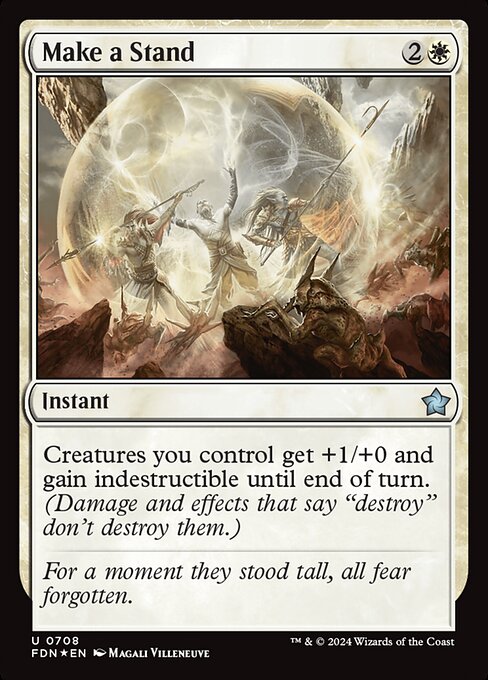
For years, White was the format's joke. It's now one of the strongest budget colors. While whales spend heavily on Teferi's Protection, the budget player runs Make a Stand or Unbreakable Formation for pennies. White specializes in exile removal — permanently dealing with threats, not just destroying them — and you can permanently answer a commander for under a dollar. Full list: the best White staples under $5.
Blue: The Permission Slip
The trap with Blue: high-end zero-mana counters (Fierce Guardianship, Force of Will) cost a fortune, so players assume Blue is unaffordable. False. A perfectly timed $0.25 Negate or Arcane Denial stops a game-winning combo exactly as effectively as a card costing fifty times more. Blue's budget strength is the sheer volume of cheap 2-mana interaction that keeps the table honest. Full list: the best Blue staples under $5.

Black: The King of Trade-Offs
Black asks: how much life will you pay for an advantage? You don't need a premium Toxic Deluge or Damnation to clear the board — Crux of Fate and Languish are under $2. And cheap "pay life" draw spells like Sign in Blood and Night's Whisper give budget players the same early-game consistency as expensive engines. Full list: the best Black staples under $5.

Red: The Impulse Engine
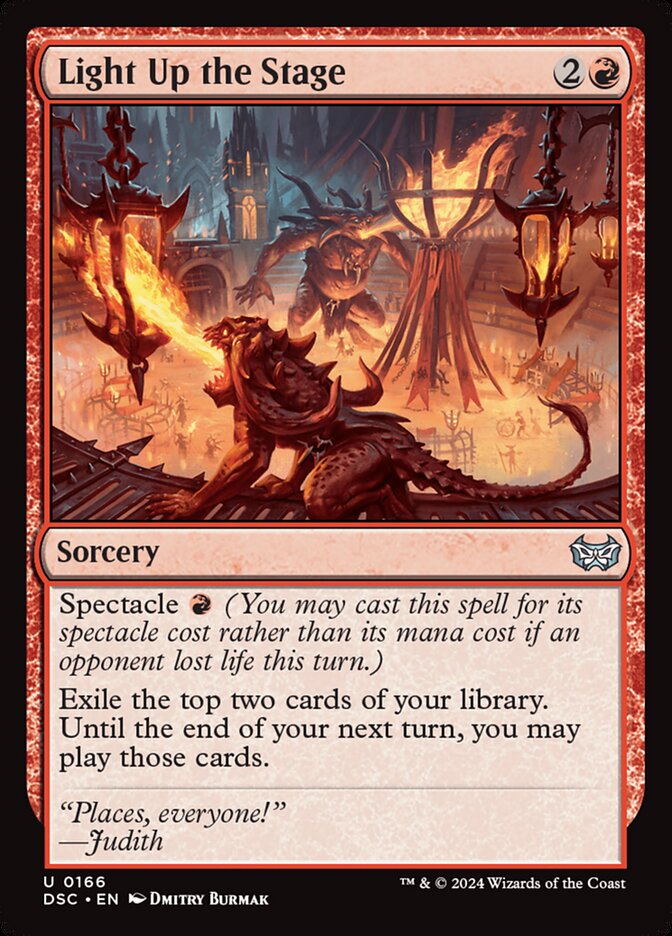
Red's headline expensive cards used to be massive Treasure generators — but with Dockside Extortionist now banned (more on that below), Red's budget identity is stronger than ever. Cheap "impulse draw" spells like Light Up the Stage and Reckless Impulse cost literal pennies and ensure you never run out of gas while opponents top-deck. Full list: the best Red staples under $5.
Green: The Ramp Monopoly
The most budget-friendly color in the format. The best ramp in Magic's history — Cultivate, Kodama's Reach, Llanowar Elves, Rampant Growth, Three Visits — has been reprinted to oblivion. You don't need a premium-priced Craterhoof Behemoth when an under-$1 End-Raze Forerunners or classic Overrun ends games just as decisively. Full list: the best Green staples under $5.

Colorless: Fixing the Mana Base
Colorless artifacts are where every deck gets the same upgrade. Sol Ring, Arcane Signet, and the guild Signets are universal — legal in any color identity, cheap to acquire, and dramatically improve every deck. These belong in 99% of Commander decks regardless of strategy. See our budget dual lands guide and our under-$1 lands list for the rest of the affordable mana base.

The Holy Trinity: Ramp, Draw, Removal
If there's one section to memorize, this is it. Expensive "high-power" decks win not because their commanders are better — they win because they've perfectly optimized the Holy Trinity of EDH. The deck that plays the most lands, draws the most cards, and interacts most efficiently wins the pod. Full stop.
When building on a budget, ruthlessly dedicate slots to these three categories before you look at your commander's specific synergy cards:
- 1. Ramp (10–12 cards). Cards that permanently accelerate your mana past the "one land per turn" rule. Budget staples like Sol Ring, Arcane Signet, the Ravnica guild Signets, and color-specific accelerators (Cultivate, Sakura-Tribe Elder) ensure you're casting 5-mana spells on turn 3 or 4.
- 2. Card Draw (10–12 cards). If you run out of cards in hand, you lose — period. Mix burst draw (draw 3 right now) and engine draw (extra card each turn). Budget efficiency means cards that replace themselves or trigger off normal play patterns.
- 3. Removal (10–12 cards). You need answers. Roughly 2–3 board wipes (destroy all creatures) and 7–9 spot removal spells (kill one problematic permanent). A $0.25 Nature's Claim when an opponent drops an infinite combo piece makes you the hero of the table.

The Reality Check
A $500 deck that misses its land drops and draws no cards loses to a $45 preconstructed deck that hits every land drop and keeps a full hand. Prioritize the Holy Trinity in your budget, and the rest of your deck automatically functions at a higher power level. For deeper coverage of removal and counterspells specifically, see our complete interaction guide.
The Top 10 Universal Staples
Your Geeky Domain shopping list. Don't buy a $40 foil dragon or fancy alt-art planeswalker until you own these. They're heavily reprinted, undeniable workhorses, and they fit into nearly any deck that shares their color:
- Sol Ring (Colorless). The undisputed king. For 1 mana, you get 2 mana every turn for the rest of the game. The best ramp spell ever printed, included in nearly every preconstructed deck, and frequently available for $2 or less.
- Arcane Signet (Colorless). The perfect mana rock. For 2 mana, it taps for any color in your commander's identity. Fixes your mana base and lets you ramp smoothly into a turn 3 or 4 commander play.
- Swords to Plowshares (White). The gold standard of spot removal. For a single white mana, you permanently exile any creature in the game at instant speed. Its controller gains life equal to its power — a trivial price for permanently answering the table's biggest threat, and still the best rate in Magic.
- Beast Within (Green). For 3 mana, at instant speed, you destroy any permanent — creature, artifact, enchantment, planeswalker, or land. Giving the opponent a 3/3 beast token is irrelevant when you just stopped them from winning.
- Arcane Denial (Blue). A hard counterspell at 2 mana with a single blue pip — trivial to cast in multi-color decks. Yes, your opponent draws two cards, but it replaces itself in your hand, and stopping a game-winning combo is worth the downside.
- Chaos Warp (Red). Red struggles with enchantments, making this mandatory. For 3 mana, shuffle any problematic permanent into its owner's library. Sometimes they flip something scary off the top — most of the time, they flip a land, and you just solved a major problem.
- Feed the Swarm (Black). Historically, Black couldn't destroy enchantments. This card broke the rule. For 2 mana and a little life, destroy a creature or enchantment. Every Black deck should run this.
- Cultivate / Kodama's Reach (Green). Cheating with two cards in one slot because they do the same thing. For 3 mana, put a basic land directly onto the battlefield and another into your hand. Ramps you and guarantees you won't miss your next land drop.
- Blasphemous Act (Red). The best board wipe in Commander. Base cost 9 mana, but it costs 1 less for every creature on the battlefield. In a typical 4-player game with 8+ creatures out, you're casting it for a single red mana to deal 13 damage to everything.
- Night's Whisper (Black). Efficiency at its finest. For 2 mana and 2 life, draw two cards. Smooths your early game, ensures you hit land drops, and digs you out of bad top-decking in the late game.


These ten cards form the backbone of efficient Commander deckbuilding. Add the ones in your colors before you spend a dollar on anything else — you'll see your win rate jump immediately. Specific color-pair budget breakdowns live in our Orzhov and Golgari guides.
Go Deeper: Staples by Color Identity
This page is the master directory. Every color, guild, shard, and wedge has its own under-$5 breakdown — the mono-color guides cover the workhorses, and the multicolor guides cover the "guild glue" that only exists in those pairs.
Mono-Color
Two-Color Guilds
- Azorius (W/U)
- Dimir (U/B)
- Rakdos (B/R)
- Gruul (R/G)
- Selesnya (G/W)
- Orzhov (W/B)
- Izzet (U/R)
- Golgari (B/G)
- Boros (R/W)
- Simic (G/U)
Three-Color Shards & Wedges
Once the 99 is together, protect the deck with standard-size sleeves and give the board a clean surface. The Vintage Pull mat keeps the first-party recommendation front and center without interrupting the card list.
As an Amazon Associate, Geeky Domain earns from qualifying purchases. eBay links are affiliate links; Geeky Domain may earn a commission at no extra cost to you.
What's Banned (and Why It Matters)
Commander's banlist changed dramatically in September 2024 when the former Rules Committee banned four format-warping cards. After community backlash, the Rules Committee dissolved on September 30, 2024, and Wizards took direct control of the format through the new Commander Format Panel. The four bans remain in effect as of 2026:
- Dockside Extortionist. Generated explosive treasure ramp on entry — warped early-game pacing across nearly every Red deck.
- Mana Crypt. Free 2-mana every turn at the cost of occasional damage. Game-defining fast mana that priced new players out of competitive tables.
- Jeweled Lotus. Free 3 mana to cast your commander on turn 1. Similar accessibility concern to Mana Crypt.
- Nadu, Winged Wisdom. An infinite-combo enabler that broke entire tournament metas. Banned for raw power and combo dominance.
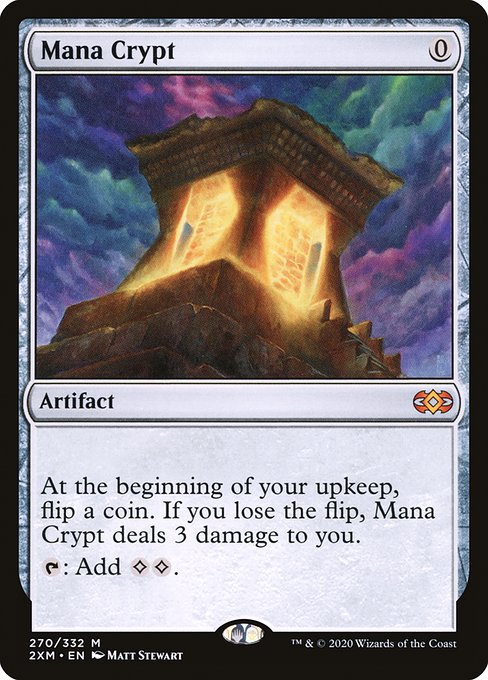
Why this matters for budget players: the ban announcement was framed in part as an accessibility move — removing $200+ cards that were quietly mandatory in many decks. Budget players actually gained ground from the bans, because the format's high-end ceiling came down to meet them.
Wizards also introduced a separate Game Changers list alongside the brackets — cards that aren't banned, but are restricted by deck bracket. It launched at 40 cards in February 2025 and, after several revisions, sits at 53 cards as of the February 9, 2026 update. The mechanics that matter: Game Changers are not allowed in Brackets 1–2, limited to 3 per deck in Bracket 3, and unrestricted in Brackets 4–5. It's a softer alternative to outright banning, and most budget builds never come near it.
Because the list is reviewed roughly every three to four months, the count moves. Our full Game Changers & bracket list keeps the current, date-stamped roster if you need to check a specific card before you sleeve up.
The 2025 Bracket System
The old "Power Level 7 out of 10" conversation is officially over. Wizards rolled out the Commander Bracket System in February 2025 (refined again in October 2025), replacing the informal 1–10 scale with five concrete brackets. That October refinement mattered: it removed the old tutor-density restrictions and dropped the "average precon" anchor from Bracket 2, both of which had confused more players than they helped. This matters for budget players because it gives you a real vocabulary for matching pods:
| Bracket | Name | What it means |
|---|---|---|
| 1 | Exhibition | Casual theme decks. No Game Changers, no two-card combos, no mass land denial. "Look at this cool thing I built." |
| 2 | Core | Classic casual Commander — a real strategy without sharp edges. No Game Changers, no intentional two-card infinite combos, no mass land denial. Friday Night Commander. |
| 3 | Upgraded | Tuned, synergy-driven decks. Up to 3 Game Changers, no mass land denial, and no two-card infinite combos that can reasonably go off in the early game (roughly the first six turns). |
| 4 | Optimized | High-power. No restrictions beyond the banlist. Bring everything. |
| 5 | cEDH | Competitive. Meta-aware lists built to win quickly against other cEDH decks. Distinct culture and pricing. |
A well-built $50–$100 budget deck typically lands in Bracket 3 (Upgraded), especially if it includes 1–3 Game Changers and has tight Holy Trinity execution. Budget decks without Game Changers and without two-card infinite combos comfortably sit in Bracket 2 (Core). Both are valid — the choice is about who you want to play with.
The biggest mistake budget players still make: assuming "my deck costs $50 so it must be Bracket 1 or 2." Efficiency determines bracket, not price. A focused $50 Krenko Goblin or Zada combo deck with the right Holy Trinity execution can comfortably play at Bracket 3 and beat poorly-built $500 decks. Use the bracket names in your Rule 0 conversation; don't undersell your deck because of its sticker price. Sol Ring, despite being arguably the most powerful card in the format, is legal in all five brackets — Wizards considered it too ubiquitous to restrict. (Arcane Signet and Lightning Greaves are likewise everyday staples, not Game Changers.) Check any card against our current Game Changers list before you assume.
The $100 Efficiency Ceiling
Because Commander requires 100 uniquely-named cards, the budget math differs from a 60-card format. Fun casual decks can be built for $30. But the true competitive ceiling of efficiency in EDH sits around the $100 mark.
$100 buys you a fully optimized Holy Trinity + a coherent strategy package.
Spending past $100 buys exponentially smaller efficiency gains — the difference between an untapped premium dual land and a tapped budget land, or a 0-mana free counter and a 2-mana counter.
At $100, you have enough budget to buy a fully optimized Holy Trinity (Ramp + Draw + Removal) and stack the rest of the deck with devastating, synergistic threats — our $50 Commander deck blueprint walks through exactly how those slots get filled. So what are players actually buying with $500 or $1,000? They're paying exponentially more for fractional efficiency gains:
- $20 for a land that enters untapped instead of $0.25 for a tapped equivalent.
- $40 for a free or 1-mana spell instead of $2 for the 2-mana version of the same effect.
- $50–$200 for a premium foil or alt-art treatment of a card whose regular printing costs $5.
There's also a real financial-risk angle. As the 2024 ban announcement proved, dropping hundreds of dollars on "staple" mana rocks is exposure to ban-list updates. Mana Crypt holders lost significant value overnight when the card was banned; the same risk applies to any high-priced format-defining card. Staying under the $100 ceiling protects your wallet from market crashes and ban updates while keeping your win rate high. For deeper coverage, see our MTG finance guide.
Common Budget-Build Mistakes
Mistake #1: Skipping the Holy Trinity for flashy synergy cards.
Spending your budget on cool tribal payoffs while running only 5 ramp spells and 4 card-draw effects is how budget decks lose to even cheaper, tighter ones. Lock in your 10–12 ramp / 10–12 draw / 10–12 removal slots first, then build synergy around what's left.
Mistake #2: Using the old 1–10 power scale in Rule 0.
"It's about a 7" means nothing in 2026 — everyone's 7 was different, and the system is officially retired. Use the bracket names instead: "It's a Bracket 3 deck" or "Upgraded with two Game Changers." Concrete, shared vocabulary, fewer surprised opponents. (Our Commander etiquette guide covers the rest of the Rule 0 conversation.)
Mistake #3: Underselling a tight budget deck.
"My deck's only $60, so it's casual" — not necessarily. A focused $60 build with sharp Holy Trinity execution and 1–3 Game Changers is genuinely Bracket 3. Pub-stomping happens when budget players misrepresent their decks as lower-power than they are. Be honest in Rule 0.
Mistake #4: Chasing banned-card replacements.
After the September 2024 bans, some players burned budget chasing "the next Dockside" or "Mana Crypt replacement." There isn't one. Spending heavily on the second-best fast mana option is exactly the spending pattern the bans were meant to curb. Stick to printed-to-death staples that won't catch a ban.
Mistake #5: Running fewer than 36 lands.
"I'll make up for it with ramp" almost never works. 36–38 lands plus 10–12 ramp pieces is the standard mana base for nearly every Commander deck — see our Commander mana curve basics for the full math. Skipping lands to fit more spells is the most common reason budget decks stall out and lose to better-tuned lists with the same cards.
The Verdict & Quick Reference
Topical authority in Commander isn't about owning the most expensive cardboard — it's about owning the decision space. The player who perfectly executes a $50 engine consistently defeats the player who clumsily pilots a $500 pile of good stuff.
By focusing on each color's natural budget strengths, adhering to the Holy Trinity, mastering the under-$5 universal staples, and using the new bracket system honestly in Rule 0, you're playing the synergy game instead of the wallet game. That's the version of Commander that's been the most fun since the format was invented — and the 2024–2025 ban and bracket changes have made it more accessible than ever.
Check Before You Buy
Commander's banlist and Game Changers list update periodically — February and October announcements have been the most recent activity. Always verify the current banlist and bracket criteria on the official Magic: The Gathering site or via Scryfall before locking in a list. Prices on the cards in this guide are budget-stable in 2026, but verify on TCGplayer or your LGS for current numbers. The principles here are durable; the specifics shift.
- Holy Trinity ratio: 10–12 ramp / 10–12 draw / 10–12 removal in every deck.
- Land count: 36–38 in nearly every deck. Don't shortcut this.
- Budget heroes: Sol Ring, Arcane Signet, Swords to Plowshares, Beast Within, Arcane Denial, Chaos Warp, Feed the Swarm, Cultivate/Kodama's Reach, Blasphemous Act, Night's Whisper.
- Banned (2024): Dockside Extortionist, Mana Crypt, Jeweled Lotus, Nadu Winged Wisdom — still banned in 2026.
- Brackets (2025): Exhibition / Core / Upgraded / Optimized / cEDH — use the names, not "7 out of 10."
- Sweet spot: $50–$100 builds compete reliably in Bracket 3.
- Never: chase replacement fast mana, undersell your bracket, run under 36 lands.
Stop Playing the Wallet Game.
A perfectly tuned $50 engine outperforms a $500 disorganized pile of staples every time. Pick your colors with their budget strengths in mind, lock in the Holy Trinity, master the universal under-$5 staples, and use the new bracket system honestly. That's the path to consistent wins regardless of what's in your wallet.
© GEEKYDOMAIN.COM | Strategy Powered by Data