

Best Esper (WUB) Budget Commander Staples Under $5
White-Blue-Black has a reputation as a rich player's color trio. It isn't — the removal, counters, and card draw that make Esper tick are some of the most-reprinted, cheapest cards in the game.
Some links below are affiliate links. If you buy through them, we may earn a small commission at no extra cost to you. We only recommend cards we'd run ourselves.
Esper is the color combination for people who looked at "fun, interactive games of Magic" and decided everyone else should be doing a little less of that. White exiles your stuff, blue says no to your stuff, and black makes you pay life for the privilege of having had stuff. It is the control deck's control deck — and it has a reputation for being expensive.
It doesn't have to be. The cards that actually make a deck tick — clean removal, efficient counters, repeatable card draw, and a board wipe or two — are heavily reprinted commons and uncommons. You can build a genuinely oppressive 99 without touching the chase mythics. We've kept prices qualitative throughout, since card values move constantly — always sanity-check before you buy.
What follows isn't a "proxy this if you can't afford the real thing" list. These are the actual best-performing cards in their slots, full stop — they just happen to also be cheap, because Wizards keeps reprinting the efficient stuff and the secondary market hasn't caught up to how good it still is.
→ Short Version
Removal is Esper's superpower — Swords to Plowshares, Anguished Unmaking, and Go for the Throat answer almost anything for pennies. Counters don't have to cost a fortune (Counterspell, Arcane Denial, An Offer You Can't Refuse). Draw your gas in black with Night's Whisper and Sign in Blood, add a wrath or two, and skip the hype mythics — Esper Sentinel and Smothering Tithe blew past $5 long ago, and you don't need them to win.
→ Expand Your Arsenal
In This Guide
The Top 3 Removal Staples
Esper's real flex isn't counterspells — it's that it gets the best removal in three colors at once. Hold-up-mana decks live and die on answering threats efficiently, and these three do it for the price of a booster pack.
Swords to Plowshares
{W} — Instant. Heavily reprinted, so reliably one of the cheapest staples in the game.
Why it wins: One white mana, exile any creature, full stop. The downside — your opponent gains life — almost never matters in a format about board states, not damage races. The most efficient single-target removal ever printed, and reprinted into the ground, which is exactly why it's cheap. Hold it up against the table's scariest commander and you'll rarely regret it; the only real skill is knowing when to wait for a bigger target instead of firing it off turn three.

Anguished Unmaking
{W}{B} — Instant. Inexpensive and easy to find.
Why it wins: "Exile target nonland permanent" is one of the most flexible lines in the game — it answers a problem artifact, a game-ending enchantment, a planeswalker, or a creature with the same card. Paying 3 life is a non-issue in a deck that spends life as a resource. This is the card you hold for the one permanent the rest of your removal suite can't touch — a stax piece, a combo enabler, an indestructible threat.

Go for the Throat
{1}{B} — Instant. Cheap and abundant.
Why it wins: Two-mana "destroy target nonartifact creature" with virtually no real drawback in most pods. It's the cheap, reliable backbone of black removal — not flashy, just always castable and always relevant. Pair it with the rest of your budget removal suite and you'll rarely meet a creature you can't kill at instant speed, on curve, without stretching your mana.
The Top 3 Counterspells
You don't need a stack of expensive counters. You need a handful of efficient ones you'll actually leave mana up for.
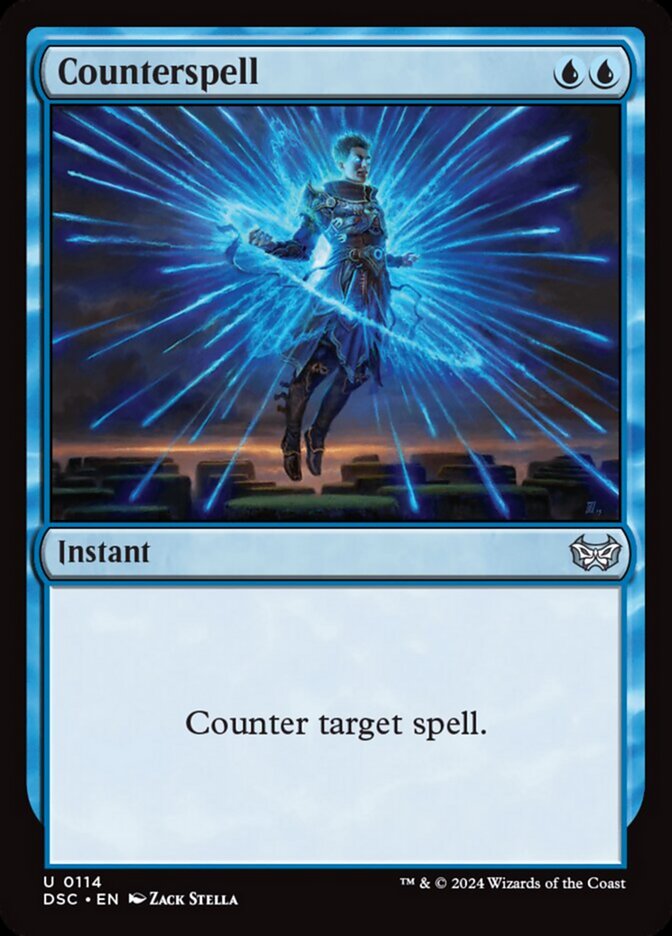
Counterspell
{U}{U} — Instant. About as cheap as a card gets.
Why it wins: The original, and still one of the best. "Counter target spell," no conditions, no riders. The double-blue cost is the only "downside," and in a multi-color deck that's trivial. No reason to pay more for a fancier counter when the cleanest one is this cheap — every other blue counterspell in the format is judged against this baseline.
Arcane Denial
{1}{U} — Instant. Inexpensive.
Why it wins: Counter anything for two mana, and you draw a card next turn. Yes, the countered player may draw two — but trading a two-mana spell for their threat and replacing it is a fantastic rate. In multiplayer, the card you replace yourself with matters far more than the cards you "give" an opponent who wasn't going to win anyway.

An Offer You Can't Refuse
{U} — Instant. Cheap.
Why it wins: One mana to counter any noncreature spell — the game-winning combo piece, the board wipe, the extra-turn spell. The cost is giving the caster two Treasures, but if you're countering the spell that ends the game, who cares if they get two mana they'll never spend in time? The cheapest "Force of Will for non-creature spells" you'll find.
The Top 3 Card-Draw Engines
Control decks lose to running out of cards, not answers. Black is where budget Esper refuels.
Night's Whisper
{1}{B} — Sorcery. Inexpensive.
Why it wins: Two mana, pay 2 life, draw two cards. The gold standard for cheap card advantage — raw, unconditional, and exactly what a grindy deck wants. Life is a resource in Esper, and trading a little for gas is the whole plan; this is the cleanest possible way to do that on turn two.

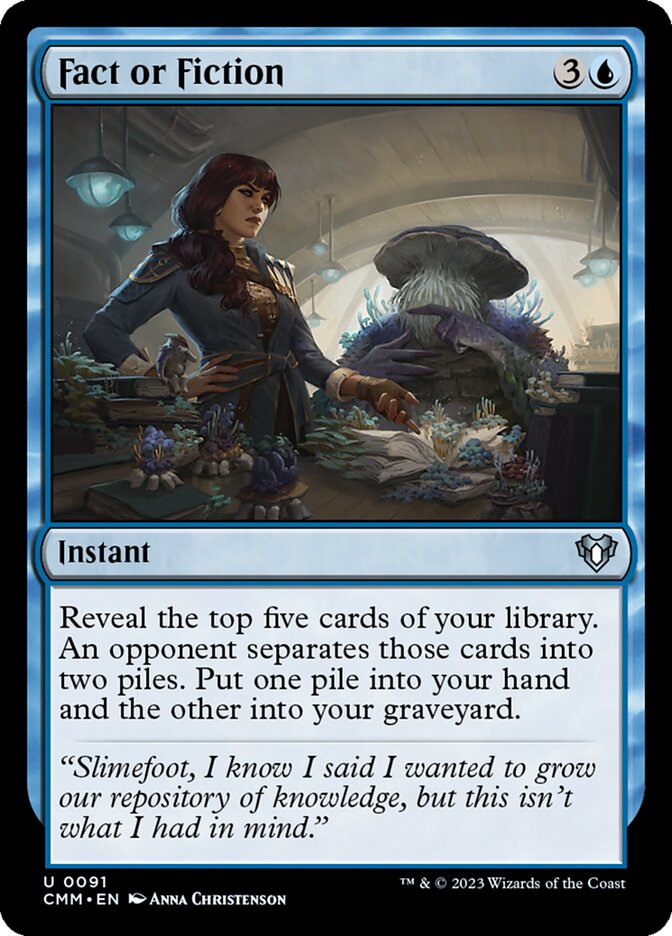
Fact or Fiction
{3}{U} — Instant. Cheap and widely available.
Why it wins: Reveal the top five, an opponent splits them into two piles, you keep one and bin the rest. You almost always net two-to-four cards at instant speed, and the "downside" of letting an opponent split is a fun mind game you usually win — they rarely build the pile you'd actually choose for them.
Sign in Blood
{B}{B} — Sorcery. Near-literal bulk.
Why it wins: Night's Whisper's twin, near-literal bulk. Two cards for two mana and 2 life, and it can point at an opponent to finish someone off in a pinch. When your draw package costs less than a soda, you can afford a few more lands — see our budget mana-base guide.
The Top 3 Wraths & Utility
Removal answers one threat; a wrath answers the table. Esper's best board resets are cheap and, in one case, immune to the counterspells they're often racing against.
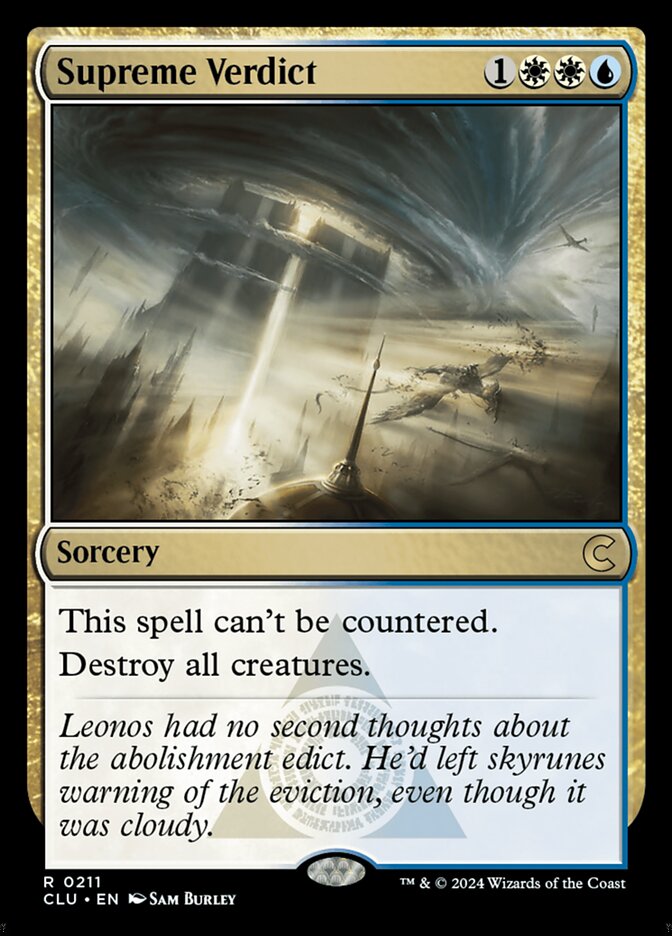
Supreme Verdict
{1}{W}{W}{U} — Sorcery. Inexpensive.
Why it wins: "Destroy all creatures" that can't be countered — a clean reset the table can't stop once it resolves. For a deck happy to durdle until it stabilizes, an uncounterable wrath at four mana is a premium effect at a bulk price, and the inability to respond to it is worth more than it looks on paper.
Damn
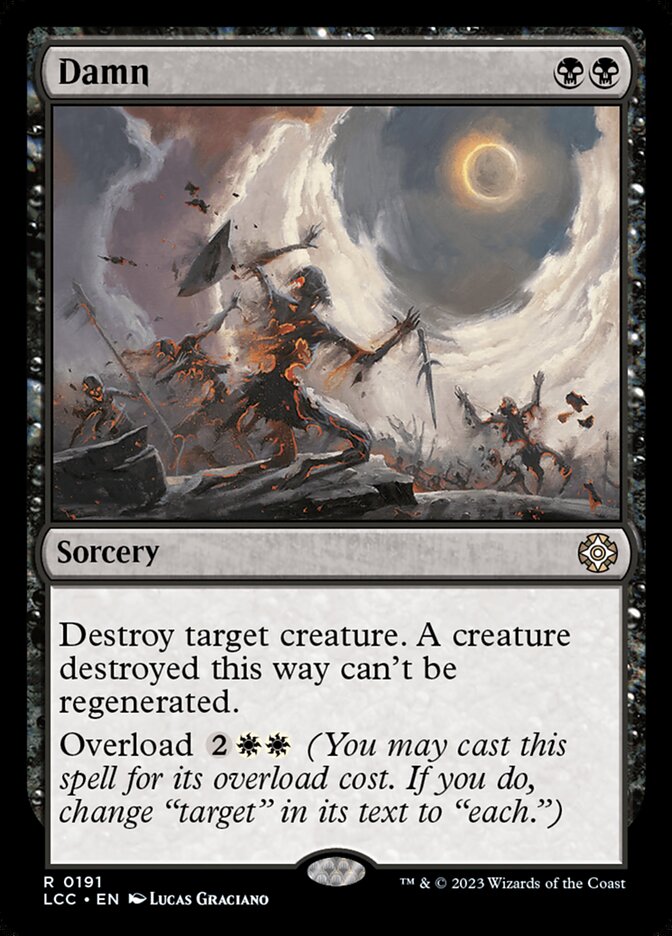
{B}{B} — Sorcery (or {1}{W}{W}{B} overloaded). A borderline pick worth checking current prices on before you buy.
Why it wins: Flexibility on a stick. Early it's a two-mana "destroy target creature"; later, overload it for a full board wipe. One card that flexes between spot removal and a wrath is exactly the efficiency budget decks crave, and it means you don't have to choose between the two slots while you're still assembling your manabase.
Generous Gift
{2}{W} — Instant. Widely available and cheap.
Why it wins: "Destroy any permanent; its controller gets a 3/3." Giving a 3/3 is a real cost — but blowing up anything, including lands and indestructible commanders, at instant speed for three mana is worth it. The catch-all your removal suite needs for the one permanent type none of your other answers touch.
Honorable Mentions: Penny Stocks
- Mortify / Utter End. Flexible WB removal that hits creatures and enchantments (Utter End hits anything).
- Dovin's Veto. Inexpensive "Negate that can't be countered." Brutal against other control decks.
- Damnable Pact. Cheap, scalable card draw that doubles as a finisher — point it at an opponent to deck them out.
- Read the Bones. Budget card selection plus draw, with a little scry attached.
Not Budget Anymore
Esper Sentinel and Smothering Tithe are the cards everyone wants in Esper — and both blew past $5 a long time ago. You do not need them to build a strong deck. Treat them as upgrades for later, not staples for now.
Where to Buy the Pieces
Esper is built from singles, so a singles marketplace is the way to assemble it affordably. TCGplayer and Card Kingdom are the go-to stops for the cheap commons and uncommons that make up this list — buy the removal and counters first, since they're inexpensive and define the deck's game plan. eBay is useful for bulk lots, and Amazon carries sealed precons that often include several of these staples. Prices vary between sellers, so compare carts before checking out.
Esper Budget FAQ
- Is Esper good for beginners on a budget? It's one of the better budget shells, precisely because its core — removal, counters, cheap draw — is heavily reprinted. The hard part is piloting a reactive deck, not affording it.
- What should I prioritize first? Removal and card draw, in that order. A control deck with answers but no gas stalls out; this list front-loads both cheaply.
- How many counterspells should I run? Most budget control decks are happy with 5–8 pieces of interaction total across counters and removal — enough to always have an answer, not so many you draw a reactive hand with nothing to do.
- Do prices change? Constantly. Check a live price source before buying, especially the borderline cards like Damn.
Control Doesn't Have to Cost a Fortune.
Esper's reputation as a "rich player's" color trio is mostly marketing for two overpriced mythics. The bones of the deck — exile a creature for one mana, say no for one mana, draw two for two mana, wrath for four — are some of the cheapest premium effects in Magic.
Build the answers first, add a wrath or two, and let the table beat itself up while you draw cards. The expensive stuff can wait until you're ready to upgrade the whole shell.
Keep Learning:
© GEEKYDOMAIN.COM | Strategy Powered by Data