

Game Changers List: Cards That Affect Your Bracket
A short list of powerful cards now decides which Commander bracket your deck belongs in. Here's what the Game Changers list is, the full current list, and how a single card can bump your whole deck up a tier.
Some links below are affiliate links. If you buy through them, Geeky Domain may earn a small commission at no extra cost to you.
Commander's power-level problem used to be unsolvable: everyone's "casual" was different, every "7 out of 10" meant something else, and pods regularly mismatched into miserable games. The bracket system — and the Game Changers list at its center — is Wizards' answer. It's a short, official list of high-impact cards that, depending on how many you run, sorts your deck into a power tier. Run none and you can sit in the casual brackets; run even one and your deck jumps up.
If you've seen our deck guides mention a build being "Bracket 1–2," this is the system behind that label. Understanding the Game Changers list is now a core part of Commander deckbuilding, because it directly answers the most important pre-game question there is: "what power level is this deck, and does it match the table?" Get it right and your games feel fair; ignore it and you'll either pubstomp a casual pod or bring a knife to a cEDH gunfight.
This guide explains what the Game Changers list is, gives you the full current list (date-stamped, since it changes), shows how it maps onto the five brackets, how a single card changes your deck's tier, the difference between a Game Changer and a banned card, and how to actually use the list in a rule-zero conversation. The bracket system is an evolving beta and the list updates every few months, so we keep the list below current and point you to the live official source as well.
The Short Version
The Game Changers list is an official, curated set of high-impact Commander cards (53 cards as of the February 9, 2026 update — full list below) that Wizards' Commander Format Panel uses to help sort deck power. They're not banned — fully legal — but they're restricted by bracket: not allowed in Brackets 1–2, limited to 3 per deck in Bracket 3, and unrestricted in Brackets 4–5. The single most important rule: including even one Game Changer automatically makes your deck Bracket 3 or higher. The five brackets run 1 (Exhibition), 2 (Core), 3 (Upgraded), 4 (Optimized), 5 (cEDH). The list exists to power rule-zero conversations — cards worth disclosing so pods can match power — and as a middle ground between "banned" and "fine." Because it's a beta that updates roughly every 3–4 months, we date-stamp the list below; the live reference is is:gamechanger on Scryfall.
→ More MTG Guides
In This Guide
What the Game Changers List Is
The Game Changers list is an official, curated set of powerful Commander cards maintained by Wizards' Commander Format Panel as part of the Commander Brackets system (still in beta). In the Panel's own framing, Game Changers are cards that dramatically warp Commander games — letting players run away with resources, shift games in ways many dislike, lock opponents out of playing, efficiently tutor up their best cards, or act as commanders that pull away from casual play.
Crucially, these cards are not banned. Every card on the list is fully legal to play in Commander. What the list does is categorize them: it flags cards powerful enough that other players would generally want to know they're in your deck before the game starts. As of the most recent update (February 9, 2026), there are exactly 53 cards on the list — all of them below.
The Game Changers list isn't a ban list.
It's a "you should mention these" list —
cards powerful enough to set your deck's power tier.
The list changes — ours is date-stamped.
The bracket system is an evolving beta, and the Game Changers list has been updated several times (it started at 40 cards in early 2025, was expanded, then trimmed, and sits at 53 after the February 2026 update). The list below is current as of that update and we refresh this page when Wizards posts changes — but for a guaranteed-live reference, search is:gamechanger on Scryfall or read the latest Commander Brackets update on the official Wizards site.
The Current List (All 53 Cards)
Here is the complete Game Changers list, organized by color the way the official list presents it. Current as of the February 9, 2026 update, and confirmed unchanged through our most recent check against official Commander Format Panel announcements as of late August 2026 (the list is reviewed roughly every 3–4 months, so check back or verify on Scryfall when tuning a deck).
White (7)
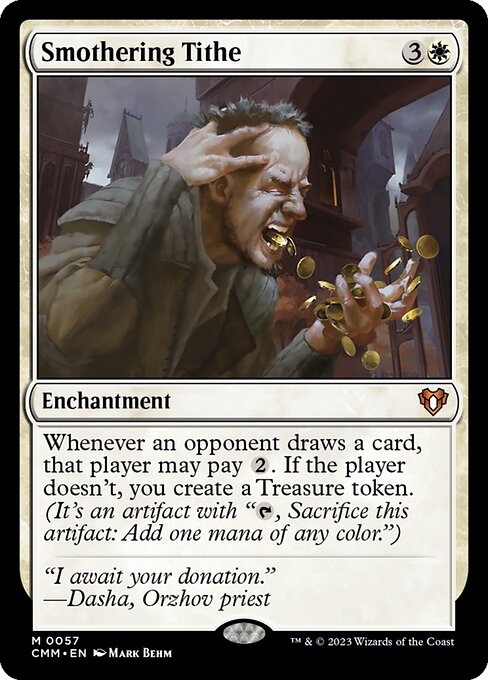
Drannith Magistrate · Enlightened Tutor · Farewell · Humility · Serra's Sanctum · Smothering Tithe · Teferi's Protection
Blue (10)
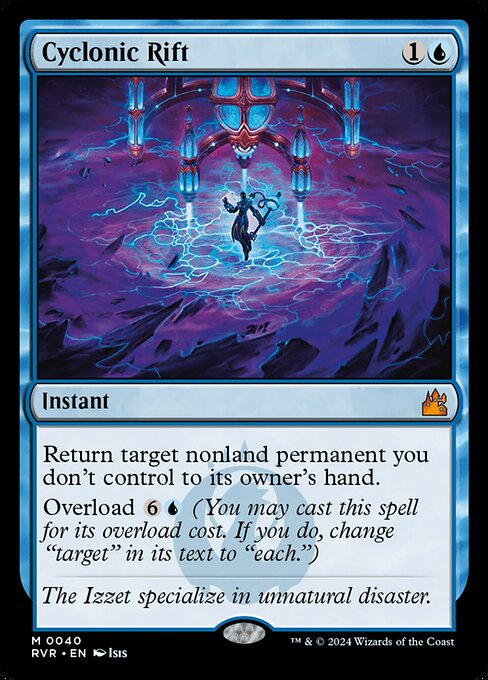
Consecrated Sphinx · Cyclonic Rift · Fierce Guardianship · Force of Will · Gifts Ungiven · Intuition · Mystical Tutor · Narset, Parter of Veils · Rhystic Study · Thassa's Oracle
Black (10)
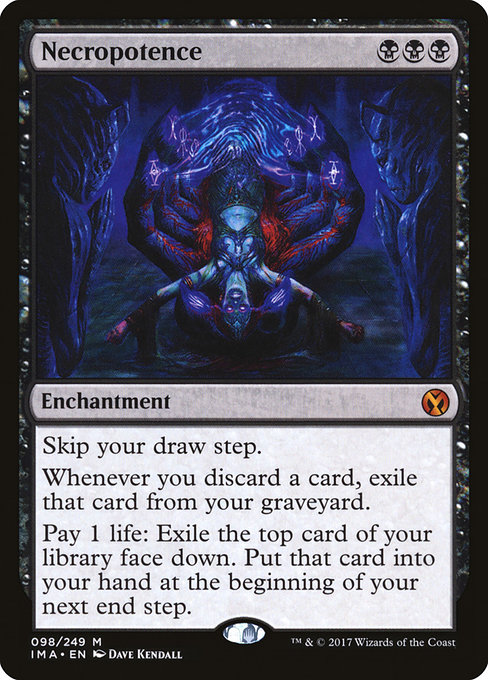
Ad Nauseam · Bolas's Citadel · Braids, Cabal Minion · Demonic Tutor · Imperial Seal · Necropotence · Opposition Agent · Orcish Bowmasters · Tergrid, God of Fright · Vampiric Tutor
Red (3)
Gamble · Jeska's Will · Underworld Breach
Green (7)
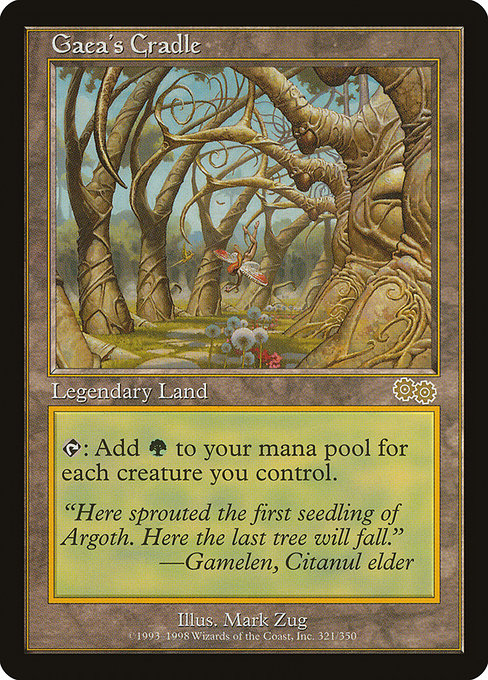
Biorhythm · Crop Rotation · Gaea's Cradle · Natural Order · Seedborn Muse · Survival of the Fittest · Worldly Tutor
Multicolored (4)
Aura Shards · Coalition Victory · Grand Arbiter Augustin IV · Notion Thief
Colorless & Lands (12)
Ancient Tomb · Chrome Mox · Field of the Dead · Glacial Chasm · Grim Monolith · Lion's Eye Diamond · Mana Vault · Mishra's Workshop · Mox Diamond · Panoptic Mirror · The One Ring · The Tabernacle at Pendrell Vale
A few things jump out from the full list. Red has by far the fewest entries (just three), while colorless fast mana and powerhouse lands make up the biggest single group — six of the 53 are lands. And note what's absent: Sol Ring isn't on the list (Wizards considers it too ubiquitous to restrict — it's legal in every bracket), and Mana Crypt, Jeweled Lotus, and Dockside Extortionist aren't Game Changers because they're banned outright, which is a different list entirely (more on that below).
The Five Brackets
The Game Changers list only makes sense inside the bracket system it serves. Commander decks now sort into five power tiers:
| Bracket | Name | Game Changers allowed |
|---|---|---|
| 1 | Exhibition (ultra-casual) | None |
| 2 | Core (precon-level) | None |
| 3 | Upgraded | Up to 3 per deck |
| 4 | Optimized (high-power) | Unrestricted |
| 5 | cEDH (competitive) | Unrestricted |
Brackets 1 and 2 are the casual end — kitchen-table and precon-level decks, where Game Changers aren't expected at all. Bracket 3 ("Upgraded") is where most tuned-but-fair decks live, and it allows a small number of Game Changers. Brackets 4 and 5 are high-power and competitive, where the list no longer restricts you. The Game Changers list is the main lever that separates the casual brackets from the rest.
How One Card Changes Your Bracket
Here's the rule that makes the list matter so much, and the thing every deckbuilder needs to internalize: if your deck contains even a single Game Changer, it's automatically Bracket 3 or higher. There's no such thing as a Bracket 1 or 2 deck with one Game Changer in it — one card moves the whole deck up.
From there, the counting is simple. Zero Game Changers keeps you eligible for the casual brackets (1–2). One to three Game Changers puts you in Bracket 3 (Upgraded), which caps you at three. Run more than three, and you've moved into Bracket 4 (Optimized) territory, where the count is unrestricted. So the list isn't just a flag — it's a literal counter that helps place your deck.
Where It Sits in the Bracket Decision Tree
Game Changer count is the first question in the official bracket decision tree, but not the only one. After counting Game Changers, the system also asks about mass land destruction, two-card infinite combos, and how early the deck can win. A deck with zero Game Changers can still be pushed up by, say, running mass land destruction or an early two-card combo. But Game Changers are the headline factor — the single clearest signal — which is why the list gets so much attention.
What Kinds of Cards Make the List
You don't need to memorize all 53 cards (the full list above is here whenever you need it), but it helps to recognize the types of effects that tend to land a card on it. The recurring themes:
- Runaway card advantage. Cards that bury the table in resources — Rhystic Study is the poster child, a card many players say warps more games than any other. Necropotence, Consecrated Sphinx, and Smothering Tithe live in the same family. Engines that draw you far ahead of everyone else are prime Game Changer material.
- Efficient tutoring. Cheap, powerful searches that find your best card every game — Demonic Tutor, Vampiric Tutor, Mystical Tutor, Gamble, Crop Rotation. Consistency this strong pushes a deck's power up.
- Lockout and resource denial. Cards that stop opponents from playing the game — Drannith Magistrate (opponents can only cast from hand, shutting off commanders), Narset, Parter of Veils, Opposition Agent, Humility. Effects that block people out tend to be "salty" and warping.
- Game-resetting bombs & fast mana. High-impact swings like Cyclonic Rift or Farewell (a recent addition) that reset the board one-sidedly, and explosive mana like Mana Vault, Chrome Mox, and Ancient Tomb that powers out threats far ahead of schedule.
- Free interaction & combo enablers. Things like Force of Will, Fierce Guardianship, Thassa's Oracle, or Underworld Breach that provide free or explosive effects out of step with casual play.
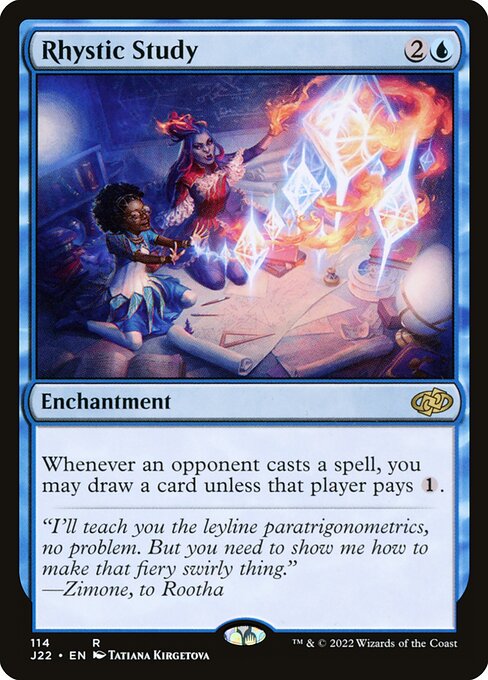
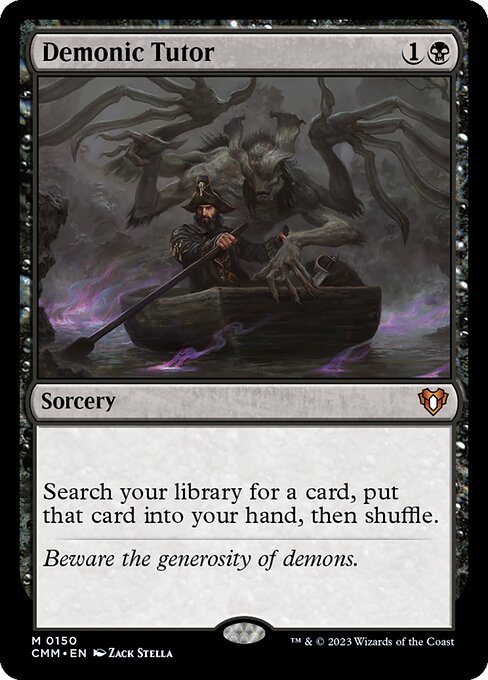
The unifying idea, in the Panel's words, is cards people would generally want to know about before the game — and might prefer to opt out of facing. If a card makes you think "my opponents would groan if they saw this," it's the kind of card the list targets.
Game Changer vs Banned
It's easy to confuse the two, but they're completely different categories — and mixing them up is a common mistake:
Game Changers
- Legal to play in every deck.
- Restricted only by bracket (none in 1–2, up to 3 in Bracket 3).
- Examples: Rhystic Study, Cyclonic Rift, Demonic Tutor, Farewell.
- Meant to be disclosed, not removed.
Banned Cards
- Illegal in any Commander deck.
- Can't be played at all, in any bracket.
- Examples: Dockside Extortionist, Mana Crypt, Jeweled Lotus, Nadu.
- Removed from the format entirely.
Interestingly, the two lists can interact: when Wizards unbans a card, it sometimes lands straight onto the Game Changers list rather than back into the open format — that's what happened with Biorhythm, which returned from the banned list directly as a Game Changer. The Game Changers list is explicitly designed as the middle ground between "banned" and "no need to mention."
Using It in a Rule-Zero Talk
The list's primary purpose isn't enforcement — it's conversation. Before a game, pods do a "rule zero" check to make sure everyone's decks are roughly matched, and the Game Changers list gives that conversation a shared vocabulary. Instead of arguing about whether your deck is "a 7," you can say "it's a Bracket 3 with two Game Changers" and everyone instantly knows what that means.
In practice, the flow is simple: agree on a bracket for the pod, then make sure each deck fits it. If you're playing a Bracket 2 game, no one should have Game Changers; if it's Bracket 3, everyone can have up to three and should mention which ones. The list turns a vague vibe-check into a concrete, quick agreement.
The healthiest habit you can build is simply asking "what bracket are we playing?" before you shuffle up. It takes ten seconds and prevents the single most common bad Commander experience — a power mismatch where one deck stomps the table or gets stomped. The Game Changers list exists to make that question answerable.
Commander nights involve a lot of shuffling, board space, and table talk. A dedicated mat and durable sleeves are simple quality-of-life upgrades once the deck is bracket-ready.
As an Amazon Associate, Geeky Domain earns from qualifying purchases. eBay links are affiliate links; Geeky Domain may earn a commission at no extra cost to you.
Common Mistakes
Mistake #1: Thinking a Game Changer is "just one card, no big deal."
One Game Changer makes your whole deck Bracket 3 minimum — you can't slot a Rhystic Study into an otherwise-casual deck and still call it Bracket 2. If you want to play in the casual brackets, you need zero Game Changers. Check your deck against the list above.
Mistake #2: Confusing Game Changers with the banned list.
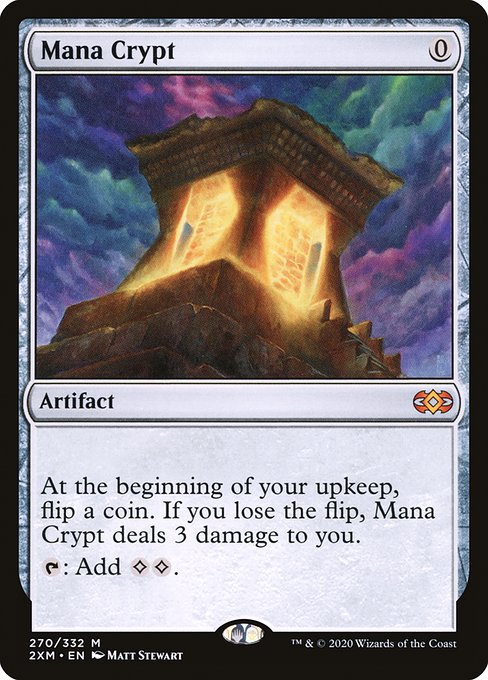
Game Changers are legal; banned cards are not. Don't avoid Rhystic Study thinking it's illegal, and don't try to play Mana Crypt thinking it's "just a Game Changer." They're separate lists with separate rules — check which is which.
Mistake #3: Trusting an outdated list.
The list is a beta that updates every few months — cards have been added (Farewell, Biorhythm) and removed (a batch of ten was cut in late 2025, including Deflecting Swat and Food Chain). The list above is date-stamped and we refresh it on official updates; when in doubt, the live source is is:gamechanger on Scryfall.
Mistake #4: Assuming zero Game Changers means low power.
The list is the headline factor, not the only one. A deck with no Game Changers can still be high-bracket if it runs mass land destruction, an early two-card combo, or wins very fast. Game Changer count is the first question in the decision tree, not the whole tree.
Mistake #5: Skipping the rule-zero conversation.
The list only helps if you use it. Sitting down without agreeing on a bracket — then revealing a stack of Game Changers turn three — is exactly the mismatch the system was built to prevent. Ask "what bracket?" first, every time.
Other Decisions from the February Update
The February 9, 2026 update didn't only reshape the Game Changers list itself — the same Commander Format Panel session also settled a handful of adjacent questions worth knowing, since they explain why a few familiar cards sit where they do above, and since they keep coming up in rule-zero chats. We confirmed this is still accurate as of our most recent check in late August 2026, verified against the official Commander announcements dated June 10 and June 29, 2026 (the most recent available at the time of that check).
- Biorhythm joined the list as part of its unban. Biorhythm's spot in the Green (7) group above dates to the same update that took it off the banned list. Wizards' own framing was blunt about the pattern: "This is what we do when a card comes off the banned list." Biorhythm didn't return to unrestricted legality — it returned straight into the restricted-by-bracket category (see Game Changer vs Banned above).
- Farewell was added in the same pass. If you were wondering why Farewell sits in the White (7) group above, this is the update responsible — it's the "recent addition" referenced earlier in this guide.
- Lutri, the Spellchaser did not join the list — deliberately. Lutri's case is different from Biorhythm's. It had been banned specifically in its companion capacity; that companion-only restriction was lifted in the same update, but Wizards explicitly stated Lutri would not be added to Game Changers as part of the change. Worth knowing if you're tracking which formerly-restricted cards did, and didn't, land on the list.
The same Panel session also fielded — and declined — three separate unban requests. Sundering Titan, Iona, Shield of Emeria, and Griselbrand were all discussed and all remain banned in Commander. None of the three appear on the Game Changers list, for the simple reason that banned cards aren't eligible for it in the first place.
One more topic came out of the same update cycle, but it's a genuinely separate issue from the Game Changers list: a proposed change to how hybrid-mana cards' color identity is calculated in Commander. That proposal was discussed and ultimately shelved after community feedback came back split, and it doesn't affect the list, the brackets, or anything else on this page. It's a big enough topic that we cover it on its own — see our breakdown of the shelved hybrid-mana color identity proposal if you want the full rundown.
FAQ & Quick Reference
- How many cards are on the Game Changers list? Exactly 53 as of the February 9, 2026 update (the full list is above) — but the number moves as the beta evolves (it began at 40 in early 2025). We refresh this page when the official list changes.
- Is Sol Ring a Game Changer? No — and it surprises a lot of players. Sol Ring isn't on the list and is legal in all five brackets; Wizards considers it too ubiquitous in Commander to restrict. (Lightning Greaves and Arcane Signet are likewise everyday staples, not Game Changers.)
- Does one Game Changer really bump my whole deck up? Yes. A single Game Changer makes the deck Bracket 3 or higher — there's no Bracket 1 or 2 deck containing one. To stay in the casual brackets, run zero. Bracket 3 allows up to three; Brackets 4–5 are unrestricted.
- Are Game Changers banned or just restricted? Restricted by bracket, not banned — they're fully legal cards. Banned cards (like Mana Crypt or Dockside Extortionist) can't be played at all; Game Changers can, you just disclose them and they set your bracket.
- Where do I find the live official list? The official Commander Brackets pages on the Wizards site, and Scryfall via the search is:gamechanger, both track the live list. The copy above is current as of this page's last update; those sources are guaranteed-live.
- Do I have to use brackets at all? No — it's a tool, not a mandate. Plenty of pods still use their own house rules. But the bracket vocabulary makes rule-zero conversations far faster and clearer, so it's worth knowing even if your group plays loosely.

- What it is: 53 official high-impact cards (Feb 9, 2026 — full list above) — legal, not banned.
- Bracket rule: none in 1–2, up to 3 in Bracket 3, unrestricted in 4–5.
- The big one: a single Game Changer = automatically Bracket 3+.
- vs banned: Game Changers are legal; banned cards can't be played at all.
- Purpose: power the rule-zero "what bracket are we?" conversation.
- It changes: beta, updated every ~3–4 months — this page refreshes; live source is is:gamechanger on Scryfall.
Know Your Bracket Before You Shuffle.
The Game Changers list turned Commander's endless "how powerful is your deck?" argument into a quick, shared answer. Check your deck against the list above, remember that even one makes your deck Bracket 3 or higher, and keep the casual brackets Game-Changer-free if that's where you want to play. Don't confuse the list with the banned list, and above all — ask "what bracket are we playing?" before every game. Do that and the system does exactly what it was built to do: fair games where everyone knew what they were signing up for. It's a living beta, so we'll keep the list current as Wizards updates it.
© GEEKYDOMAIN.COM | Strategy Powered by Data