

The Best Budget Dual Lands for Any Deck (MTG)
A consistent mana base is the quiet foundation of every multicolor deck — and it doesn't have to cost a fortune. Here are the best budget dual lands and how to use them.
Some links below are affiliate links. If you buy through them, we may earn a small commission at no extra cost to you. We only point you toward cards that fit the advice above.
Nothing feels worse in Magic than drawing a great hand you can't cast because your lands won't produce the right colors. Dual lands — lands that tap for two colors — are the fix, smoothing out your mana so your spells actually hit the table on time. The catch is that the most famous duals (the Reserved List originals and the fetch lands) cost serious money.
The good news: you don't need them. Years of reprints have pushed most of the best dual land cycles into genuinely cheap territory, and a thoughtfully built budget mana base delivers the large majority of the consistency for a tiny fraction of the price. You'll take a small power hit versus a premium base, but you'll get your colors and play your games all the same.
This guide covers the best budget dual land cycles, the single tradeoff that matters most when choosing between them, and which to use in which deck. It pairs with our budget mana base guide — that one covers how many lands and color sources you need; this one covers which lands to fill those slots with. One note throughout: land prices move constantly with reprints, so check current prices before buying.
The Short Version
The key choice is tapped vs untapped. For cheap untapped fixing, Pain Lands are the best budget duals in the game, backed by Check Lands and (for aggressive decks) Fast Lands. For tapped lands with upside — ideal in slower and Commander decks — Surveil Lands, Temples, Gain Lands, and Cycling Lands all earn their slots. For three or more colors on a tiny budget, Thriving Lands and the pocket-change tapped tri-lands carry you, with Triomes as the premium-budget pick and Command Tower as the single best fixer in Commander. Mix untapped and tapped to taste, lean untapped if your deck is fast, and don't overspend — getting your colors matters far more than owning the fanciest lands.
→ More MTG Guides
In This Guide
Why Dual Lands Matter
Consistency is the unglamorous reason good players win more games. A two- or three-color deck that draws the wrong colors stalls out, watching unplayable cards pile up in hand while the opponent develops. Dual lands fix that by producing more than one color from a single slot, so you hit your colors on time far more often and suffer fewer "dead" draws.
The dual land category spans an enormous price range — from cards worth pennies to chase lands worth serious money. The encouraging truth is that the expensive end buys speed and marginal consistency, not the core function. A budget dual land fixes your colors just as reliably as a pricey one; it simply asks for a small concession in exchange, usually a turn of tempo or a point of life.
For the vast majority of decks — and nearly all of Commander — that trade is more than worth it. You can build a mana base that almost never lets you down for the price of a single premium dual land. (If you're assembling a deck from scratch, our $50 Commander blueprint shows how the mana base fits the whole build.)
The One Tradeoff: Tapped vs Untapped
Almost every choice in this guide comes down to a single axis: does the land enter the battlefield tapped (unusable the turn you play it) or untapped (ready immediately)?
- Untapped lands let you play on curve and never lose tempo, but budget versions attach a string — a point of damage, or a condition like controlling the right basics. They're what faster decks need.
- Tapped lands cost you a turn of tempo when they enter, but they're cheaper and often bolt on real upside — scry, surveil, lifegain, or a late-game cycle. They're a bargain in slower decks that don't mind the lost turn.
The practical rule: the faster and more aggressive your deck, the more untapped lands you want; the slower and more grindy it is (most Commander decks included), the more tapped lands with upside you can comfortably run. Most good budget mana bases are a blend of the two.
The Best Untapped Budget Duals
When you need your colors right now, these cheap cycles deliver untapped mana:
- Pain Lands (the best budget pick). The full ten-card cycle covers every color pair: Adarkar Wastes, Underground River, Sulfurous Springs, Karplusan Forest, and Brushland for the allied pairs; Caves of Koilos, Shivan Reef, Llanowar Wastes, Battlefield Forge, and Yavimaya Coast for the enemy pairs. Every one always enters untapped — they tap for colorless free, or either of their two colors for one point of damage to you. The damage adds up over a long game, but guaranteed untapped mana every turn at a bargain price makes these the best budget duals in the game.
- Check Lands ("buddy lands"). Another complete ten: Sunpetal Grove, Glacial Fortress, Drowned Catacomb, Dragonskull Summit, and Rootbound Crag for the allied pairs; Isolated Chapel, Sulfur Falls, Woodland Cemetery, Clifftop Retreat, and Hinterland Harbor for the enemies. Each enters untapped if you control a land with the matching basic land type. In a deck with a healthy basics count (or shock lands), they're untapped the great majority of the time, with no life cost.
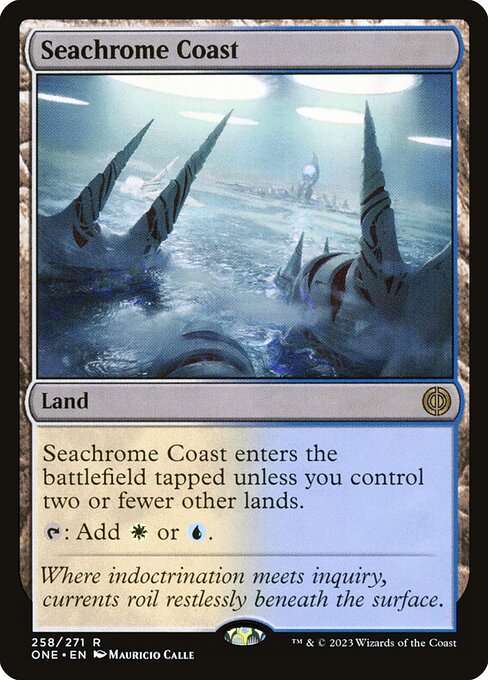
- Fast Lands. Seachrome Coast and its cycle enter untapped if you control two or fewer other lands — perfect early, clunky late. They're the untapped land of choice for aggressive decks that want to curve out in the first few turns.
- Battle Lands ("tango lands"). Prairie Stream, Canopy Vista, and friends enter untapped if you control two or more basics, and they carry basic land types themselves. They shine in ramp-heavy and basics-heavy decks, where the condition is easy to meet.


The Best Tapped Duals (with Upside)
If your deck can spare the tempo, these tapped cycles pay you back with extra value — and they're some of the cheapest fixing available:
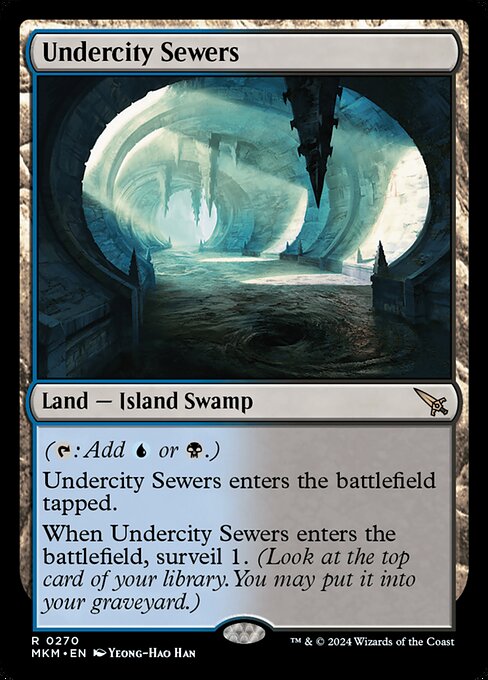
- Surveil Lands. The newer cycle from Murders at Karlov Manor (Undercity Sewers, Meticulous Archive, Hedge Maze, and the rest) enters tapped and surveils 1. They also have basic land types, so they're fetchable, and the surveil smooths your draws while feeding graveyard strategies — effectively an upgraded Temple.
- Temples (scry lands). The Theros-block cycle enters tapped and scries 1, helping you find your next land or spell. Years of reprints have driven them firmly into budget territory.
- Gain Lands. The "Tranquil Cove" cycle enters tapped and gains you 1 life. The upside is small, but they're among the cheapest duals in existence and the lifegain genuinely matters against aggressive decks.
- Cycling ("bicycle") Lands. Fetid Pools, Irrigated Farmland, and the rest enter tapped, carry two basic land types, and can be cycled away for a fresh card late in the game. That built-in flood insurance makes them excellent in slower Commander decks.
- Bounce ("Karoo") Lands. Azorius Chancery and its cycle enter tapped and return a land to your hand, but they tap for two mana of their colors — effectively a small piece of ramp. A nice budget option in slower decks that can absorb the tempo.
- Guildgates & basic taplands. The cheapest floor of all: enter tapped, tap for either color, no upside. They cost pennies and are perfectly serviceable when you just need fixing and nothing more.
Budget 3-Color Fixing
Three-color decks demand more from their mana, but you can still fix it cheaply:
- Thriving Lands. The ultimate beginner's fixer for three-plus colors. Each enters tapped, taps for its printed color, and lets you choose a second color as it enters — so it always produces the color you need most. They make wide mana bases run smoothly for almost no money.
- The Pocket-Change Tapped Tri-Lands. Uncommon lands that enter tapped and produce three specific colors from one slot. They have no upside beyond that, but generating three colors from a land that costs less than a pack of gum is exactly what a budget three- or four-color deck wants.
- Triomes (the premium-budget pick). Enter tapped, tap for three colors, carry all three basic land types (fetchable), and can be cycled late. They cost more than the options above but are far stronger, and they're the upgrade to aim for as your budget grows.
Commander Bonus: Command Tower
If you're playing Commander, the single best budget fixer isn't a dual at all — it's Command Tower, which enters untapped and taps for any color in your commander's identity, with no downside, for pennies. It belongs in essentially every multicolor Commander deck. Pair it with the cycles above and your fixing is sorted for the price of a soda.

Honorable Mentions
A few more cheap cycles fill specific niches and are worth knowing:
- Slow Lands. The mirror image of Fast Lands — they enter untapped only if you already control two or more other lands. Awkward early, reliable later, and ideal for slower decks that want untapped mana from the mid-game on.
- Reveal Lands. Port Town and its cycle enter untapped if you reveal a basic land from your hand. Cheap conditional-untapped fixing that works best in basics-heavy decks.
- Bond Lands (multiplayer). The Battlebond cycle enters untapped if you have two or more opponents — essentially free untapped duals in multiplayer Commander, where that condition is almost always met.
- Tainted Lands. A quirky cycle that's a perfect untapped dual if you control the right basic (a Swamp for Tainted Field, and so on), or just a colorless land if you don't. Excellent and dirt-cheap in mono-color-plus-splash decks built on those basics.
How to Build a Budget Mana Base
Putting it together is simpler than it looks — here's the short version. (For the full method — how many lands to run, how to count color sources per color, and where ramp fits — see our dedicated budget mana base guide; this section is about choosing the lands themselves.)
- Match your lands to your speed. A fast two-color deck wants mostly untapped duals (Pain, Check, Fast lands) plus basics. A slower Commander deck can run a generous helping of tapped lands with upside without missing the tempo.
- Keep enough basics. Basics power up Check Lands and Battle Lands and dodge effects that punish nonbasics. A budget base built entirely from taplands is often worse than a mix of cheap duals and basics.
- Use cycling lands as flood insurance. In longer games, a couple of cycling duals turn excess lands into fresh cards — a quietly huge upgrade for grindy decks.
- Don't overthink it. Reliably getting your colors matters far more than owning the perfect land in every slot. A mix of cheap duals and basics that produces your colors on time will win you more games than agonizing over the last few percent of optimization. The same goes for the rest of the deck — spend your savings on cheap staples and removal that actually win games.
A Note on Prices
Land prices move constantly as cards get reprinted in Commander decks, Core Sets, and supplemental products — a cycle that's cheap today might be cheaper next year, or briefly spike. Confirm current prices on a marketplace before buying, and check format legality if you're building for Standard, Pioneer, or Modern (some budget cycles are Commander-and-eternal only).
Common Mistakes
Building an all-tapland mana base.
Every tapped land costs a turn of tempo, and a base made entirely of them means you're effectively a turn behind all game — death by a thousand cuts even in Commander. Mix in untapped duals (Pain and Check lands are cheap) and basics so a reasonable share of your lands work immediately.
Cutting too many basics.
Basics are what switch on Check Lands and Battle Lands, and they dodge the nonbasic-land hate some decks pack. Replacing every basic with a budget dual often makes your mana worse, not better — the conditional lands stop meeting their conditions.
Buying at a reprint spike — or ignoring the cheapest printing.
These cycles have been printed many times, and the printings are functionally identical. Always buy the cheapest version, and if a cycle has briefly spiked around a new set, wait — reprints reliably bring land prices back down.
Upgrading lands before the deck.
On a budget, the jump from cheap duals to premium ones buys you the least win-rate per dollar of any upgrade. Get your colors working with the cycles here, then spend the savings on staples, removal, and card advantage — the cards that actually decide games.
Buyer FAQ
- How many dual lands should I run? It scales with how many colors you play and how color-intensive your spells are. A two-color 60-card deck might run a handful of duals alongside basics; a multicolor Commander deck often wants the large majority of its nonbasics to fix colors. More colors and more demanding costs mean more fixing — the mana base guide covers the actual counting.
- Are shock lands budget? They sit just above this guide's range — pricier than the cycles here, but the standout near-budget upgrade. They enter untapped if you pay 2 life (or tapped for free) and carry basic land types. Aim for them as your first step up.
- Do I need fetch lands? No. Fetches are premium-priced and aren't legal in every format. On a budget, Pain and Check Lands do the fixing job; fetches are a luxury optimization, not a requirement.
- Can I run tapped lands in an aggressive deck? Sparingly. Aggro punishes lost tempo, so lean on untapped options — but a single tapped land played on an early turn when you weren't going to use all your mana anyway is usually fine.
Quick Reference
- Best untapped budget dual: Pain Lands.
- Conditional untapped (with basics): Check Lands, Battle Lands.
- For fast/aggressive decks: Fast Lands.
- Tapped with upside: Surveil Lands, Temples, Gain Lands, Cycling Lands.
- Cheapest floor: Guildgates and basic taplands.
- 3+ colors on a budget: Thriving Lands and tapped tri-lands; Triomes as the upgrade.
- Commander any-color fixer: Command Tower.
- Rule of thumb: faster deck → more untapped; slower deck → more tapped-with-upside.
Where to Buy Budget Lands
Budget duals are singles, so a singles marketplace is the cheapest way to assemble most of them — TCGplayer and Card Kingdom let you pick the exact cheapest printing of each land. eBay shines for complete cycle lots (a full set of Pain Lands or gain lands in one purchase), and Amazon carries mixed land bundles. Prices swing with reprints, so compare before buying and confirm format legality.
Great Mana, Small Budget.
You don't need a single triple-digit land to build a mana base that consistently does its job. Pain Lands and Check Lands give you cheap untapped fixing, the tapped-with-upside cycles pay you back in slower decks, Thriving Lands and tri-lands handle three colors, and Command Tower quietly anchors any Commander deck. Match the lands to your deck's speed, keep some basics, and you'll cast your spells on time without emptying your wallet.
Build the base, check current prices, and spend the savings on the cards that actually win games.
© GEEKYDOMAIN.COM | Strategy Powered by Data