

Building a $50 Commander Deck: The Ultimate Blueprint
Brew on a budget without sacrificing power. Master the mathematical ratios needed to build highly competitive MTG decks for the price of a precon.
In Magic: The Gathering, the Commander format has a reputation for being an arms race. It is easy to look across the table at a $1,000 deck filled with premium dual lands, fast mana, and free counterspells and assume you need to spend a fortune to compete. That assumption is mathematically incorrect.
A $50 budget constraint does not mean you have to play a weak deck; it simply forces you to be hyper-efficient. When you cannot rely on expensive, format-defining staples to bail you out of bad situations, your deck's fundamental architecture must be flawless. Your ratios of ramp, card draw, and interaction must be perfectly calibrated.
This guide provides the definitive blueprint for brewing from scratch. Whether you are building an aggressive Boros swarm or a methodical Dimir control list, these are the strict deck-building rules, mathematical ratios, and budget workarounds required to build a Tier-1 engine for under $50 — plus a worked example showing exactly what the finished math looks like.
The Short Version
Pick a 1-2 color Engine commander, not a fragile Payoff. Lean on basics over slow tapped lands, fixed by cheap untapped mana rocks. Hold the Golden Ratios: 36-38 lands, 10-12 ramp, 10-12 real card draw, 10-12 cheap interaction, 2-3 board wipes. Keep your curve low (~3.0 average mana value) and your win condition singular and focused. Upgrade in order: mana base first, then tutors, then free interaction.
→ Stock Your Arsenal
In This Guide
- → Step 1: The Commander (Limiting Colors & Value)
- → Step 2: The Mana Base (Navigating Cheap Lands)
- → Step 3: The Golden Ratios (Ramp, Draw, Removal)
- → Step 4: Conditional Card Advantage
- → Step 5: The Mathematics of the Mana Curve
- → Step 6: Navigating Budget Interaction
- → Step 7: Focused Win Conditions
- → Applying the Blueprint: A Sample $50 Build
- → The Vault: When to Break the Budget
- → Common Budget Deckbuilding Mistakes
- → Budget Blueprint FAQ
Step 1: The Commander (Colors & Value)
The biggest mistake players make when building on a budget is choosing a commander that requires expensive combo pieces to function. If your commander only works with a $40 enchantment, the deck will fail. A budget commander must be a self-contained engine that provides immediate value (usually card draw, ramp, or recursion) the second it hits the board — and keeps providing it every single turn after.
- The 2-Color Limit. On a $50 budget, strictly limit yourself to one or two colors (Boros, Simic, Golgari, and so on). A 3-, 4-, or 5-color deck has an incredibly slow, inconsistent mana base without expensive dual lands. Two colors lets you run mostly basic lands, which cost pennies.
- Engine over Payoff. An Engine commander fuels the deck every turn on its own; a Payoff commander just gets bigger or better when the rest of the deck is already working, and leaves you empty-handed in the mid-game if your other pieces stall.
A few verified, budget-friendly Engine commanders to illustrate the idea across different color pairs:
Tatyova, Benthic Druid
Simic (G/U).
Draws a card and gains 1 life whenever a land enters the battlefield under your control — including off the ramp spells you're already running. A budget all-star because the deck's own ramp doubles as her trigger.
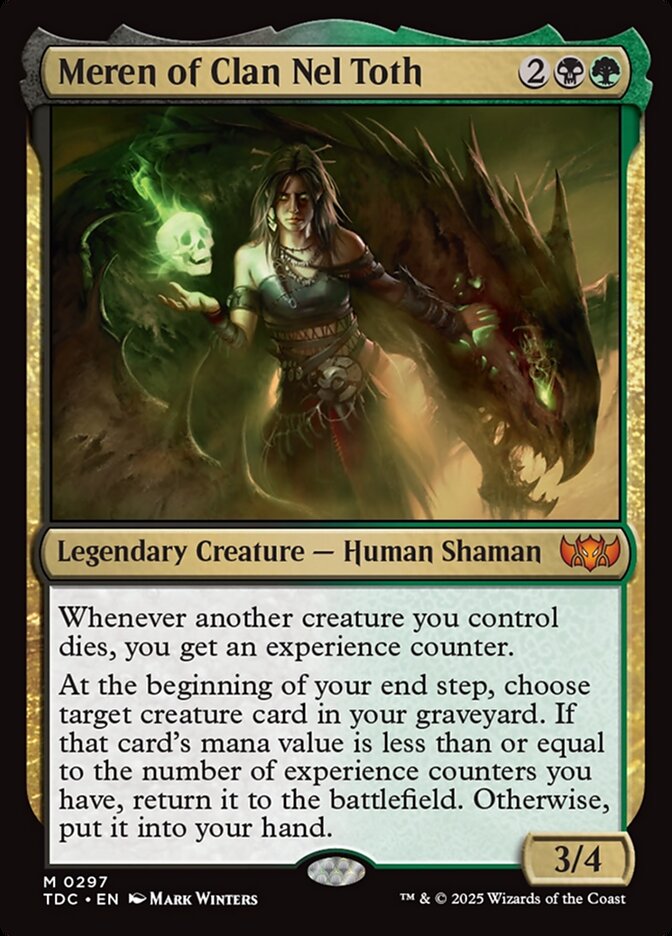
Meren of Clan Nel Toth
Golgari (B/G).
Every creature death earns an experience counter; at your end step, reclaim a creature from the graveyard to hand or battlefield. A recurring value engine that turns combat losses and sacrifice fodder into card advantage, turn after turn.
Prosper, Tome-Bound
Rakdos (B/R).
Exiles the top card of your library each end step to play later, and makes a Treasure token whenever you play a card from exile. Free card advantage and free ramp from one cheap legendary creature.
Step 2: The Mana Base (Navigating Cheap Lands)
The mana base is the foundation of your deck. In a standard $500 deck, players use "Shocklands" and "Fetchlands" to perfectly fix their colors so they never miss a spell. On a $50 budget, those lands are entirely out of reach. You must construct a mana base that minimizes "tapped" lands while ensuring color consistency.
- The danger of tapped lands. Many budget builders jam in cheap dual lands that enter tapped (like Guildgates). This is a fatal error — every tapped land puts you half a turn behind the table. Cap yourself at 4 or 5 tapped lands. In a two-color deck you're mathematically better off running 30 basics (15 of each) than 10 slow duals.
- Budget color fixing. Instead of slow lands, lean on cheap 2-cost mana rocks (Arcane Signet, Fellwar Stone, the Talisman cycle). They cost about $1 each, enter untapped, and fix your colors while ramping you ahead of the curve. Your artifact ramp must be flawless to compensate for the basics.

For the land base specifically, our budget mana base guide walks through the exact land-count math, and our budget dual lands guide covers which cheap fixing lands are actually worth the slot versus a basic.
Step 3: The Golden Ratios (Ramp, Draw, Removal)
To ensure your $50 deck runs with the consistency of a high-end competitive list, you must adhere strictly to the "Golden Ratios" of deck building. Do not sacrifice these foundational slots for more big, flashy creatures.
- 36–38 Lands. Never drop below 36 on a budget. Missing a land drop on Turn 4 will lose you the game.
- 10–12 Ramp Spells. Mana Rocks, Mana Dorks, or Green Ramp spells. 80% should cost 2 mana or less.
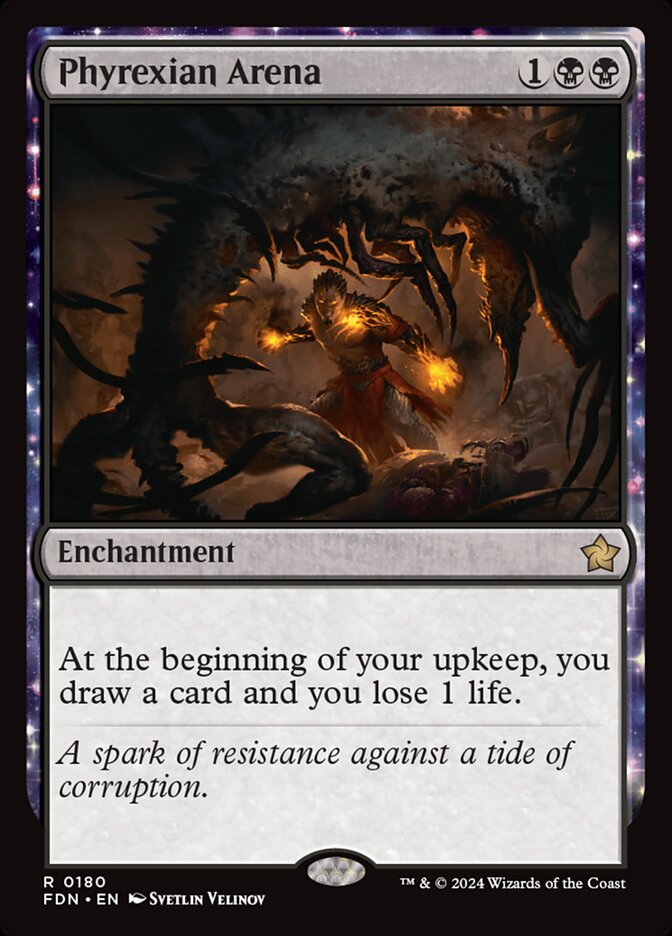
- 10–12 Card Draw Engines. Cards that draw multiple cards over time, like Phyrexian Arena or Garruk's Uprising. One-card cantrips do not count toward this total.
- 10–12 Interaction Spells. Targeted removal, counterspells, and board protection. Keep these 1-2 mana so you can hold them up while still advancing your board.
- 2–3 Board Wipes. Your emergency reset button, like Blasphemous Act or Fumigate, for when the board gets completely out of control.
If you're unsure whether a card counts as "ramp" or "draw" for these totals, our ramp vs card advantage guide breaks down how to weigh the two against each other when a slot could go either way.
Step 4: Synergistic Card Advantage
The biggest gap between a $50 deck and a $500 deck is the quality of card draw. Expensive decks rely on "unconditional" draw engines like Rhystic Study, Sylvan Library, or The One Ring, which generate massive card advantage regardless of what the rest of the deck is doing. On a strict budget, those cards are inaccessible. You must replace them with "conditional" draw engines.
Conditional draw requires you to perform a specific action to get the card. The secret to budget brewing is making sure that "action" is exactly what your deck already wants to do natively.
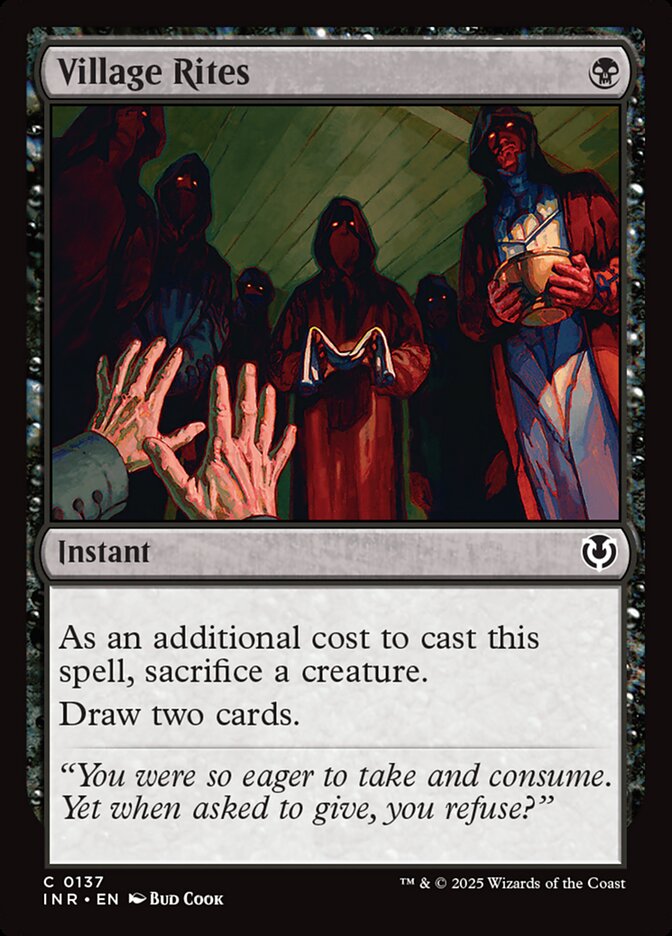
- Align draw with archetype. Building Aristocrats? Don't run generic draw like Divination — run Village Rites or Morbid Opportunist, which draw because a creature died. Green Stompy? Garruk's Uprising draws whenever a big creature lands. Enchantress? Sythis, Harvest's Hand. Every draw spell should be synergistic with your primary game plan.
- The "cantrip" trap. Don't confuse filtering with advantage. A 1-mana spell that does a minor effect and draws one card (like Crash Through or Opt) only replaces itself. Unless you're a Spellslinger deck triggering off instants, these single-draw cantrips don't count toward your 10-12 card draw slots.
For a full breakdown of which conditional draw engines are best in each color, see our budget card draw by color guide.
Step 5: The Mathematics of the Mana Curve
When you are playing on a budget, you do not have access to "Fast Mana" (like Mana Crypt or Jeweled Lotus) to violently accelerate your game plan. Because you are generating mana at a fair, traditional pace, you cannot afford to have a deck filled with massive 6-cost, 7-cost, and 8-cost spells. If your hand is full of expensive cards on Turn 3, you will fall hopelessly behind.
Target a 3.0 Average Mana Value
Police your deck's Average Mana Value (the average cost of all non-land cards). Aim for an average between 2.8 and 3.2. If it creeps up to 3.8 or 4.0, the deck will feel clunky, slow, and unresponsive.
To get there, aggressively cut your "pet cards." That cool 7-mana Dragon might be fun, but unless it immediately wins the game or generates massive value the moment it lands, it has to go. Replace heavy top-end with hyper-efficient 1- and 2-cost utility spells that smooth out your early game.
Our Commander mana curve basics guide walks through how to actually count and chart your curve before you finalize a list.
Step 6: Navigating Budget Interaction
Interaction (removal, counterspells, and protection) is how you stop other players from winning the game. High-end decks use "free" interaction—spells like Fierce Guardianship or Deflecting Swat that cost zero mana if the Commander is in play. This lets them spend all their mana on their own turn while staying protected on everyone else's.
Budget decks do not have this luxury. If you tap out to cast a massive creature, your shields are completely down. You must prioritize interaction that is incredibly cheap to cast, so you can easily hold up 1 or 2 mana during a full table rotation.
- 1-mana answers. Lean on cheap staples: Swords to Plowshares (White, exiles a creature) and Nature's Claim (Green, destroys an artifact or enchantment) for permanent answers. For protecting your own plays, An Offer You Can't Refuse (Blue, counters a noncreature spell) and Vandalblast (Red, destroys an artifact — or every opposing artifact for five mana). Together they let you cast a 4-mana spell on Turn 5 and still hold up disruption.
- Avoid sorcery speed. With the exception of board wipes, almost all of your interaction must be instant speed. A 3-mana sorcery that destroys a creature is functionally unplayable in modern Commander — you must be able to remove combo pieces the moment your opponent tries to win, not on your own main phase.

For removal picks broken down color-by-color, see our budget removal by color guide.
Step 7: Focused, Concentrated Win Conditions
A $50 budget deck cannot afford to play "Goodstuff"—a strategy where you just play generally strong cards and hope to overwhelm the table with raw card quality. Match a budget "Goodstuff" deck against a $500 one and you will lose mathematically every single time.
To win on a budget, your deck must be relentlessly focused on a single, highly concentrated win condition. Every card in your 99 must either directly support that win condition, draw you into it, or protect it.
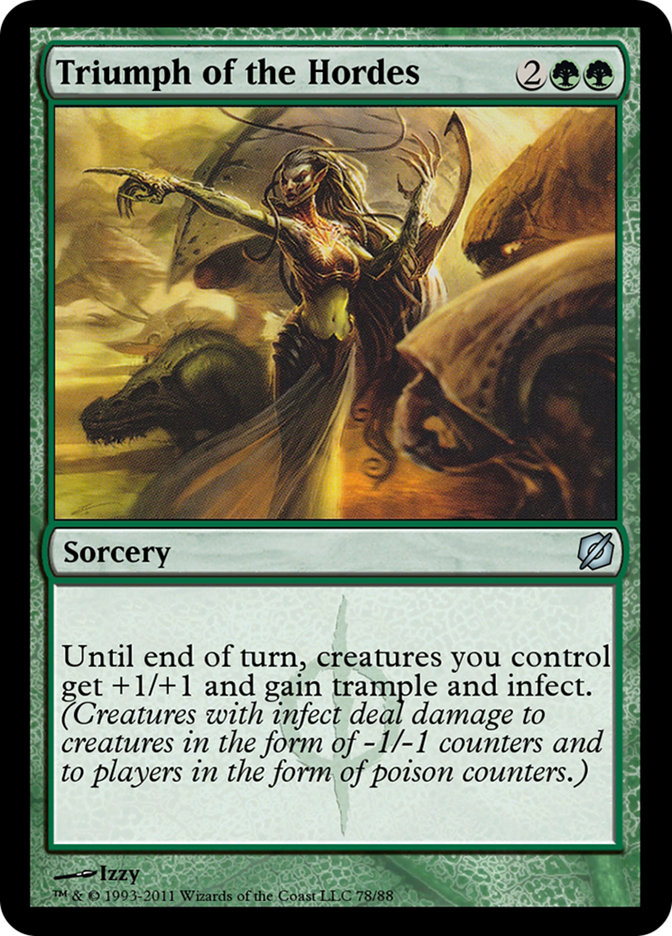
- The combat overrun. If you win by turning creatures sideways, don't just attack one player at a time with generic 4/4s. Stall the board, build an army of tokens, then cast a finisher like Overwhelming Stampede or Triumph of the Hordes to scale your whole board and kill all three opponents at once. Our Voltron guide covers the single-big-threat version of this plan.
- The non-combat combo. If you don't win through combat, you need a deterministic loop — 2 or 3 cheap cards that combine into infinite mana, drain, or mill. Budget combo is highly competitive because a $1 common combo piece ends the game exactly as efficiently as a $100 Mythic one. Our budget combo win conditions guide lists several you can build on this budget.
Applying the Blueprint: A Sample $50 Build
Seven steps of rules are easier to trust once you see them assembled. Here's the math applied to a real 100-card shell — a Golgari (B/G) Engine deck built around Meren of Clan Nel Toth, hitting every Golden Ratio:
- 37 Lands. About 27 basics weighted toward Black and Green, plus a small handful of budget B/G typed lands and Evolving Wilds — 4 tapped lands maximum.
- 11 Ramp. Sol Ring, Arcane Signet, Fellwar Stone, a couple of the Talisman cycle, and green ramp spells like Rampant Growth — almost all untapped, almost all under $1.
- 11 Card Draw. Phyrexian Arena as the anchor, plus sacrifice-triggered draw like Village Rites and Morbid Opportunist that line up with Meren's own death triggers — synergy doing double duty.
- 11 Interaction. Swords to Plowshares, Nature's Claim, Beast Within, and similar cheap answers, almost entirely instant speed and under 2 mana.
- 3 Board Wipes. Blasphemous Act, Fumigate, and one more catch-all sweeper for when the board gets out of hand.
- 26-card win package. Cheap sacrifice fodder, recursive value creatures Meren can reclaim, and one or two finishers worth ramping toward — everything else in the 99 either feeds the engine or wins through it.

The math holds: 37 lands + 36 support slots (11 + 11 + 11 + 3) + 26 win-condition cards = 99 cards, with Meren in the command zone making 100. Every category sits inside the Golden Ratios, and the whole shell is achievable for around $50 at current prices. The exact cards shift with your commander and colors, but the shape should always look like this.
Sourcing the Sample Build
That shell is a shopping list: Sol Ring, Arcane Signet, Fellwar Stone, a Talisman or two, Phyrexian Arena, Village Rites, Nature's Claim, Blasphemous Act. TCGplayer is the cleaner place to price and cart a 99-card list card by card under standardised condition grading; eBay is usually where the same cheap staples turn up as a bulk lot.
As an Amazon Associate, Geeky Domain earns from qualifying purchases. eBay links are affiliate links; Geeky Domain may earn a commission at no extra cost to you.
The Vault: When to Break the Budget
Once you have built a hyper-efficient $50 engine that runs consistently, you may decide to invest capital to increase its power ceiling. Upgrading should never be random; there is a strict hierarchy of where your money is best spent to improve win rates.
- Priority 1: The mana base (untapped duals). The best place to spend your first upgrade dollars is on lands. Replacing basics with Shocklands (e.g., Steam Vents) and Fetchlands (e.g., Scalding Tarn) gives perfect color fixing on Turn 1 with no tempo loss. A premium mana base also transfers to any other deck you build in those colors.
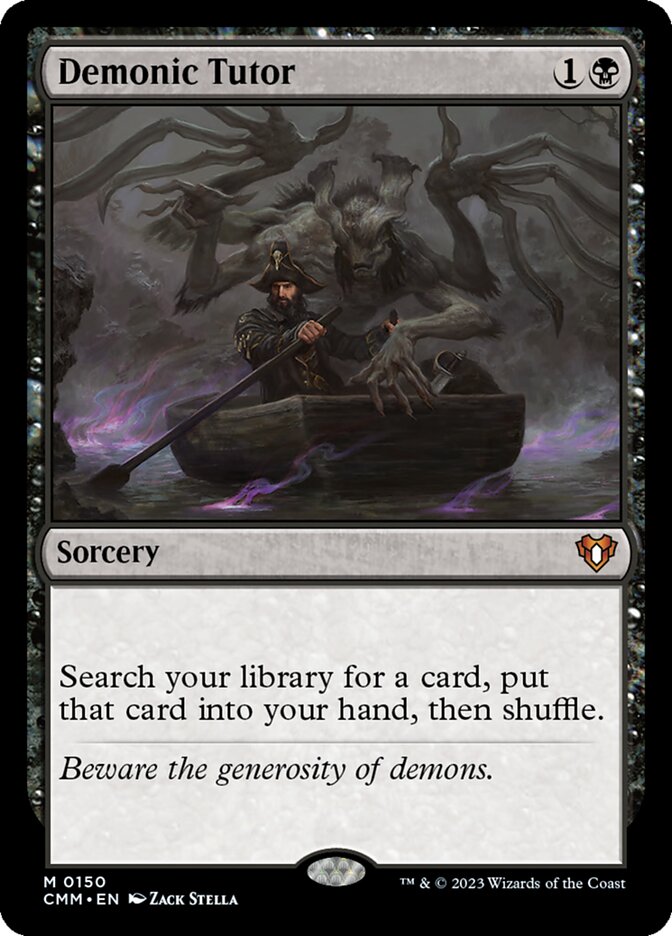
- Priority 2: Unconditional tutors. Budget decks draw a lot to find their win conditions. Tutors search your whole library for the exact piece instead. Staples like Demonic Tutor, Enlightened Tutor, or Worldly Tutor drastically increase consistency and speed.
- Priority 3: Free interaction. Once mana is perfect and the engine is consistent, upgrade 1-mana interaction into 0-mana interaction. Fierce Guardianship, Deflecting Swat, and Deadly Rollick let you tap out for your win condition while keeping a free, instant-speed shield.
Common Budget Deckbuilding Mistakes
A handful of recurring traps separate a budget deck that runs smoothly from one that constantly stumbles. Watch for these:
Cutting ratios to fit "cool" cards.
The most common budget mistake is sacrificing ramp or interaction slots for big, flashy creatures that don't actually win the game faster. Hold the Golden Ratios first; spend whatever's left on fun.
Counting cantrips as card draw.
A pile of 1-mana "draw a card" spells feels like card advantage but mostly just replaces itself. Make sure your 10-12 draw slots are genuinely growing your hand, not just cycling.
Going three-plus colors on a tight budget.
Every extra color multiplies your fixing problem. A clean two-color manabase on basics beats a clunky four-color pile of tapped lands almost every time at this budget.
Diluting the win condition.
Trying to support two different win conditions (combat and a combo, say) splits your deck's focus and weakens both plans. Pick one and build every card around it.
Budget Blueprint FAQ
Can I really build a competitive deck for $50?
Yes, within reason. A disciplined $50 deck can comfortably compete at casual and lower-bracket tables. It won't out-power a tuned cEDH list, but most pods aren't playing at that level — and the ratios in this guide are what actually determine whether a deck "works," not the price tag.
What bracket does a $50 deck usually land in?
Most disciplined $50 builds land in Bracket 2 (Core) territory — solid, synergistic, and consistent without relying on fast combos or Game Changers. See our Game Changers and bracket guide if you're matching decks for a pod.
Should I count my commander toward the 99-card ratios?
No — the ratios apply to your 99-card library. Your commander sits in the command zone and is a bonus on top of whatever role it plays (ideally, as an Engine, doing real work every turn regardless).
What if my commander's colors don't have great budget interaction?
Every color has at least serviceable cheap interaction, even if it's not as iconic as White's or Black's. Check our removal by color guide before assuming your colors are stuck — and remember colorless answers like Vandalblast are available to literally every deck.
How strict do the ratios actually need to be?
Treat them as a floor, not a cage. Going slightly over on interaction or draw is fine; going meaningfully under on any category is where decks start to feel inconsistent. When in doubt, round up on ramp and draw before you round up on flashy spells.
Brew with Discipline.
A budget constraint is not a handicap; it is an exercise in mathematical discipline. By refusing to rely on bloated, inefficient cards and sticking strictly to the golden ratios of ramp, synergistic card draw, and cheap interaction, you can build an engine that easily outpaces decks that cost ten times as much.
Keep your average mana value hovering around 3.0. Prioritize instant-speed interaction. Pick commanders that act as standalone engines rather than fragile payoffs. If you respect the math, you will dominate the table, regardless of the price tag on your cards.
© GEEKYDOMAIN.COM | Strategy Powered by Data