

The mana base nobody talks about — because it costs less than a pack of sleeves. Universal fixers, tapland cycles, and utility lands that belong in every budget 99.
Some links below are affiliate links. If you buy through them, we may earn a small commission at no extra cost to you. We only recommend cards we'd run ourselves.
The Short Version
Command Tower, Ash Barrens, and Evolving Wilds go in every multicolor Commander deck, full stop — they fix your colors for pennies. Gain lands, bounce lands, and Guildgates are the cheapest two-color cycles and the backbone of any budget mana base. Path of Ancestry, Reliquary Tower, and Rogue's Passage add utility without adding cost. Skip the $15 fetch lands until you've outgrown these — you'll be surprised how long that takes.
In This Guide
The mana base is the part of a Commander deck that new players skip and experienced players obsess over. Fetch lands, shock lands, original duals — the premium land package can cost more than the rest of the 99 combined. And the conventional wisdom says you need all of it to compete.
That wisdom is wrong. The lands that actually make a budget Commander deck function — reliable color fixing, basic-land tutoring, and a handful of utility slots — cost pennies. Literally. The cards on this list are the ones that ship in every precon, sit in every bulk bin, and quietly do the job that $30 fetch lands get the credit for. If you're building your first $50 deck or tightening a mana base on a real budget, this is where you start.
We've organized by role — universal fixers first, then the two-color tapland cycles that form the backbone of any multicolor base, then utility lands that do more than just make mana. Every card here is under $1 at the time of writing, and most are well under that. For the deeper strategic picture — how many lands to run, what ratio of basics to nonbasics, when taplands hurt you — our Budget Mana Base guide covers the theory. This list is the shopping list.
The Top 3 Universal Fixers
These go in every multicolor Commander deck, regardless of strategy, color identity, or power level. They fix your mana, they cost almost nothing, and skipping them is the single most common deckbuilding mistake at the budget level. If you're running two or more colors, start here.
Command Tower
Land. Taps for any color in your commander's color identity. Ships in every precon ever printed — the single cheapest staple in the format.
Why it wins: No entering tapped, no life payment, no condition — just any color you need, every turn. Command Tower does what a $200 original dual land does, for free, in a format where your color identity is fixed. There is no reason to ever cut this card from a multicolor deck. It's the first land in and the last one out, and the fact that it costs pennies makes every other budget land on this list feel like a luxury. If you're building around any of the budget commanders we recommend, Command Tower is slot one.

Ash Barrens
Land. Taps for colorless. Basic landcycle {1} — discard it, pay one, search a basic land to your hand. Heavily reprinted across Commander sets.
Why it wins: The most underrated fixer at the budget level. Early game, you cycle it for whichever basic color you're missing — the land comes to your hand untapped, so you play it and use it immediately. Late game, it taps for colorless in a pinch. The critical difference between Ash Barrens and Evolving Wilds is that the basic you fetch enters untapped (it goes to hand, then you play it for the turn), which means Ash Barrens doesn't cost you tempo the way a fetch-to-battlefield-tapped land does. In a format where hitting your curve matters, that's a real edge.

Evolving Wilds
Land. Sacrifice: search your library for a basic land, put it onto the battlefield tapped. Printed in nearly every core and supplemental set — the most reprinted land in Magic.
Why it wins: Universal color fixing for any deck, any color count, any budget. Yes, the basic enters tapped — you lose a mana that turn. But you find exactly the color you need, thin your deck by one card, and never miss a color again. Terramorphic Expanse is functionally identical and costs the same (run both in three-plus-color decks). The pair forms the backbone of every precon mana base for a reason: they work, they're free, and the tempo cost matters less in a 40-life multiplayer format than it does in 60-card constructed. If you're running a Simic landfall shell, the sacrifice trigger is upside — Tatyova draws you a card off the basic entering.

The Best Budget Two-Color Cycles
These are complete ten-card cycles — one for every two-color pair. They all enter tapped, which is the tradeoff for costing almost nothing. In a format with 40 life and multiplayer pacing, that tradeoff is far gentler than it looks. For the full breakdown of which dual-land cycles exist and how they compare, see our Best Budget Dual Lands deep-dive — here we're focused on the three cycles that sit firmly under $1.
Gain Lands (Lifegain Taplands)
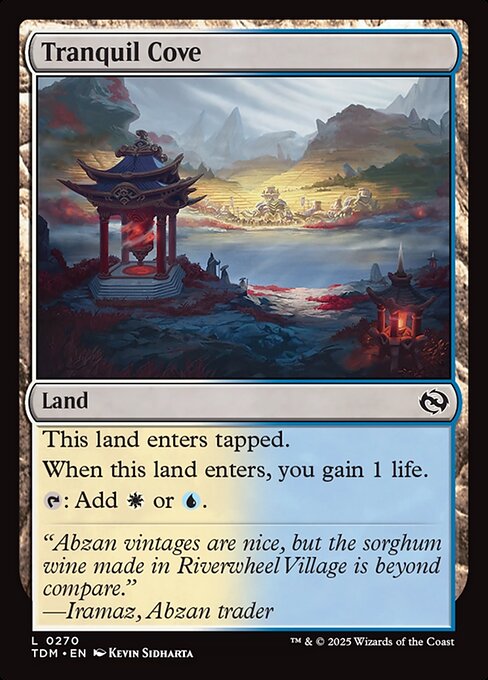
Land cycle — all 10 color pairs. Enters tapped. Gain 1 life. Taps for two colors. Examples: Tranquil Cove (W/U), Wind-Scarred Crag (R/W), Jungle Hollow (B/G).
Why they win: The cheapest two-color lands in the game — bulk-bin staples that cost literal pennies. The 1 life doesn't matter in most games, but it adds up across three or four gain lands in a deck, and in a lifegain-matters build those triggers are actual upside. Every color pair has one, so whether you're building Boros aggro or Dimir control, your gain land exists and it's free. The floor of budget mana fixing — nothing costs less and still produces two colors.
Bounce Lands (Karoo Lands)
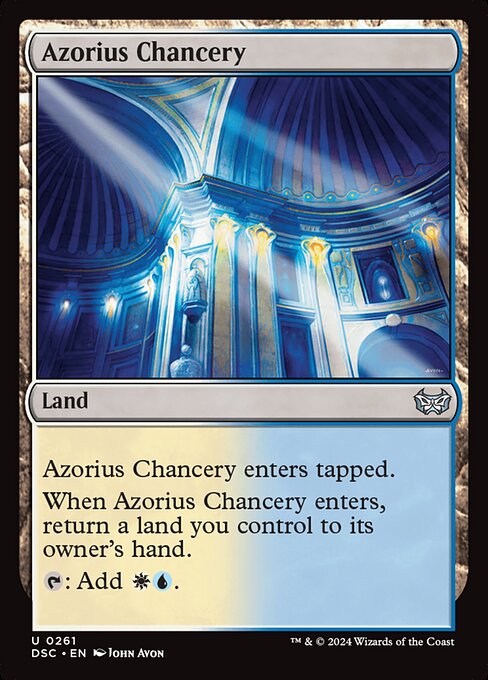
Land cycle — all 10 color pairs. Enters tapped. Return a land you control to your hand. Taps for two colors of mana. Examples: Azorius Chancery (W/U), Boros Garrison (R/W), Golgari Rot Farm (B/G).
Why they win: The only budget taplands that are actually a form of ramp. When you bounce a basic and replay it next turn, you've effectively added an extra mana — the bounce land produces two mana by itself. That makes them the strongest tapland cycle on this list by raw output. The risk is vulnerability: if an opponent destroys a bounce land before you use it, you've lost two land drops. But in most Commander games, land destruction is rare enough that the upside outweighs the risk. Izzet spellslinger decks love bounce lands in particular — the extra mana feeds the instant-speed gameplan, and bouncing a land with an ETB trigger (like a gain land) is a quiet value play.
Guildgates
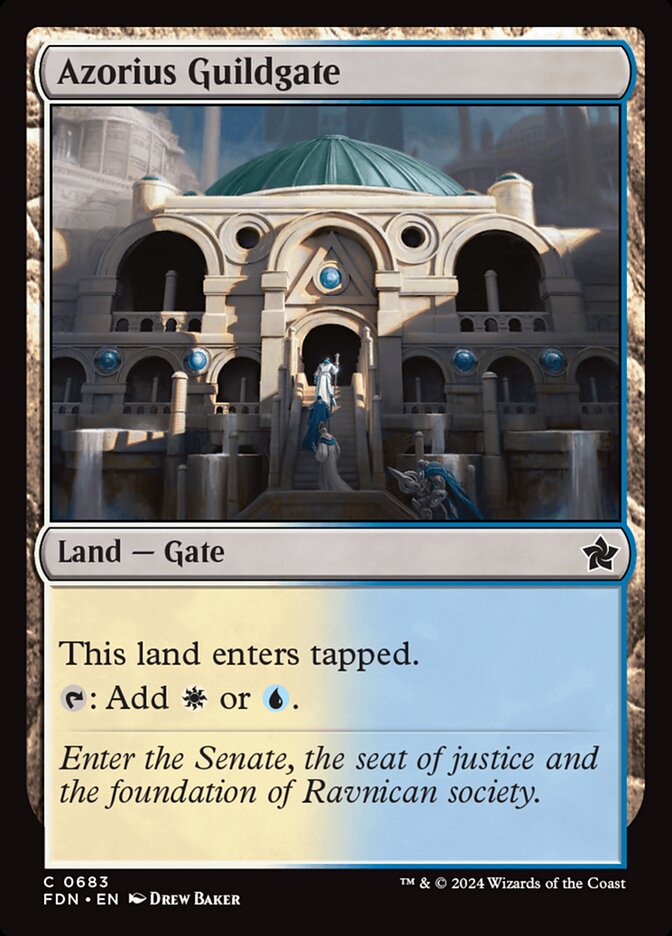
Land cycle — all 10 color pairs. Gate subtype. Enters tapped. Taps for two colors. Examples: Azorius Guildgate (W/U), Rakdos Guildgate (B/R), Selesnya Guildgate (G/W).
Why they win: On raw stats, Guildgates are the worst of the three cycles — no life, no ramp, just two colors and a tap. What earns them a slot is the Gate subtype. Cards like Maze's End, Gateway Plaza, Gates Ablaze, and Guild Summit care about the Gate type, and a dedicated Gates deck is a genuine budget archetype in Commander. Even outside that archetype, Guildgates are fine in casual two-color decks that need another tapland and don't mind the subtype. If you're building Azorius, Rakdos, or Selesnya on a strict budget, the Guildgate is a free inclusion.
The Top 3 Utility Lands
Lands that do more than make mana. These occupy the 2–4 flex slots in a mana base where you're not fixing colors — you're adding a free spell effect to a land drop. Every one of these is under $1 and earns its slot in almost any Commander deck.
Path of Ancestry
Land. Enters tapped. Taps for any color in your commander's color identity. When you cast a creature that shares a type with your commander, scry 1. Reprinted in every tribal precon.
Why it wins: A Command Tower that enters tapped but scrys. In any tribal or creature-heavy deck, you'll scry off Path of Ancestry multiple times per game — that's free card selection stapled to a land. Even in non-tribal decks, your commander shares at least one creature type with some of your creatures, so the scry fires more often than you'd expect. At under $1, it's strictly better than a basic in any multicolor deck that runs enough creatures. A quiet MVP in Dragons tribal, Goblins tribal, and any creature-type-matters build.

Reliquary Tower
Land. Taps for colorless. You have no maximum hand size. Reprinted in core sets, Commander products, and supplemental releases — easy to find for under $1.
Why it wins: In a format full of massive draw spells — card advantage is half the game — discarding to hand size feels terrible. Reliquary Tower means you never have to. Draw ten off a big spell, keep all ten. The colorless-only mana is a real cost in aggressive multicolor decks, so don't jam it into every 99 blindly — but in any deck that draws cards in bursts (spellslinger, control, blue-heavy shells), it earns its slot immediately.

Rogue's Passage
Land. Taps for colorless. Pay {4}, tap: target creature can't be blocked this turn. Reprinted across many sets and Commander products.
Why it wins: A free unblockable effect, every turn, stapled to a land. In a Voltron deck building a single massive threat, Rogue's Passage is a win condition — you suit up your commander, activate the Passage, and swing in for lethal through any board. Four mana to activate is steep, but in the late game it's a land that reads "your best creature connects every turn." Works equally well in any deck that wins through combat damage and has a commander worth protecting through the red zone.

The Budget Picture: Floor vs Ceiling
The single biggest sticker-shock moment in Commander deckbuilding is the mana base. Premium lands cost more than most cards in the 99 — but they don't do proportionally more work. Here's what the gap actually looks like, slot by slot.
Budget vs Premium, By Slot
Each row shows the job the land does, the under-$1 option from this guide, and the premium alternative. The budget option does the same job — it just enters tapped or produces colorless. That's the whole difference.
Illustrative pricing — secondary market moves with reprints and demand. The takeaway: the premium lands save you one turn of tempo per land. In 40-life multiplayer Commander, that's a much smaller edge than the price gap implies.
Precons are the cheapest bulk source for Command Tower, Path of Ancestry and a stack of taplands; a commander land lot covers the gain lands, Guildgates and bounce lands in a single order.
As an Amazon Associate, Geeky Domain earns from qualifying purchases. eBay links are affiliate links; Geeky Domain may earn a commission at no extra cost to you.
Commanders That Love Cheap Lands
Most commanders don't care what their lands cost. These three actively reward you for running the cheapest lands possible — because they care about lands entering the battlefield, not what those lands are called.
Tatyova, Benthic Druid
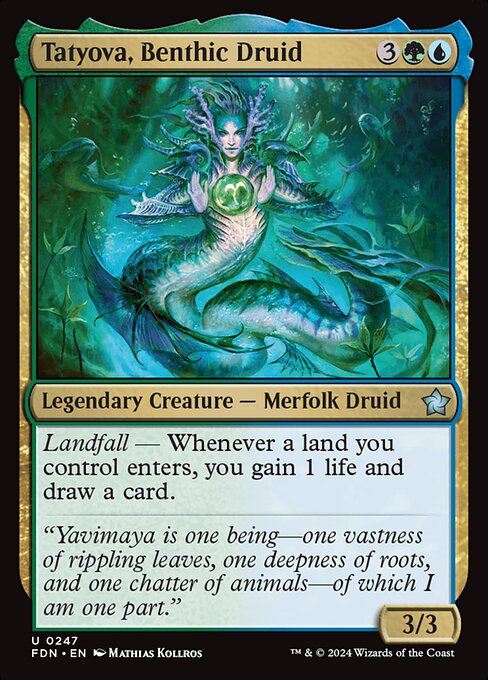
{3}{G}{U} — Legendary Creature. Inexpensive and one of the best budget landfall commanders in the format.
Why she loves cheap lands: Whenever a land enters the battlefield under your control, draw a card and gain 1 life. Evolving Wilds sacrifices and puts a basic onto the battlefield — that's two landfall triggers from one card. Bounce lands return a land to replay next turn — more triggers. The cheaper and more numerous your lands, the more cards Tatyova draws. A $5 mana base draws just as many cards as a $500 one. Check our Simic staples guide for the best budget cards to pair with her.
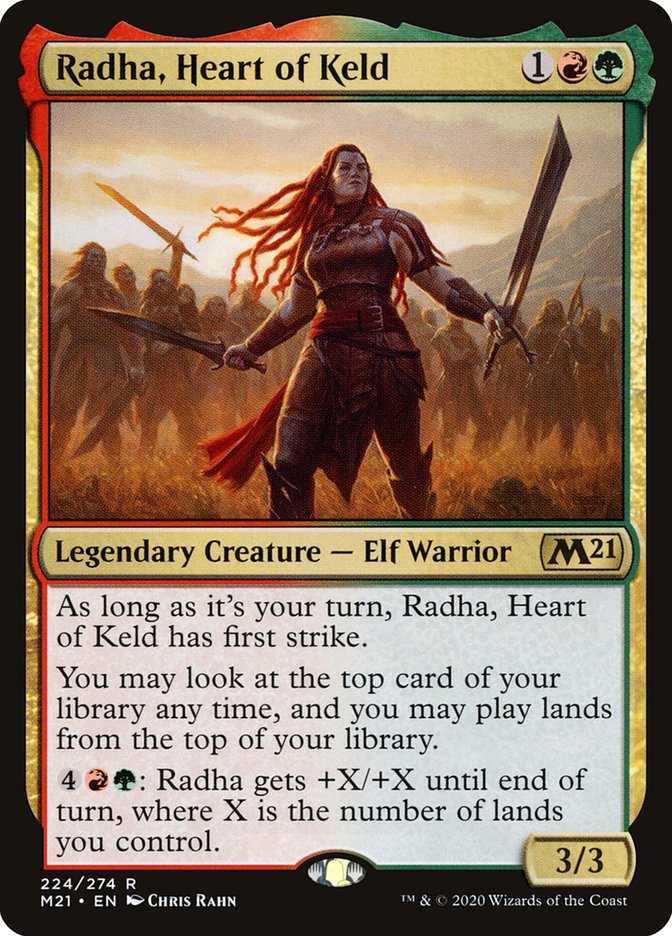
Radha, Heart of Keld
{1}{R}{G} — Legendary Creature. Cheap and underplayed.
Why she loves cheap lands: You may play lands from the top of your library, and Radha gets +X/+X where X is the number of lands you control. More lands on board means a bigger commander — and playing lands off the top means you never miss a drop. Budget basics and taplands count just as much as premium fetches for Radha's power boost. A Gruul shell built around Radha is one of the most naturally budget-friendly strategies in Commander.
Mina and Denn, Wildborn
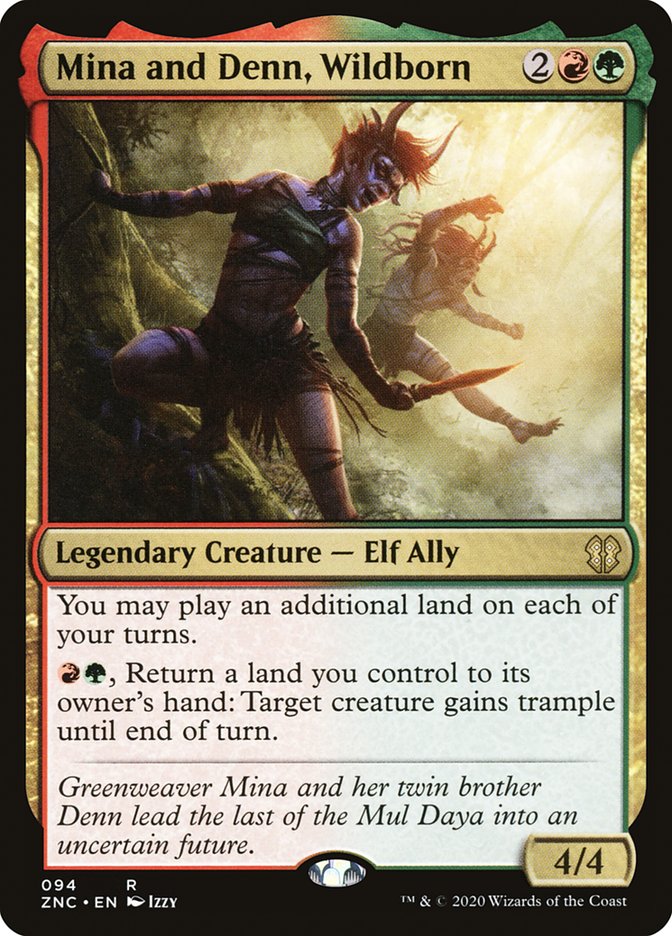
{2}{R}{G} — Legendary Creature. Cheap.
Why they love cheap lands: You may play an additional land on each of your turns, and you can return a land to your hand to give a creature trample. Extra land drops turn budget basics into genuine ramp, and the bounce ability synergizes with Evolving Wilds (sacrifice, replay, sacrifice again) and bounce lands (return the bounce land, replay it for another double-mana turn). A commander that literally rewards you for playing more cheap lands — the budget mana base is the strategy.
Honorable Mentions
A few more budget lands that earn slots in specific strategies but didn't crack the top tier for universality:
- Terramorphic Expanse. Functionally identical to Evolving Wilds. Run both in any three-plus-color deck — you want every budget fixer available. In a Simic landfall deck, both copies mean two extra landfall triggers.
- Temple of the False God. Taps for two colorless once you control five or more lands. A free Sol Ring in the mid-game, a dead card in your opener. Contentious among deckbuilders — skip it in aggressive low-curve decks, but it's strong in slower builds that reliably hit five lands. Pairs well with the mana curve principles we cover elsewhere.
- Exotic Orchard. Taps for any color that a land an opponent controls could produce. In a four-player Commander game, this almost always taps for any color you need — it's a second Command Tower in practice. Sometimes slightly above $1 depending on the printing, but frequently found in bulk bins and precon leftovers.
- Thriving Lands (Thriving Bluff, Thriving Grove, etc.). Enter tapped, choose a color, then tap for that color or their printed color. Flexible two-color lands from Jumpstart — under $1 and useful in two-color decks that want another tapland without committing to a specific pair.


Common Mistakes
Running too few lands because "I have ramp spells."
Ramp spells don't replace lands — they need lands to cast them in the first place. Most Commander decks should run 36–38 lands. Budget players often cut to 33 or lower to fit more spells, then wonder why they're stuck on three mana on turn six. The lands on this list cost nothing — there's no reason to run fewer than 36. For the math on why, see our Budget Mana Base guide.
Skipping Command Tower because "I already have good fixing."
There is no land in Commander that is better than Command Tower for the slot it fills. It enters untapped, taps for any color in your identity, and costs nothing. Even if you own shock lands and fetch lands, Command Tower goes in the deck. Always.
Running too many colorless utility lands in a three-color deck.
Reliquary Tower, Rogue's Passage, and Temple of the False God are all great — but they all produce colorless mana. In a three-color deck with demanding color requirements (like Esper or Jund), running more than two colorless lands is asking for hands where you can't cast your spells. One or two utility lands, max, and the rest should fix your colors.
Assuming taplands are unplayable.
This advice comes from competitive 60-card formats where every mana matters on curve. In Commander, you have 40 life, four players sharing the table's attention, and games that last 8–12 turns. A land entering tapped on turn three rarely costs you the game. The budget taplands on this list are fine in casual and mid-power Commander — the efficiency gap only starts mattering at high-power tables where the first four turns decide the game.
Where to Buy the Pieces
Budget lands are bulk-bin staples — every local game store has a pile of them, and online they ship for pennies. TCGplayer is the best place to fill a cart with a dozen gain lands and bounce lands in one order; Card Kingdom bundles them neatly by cycle. eBay is useful for bulk land lots (search "MTG commander land lot" for 50–100 land bundles). Amazon carries precons that include Command Tower, Path of Ancestry, and a handful of taplands — if you're buying a precon anyway, strip the mana base before you upgrade the spells.
Budget Lands FAQ
How many lands should I run in Commander? 36–38 is the standard range for most decks. Lower-curve aggressive decks can go to 34; landfall and ramp-heavy decks sometimes go to 39–40. Never go below 33 unless you have an extremely specific reason. Our mana base guide breaks down the math.
How many taplands is too many? In a two-color casual deck, 5–8 taplands is manageable. In three colors, you'll need more fixing so 8–12 is common on a budget. The pain point is having multiple taplands in your opening hand — if you're consistently a turn behind, cut a few taplands for basics and lean on your universal fixers instead.
Should I upgrade my lands before my spells? Usually yes. A consistent mana base makes every spell in your deck better, because you can actually cast them on time. The first upgrades from this list should be replacing Guildgates and gain lands with better budget dual lands — check lands, pain lands, and battle lands sit in the $1–5 range and enter untapped more often.
Do I need fetch lands to be competitive? At casual and mid-power tables, absolutely not. Evolving Wilds and Ash Barrens do the same basic-tutoring job that $30 fetch lands do — they're just slower. Fetch lands matter at high-power and cEDH tables where the tempo loss of an entering-tapped land is genuinely punishing. For 90% of Commander games, the budget options on this list are more than enough.
The Foundation Nobody Notices.
Nobody wins a Commander game because of their lands. But plenty of players lose because of them — stuck on two colors in a three-color deck, missing their fourth land drop, discarding to hand size because they didn't run Reliquary Tower. The lands on this list prevent all of that, and they cost less than a cup of coffee combined.
Command Tower, Ash Barrens, Evolving Wilds, a few gain lands, a bounce land or two, Path of Ancestry, and one utility slot. That's a complete budget mana base — reliable, functional, and ready to support whatever strategy you build on top of it. Save the fetch-land budget for the spells that actually win you the game.
© GEEKYDOMAIN.COM | Strategy Powered by Data