

Best Temur (GUR) Budget Commander Staples Under $5
Green-Blue-Red ramps hard, draws deep, and slams big spells — the "ramp into payoffs" wedge, built without the chase cards.
Some links below are affiliate links. If you buy through them, we may earn a small commission at no extra cost to you. We only recommend cards we'd run ourselves.
Temur is the wedge for players who want to make a lot of mana and do something huge with it. Green ramps and fixes, blue draws and protects, red adds reach and flexible answers. It's the deck that's always a turn ahead on resources and looking for the biggest thing to do with them.
The good news: the ramp, the card draw, and the interaction are all cheap commons and uncommons — you save your budget for whatever splashy payoff you want to ramp into. Here are the staples that power Temur, grouped by job, with approximate market averages as of June 2026. Verify before buying.
Because the engine is so cheap, Temur is one of the best wedges for slowly upgrading a deck over time — you can build the entire mana, draw, and interaction shell from this list for a small fraction of a typical deck's budget, then add one new finisher every time your budget allows, without ever having to rebuild the foundation. That's the real appeal of a ramp shell: the parts that make it function reliably are also the parts that age the best, since a smooth manabase and a few answers stay relevant no matter how many times you swap out the payoff sitting on top of them.
→ Short Version
Ramp first — Cultivate, Sakura-Tribe Elder, and Farseek get you ahead and fix your colors. Interaction across colors (Beast Within, Chaos Warp, Counterspell) answers anything. Card advantage keeps the gas flowing into your big plays. Save the budget for the payoff — the engine is bulk.
→ Expand Your Arsenal
In This Guide
The Top 3 Ramp & Fixing Pieces
Getting ahead on mana is the entire point of Temur. These three do it cheaper than almost anything else in the format.
Cultivate
{2}{G} — Sorcery. Reprinted into nearly every green precon; near-bulk pricing.
Why it wins: Ramp a land to play and put a second to hand — and because it fetches any basic, it's the cleanest way to fix all three of Temur's colors in one card. The simplest way to keep your greedy mana online and hit your big spells early.

Sakura-Tribe Elder
{1}{G} — Creature (1/1). A perennial reprint, so it sits at near-bulk pricing.
Why it wins: Block an attacker, then sacrifice it for a basic — ramp, fixing, and a turn bought against aggro, all on a near-bulk common. The best budget ramp creature there is, and because the sacrifice can fetch any basic, it helps anchor all three colors.
Farseek
{1}{G} — Sorcery. Cheap and widely available.
Why it wins: Two-mana ramp that fetches a Plains, Island, Swamp, or Mountain card — which means it can grab a typed dual or shock land to lock in your blue and red splashes. Note it can't find a Forest, so lean on Cultivate and Sakura-Tribe Elder for green; Farseek is your tool for getting the off-colors online early.

The Top 3 Interaction Spells
Ramping past everyone means nothing if you can't protect your lead. These three keep the table honest while your payoffs come online.
Beast Within
{2}{G} — Instant. Inexpensive and widely available.
Why it wins: Destroy any permanent at instant speed — green's catch-all for everything Temur otherwise can't answer. The 3/3 you give is rarely a problem for a ramp deck that's about to out-resource the recipient anyway.

Chaos Warp
{2}{R} — Instant. Cheap and abundant thanks to repeated Commander reprints.
Why it wins: Shuffle any permanent into its owner's library — red's only true answer to indestructible threats and problem enchantments. Pairs with Beast Within for full coverage across nearly every permanent type at the table.
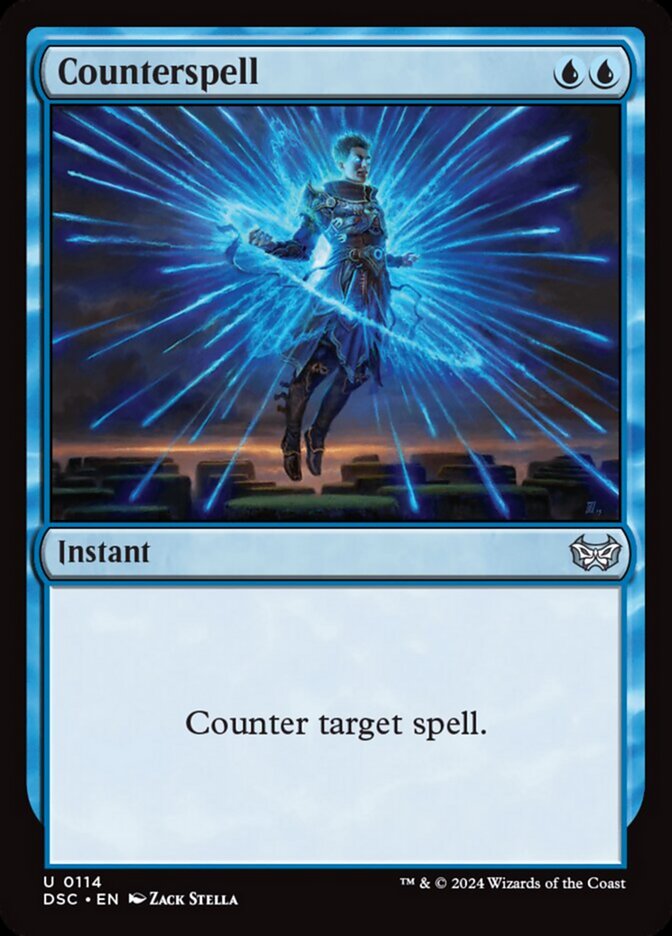
Counterspell
{U}{U} — Instant. About as cheap as a card gets, despite being a format staple.
Why it wins: "Counter target spell," no conditions, one dollar. The cleanest way to protect your ramp engine from a board wipe or stop the play that ends the game while you're still assembling your own.
The Top 3 Card-Advantage Pieces
A ramp deck that runs out of cards stalls out just as fast as one that runs out of mana. These keep your hand full while you dig for the payoff.
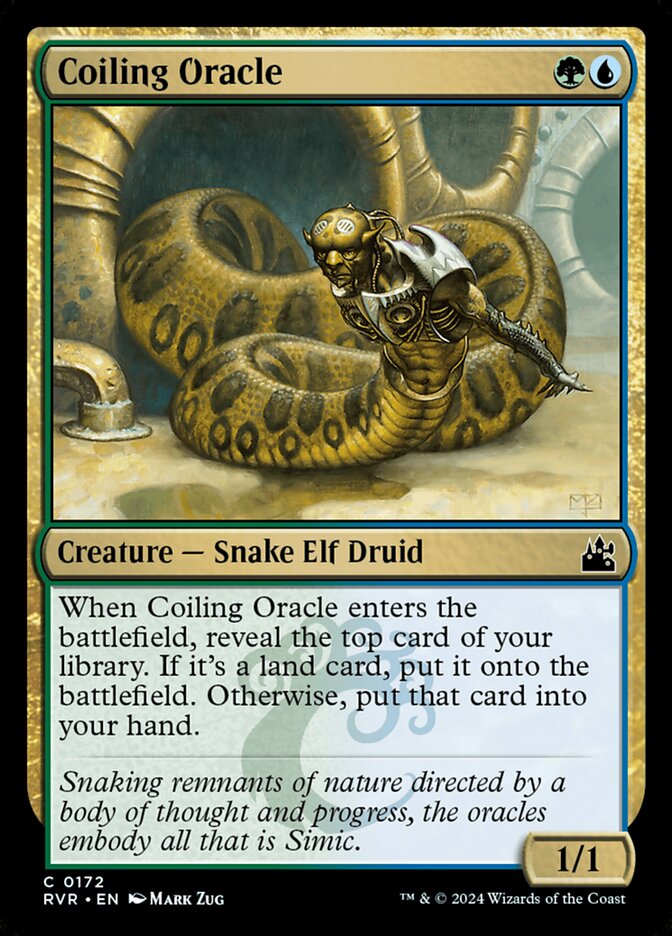
Coiling Oracle
{G}{U} — Creature. Near-bulk pricing.
Why it wins: Reveal the top card on entry — ramp a land or draw a card, on a blockable body. The quintessential Simic value play; it's never a bad draw in a Temur shell, whether you need the land or the card in that moment.
Eternal Witness
{1}{G}{G} — Creature. A bit pricier than bulk, but still comfortably inside budget.
Why it wins: Return any card from your graveyard — buy back your big spell, your ramp, or your removal. On a recurring body, it's pure card advantage that loops with any blink effect, stretching your whole list further.
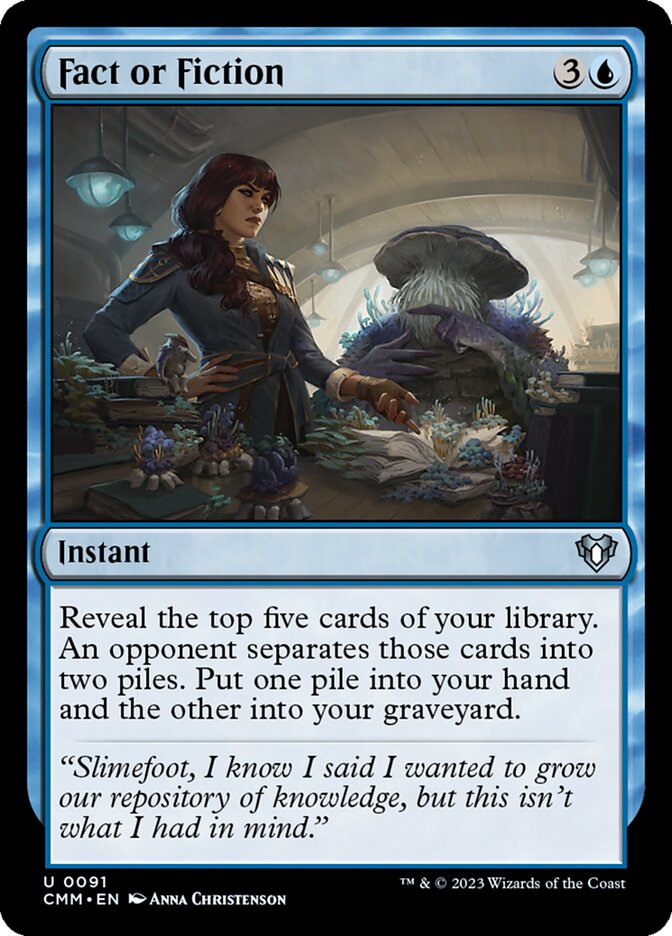
Fact or Fiction
{3}{U} — Instant. Cheap and easy to find.
Why it wins: Reveal five, opponent splits, you keep a pile — two-to-four cards at instant speed for a dollar. The gas that turns a ramp lead into a hand full of action instead of an empty grip.
Honorable Mentions
- Lightning Bolt. Efficient burn that doubles as removal and reach — pick it up anytime you want a fourth piece of cheap interaction.
- Frantic Search. Effectively free card filtering that untaps your lands — a quiet way to dig toward your payoff without spending real mana.
- Beast Whisperer. Draw a card for every creature you cast — strong in a creature-heavy Temur build, less so if you're leaning on spells and artifacts instead. Often runs a touch above the others on price, so grab it when it's cheap.

Putting the Shell Together
Nine cards don't make a hundred-card deck, so how do the pieces above fit into the bigger picture? Here's a rough skeleton for a budget Temur Commander list, showing how many slots each job typically needs:
- Lands: 35–37. Start with mostly basics, leaning green-heavy since green is the color you need earliest for ramp spells. Add budget typed duals (the Thriving cycle, Evolving Wilds, Terramorphic Expanse, and any cheap shock or pathway you own) to help Farseek and your color fixing work. Three colors on a budget means prioritizing lands that enter untapped or that Farseek can fetch.
- Ramp & fixing: 8–10. The three picks above (Cultivate, Sakura-Tribe Elder, Farseek) plus Sol Ring, Arcane Signet, and a few more green ramp spells (Kodama's Reach, Nature's Lore, Rampant Growth). This is the engine that makes Temur function — don't cut below eight.
- Interaction: 8–12. Beast Within, Chaos Warp, and Counterspell are the core. Fill the rest with budget removal and countermagic that fits your meta — Lightning Bolt, Negate, Return to Nature, and a board wipe or two (Blasphemous Act is often under a dollar).
- Card advantage: 8–10. Coiling Oracle, Eternal Witness, Fact or Fiction, plus whatever draw engine fits your commander — Harmonize, Ponder, Preordain, and Brainstorm all cost pennies. The goal is to never run out of gas after you've ramped.
- Payoffs: 10–15. This is everything else — the big creatures, splashy spells, and win conditions that justify all that ramp. These are the slots where you spend your remaining budget. Start with whatever exciting cards you already own and upgrade one at a time as your budget allows.
The ratio matters more than any individual card. A Temur deck that has 9 ramp spells, 10 pieces of interaction, 9 draw spells, 36 lands, and 35 payoffs will function smoothly even if every card is a bulk common — the structure does the work. That's why the engine is worth locking in first: it makes every future upgrade slot directly into a working deck instead of a pile of expensive cards that can't find each other.
Budget Deckbuilding Mistakes
A few traps catch budget Temur builders. Avoid these and the deck plays well above its price:
Ramping with no payoff to ramp into.
Six lands in play and nothing worth casting is the classic Temur trap. Make sure your top end actually justifies the acceleration — a deck full of ramp spells and no splashy finishers is just a slow, mediocre midrange deck.
Skipping interaction to fit more ramp.
It's tempting to run every ramp spell available, but a deck that can't answer a problem permanent just hands the game to whoever plays one first. Keep Beast Within and Chaos Warp in the list even when budget feels tight.
Underestimating the manabase.
Three colors means fixing matters more than usual. Remember that not every ramp spell finds every color — Farseek can't fetch green, for instance — so build your mana so you reliably have green, blue, and red on time. A perfect ramp package still stumbles if your lands can't produce the right colors.
Where to Buy the Pieces
A Temur shell is built from singles, so a singles marketplace is the way to assemble it affordably. TCGplayer and Card Kingdom are the go-to stops for the cheap ramp and interaction that make up this list — buy the mana base first, since a smooth three-color manabase is what lets you actually cast the splashy payoff you're saving up for. Prices vary, so compare carts before checking out.
Temur Staples on TCGplayer Singles on Card Kingdom Lots on eBay Precons on AmazonTemur Budget FAQ
- Is Temur good for beginners? Very — "ramp, draw, do something big" is an intuitive and satisfying plan, and the engine cards are cheap.
- What should I buy first? Ramp and fixing, then card draw. The engine matters more than any single payoff — and these staples leave room in the budget for whatever big finisher you choose.
- What kind of finisher should I save up for? Anything with a high mana value and a strong board impact — a big creature, an extra-turn effect, or a powerful planeswalker. The engine on this list gets you there reliably; the finisher is the part worth splurging on.
- How many ramp spells should I run? Most budget Temur lists want 8–10 dedicated ramp/fixing pieces between rocks, dorks, and spells like Cultivate — enough to reliably hit your colors and stay ahead on mana.
- Do prices move? Yes. Every figure is an approximate average as of June 2026 — verify before buying.
- What's the first upgrade I should make after building the shell? Usually a better payoff — whatever big, exciting card fits your commander's strategy that you couldn't afford on the first pass. The engine on this list is already strong, so upgrading one finisher at a time gives you the most noticeable improvement per dollar. After that, look at your mana base: even one or two budget shock lands or pathway lands smooth out the early game noticeably.
- Can I run these staples in other green-blue or green-red decks? Absolutely — that's half the value. Cultivate, Sakura-Tribe Elder, Beast Within, Counterspell, Eternal Witness, and Fact or Fiction are format staples that go into virtually any deck that shares their colors. Buy them once and they'll serve you across multiple builds for years.
Ramp Now, Splurge Later.
Temur is the budget ramp player's playground: cheap acceleration, cheap interaction, and cheap card draw that all set up whatever giant payoff you want to run. Get ahead on mana, hold up an answer, refill your hand, and slam the biggest thing at the table. The engine costs pennies — spend your budget on the finish. Prioritize wisely with our ramp vs card advantage guide.
Keep Learning:
© GEEKYDOMAIN.COM | Strategy Powered by Data