

The modern Magic economy is a revolving door. Stop losing value on your staples and learn to time the market.
In the early days of Magic: The Gathering, acquiring a high-value card felt like putting money in a savings account. You bought a powerful single, slotted it into your deck, and watched its value slowly appreciate over time. In 2026, operating with that mindset is a guaranteed way to bleed capital.
Wizards of the Coast (WotC) has realized that their most valuable asset is not the new cards they design, but the old cards they can print again. Through Masters sets, Commander precons, Secret Lairs, and special "Bonus Sheets" inside standard sets, WotC has created a relentless reprint engine. If a card is expensive and highly played, it is not a matter of if it will be reprinted, but when.
"A modern MTG staple is not a long-term stock; it is a volatile currency. Your goal is not to hoard it indefinitely, but to utilize it when you need it and liquidate it before the publisher decides to cash in."
— The Geeky Domain Market Philosophy
→ Protect Your Wallet
Don't want to play the volatile finance game? Check out our budget hubs to build competitive decks for pennies on the dollar.
The Bullseye: Calculating Reprint Equity
To survive the crash, you must be able to identify which cards in your binder are wearing a massive target on their back. In MTG finance, this vulnerability is called Reprint Equity. It is the metric WotC uses to decide which cards to include in a $15 premium booster pack to guarantee that players will buy it.
A card has dangerously high Reprint Equity if it meets two criteria simultaneously:
- High Secondary Market Value: The card currently sells for over $30.
- High Format Demand: It is a staple in Commander (EDH) or Modern.
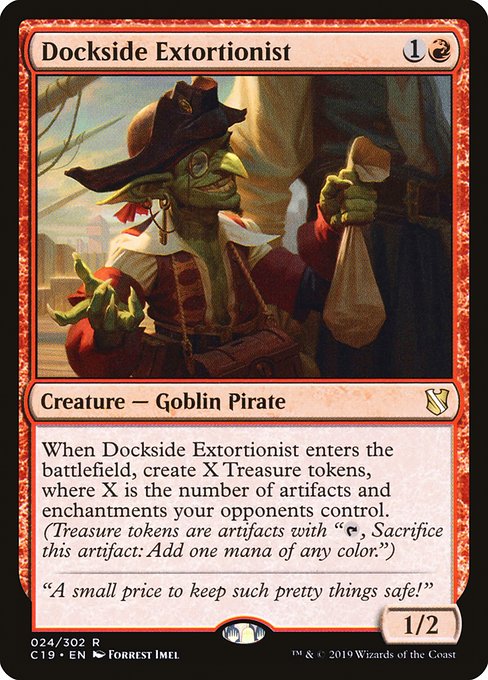
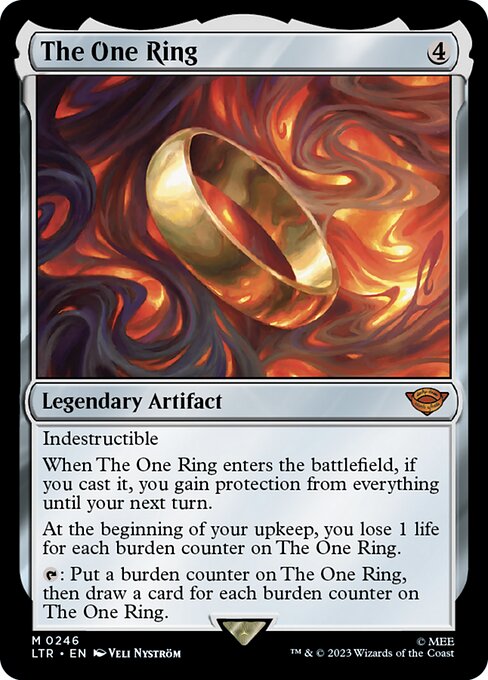
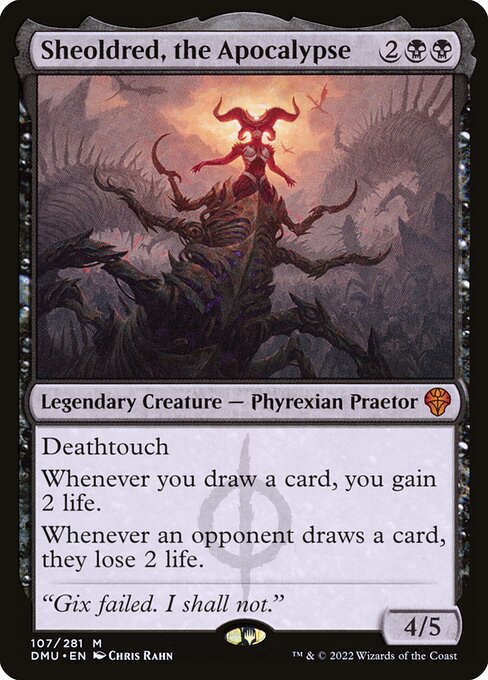
If you own a card that fits this description (think Dockside Extortionist, The One Ring, or Sheoldred, the Apocalypse), you must actively manage it. These are not safe investments. They are temporary assets that will inevitably lose 30% to 50% of their value overnight the moment a new reprint is announced.
The Exit Strategy: When to Fold
Knowing that a crash is coming is only half the battle. The other half is having the discipline to let go of a powerful card before the market bottoms out.
Not That: Panic Selling on Release Day
Do not try to sell your original copy of a card the week the reprint set actually hits store shelves. By release day, the market is already flooded with new copies being cracked by stores and players. The race to the bottom has already begun, and you will be forced to sell at the absolute lowest price point.
Do This: Selling the Spoiler Season Whisper
The optimal time to liquidate a high-equity staple is before the official spoiler drops. If WotC announces a new "Commander Masters" set coming in three months, immediately audit your binder. Liquidate your $50 staples while the price is still stable. When the inevitable reprint tanks the price to $25, you can simply buy the card back and pocket the difference.
The Safe Havens: Where to Park Your Capital
If modern staples are volatile, where do you actually store your long-term TCG capital safely? If you want to hold value without constantly stressing over spoiler seasons, you have to move your money into assets that are immune to the reprint engine.
-
1. The Reserved List
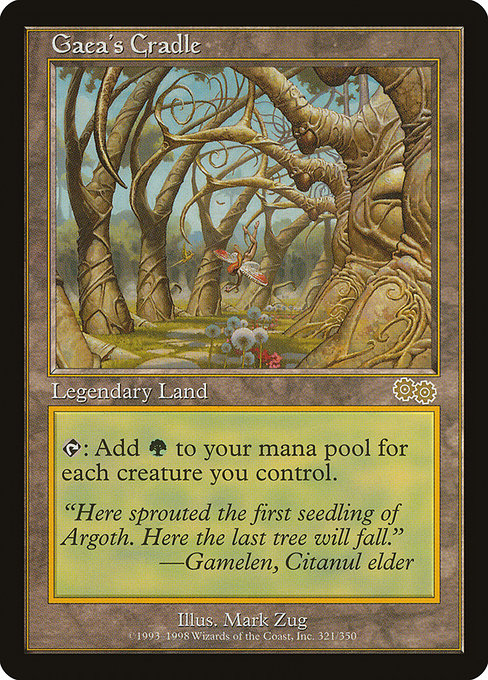
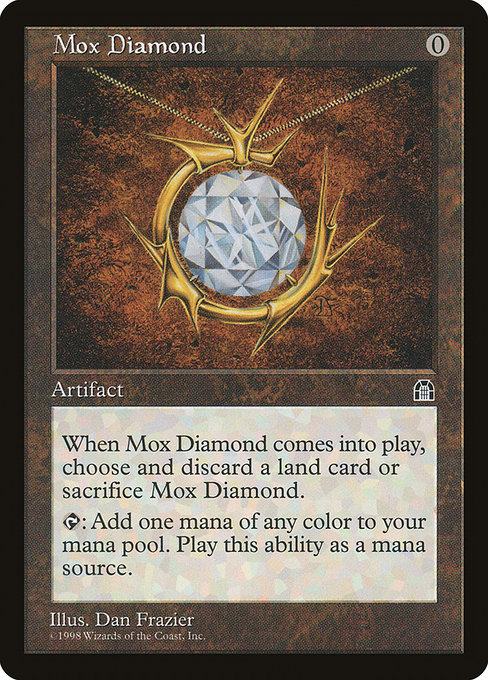
This is the ultimate safe haven. The Reserved List is a legally binding promise from WotC that specific cards printed from 1993 to 1999 (like Original Dual Lands, Gaea's Cradle, and Mox Diamond) will never be reprinted in tournament-legal form again. While these cards fluctuate slightly with macroeconomic trends, their supply is permanently capped. They will never crash due to a new set release.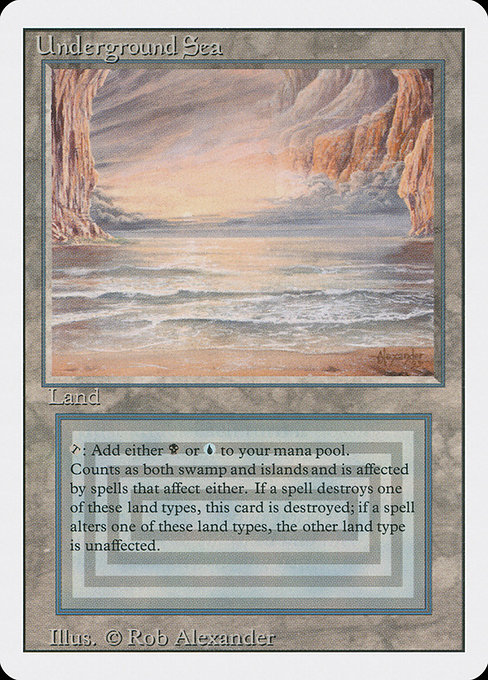
-
2. Unique Serialized and Premium Art
WotC will reprint the text of a card, but they rarely reprint a highly specific, premium art treatment. Original printing foil retro-frames, highly desirable Secret Lair arts, and serialized cards (e.g., 1/500 print runs) hold their value significantly better than base-art versions. When the standard version of the card is reprinted and crashes, the ultra-premium version often remains insulated because it holds collector prestige, not just gameplay utility.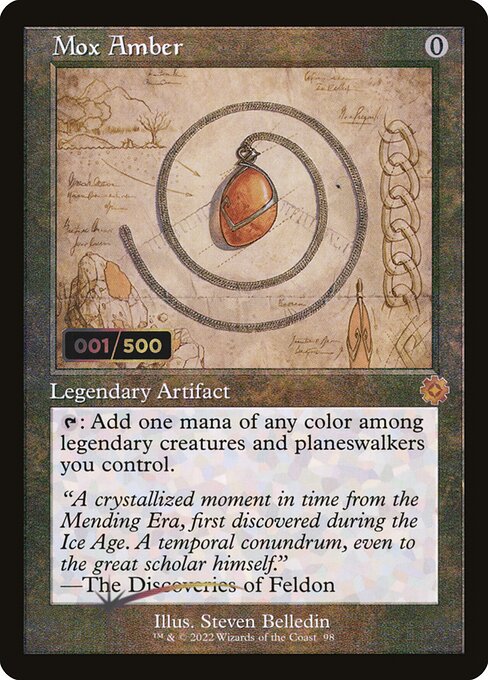
The Synergy Boom: Profiting off Commander Precons
While WotC's reprint engine destroys the value of existing staples, their new product designs simultaneously create massive, overnight spikes in older, forgotten cards. This is known in MTG finance as the "Commander Precon Effect."
Wizards of the Coast releases a new batch of preconstructed Commander decks with almost every major set. When they spoil the face commander for a new deck, players immediately start theory-crafting. If the new commander cares about a highly specific, historically unsupported mechanic—like "Mutate," "Madness," or an obscure creature type like "Crabs"—the secondary market reacts violently.
Players rush to buy the few old cards that synergize perfectly with the new commander. Because these older cards haven't been printed in ten years, the sudden surge in demand wipes out the available inventory online in hours, causing a $1 bulk rare to spike to $15 overnight.
The FOMO Trap: Sell the Hype, Don't Buy It
When you see a card spike 500% in a single day because a new commander was just announced, your psychological instinct is Fear Of Missing Out (FOMO). You want to buy the card before it goes up even further. This is exactly how amateur speculators lose their shirts.
The Hype Cycle Reality Check
Never buy into a synergy spike during spoiler season. Nine times out of ten, WotC knows exactly what older cards pair perfectly with their new commander, and they have already secretly included those exact cards as reprints inside the upcoming preconstructed deck.
If you buy that $15 card on Monday, and on Thursday WotC reveals it is being reprinted in the $40 precon, your card will crash back to $2 instantly.
Your Action Plan: Use spoiler season to liquidate. Dig through your bulk boxes. If you own the obscure card that just spiked, sell it immediately into the hype to the players suffering from FOMO. Cash out before the full decklist is revealed.
Catching the Falling Knife: The Post-Crash Buy Window
We have talked about selling, but when is the statistically optimal time to buy a staple that was just heavily reprinted? When a highly desired card (like a fetch land or a premium counterspell) is reprinted in a new set, the market goes into freefall. Store owners and players are aggressively cracking boxes and undercutting each other on TCGplayer to recoup their costs.
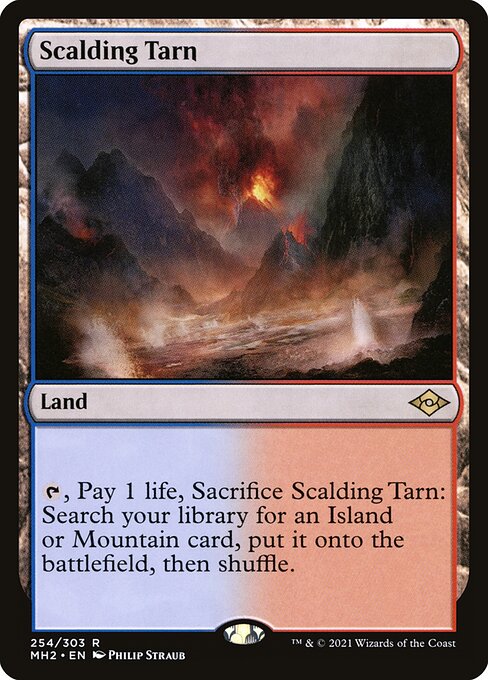
Do not buy the card on release weekend. The race to the bottom takes time to play out.
The 3-to-6 Week Rule
The absolute floor for a newly reprinted staple generally occurs between three to six weeks after the official release date. By week four, maximum supply has hit the market, the initial hype of cracking packs has died down, and sellers are desperate to clear inventory. This is the exact window where the smart money steps in and buys their playsets at a 50% discount. Once week eight hits, supply begins to dry up, and the price will slowly start ticking back upward.
Anatomy of a Reprint Crash, Week by Week
Principles are easier to act on when you can see the shape of the whole cycle. Below is how a typical reprint crash plays out for a hypothetical $40 staple from the moment a new set is announced. The exact figures vary card to card, but the rhythm is remarkably consistent — and knowing it tells you precisely when to sell and when to buy.
The Crash Curve
A $40 staple, from spoiler announcement to recovery. Bar length tracks the card's rough market value at each stage.
Illustrative figures for a single hypothetical staple — actual percentages vary by card, rarity, and how many variants the reprint includes. The pattern, not the exact dollars, is what to internalize.
Read left to right, the strategy writes itself. The two green stages — announcement and spoiler season — are your selling window, while demand is still propping the price up. Release weekend is a no-man's-land: the price is collapsing but hasn't bottomed, so you neither sell (too late) nor buy (too early). The coral weeks 3–6 stage is the floor, where the disciplined buyer steps in. By week eight, supply has dried up and the slow climb back has begun — the buy window has closed.
Notice the card never fully returns to its pre-reprint price. That permanent haircut is the whole reason to sell before the reprint rather than hold through it: a reprinted staple typically settles into a new, lower equilibrium, because the total supply in the world is now permanently larger. Holding through a reprint means eating that entire decline for nothing.
The Variant Matrix: Navigating "Project Booster Fun"
Ten years ago, a card had two versions: regular and foil. Today, WotC's "Project Booster Fun" ensures that a single card might have a base version, an extended art version, a borderless alternate art version, a retro-frame version, and a serialized version—all in the same set.
This massive variant matrix completely shatters traditional pricing models. When a card is reprinted with five different art treatments, the "Base" non-foil version becomes the sacrificial lamb. Its price will crash to absolute zero as players exclusively chase the premium alternate arts.
- The Budget Player's Dream: If you do not care about aesthetics and simply want the game piece for your Commander deck, modern reprints are the best thing to ever happen to your wallet. Let the collectors fight over the $60 borderless foil; you can quietly pick up the base version for $4 during that week-four buy window.
- The Premium Consolidation: If you are investing, never buy the base version of a modern card. Always consolidate your capital into the absolute rarest, most premium variant available in the set. It is the only version with enough collector demand to weather the next inevitable reprint cycle.
The Invisible Threat: Format Shifts and Bans
Reprints are not the only thing that can destroy a card's value. In competitive formats like Modern and Pioneer, and even in the casual realm of Commander, the meta is constantly shifting. A card that is a $40 staple today might become a $5 bulk rare tomorrow—not because it was reprinted, but because it was rendered obsolete.
This happens in two ways:
- The Power Creep Obsolescence: WotC frequently prints new cards that do the exact same thing as older cards, but more efficiently. If a new removal spell costs one less mana than the current $30 staple, competitive players will instantly swap to the new card. The old staple's demand evaporates overnight.
- The Ban Hammer: The Rules Committee and WotC actively manage format health. If a card becomes too dominant, it gets banned. A banned card has zero playability and, consequently, zero liquidity. If you are holding multiple copies of a card that the community is actively complaining about, liquidate immediately. The risk of holding a ban-target through an announcement window is never mathematically justifiable.
Operational Mindset: Your Binder is a Bank Account
If you want to survive the modern MTG economy, you have to stop looking at your trade binder as a sentimental collection of memories and start looking at it as an active investment portfolio.
Dead equity is the silent killer of TCG value. If you have twenty cards worth $10 each sitting in a binder that you haven't played in over a year, you are holding $200 of highly volatile, depreciating assets. They are doing nothing for your gameplay experience, and they are actively losing value to the reprint engine.
The Consolidation Strategy
Aggressively "buylist" or trade your mid-tier, unused staples into a local game store or an online vendor. Take that $200 of dead equity and consolidate it into a single, high-tier asset that is immune to reprints—like a heavily played Reserved List dual land, or a sealed booster box to hold in the vault. Turn twenty volatile liabilities into one concrete asset.
Master the Timing, Master the Game.
Magic: The Gathering is the most robust and complex trading card economy on the planet, but it is deeply unforgiving to passive participants. Wizards of the Coast will continue to utilize their reprint engine to drive their quarterly profits. You can either be a victim of that engine, or you can leverage it.
Track your Reprint Equity. Sell your volatile staples during the spoiler season hype, never buy into the Commander Precon FOMO, and confidently purchase the dip during the Week 4 post-crash window. By treating your cardboard like the liquid currency it is, you can play the most optimized decks in the format without constantly draining your bank account.
© GEEKYDOMAIN.COM | Strategy Powered by Data