

Black-Green-Blue grinds value from the graveyard, answers everything, and out-draws the table — the patient midrange wedge, built cheap.
Some links below are affiliate links. If you buy through them, we may earn a small commission at no extra cost to you. We only recommend cards we'd run ourselves.
Sultai is the wedge that treats the graveyard as a resource and card advantage as a win condition. Green ramps and recurs, black kills and digs, blue draws and protects. It doesn't race — it accrues, until it simply has more of everything than you do.
All of that runs on cheap commons and uncommons: efficient removal, self-mill, and recursion. Here are the staples that make Sultai tick, grouped by job, with approximate market averages as of June 2026. Verify before buying.
The skill curve here is real but forgiving — Sultai punishes impatience more than it punishes mistakes. As long as you're trading resources favorably and not racing a deck that's faster than you, the accumulated card advantage tends to take care of itself by the midgame. The mental model worth holding onto: every card you play should either remove a threat, replace itself, or set up a loop. Spells that do only one of those things are fine; spells that do two or three are the ones worth prioritizing when you're deciding what to cut.
→ Short Version
Removal is deep and cheap — Putrefy, Abrupt Decay, and Go for the Throat answer almost anything. Card advantage is the plan (Night's Whisper, Fact or Fiction, Coiling Oracle). The graveyard is your engine — Eternal Witness and Victimize recur your best pieces forever. No chase cards needed.
→ Expand Your Arsenal
In This Guide
The Top 3 Removal Staples
Sultai trades resources favorably, and that starts with cheap, efficient answers that don't cost you tempo.
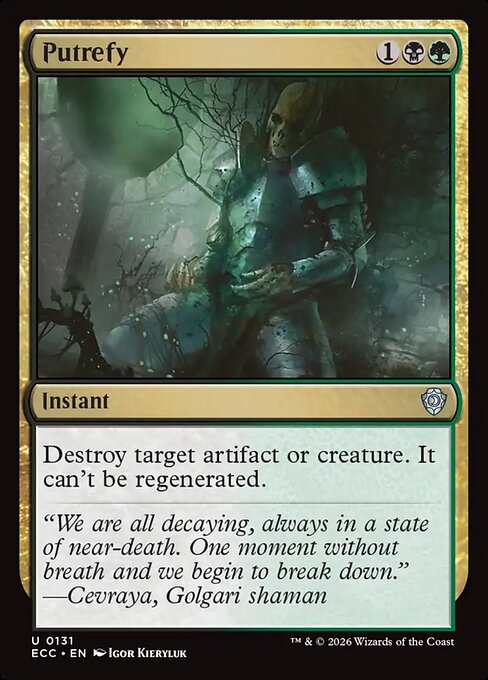
Putrefy
{1}{B}{G} — Instant. Bulk-bin pricing — about as cheap as instant-speed removal gets.
Why it wins: Destroy target artifact or creature, no regeneration. Three mana to answer two threat types at instant speed — dependable and bulk-priced, and a fine target to recur once your graveyard engine comes online.
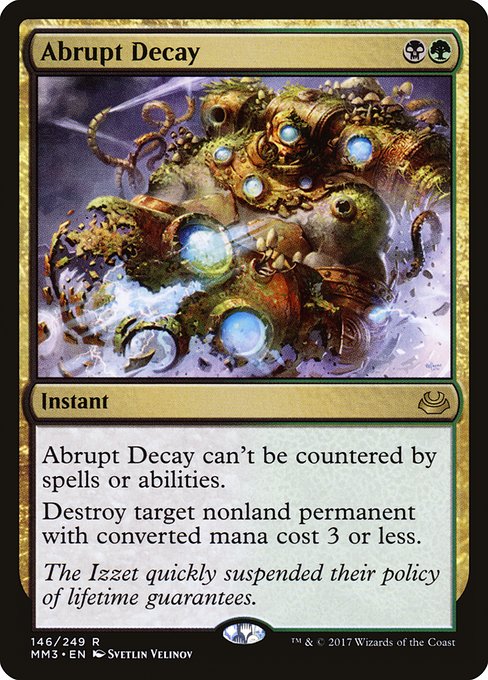
Abrupt Decay
{B}{G} — Instant. A little pricier than bulk removal, but still comfortably inside budget.
Why it wins: Destroy any nonland permanent of mana value 3 or less, uncounterable. Brutal against rocks, cheap engines, and enchantments, and it walks through control mirrors. Huge value for two mana against the decks Sultai struggles to out-resource quickly.
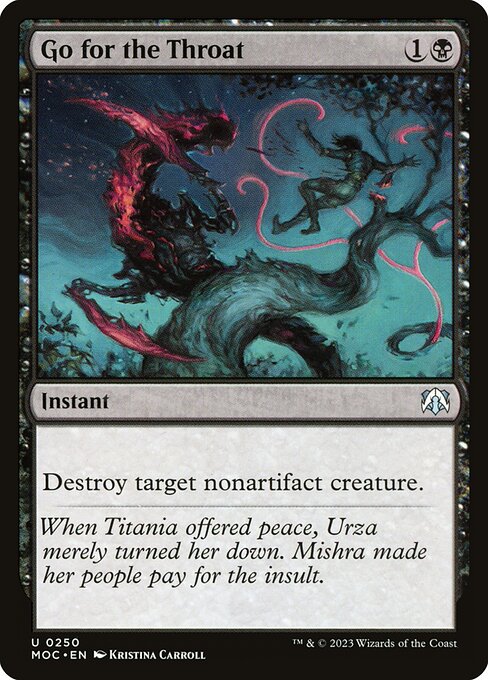
Go for the Throat
{1}{B} — Instant. Inexpensive and widely available.
Why it wins: Two-mana creature kill with no real drawback in most pods. Reliable, always castable, dirt cheap — the backbone of black removal, and exactly the kind of efficient trade Sultai wants to make over and over.
The Top 3 Card-Advantage Engines
This is the win condition. Out-resourcing the table only works if you're actively drawing more cards than everyone else.
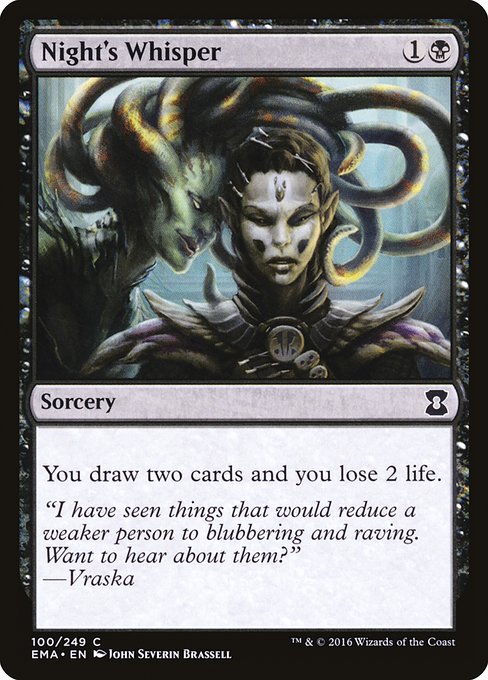
Night's Whisper
{1}{B} — Sorcery. Inexpensive and easy to find in any quantity.
Why it wins: Two cards for two mana and 2 life — raw, unconditional advantage. The cheapest "just draw cards" button, and life is a resource Sultai is happy to spend on the way to a dominant late game.
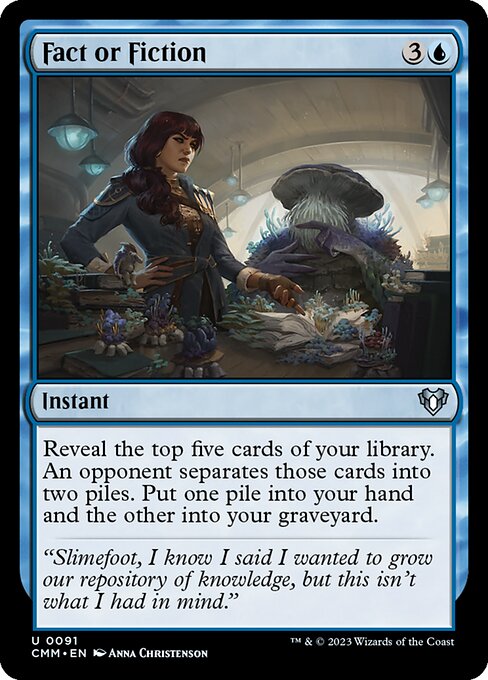
Fact or Fiction
{3}{U} — Instant. Cheap and easy to find.
Why it wins: Reveal five, opponent splits, you keep a pile — and the cards you bin fuel your graveyard. Two-to-four cards at instant speed for a dollar, with upside for a recursion deck that's happy to lose cards to the yard.
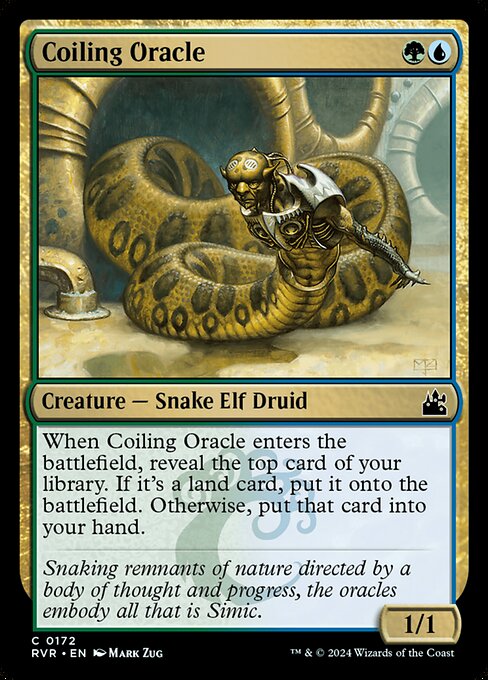
Coiling Oracle
{G}{U} — Creature. Near-bulk pricing.
Why it wins: A 1/1 that ramps a land or draws a card on entry — and it's a creature, so it blocks and blinks. Cheap value that smooths your early game and feeds the graveyard later, with no real downside to playing it on curve.
The Top 3 Graveyard Value Pieces
This is what separates Sultai from a generic three-color goodstuff pile — the graveyard isn't a loss, it's a second copy of your best cards.
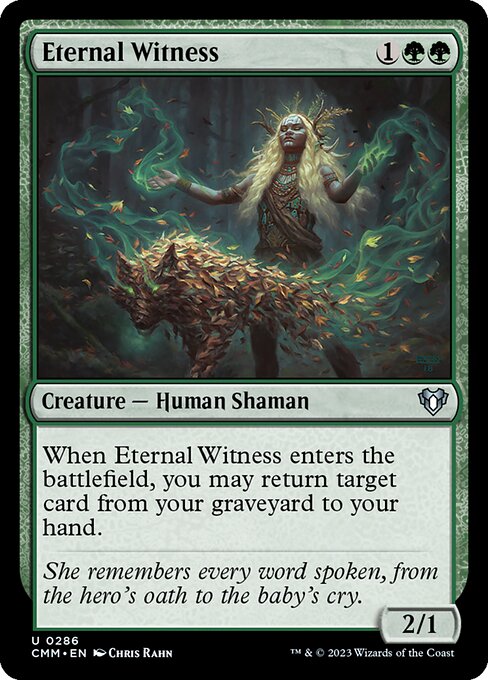
Eternal Witness
{1}{G}{G} — Creature. A bit pricier than bulk, but still comfortably inside budget.
Why it wins: Return any card from your graveyard — on a recurring, blink-able body. Buy back your best removal or draw spell, then loop it. The backbone of Sultai value, and a card that gets stronger the longer the game runs.
Victimize
{2}{B} — Sorcery. A dollar or two, and mono-black, so it fits any Sultai list.
Why it wins: Sacrifice a creature to return two creature cards from your graveyard to the battlefield tapped. Three mana turns a spent body — a Coiling Oracle that already drew you a card, a Sakura-Tribe Elder you were sacrificing anyway — into two bigger ones. Built for the mill-and-recur plan, and exactly Sultai's "do more with less" identity.

Grisly Salvage
{B}{G} — Instant. Near-bulk pricing.
Why it wins: Mill five, then put a creature or land into hand. It fills the graveyard for your recursion and finds you a piece — cheap fuel and selection in one instant, with almost no wasted mana.

Honorable Mentions
Once the core nine are in place, these three add redundancy to the mana base and the removal suite without pulling focus from the cards that matter most.
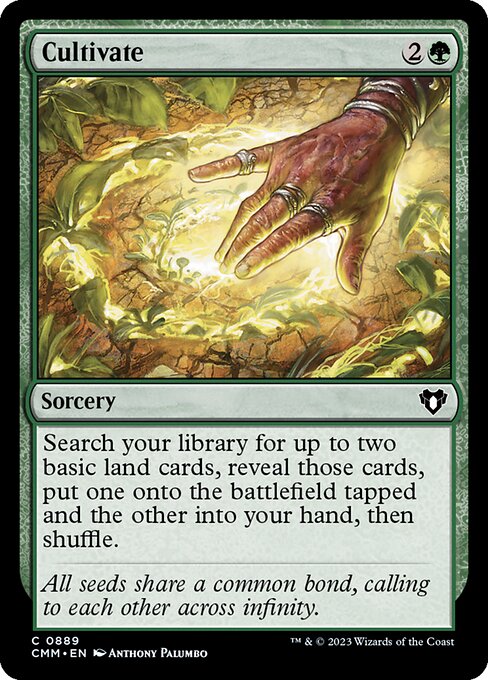
- Cultivate. Ramp and three-color fixing in one near-bulk card — exactly the kind of mana-base smoothing a Sultai manabase needs.
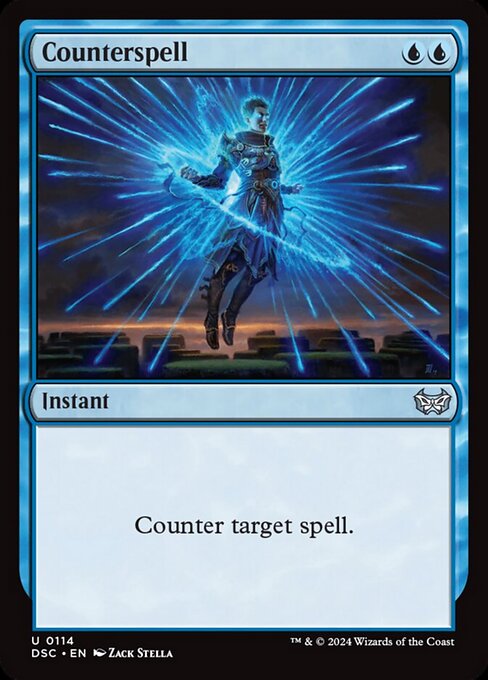
- Counterspell. The cleanest answer to the spell that ends the game, and a fine way to protect your engine once it's assembled.
- Sakura-Tribe Elder. Blocks, ramps, fixes, and feeds the graveyard on the way out — one of the most efficient two-mana creatures ever printed.

Budget Deckbuilding Mistakes
A few traps catch budget Sultai builders. Avoid these and the deck plays well above its price:
Milling yourself with nothing to recur.
Self-mill is only good if you have Eternal Witness, Victimize, or similar recursion waiting to cash it in. Filling your graveyard for its own sake just costs you cards — pair every self-mill effect with a payoff that gets them back.
Playing too passively.
Sultai's patience is a strength, but it's not an excuse to durdle forever. If you're not trading resources favorably by turn six or seven, you're not grinding value — you're just falling behind a faster table.
Skipping interaction for more value pieces.
It's tempting to stack the deck with card-advantage engines and skimp on removal. Sultai still needs to answer the table's actual threats — a deck full of value with no way to stop a combo or a fast aggro start just loses on a faster clock.
Where to Buy the Pieces
A Sultai shell is built from singles, so a singles marketplace is the way to assemble it affordably. TCGplayer and Card Kingdom are the go-to stops for the cheap removal and card draw that make up this list — buy your draw spells first, since the whole archetype lives or dies on actually outpacing the table on cards. Prices vary, so compare carts before checking out.
Sultai Budget FAQ
- Is Sultai beginner-friendly? It's patient and forgiving — if you enjoy out-resourcing the table rather than racing, it's an easy plan to pilot and cheap to build.
- What should I prioritize? Removal and card draw first, then your recursion engine. Sultai wins by having more answers than the table has threats.
- Is self-mill the same as a dedicated mill strategy? No — here, milling yourself is just a cheap way to fill the graveyard for recursion. You're not trying to deck opponents; see our mill strategy guide for that separate plan.
- What's the ideal land count? Lean slightly higher than a typical 37-38, since Sultai wants to hit land drops reliably to keep casting value spells every turn — 38-39 is a safe default.
- Do prices move? Yes. Every figure is an approximate average as of June 2026 — verify before buying.
Patience Is the Win Condition.
Sultai is the budget value grinder: cheap removal, cheap card draw, and a graveyard that hands your best spells back turn after turn. Answer the threats, refill your hand, and recur your way to inevitability — all on commons and uncommons. Build the removal-and-draw core first, then layer in recursion and let the long game do the rest.
There's a reason this wedge shows up so often in cube and casual power rankings despite costing almost nothing: card advantage is the most reliably powerful resource in multiplayer Magic, and Sultai accumulates it from more angles than almost any other color combination. Patience isn't just a playstyle here — it's the actual win condition.
Keep Learning:
© GEEKYDOMAIN.COM | Strategy Powered by Data