

Reading Your Opponent: Lorcana Mind Games
For players who already know the rules and now want to learn the person across the table — what open ink, held-back quests, and a suspiciously full hand actually mean.
Some links below are affiliate links. If you buy through them, Geeky Domain may earn a small commission at no extra cost to you.
The Short Version
Lorcana rewards players who can read the table, not just the cards on it. Because the game has no maximum hand size, a five-card hand and a two-card hand can represent the exact same threat — you can only tell them apart by tracking behavior, not by counting cards. Every inkable card must be revealed before it goes face-down into the inkwell, so an opponent's total ink is always public information even though which specific cards make it up stays hidden. A ready character is genuinely ambiguous because it can only quest, challenge, or use an exert ability once per turn — never more than one. Keywords like Rush, Challenger, Bodyguard, and Reckless build real tells directly into the rules, and the first one or two ink colors an opponent reveals already narrow their deck to a short list of two-color archetypes.
In This Guide
- → What an Opponent's Open Ink Actually Tells You
- → The Quest-vs-Challenge Tension: What a Ready Character Is Hiding
- → Bluffing With a Full Hand (and an Empty One)
- → Keywords That Build Bluffs Into the Rules
- → Deducing Deck Archetype From the First Few Turns
- → Protecting Your Reads: Why Sleeve and Shuffle Integrity Matter
- → FAQ & Quick Reference
What an Opponent's Open Ink Actually Tells You
Every Lorcana turn opens the same way: exerted cards ready, any start-of-turn triggers resolve, and the active player draws a card (the one exception being that whoever goes first skips the draw on their opening turn) — the game's own shorthand for this is "Ready, Set, Draw." After that, a player may place one eligible card into their inkwell, but only after showing it to the table. That single rule quietly changes the entire information landscape of the game. You are never guessing at your opponent's total ink. You watched every card go in, face-up, before it flipped face-down. If it's turn six and they've inked on five of those turns, you know they have exactly five ink whether they've spent it or not. What you don't know is which of their remaining cards in hand are inkable in the first place, which is why understanding the inkable-versus-uninkable split matters as much as counting pips.
This is where a lot of newer players stop paying attention, because the ink count feels like a solved variable — you can see it, so why keep tracking it? But the interesting read isn't the number itself, it's the number relative to what they choose to do with it. A player sitting on six open ink who plays nothing and passes is telling you something different than a player sitting on two open ink who plays nothing and passes. The first is representing a real decision — they can afford whatever the biggest threat in their deck costs, and they're choosing not to commit it yet. The second probably just doesn't have a play. Learning to separate "holding back because they can't" from "holding back because they won't" is most of what reading an opponent in this game actually is, and it starts with a habit as simple as glancing at the inkwell before you decide your own line — the same discipline that makes a clean opening hand worth more than a lucky one.
The Quest-vs-Challenge Tension: What a Ready Character Is Hiding
Questing exerts a ready character to gain lore equal to its printed value. Challenging exerts a ready character to fight an already-exerted opposing character, both sides dealing damage equal to Strength, with anything taking damage equal to or greater than its Willpower getting banished. Those are two completely different actions built on the exact same resource: an untapped character can do one of them, or use an exert-cost ability instead, but never more than one in the same turn. That constraint is the entire engine behind reading a Lorcana board. Every character standing ready on your opponent's side is a question mark, and the question is always the same one: what is this card about to be used for, and why hasn't it happened yet?
A freshly played character normally can't act at all the turn it enters play — its ink hasn't dried — unless it has Rush, which lets it challenge (though not quest) immediately. 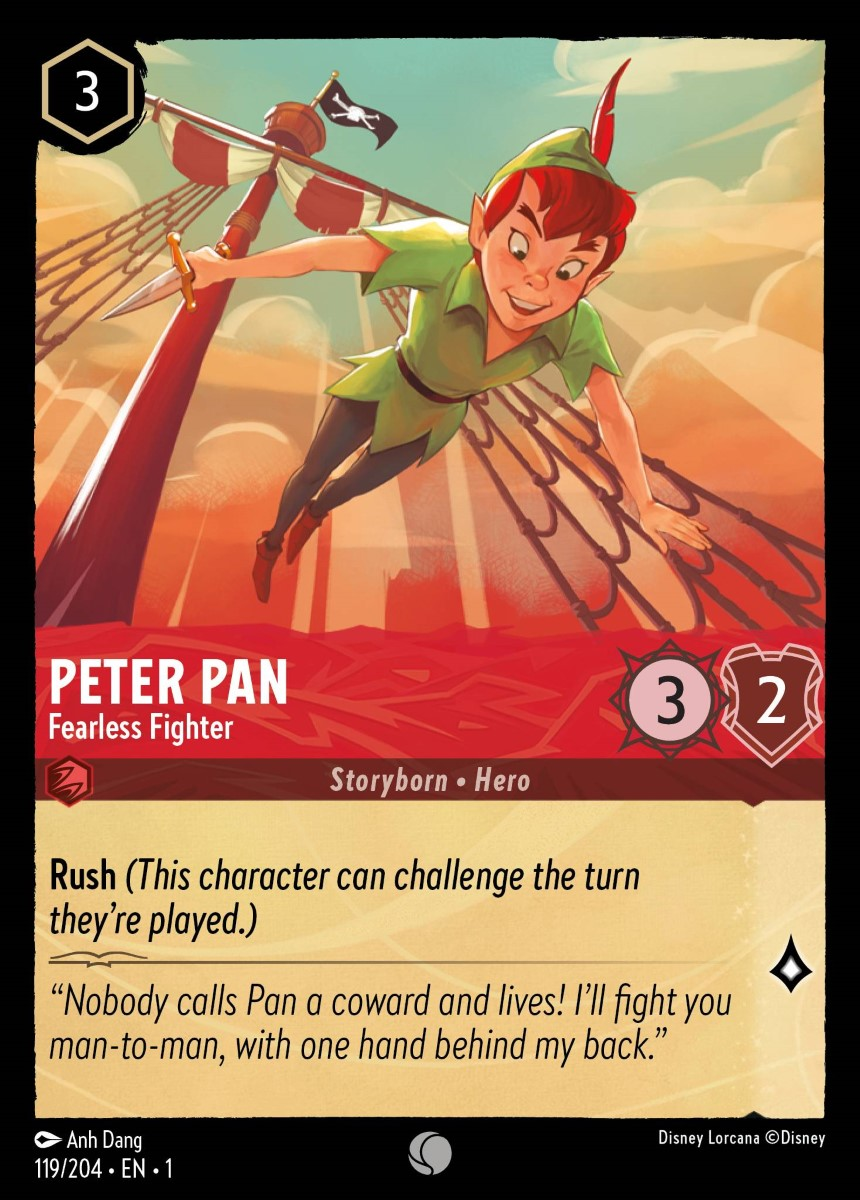 Peter Pan - Fearless Fighter is a good card to keep in mind here, because Rush is the clearest case where "they just played it" is not a reason to relax — Shift is the other one to watch for, since a character shifted onto one that's been in play since the start of the turn and is still ready inherits that dried, ready state and can quest, challenge, or use an exert ability right away. Everywhere else, a brand-new character sitting ready is either genuinely unable to act yet, or it's a signal that your opponent is content to let it sit as a blocker-in-waiting for next turn's challenge. Compare that to a character that's been on board for several turns and is still ready with no quest this turn — that one has no summoning-sickness excuse, which means the decision not to quest was deliberate. Maybe they're worried about a trick from your open ink and don't want to walk a character into a bad trade after questing exerts it. Maybe they'd rather hold it back to challenge whatever you exert on your turn. This tension is the same one that separates going tall from going wide as a deckbuilding philosophy, and it plays out fresh every single turn in the lore race that decides most games.
Bluffing With a Full Hand (and an Empty One)
Because Lorcana has no maximum hand size, a player never has to discard down at the end of their turn. That single design choice is what makes a big hand such a durable bluff — there's no forced timer pushing your opponent to dump cards or reveal information, so a five- or six-card hand can sit there for turns on end, doing nothing but making you play around threats that may or may not exist. TCG Protectors' intermediate Lorcana strategy guide puts the underlying plan plainly: after reaching the ink you need for your best cards, the idea is to "hold cards to maintain options or bluff a response." That's not a hidden tech, it's the accepted rhythm of the mid-game — ink until you can cast your top end, then start banking cards as leverage instead of spending them as fast as you draw them.
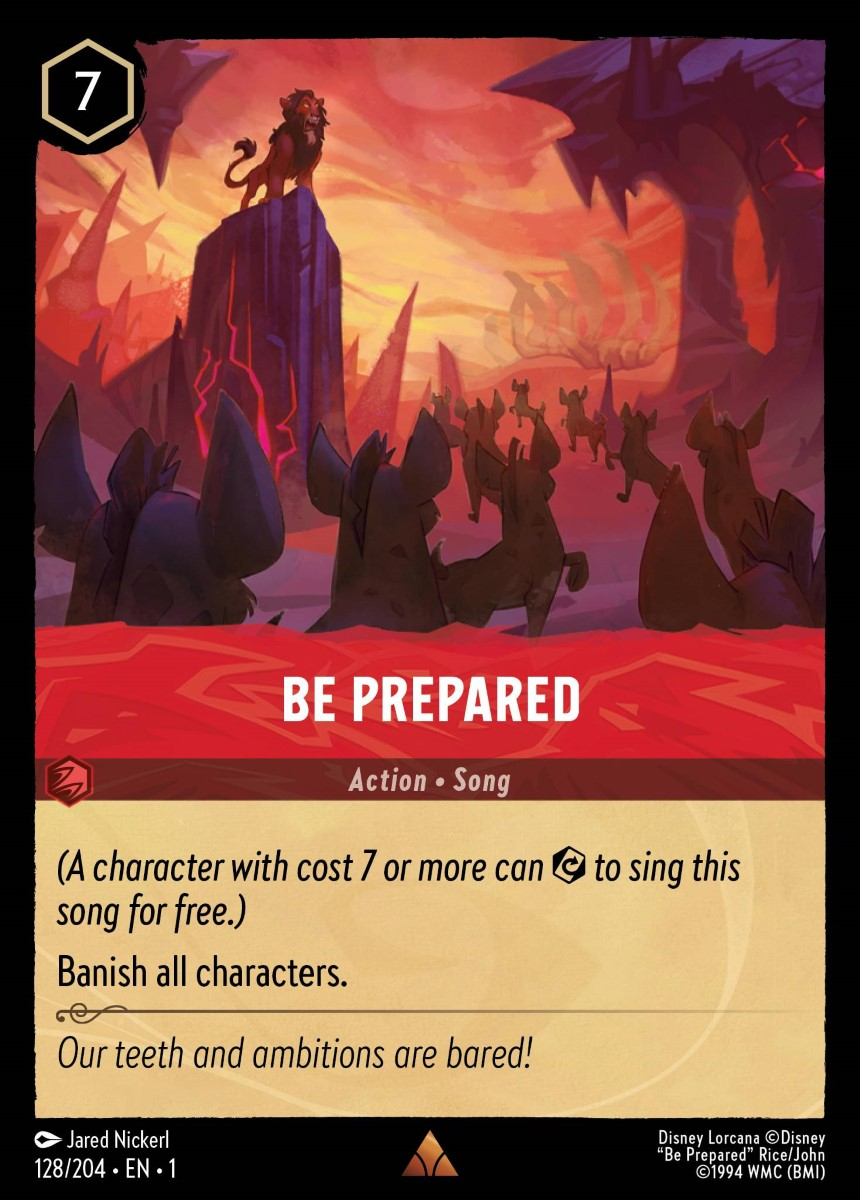
The flip side is just as important: an "empty" hand isn't automatically a safe one. 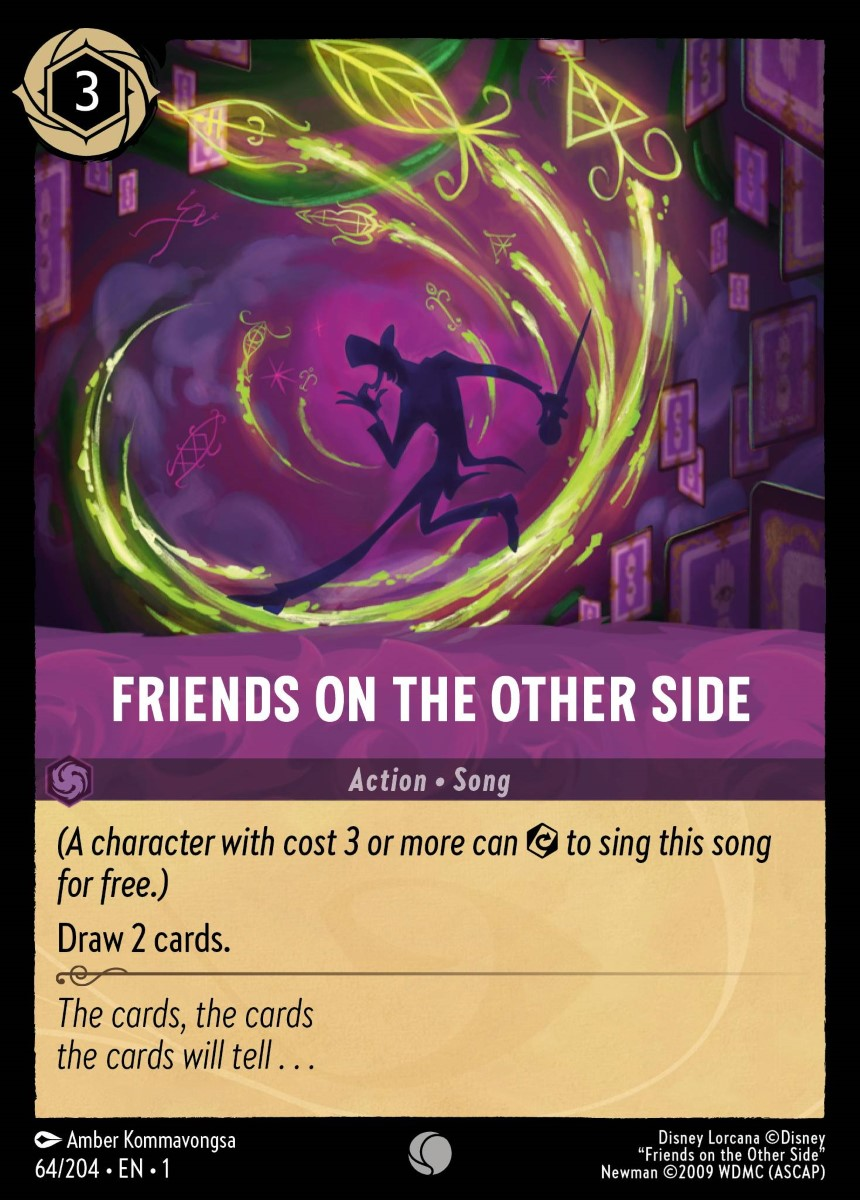 Friends on the Other Side is a 3-cost Amethyst song — any character costing 3 or more can exert to sing it for free — and its entire effect is draw two cards. A player who looks tapped out and desperate can be one ready character costing 3 or more away from refilling their hand on their next turn, which is exactly why "they have nothing left" is a dangerous assumption to build a whole attack around. On the more expensive end, Be Prepared is a 7-cost Ruby song that banishes every character in play on both sides of the board, and it's playable off any character costing 7 or more. If you notice an opponent sitting on ink in that range while declining to commit their own board, that reluctance is worth taking seriously — it's the kind of behavior a real board wipe produces, whether or not they're actually holding one. Songs like these are a big enough part of Lorcana's bluff game that it's worth knowing the Singer and Songs mechanic cold, and control-leaning shells built to protect exactly this kind of patience are covered in more depth in our Ruby/Amethyst control masterclass.
Keywords That Build Bluffs Into the Rules
Some of the most reliable mind games in Lorcana aren't really mind games at all — they're keywords that hard-code a tell or a bluff directly into a card's text box. Learning the full keyword list pays for itself many times over here, because half the job of reading a board is knowing which of these abilities is quietly in play. Challenger +N is the cleanest example: it only adds Strength while that character is the one initiating a challenge, never while it's questing and never while it's being challenged itself. A one-ink character can look completely harmless sitting on the board, then hit far above its printed stat line the moment it swings.
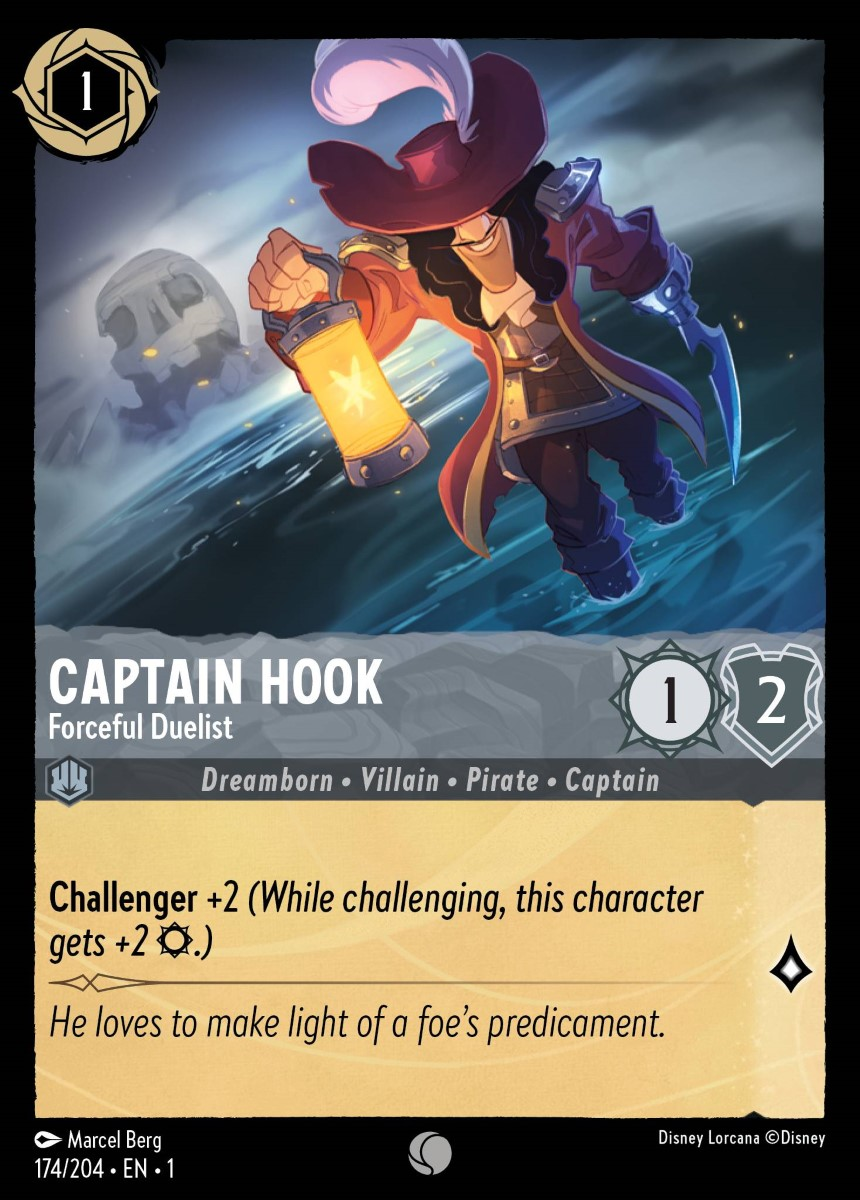
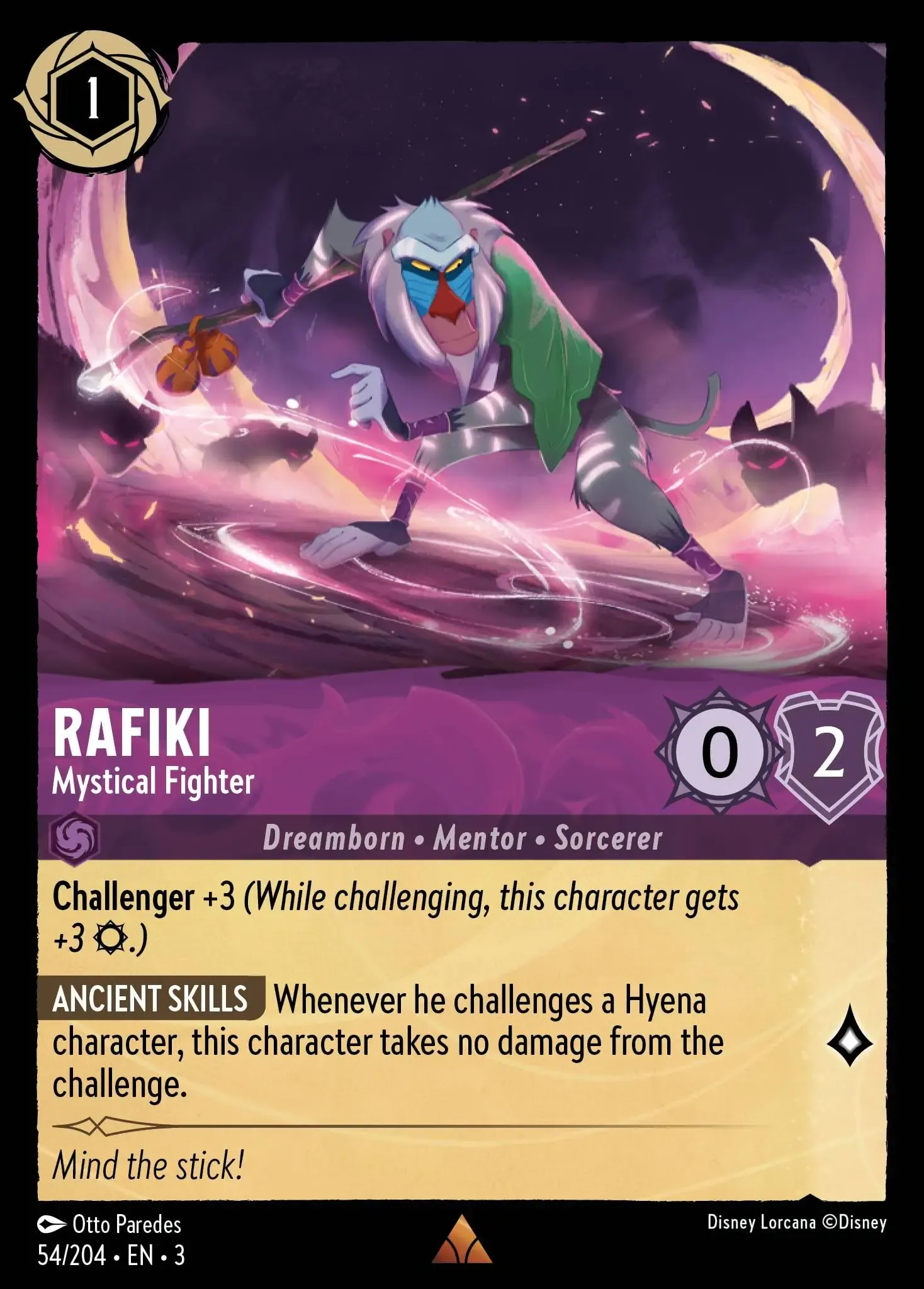
Captain Hook - Forceful Duelist is a one-ink Steel character with Challenger +2 — cheap enough to look like a throwaway blocker until it's attacking as a much bigger number than its cost suggests. Rafiki - Mystical Fighter takes the disguise even further: a 0 Strength, 2 Willpower body at one ink that gains Challenger +3, meaning a character with zero printed offense is fully capable of trading up the moment it initiates. Other keywords work the opposite way, removing ambiguity instead of creating it. Bodyguard lets a character enter play already exerted, and while it's exerted, any challenge aimed at your board must target the Bodyguard character first if one is available — a deliberate, rules-enforced "hit me instead" that functions as bait whether or not the player wants it read that way, which is worth understanding on its own in our Bodyguard breakdown. Reckless goes further still: a Reckless character can't quest at all, and if it's ready and able to challenge, its controller cannot end the turn without doing so. There's no bluff to read there because there's no choice being made — if you see Reckless on a ready, eligible character, assume the swing is coming.
| Keyword | What It Does | What It Signals |
|---|---|---|
| Rush | Can challenge (not quest) the turn it's played, ignoring the normal wait | A brand-new character is an immediate threat, not a future one |
| Evasive | Can only be challenged by another Evasive character | A comparatively safe quester — expect it to attack lore most turns |
| Ward | Can't be chosen as the target of an ability or effect | Still vulnerable to challenges and board-wide damage — not untouchable |
| Challenger +N | Gets +N Strength only while initiating a challenge | Looks weak at rest; the real number only shows up on offense |
| Bodyguard | Can enter exerted; must be challenged first while exerted | A built-in bait — meant to absorb a challenge for the rest of the board |
| Reckless | Can't quest; must challenge if ready and able | No bluff possible — if it's ready and can hit something, it will |
Deducing Deck Archetype From the First Few Turns
Constructed Lorcana decks are built from at most two of the game's six ink colors, so the very first card your opponent inks already cuts their possible identity down to a short list of two-color pairs. Each color carries a real strategic lean: Amber leans into healing, lore, and protection; Amethyst into card draw; Steel into raw strength and board control; Ruby into damage and aggressive removal; Sapphire into control and tactical items; and Emerald into discard and disruption. The moment you see their second color, that list collapses even further, and you can start planning around a known shape rather than a total unknown — the same shape our color-by-color breakdowns for Amber and Ruby budget staples are built around.
Curve tells you almost as much as color. A healthy deck has playable cards across the whole cost spectrum, but aggressive builds typically run a heavy concentration — commonly cited around 12 to 14 cards — at the one and two-cost slots, while a deck that's noticeably quiet in the early turns and only starts acting once it reaches five, six, or seven ink is signaling a top-heavy, control-leaning build. That difference in early behavior lines up with how these archetypes actually want to play the game: aggro decks are generally built to prioritize questing and racing lore, while control decks are generally built to prioritize challenging, denying your lore gain while they assemble a bigger board or a bigger finisher. If your opponent spent turns one and two doing nothing but passing with ink face-down, don't read that as a mistake — read it as a deck telling you exactly what it's building toward, and start planning your own lore race accordingly with a resource like our guide on beating control or beating aggro, depending on which side of that curve you're staring at.
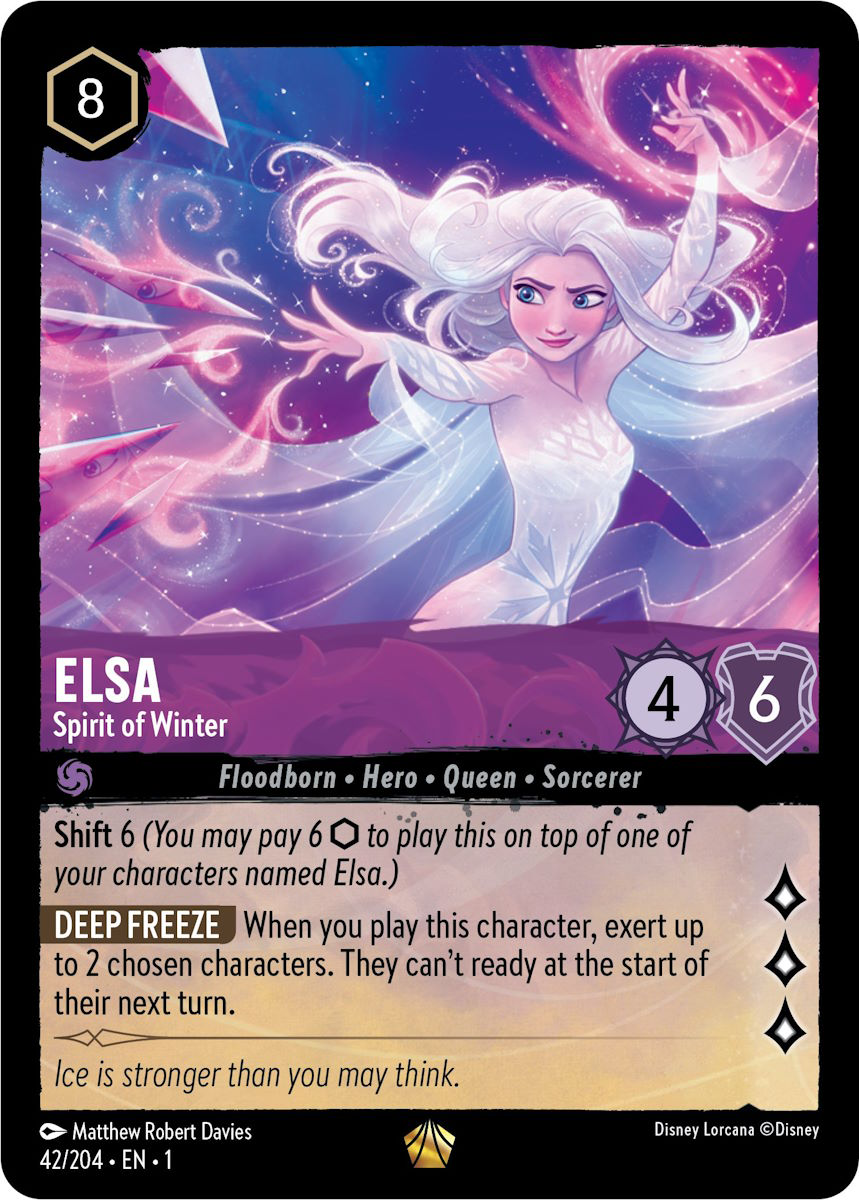
Elsa - Spirit of Winter is a good case study for exactly this pattern. She's an eight-ink Amethyst character with Shift 6, and her enter-play ability, Deep Freeze, exerts up to two chosen characters and stops them from readying at the start of their next turn — a real tempo swing that can single-handedly take over a turn if it lands unanswered. A player quietly stockpiling ink into that six-to-eight range in an Amethyst-adjacent shell, while declining to commit much of a board, is showing you a very specific and well-documented threat shape, not just being passive. Recognizing that pattern before it resolves is most of what separates reacting to a deck from actually playing around it — and it's exactly the kind of pattern-recognition that a solid deckbuilding foundation teaches you to notice on both sides of the table.
Everything in this guide assumes both players are working from the same hidden information. A worn corner or a mismatched sleeve on your best card undoes that instantly — for someone else.
As an Amazon Associate, Geeky Domain earns from qualifying purchases. eBay links are affiliate links; Geeky Domain may earn a commission at no extra cost to you.
Protecting Your Reads: Why Sleeve and Shuffle Integrity Matter
Everything covered so far assumes both players are working with the same hidden information — that the only way to learn what's in an opponent's hand is through legal deduction: ink counts, curve, keyword tells, and behavior over time. That assumption breaks the moment cards themselves start leaking information physically. A bent corner on your one copy of Be Prepared, a scuffed sleeve back on your only Elsa - Spirit of Winter, a different print run mixed into an otherwise matching set — any of these can turn a specific card into something an attentive opponent can identify from across the table without doing any of the reading this article has been about. You'd be handing away for free exactly the kind of edge you're trying to earn through play.
This is a big part of why organized events care so much about uniform, opaque sleeves in the first place, and it's worth treating as more than a cosmetic choice even in casual games — full details on what tournament organizers actually check are covered in our Set Championship and organized play guide. A full shuffle between games matters for the same reason: if your deck's color and curve identity is going to be read by your opponent anyway over the course of a match, you don't want to hand them a head start by leaving last game's clumping intact. None of this requires expensive gear — it just requires a matched set that isn't showing wear where it counts, which pairs naturally with knowing how to spot counterfeit or altered cards in the first place, since both problems come down to the same habit: actually looking closely at what's in front of you before you trust it.
FAQ & Quick Reference
Does Lorcana have a maximum hand size I need to worry about? No. Players never discard down at the end of a turn, which is exactly why a big hand can be held indefinitely as a bluff rather than being forced out by a hand-size rule the way some other card games work.
How do I track my opponent's ink without losing count? Every inkable card has to be revealed before it's placed face-down, so the running total is public — the simplest habit is to just note it once per turn during their Beginning Phase rather than trying to reconstruct it later.
What's the single biggest mistake players make when trying to read an opponent? Treating a ready, un-exerted character as automatically safe to ignore. Because a character can only quest, challenge, or use an ability once per turn, every ready character on the board is a live decision your opponent is still making — assuming it's already "used up" for the turn is how challenges catch people off guard.
What does it mean if my opponent keeps refusing to quest with a ready character? It usually means one of three things: the character was played this turn and its ink isn't dry yet, they're worried about a trick from your open ink, or they'd rather hold it back to threaten a challenge against whatever you exert next.
Are Ward characters safe from everything? No. Ward only prevents opponents from targeting that character with an ability or effect — it does nothing to stop a challenge or board-wide, non-targeted damage.
What's the fastest way to guess an opponent's archetype early? Their first two inked colors narrow them to one of a short list of two-color pairs, since constructed decks use at most two colors, and their turn-one and turn-two behavior — playing out cheap threats versus passing while inking up — usually maps to an aggro-versus-control lean from there.
Do sleeves actually matter for reading the game, or is that just card protection? Both. Beyond protecting your cards, uniform and undamaged sleeves keep individual copies from becoming physically identifiable, which is exactly the kind of information leak this whole guide is about avoiding — just from the other direction.
The Cards Are Only Half the Information.
Lorcana gives you real, trackable signals — public ink counts, the one-exert-per-turn limit, keyword-level tells like Rush, Bodyguard, and Reckless, and a color-and-curve identity that shows up in the first few turns — and reading them well is a skill that improves independently of your deck. Start by tracking what your opponent's ready characters could be about to do instead of what they already did, and the rest of this framework starts filling in on its own.
© GEEKYDOMAIN.COM | Strategy Powered by Data