

Every Lorcana Keyword Explained
Keywords are the grammar of Disney Lorcana. Here's every current one in plain English — including the protection rules nearly everyone gets wrong.
Lorcana packs a lot of its rules into single words. "Bodyguard," "Evasive," "Shift" — these keywords are printed right on your cards, and each is shorthand for a specific ability the game expects you to know. For a new player that can feel like a secret language. The good news: the list is short, the words are intuitive once explained, and learning them is the fastest way to start making confident plays.
This guide covers every current keyword in plain English. We'll start with a quick refresher on the basic actions keywords build on, dig into the three "protection" keywords that get muddled most often (Bodyguard, Resist, and Ward — plus the Ward-vs-Evasive confusion that decides games), then run through the rest so you've got a complete reference.
These definitions follow Lorcana's official Comprehensive Rules. The game occasionally adds a new keyword with a set, so if you hit something not listed here, the Comprehensive Rules are the final word — and when a card's text and any guide ever disagree, the card wins.
The Short Version
Keywords are one-word abilities printed on your cards. The protection trio is the big one: Bodyguard forces opponents to challenge it first; Resist +N reduces damage dealt to the character by N; Ward stops opponents from choosing it for effects but doesn't stop challenges. That last point matters — Ward blocks removal, Evasive blocks challenges; they protect against different things. The rest (Challenger, Rush, Reckless, Shift, Singer, Sing Together, Support, Vanish, and the newest, Boost) handle combat, tempo, songs, disruption, and powering up your characters. Learn these and you'll understand the vast majority of cards you'll ever play. Full cheat sheet at the bottom.
→ Keyword Deep-Dives
In This Guide
First, the Basics
Keywords modify a handful of core actions, so they only make sense once you know those actions. Here's the quick primer:
- Ink & the inkwell — each turn you may put one card face-down into your inkwell as a resource; ink pays the cost to play your cards.
- Exert & ready — turning a card sideways ("exerting") is how it quests, challenges, or uses some abilities. It readies again at the start of your next turn.
- Quest — exert a character to gain lore equal to its lore value (the diamond number). First to 20 lore wins.
- Challenge — exert a character to attack an opponent's exerted character; both deal damage equal to their Strength to each other.
- Strength, Willpower & damage — Strength is how much damage a character deals; Willpower is how much it can take. When damage meets or exceeds Willpower, the character is banished.
- Drying ink — a character can't quest, challenge, or use exert abilities the turn it's played, unless a keyword (like Rush) says otherwise.
With those in hand, every keyword below is just a tweak to one of these rules.
The Protection Trio
These three keep your characters alive, but each protects against a different threat. Knowing which is which is half the battle.
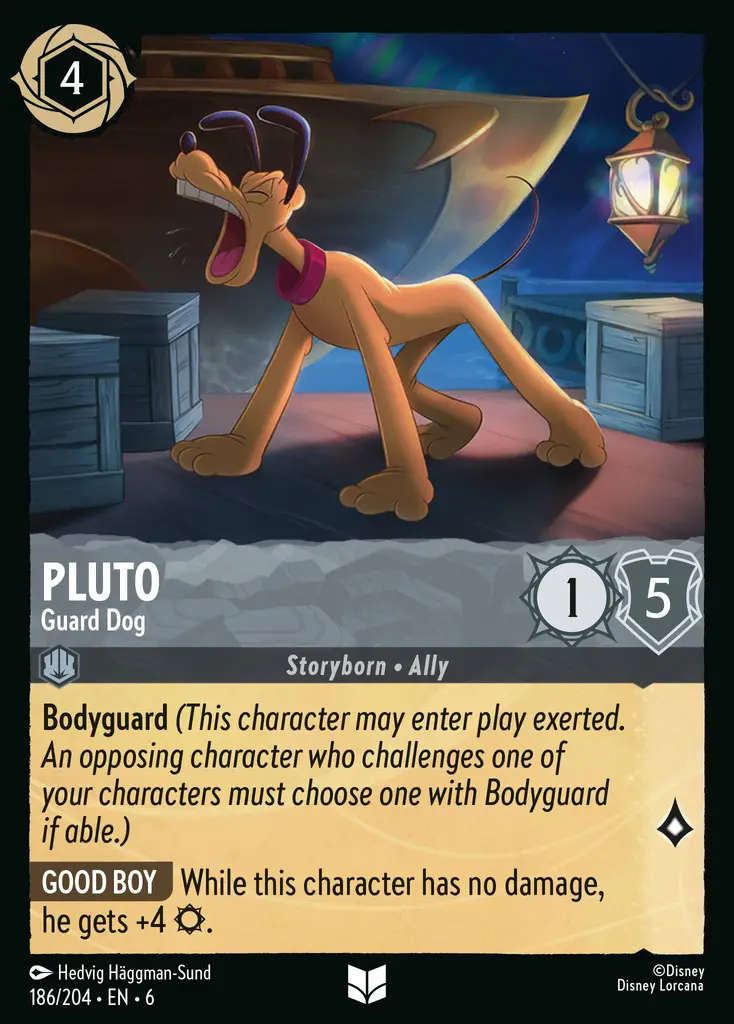
Bodyguard
What it does: A character with Bodyguard may enter play already exerted, and while it's exerted, an opposing character that challenges must choose a Bodyguard character if able.
How it plays: It's a bouncer. By entering exerted, your Bodyguard is an immediate, mandatory target — so your fragile lore-generators keep questing while the opponent is forced to deal with the big body up front. Pair it with high Willpower or Resist to make it a genuine wall.
Common mistake: Forgetting the "if able" clause. Effects that stop a character from being chosen, or other interactions, can let an opponent challenge around your Bodyguard — and the redirection only matters while the Bodyguard is exerted.
Resist +N
What it does: If damage would be dealt to this character, it's dealt that much minus N instead — every time damage would be dealt, not just once.
How it plays: Resist turns a character into a serial survivor. In a challenge it shrugs off part of every hit, often winning trades it has no business winning and surviving "deal damage" effects. Multiple sources of Resist stack, so +1 and +2 become +3.
Common mistake: Assuming Resist stops removal entirely. It only reduces damage — a banish effect that doesn't deal damage, or enough damage to overwhelm the reduction, still gets there.
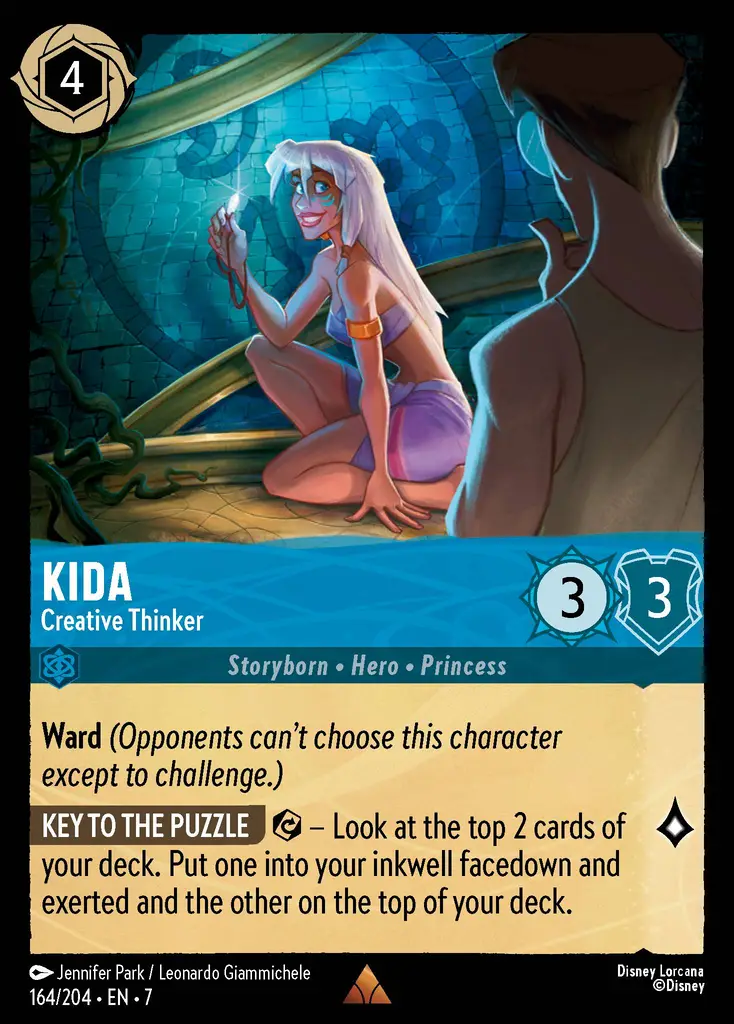
Ward
What it does: Opponents can't choose this character — except to challenge it.
How it plays: Ward is your shield against targeted removal: "deal damage to chosen character," "return chosen character to hand," and similar effects simply can't pick a Ward character. It's the keyword you want on the engine piece your whole deck is built around.
Common mistake: Believing Ward makes a character untouchable. It does not stop challenges. A Ward character that's exerted from questing can be challenged and banished like anyone else. Ward dodges spells, not swords.
Ward vs Evasive vs Bodyguard
This is the single most common point of confusion in Lorcana, so let's nail it. All three are "protective," but they answer different threats:
- Ward — protects against being chosen by effects and abilities (removal, bounce, targeted damage). Does not stop challenges.
- Evasive — protects against challenges: only characters that also have Evasive can challenge it. Does not stop targeted effects.
- Bodyguard — doesn't protect itself; it redirects challenges onto itself to protect your other characters.
The One-Sentence Rule
If you're worried about removal spells, you want Ward. If you're worried about getting challenged, you want Evasive. If you want to soak hits for your team, you want Bodyguard. A character with both Ward and Evasive is famously hard to deal with — protected from effects and from ordinary challenges at once.
Combat Keywords
These change how challenges work — who can attack, when, and how hard.
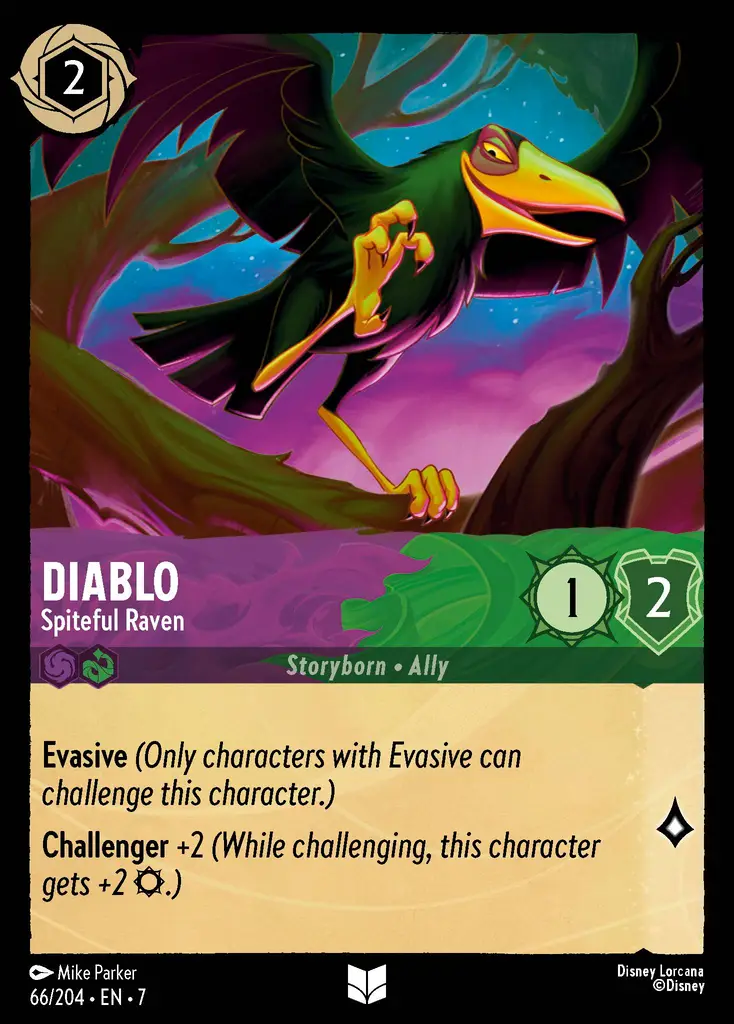
- Challenger +N. This character gets +N Strength only while it's challenging. A 2-Strength character with Challenger +3 swings as a 5 when it attacks, then drops back to 2 afterward. Great for forcing favorable trades — but it does nothing on defense, since the bonus only applies when this character initiates the challenge.
- Evasive. Only characters that also have Evasive can challenge this character. Against a normal board it's untouchable in combat, so it quests safely turn after turn — a reliable lore closer that slips through crowded boards. (Remember: Evasive doesn't stop targeted effects — see the mistakes section.)
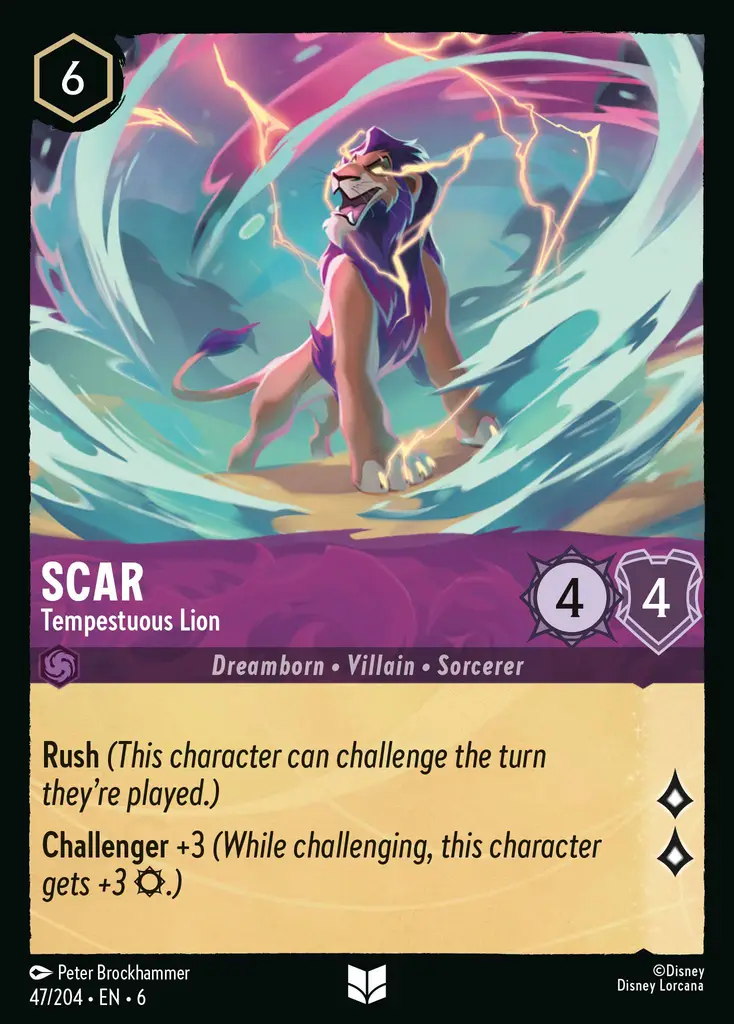
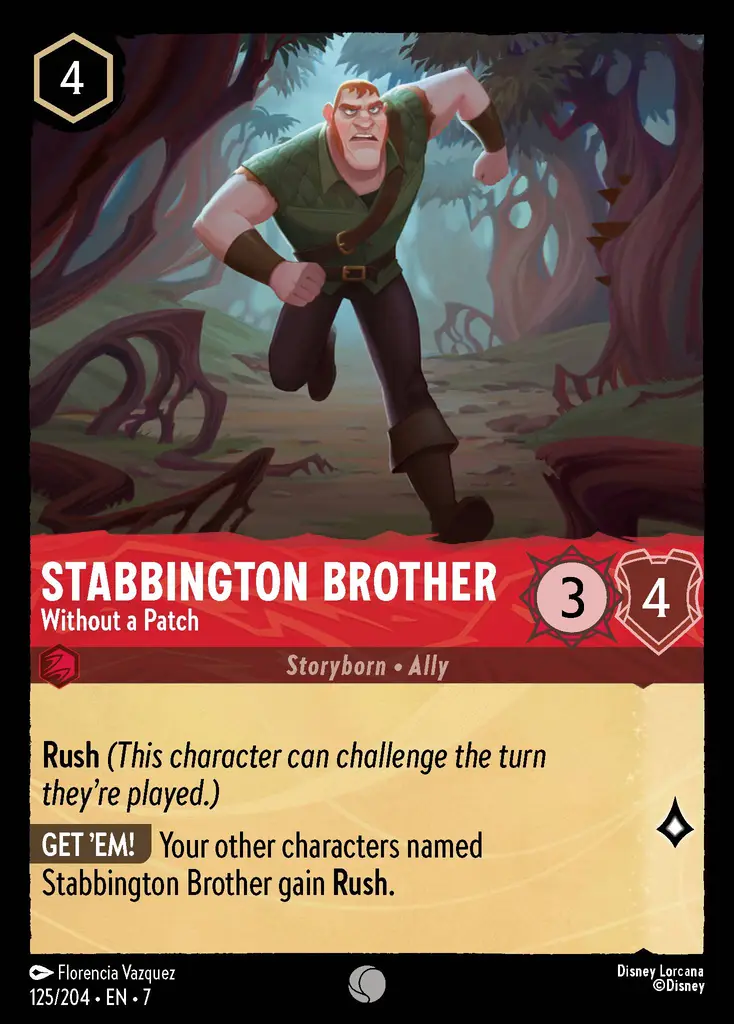
- Rush. This character can challenge the turn it's played, ignoring the usual wait for the ink to dry. It's a surprise weapon for taking out an exerted threat before your opponent can react. Important nuance: Rush only speeds up challenging — the character still can't quest or use exert abilities until your next turn.
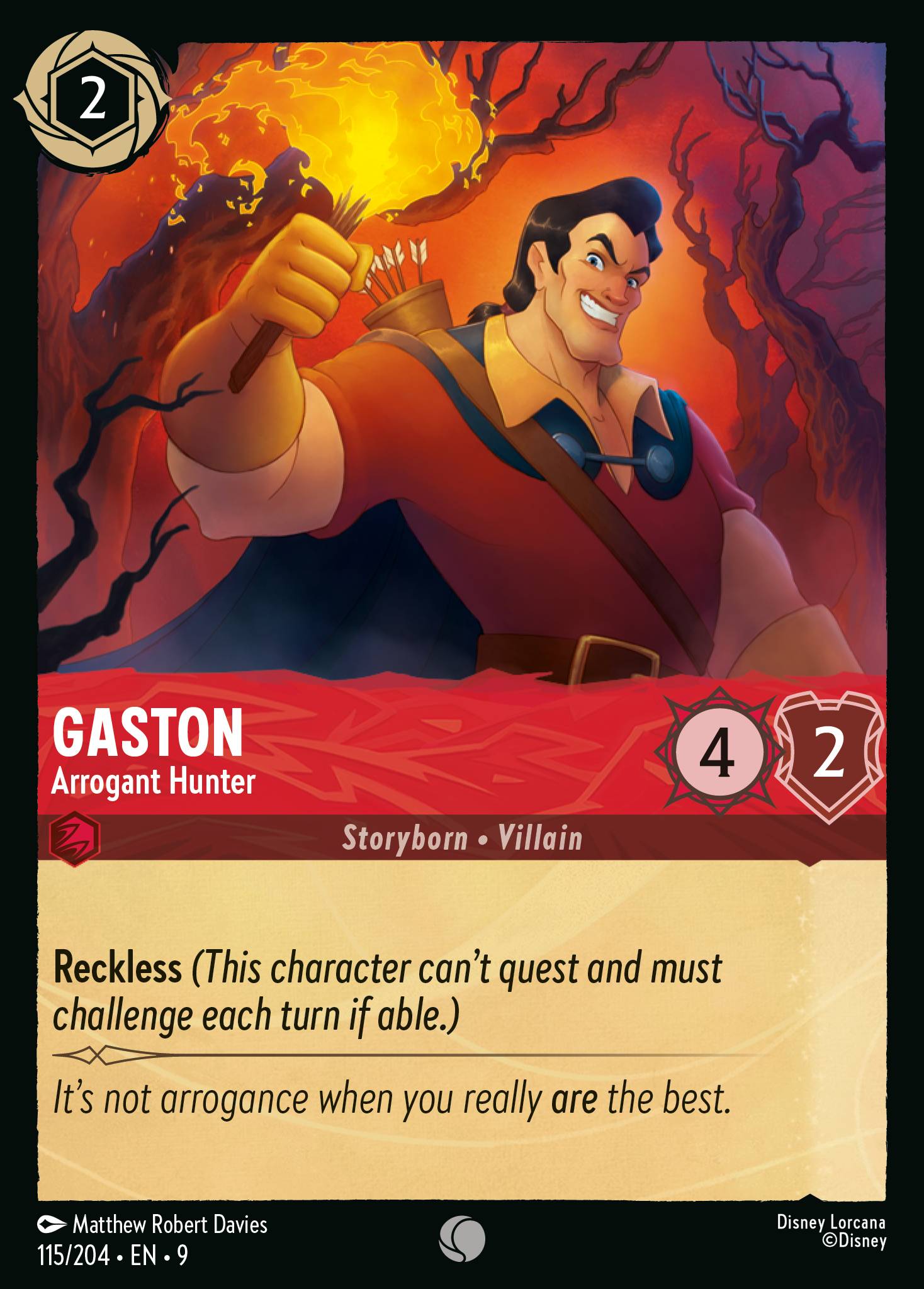
- Reckless. This character can't quest, and it must challenge if it's able. You give up lore generation in exchange for a relentless attacker. (It can still exert to use abilities or sing songs — it just can't quest, and can't be held back from challenging.)
Tempo, Song & Utility Keywords
These handle the clever stuff — cheating on cost, powering songs, sharing strength, punishing removal, and powering up your characters.
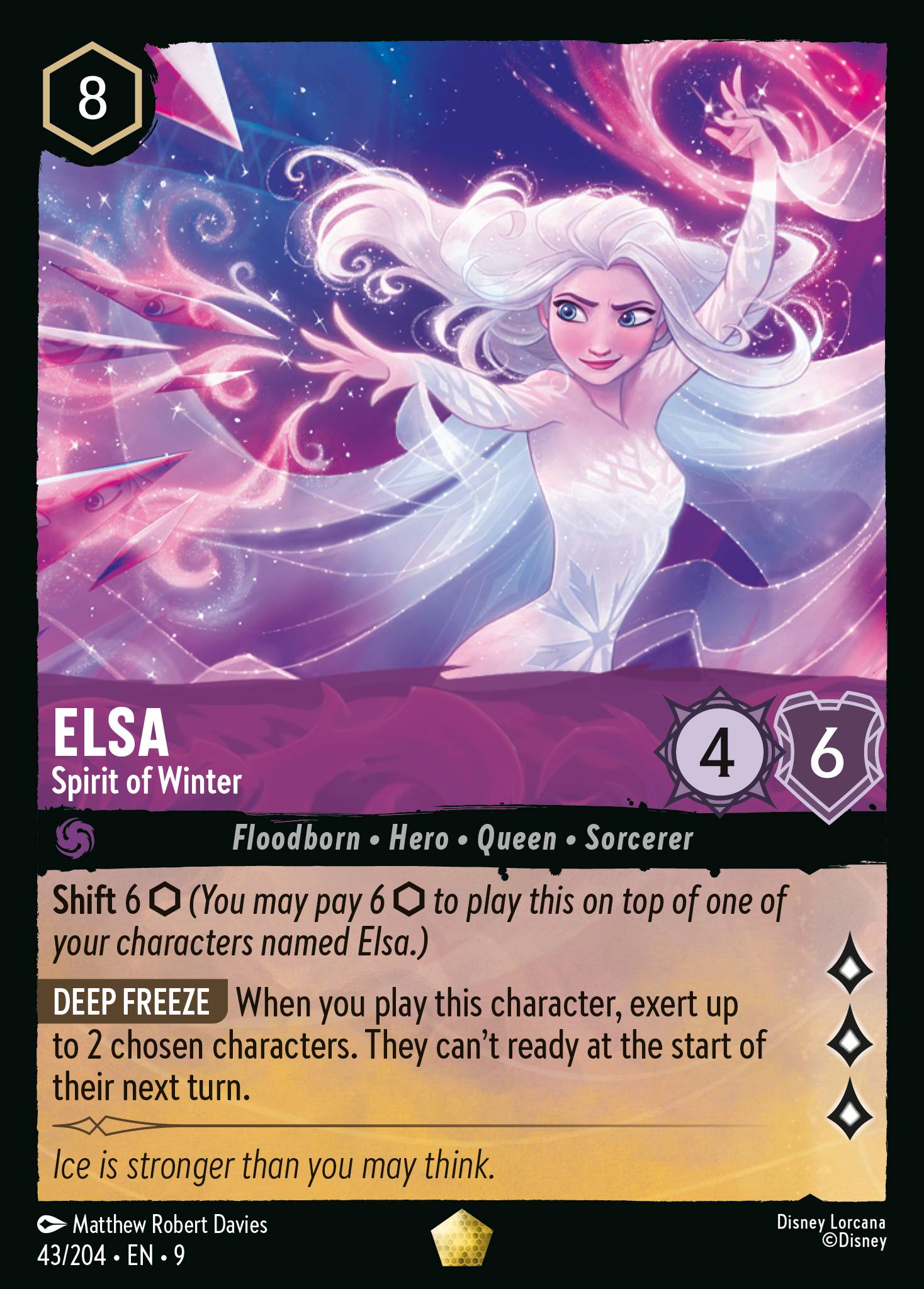
- Shift [cost]. An alternate cost: pay the Shift amount (instead of the full ink cost) to play this character on top of one of your characters with the same name. The new version is ready to act right away and inherits the old card's state — including any damage already on it — while using the new card's stats and abilities. A core engine of efficient, on-curve decks, with several variants that lower the cost in different ways.
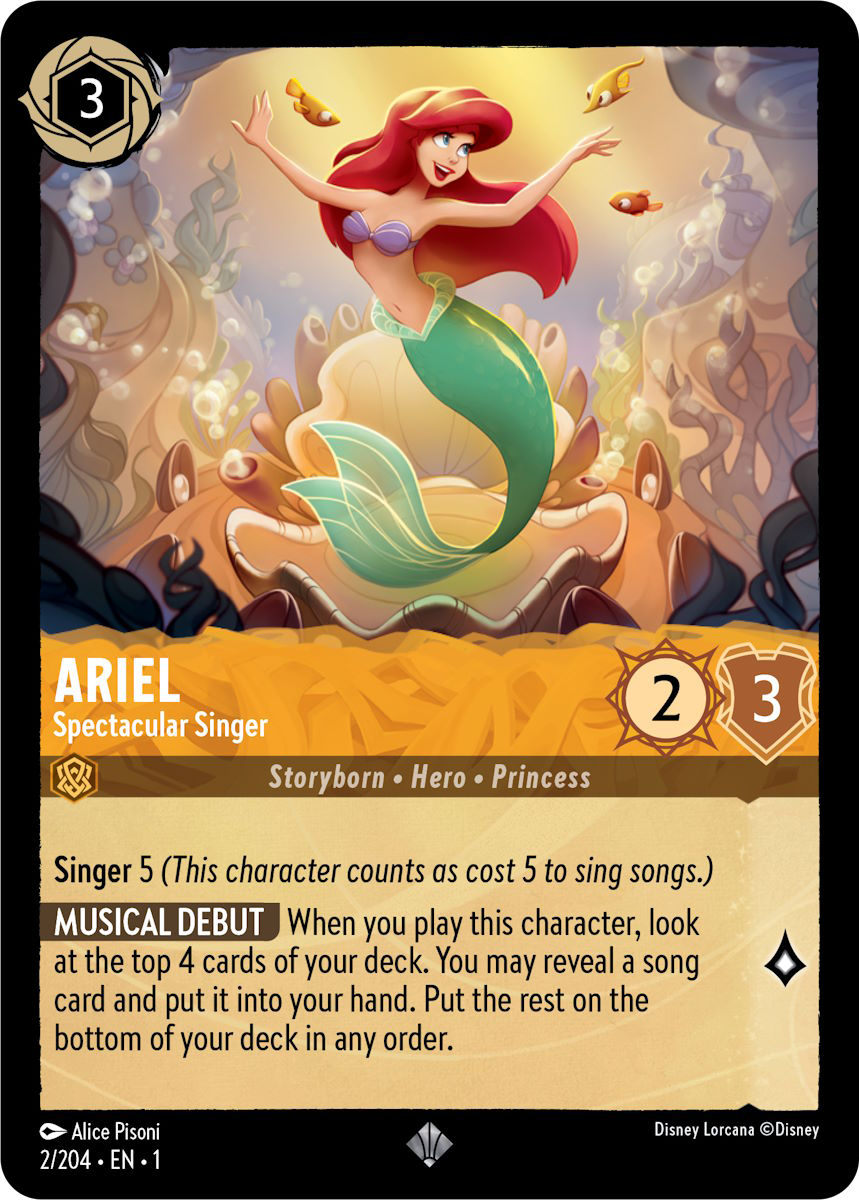
- Singer N. This character can exert to sing a song as though it had cost N — letting a cheap character belt out an expensive song for free, ahead of schedule. It's how song-based decks get powerful effects early.
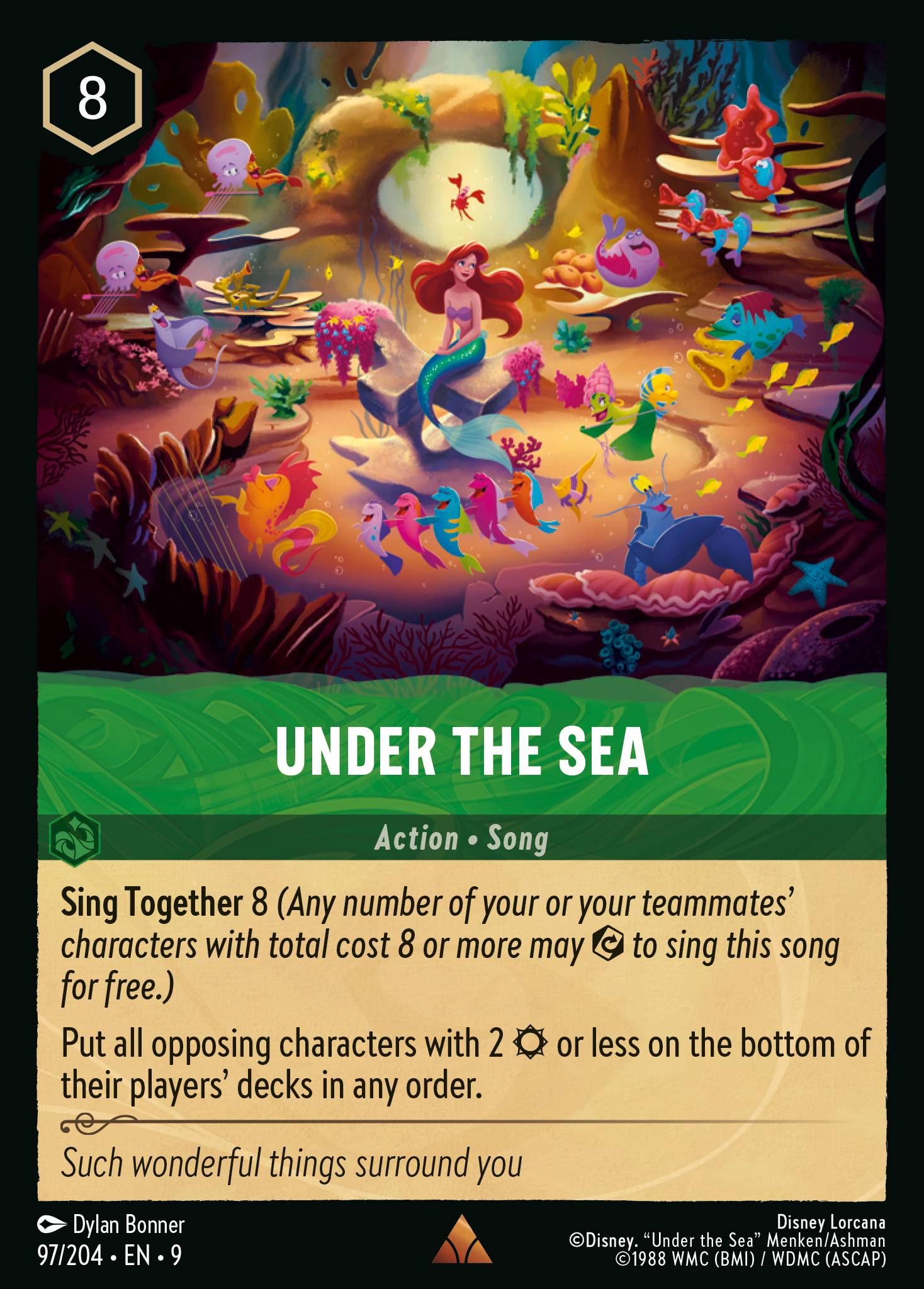
- Sing Together N. A song with this keyword can be sung for free by exerting any number of your (or teammates') characters whose total cost is N or more. To sing a 10-cost Sing Together song you might exert one 10-cost character, or a 4-cost and a 6-cost, and so on. It rewards a wide board with a powerful, discounted song.
- Support. Whenever this character quests, you may add its Strength to another chosen character's Strength for the rest of the turn. It stacks power onto a single attacker or questing threat — though the Support character has to quest (and exert) to do it, which can leave it exposed the following turn.
- Vanish. When an opponent chooses this character for one of their actions, it's banished instead. Introduced with Set 7, Archazia's Island, it punishes targeted removal — your opponent picks the character with an action and it simply disappears rather than letting their plan resolve cleanly. Often found on high-stat characters, making them powerful-looking glass cannons.
- Boost X. The newest keyword, introduced with Whispers in the Well (Set 10) on the mysterious Whisper Glimmers. Once during your turn you may pay X ink to put the top card of your deck facedown under this character; while a card sits beneath it, the Glimmer gains its printed enhanced effect (extra lore, a keyword, stats, or a trigger). The ink is cheap, but the real cost is the buried card — you're trading a future draw for present power. For a full breakdown, see our Glimmer & Boost guide.
Common Keyword Mistakes
A few keywords trip up almost every new player. Get these straight early and you'll avoid the most common misplays:
- Rush doesn't let you quest. It only lets a fresh character challenge the turn it's played. You still can't quest with it or use its exert abilities until your next turn — a frequent and costly assumption.
- Ward doesn't stop everything. Ward only stops opponents from choosing the character. It does not stop challenges, and effects that hit every character at once without choosing still apply — so Ward won't save you from a board-wide sweep.
- Evasive only blocks challenges. An Evasive character can't be challenged by non-Evasive characters — but it can still be chosen and banished by actions, songs, and abilities. Evasive is not Ward; for full protection a character needs both.
- Challenger does nothing on defense. The +N bonus only applies when the character itself initiates a challenge. If your opponent challenges into it, it defends at its printed Strength.
- Reckless is not optional. A Reckless character cannot quest, and it must challenge if it's able. You can't hold it back to defend or chip in lore — plan around that obligation.
Keyword FAQ
- What's the difference between Ward and Evasive? They protect against different things. Ward stops opponents from choosing the character with effects and abilities (but it can still be challenged). Evasive stops the character from being challenged by non-Evasive characters (but it can still be chosen by effects). A character with both is extremely hard to deal with.
- Can one card have multiple keywords? Absolutely — many do. A character might have both Evasive and Challenger, or Bodyguard and Resist. Each keyword works independently, so they simply layer their effects together.
- Do numbered keywords add up? Yes — if a character has Resist +1 printed and another effect grants Resist +2, it has Resist +3 in total. The same stacking logic applies to Challenger and other numbered keywords.
- How many keywords are there? Thirteen are in regular use today, all covered above. Lorcana occasionally introduces a new keyword with a set — Vanish arrived with Archazia's Island and Boost with Whispers in the Well — so it's worth a quick check of the Comprehensive Rules when a new wave releases.
A–Z Cheat Sheet
- Bodyguard — may enter exerted; opponents must challenge it first if able.
- Boost X — once per turn, pay X ink to tuck the top card of your deck under it for an enhanced effect.
- Challenger +N — +N Strength while challenging only.
- Evasive — only challengeable by other Evasive characters.
- Reckless — can't quest; must challenge if able.
- Resist +N — reduces each instance of damage taken by N (stacks).
- Rush — can challenge the turn it's played (can't quest that turn).
- Shift [cost] — pay the alternate cost to play atop a same-named character.
- Singer N — exert to sing a song as if it cost N.
- Sing Together N — exert characters totaling cost N or more to sing it free.
- Support — when it quests, add its Strength to another character this turn.
- Vanish — banished when an opponent chooses it for an action.
- Ward — can't be chosen by opponents except to challenge.
Learn the Words, Play with Confidence.
Lorcana's keywords look intimidating on day one and feel like second nature by week two. There are only about a dozen and a half, they each tweak a single basic action, and once you can spot them at a glance you'll stop reading reminder text and start planning your turns. Internalize the protection trio, keep the Ward-vs-Evasive distinction crystal clear, and the rest is reps.
Keep this page handy as a mid-game reference — and when a new keyword shows up in a future set, or a card's text and your memory disagree, the official Comprehensive Rules and the card itself always win.
Keyword Deep-Dives:
© GEEKYDOMAIN.COM | Strategy Powered by Data