

Bodyguard, Explained: The Defensive Keyword
Bodyguard is how you protect the characters that win you the game. Here's exactly how its two abilities work, the rulings that trip people up, and how to build a wall your opponent can't get around.
Every Lorcana deck has characters it can't afford to lose — a Singer that powers your whole turn, a quester racing you to 20 lore, a combo piece the deck is built around. The problem is that your opponent gets to challenge those characters the moment they're vulnerable. Bodyguard is the keyword that solves this: it forces challenges onto a designated protector, keeping your important characters safe behind a wall.
It's the cornerstone defensive keyword, and it's a little more involved than it first looks. Bodyguard is actually two abilities bundled into one word — the option to enter play already exerted, and a challenge-redirection that funnels your opponent's attacks toward the Bodyguard. Understanding how those two halves work together (and the "if able" clause that limits the second one) is the difference between a wall that holds and one your opponent simply walks around.
This guide breaks down both abilities, the exact rulings that matter (including the must-exert-immediately rule and how multiple Bodyguards interact), the powerful keyword pairings that make a near-unbreakable wall, and the misplays that waste the protection. If you've followed our deep-dives on Singer, Shift, Evasive, and the aggressive trio, this is the same treatment for the keyword that holds the line.
The Short Version
Bodyguard is two abilities in one keyword. First, the character may enter play exerted (your choice, decided the instant it's played — you can't play it, do other things, then exert it later). Second, while a Bodyguard character is exerted, an opposing character that challenges must choose a Bodyguard character first — if able. That redirection is the whole point: it funnels challenges onto your tanky protector and keeps your questers, Singers, and combo pieces safe. The keys: the Bodyguard has to be exerted for the redirection to work, "if able" means tricks like giving it Evasive can create a near-lockout, and with multiple Bodyguards your opponent picks which to challenge but must clear them all before touching anything else. Bodyguards are usually high-willpower bodies built to soak hits and sacrifice themselves so the rest of your board wins the game.
→ More Lorcana Guides
In This Guide
What Bodyguard Does

Reminder text: "This character may enter play exerted. An opposing character who challenges one of your characters must choose one with Bodyguard if able." That's two distinct abilities sharing one keyword, and it pays to treat them separately because they do very different jobs.
The first ability is about timing — it lets the character be ready to defend the instant it arrives, instead of having to wait a turn. The second is the actual protection — it changes the rules of who your opponent is allowed to challenge, forcing them through your Bodyguard before they can touch anything that matters.
Bodyguard in one line:
A tanky character that opponents are forced to challenge first —
so your important characters never take the hit.
Bodyguard characters are designed for this role: they tend to have high willpower so they can absorb several challenges before being banished, buying your questers and engine pieces turn after turn of safety. They're walls, and a good wall wins games by simply refusing to let your opponent interact with the parts of your board that matter.
Ability One: Enter Play Exerted
Normally a character enters play ready (upright) and can't be challenged on the turn it arrives — only exerted characters can be challenged. Bodyguard gives you the option to have the character enter play exerted (turned sideways) instead.
Why would you want your own character to be vulnerable immediately? Because that's exactly what makes the protection work right away. A Bodyguard only redirects challenges while it's exerted — so entering exerted means it's defending your board on your opponent's very next turn, instead of sitting ready and useless as a protector for a full round.
The Decide-Immediately Rule
You must choose whether to enter exerted the moment the character is played. You can't play it ready, take other actions, and then decide to exert it later — the choice happens as it enters, or not at all. So before you play a Bodyguard, decide its job: if you need it defending immediately, enter exerted; if you'd rather quest or challenge with it this turn and defend next turn, enter ready (it'll naturally be exerted after it acts).
Ability Two: The Challenge Redirect
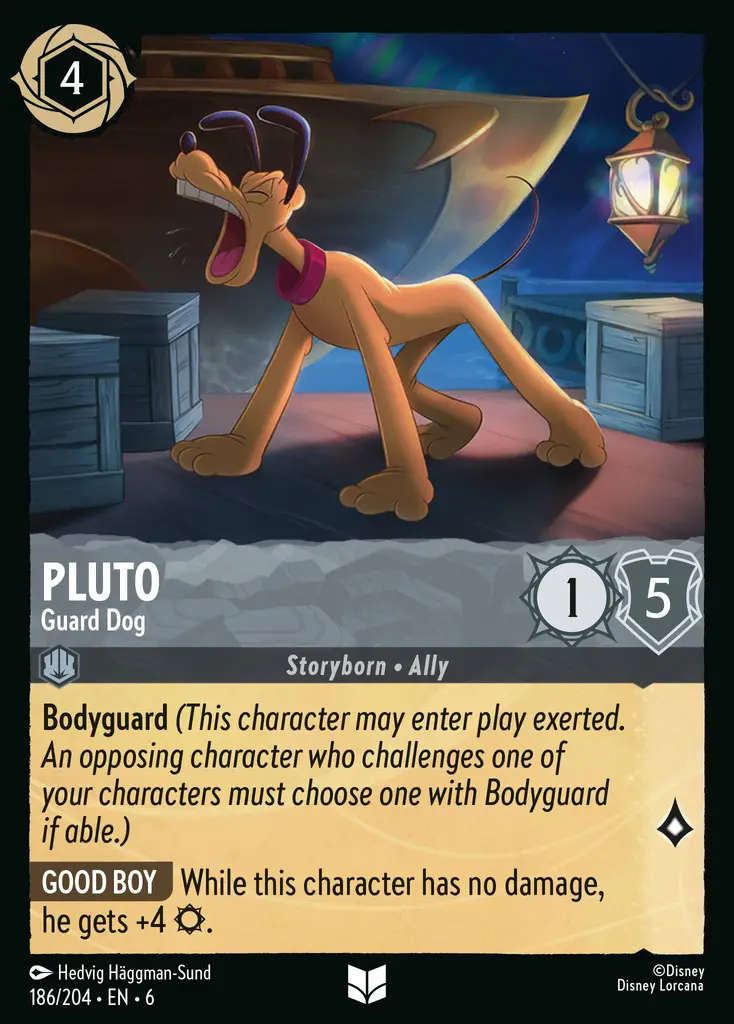
This is the ability that does the protecting. While a Bodyguard character is exerted, any opposing character that wants to challenge must choose a character with Bodyguard — it can't reach past the wall to your questers or Singers until the Bodyguard is dealt with.
In practice, your opponent's options become: challenge the Bodyguard, or don't challenge at all. They can't simply ignore it and pick off your valuable characters. That forces unfavorable trades — they have to spend resources banishing a high-willpower body that you were happy to lose, while the characters you actually care about keep questing safely behind it.
There's one structural requirement baked in: the Bodyguard has to be exerted for the redirect to apply. Under normal rules that's automatic for the targeting question (opponents can only challenge exerted characters anyway), but it matters a great deal once cards enter the picture that let players challenge ready characters — more on that in the rulings section.
The "If Able" Clause
Those two words — "if able" — are the most important and most misunderstood part of the keyword. The redirect only forces your opponent onto the Bodyguard if they are able to challenge it. If something makes the Bodyguard an illegal target for a given challenger, that challenger is free to challenge your other characters instead.
This cuts both ways. It's a limitation — but cleverly, it's also where Bodyguard's strongest combo lives. The classic case is giving your Bodyguard the Evasive keyword. Evasive means only characters with Evasive can challenge it. So if your opponent has no Evasive characters, they're "unable" to challenge your Bodyguard — but they're also still blocked from your other characters only when the Bodyguard is a legal target. The interaction is sharp: an Evasive Bodyguard that a non-Evasive opponent can't challenge effectively walls part of your board while being nearly untouchable itself.
The takeaway: read "if able" carefully in both directions. It can let an opponent slip past your wall if your Bodyguard becomes an illegal target — and it can let you build a near-lockout when you stack the right protective keywords on the Bodyguard.
Building a Wall: Key Pairings
Bodyguard is good on its own and great in combination. The strongest pairings:
| Pairing | What it does |
|---|---|
| Bodyguard + high willpower | The baseline: a tanky body soaks multiple challenges before going down, maximizing how long your board is protected. |
| Bodyguard + Resist | Resist reduces damage taken, so the wall lasts even longer — opponents need multiple big challenges to break through one protector. |
| Bodyguard + Evasive | The lockout: if the opponent has no Evasive characters, they can't legally challenge the Bodyguard — a near-untouchable wall (read the "if able" interaction carefully). |
| Bodyguard protecting Singers/engines | The payoff: keep your value characters (Singers, questers, combo pieces) alive behind the wall so they win the game uninterrupted. |
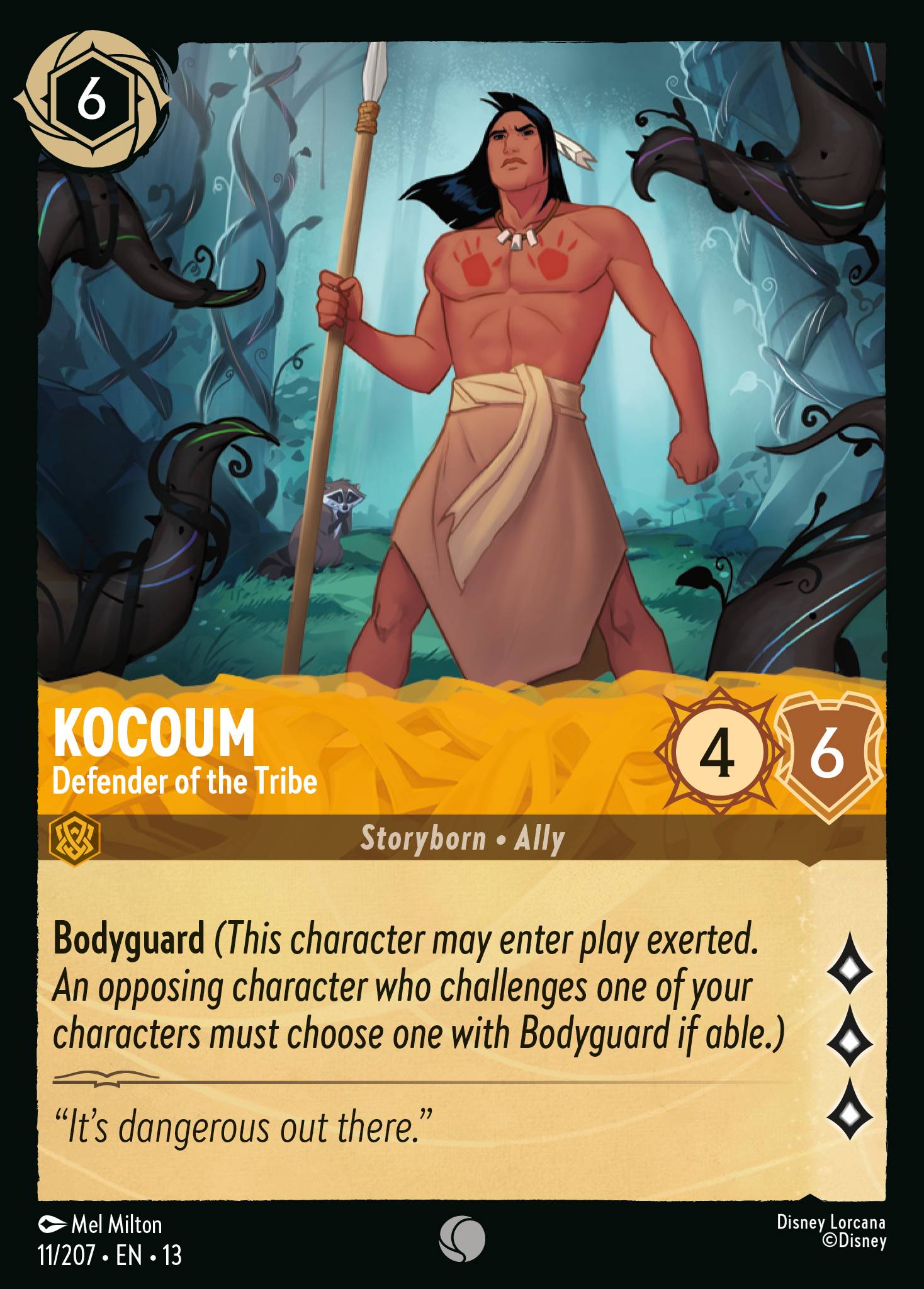
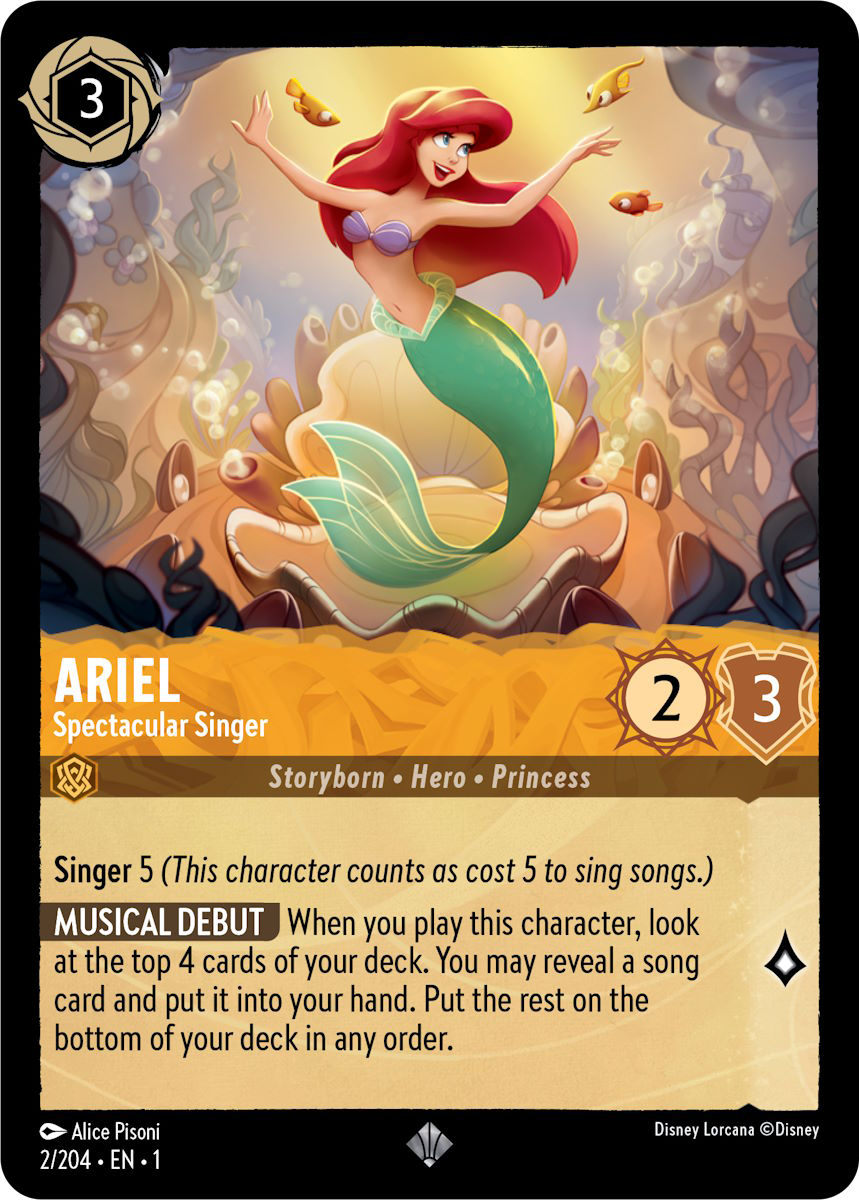
The deckbuilding principle the pros use: pick two keywords that reinforce each other. Bodyguard's natural partners are the other defensive keywords (Resist to tank longer, Evasive to dodge challenges entirely) and the value engines it exists to protect. A control or midrange deck that walls its win condition behind a Resist-boosted Bodyguard is a genuinely hard thing to race or break.
The Rulings People Get Wrong
Ruling #1: The Bodyguard Must Be Exerted
The redirect only works while the Bodyguard is exerted. A ready Bodyguard doesn't protect anything — and this matters with cards that can challenge ready characters. If an effect lets an opponent challenge a ready character and your Bodyguard is also ready, they're still forced onto the Bodyguard if it's a legal target, but if your Bodyguard is ready while your other characters are exerted under normal rules, the wall isn't up. Keep your Bodyguard exerted on your opponent's turn (by questing or challenging with it) to keep the protection online.
Ruling #2: Multiple Bodyguards — Opponent Chooses
If you have two or more exerted Bodyguards, your opponent picks which one to challenge — you don't get to assign it. They must clear all exerted Bodyguards before they can challenge anything without Bodyguard, but they can focus one down or spread challenges across them as they choose. More Bodyguards means a thicker wall, just not a wall you control the order of.
Ruling #3: Decide the Exert at Play Time
You choose whether the character enters exerted as it's played — not afterward. There's no "play it, see what happens, then exert it" line. Plan the decision before you commit the card: defend now (enter exerted) or act now and defend next turn (enter ready).
Common Mistakes
Mistake #1: Leaving the Bodyguard ready on your opponent's turn.
A ready Bodyguard provides no protection — the redirect needs it exerted. If you play one ready and don't act with it, your wall is down for a full turn. Either enter it exerted, or quest/challenge with it so it's exerted when your opponent's turn comes around.
Mistake #2: Entering exerted when you needed the tempo.
The flip side: entering exerted means you skip questing or challenging with that character this turn. If you didn't actually need protection yet — say you're ahead and pushing lore — entering exerted wastes a turn of the body's offense. Match the choice to the situation, don't default to one.
Mistake #3: Forgetting "if able" lets opponents slip past.
If your Bodyguard becomes an illegal target — for example it has Evasive and your opponent acquires an Evasive challenger, or an effect makes it unchallengeable — the wall can open up. Don't assume your questers are safe just because a Bodyguard is on the board; check that it's actually a legal target for what your opponent has.
Mistake #4: Relying on Bodyguard against non-challenge removal.
Bodyguard only redirects challenges. It does nothing against banish-on-sight actions, bounce, or other effects that target your characters directly — those sail right past the wall. A Bodyguard protects against combat, not against removal spells. Plan another answer for those.
Mistake #5: Using a low-willpower character as your Bodyguard.
A Bodyguard that dies to a single challenge barely protects anything — the wall is only as good as how many hits it can take. Save the keyword for high-willpower bodies (or pair it with Resist), so the protector actually buys you multiple turns rather than one.
FAQ & Quick Reference
- Does a Bodyguard have to enter play exerted? No — it's optional, and you decide as you play it. Enter it exerted when you want protection immediately; enter it ready when you'd rather quest or challenge with it first (it'll be exerted afterward and protect you next turn).
- Does Bodyguard protect against everything? No. It only redirects challenges. Removal actions, bounce, and other effects that target your characters directly ignore Bodyguard entirely. It's a combat wall, not blanket protection.
- What if I have two Bodyguards out? Your opponent must challenge a Bodyguard before any non-Bodyguard, but they choose which one and can focus it down or spread challenges. All exerted Bodyguards must be cleared before they can reach your other characters.
- Why pair Bodyguard with Evasive? Because of "if able." Evasive means only Evasive characters can challenge it — so against an opponent with no Evasive, your Bodyguard becomes a wall they can't legally attack. It's one of the strongest defensive combos, though watch for the opponent gaining their own Evasive.
- Do these keywords stack? You can't have two instances of Bodyguard on one character do anything extra, but you absolutely stack different protective keywords — Bodyguard + Resist + high willpower is a wall that takes reduced damage and soaks many hits. That layering is exactly how you build an unbreakable defensive core.
- Two abilities: may enter play exerted + opponents must challenge a Bodyguard first, if able.
- Must be exerted: the redirect only works while the Bodyguard itself is exerted.
- Decide at play time: the enter-exerted choice happens the instant it's played, not later.
- "If able": if the Bodyguard is an illegal target, opponents can challenge past it.
- Best pairings: Resist (tank longer), Evasive (lockout), high willpower (soak hits).
- Limit: redirects challenges only — removal and bounce ignore it.
Hold the Line, Win the Game.
Bodyguard is the keyword that lets the rest of your deck do its job. Drop a tanky protector, enter it exerted when you need the wall up now, and force your opponent to grind through it while your questers and Singers win the game behind it. Master the two abilities, respect the "if able" clause in both directions, keep your Bodyguard exerted, and pair it with Resist or Evasive — and you'll build a defensive core that's genuinely miserable to break through. Just remember it's a wall against combat, so keep an answer handy for the removal that goes around it.
© GEEKYDOMAIN.COM | Strategy Powered by Data