

Evasive: Why It Wins Lore Races
Evasive looks like a simple defensive keyword. It's actually one of Lorcana's most reliable win conditions — a character your opponent usually can't touch, questing for lore every single turn. Here's how it works and how to build around it.
Most Lorcana keywords change how a character fights. Evasive changes whether your opponent gets to fight it at all. The text is four words long — "only characters with Evasive can challenge this character" — but those four words quietly answer the most important question in the game: how do you reliably gain lore when the board is full of opposing blockers waiting to trade with your questers?
The answer Evasive gives is blunt. Your questing character simply can't be challenged unless your opponent also happens to have an Evasive character of their own — and most of the time, they don't. That turns an Evasive quester into something close to a clock: it ticks up your lore total every turn, and the only way to stop it is to remove it without challenging, which not every deck can do. That's why competitive players talk about "Evasive shells" and why the keyword shows up at the top of so many lore-race strategies.
This guide breaks down exactly how Evasive works (including the rulings people get wrong), why it's so strong in a game won by lore rather than damage, how to build an Evasive game plan, how to beat one when it's pointed at you, and the mistakes that quietly waste the keyword's power. If you've read our deep-dives on Singer and Shift, this is the same treatment for the keyword that closes the most games.
The Short Version
Evasive means only characters with Evasive can challenge this character — but an Evasive character can still challenge anyone. Because Lorcana is won by reaching 20 lore, not by dealing damage, an unchallengeable quester is enormous: it gains lore every turn and your opponent usually can't stop it through combat. The keyword wins lore races by providing inevitability — a threat that keeps ticking up while slower answers scramble. To beat it you can't rely on challenges; you need your own Evasive characters or non-challenge removal (banish/damage Songs, board wipes, bounce). Two rulings to know: you can't stack two copies of Evasive on one character, and Evasive does not stop targeting the way Ward does — removal still hits it.
→ More Lorcana Guides
In This Guide
What Evasive Actually Does
The official keyword text is short: "Only characters with Evasive can challenge this character." That's the whole rule, but its consequences are bigger than they look, and the most important nuance is that the restriction runs in only one direction.
What Evasive Protects Against
- Being challenged by normal (non-Evasive) characters.
- Getting traded off while questing.
- The board-stall that stops most questers.
What Evasive Does NOT Do
- Stop your character from challenging anyone.
- Protect against removal Songs or abilities.
- Prevent targeting (that's Ward, a different keyword).
So an Evasive character is a one-way wall. Your opponent's ordinary characters cannot challenge it — but it can freely challenge their characters, Evasive or not. That asymmetry is what makes the keyword aggressive as well as defensive: an Evasive attacker can pick off the opponent's exerted questers while remaining untouchable in return.
If you've played Magic: The Gathering, Evasive is the spiritual cousin of Flying — a creature most things can't block. The crucial difference is the win condition. In Magic, evasion matters because it pushes through damage. In Lorcana, you don't win by damaging the opponent; you win by reaching 20 lore first. So the payoff of Evasive isn't unblocked damage — it's uninterrupted questing. That single distinction is the entire reason the keyword is a lore-race engine, and it's the subject of the next section.
Why It Wins Lore Races
In a normal Lorcana game, questing is risky. The moment your character exerts to quest, it's open to being challenged on your opponent's turn. That tension — quest and expose yourself, or hold back and gain nothing — is the central decision of the game. Evasive deletes that tension for one character. It can quest with near-impunity, because the opponent's blockers simply aren't allowed to challenge it.
Stack that up over a few turns and the math becomes oppressive. A 3-lore Evasive quester that survives four turns is twelve lore your opponent never got a chance to interact with through combat. Against a deck with no Evasive characters and no efficient removal, that's often just a win — the opponent watches the lore tick up and can't do anything about it on the board.
The inevitability math:
One unchallengeable 2-lore quester = +2 lore every turn it lives.
Four turns unanswered = 8 lore your opponent never contests.
Two of them = the lore race is effectively over.
Evasive converts board presence into guaranteed lore. That guarantee is the whole point.
Competitive players call this quality inevitability — the sense that, left alone, your deck simply wins, and the opponent is on a clock to find an answer before it does. Evasive (often paired with Ward for extra resilience) is one of the clearest sources of inevitability in the game, which is why it anchors so many lore-focused decks.
It's worth being precise about the limit, though: Evasive guarantees you can't be challenged by ordinary characters. It does not guarantee you can't be answered. A deck packing removal can still banish your evasive quester with a Song or ability. So Evasive doesn't make you invincible — it makes you immune to the most common form of interaction (combat), which against many decks is enough.
The Rulings People Get Wrong
Two interactions trip up players constantly. Getting these right is the difference between an Evasive deck that runs smoothly and one that fumbles a winning board.
Ruling #1: You Can't Stack Evasive
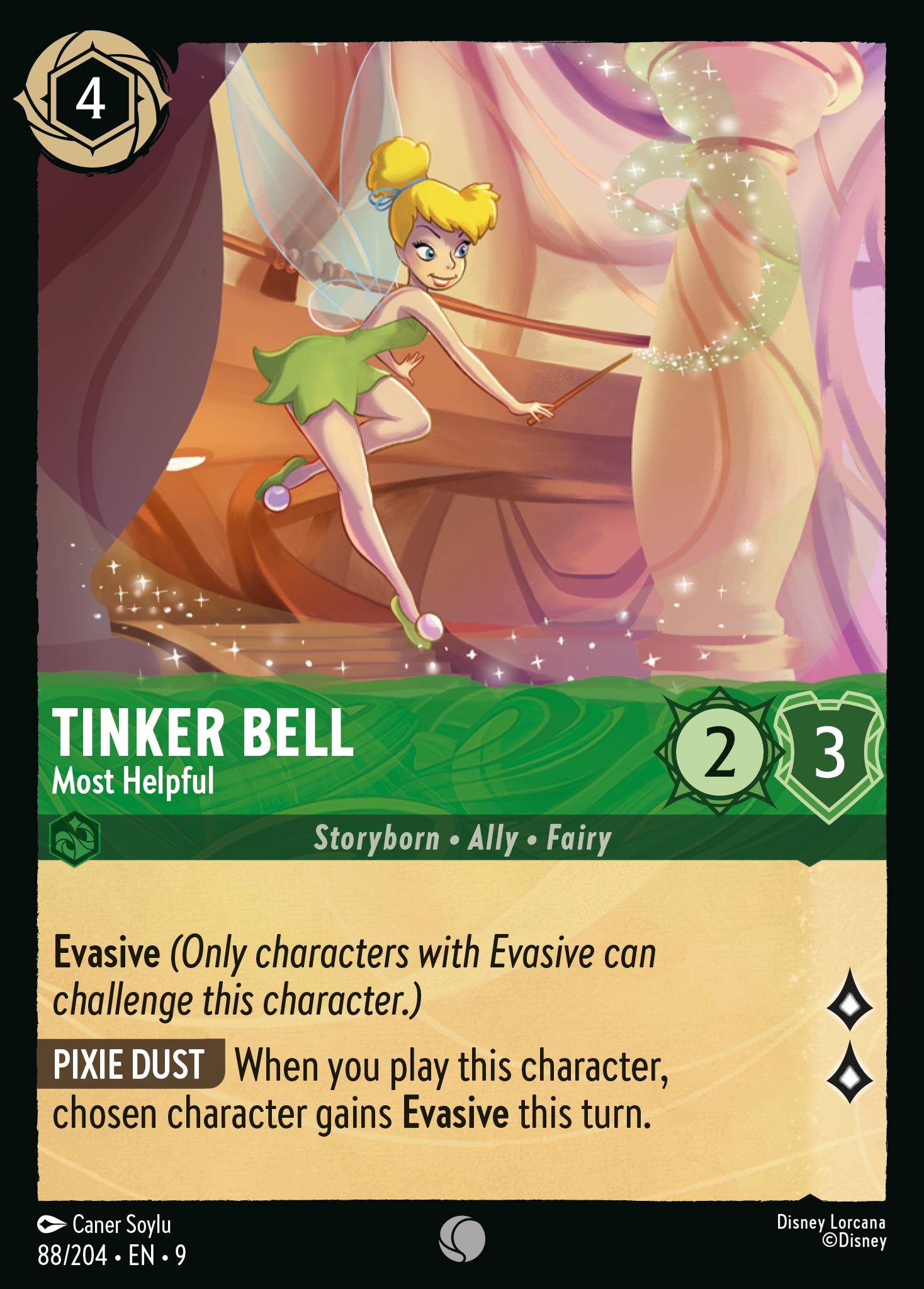
A character can't hold two instances of the same keyword. If a character already has Evasive and you try to grant it Evasive again (say, with a Tinker Bell – Most Helpful effect), the granting simply fails — the character keeps its single Evasive, and the effect is wasted. Per official Team Lorcana / Steve Warner rulings, "you cannot add two instances of the same keyword." Save your grant effects for characters that don't already have Evasive.
Ruling #2: Evasive Is Not Ward
This is the big one. Evasive only restricts challenges. It does nothing against targeted removal, damage effects, or board wipes. Ward is the keyword that stops your character from being chosen by opponents' abilities. New players assume an Evasive character is "safe" and get blown out when a removal Song banishes it anyway. If you want a quester that's both unchallengeable and untargetable, you need both keywords — which is exactly why Evasive + Ward shells are so prized.
Where Evasive Comes From
Evasive shows up on characters in three different ways, and knowing which is which shapes how you build and play:
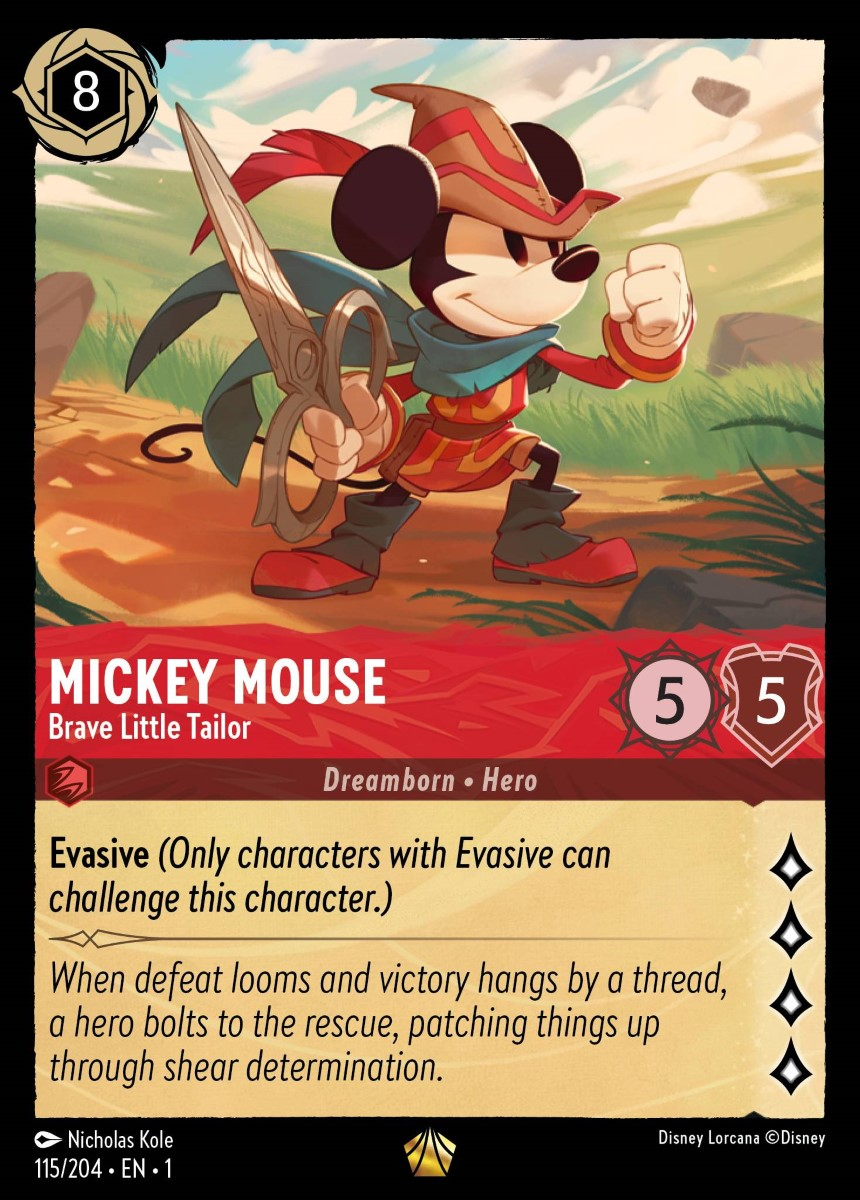
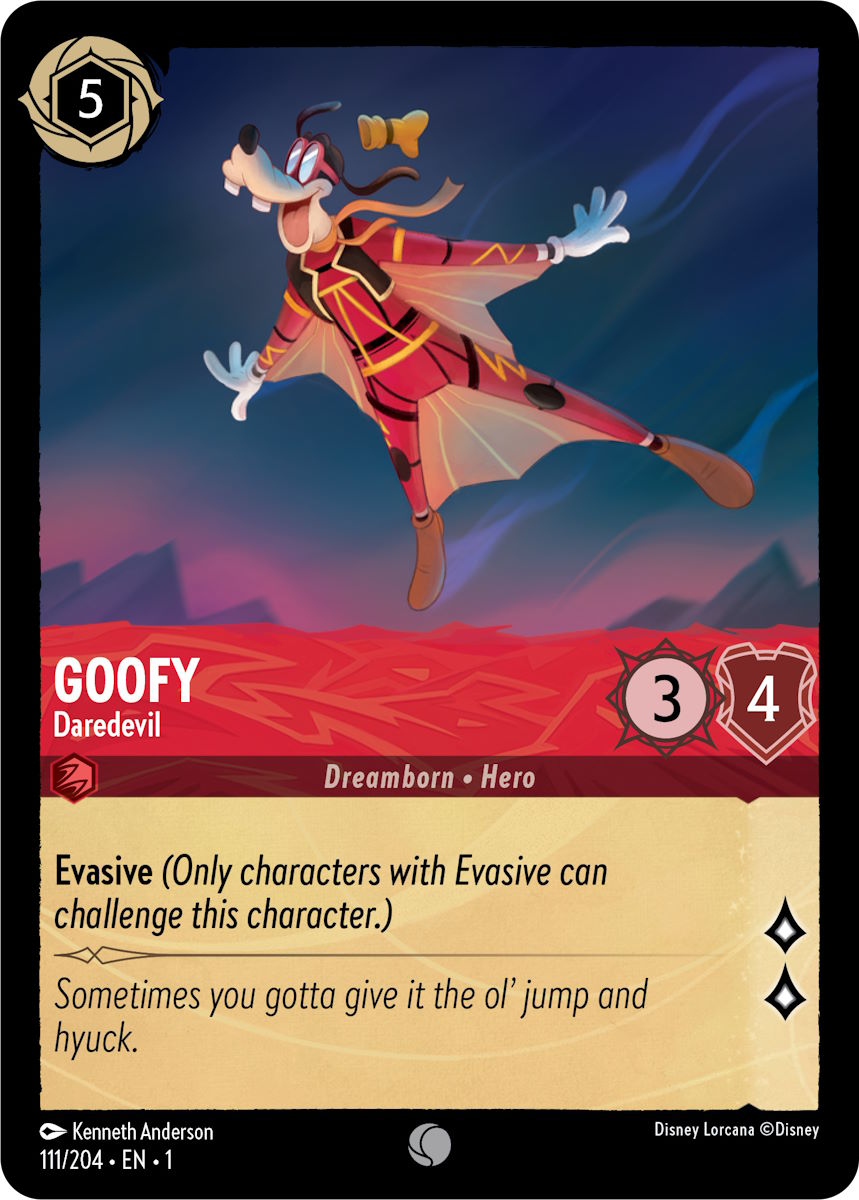
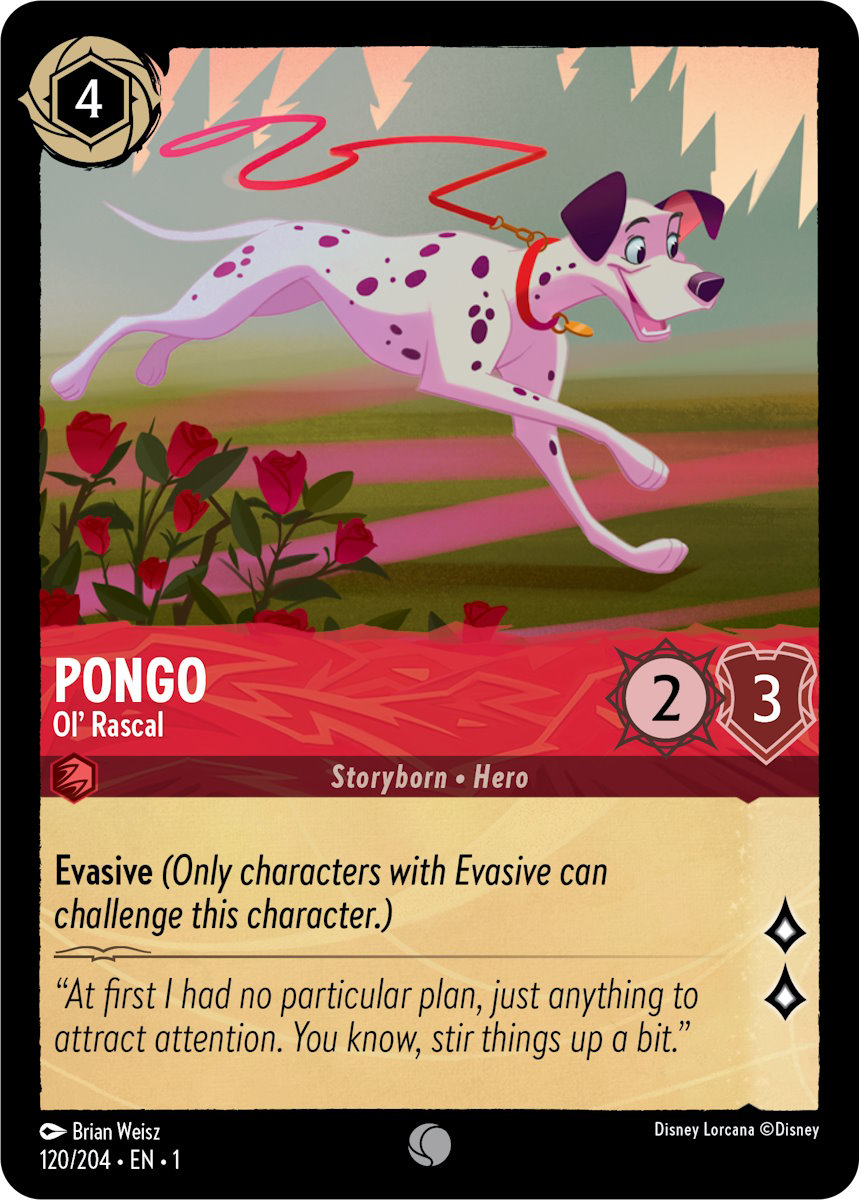
- 1. Always Evasive (printed on the card). The character simply has the keyword at all times — Goofy – Daredevil, Pongo – Ol' Rascal, and Mickey Mouse – Brave Little Tailor are classic examples. These are your reliable backbone questers; what you see is what you get.
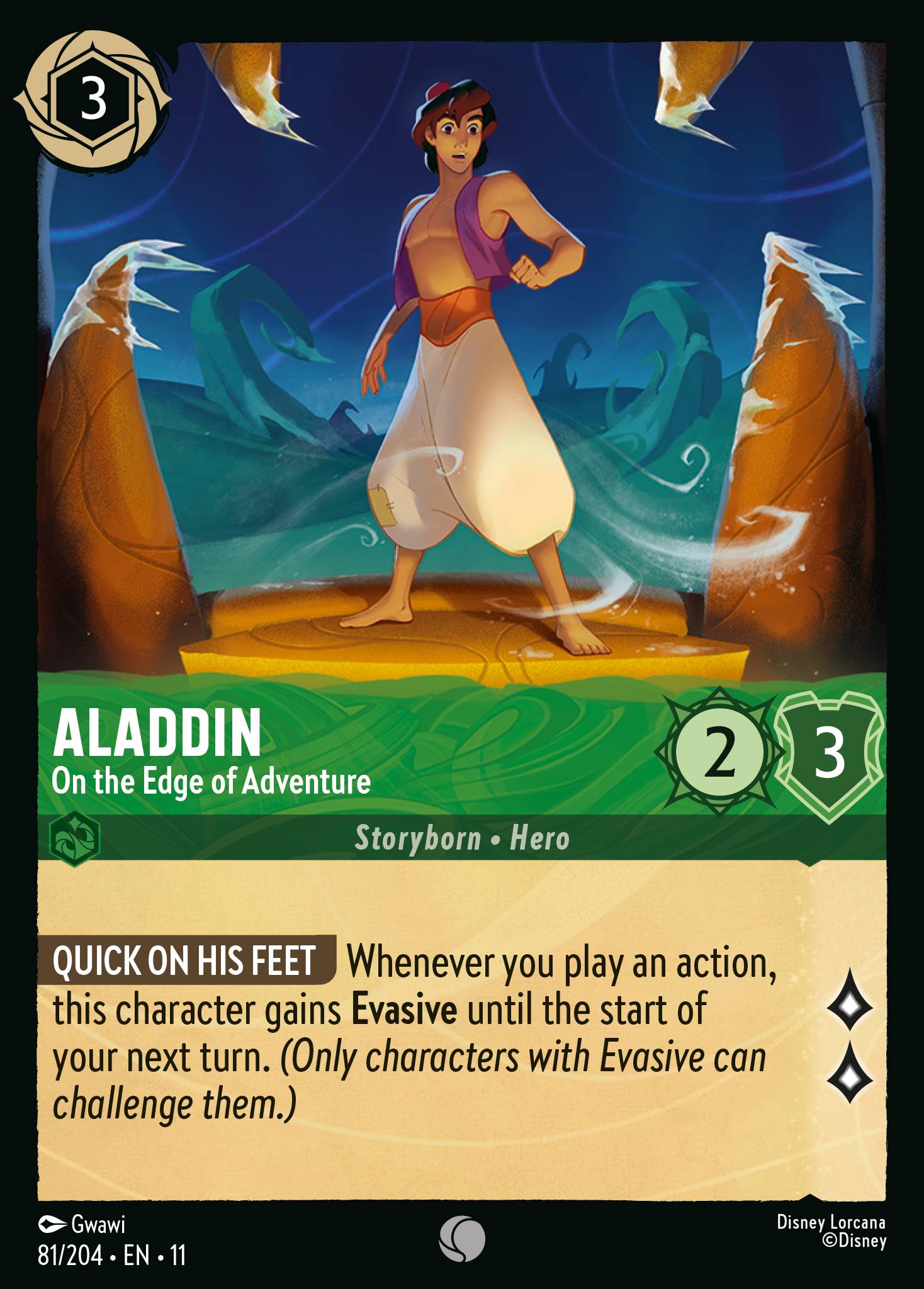
- 2. Conditionally Evasive. The character gains Evasive only when a condition is met — on your turn, while another character is in play, or after an ability triggers (Jetsam – Ursula's Spy gaining Evasive through a Sinister Slither-style ability, for example). Powerful, but you have to track the condition or you'll misjudge what's safe.
- 3. Granted Evasive (from another card). A character hands Evasive to one of your other characters, usually for a turn — Tinker Bell – Most Helpful is the textbook enabler. Use these to make a high-lore quester briefly untouchable on a key turn, but remember the no-stacking ruling: don't grant it to something that already has it.
Building an Evasive Game Plan
Evasive is at its best as a focused plan, not a random inclusion. A few principles for building around it:
- Prioritize lore on your Evasive bodies. An Evasive character's value scales directly with its lore value, because that's what it generates unmolested every turn. A 1-lore Evasive is fine; a 2- or 3-lore Evasive is a genuine clock. Lean toward the high-lore evasive questers as your win conditions.
- Pair Evasive with Ward where you can. Since removal is the main answer to Evasive, stacking Ward (untargetable) on top makes your quester immune to both forms of interaction. Evasive + Ward is the "inevitability" package competitive decks chase.
- Run grant effects to protect a key turn. A Tinker Bell-style grant can push a big non-Evasive quester through for one decisive turn, or hand Evasive to a body you need to survive. Treat it as a tempo tool, not a permanent fix.
- Keep your own Evasive answers. Mirror matches come down to who has Evasive characters that can challenge the other player's. Carrying a couple of evasive bodies that are willing to trade keeps you from being helpless against an opposing evasive clock.
- Don't over-commit the keyword. As the design pros note, strong decks build two-keyword packages rather than sampling every keyword. An Evasive shell wants enough evasive threats to apply constant pressure, supported by removal and Ward — not thirty different keywords diluting the plan.
How to Beat Evasive
When an Evasive clock is pointed at you, challenging won't save you — that's the whole point of the keyword. You have exactly three real answers:
- 1. Bring your own Evasive. Only Evasive can challenge Evasive. A couple of evasive bodies in your deck let you trade with their clock instead of watching it tick. This is the most direct answer and the reason evasive characters appear even in decks that aren't "Evasive decks."
- 2. Use non-challenge removal. Banish or damage Songs, board wipes, and single-target removal abilities all ignore Evasive entirely — they don't challenge, they just answer. This is why removal-heavy control decks aren't especially afraid of Evasive: they were never going to challenge it anyway. (Watch for Ward, though — if the evasive quester also has Ward, targeted removal won't work and you'll need a board wipe or your own Evasive.)
- 3. Bounce it back to hand. Returning the evasive character to its owner's hand resets the clock — they have to re-pay its cost and re-develop it, costing them a full turn of lore. Bounce is one of the most ink-efficient answers to an evasive threat, especially against expensive ones.
The losing line is to keep developing ordinary blockers and hope to "wall up." You can't wall an Evasive quester — your blockers aren't allowed to challenge it. If your deck has none of the three answers above, the matchup is a deckbuilding problem, not a play problem. Every well-rounded list wants at least a small package of removal or evasive bodies precisely so it isn't helpless here.
Common Evasive Mistakes
Mistake #1: Treating Evasive like Ward.
Assuming your Evasive quester is "safe" and leaving it exposed to removal. Evasive stops challenges, not targeting. If the opponent has removal Songs or abilities, your evasive character can still be banished — play around it, or back it up with Ward.
Mistake #2: Wasting a grant on an already-Evasive character.
Using Tinker Bell – Most Helpful or a similar effect on a character that already has Evasive does nothing — you can't stack the keyword, so the grant fizzles. Always point grant effects at a character that lacks Evasive, ideally a high-lore quester you want to push through this turn.
Mistake #3: Putting Evasive on low-lore bodies and ignoring your real questers.
Evasive on a 1-lore character is barely a clock. The keyword's value scales with the lore it protects, so prioritize evasive characters with meaningful lore values, or grant Evasive to your biggest quester rather than your smallest.
Mistake #4: Forgetting Evasive can attack, too.
Players often park their evasive character on questing duty and never use it offensively. But an Evasive character can challenge non-Evasive characters freely while staying safe from retaliation — it's a perfect tool for picking off the opponent's exerted questers without losing your body. Don't leave that upside on the table when the board calls for it.
Mistake #5: Trying to "block" an opposing Evasive with normal characters.
On the defending side, the instinct is to develop more bodies to stop the evasive clock. It doesn't work — your non-Evasive characters can't challenge it. Stop developing blockers and reach for your real answers: your own Evasive, removal, or bounce.
FAQ & Quick Reference
- Can an Evasive character challenge a non-Evasive character? Yes. The restriction is one-way — it limits who can challenge the Evasive character, not who the Evasive character can challenge. An Evasive character can challenge anyone, Evasive or not.
- Does Evasive protect against removal Songs and abilities? No. Evasive only restricts challenges. Targeted removal, damage effects, and board wipes all still work on an Evasive character. The keyword that prevents being targeted is Ward, which is separate.
- Can I give a character Evasive twice for double protection? No. You can't have two instances of the same keyword on one character. A second grant of Evasive simply fails, and the effect is wasted — point it at a different character instead.
- Is Evasive better in Core or Infinity? It's strong in both, because the underlying logic — lore is the win condition, and Evasive protects questing — never changes. The specific best evasive characters shift with the legal card pool, but the keyword's role as a lore-race engine is format-independent.
- How many Evasive characters should an Evasive deck run? There's no fixed number, but the goal is enough evasive threats to keep constant lore pressure on the board, backed by removal and ideally Ward. Most lists treat Evasive as one half of a focused two-keyword package rather than a card-by-card afterthought.
- The text: "Only characters with Evasive can challenge this character." One-way restriction.
- The payoff: uninterrupted questing — lore every turn the opponent can't contest in combat.
- Lore, not damage: unlike Flying in MTG, the reward is guaranteed lore, which wins the race.
- Two key rulings: can't stack Evasive; Evasive is NOT Ward (removal still hits it).
- Build it: high-lore evasive bodies + Ward + a few grant effects; don't dilute the plan.
- Beat it: your own Evasive, non-challenge removal, or bounce — never ordinary blockers.
Untouchable Is a Win Condition.
Evasive looks modest on the card — four words and a simple restriction. But in a game won by lore, a character your opponent can't challenge is a character that keeps scoring, turn after turn, while they scramble for an answer they may not have. That's inevitability, and it's how Evasive quietly closes more games than flashier keywords. Build around it with high-lore bodies and Ward, respect the two rulings that trip everyone up, and remember the answer when it's aimed at you: don't try to block it — remove it, bounce it, or out-Evasive it.
© GEEKYDOMAIN.COM | Strategy Powered by Data