

The Singer & Songs Guide (Lorcana)
Songs let you cast powerful effects for free — and the Singer keyword lets a cheap character belt out an expensive one. Here's how Songs, Singer, and Sing Together work, and how to build around them.
Songs are one of Lorcana's most flavorful and powerful mechanics. Every Illumineer eventually has the moment where they serenade the table with a free, game-swinging effect — drawing cards, wiping a board, or buffing a quester to lethal — without spending a single ink to do it. That's the magic of singing, and understanding it unlocks one of the game's strongest deckbuilding directions.
The catch is that singing isn't free in the truest sense — it costs you the use of a character for the turn. Learning to weigh that trade, and to build a deck with enough singers to fuel your songs, is what separates a pile of cool song cards from an engine that actually wins games.
This guide covers exactly how Songs, the Singer keyword, and Sing Together work, then digs into how to build and pilot a song deck. The mechanics are drawn from the official rules, with verified card examples throughout.
The Short Version
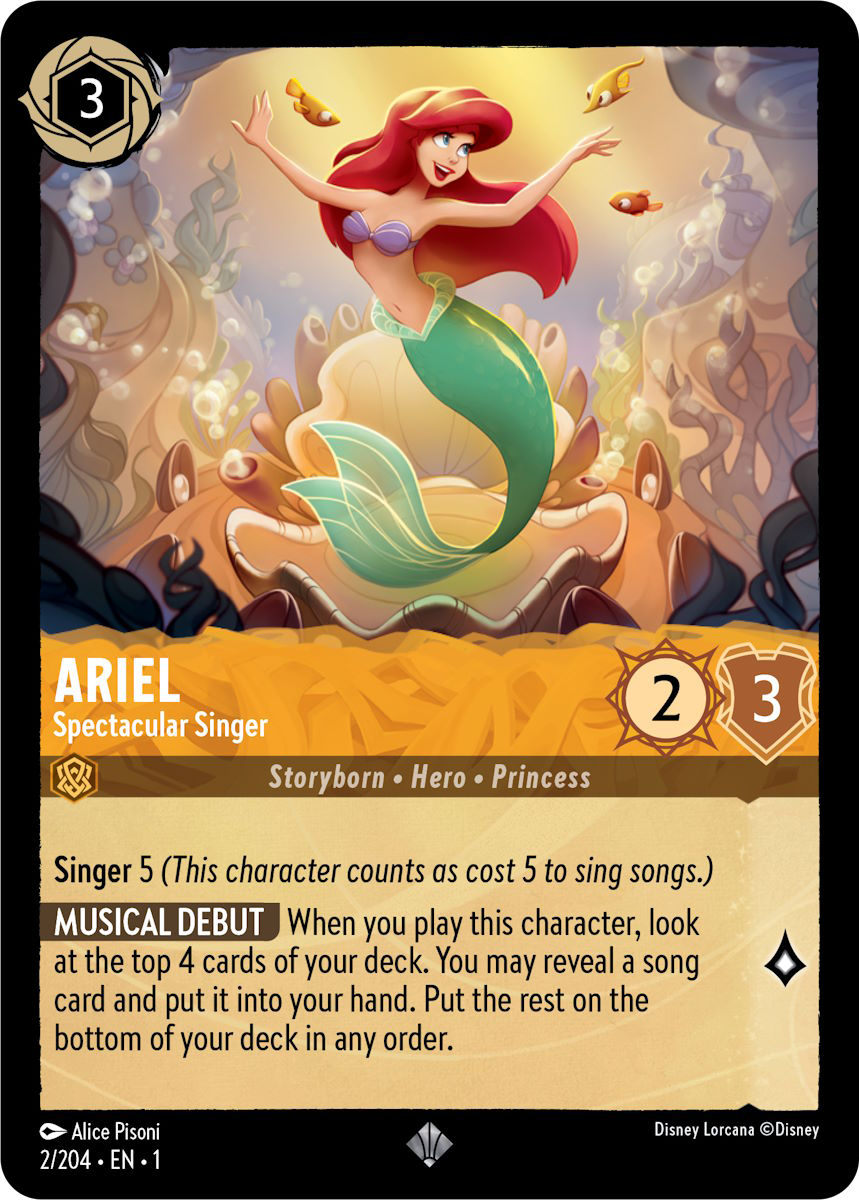
A Song is an action you can either play by paying its ink cost, or "sing" for free by exerting a ready character whose ink cost is equal to or higher than the song's cost. The Singer N keyword lets a character sing as if its cost were N, so a cheap character can sing an expensive song (Ariel - Spectacular Singer costs 3 but has Singer 5). Sing Together lets multiple characters combine their costs to sing one big song. The tradeoff: a character that sings is exerted, so it can't quest or challenge that turn and can be challenged. Build a song deck with enough singers to reliably fuel your songs, and weigh every sing against the lore you give up.
→ More Lorcana Strategy
In This Guide
What Songs Are
A Song is a special subtype of Action card. Like every Action, it has a one-time effect that resolves immediately and then goes to the discard. And like every card in Lorcana, you can only play it on your own turn, and you can run up to four copies of a given song in your deck.
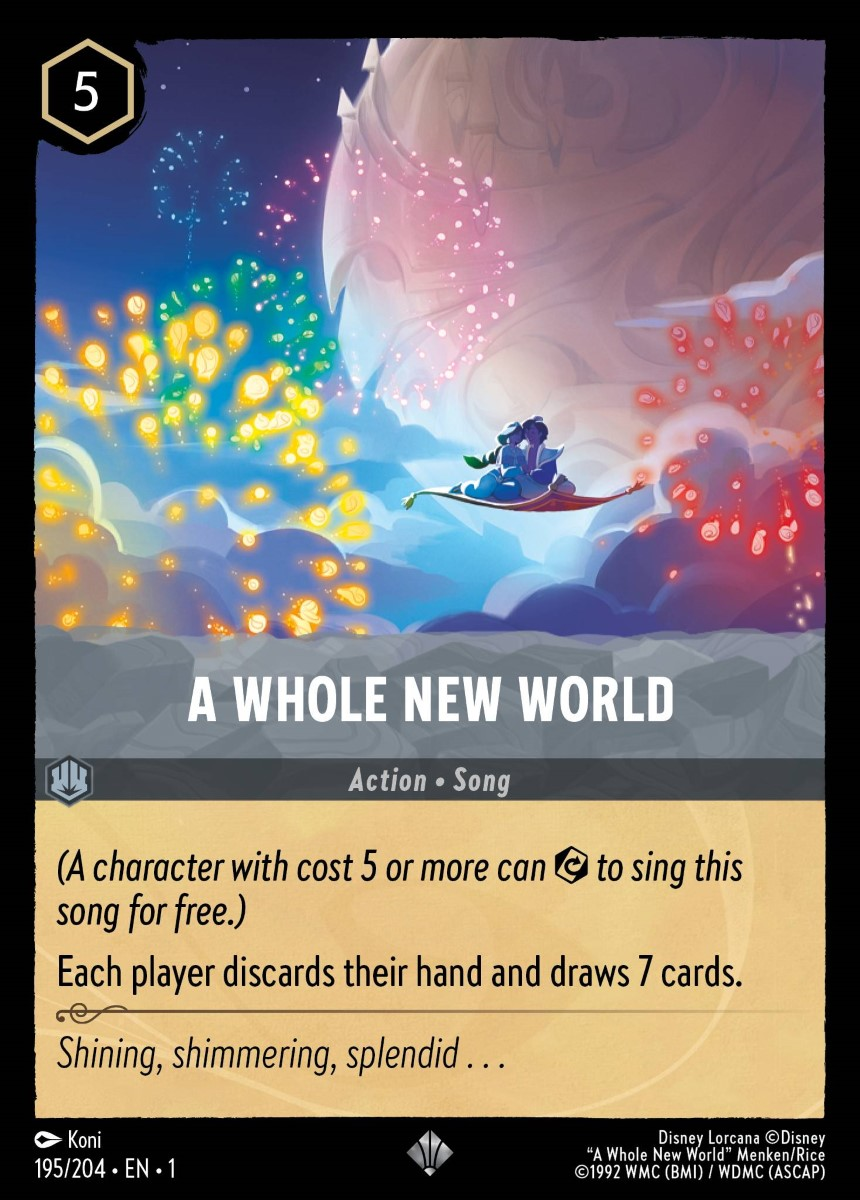
What makes a Song different from an ordinary action is that it offers two ways to play it. The first is the normal way: pay its ink cost, exactly like any other action. The second is the special one, printed right on the card in reminder text — something like "(A character with cost 3 or more can exert to sing this song for free.)"
That second option is the entire reason songs are exciting. It means a song you'd normally pay ink for can instead be cast for free — paid for not with ink, but with the exertion of a character already on your board. Understanding exactly how that works is the key to the whole archetype.
How Singing Works
To sing a song, you choose a ready (un-exerted) character on your board whose ink cost is equal to or greater than the song's cost. You exert that character, and then play the song just like a normal action — except you don't pay its ink cost at all.
So if you have a 4-cost character standing ready, it can sing any song costing 4 or less for free. The song resolves, and your character is now exerted. That exertion is the real price of singing, and it has two consequences worth understanding clearly.
First, the singing character can't quest or challenge that turn — you've spent its action on the song instead of on gaining lore or fighting. Second, because it's now exerted, it can be challenged by your opponent. Singing with a key character can leave it exposed, so if a character is critical to your plan, think twice before sending it to the microphone.
How a Sing Resolves
You're swapping a character's turn for a free spell — no ink ever leaves your pool.
The price: that character can't quest or challenge this turn — and, now exerted, it can be challenged.
The Singer Keyword
Normally, only a character whose ink cost is high enough can sing a given song — a 2-cost character can't sing a 5-cost song. The Singer N keyword breaks that rule. A character with Singer N "sings songs as if its cost were N," regardless of its actual ink cost.
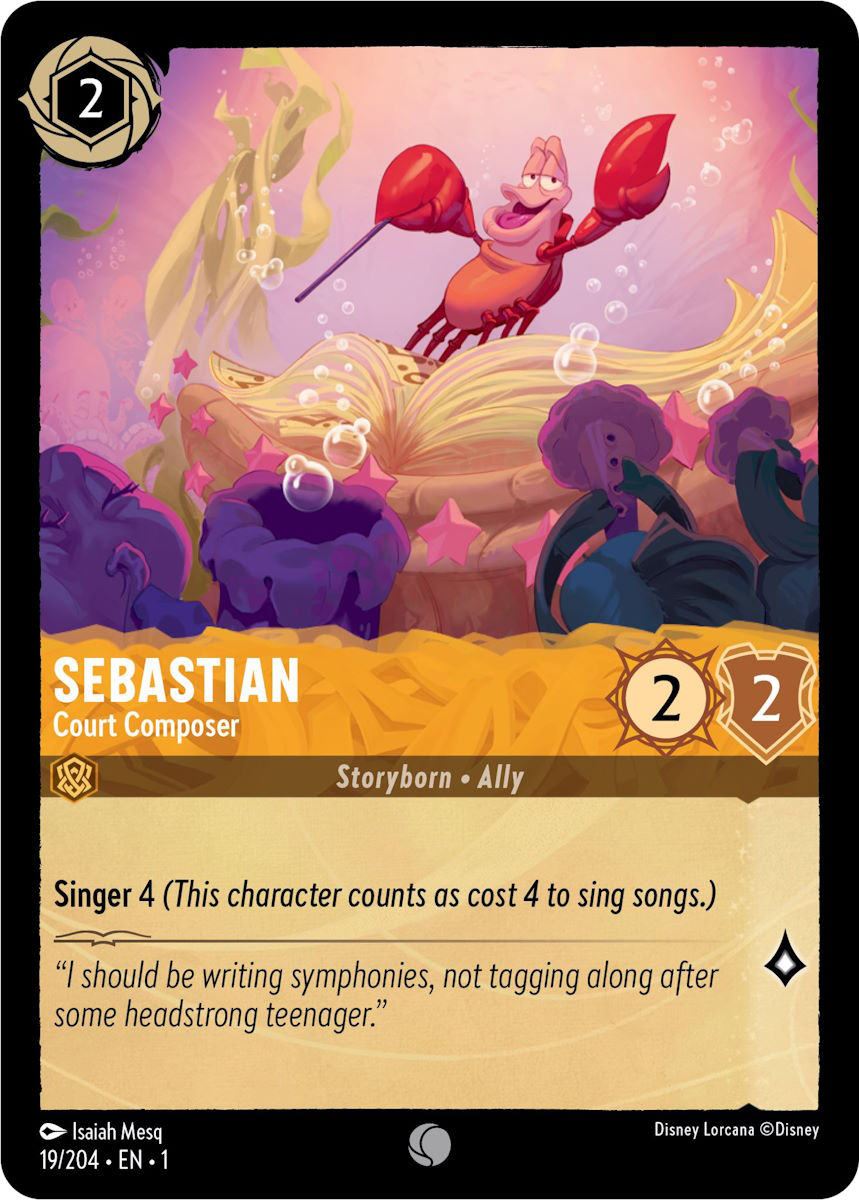
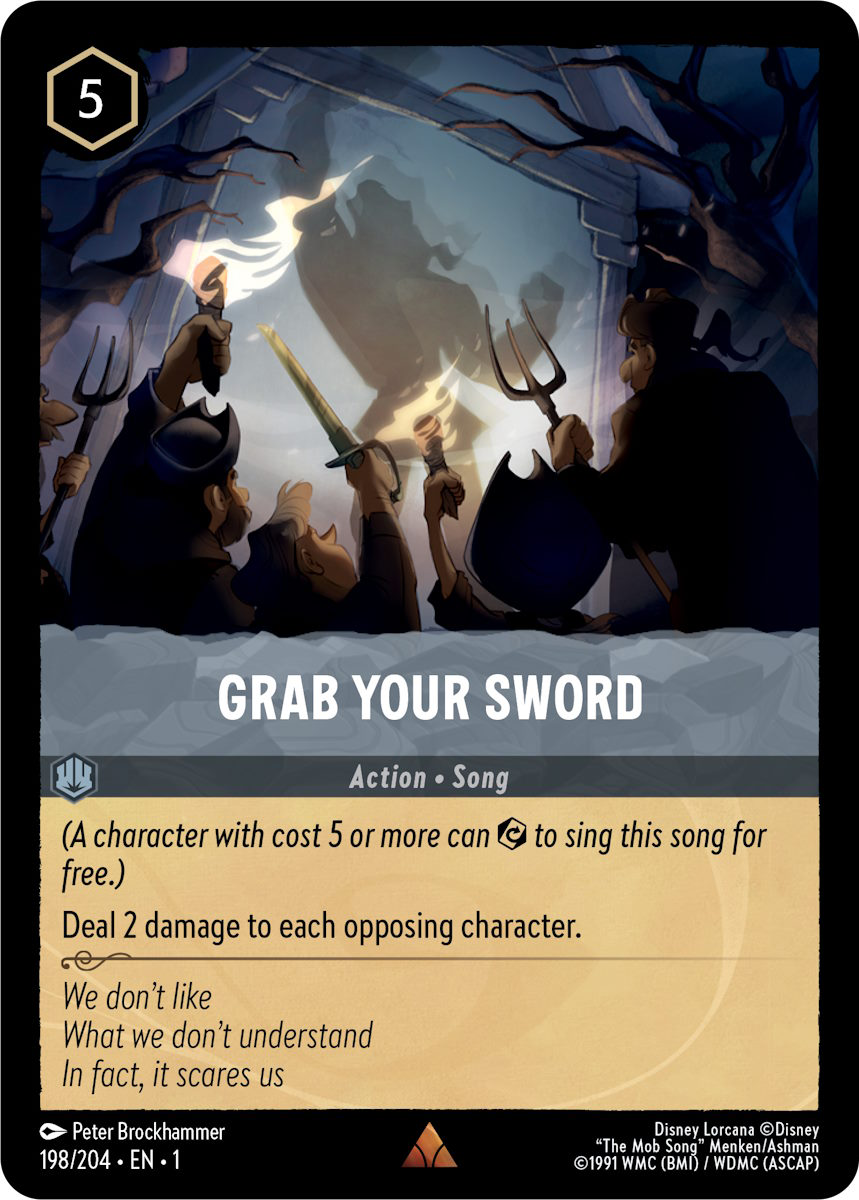
The classic example is Ariel - Spectacular Singer, a 3-cost character with Singer 5. Even though Ariel only costs 3 ink, she can sing any song costing 5 or less — songs like Grab Your Sword (cost 5), A Whole New World (cost 5), or Hakuna Matata (cost 4) — far earlier than you could otherwise. Similarly, Sebastian - Court Composer costs only two ink but, with Singer 4, sings as though he cost four.
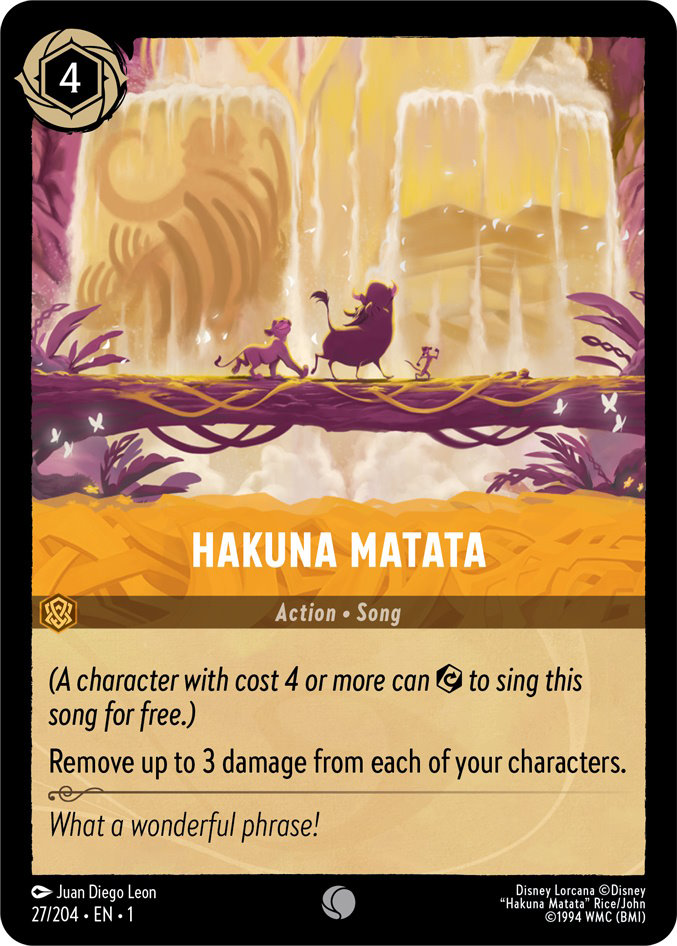
This is enormous for tempo: a cheap, early-game character can drop a powerful late-game song ahead of schedule. Singer values climb well past the low single digits — Sebastian sings as a 4, Ariel as a 5, and the game goes higher still — so a well-chosen singer can unlock some of the biggest songs in the format well before you'd ever have the ink to hard-cast them.
Singer N: Small Body, Big Reach
The orange bar is reach your ink can't pay for yet — a cheap early body dropping a late-game song ahead of schedule.
Sing Together
Some songs carry a related keyword: Sing Together N. Instead of a single character, Sing Together lets any number of your ready characters combine their costs to sing one big song — you exert several characters whose total cost is N or more, and the song is free.
For example, a Sing Together 9 song could be sung by exerting one 9-cost character, or a 4-cost plus a 5-cost, or even nine 1-cost characters — any combination that totals nine. The verified card I2I is a Sing Together 9 song where each player draws two cards and gains two lore, with a bonus that readies the singers if two or more sang it.
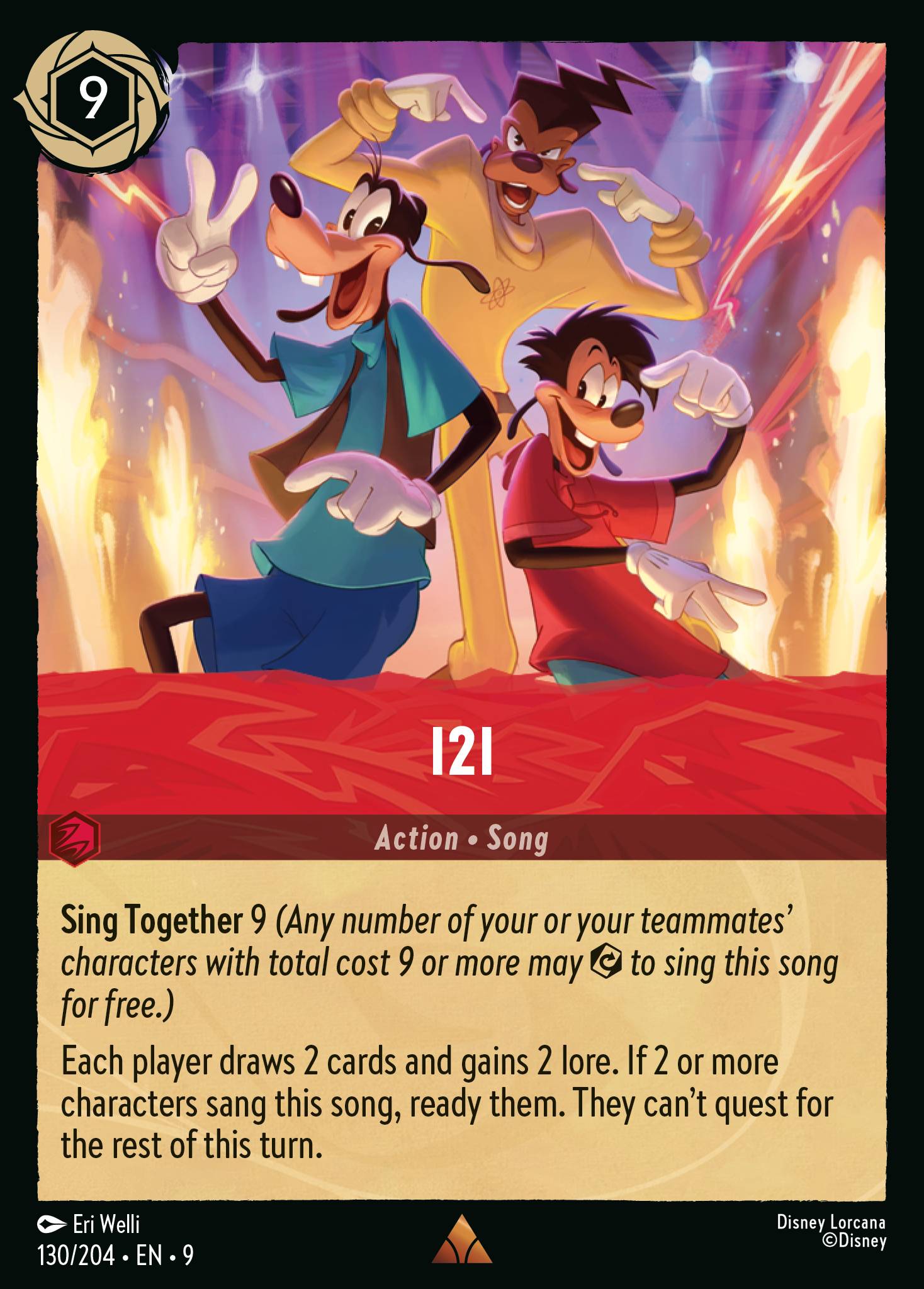
Sing Together rewards a wide board, turning a swarm of small characters into the fuel for an enormous effect. And the Singer keyword stacks with it — Singer characters contribute their boosted cost toward the total, so two Singer 5 characters can together sing a Sing Together 10 song.
Sing Together: Many Voices, One Song
Exert any number of ready characters whose costs total N or more. Here, three small bodies clear a Sing Together 9.
Singer values count toward the total too — two Singer 5 characters together clear a Sing Together 10.
Why Singing Is Powerful
The core advantage of singing is simple but profound: it's a free spell. When you sing, you keep all your ink for the turn to play other cards, effectively giving yourself extra resources. A turn where you sing a powerful song and play out your hand with your ink does roughly twice the work of a normal turn.
What One Turn Gets Done
The song is paid for with a character's exertion, not ink — so it stacks on top of everything your ink already bought.
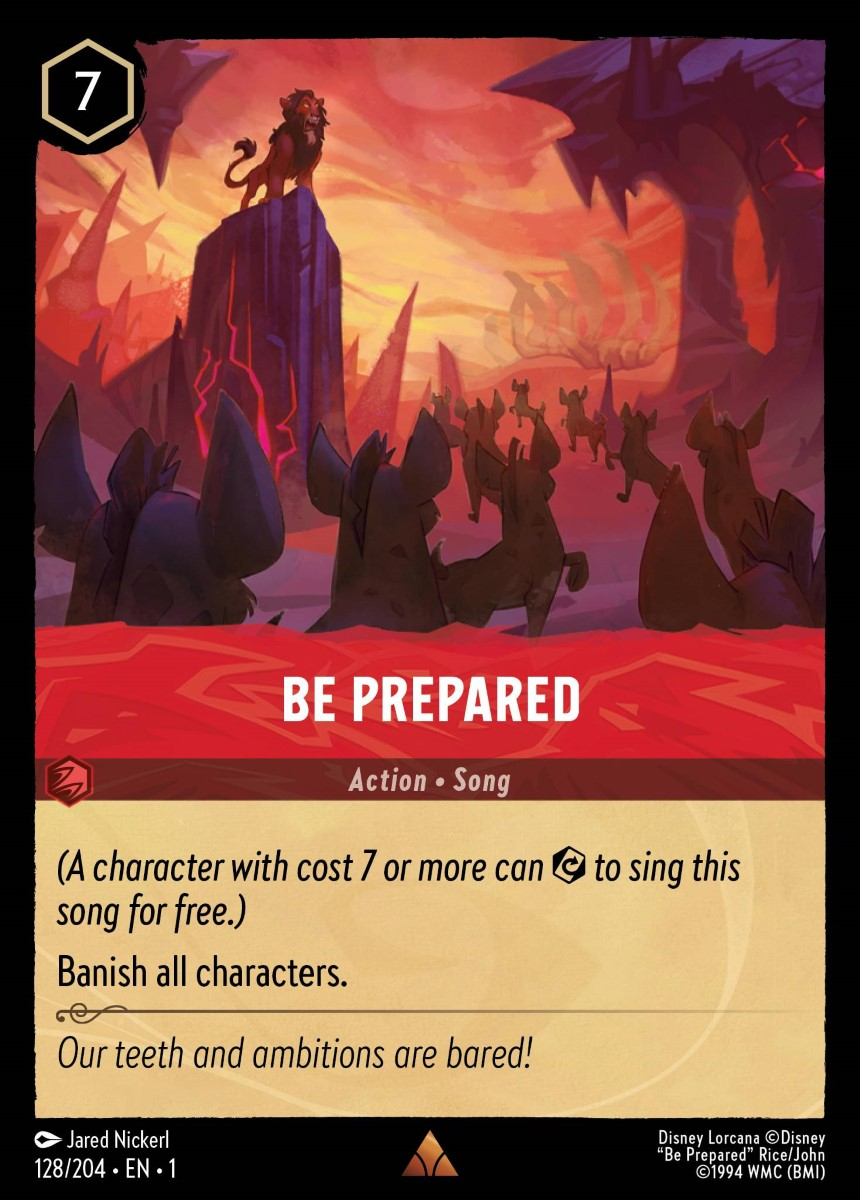
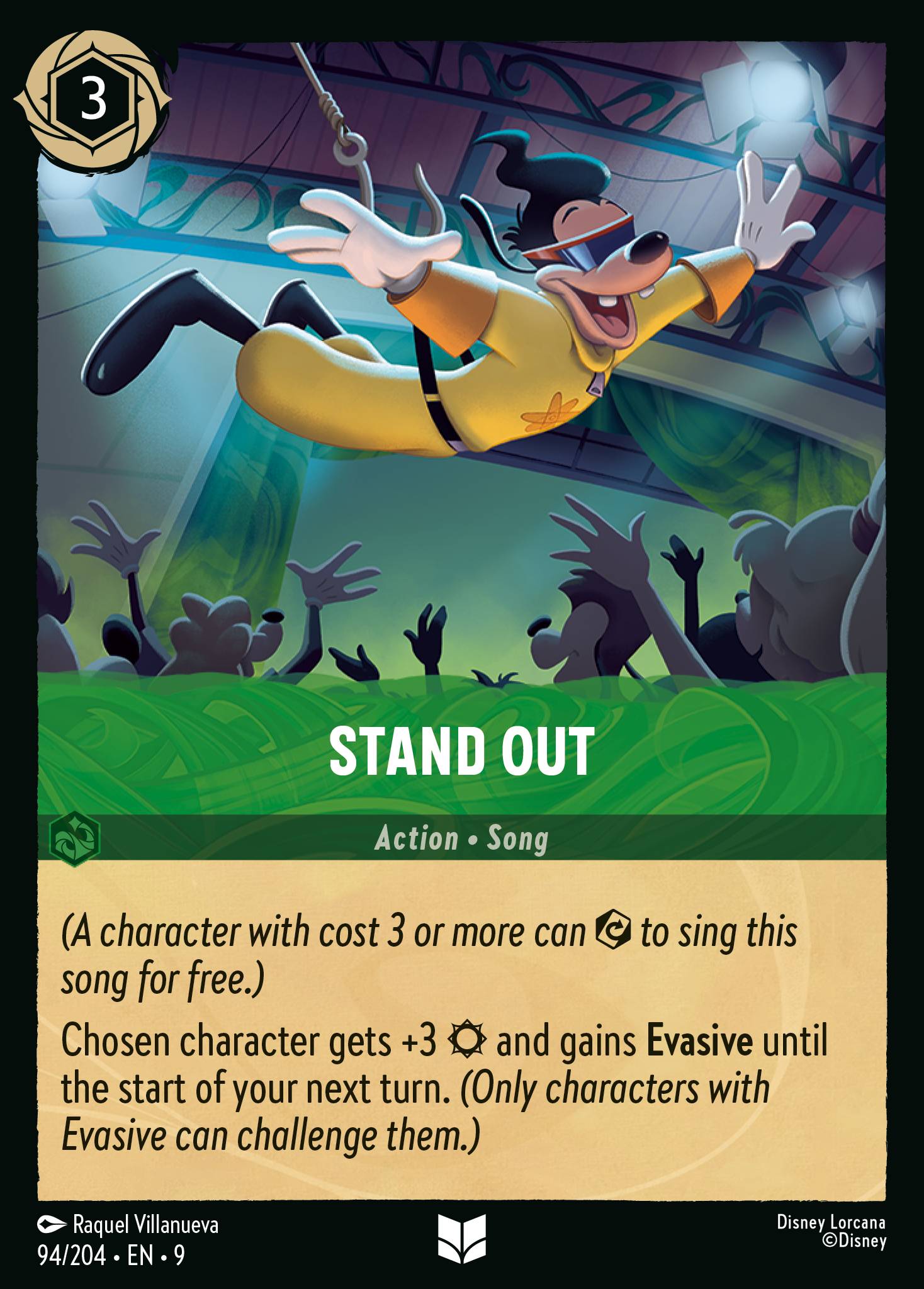
Songs also reach across every role a deck needs. There are song-form removal spells and board wipes (the villain board wipe Be Prepared is the famous example), buff songs that pump a quester and grant evasion (the verified Stand Out gives a character +3 Strength and Evasive), card-advantage songs (I2I), and effects that heal, ramp, or disrupt. A good song package can cover your deck's needs while barely touching your ink.
The cost, always, is the exerted character. Every song you sing is a character that didn't quest for lore or challenge a threat. That's the lens through which all song decisions should be made — and the reason a song deck has to balance singers against questers carefully.
Building a Song Deck
A song deck has two halves that need to be in balance: the songs themselves, and the singers that fuel them. Get the ratio wrong and the deck stumbles.
- Singer density. You need enough characters that can sing — whether through high ink cost or the Singer keyword — that you can reliably sing a song when you draw one. Too few singers and your songs sit dead in hand, forcing you to pay full ink for them.
- A focused song package. Pick songs that cover real needs — a removal song, a card-draw song, a finisher or buff song — rather than jamming every song you own. Each song should earn its slot by being worth a character's exertion.
- Curve your singers low. Cheap Singer characters like Sebastian are gold — they cost little to deploy but unlock big songs early. A low-cost singer that sings as if it were cost 4 or 5 is doing the work of a much more expensive card.
- Mind the dual purpose. Your singers are also your board. A character can either quest, challenge, or sing on a given turn — not all three — so value singers that are also fine questers, and don't build a deck so song-heavy that you forget to gain lore.
The Quest-or-Sing Decision
Singing sits right alongside questing and challenging as one of the three things a ready character can do with its turn — and like those, it comes down to a value judgment. Every time you sing, you're choosing the song's effect over the lore that character could have quested for.
One Ready Character, Three Choices
A ready character can do exactly one of these per turn — and all three exert it.
Sing when the song advances your game more than the lore a quest would gain — and not a marginal beat sooner.
That means singing is correct when the song advances your game more than a quest would: a removal song that saves your board, a card-draw song that refuels you, or a finisher that closes the game. It's a mistake when you sing a marginal song with a character that could have quested toward your win, especially if you're in a race where every point of lore counts.
If you've read our tempo guide, this will feel familiar — it's the same lore-race math applied to a third option. Sing when the effect outweighs the lore; quest when it doesn't. And remember the hidden cost: an exerted singer is a target, so don't sing with a character you can't afford to lose to a challenge.
Common Mistakes
- Too many songs, not enough singers (or vice versa). A deck stuffed with songs but light on singers can't fuel them; a deck of singers with few songs wastes the synergy. Balance the two halves.
- Singing with a key character into danger. An exerted singer can be challenged. Don't tap your most important quester or combo piece to sing if losing it would cost you the game.
- Forgetting you can hard-cast a song. If you have the ink and no good singer available, you can always just pay for the song like a normal action. Don't sit on a game-winning song waiting for a singer.
- Singing instead of winning. Don't get so attached to your songs that you sing when you should be questing to 20. The song is a means to the win, not the win itself.
Singer & Songs FAQ
- Does singing cost ink? No — singing is free. You pay for it by exerting a character instead of spending ink. You can still choose to play a song the normal way by paying its ink cost, in which case no character exerts.
- Can any character sing? Almost any ready character can, as long as its ink cost (or Singer value) meets the song's cost. A few specific cards have text that stops them from singing, but as a rule, if the cost lines up, the character can sing.
- What's the difference between Singer and Sing Together? Singer is a keyword on a character that lets it sing as if its cost were higher. Sing Together is a keyword on a song that lets several characters combine their costs to sing it. The two work together.
- Can I sing on my opponent's turn? No. Songs, like every card in Lorcana, can only be played on your own turn — there are no instant-speed plays on the opponent's turn.
Singer & Songs Cheat Sheet
- Songs: an Action subtype — pay the ink, OR sing for free.
- Singing: exert a ready character whose cost ≥ the song's cost; don't pay ink.
- The cost: the singer can't quest or challenge and can be challenged.
- Singer N: sing as if your cost were N — cheap characters sing big songs.
- Sing Together N: combine multiple characters' total cost to sing one big song.
- Build: balance singers and songs; curve singers low; keep questing.
- Decide: sing when the effect beats the lore a quest would gain.
Free Spells Win Games.
Songs are one of Lorcana's most rewarding mechanics because a free, well-timed effect can do the work of a whole turn — and the Singer keyword lets you unleash big songs far earlier than your ink should allow. Build a deck that balances singers and songs, treat every sing as a choice against questing, and protect the characters you send to the microphone. Do that, and your songs become an engine that quietly out-resources the table on the way to 20 lore.
Pick your singers, build your setlist, and bring the house down.
Sharpen Your Game:
© GEEKYDOMAIN.COM | Strategy Powered by Data