

Inkable vs Uninkable: Building Your Inkwell
Every card in your hand is a choice — play it, or feed it to the inkwell. Mastering that choice, and the inkable/uninkable divide, is the foundation of every good Lorcana deck.
Lorcana's resource system is quietly one of the most elegant in all of card games. There are no separate resource cards to draw and no risk of being flooded with lands you can't use — instead, almost any card in your hand can become a resource. Each turn you choose one card to slide face-down into your inkwell, where it powers the cards you'd rather actually play. That single decision, made every turn, shapes the entire game.
But there's a twist that gives the system real depth: not every card can be inked. Some of the most powerful cards in the game carry no inkwell symbol at all, meaning they can never be a resource — only a play. Balancing the cards that fuel you against the cards that can't is the central tension of Lorcana deckbuilding.
This guide explains how the inkwell works, the difference between inkable and uninkable cards, how many uninkables your deck should run, and how to decide which card to ink each and every turn. The mechanics and the ratio guidance here come from the official rules and tournament data.
The Short Version
Each turn you may put one card from your hand face-down into your inkwell to act as a resource. Inkable cards have a gold ring around their cost and can be played or inked; uninkable cards lack that ring and can only be played, never inked. Uninkable cards are often more powerful for their cost — that's the trade. Official guidance suggests running roughly 11-13 uninkable cards in a 60-card deck (keeping uninkables under about 25%), spread across your curve, so you can ink a card nearly every turn. When choosing what to ink, ink the card you least need to play; keep the cards you want to cast.
→ More Lorcana Strategy
In This Guide
How the Inkwell Works
Ink is your primary resource in Lorcana — the currency you spend to play characters, items, and actions. You build it through your inkwell, the row of face-down cards beside your play area.
Once per turn, you may take one card from your hand, reveal it to your opponent to show it's eligible, and place it face-down into your inkwell. That card is now ink. It no longer matters what it was — face-down in the inkwell, every card is simply one unit of resource. Inking is optional, but doing it nearly every turn is how you keep pace.
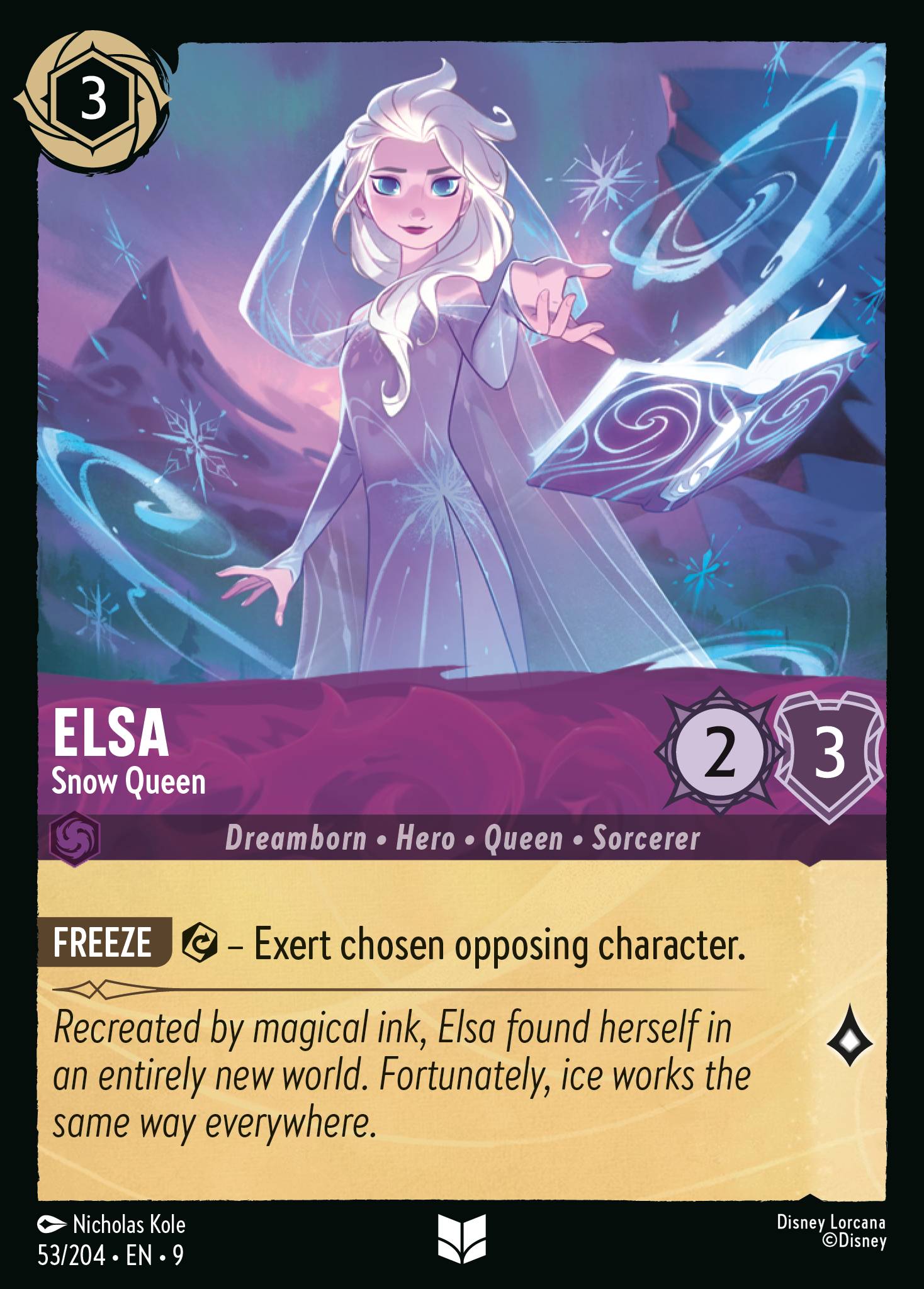
Crucially, ink doesn't get used up permanently. Your inkwell readies each turn, so the cards you've banked are available again every turn to spend — which means your total available ink grows by up to one each turn you add a card. Early game is about building that base; later, a deep inkwell lets you deploy your most expensive threats and answers. The catch, of course, is that everything you ink is a card you'll never play.
Inkable vs Uninkable
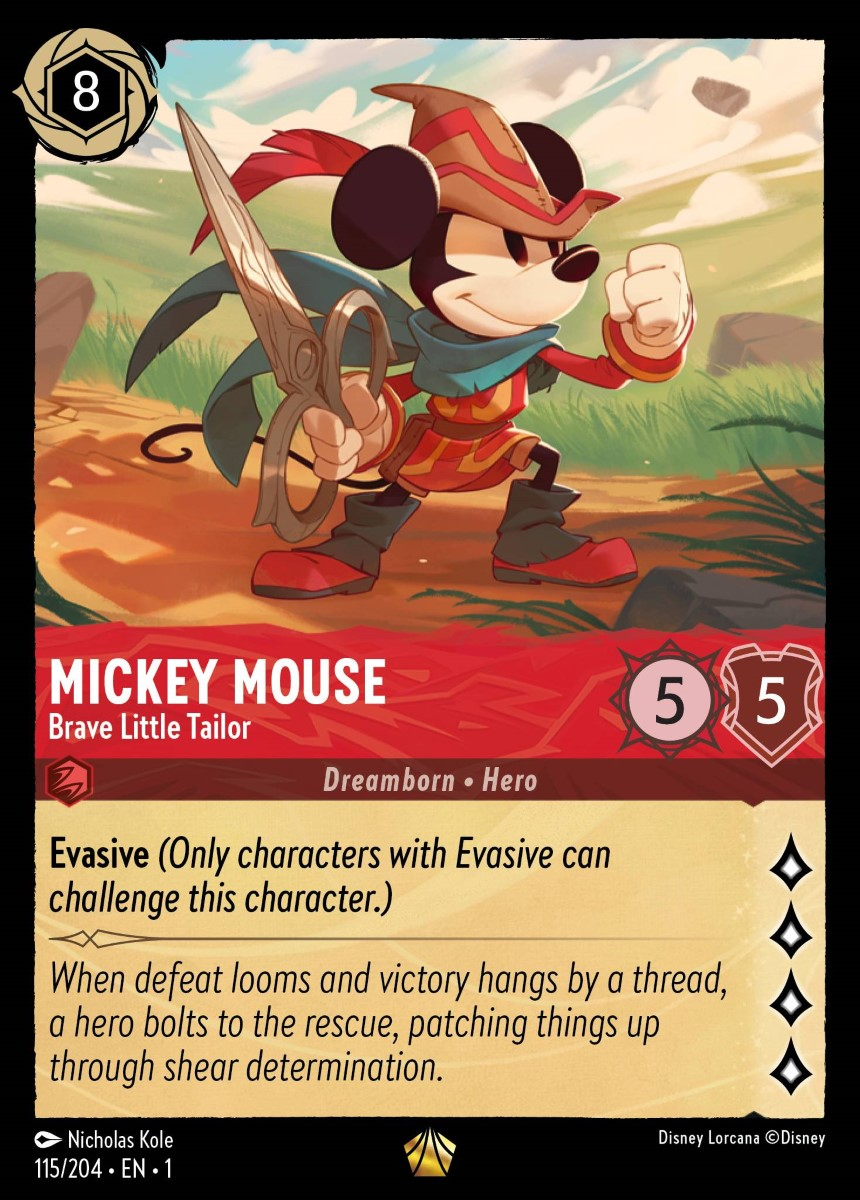
Whether a card can go into your inkwell is printed right on it. Look at the cost number in the top-left corner:
- Inkable cards have a decorative gold ring (the inkwell symbol) around their cost. These are the flexible majority of your deck — each one can be either played for its effect, or committed to your inkwell as a resource. That choice is yours, every turn.
- Uninkable cards lack the gold ring. They can only ever be played — never inked. If you can't afford to play one, it sits dead in your hand until you can.
Why would a card be uninkable? It's a deliberate balancing lever. As Lorcana's designers have explained, removing the ink symbol lets them print a card that's more powerful for its cost, balanced by the fact that it can never help build your inkwell. The drawback is the price you pay for the power.
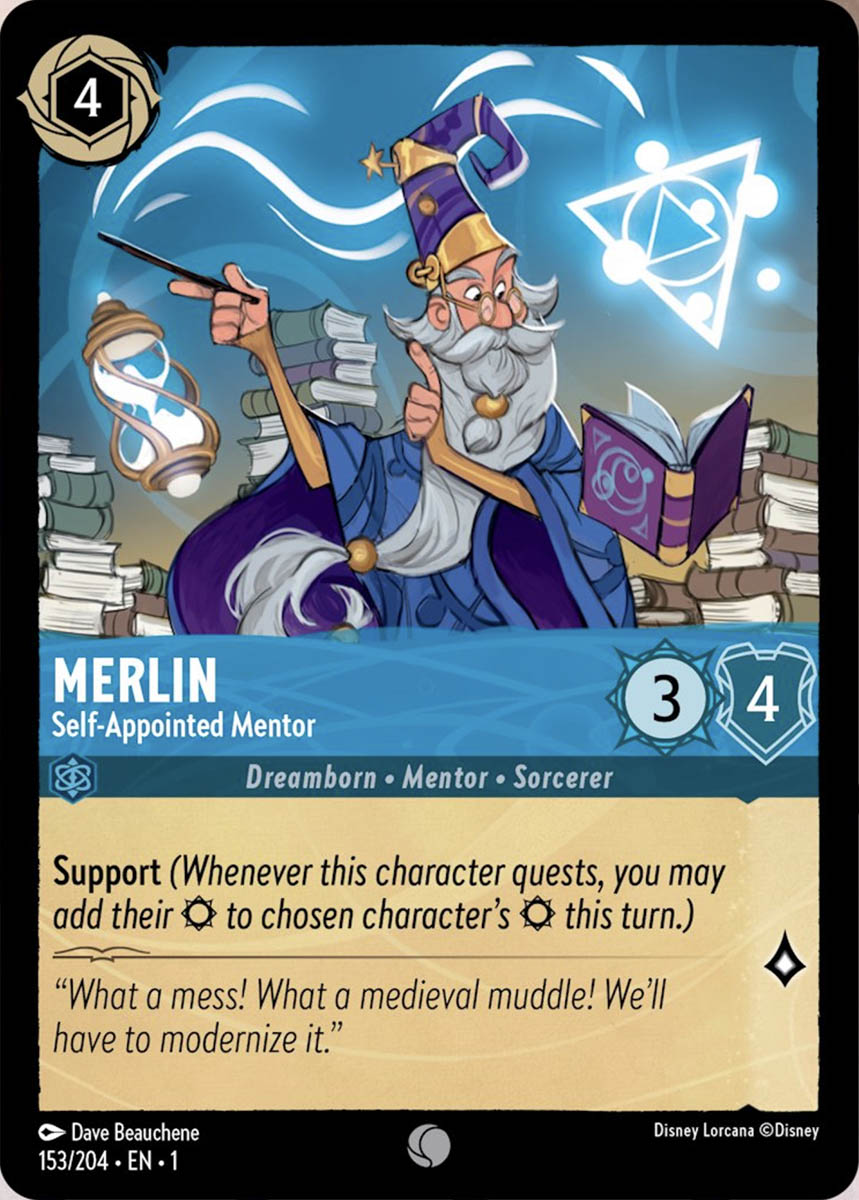
You can see this in action by comparing two cards of the same cost. A four-ink uninkable like Ariel - Whoseit Collector, with a strong board-altering ability, simply does more than a four-ink inkable like Merlin - Self-Appointed Mentor, whose effect is more modest. The uninkable card is stronger — but you give up the option to ever turn it into ink.
The Core Tension
Here's the dilemma at the heart of every Lorcana deck. The most powerful cards are often uninkable — and you naturally want to run lots of them. But every uninkable card is a card that can never be ink, which means the more you add, the harder it becomes to build your inkwell in the first place.
Load up on too many uninkables and you'll have games where you draw a fistful of powerful cards and no way to pay for any of them. You stall out, your inkwell stays shallow, your hand clogs with cards you can't cast, and you lose the very flexibility that makes the ink system strong.
So deckbuilding becomes a balancing act: enough uninkable power to win, enough inkable cards to reliably fuel it. Get the ratio right and the deck hums; get it wrong and you'll either fall behind on resources or run out of impactful cards. Fortunately, there's solid guidance on where that line sits.
How Many Uninkables to Run
Official guidance from Ravensburger, drawn from successful tournament decks, points to a clear sweet spot: roughly 11 to 13 uninkable cards in a 60-card deck, with the remaining 47-49 cards inkable. A common community rule of thumb says the same thing from the other direction — keep your uninkables under about 25% of the deck.
Just as important as the number is the spread. You want those uninkables distributed across your ink curve, not bunched at one cost, so that you're rarely stuck with a hand of expensive uninkable cards and nothing to ink. The goal is simple to state: build the deck so you can put a card into your inkwell nearly every turn of the game.
This is a guideline, not a law. A deck leaning on cheap, efficient uninkables can sometimes push the count higher, while a resource-hungry deck may want fewer. But if you're new to the game or unsure, 11-13 uninkables is the reliable starting point — deviate only when you have a specific reason to.
Which Card to Ink Each Turn
Deckbuilding sets you up; the in-game decision is choosing which card to ink each turn. The guiding principle is straightforward: ink the card you least need to play.
Good candidates for the inkwell are extra copies of a card you've already drawn, highly situational cards that don't fit the current game, and expensive cards you won't be able to cast for many turns anyway. The cards you want to keep are the ones advancing your plan this game — your questers, your removal, your build-around pieces.
Two cautions. First, think a turn or two ahead: don't ink a card you'll desperately want soon just because you can't play it yet. Second, remember that the flexibility itself is a resource — every inkable card in hand is a future decision, so don't reflexively ink your best cards early to "save" weaker ones you might never need.
Building Around Uninkable Bombs
Because uninkable cards tend to be your most powerful, they're often the cards you build a deck around rather than just include. An uninkable engine or payoff sets the deck's direction, and the rest of your inkable cards are chosen to support and enable it.
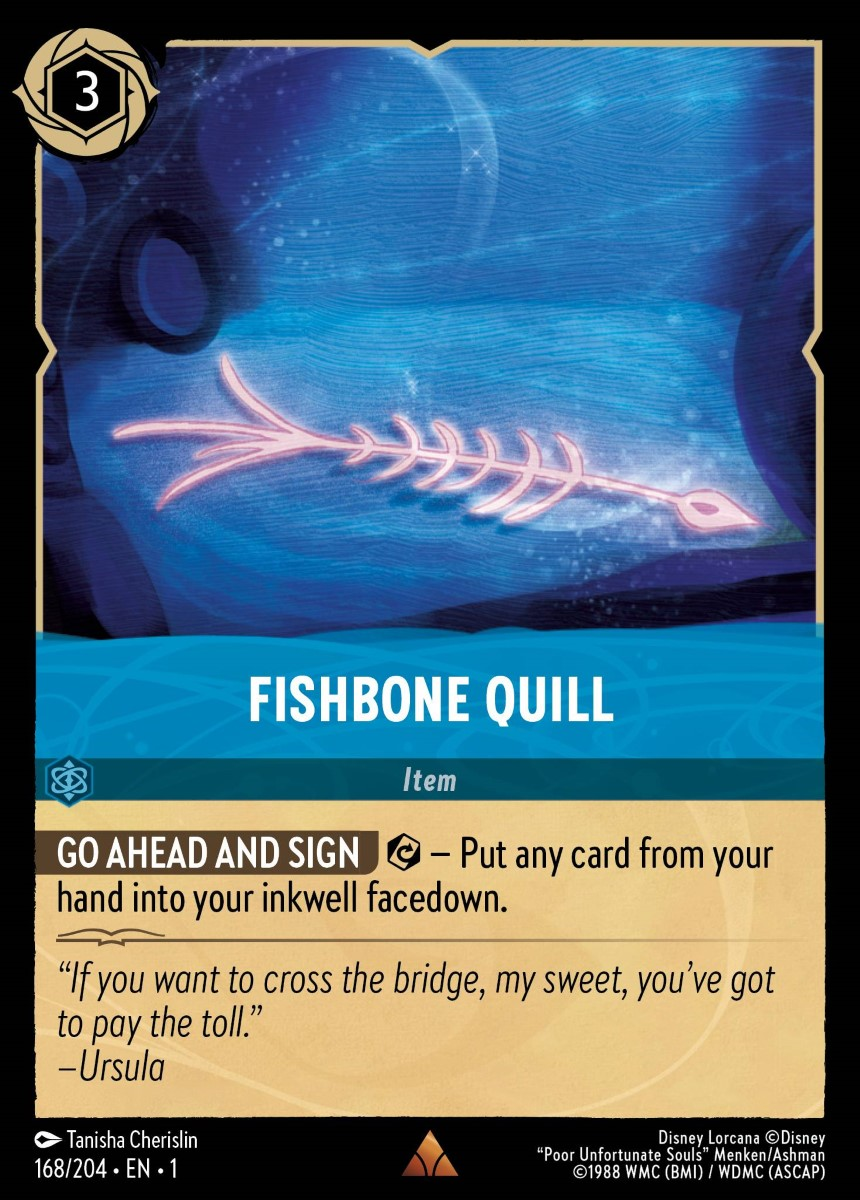
If a top-heavy uninkable plan leaves you short on resources, ink-acceleration cards can bridge the gap. An item like Fishbone Quill, which lets you put an extra card into your inkwell each turn, effectively raises your resource ceiling and helps a powerful, expensive deck come online faster. Ink ramp is the classic way to support a build that wants to cast big things ahead of schedule.
The lesson: don't just count your uninkables — make sure your inkable cards are pulling their weight as enablers, fuel, and curve-fillers for whatever your uninkable bombs want to do.
Avoiding Ink Screw & Flood
Two failure states haunt every resource system, and Lorcana is no exception:
- Ink screw — you can't develop ink fast enough, usually because you drew too many uninkable cards (or a hand with nothing worth inking). You fall behind, unable to cast your hand. The cure is largely in deckbuilding: respect the ratio and the curve.
- Ink flood — you have plenty of ink but not enough impactful cards to spend it on, so your turns fizzle. This comes from inking too aggressively or a top-light deck. The cure is to stop inking once your inkwell is deep enough and start banking action instead.
Your best in-game tool against both is the mulligan. When you decide whether to keep your opening hand, look for a workable curve and enough inkable cards to get your engine going. A hand of all expensive uninkables is a mulligan; so is a hand with no early plays. Keep hands that can ink early and act on time.
Common Mistakes
- Running too many uninkables. The most common deckbuilding error. Stay near 11-13 in a 60-card deck unless you have a specific reason not to.
- Inking a card you needed. Think ahead before committing a card to the inkwell — once it's ink, it's gone for the rest of the game.
- Skipping your ink for the turn. Unless you have a strong reason, ink every turn early — falling a card behind on resources compounds fast.
- Bunching uninkables on the curve. Spread them across costs so you're not stuck holding several expensive uninkables with nothing to ink.
Inkwell FAQ
- Can I get cards back out of my inkwell? Not normally — once a card is in your inkwell it stays there as ink for the rest of the game. Treat inking a card as a permanent decision unless a specific card effect says otherwise.
- Can I ink an uninkable card in an emergency? No. Uninkable cards can never go into your inkwell, no matter how badly you need the resource. That's the entire trade-off for their extra power.
- How much ink do I gain per turn? Up to one, since you may ink a single card per turn. Your inkwell readies each turn, so banked ink is reusable — your spendable total grows by one for each turn you add a card.
- Do I have to ink every turn? No, it's optional — but you usually should early on. Late in the game, once your inkwell is deep enough to cast your hand, you can stop inking and keep your cards to play instead.
Inkwell Cheat Sheet
- Inking: one card face-down per turn, optional; it becomes a reusable resource.
- Inkable: gold ring around the cost — can be played or inked.
- Uninkable: no ring — can only be played, often stronger for its cost.
- Ratio: ~11-13 uninkable in 60 (under ~25%), spread across the curve.
- What to ink: the card you least need — duplicates, situational, uncastable.
- Goal: be able to ink nearly every turn; ink early, bank action late.
Master the Inkwell, Master the Game.
The inkwell is where Lorcana games are quietly won and lost. Get your inkable-to-uninkable ratio right, spread your power across the curve, and make a sharp inking decision every turn, and you'll have the resources to deploy your best cards exactly when they matter. Treat every card as the choice it is — fuel or play — and you'll rarely find yourself stranded with a hand you can't use.
Build the base, bank the power, and pour it out at the perfect moment.
Sharpen Your Game:
© GEEKYDOMAIN.COM | Strategy Powered by Data