

Ward Mechanics: How to Protect Your Best Characters
Ward is the keyword that shuts off removal. Here's exactly what it stops (and the one thing it doesn't), the "choose" rule that decides everything, and how to keep your lore engine alive all game.
You've built your board around a key character — a lore engine, a Singer, a combo enabler — and your opponent reaches for a removal spell to blow it up. Ward is the keyword that says: no. It makes a character untargetable by your opponent's effects, forcing control decks to either find a board wipe or simply watch your best character keep winning the game. For decks built around a lynchpin, Ward is one of the most protective keywords in Lorcana.
But Ward is also one of the most misunderstood keywords, because of one crucial limit: it does not stop your opponent from challenging the character. Ward protects against being targeted by effects — not against combat. That makes it the exact mirror image of Bodyguard, which protects against challenges but does nothing against removal. Understanding precisely what Ward stops, and the single word ("choose") that decides whether an effect gets through, is what separates players who think their character is safe from players who know it is.
This guide breaks down exactly what Ward protects against, the "choose/chosen" rule that's the heart of the keyword, why board wipes sail right through it, how it compares to Bodyguard, the keyword pairings that make a near-unkillable character, and the misplays that get a "protected" character killed anyway. It's the companion to our Bodyguard deep-dive — together they're the two halves of a real protection plan.
The Short Version
Ward reads "Opponents can't choose this character except to challenge." It stops your opponent from selecting the character as the target of any effect that says "choose" or "chosen" — removal, bounce (return to hand), damage, Strength reduction, granting Reckless, and so on. The huge caveat: Ward does not stop challenges — opponents can still attack the character in combat (that's the opposite of Bodyguard). And it only stops effects that choose: board wipes and "all characters" effects that don't say "choose" still hit a Ward character. So Ward is fantastic against spot removal and a nightmare for control decks, but it's not invincibility. Pair it with Evasive (untargetable and hard to challenge) for a near-unkillable lynchpin, and lean on Ward when your meta is full of removal.
→ More Lorcana Guides
In This Guide
What Ward Does
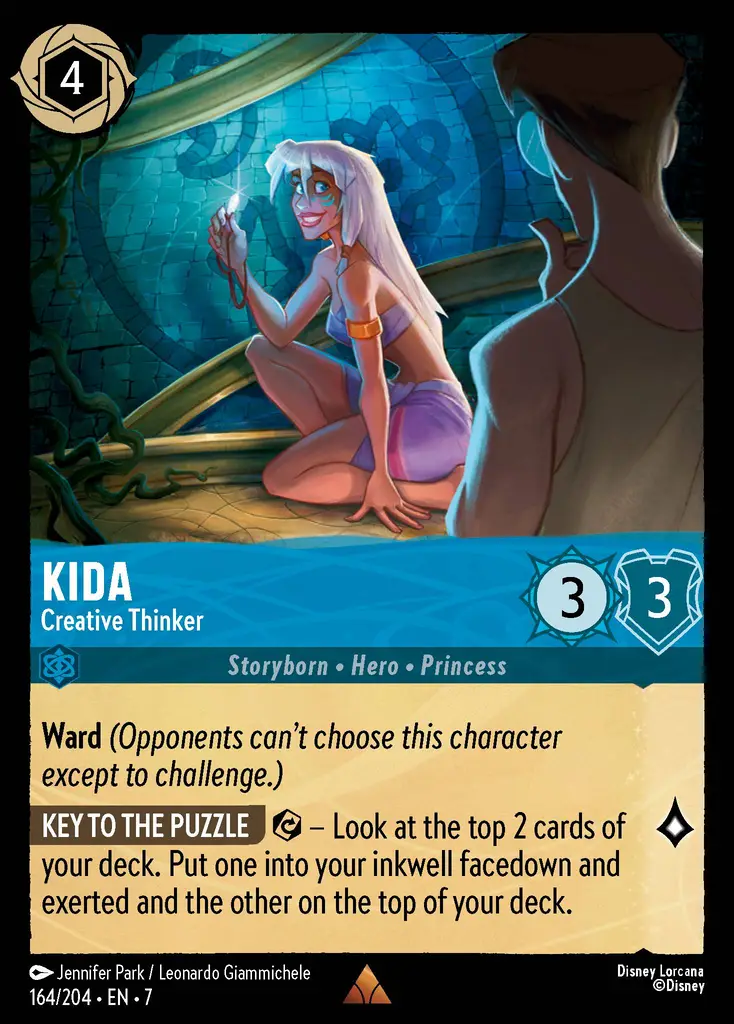
Reminder text: "Opponents can't choose this character except to challenge." In plain terms, your opponent cannot select a Ward character as the target of their effects. Any card that would damage it, banish it, return it to your hand, reduce its Strength, or saddle it with a downside keyword simply can't pick it.
That covers an enormous range of interaction, because so many Lorcana cards work by choosing a character to do something to. Spot removal that banishes a chosen character, actions that deal damage to a chosen character, bounce effects that return a chosen character to hand, abilities that reduce a chosen character's Strength — against a Ward character, all of them fizzle. For a control opponent leaning on targeted removal, that's a wall they can't climb without a different kind of answer.
Ward in one line:
Your opponent can't point an effect at this character —
but they can still challenge it.
It stops targeting, not everything.
Some characters come with Ward printed on them; others can grant Ward to a chosen character (yours), either permanently or for a turn. That second kind is especially powerful — you can drop Ward onto your unprotected lore engine right before your opponent's turn, shutting off the removal they were holding.
The "Choose" Rule Is Everything
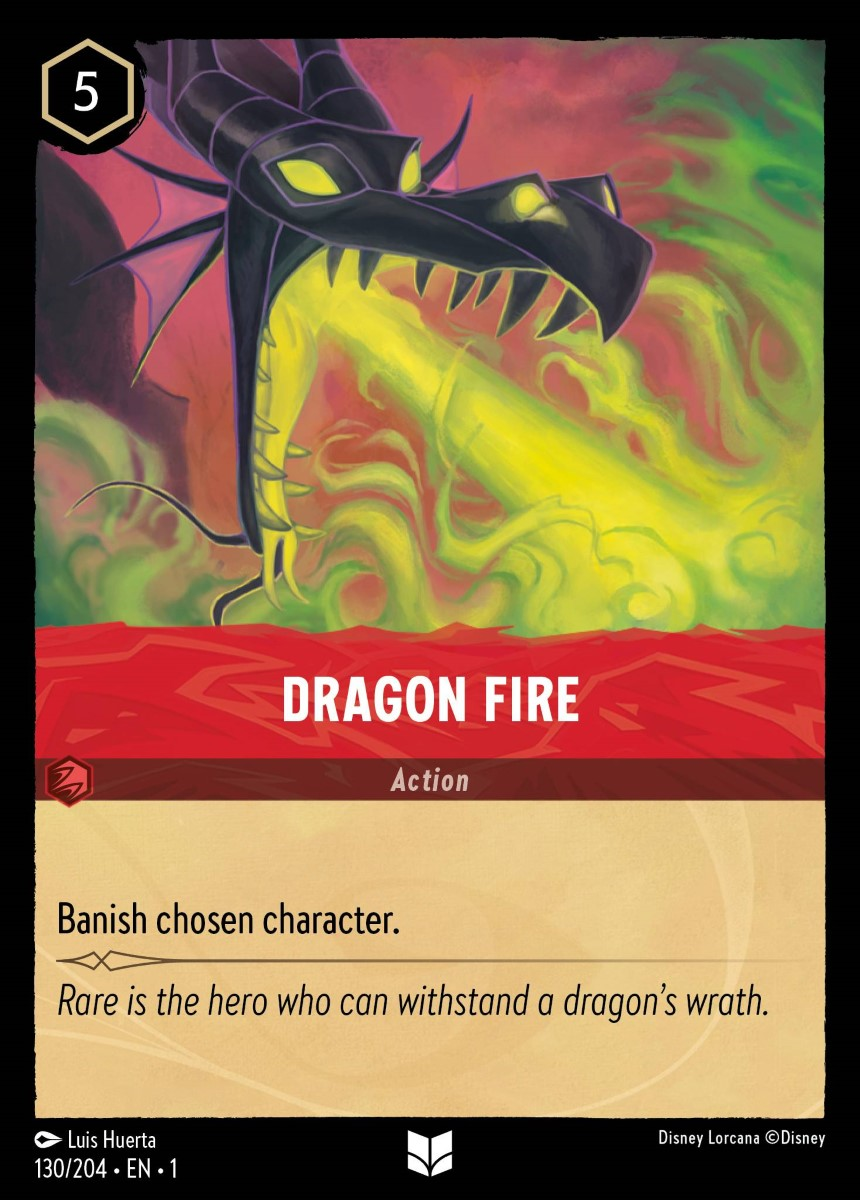
Here's the single most important thing to understand about Ward, and the source of nearly every rules question: Ward only stops effects that use the words "choose" or "chosen."
Lorcana's rules text is written very deliberately. If a card says "banish chosen character" or "deal damage to a chosen character," that's a choice — and Ward blocks it. But if a card affects characters without choosing them — "banish all characters," "each character gets -1 Strength," "deal 2 damage to all opposing characters" — there's no choosing happening, so Ward does nothing to stop it.
The Test: Does the Card Say "Choose"?
When in doubt, read the opposing card's text. If it says "chosen character" or asks the opponent to "choose," Ward protects against it. If it hits everything (or a whole type) without singling out a character, Ward is irrelevant and the effect lands. A removal spell that reads "banish chosen character" can't touch your Ward character; the same deck's "banish all characters" wipes it like anything else. One word decides the entire interaction.
One small boundary worth knowing: "choose/chosen" applies to characters in play, not cards in the discard, unless a card specifically says otherwise. So Ward protects a character on the board — it isn't relevant once a character is already banished.
Why Board Wipes Get Through
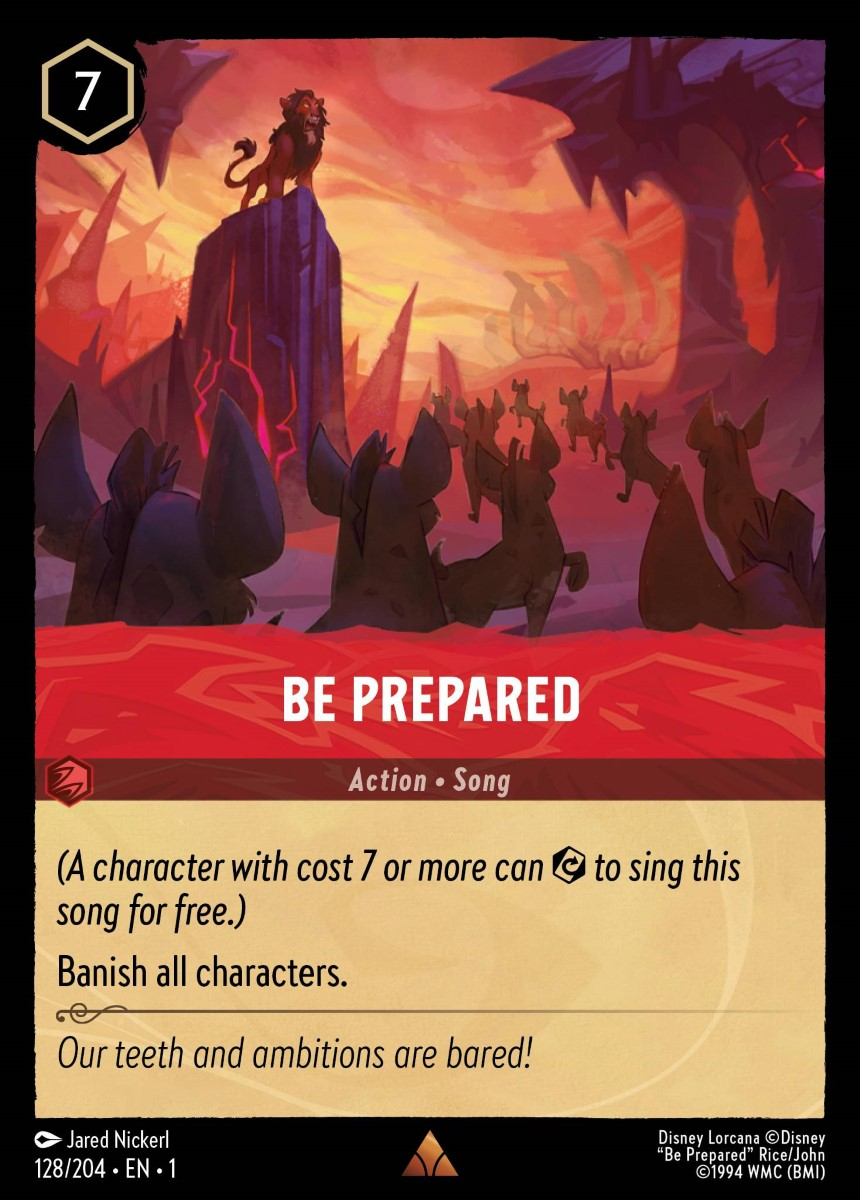
This follows directly from the "choose" rule, but it's worth stating plainly because it's how Ward characters most often die: area-of-effect removal ignores Ward. A board wipe that banishes all characters doesn't choose any individual one, so a Ward character is swept up with the rest.
This is, in fact, the intended counter-play. Ward forces a control deck to abandon its efficient spot removal and reach for its mass-removal — which is usually slower, more expensive, and also kills the opponent's own board. You've made your opponent pay a much higher price to deal with your key character, even though you haven't made it truly invincible. That's a great trade, but don't mistake it for total safety.
The practical lesson: if you're relying on Ward to protect a must-keep character, be aware that a board wipe is still your weak point. Play around it the way you would any sweeper — don't over-commit, and hold a way to rebuild.
Ward Doesn't Stop Challenges
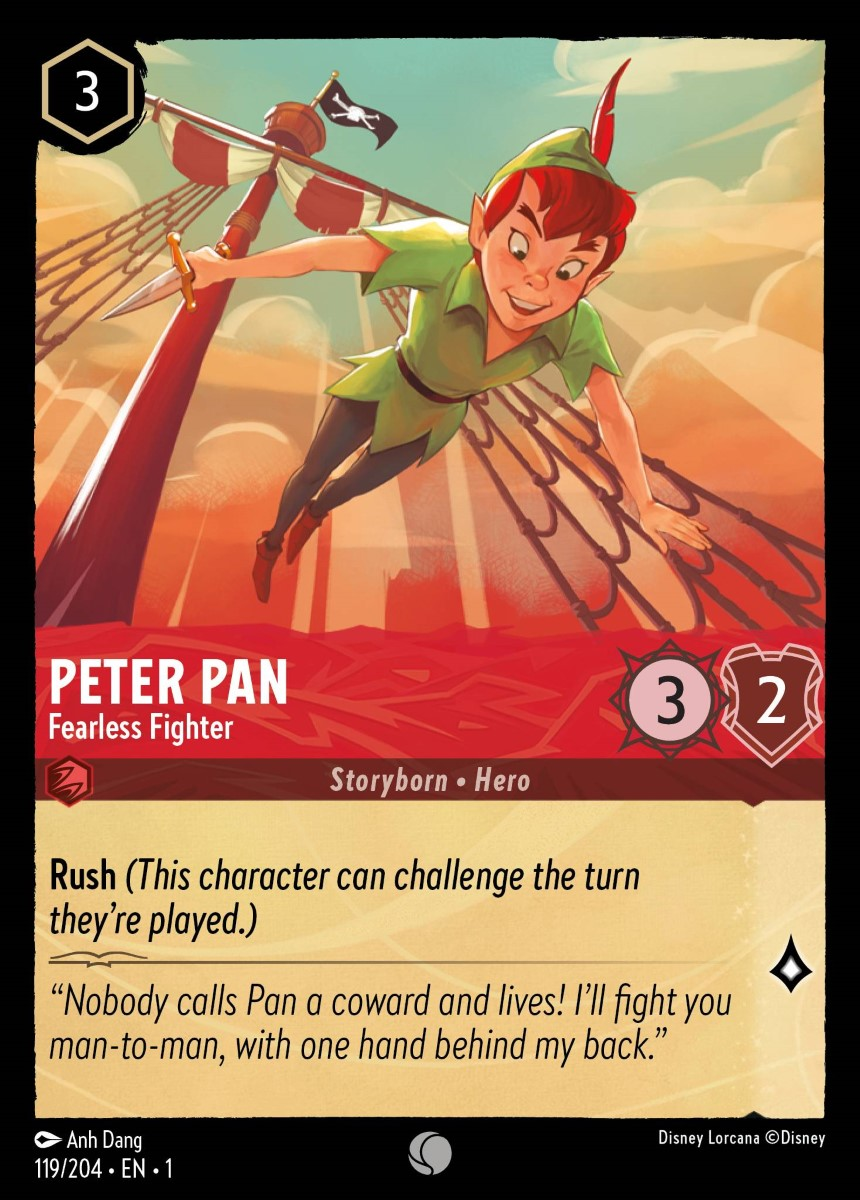
The most common Ward misconception, and the one that costs games: Ward does not prevent your character from being challenged. The reminder text says it directly — opponents can't choose it "except to challenge." Challenging is explicitly carved out.
So a Ward character is fully exposed to combat. If it's exerted (from questing or challenging), your opponent can attack it with their own characters exactly as if it had no Ward at all. A player who quests with their Ward lore engine and assumes it's safe can lose it to a challenge on the very next turn.
This is precisely why Ward and Bodyguard are complementary rather than redundant. Ward closes the "removal effect" door; it leaves the "combat" door wide open. To close both, you either pair Ward with a way to avoid combat (like Evasive) or back it up with a Bodyguard that soaks the challenges. Ward alone protects against half the threats — a strong half, but only half.
Ward vs Bodyguard

These two defensive keywords get confused constantly, but they protect against opposite things. Here's the clean comparison:
| Ward | Bodyguard | |
|---|---|---|
| Protects against | Targeted effects ("choose"/"chosen") | Challenges (combat) |
| Does NOT stop | Challenges or board wipes | Removal, bounce, or other effects |
| Protects whom | The character that has it | Your other characters (the wall takes hits) |
| Best against | Control / spot-removal decks | Aggro / combat decks |
Read together, the two keywords cover the two ways your characters die: getting picked off by an effect, and getting challenged in combat. A deck that wants its lynchpin truly safe runs Ward to stop the removal and some combat answer to stop the challenges. (For the full breakdown of the combat side, see our Bodyguard deep-dive.)
Pairings & When to Lean on Ward

Ward is strongest when it covers for a character's weakness or stacks with another protective layer. The pairings that matter:
- Ward + Evasive (near-unkillable). Evasive means only Evasive characters can challenge it; Ward means no effect can choose it. Against an opponent without Evasive characters and without a board wipe, a Ward + Evasive character literally cannot be removed. This is the dream protection for a lore engine.
- Ward on a lore engine or combo piece. The whole reason Ward exists. Slap it on the character your deck is built around — the Singer, the value engine, the synergy enabler — so spot removal can't undo your game plan. Granted-Ward effects let you protect a character that didn't come with it.
- Ward + a Bodyguard wall. Ward stops the removal; a separate Bodyguard soaks the challenges. Together they close both doors — your protected character can't be targeted or attacked while the wall stands.
When should you prioritize Ward in deckbuilding? When your local meta is heavy on removal. The pro guidance is direct: if opponents are leaning on spot removal, lean on Ward and Resist; if boards stall out, push Evasive instead. Ward is a meta call — it's at its best when there's lots of targeted interaction to blank, and weaker in a field full of board wipes and combat.
Common Mistakes
Mistake #1: Thinking Ward means "can't be challenged."
The big one. Ward stops targeting, not combat — your opponent can challenge a Ward character normally. Questing with your Ward lore engine and assuming it's safe is how it dies to a challenge next turn. If you need combat protection too, that's Bodyguard's job, not Ward's.
Mistake #2: Forgetting board wipes ignore Ward.
A "banish all characters" effect doesn't choose, so it sweeps up your Ward character with everyone else. Don't over-commit a Ward lynchpin into an open board wipe thinking it's protected — play around the sweeper as you normally would.
Mistake #3: Reading "choose" too loosely.
Ward only blanks effects that actually say "choose" or "chosen." An effect that hits "all" or "each" character without choosing still applies. When unsure, read the opposing card's exact wording — the presence or absence of "choose" is the whole ruling.
Mistake #4: Wasting granted-Ward timing.
If you can grant Ward to a character, the value is in the timing — give it to your exposed engine right before your opponent's turn, when their removal is live. Granting it on your own turn after the threat has passed, or to a character that wasn't in danger, throws the protection away.
Mistake #5: Running Ward in a meta full of wipes and combat.
Ward is a meta-dependent keyword. In a field that answers threats with board wipes and challenges rather than spot removal, Ward blanks very little. Build it in when targeted removal is common; reach for Evasive or a combat plan when it isn't.
FAQ & Quick Reference
- Can a Ward character still be challenged? Yes. Ward only stops opponents from choosing the character for effects — challenging is explicitly the exception. A Ward character is fully exposed to combat, so it can be attacked and banished in a challenge like any other character.
- Does Ward stop board wipes? No. Board wipes and "all/each character" effects don't choose a character, so Ward doesn't protect against them. Ward's job is to blank targeted (spot) removal, which forces a control opponent toward slower, more expensive mass removal.
- What exactly does Ward block? Any opposing effect that says "choose" or "chosen" — targeted banish, targeted damage, bounce (return to hand), Strength reduction, granting a downside keyword, and the like. If the card singles out a chosen character, Ward stops it.
- Can I put Ward on my own characters? Yes — some characters have Ward built in, and others grant it to a chosen character you control, sometimes just for a turn. Granting Ward to an exposed lore engine right before your opponent's turn is one of the strongest protective plays in the game.
- Ward or Bodyguard — which should I run? They protect against different threats, so it depends on the meta. Ward blanks targeted removal (great against control); Bodyguard absorbs challenges (great against aggro). For a truly safe lynchpin, you want both — or Ward plus Evasive to dodge combat entirely.
- Reads: "Opponents can't choose this character except to challenge."
- Stops: targeted effects that say "choose"/"chosen" — removal, bounce, damage, debuffs.
- Does NOT stop: challenges (combat) or board wipes that don't choose.
- vs Bodyguard: Ward stops targeting; Bodyguard stops challenges — opposite doors.
- Best combo: Ward + Evasive = near-unkillable (no target, no legal challenger).
- Meta call: lean on Ward when spot removal is everywhere; less useful vs wipes.
Keep Your Lynchpin Alive.
Ward is the keyword that lets the character your deck is built around survive the removal aimed at it. Remember what it actually does: it stops your opponent from choosing the character — not from challenging it, and not from sweeping it up in a board wipe. Use it to blank spot removal, time your granted-Ward effects for your opponent's turn, and stack it with Evasive (to dodge combat) or a Bodyguard (to soak it) when you want a lynchpin that simply refuses to die. Know the "choose" rule cold and Ward goes from a vague "protection" keyword to a precise, game-winning tool.
© GEEKYDOMAIN.COM | Strategy Powered by Data