

Underrated Uncommons That See Play
Real Uncommon-rarity Disney Lorcana cards that keep showing up in decklists — not chase cards, just cards that work.
Some links below are affiliate links. If you buy through them, Geeky Domain may earn a small commission at no extra cost to you.
The Short Version
Every Disney Lorcana booster pack guarantees 3 Uncommons and 6 Commons out of 12 cards, which makes Uncommon the most accessible "real" rarity tier in the game — and a handful of them punch well above that price point. Dragon Fire (Ruby, 5 ink) is unconditional Banish-a-character removal with zero fine print. Smash (Steel, 3 ink) is inkable, deals 3 damage, and still shows up in current deck-tech coverage as a tech answer. Aurora - Holding Court and Diablo - Obedient Raven are 1-cost Uncommons that quietly discount your game plan or replace themselves when they die, and Merlin - Goat fills the same Amethyst "transformation" slot as two Rare cards, at Uncommon rarity. None of these need a second mortgage — they need you to stop sorting Uncommons straight into the bulk box.
In This Guide
- → Why Uncommon Rarity Isn't the Same as Unplayable
- → Dragon Fire: Ruby's No-Strings Removal
- → Smash: The Uncommon Removal Spell Still Doing Work
- → Aurora - Holding Court: A 1-Ink Amber Engine
- → The Amethyst "Transformation" Package, and Where the Uncommon Fits
- → Where These Picks Sit in the Current Metagame
- → Two New Cards to Watch From Attack of the Vine!
- → Building Around Underrated Uncommons on a Budget
- → FAQ & Quick Reference
Why Uncommon Rarity Isn't the Same as Unplayable
Lorcana's rarity ladder runs Common, Uncommon, Rare, Super Rare, Legendary, and Enchanted, and the newest sets have layered a couple of higher tiers on top of that (names and rollout timing are still shifting release to release, so treat that detail as directional rather than gospel). Enchanted foils and Legendary characters get the spotlight, the price tags, and the budget-staples roundups built specifically to route around them. Uncommons get sorted into trade binders and bulk boxes without a second look. That's a mistake, because Uncommon sits just one rung above Common on that ladder, and every booster pack guarantees three of them alongside six Commons out of its 12 cards — meaning Uncommon is the most accessible rarity tier that isn't the literal bottom of the pile.
That accessibility is exactly why it's worth knowing which Uncommons are actually doing work. The five picks below aren't guesses — they're cards with text that reads like it should cost more, corroborated across multiple card-database and deck-tech sources, and in most cases still relevant to how current Core Constructed decks are built. Two newer additions from the most recent set get flagged separately as "watch" picks rather than proven staples, because they're real, verified cards that simply haven't had time to show up in tournament data yet.
Dragon Fire: Ruby's No-Strings Removal
Dragon Fire is a Ruby action card that debuted as an Uncommon in The First Chapter and was reprinted in Whispers in the Well (133/204) at Common rarity — that reprint is what keeps it legal in Core Constructed after The First Chapter rotated out. It costs 5 ink, and the entire card reads: "Banish chosen character." No strength cap, no willpower threshold, no exert requirement on your side of the board — just a clean answer to whatever the opponent has in play. Most removal that's this unconditional gets printed at Rare or above, which is what makes finding it at Uncommon notable.
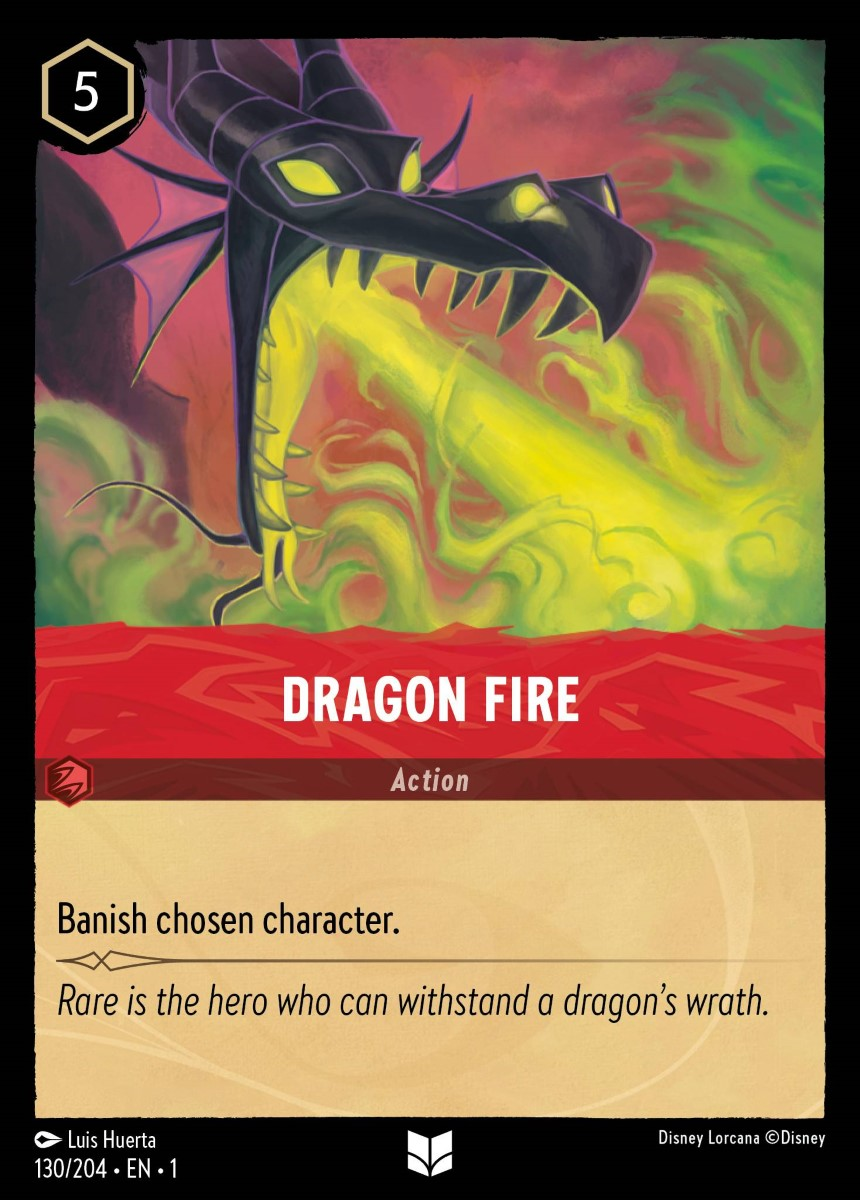
Five ink isn't cheap in absolute terms, and it won't out-tempo a 1-cost problem. But as a top-end answer in a Ruby or Ruby/Amethyst control shell, it's the kind of card that turns the game around a single un-answerable threat, and it's priced like a Common at retail because nobody's fighting over it. If you're assembling a control-leaning deck around this pick, the Ruby/Amethyst control masterclass walks through how a card like Dragon Fire slots into a longer game plan, and our best budget Ruby cards list covers the rest of the color's cheap staples. The First Chapter carried somewhere in the neighborhood of 53 to 54 collectible Uncommons across its full print run (sources vary slightly on the exact count), and Dragon Fire is one of the ones worth digging out of that pile specifically.
Smash: The Uncommon Removal Spell Still Doing Work
Smash is an Uncommon Steel action card, also from The First Chapter. It costs 3 ink and deals 3 damage to chosen character — and because it's inkable, it's never a dead draw even in a game where you don't need the removal, since it can go straight into your inkwell instead. That flexibility is a big part of why it has stuck around: you're never punished for including it, the way you would be with a narrower, uninkable answer.
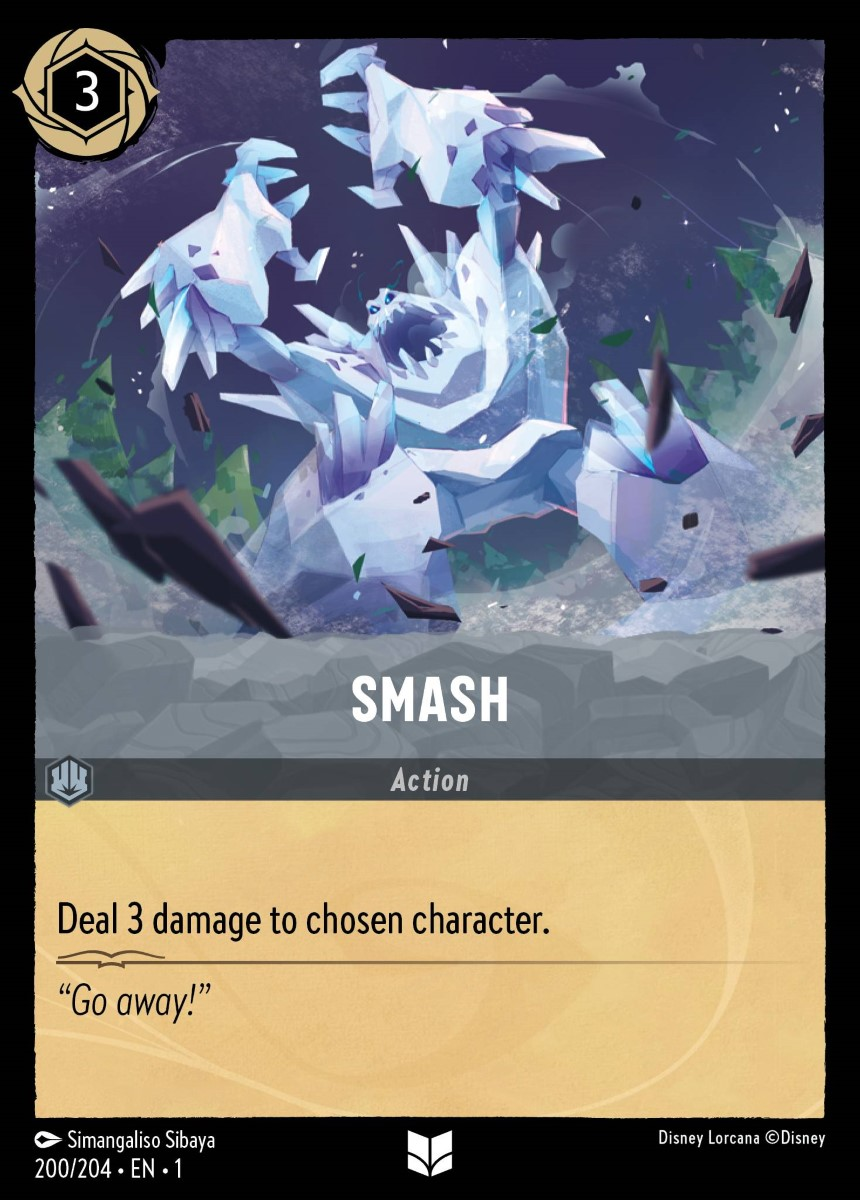
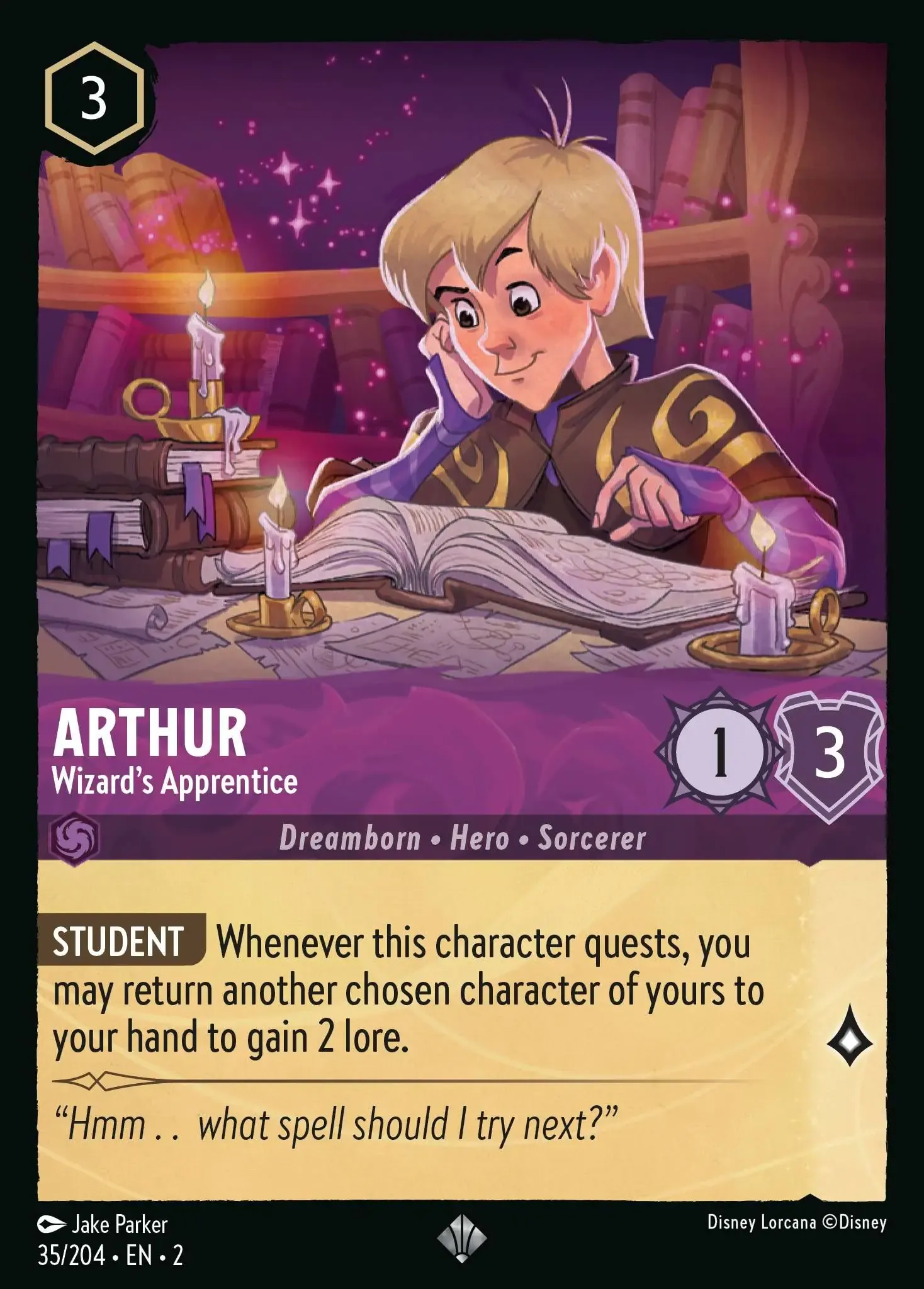
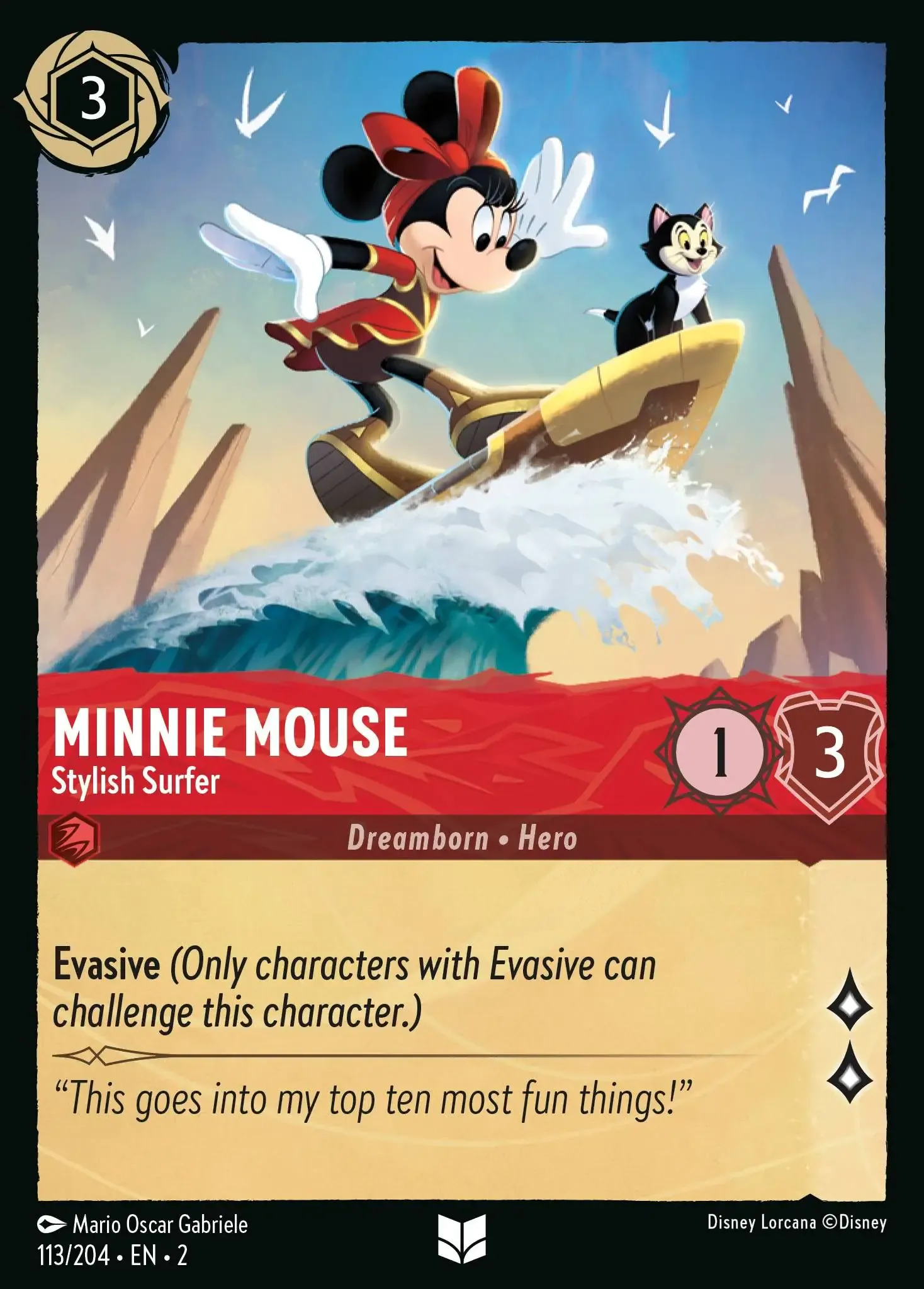
Community deck-tech coverage has long named Smash as a live tech answer against threats like Arthur - Wizard's Apprentice and Minnie Mouse - Stylish Surfer — though both of those are Rise of the Floodborn cards that rotated out of Core Constructed in September 2025, so that matchup now only comes up in Infinity Constructed. Smash itself stays Core-legal thanks to its Fabled reprint (198/204). Three damage doesn't kill everything, but against the specific cards a Steel player is worried about that turn, it's often exactly enough — and being inkable means you can play Smash proactively on curve without fear of stranding it in hand.
If you're new to why "inkable" matters as much as the effect text, our guide to the inkwell breaks down how that resource actually shapes deckbuilding decisions. And if you're specifically trying to shore up a matchup against a fast board, how to beat aggro in Lorcana covers where cheap, flexible removal like Smash actually earns its slot versus where it doesn't. The rest of Steel's budget-friendly cards are rounded up in our best Steel cards under $10 list.
Aurora - Holding Court: A 1-Ink Amber Engine
Aurora - Holding Court is an Uncommon 1-cost Amber character (Storyborn, Hero, Princess) from the Fabled set. Her ability is simple but recurring: whenever she quests, you pay 1 ink less for the next Princess or Queen character you play that turn. She's a 1-drop, so she's not doing anything flashy on the turn you cast her, but every subsequent turn she's alive and questing, she's shaving a full ink off whatever royal payoff you're building toward.
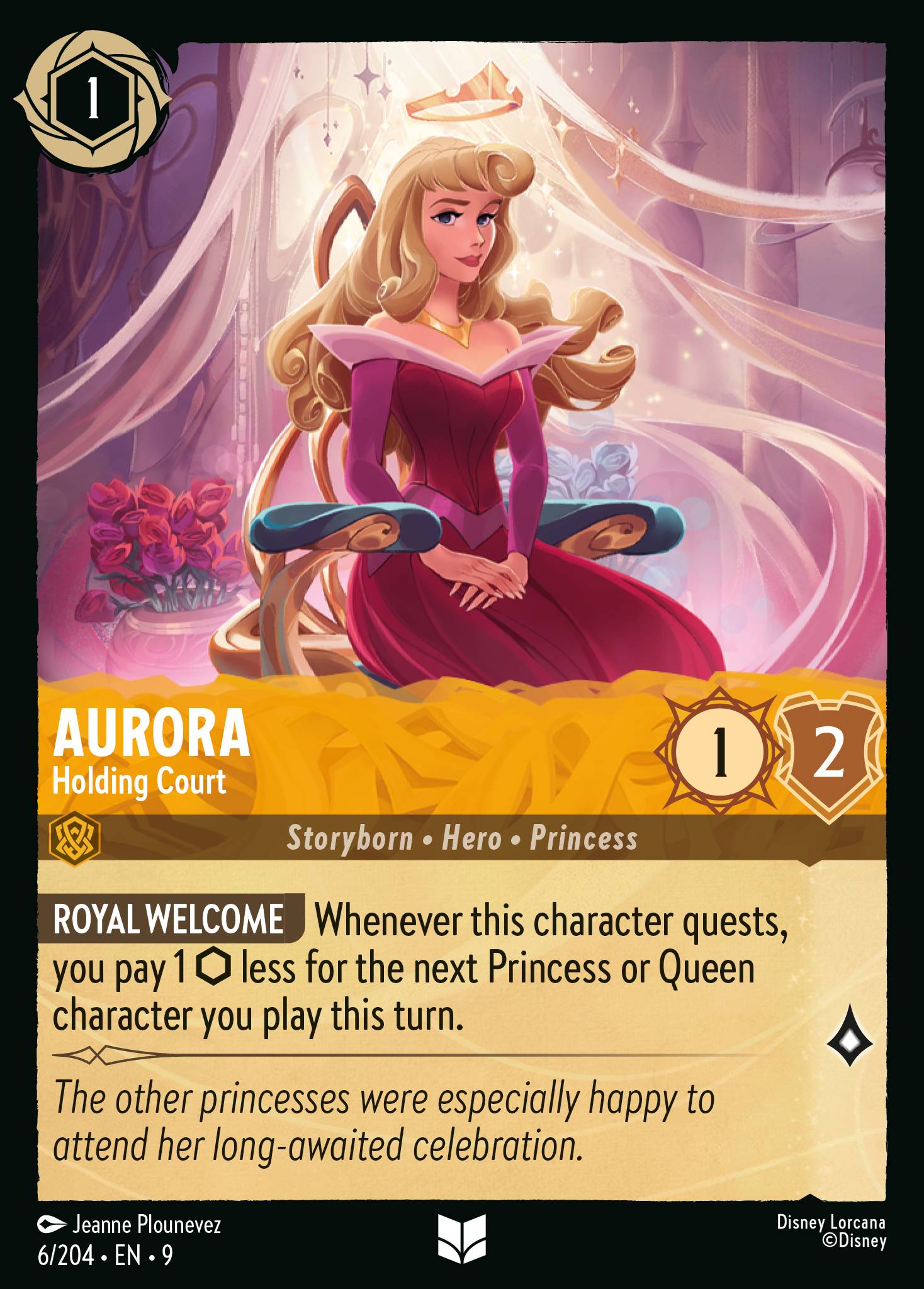
This is exactly the kind of card that gets overlooked because it doesn't do anything on the turn you play it — no immediate lore swing, no removal, just a quiet discount engine. Pricing on Aurora has floated somewhere in the rough $1 to $4 range in aggregated marketplace searches (treat that as a ballpark rather than a live quote, since singles prices move constantly), which is bulk-Uncommon territory for a card that's actively saving you ink turn after turn in the right shell. She belongs in any Amber deck leaning on Princess or Queen payoffs — check our best Amber cards under $10 roundup for the rest of that shopping list, and if you're building toward an aggressive early curve rather than a control one, the budget Amber/Emerald aggro deck guide shows how a cheap 1-drop like this fits into a faster plan.
The Amethyst "Transformation" Package, and Where the Uncommon Fits
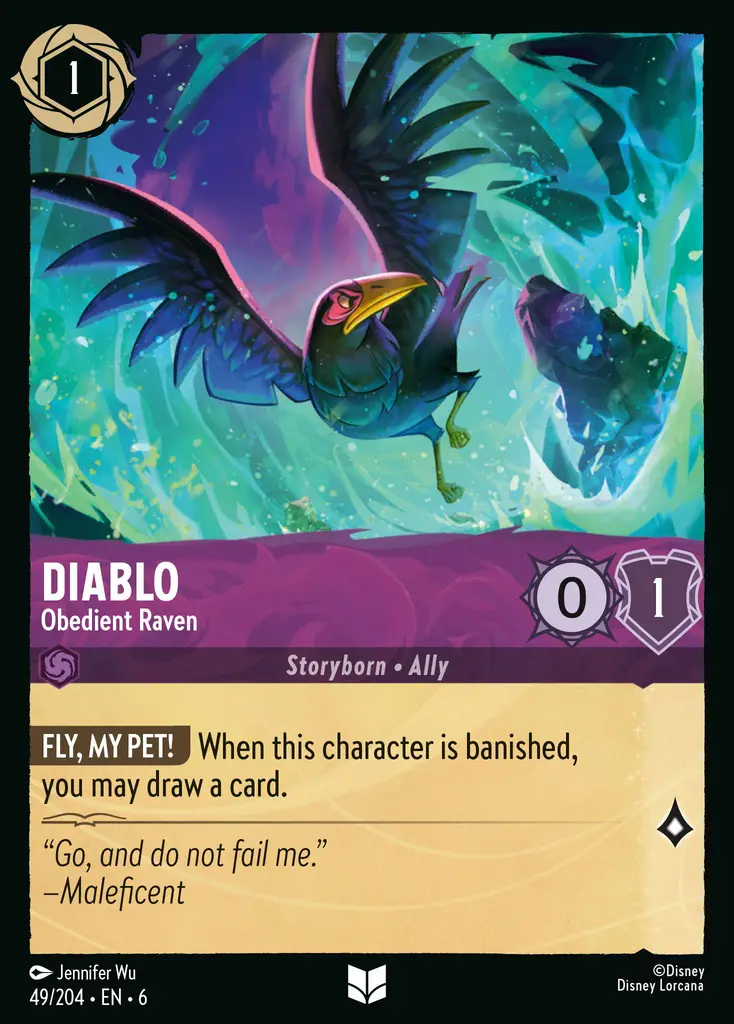
Two more picks come from Amethyst, and they're worth covering together because one sets up the other's family of effects. Diablo - Obedient Raven is an Uncommon 1-cost Amethyst character (Storyborn Ally) from the Azurite Sea set. His ability, "FLY MY PET!," reads: when this character is banished, you may draw a card. He's a 1-drop that's actively fine being traded away, since dying is the trigger, not the downside — a rare thing to be able to say about a 1-cost body.
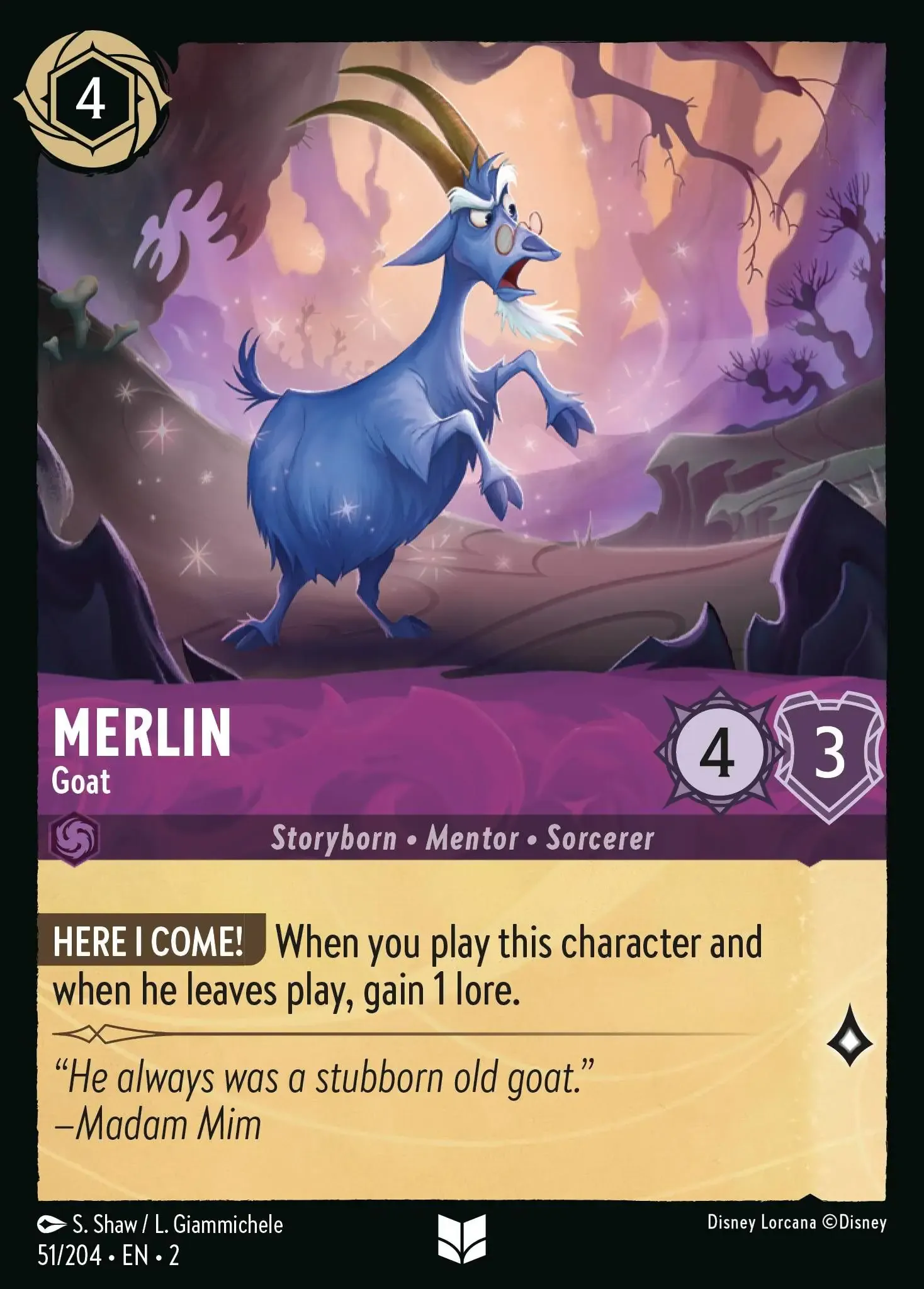
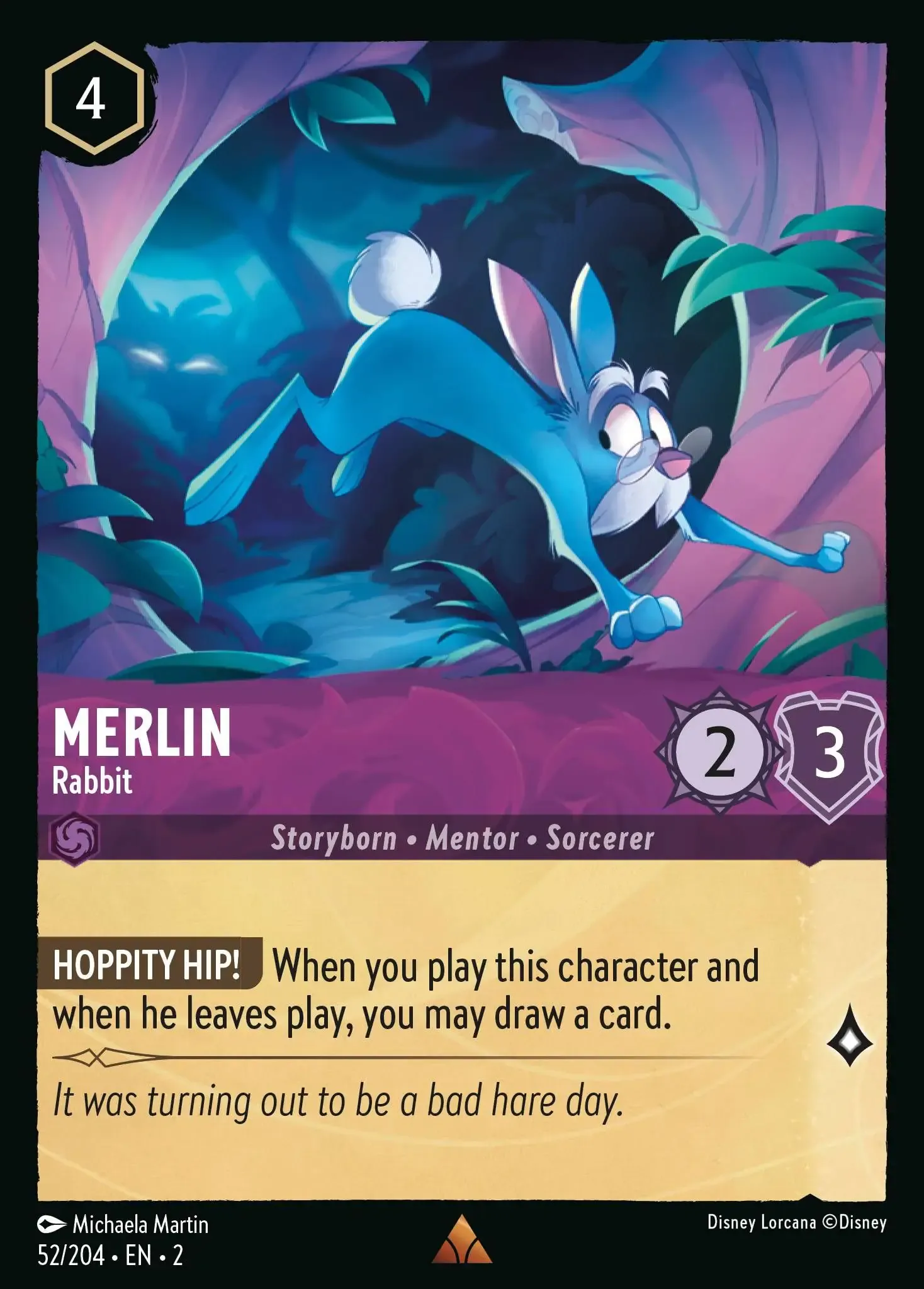
Merlin - Goat is an Uncommon 4-cost Amethyst character (Storyborn, Mentor, Sorcerer) from Rise of the Floodborn. His ability, "HERE I COME!," gains you 1 lore both when you play him and when he leaves play — meaning a single card is worth two separate lore ticks across the game if your deck is built to bounce or replay characters. Two other well-known cards from the same Merlin "transformation" family sit at higher rarity: Merlin - Rabbit (also 4-cost Amethyst, "HOPPITY HIP" — draw a card on play and on leaving play) and Madam Mim - Fox (3-cost Amethyst, "CHASING THE RABBIT" — a Rush-enabled banish/bounce effect) are both Rare. Merlin - Goat is the Uncommon that slots into the exact same package, at a fraction of the cost.
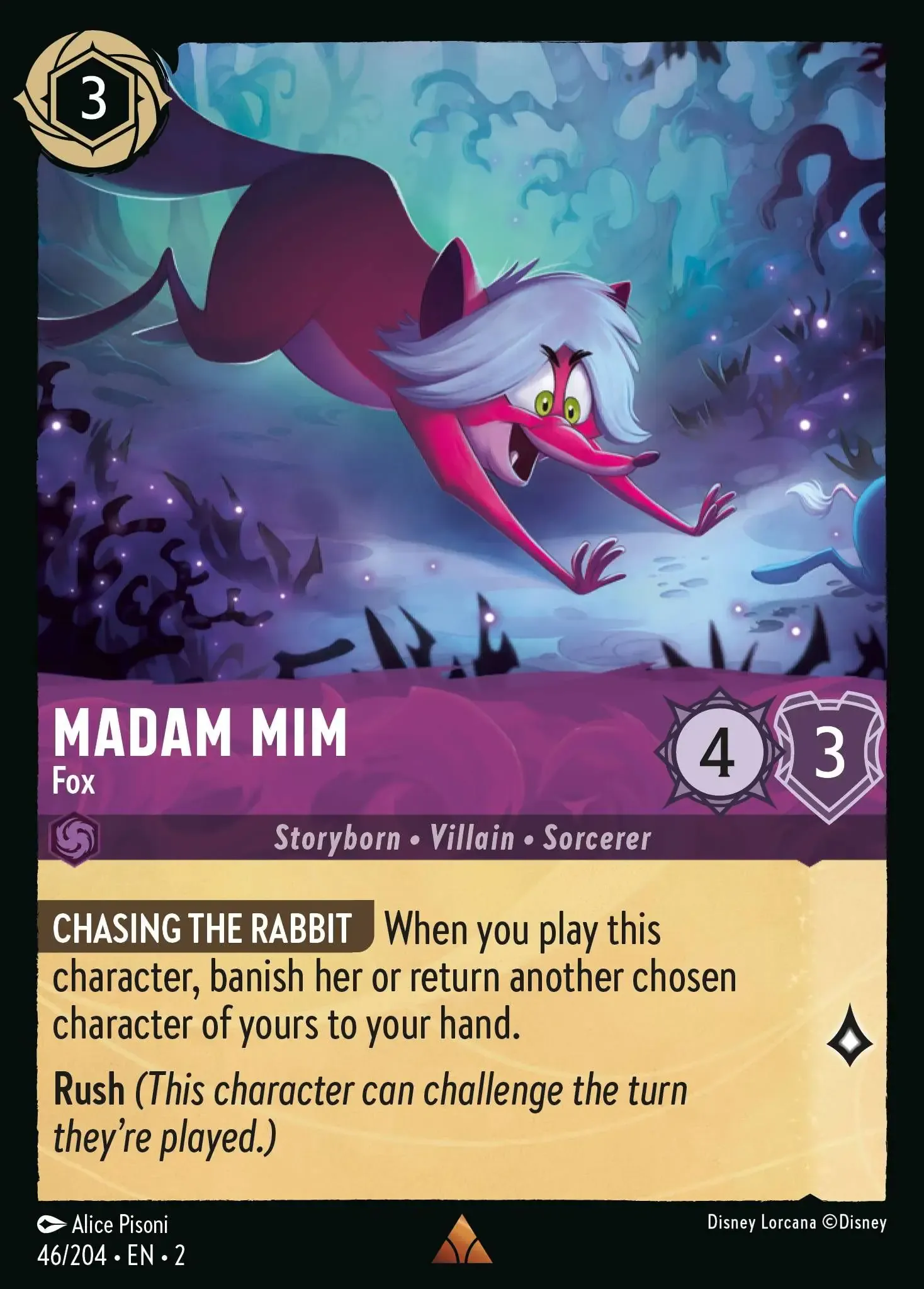
Community write-ups often describe Amethyst's early cards, including this trio, as some of the format's most cost-effective options — that framing is general community consensus rather than one single hard citation, so take it as context rather than a guaranteed result, but the underlying card text on all three is confirmed and consistent across multiple sources. If you want the fuller picture of what else Amethyst offers on a budget, our best Amethyst cards under $10 guide covers the rest, and our keywords explained guide is a useful reference if terms like "leaves play" trigger or Rush aren't second nature yet.
Bulk and lot listings are usually the cheapest way to land multiples of Uncommon-rarity staples like these — no Lorcana-specific product is currently in our catalog, so these two marketplaces are your best starting points.
As an Amazon Associate, Geeky Domain earns from qualifying purchases. eBay links are affiliate links; Geeky Domain may earn a commission at no extra cost to you.
Where These Picks Sit in the Current Metagame
Based on aggregated Core Constructed tournament-tracking data from around this writing (early September 2026), the top archetype is Amber/Amethyst Midrange at roughly 20% metashare, followed by Amber/Emerald "Elinor" at around 15% and Amber/Ruby Boost at about 8% — figures that shift week to week and are worth rechecking against a live meta-tracking site rather than treating as fixed. That's useful context for these picks specifically, because Amber/Amethyst Midrange is exactly the deck that wants Aurora - Holding Court on-color and on-curve. Diablo - Obedient Raven (Azurite Sea) and Merlin - Goat (Rise of the Floodborn) are both from sets that have rotated out of Core Constructed, so treat them as Infinity Constructed and casual-play picks rather than current-format inclusions. Dragon Fire and Smash, meanwhile, are the off-color answers built specifically to punish whatever that top archetype and its neighbors put on board.
If you're building toward organized play rather than just kitchen-table games, our Set Championship and organized play guide covers how the competitive calendar actually works, and the rotation survival guide is worth a read before you invest heavily in any Core Constructed staple, Uncommon or otherwise, so you know how long it's actually legal for.
Two New Cards to Watch From Attack of the Vine!
Attack of the Vine! is Disney Lorcana's 13th main set, released at wide retail on July 24, 2026, with prerelease events the week before on July 17. It's the first main set to break past the traditional 204-card ceiling, landing at 207 numbered cards, and it introduces Monsters, Inc., Up, and Turning Red characters alongside the Temporary Shift and Floodborn Shift keywords, while bringing the Lorcana-native "Vine" storyline that began in Whispers in the Well to its conclusion. It's also the third set in 2026's quarterly release cadence, following Winterspell (February 20) and Wilds Unknown (May 15), with Hyperia City slated for October 23 (prerelease October 16). Set names, exact dates, and card-count figures move around release windows more than people expect, so treat the specifics in this paragraph as a snapshot and confirm anything you're planning around against Ravensburger's official release calendar.
Two cards from this set — one Uncommon, one Rare — are worth flagging now, with a clear caveat: because the set is only about six weeks old as of this writing, neither has established tournament results or tier-list placement yet. Their text alone is what earns them a spot here — treat them as cards to watch rather than confirmed staples, unlike the five picks above.
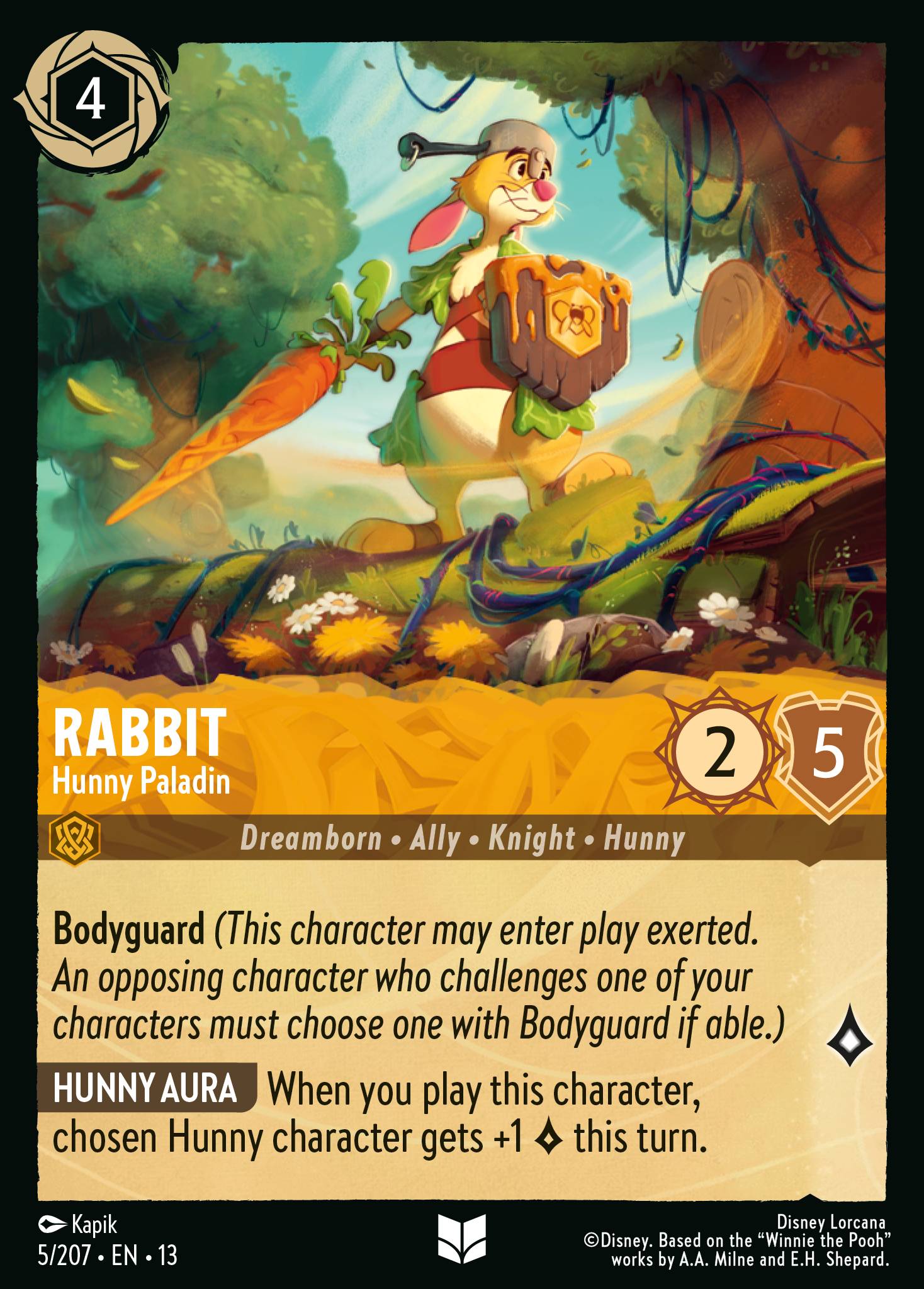
Rabbit - Hunny Paladin is an Uncommon 4-cost Amber character with Bodyguard, plus "HUNNY AURA": when you play this character, chosen Hunny character gets +1 lore this turn. Bodyguard alone is a strong ability to find at Uncommon rarity, since it's normally the kind of keyword that shows up on pricier cards — see our Bodyguard keyword explainer if you need a refresher on how it works. The Hunny lore bonus is pure upside if the new Hunny archetype ends up being supported.
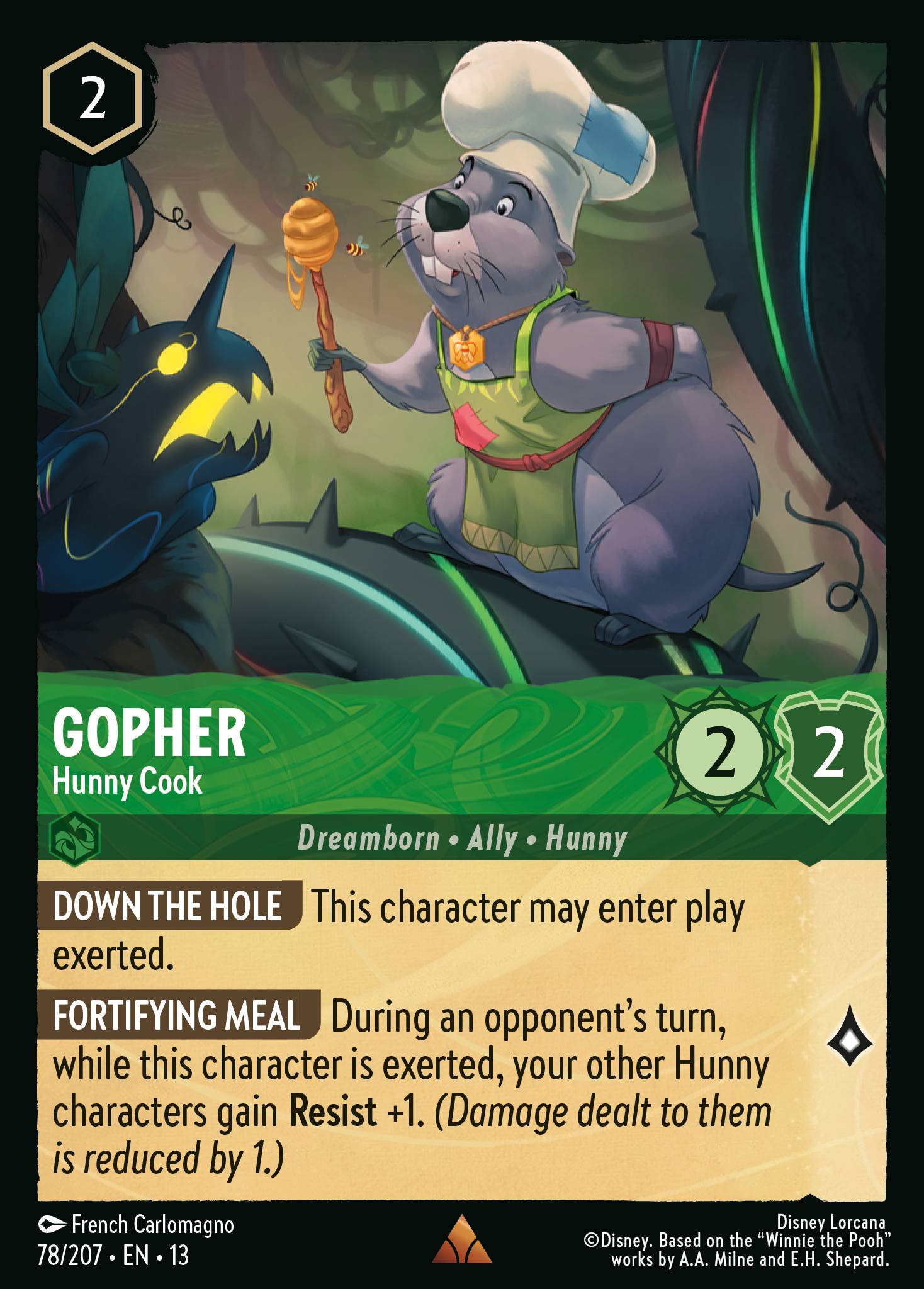
Gopher - Hunny Cook is a Rare 2-cost Emerald character. "DOWN THE HOLE" lets him enter play exerted, and "FORTIFYING MEAL" then gives your other Hunny characters Resist +1 during an opponent's turn while he's exerted — see our Resist keyword guide for what that actually blocks. He's a cheap defensive anchor purpose-built for a brand-new archetype, printed at a rarity most players won't think to look twice at. For the rest of what this set adds, our Attack of the Vine! best cards guide covers the set more broadly.
Building Around Underrated Uncommons on a Budget
The practical upside of all this is straightforward: a deck built around cards like these costs a fraction of one chasing Enchanted foils, and it's genuinely competitive, not just a placeholder until you can afford better. If you're assembling your first 60-card deck, our first-deck building guide walks through the process from scratch, and the budget Amber/Steel midrange deck guide shows one concrete example of a cheap-card shell that leans on exactly this kind of value.
Where you actually source these cards matters too. Buying loose or lot-based Uncommons is almost always cheaper per card than picking off individual singles, especially for cards this common in circulation. Our guide to buying Lorcana singles breaks down the tradeoffs between marketplaces, local game stores, and bulk lots if you're trying to fill out a playset of any of the cards covered above.
| Card | Ink | Real Effect | Why It's Undervalued |
|---|---|---|---|
| Dragon Fire | Ruby | Banish chosen character (5 ink, no restrictions) | Unconditional removal at Uncommon rarity, with none of the strength or willpower caps most cheap-rarity removal carries |
| Smash | Steel | Deal 3 damage to chosen character (3 ink, inkable) | Never a dead card since it can go straight into the inkwell, and still cited as live meta tech against current threats |
| Aurora - Holding Court | Amber | On quest, next Princess/Queen played this turn costs 1 less ink | A 1-cost body that keeps discounting your payoffs every turn it survives, with no flashy text to draw attention |
| Diablo - Obedient Raven | Amethyst | When banished, you may draw a card | Turns a 1-drop into a free replacement the moment it trades, so it's never a bad block or blocker target |
| Merlin - Goat | Amethyst | Gain 1 lore on play and on leaving play | Fills the same transformation-package slot as two Rare cards (Merlin - Rabbit, Madam Mim - Fox) at a lower rarity |
| Rabbit - Hunny Paladin (watch) | Amber | Bodyguard; on play, chosen Hunny character gets +1 lore this turn | Bodyguard is rarely printed this cheap; upside scales if the new Hunny archetype holds up |
| Gopher - Hunny Cook (watch) | Emerald | May enter play exerted; while exerted on opponent's turn, other Hunny characters get Resist +1 | A purpose-built defensive anchor for a brand-new archetype, at a rarity nobody's competing over |
FAQ & Quick Reference
What rarity is Dragon Fire, and why does that matter for a removal spell? It's Uncommon — The First Chapter. It matters because its effect, "Banish chosen character," has no strength, willpower, or exert restriction attached, which is normally the kind of unconditional removal reserved for Rare cards or higher.
Is Smash still good in the current Lorcana metagame? Yes — it stays Core Constructed legal through its Fabled reprint, and its inkable flexibility means it's never a wasted draw. Note, though, that the two threats deck-tech coverage most often names it against — Arthur - Wizard's Apprentice and Minnie Mouse - Stylish Surfer — both rotated out of Core Constructed in September 2025, so that specific matchup now only comes up in Infinity Constructed.
What's the difference between Merlin - Goat, Merlin - Rabbit, and Madam Mim - Fox? All three belong to the same Amethyst "transformation" family, but at different rarities and with different effects. Merlin - Goat (Uncommon) gains 1 lore on play and on leaving play. Merlin - Rabbit (Rare) lets you draw a card on play and on leaving play. Madam Mim - Fox (Rare) has a Rush-enabled banish/bounce effect. Goat does the cheapest version of the family's job.
How many Uncommons are guaranteed in a Disney Lorcana booster pack? Three, alongside six Commons, out of 12 total cards per pack — making Uncommon the most accessible rarity tier above Common.
Are Rabbit - Hunny Paladin and Gopher - Hunny Cook actually proven tournament cards? Not yet. Both are confirmed real cards from Attack of the Vine! (July 2026) — Rabbit - Hunny Paladin at Uncommon and Gopher - Hunny Cook at Rare — with the effect text described above, but the set is only about six weeks old as of this writing, so tournament inclusion rates and tier-list placement haven't been established. Treat them as cards to watch rather than confirmed staples.
Are Gaston - Arrogant Hunter or Hades - Infernal Schemer actually Uncommon? No, despite occasionally being mislabeled that way in secondary listings. Gaston - Arrogant Hunter (The First Chapter) is Common, and Hades - Infernal Schemer (The First Chapter) is Legendary.
Where's the cheapest place to pick up a stack of Lorcana Uncommons? Bulk and lot listings on marketplaces like Amazon and eBay are typically the lowest cost per card for common Uncommon staples. Our buying Lorcana singles guide covers the other options and their tradeoffs.
Verdict: Sort the Bulk Box Before You Trade It Away.
Dragon Fire, Smash, Aurora - Holding Court, Diablo - Obedient Raven, and Merlin - Goat are five confirmed Uncommons that do real work in real decks, and none of them cost anything close to a chase pull. Rabbit - Hunny Paladin and Gopher - Hunny Cook look promising from the newest set, but they haven't earned "proven" status yet — give the metagame a few more months to catch up before you build entirely around them.
© GEEKYDOMAIN.COM | Strategy Powered by Data