

The Best Way to Buy Lorcana Singles
Sealed packs are a gamble; singles are precision. Here's how to buy exactly the Lorcana cards you want — where to shop, how to read price and condition, and when cards are cheapest.
Some links below are affiliate links. If you buy through them, we may earn a small commission at no extra cost to you. We only point you toward marketplaces we'd genuinely use ourselves.
There comes a point in every Disney Lorcana player's journey where ripping packs stops making sense. You need three more copies of one specific character to finish a deck, and no amount of booster-cracking reliably hands them to you. That's when you switch to buying singles — purchasing the exact cards you want, in the exact quantities you need, for a known price.
Buying singles is the single biggest money-saver in the hobby for players. It turns deckbuilding from a slot machine into a shopping list. But there's a right way and a wrong way to do it: the difference between a smart buyer and a careless one is knowing where to shop, how to read a listing, and when prices are at their lowest.
This guide walks through all of it — singles versus sealed, the marketplaces worth your time, how to decode price and condition, buying a full playset efficiently, the timing that gets you the best prices, and how to avoid fakes and bad sellers.
The Short Version
If you want specific cards, singles beat sealed every time — you buy exactly what you need, up to the four-copy playset limit. Shop online marketplaces for selection and price (your local game store for immediacy and to support the community). Learn the condition scale (NM down to Damaged) and pay attention to a listing's stated condition, not just its price. Buy enough in one order to clear the seller's shipping threshold so postage doesn't eat your savings. Prices are usually lowest a while after a set releases and after a card rotates out of the competitive format. And always buy from reputable sellers — fakes exist.
→ More Lorcana Guides
In This Guide
Singles vs. Sealed: Buy What You Need
The first thing to be clear about is what you're actually trying to do. Opening sealed product — boosters, boxes — is fun, and it's the right move if you enjoy the surprise or want a broad random pool to start from. But if your goal is a specific deck, sealed is a wildly inefficient way to get there. You're paying for randomness, and the cards you need are buried in a sea of ones you don't.
Singles flip that around. You buy the four copies of the character you want and nothing else. For building a competitive or even just a complete casual deck, this is almost always cheaper than chasing those cards through packs — and you know the cost up front instead of gambling on it. If you're weighing the two, our look at whether sealed Lorcana is a good investment goes deeper on when ripping packs makes sense and when it doesn't.
The playset rule that shapes every purchase: a Lorcana deck can run up to four copies of any single card (counting its full name and version together), in a 60-card minimum deck. So a "playset" is four. When you're buying singles for a deck, you're almost always buying in ones, twos, threes, or fours — never more of the same card. Knowing you cap at four keeps you from over-buying.
Where to Buy Lorcana Singles
You have four main options, and the best choice depends on what you're buying and how fast you need it.
- Dedicated TCG marketplaces (TCGplayer, Card Kingdom): The default home for singles. They list huge inventories with clear, condition-graded prices, so you can buy a whole deck's worth of cards in one search. Card Kingdom is known for tight condition standards and reliable shipping; large marketplaces let you fill a cart from many sellers at once. This is where most players do the bulk of their single buying.
- eBay: Best for the cards the big marketplaces don't stock well — older or out-of-print Enchanted chase cards, graded slabs, and bundled lots. Auctions can land you a deal, but you're trusting individual sellers, so check ratings carefully (more on that below).
- Your local game store (LGS): You can hold the card, walk out with it today, and support the shop that hosts your play space. Prices may be a touch higher than rock-bottom online and selection is smaller, but for filling a couple of gaps before tonight's game night, nothing beats it — and a healthy LGS is worth supporting.
A practical pattern most players settle into: marketplaces for the planned bulk of a deck, eBay for the one or two hard-to-find chase pieces, and the LGS for last-minute fills and the cards you'd rather inspect in person.
Reading Price & Condition
A listing has two numbers that matter: the price and the condition. New buyers fixate on the first and ignore the second — which is how you end up surprised by a creased card. Condition is graded on a standard scale, cheapest (and roughest) to priciest (and cleanest):
- NM (Near Mint): looks essentially new. The standard for a deck you care about, and what most listings default to.
- LP (Lightly Played): minor wear, perfectly fine sleeved for play. Often the best value-to-quality balance.
- MP / HP (Moderately / Heavily Played): visible wear — whitened edges, scratches, maybe a bend. Cheapest playable copies; great for a budget deck where you just need the card to function.
- DMG (Damaged): creases, tears, water damage. Only worth it if you want the card at any cost and don't care how it looks.
The smart play: if a card is going straight into a sleeved deck and you don't care about resale, buy the cheapest condition you'll be happy sleeving — usually LP or MP. You'll often pay noticeably less than NM for a card that looks identical once it's behind a sleeve. Save the NM premium for cards you want pristine, display, or might grade later.
On pricing itself: marketplaces show a rolling "market price" (an average of recent sales) alongside individual listings, which is the honest reference point — a listing well below market is usually a rougher condition or a seller clearing stock, and one well above is overpriced. We keep prices qualitative on this site because they move constantly, so always check the live market figure on the day you buy.
One Lorcana-specific note: foil and Enchanted versions carry a premium over their standard printings. If you only need a card to play, the cheapest non-foil copy does the job for a fraction of the cost — the premium is for collectors and the display-minded, not for function.
Buying a Full Playset Efficiently
When you're buying singles for a whole deck, the trick is to minimize what postage and fees add on top of the cards. A scattershot approach — one card here, one card there, a different seller each time — racks up shipping costs that can dwarf the cheap cards themselves.
A few habits keep your costs down:
-
Cart as much as you can from one seller.
Combining your whole list with a single seller (or a marketplace's cart-optimizer that minimizes the number of sellers) means one shipment instead of ten. This is the biggest lever you have. -
Clear the shipping threshold.
Many sellers ship cheaply (a plain envelope) under a certain order value — a common community threshold sits around the $20 mark — and switch to tracked shipping above it, sometimes free. Bundling your cheap commons in with the order you were placing anyway often gets them to you at almost no added cost. -
Don't overpay shipping on bulk commons.
The cheap, ubiquitous cards in a deck are nearly free as singles — the cost is getting them mailed. Grab them in the same order as a card you actually needed shipped, rather than paying postage twice.
Once your cards arrive, get them sleeved and into a deck box before they pick up wear — our Lorcana accessories guide covers the protection worth owning, and if you're assembling your first deck, the deckbuilding guide walks you through what to actually buy.
Timing: When Singles Are Cheapest
Card prices aren't fixed — they move with supply and the competitive meta. Buy at the right moment and the same card costs a fraction of its peak. Three patterns are worth knowing:
-
A while after a set releases, not at launch.
Right at a set's release, demand is highest and supply is thinnest, so prices spike. As more product gets opened over the following weeks and months, singles settle. Unless you need a card for a tournament now, waiting out the launch hype usually pays. -
After a card rotates out of the competitive format.
When a set leaves the rotating Standard-style format, demand for its competitive staples drops and prices often fall — great news if you play casually or just want the card. Our rotation survival guide explains how Lorcana's rotation works and what it means for prices. -
When the meta shifts away from a card.
A card's price tracks how much the best decks want it. When a previously-dominant card falls out of favor, its price usually softens — a buying window for anyone who still likes it. Tournament results drive a lot of this, which our Lorcana value guide breaks down.
The flip side: if a card is climbing because a deck just won a big event, you're buying at a local peak. There's no shame in paying up for a card you need now — just know that's what you're doing, and that the price may settle later.
Avoiding Fakes & Bad Sellers
As Lorcana has grown, counterfeits have appeared — especially for high-value Enchanted and chase cards. The good news is that buying smart makes fakes a non-issue for almost everyone.
-
Buy from reputable sources.
Established marketplaces and well-rated sellers have strong incentives to police fakes and buyer protections if something goes wrong. The big TCG marketplaces and a trusted LGS are the safest channels by a wide margin. -
Scrutinize individual sellers.
On eBay or any peer-to-peer platform, check the seller's feedback score and read recent reviews. Be wary of a high-value card priced far below market from a brand-new account — that's the classic fake or scam pattern. -
Know the authentication tells.
For pricey purchases, it pays to know what a real card looks and feels like — texture, foil pattern, print quality. Our Lorcana authentication guide walks through exactly what to check before you commit to a big single.
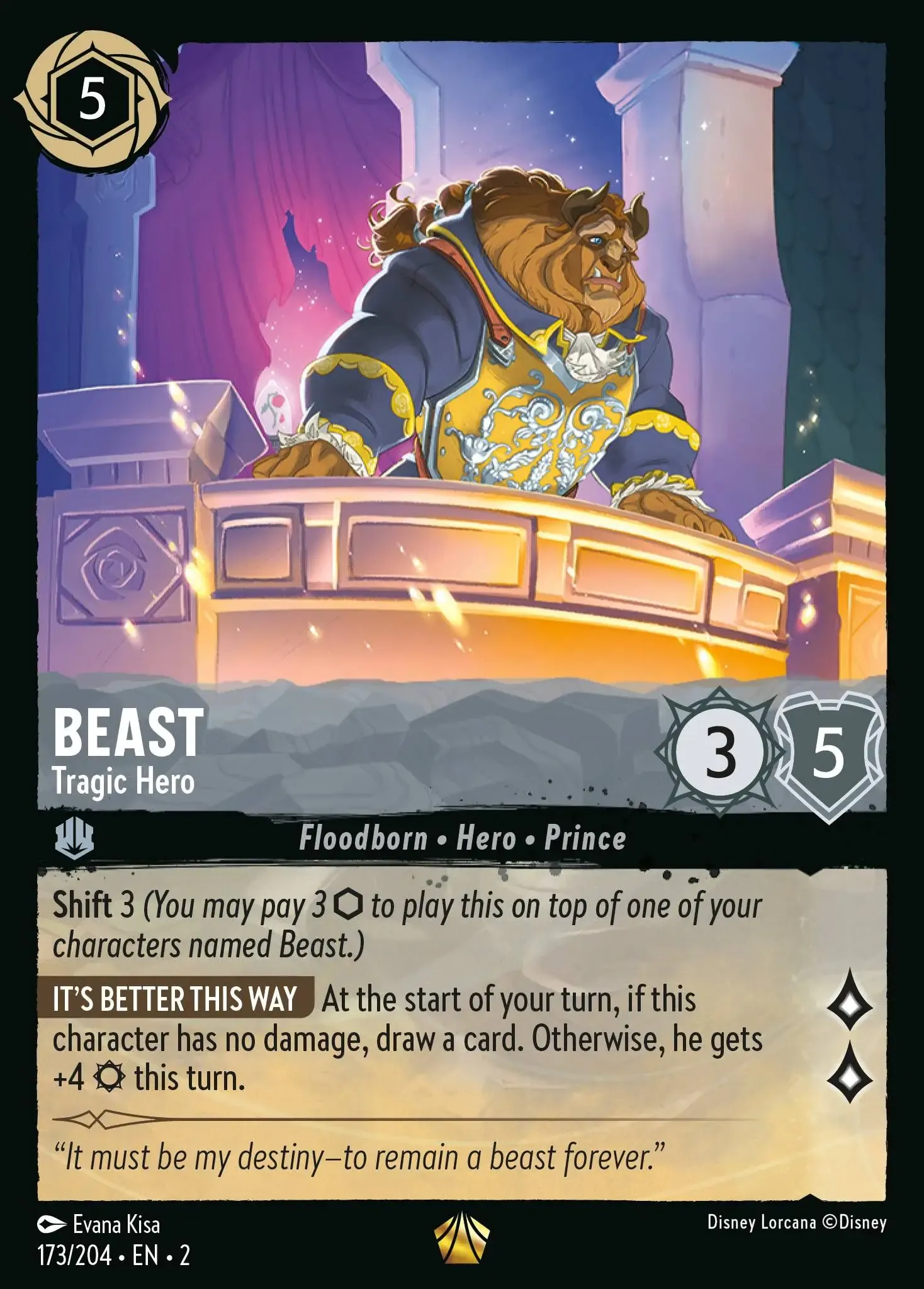
For the vast majority of buying — commons, uncommons, and rares for a deck — fakes simply aren't worth faking, so this only really matters when you're spending real money on a chase card. When you are, slow down and verify.
Buying Singles FAQ
Is it cheaper to buy singles or open packs for a specific deck?
For a specific deck, singles are almost always cheaper and far more reliable. Packs make sense for the fun of opening or to build a broad random pool, not to chase particular cards.
What condition should I buy for a deck?
For cards going straight into a sleeve, Lightly Played or Moderately Played usually look fine and cost less than Near Mint. Pay the NM premium only for cards you want pristine, display, or might grade.
How many copies of a card can I run?
Up to four of any single card (by full name and version) in a 60-card minimum deck — so a playset is four. There's no reason to buy more of the same card for play.
Do I need foils or Enchanted versions?
No. The cheapest standard printing is fully tournament-legal and plays identically. Foils and Enchanted cards are a cosmetic and collector premium, not a gameplay one.
How do I keep shipping from eating my savings?
Buy as much as you can from one seller in a single order, and bundle cheap commons in with cards you needed shipped anyway. Clearing a seller's shipping threshold (often around $20) frequently unlocks cheaper or free postage.
- For a specific deck: singles beat sealed — buy exactly what you need, up to four per card.
- Where: marketplaces for bulk, eBay for chase/graded, your LGS for immediacy.
- Condition: LP/MP is the value sweet spot for sleeved play; pay NM only when it matters.
- Shipping: one seller, one order, clear the threshold.
- Timing: after launch hype, after rotation, after a meta fall — not at the peak.
- Safety: reputable sellers only; verify before any big chase-card buy.
Where to Buy Lorcana Singles
Start your search at a dedicated marketplace for the bulk of a deck, and check eBay for harder-to-find Enchanted and graded copies. Compare condition and the live market price before you buy.
Build the Deck You Actually Want.
Singles are the cheat code for Lorcana players: instead of hoping the pack gods smile on you, you buy the exact cards your deck needs and move on. Shop the right place, read the condition, time it well, and you'll build better decks for less — every time.
Not sure which cards to chase first? These guides point the way:
Plan Your Shopping List:
© GEEKYDOMAIN.COM | Strategy Powered by Data