

Budget Amber/Steel Midrange Under $50
"Steelsong" is one of Lorcana's true classics — a song-powered midrange deck that controls the board almost for free. Here's how it works, and how to build it without breaking the bank.
If there's a single archetype that defines Lorcana's middle ground between aggression and control, it's Amber/Steel — nicknamed Steelsong. It's a song-driven midrange deck that uses Singers to fire off removal and tempo plays without spending ink, then converts that head start into an unbeatable board. It's been a tournament staple since the game's early days, and it's a fantastic deck to learn midrange fundamentals on.
It's also one of the more budget-accessible competitive shells, because so much of its power lives in cheap songs and common characters rather than a stack of expensive chase cards. With some smart trimming, a functional version is very buildable on a tight budget.
Two honest notes before we start. First, Steelsong has been rebuilt several times as cards rotate in and out of the Core Constructed format, so the exact list shifts — always confirm legality and current prices before you buy. Second, this guide gives you the real game plan and a verified core to build around, not a fabricated "magic 60." Validate the list against a live deckbuilder and price tracker, then fill it out.
The Short Version
Steelsong runs roughly a quarter of its deck as Songs and uses Singer characters to sing them for free — turning removal and card draw into ink-free tempo. You spend your actual ink on characters, snowball a board advantage, and race to 20 lore. The budget-friendly part is the engine (cheap songs + common Singers and draw cards); the cost lives in a few premium pieces you can trim. Decide your format first (current Core vs. casual/Infinity), because that changes which cards are legal and how cheap the deck gets — then validate the list before buying anything.
→ Sharpen Your Lorcana Game
In This Guide
What Steelsong Wants to Do
The game plan is elegant. You establish board control through efficient plays, leaning on Singer characters to sing Songs that remove threats and generate value — crucially, without spending ink. That frees your actual ink to deploy characters, so you routinely do two things a turn while your opponent does one.
That repeated tempo edge — two-plus cards of impact per turn — gradually compounds into a board advantage your opponent can't claw back from. Once you're ahead on board, you simply quest your way to 20 lore behind a wall of characters they can't profitably attack into.
Because it sits squarely between aggro and control — pressuring like an aggressive deck but grinding and answering like a control deck — Steelsong is about as textbook a midrange archetype as Lorcana has. If you want to learn how to value tempo, sequencing, and trades, this is the deck that teaches it.
The Engine: Songs + Singers
Songs make up roughly a quarter of the deck, and they fall into two jobs: controlling the board and generating tempo. The magic is the Singer keyword, which lets a character exert to sing a song as if paying its cost — so you fire expensive effects for free while your ink goes elsewhere.
The Removal Songs
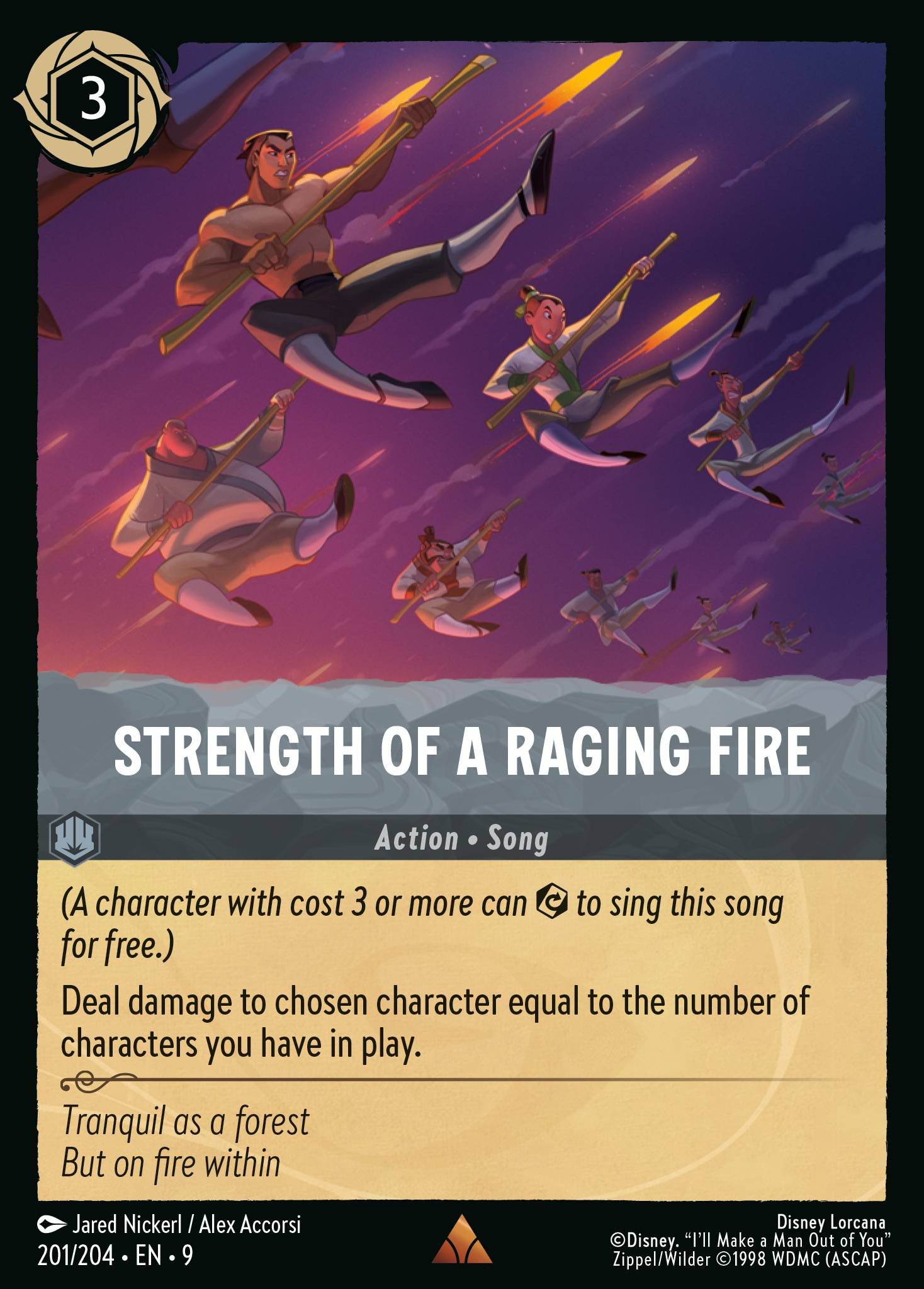
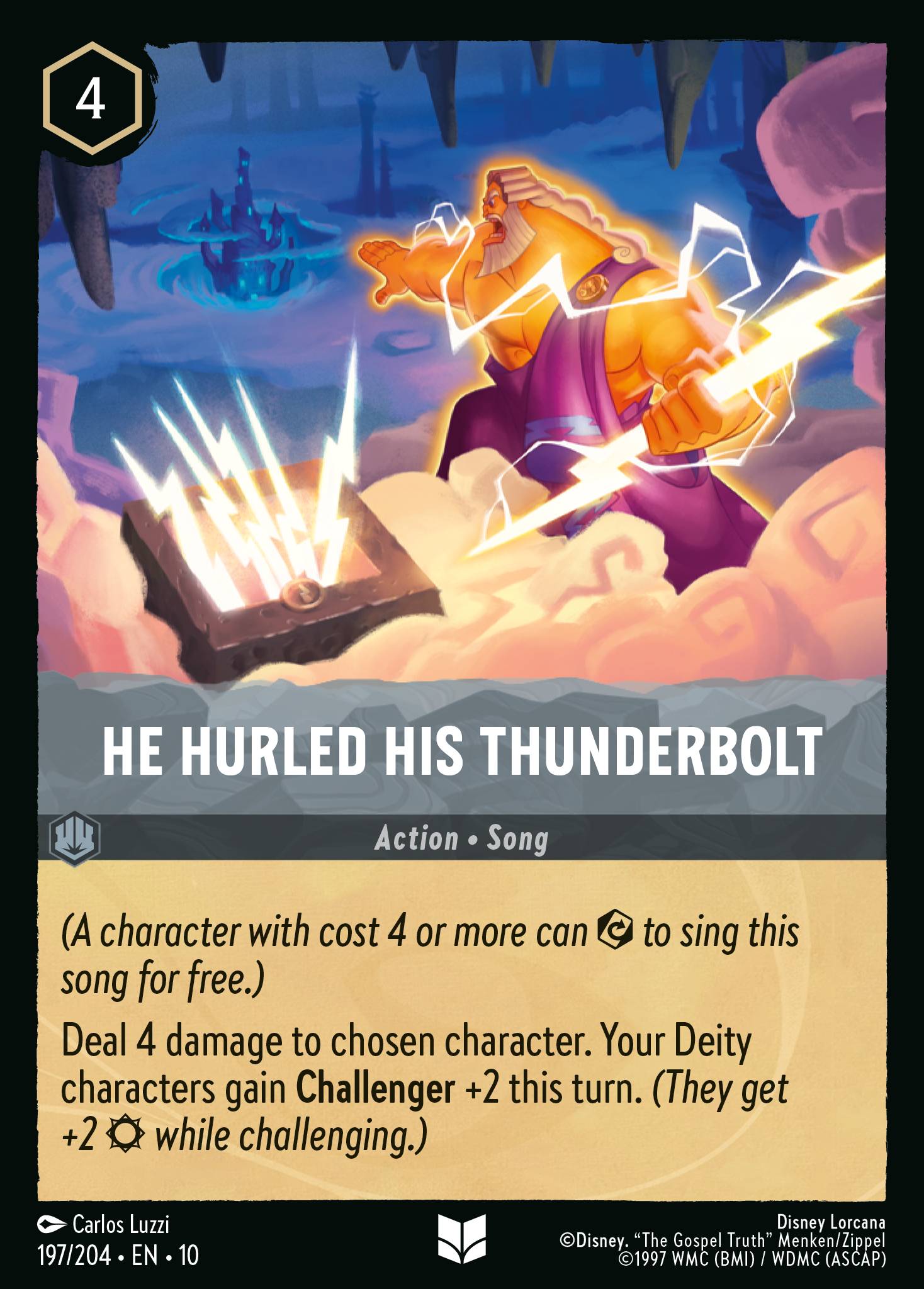
- He Hurled His Thunderbolt & Strength of a Raging Fire: The board-control core. These are your damage/removal songs, run at high counts to keep clearing the opponent's characters. Singing them for free while developing your own board is exactly the two-for-one tempo the deck is built on.
The Tempo & Card Songs
- Akood: A perfect encapsulation of the deck — it reduces the cost of your characters and draws a card, pushing your board out faster while replacing itself.
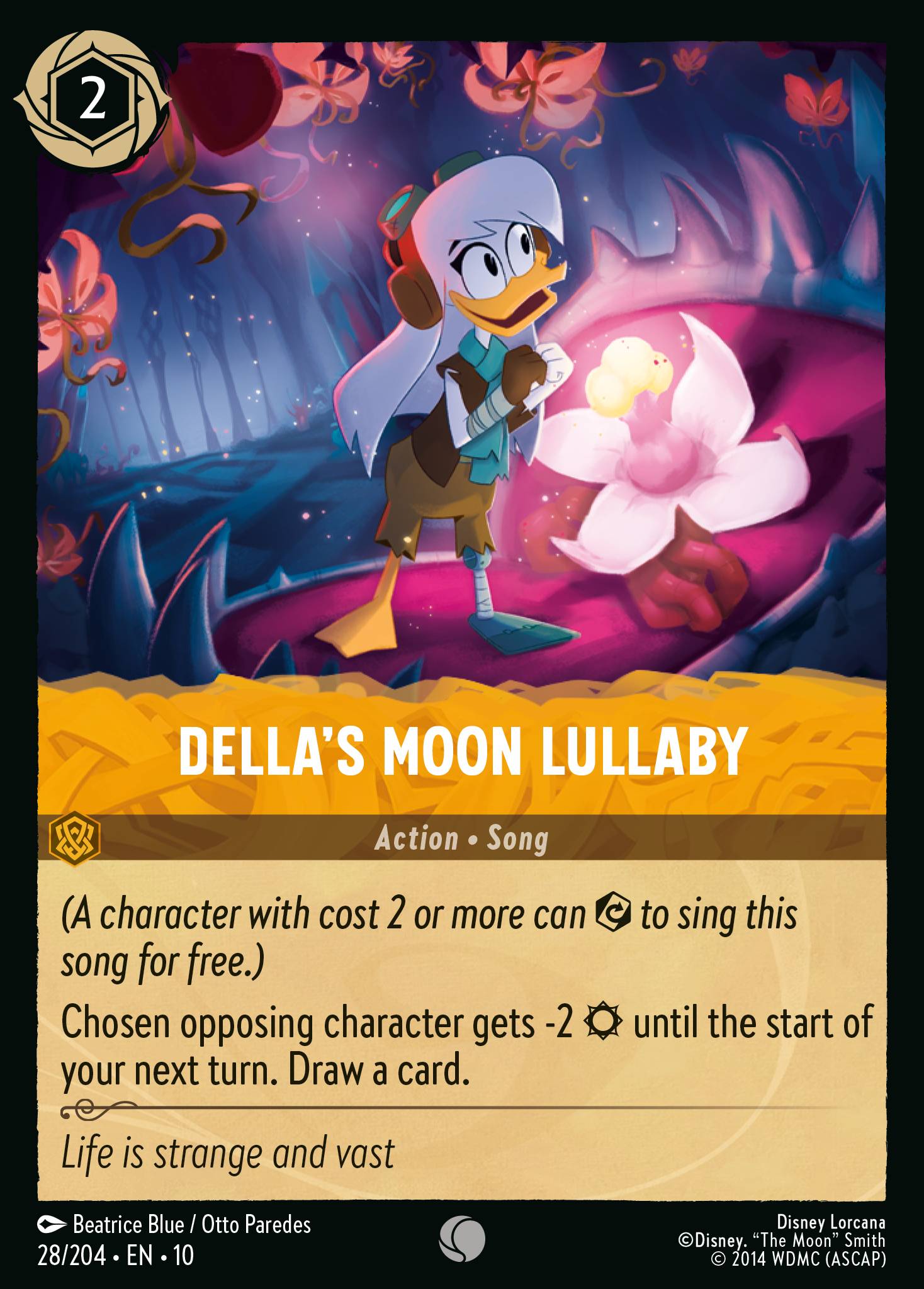
- Della's Moon Lullaby: An inkable early-game song that shrinks an opposing character by 2 Strength and always draws a card. Because it's inkable, it never clogs your ink development — a great flex against faster decks.
- Beyond the Horizon: The high-impact flex. It can force a hand-hoarding control opponent to discard and draw three (or just refill your own hand). It's expensive and non-inkable, so you typically need two characters to sing it — a tool for grindier metas.
The Singers (and Their Payoff)
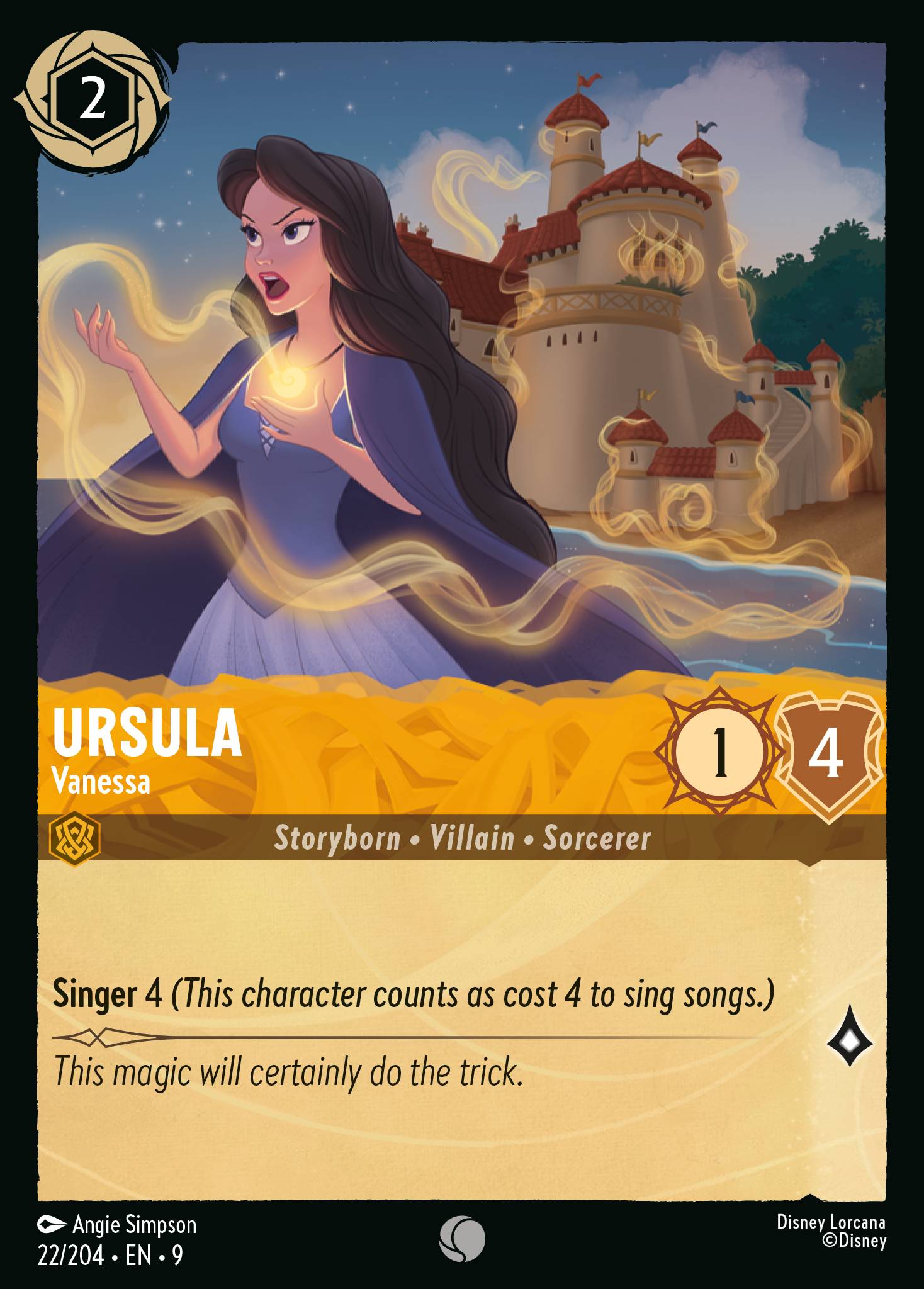
- Angel, Troubadour & Ursula – Vanessa: Your Singers — characters that can sing songs costing up to a set amount without the matching ink. They're what turn the song package from "expensive cards" into "free tempo."
- Ariel: Not a Singer herself, but the song payoff: she draws you a card every time you play a Song. Landing and protecting an Ariel early (her Boost helps) turns your songs into a snowballing card-advantage engine.
Card Advantage: Outlasting the Opponent
Midrange decks win the long game by never running out of resources. Steelsong packs several cheap engines to keep your hand full while you trade with the opponent:
- Doc: An outstanding rate — for two ink, draw two cards when your hand is empty. In a grindy game where you're spending cards fast, Doc refills you and keeps the board from slipping.
- Willow: Accelerates your game — helps empty your hand to make Doc maximally efficient and reaches your key characters a turn earlier.
- Mulan: Card selection — finds a specific piece, filters non-inkable cards out of your hand, and comes on a body with solid stats for its cost.
- Nani, Stitch & Bambi: Repeatable card advantage — Nani offers some selection, while Stitch and Bambi keep generating value turn after turn, exactly the slow drip a midrange deck wants.
Protecting the Plan
There's a catch built into the engine: Singers have to exert to sing, which leaves them tapped down and vulnerable to a challenge. A few cards keep the plan safe:
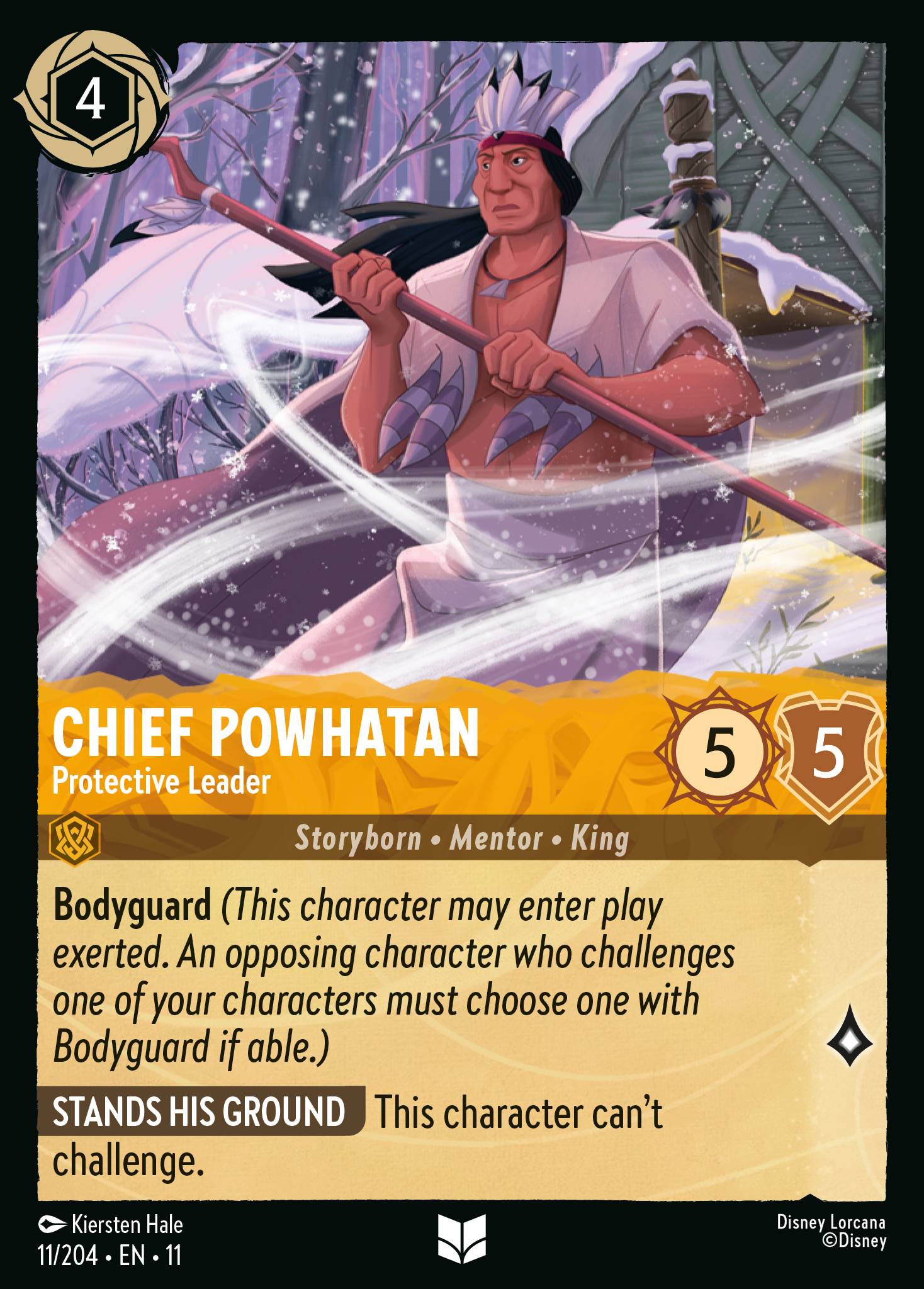
- Chief Powhatan – Protective Leader: Shields your board — especially the exerted Singers you've left exposed after singing. Keeping your engine alive is half the battle.
- Mowgli: Answers the card types your songs can't — opposing actions, locations, and items. Your removal handles characters; Mowgli covers the rest with a bit of hand disruption.
- Angel (again): Pulls double duty as recurring removal — discard a card to pick off a small character or finish a large one. Since the deck refills so well, the discards rarely sting.
Building It on a Budget
Here's the honest budget picture. Steelsong is friendlier to a tight wallet than most competitive decks because its engine — roughly a quarter of the deck in Songs, plus common Singers and cheap draw — is inexpensive. The cost concentrates in a handful of premium characters and flex pieces, which is exactly what you trim for a sub-$50 build.
Two decisions decide how cheap it gets:
- Pick your format first. If you're playing current Core Constructed, you'll use the modern pieces above (some cost a little money). If you're playing casual or the Infinity format — where rotated cards are legal — the classic Steelsong songs from older sets are extremely cheap and make a budget build almost trivial. The deck has been rebuilt across rotations, so legality is the first thing to confirm.
- Trim the chase pieces. Keep the cheap song-and-draw core at full strength; cut down on the most expensive Legendaries and run extra copies of the budget Singers and removal instead. You lose a little ceiling, not the game plan.
Validate Before You Sleeve
Card prices and Core legality both move week to week, and this archetype rotates more than most. Before you buy a single card, plug your list into a live deckbuilder (such as Dreamborn or inkDecks), confirm every card is legal in your chosen format, and price it against current market data. Treat any dollar figure — including "under $50" — as a target to verify, not a promise.
A Budget Core to Build Around
Rather than hand you a fixed 60 that may be illegal or mispriced by the time you read this, here's the verified, role-based core the archetype is built on. Confirm legality and prices, then fill out the remaining slots with curve-fillers and extra copies to reach 60.
Removal Songs (the spine)
He Hurled His Thunderbolt · Strength of a Raging Fire
Tempo & Card Songs
Akood · Della's Moon Lullaby (budget flex over the pricier Beyond the Horizon)
Singers & Song Payoff
Angel · Troubadour · Ariel (the draw-on-song engine)
Card Advantage
Doc · Willow · Mulan · Nani / Stitch
Protection
Chief Powhatan – Protective Leader · Mowgli
*This is a verified core skeleton, not a complete tournament list. Build to 60 with curve-fillers, validate every card's format legality, and price-check before buying.*
Buying the Core
That core is a shopping list, and Geeky Domain does not sell singles — so these are marketplace links. TCGplayer is usually the better route for assembling a full 60: standardized condition grading and one cart across several sellers. eBay is worth checking for cheap Amber/Steel lots and for the two removal songs on their own.
Once the list is validated and you are ready to sleeve it: a 100-count of matte sleeves covers a 60-card deck with spares, and a deck box keeps it together between games.
As an Amazon Associate, Geeky Domain earns from qualifying purchases. eBay links are affiliate links; Geeky Domain may earn a commission at no extra cost to you.
Upgrade Path & The Verdict
As your budget grows, the natural upgrades are the pieces you trimmed: add the premium Singer options (such as an Ursula – Vanessa), swap a flex song toward Beyond the Horizon if you're facing slow, hand-hoarding control decks, and pick up the better protective bodies and repeatable draw like Bambi to grind even harder. None of these change the plan — they just raise the ceiling.
A Classic, and a Great First Midrange Deck.
Steelsong endures because its core idea — sing your removal and card draw for free, then bury the opponent in tempo — is both powerful and genuinely fun to pilot. It teaches the tempo-and-trades thinking that makes you better at every Lorcana deck, and its cheap engine means you can learn it without a big investment.
Pick your format, build around the verified core, validate legality and prices, and fill out the rest as your collection grows. It's one of the best value-per-dollar entries into competitive Lorcana there is.
Build Your Steelsong:
© GEEKYDOMAIN.COM | Strategy Powered by Data