

Resist: Damage Reduction Strategy in Lorcana
Resist quietly wins the long game by making your characters hard to kill. Here's exactly how the keyword works, the rulings that matter, and how to stack it into an unbreakable wall.
Some keywords announce themselves; Resist just makes your characters refuse to die. It reduces every instance of damage they take by a fixed amount — turning a clean trade into a survived challenge, a "ping" removal effect into nothing at all, and a fragile body into a sticky wall that controls the board for turns. It's the engine of Lorcana's control and midrange decks, and the third pillar of the game's defensive toolkit alongside Bodyguard and Ward.
What makes Resist worth a full breakdown is how cleanly it complements the other two defensive keywords — and how it differs from them. Bodyguard redirects challenges; Ward stops targeting; Resist reduces damage. Each closes a different door, and Resist is the one that makes your characters durable in actual combat, skewing the math of every fight in your favor. Understanding exactly what counts as "damage" (and what doesn't) is the difference between a wall that holds and a false sense of security.
This guide breaks down the exact rules text, the nuances that decide games — it works on offense and defense, it stacks, and it does nothing against non-damage removal — the keyword pairings that build a near-unkillable character, and the misplays that waste the protection. It completes our defensive-keyword set alongside the Bodyguard and Ward deep-dives.
The Short Version
Resist +N means "if damage would be dealt to this character (or location), it's dealt that much damage minus N instead." It reduces every instance of damage from any source — challenge damage and ability/action damage alike — by N. Three things make it strong: it works on offense and defense (unlike Challenger, which is offense-only), it's active immediately as a static ability (like Ward), and it stacks — multiple Resist effects add together, so you can pile it up to shrug off big hits. The crucial limit: Resist only reduces damage. It does nothing against banish effects, bounce (return to hand), or Strength reduction — non-damage removal goes right through it. Its best home is on tanky bodies and walls: pair it with Bodyguard (forced to be challenged + takes reduced damage = a wall that lasts), with high Willpower (effective toughness), or grant it board-wide. Resist turns combat math in your favor turn after turn.
→ More Lorcana Guides
In This Guide
What Resist Does
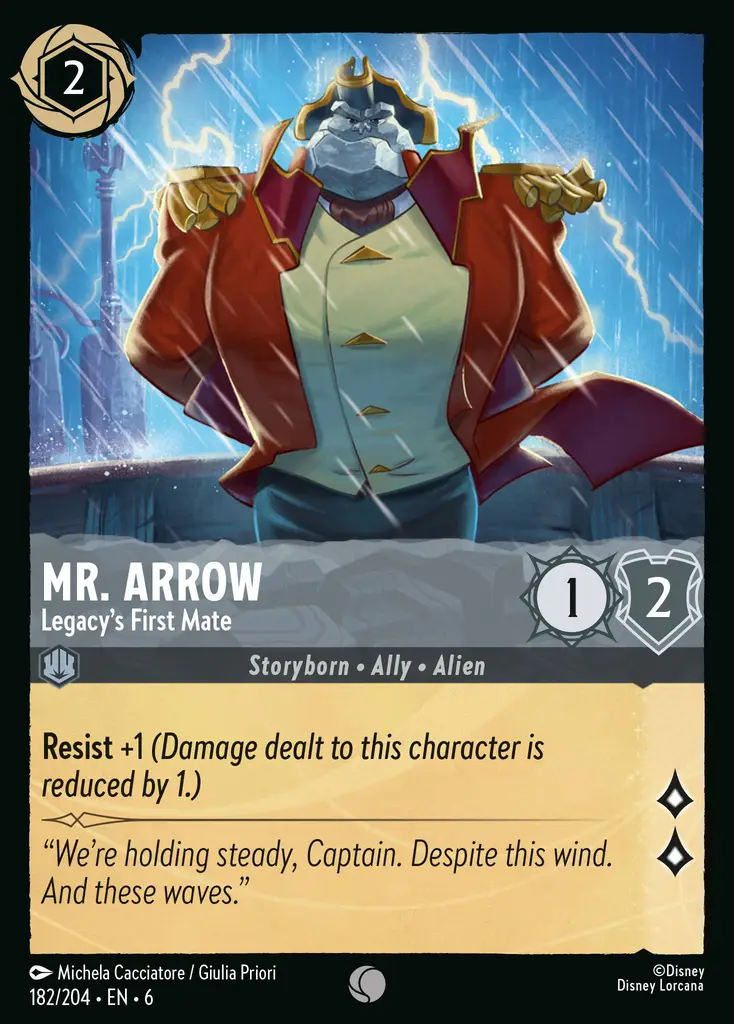
Reminder text: "Damage dealt to this character is reduced by N." The full rules definition is precise and worth knowing exactly: Resist +N means that if damage would be dealt to this character (or location), it is dealt that much damage minus N instead. A character with Resist +2 that would take 3 damage takes 1; one that would take 2 takes nothing.
It's a static ability — it's on the moment the character is in play, requires no activation, and applies automatically to every instance of damage. There's nothing to remember to "turn on"; the reduction just happens each time damage would land.
Resist +N in one line:
Every hit this character takes is reduced by N.
Small hits become nothing; big hits become survivable.
The effect on the game is that Resist skews combat math. Lorcana combat is about whether the damage dealt meets or exceeds a character's Willpower. Resist quietly raises the bar your opponent has to clear every single time — turning trades that would kill your character into trades it walks away from, and making small recurring "ping" damage effects do nothing at all.
What Counts as Damage

Resist reduces damage from any source — this is broader than players sometimes assume, and it's where a lot of the value hides. The two main sources it applies to:
- Challenge damage. When your character is in a challenge (attacking or being challenged), the damage dealt to it is reduced by N. This is the most common use — it's what makes a Resist character survive fights it would otherwise lose.
- Ability and action damage. Damage from card effects — an action that "deals 2 damage to chosen character," an ability that pings your board — is also reduced by N. Against decks that lean on direct damage removal, Resist can turn their whole plan into wasted cards.
That second point is the underrated one. A deck that wins by dealing small amounts of damage to clear your board — the kind of widespread damage removal that punishes wide boards — runs straight into a wall against Resist characters. A Resist +2 character simply ignores most "deal 2 damage" effects entirely. Resist isn't just a combat tool; it's a hard counter to damage-based removal.
Offense and Defense

Here's a key contrast with the aggressive keywords: Resist works whether your character is attacking or defending. Because it reduces damage dealt to the character — full stop, regardless of who started the fight — it's always active.
Compare that to Challenger, which only grants its bonus "while challenging" (offense only) and does nothing on defense. Resist has no such restriction. A Resist character that challenges takes reduced return damage; a Resist character that gets challenged takes reduced damage; a Resist character hit by an ability takes reduced damage. It's the rare keyword that's equally valuable on both sides of combat.
That two-way utility is why Resist is so good on characters you want to be active. A questing or challenging character that also shrugs off retaliation gets to do its job and survive the consequences — which is exactly what control and midrange decks want from their bodies.
Stacking Resist
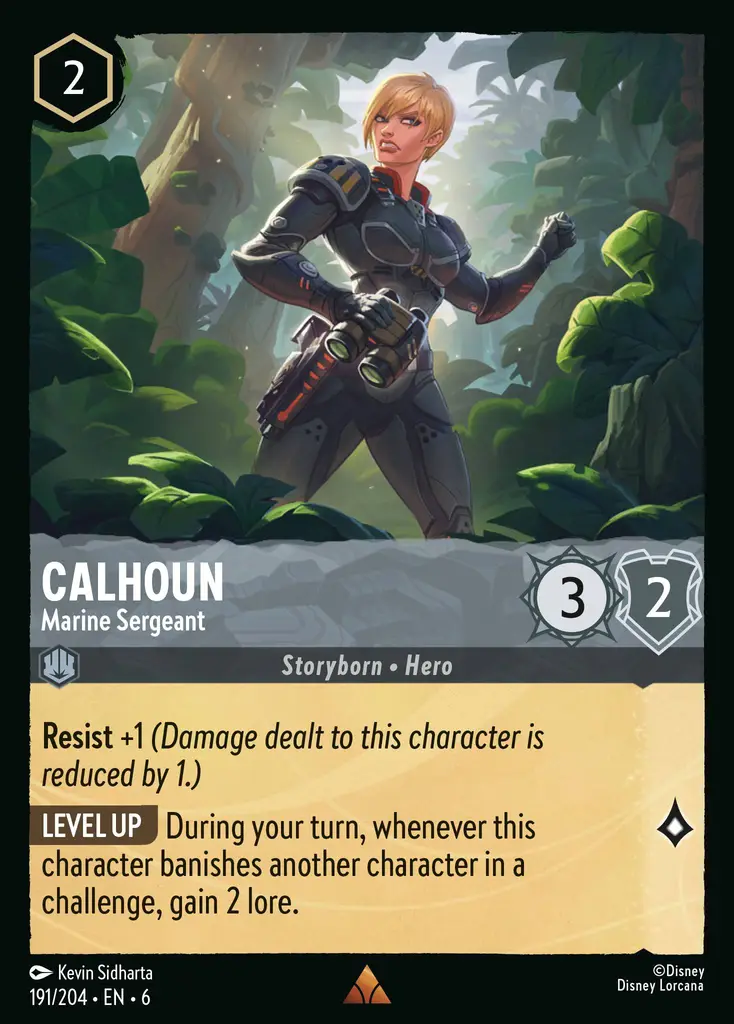
Unlike most keywords, Resist stacks. It's a "+N" ability, and the rules are explicit that multiple Resist effects add together. A character with printed Resist +1 that's also granted Resist +1 by another card has Resist +2 — every hit reduced by two.
How Stacking Builds a Wall
Because it stacks, Resist scales in a way most keywords can't. Cards that grant Resist to your characters — including effects that give all your characters Resist, or an action that grants a big temporary Resist for a turn — pile on top of any printed Resist. Stack enough and your character becomes effectively unkillable in combat: if every hit is reduced by three or four, most challengers simply can't deal enough to banish it. This is how control decks build a board the opponent physically can't break through with damage.
The practical upshot for deckbuilding: Resist-granting cards are force multipliers. One character with printed Resist is sticky; a board where you can hand out Resist to everyone, or spike one character's Resist for a turn, is a fortress. Look for the grant effects — they're where Resist goes from "nice" to "oppressive."
The Limit: Damage Only
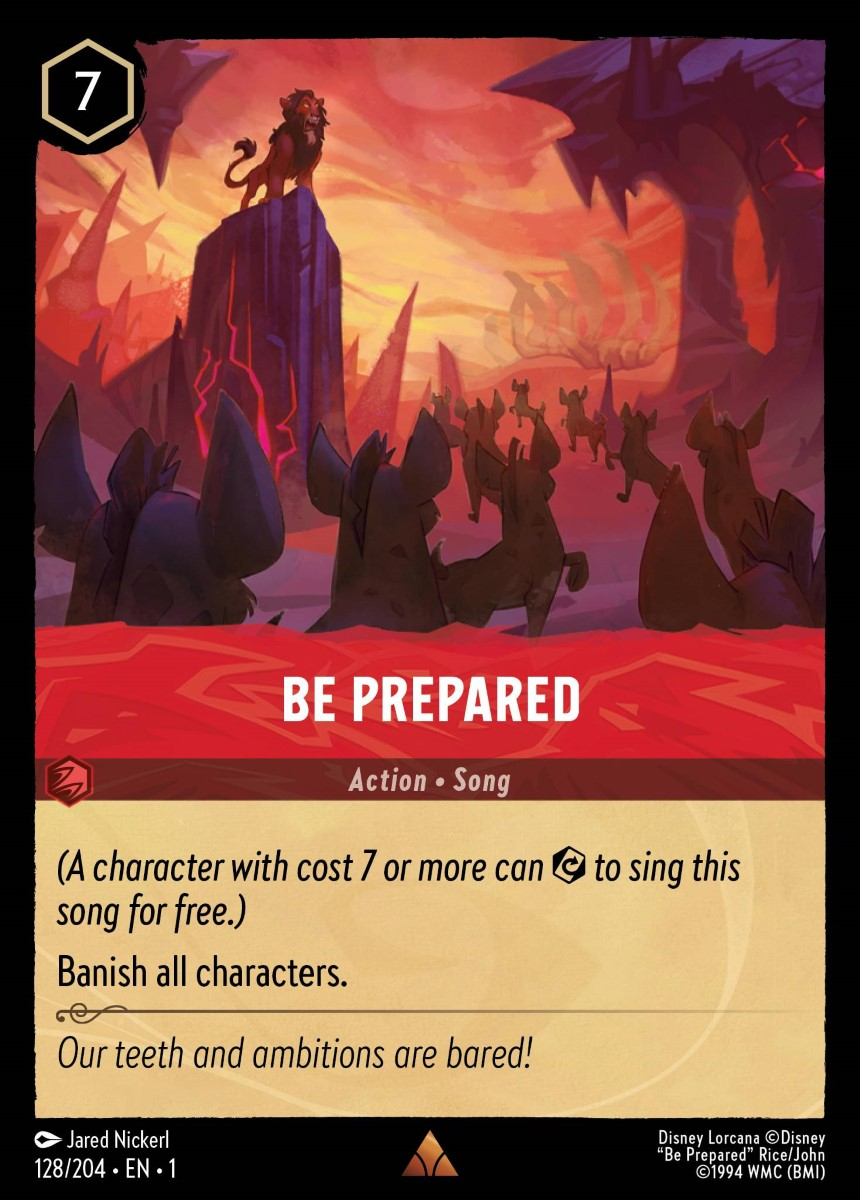
Now the crucial caveat, and the thing that separates players who understand Resist from those who over-trust it: Resist only reduces damage. It does absolutely nothing against removal that doesn't deal damage.
- Banish effects ignore Resist. An action or ability that "banishes chosen character" removes a Resist character exactly as easily as any other — there's no damage to reduce. Resist is no defense against direct banish.
- Bounce ignores Resist. Returning a character to hand isn't damage, so Resist does nothing to stop it. Your tanky wall goes back to your hand all the same.
- Strength reduction ignores Resist. Effects that lower a character's Strength aren't dealing damage either, so Resist doesn't interact with them.
This is exactly why the three defensive keywords are complementary, not redundant. Resist handles damage (combat and pings); Ward handles targeted effects (including banish and bounce); Bodyguard handles challenges (by redirecting them). No single one covers everything — which is why the strongest defensive cards and decks layer them.
| Keyword | Protects against | Doesn't stop |
|---|---|---|
| Resist | Damage (challenge + ability/action) | Banish, bounce, Strength reduction |
| Ward | Targeted effects ("choose") | Challenges, board-wide effects |
| Bodyguard | Challenges (redirects them) | Removal, bounce, abilities |
Building the Wall: Pairings
Resist is good alone and excellent in combination. The pairings that matter:
| Pairing | What it does |
|---|---|
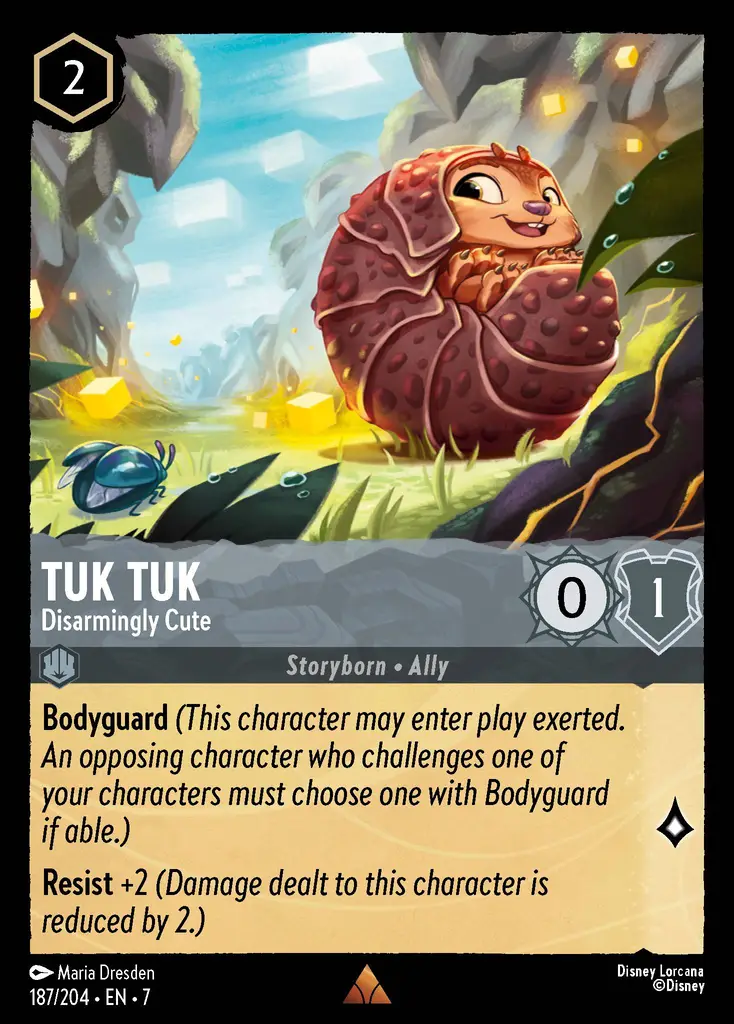
| Resist + Bodyguard | The premier wall: opponents are forced to challenge it, and it takes reduced damage when they do — so it soaks hit after hit while your other characters stay safe. The classic control-deck protector. |
| Resist + high Willpower | Effective toughness: a high-Willpower body that also reduces each hit is enormously hard to banish in combat. Resist +2 on a 7-Willpower body plays like far more. |
| Granted / board-wide Resist | A character or action that gives all your characters Resist turns your whole board sticky at once — brutal against damage-based removal and wide-board sweeps. |
| Temporary Resist on offense | An action granting Challenger +N and Resist +N for a turn is essentially a temporary stat boost in both directions — your attacker hits harder and survives the return swing. |
The deckbuilding throughline: Resist is a control and midrange keyword. The pro framing is that Bodyguard and Resist power control lists, while Evasive and Ward deliver inevitability — Resist's job is to make your board durable enough to grind the opponent out. Build it onto the characters you want to keep questing and trading turn after turn, and back it with grant effects to scale the wall.
Common Mistakes
Mistake #1: Trusting Resist against banish or bounce.
The big one. Resist only reduces damage — a "banish chosen character" or a bounce sends your tanky wall away regardless. Don't assume a high-Resist character is safe from a control deck's removal; for that you need Ward. Resist makes a character hard to kill in combat, not hard to remove.
Mistake #2: Forgetting Resist applies per instance.
Resist reduces each instance of damage by N, not a one-time pool. Two separate 2-damage hits against Resist +2 are both reduced to zero — not "4 damage minus 2." This makes Resist especially brutal against decks that deal lots of small hits; don't undersell how much it blanks.
Mistake #3: Not stacking when you could.
Because Resist stacks, granting more of it to an already-Resist character is often better than spreading it thin. If you have grant effects, concentrating them on your key wall can push it past the point where the opponent can deal enough damage to break it at all. Recognize when stacking creates an unbeatable body.
Mistake #4: Wasting Resist on a character that won't be hit.
Resist only matters when the character actually takes damage. A pure Evasive quester that never gets challenged gains little from Resist; the value is on bodies that will be in combat — your blockers, your Bodyguards, your trading pieces. Put it where the hits land.
Mistake #5: Ignoring the offense side.
Players often think of Resist as purely defensive and forget it reduces return damage when their character challenges. A Resist body can attack into things and survive the counter-hit — so use it to make aggressive trades that come out one-sided in your favor, not just to sit back.
FAQ & Quick Reference
- Does Resist reduce all damage or just challenge damage? All damage from any source — both challenge damage and damage from card abilities and actions. Each instance is reduced by N. That makes it a strong answer to direct-damage removal, not just a combat tool.
- Does Resist stop banish or bounce? No. Resist only reduces damage — effects that banish, return to hand, or reduce Strength don't deal damage, so they ignore Resist entirely. For protection against those, you want Ward.
- Does Resist stack? Yes. It's a +N ability, so multiple Resist effects add together — printed Resist plus granted Resist combine. Stack enough and a character becomes effectively unkillable in combat.
- Does Resist help when my character is attacking? Yes — unlike Challenger, Resist works on both offense and defense. It reduces any damage dealt to the character, including the return damage when it challenges, so a Resist body can make favorable aggressive trades.
- What's the best keyword to pair with Resist? Bodyguard — opponents are forced to challenge the Bodyguard, and Resist makes it survive those challenges, creating a wall that soaks hits while protecting your other characters. High Willpower and Resist-granting effects also scale it beautifully.
- Resist +N: each instance of damage to this character is reduced by N.
- All damage: challenge damage AND ability/action damage — counters pings.
- Both ways: works on offense and defense (unlike Challenger).
- Stacks: multiple Resist effects add together — pile it up.
- The limit: damage only — banish, bounce, and Strength reduction ignore it.
- Best pairing: Bodyguard (forced-to-challenge wall that takes reduced damage).
Make Your Board Unbreakable.
Resist is the quiet keyword that wins long games. It reduces every hit your characters take — in combat and from abilities — works whether you're attacking or defending, and stacks as high as you can build it. Layer it onto a Bodyguard wall or a high-Willpower body, lean on grant effects to scale it across your board, and you'll have characters your opponent simply can't punch through. Just remember its one blind spot: Resist stops damage, not removal — so back it with Ward against the banish and bounce that go around it. Master all three defensive keywords and your best characters stay on the table, doing their job, game after game.
© GEEKYDOMAIN.COM | Strategy Powered by Data