

Gundam Meta Tier List (2026)
Blue has defined the competitive Gundam Card Game format through GD01–GD04, and the first-ever World Championship confirmed it. Here's what's actually winning right now — and what Freedom Ascension (GD05) has added to the card pool since its July 24 release.
The competitive Gundam Card Game metagame has had a consistent story across its first four main sets: Blue-based control and tempo strategies have been the format's backbone, backed by efficient counter effects and card advantage that grind out less disciplined decks. That story got its biggest confirmation yet at the first Gundam Card Game World Championship, where a Blue/Purple Tempo deck took the title.
This is a snapshot of the GD01–GD04 metagame, not a permanent ranking — and it comes with an important update: Freedom Ascension (GD05), the game's 1st Anniversary set, released July 24, 2026 and has now been out for roughly five weeks. The tiers and matchup notes below still reflect the pre-GD05 competitive picture, since there isn't yet sourced tournament data showing how the new cards have actually performed at the top tables. What GD05 added to the pool — and why it's worth watching — is covered in its own section further down.
Here's what's actually defining competitive Gundam right now, and where the format is likely headed.
→ Short Version
Blue-based decks have defined the format through GD01–GD04 — Blue/Purple Tempo won the first Gundam Card Game World Championship, confirming Blue's dominance at the highest level of play. Blue's counter effects and card advantage tools are the common thread across its strongest builds, whether paired with Purple's tempo tools or White's defensive keyword stack. Rush and aggressive strategies remain viable but currently sit below Blue's ceiling at the top tables. GD05 (Freedom Ascension) released July 24, 2026, adding four new series and a record five LR++ chase cards to the pool — its competitive impact is still being established, so the tiers above reflect the pre-GD05 picture for now.
→ Related Reading
In This Guide
The Tier List at a Glance
Four archetypes define the current GD01–GD04 environment. Here's where each one stands — see the "What GD05 Added to the Format" section below for how Freedom Ascension factors into this picture:
- Blue/Purple Tempo. World Championship winner and the top of the format — counter-backed tempo that both disrupts and closes.
- Blue/White Control. Consistently strong and grind-oriented — the more purely defensive alternative to Tempo.
- Red/Green Zeon Rush. Viable, budget-friendly aggro that sits below Blue's ceiling at the top tables but wins plenty at the local level.
- Green/Blue Ramp. A solid midrange option distinct from Zeon Rush's swarm plan — best when the field is heavy with aggro to outscale.
Archetype Profiles
A closer look at each deck — how it plays, how hard it is to pilot, roughly what it costs to build, and where its matchups fall.
Blue/Purple Tempo
Counter-backed tempo — high difficulty, high cost ($$$$).
The format's best deck: Blue's disruption plus Purple's proactive pressure, so it denies the opponent's plays while still closing games on its own. Strongest against Rush aggro and Ramp; its toughest games are the skill-intensive mirror.
Blue/White Control
Defensive grind — high difficulty, mid-high cost ($$$).
A more purely defensive shell that grinds opponents out of resources. Excellent against aggro and midrange, but gives up ground to Blue/Purple Tempo's more proactive closing plan.
Red/Green Zeon Rush
Swarm aggro — medium difficulty, budget-friendly ($$).
Floods the board with cheap units and races the game. Great against Ramp and slow control, but Blue's counters and tempo tools are its hardest wall — the deck's whole plan runs into Blue's best cards.
Green/Blue Ramp
Resource ramp / midrange — medium difficulty, mid-high cost ($$$).
Uses Green's acceleration to deploy threats ahead of curve and outscale aggro. Its weak point is the early game, where spending resources on ramp opens a window — and it still struggles against Blue/Purple Tempo.
Blue's Continued Dominance
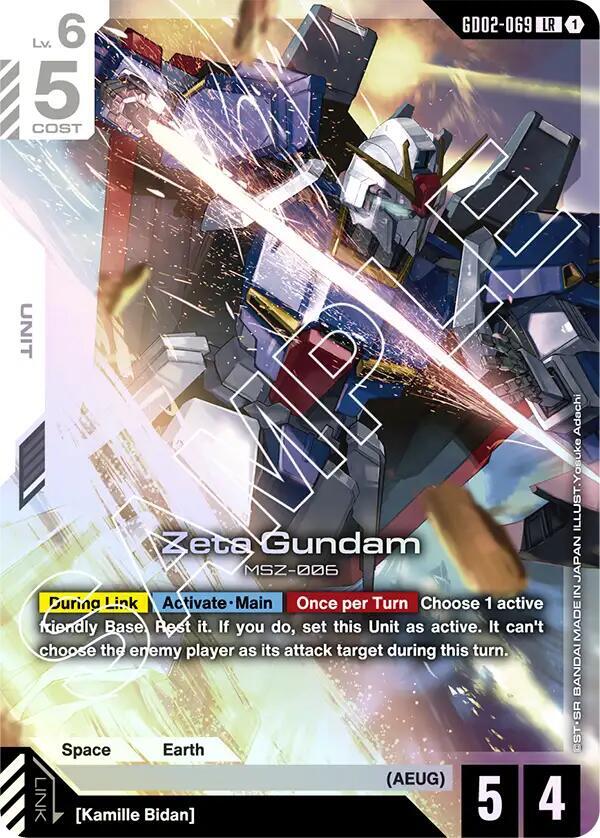
Blue has been the format's most consistently powerful color since early in the GD01–GD04 run, largely on the strength of its counter effects and card-advantage tools — the same fundamentals that make control decks strong in most card games. That dominance was confirmed at the highest level of competition when a Blue/Purple Tempo deck won the first-ever Gundam Card Game World Championship.
Blue/Purple Tempo blends Blue's defensive toolkit with Purple's more proactive tempo tools, giving the deck both the ability to deny an opponent's best plays and enough independent pressure to actually close games rather than just surviving indefinitely. That combination of resilience and a real win condition is a big part of why it's currently sitting at the top of competitive results.
Blue/White Control remains a strong alternative for players who prefer a more purely defensive game plan, trading some of Tempo's proactive pressure for an even more resilient defensive shell. Both decks share Blue's core strength; the choice between them comes down to how much you want to lean into control versus tempo as your closing plan.
What makes Blue's dominance particularly stable is that it doesn't rely on a single card or combo that could be easily banned or rotated away. The color's strength comes from a broad toolkit — efficient counters, strong draw effects, and flexible removal — that would require multiple targeted nerfs to meaningfully weaken. That structural advantage is why Blue has remained at the top across four consecutive main sets despite each new release introducing cards designed to support other strategies.
For new competitive players deciding between the two Blue archetypes, the key question is your tolerance for complexity. Blue/Purple Tempo demands more sequencing decisions per game — you're constantly choosing between deploying threats and holding up counter resources, and mistiming that balance is the deck's main failure mode. Blue/White Control is more forgiving turn-to-turn since its gameplan is more linear: deploy defensive bodies, answer threats, grind the opponent out of cards. Both require skill, but Tempo rewards practiced pilots disproportionately.
Where Aggro Currently Stands
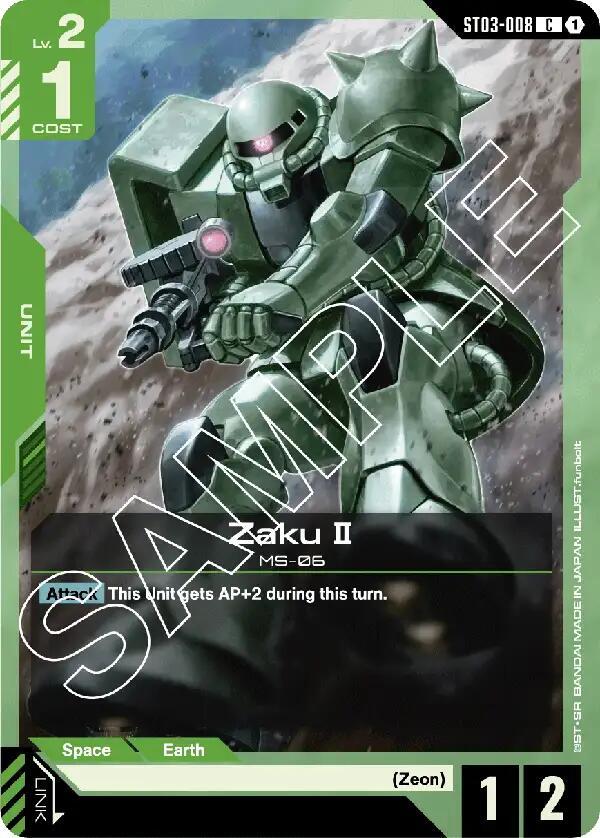
Rush-based aggro strategies like Red/Green Zeon Rush remain genuinely viable in the current format, but they sit below Blue's ceiling at the highest levels of competition. That doesn't make them bad choices — they're often more budget-accessible and can still win consistently at the local level — but players building specifically to compete at the top tables should be aware that the format's best-performing decks currently skew toward Blue.
The core tension for aggro in this metagame is that its traditional strength — getting on board fast and closing before the opponent stabilizes — runs directly into Blue's best tools. Counter effects trade one-for-one with your threats while the Blue player develops their own board, and strong draw effects mean the Blue player is rarely running out of answers. Aggro needs to either go wide enough that one-for-one trading can't keep up, or find ways to bait out counters before committing the cards that actually matter.
Red/Green Zeon Rush approaches this by flooding the board with cheap, efficient units and forcing the opponent to have multiple answers in a single turn cycle. When it works, the Blue player simply can't counter everything, and the raw damage output closes the game before they stabilize. When it doesn't, you've spent your hand by turn three and the Blue player still has cards in reserve — that's the fundamental risk of linear aggro into a counter-heavy field.
Green/Blue Ramp occupies a strange middle ground. It uses Green's resource acceleration to deploy threats ahead of curve, which in theory lets you go over the top of both aggro and control. In practice, Ramp's early turns are vulnerable — you're spending resources on acceleration rather than board presence, giving aggro a window to race you and giving Tempo decks time to set up their counter shields. Ramp's best tournament results come in metagames where aggro is heavily represented, since outscaling aggro is exactly what the archetype is designed to do.
If you're playing Rush aggro in the current environment, expect to face Blue's counter effects regularly, and build your list with enough resilience to play through disruption rather than assuming every attack will connect cleanly. Sideboard or flex slots should prioritize cards that generate multiple threats from a single play, forcing the Blue player to choose which one to counter. The sideboard principles above apply on both sides of the matchup, whether you're piloting Rush or trying to beat it.
How the Top Decks Match Up
Approximate matchup trends based on tournament performance through June 2026. These aren't hard numbers — piloting skill swings every one of them — but the shape of the format is clear:
Blue/Purple Tempo
Favored into all three of the other top decks — Blue/White Control, Red/Green Rush, and Green/Blue Ramp. Its only truly demanding matchup is the mirror, where the game comes down to sequencing and counter timing rather than deck choice. This is what "top of the format" looks like on paper.
Blue/White Control
Favored against Red/Green Rush and roughly even with Green/Blue Ramp, but unfavored into Blue/Purple Tempo — the one deck whose proactive pressure it can't fully grind down. A strong pick in an aggro-heavy field, a harder sell in a Tempo-heavy one.
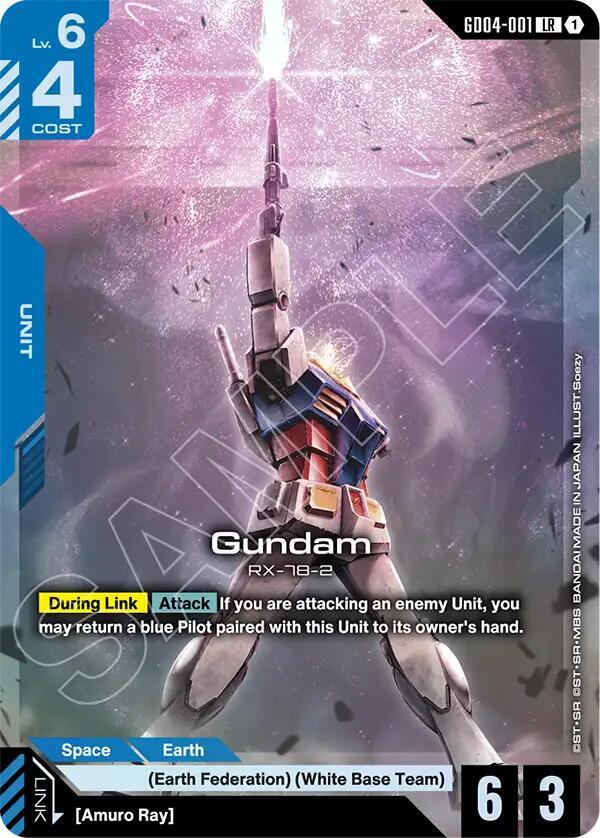
Red/Green Zeon Rush
Favored against Green/Blue Ramp — it races the archetype before it stabilizes — but unfavored into both Blue decks, whose counters and card advantage blunt the aggression. Its win rate lives and dies by how much Blue is in the room.
Green/Blue Ramp
Roughly even with Blue/White Control, but unfavored into both Blue/Purple Tempo and Red/Green Rush — squeezed from both directions, too slow for the aggro race and outclassed by Tempo's disruption. It needs the field to break a specific way to shine.
What GD05 Added to the Format
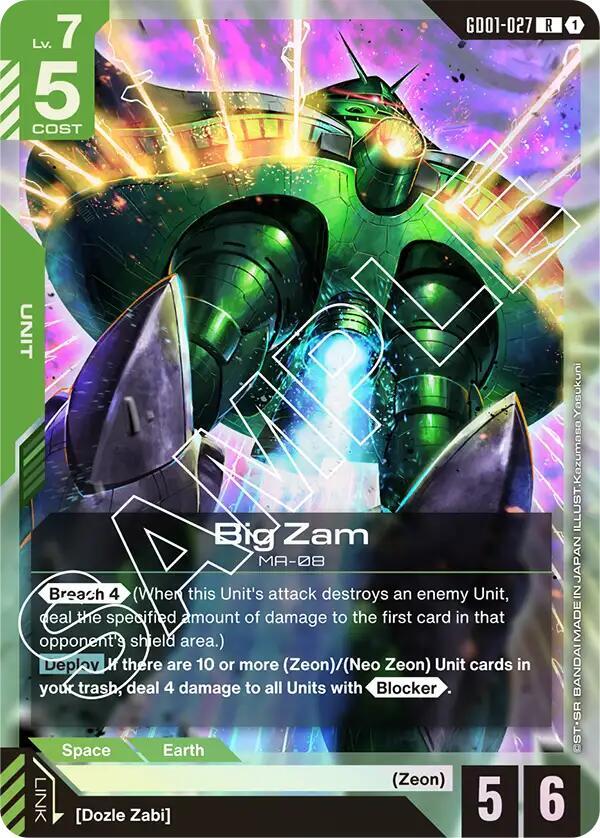
Freedom Ascension (GD05) released July 24, 2026 as the Gundam Card Game's official 1st Anniversary set, and it's now been out for about five weeks. Anniversary sets in card games tend to introduce format-defining cards, and GD05 backed that up on paper — it's the single biggest infusion of new series and high-end rarities the game has seen since launch. Whether that actually reshuffles the tiers above is still an open question, since there isn't sourced tournament data yet showing how GD05's cards are performing at the top tables. What follows is what shipped, and why it's worth watching.
The headline change is four entirely new anime series joining the game for the first time in one set: Mobile Suit Gundam SEED Destiny, headlined by the Blue Strike Freedom Gundam; Mobile Fighter G Gundam, headlined by the White Shining Gundam and pilot Domon Kasshu (and including a Shining Finger command card), alongside the Red Master Gundam; Mobile Suit Gundam Wing: Endless Waltz, headlined by the White Wing Gundam Zero EW; and Mobile Suit Gundam Char's Counterattack, headlined by the Green Nu Gundam and Purple Sazabi. That's new support landing in Blue, White, Green, Purple, and Red all at once — a meaningfully different situation from a set that just deepens one or two existing colors, and part of why it's plausible this shakes up an environment that's been Blue-centric since GD01.
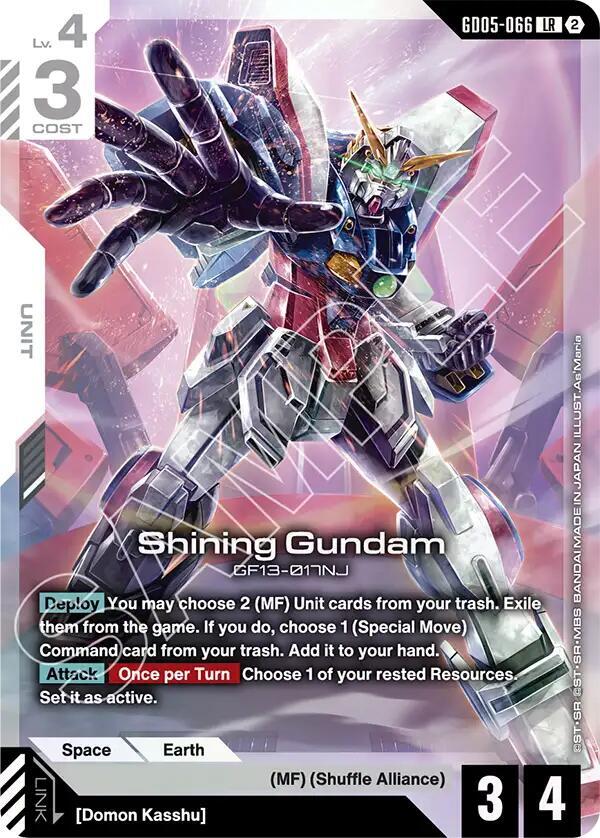
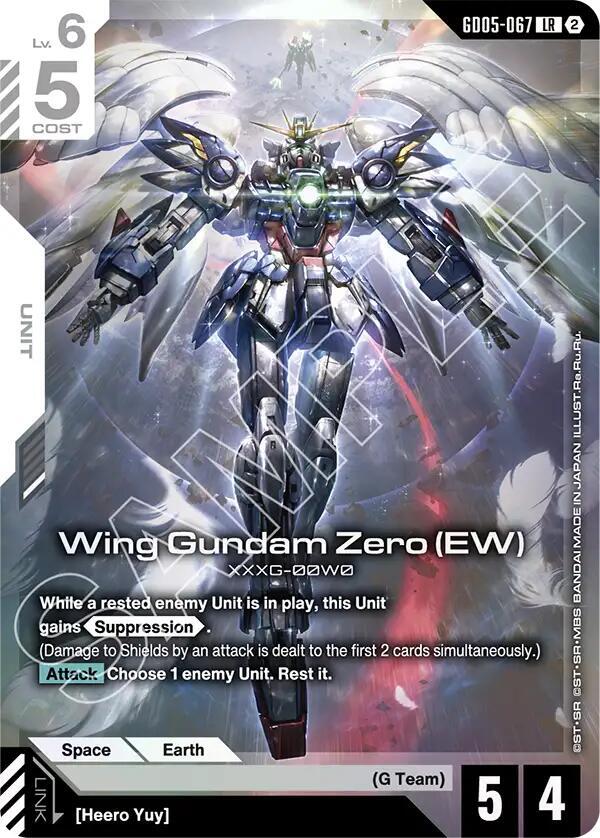
GD05 also debuted mechanics the game hasn't used before: "Link Rare," a brand-new parallel rarity pairing a Unit with its Pilot in combined artwork; SP Card EX Resources, the first-ever EX Resource cards done in SP treatment; eight Pilot SP cards for popular pilots; and a record-high five "LR++" cards — a tier above standard Legend Rare that no prior set has used this heavily. None of that tells us how the format shakes out competitively, but it's the clearest signal yet that Bandai built this set to be a showcase rather than an incremental release.
Those five LR++ cards are worth naming specifically, since each one anchors one of the new series and each is (as of pricing snapshotted shortly after release, and likely to move) among the most expensive cards the game has ever printed: Wing Gundam Zero (EW) in White, Strike Freedom Gundam in Blue, Nu Gundam in Green, Sazabi in Purple, and Master Gundam in Red — currently the game's headline chase cards by a wide margin. We cover their approximate pricing and what makes each one a threat on paper in our most valuable chase cards guide. Whether owning one of these actually translates into winning games at the top tables is a separate question from whether it's expensive — rarity and price track hype and pull odds, not necessarily competitive strength, and that gap is exactly what's still unresolved here.
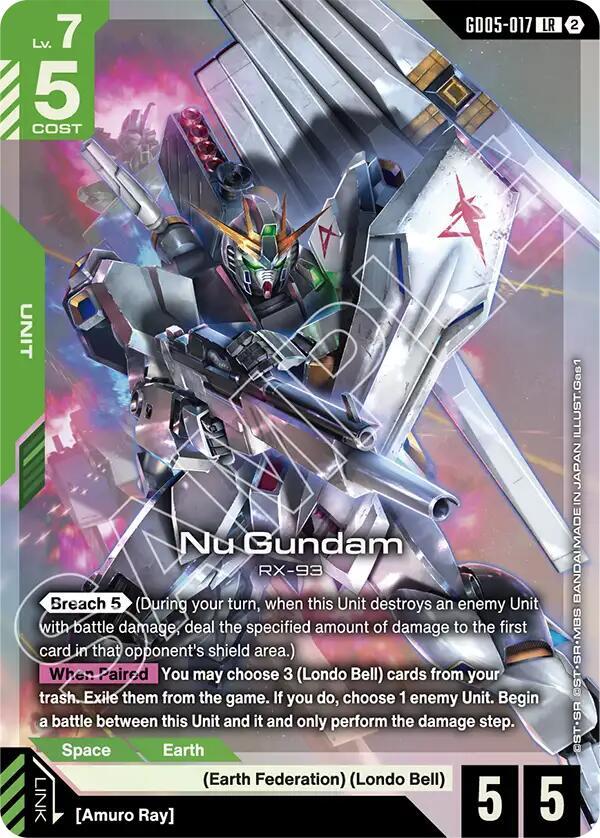
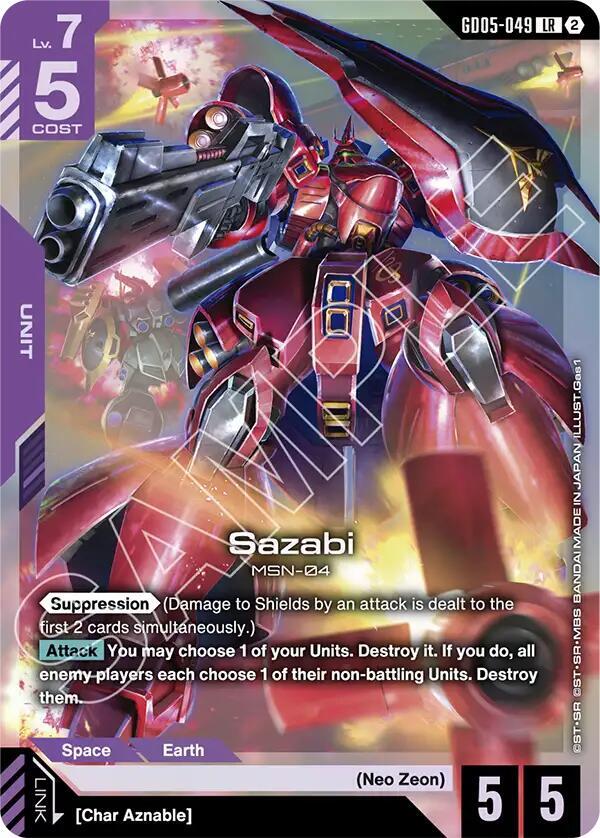
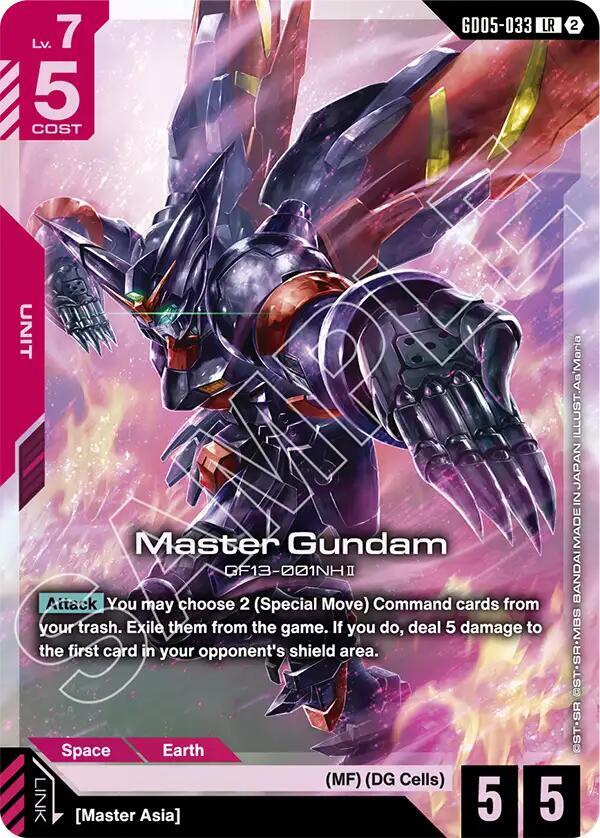
So where does that leave the tier list above? Unchanged, deliberately. Four new series and a stack of new high-rarity cards are real additions to the card pool, and they're plausible reasons the Blue-centric hierarchy could shift — new Red, White, Green, and Purple tools are exactly the kind of thing that could give an underrepresented color or archetype a genuine answer to Blue's counters. But "plausible reason to shift" isn't the same as a confirmed shift, and we don't have sourced tournament results, win rates, or ranked placements for GD05 cards to report yet. Treat this section as what changed in the card pool, not a preview of a new tier list — we'll update the tiers themselves once real competitive results are in.
FAQ
Is this list still relevant now that GD05 has released?
Largely yes — the tiers above reflect the format through GD04, including the first World Championship, and there's no sourced tournament data yet showing GD05 has displaced any of these archetypes. Freedom Ascension (GD05) released July 24, 2026 and added four new series plus a record five LR++ cards to the pool (see the section above), but this page will be refreshed once real results establish its actual competitive impact.
Is Blue overpowered, or just well-supported?
Current results suggest well-supported rather than obviously broken — Blue's tools reward disciplined, skill-intensive play rather than winning through raw power level alone, which is a meaningfully different situation than a color simply being too strong.
Should I avoid building aggro if Blue is dominant?
Not necessarily — aggro remains viable, especially outside of the very highest level of competition, and it's often more accessible on a budget. Just build with the expectation of facing Blue's counter effects regularly.
How does this relate to the "Beginner's Guide to the Gundam Meta" article?
That piece explains the concepts behind evaluating a metagame — how to think about tiers, matchups, and deck evaluation generally. This page is the current, point-in-time application of those concepts: what's actually winning right now.
Blue's Format, For Now.
The first Gundam Card Game World Championship confirmed what the metagame had been suggesting for a while — Blue's counter effects and card advantage tools are the strongest foundation in the format, whether paired with Purple's tempo or White's defensive keyword stack. Rush aggro remains a real, budget-friendly option, just not currently the format's ceiling.
Freedom Ascension (GD05) is now in the pool, and it brought real firepower — four new series and a record five LR++ chase cards spread across every color. Whether that's enough to reshape the tiers above is still an open question; check back as real tournament data comes in.
© GEEKYDOMAIN.COM | Strategy Powered by Data