

Budget Green/White Wing Zero Deck (Gundam)
Ramp into a Wing Gundam Zero closer behind a White defensive wall. The tuned, tournament-shape version of the ramp deck — on a budget.
Some links below are affiliate links. If you buy through them, Geeky Domain may earn a small commission at no extra cost to you. We only recommend cards and products we believe offer real value to players.
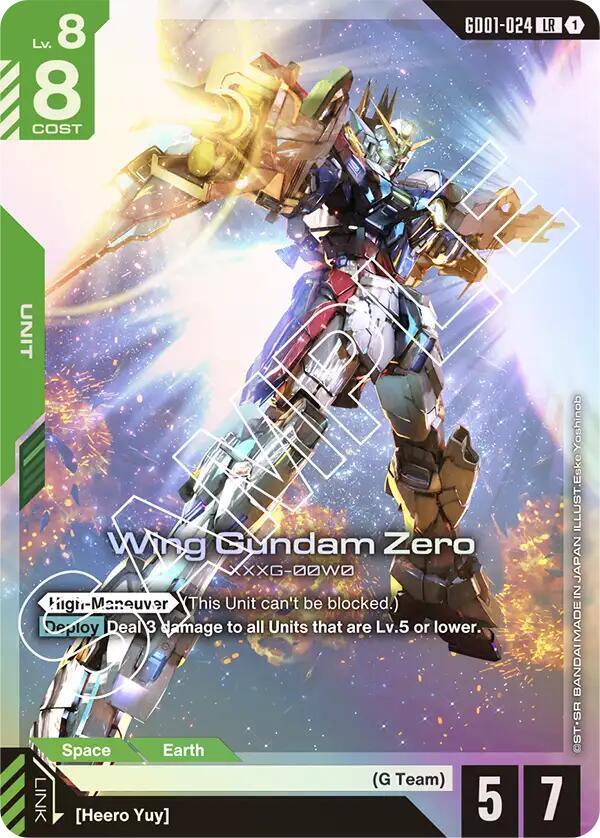
Green/White Wing Zero is one of the strongest decks in the Gundam Card Game format — consistently the most represented archetype in tournament top cuts. It works because it does two simple things very well: it accelerates Resources faster than any other color pair, and then it deploys threats so durable that the opponent can't punish the time you spent ramping. Green sets the table; White makes sure no one knocks it over.
The catch is that the deck's signature closer — Wing Gundam Zero — is a chase card. But the shell around it is almost entirely cheap Green ramp from the ST02 "Wings of Advance" starter plus inexpensive White singles. That means you can build the entire deck for the cost of a starter and a small stack of commons, then swap the finisher in whenever you find one at a price you like. The deck plays the same; the closer is just an upgrade slot.
This guide covers how Wing Zero actually wins, the cheap Green-and-White core that powers the shell, the honest weakness every ramp deck lives with, the piloting habits that turn it into a tier-one deck, and the upgrade path from "ST02 plus commons" to "tournament-ready." No fabricated cards, no expensive chase list disguised as a budget deck.
→ Short Version
Green/White Wing Zero wins by ramping into a late-game Wing Gundam Zero behind a White defensive shell. Start from the ST02 "Wings of Advance" starter for the cheap Green ramp engine — Wing Gundam (Bird Mode), First Contact, and the Wing Gundam + Heero Yuy Link Unit. Replace the Blue support with cheap White Units and Commands for the defensive wall that lets the deck survive long enough to close. The closer is a chase card, but the shell isn't — the deck is fully playable while you wait to find one at the right price. The honest catch: ramp decks fold to aggressive starts you can't outrace. Learn the timing, and this is one of the strongest decks in the game.
→ More Reading
In This Guide
The Game Plan: Ramp Behind a Wall
Green/White Wing Zero is a two-axis deck. Green is the acceleration axis — the color's identity is Resource gain and search effects, the fastest way to deploy high-level Units in the format. White is the defensive axis — durable, high-HP Units and healing that keep you alive during the turns you'd otherwise be defenseless. Most decks pick one of these and live with the trade-off. Wing Zero stacks them, which is why it consistently shows up at the top of the meta.
The deck's win condition is straightforward: ramp into a Level 7+ closer two or three turns before the opponent can, then ride that Unit through their depleted board into their Shields. Wing Gundam Zero is the canonical finisher — the card the archetype is named for. But the broader plan works with any high-level threat, which is why the deck is functional from the moment you sleeve it up, even before you own a copy of Zero itself.
The Core Idea
A ramp deck is willing to do nothing for two turns so it can do something enormous on turn four or five. White exists in this shell specifically to make those nothing-turns survivable. If your defensive wall holds while you accelerate, you reach the point where your opponent can't beat what you're deploying. If the wall breaks, you lose before the ramp pays off.
The Gap That Wins the Game
Resources by turn — what a normal deck has versus what a Wing Zero ramp deck has when its accelerants land:
Illustrative figures — exact ramp depends on your draws. The point is the gap widens every turn until it's unbridgeable: by turn six, your ramp deck is deploying what their normal curve won't reach until turn eight.
The Three Phases of a Ramp Game
A Wing Zero game has a sharp three-act structure. Each phase asks you to do exactly one thing well — and switching phases at the wrong time is the most common way the deck loses.
From Setup to Pressure to Lethal
The most common new-player mistake is trying to defend during the ramp phase. The deck cannot survive on a White wall alone; it needs the ramp turns to land. Take the chip damage on Shields, keep accelerating, and trust the wall to hold once your Level 5+ Units start showing up. If you defend instead of ramp, you stall in the mid-game with no payoff coming.
The Cheap Core: Starter & White Singles
The cheapest path into Wing Zero is one copy of the ST02 "Wings of Advance" starter, which gives you the entire Green ramp engine, plus a stack of cheap White commons from the GD-set boosters. ST02 is officially a ramping Green/Blue deck — the Blue half is what you'll be cutting to make room for White. The Green half is already exactly what the competitive deck wants.
-
The Green ramp engine (from ST02)
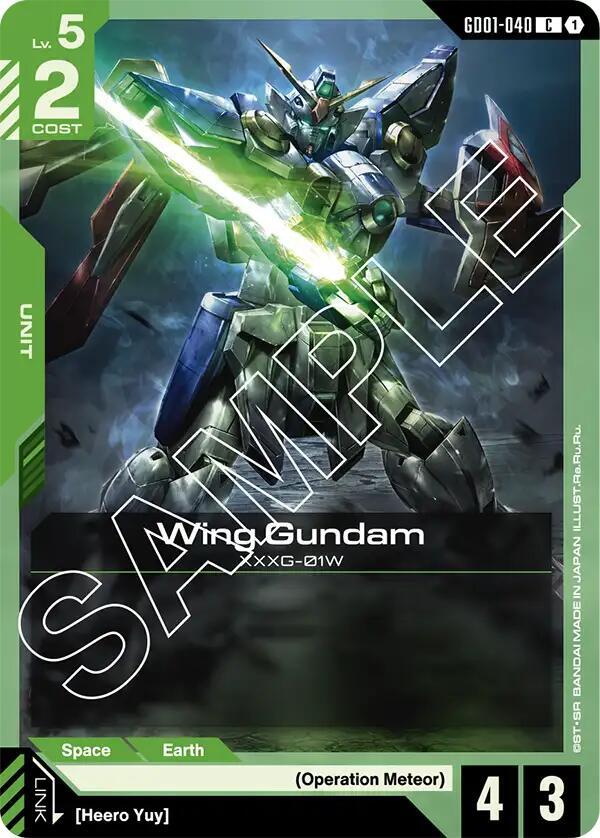
This is the half of the starter you keep. Wing Gundam (Bird Mode) and First Contact are the two key Resource accelerators — the cards that push you to a Level 4+ board ahead of curve. The starter's Wing Gundam Unit is the Link Unit anchor and a perfectly serviceable mid-game threat in its own right. Combined, these are the most efficient Resource ramp the format has, and they're sitting in a sub-$20 starter. -
The Wing Gundam + Heero Yuy Link
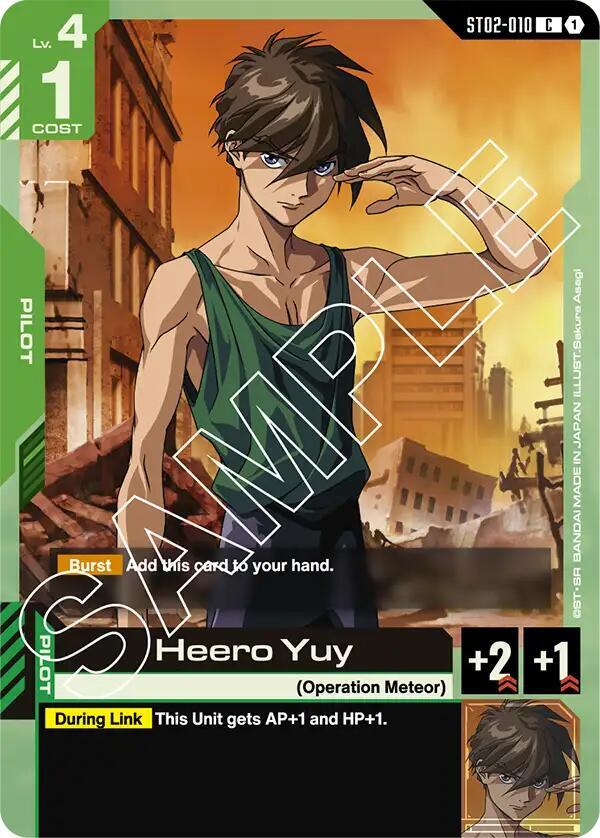
ST02 also contains Heero Yuy, the Pilot that completes the Link Unit pairing with Wing Gundam. Linked Units gain stat bonuses and effects that make them substantially more efficient than the same Unit played plain — this is one of the best Link payoffs in the starter pool. The pairing is the core of the competitive shell and you already own both pieces from a single starter purchase. -
A White defensive shell (from cheap singles)
This is what you build around the ST02 base. White's identity is durability — high-HP Units, healing, and a strong defensive Base. The competitive deck swaps out the starter's Blue tempo cards for cheap White commons that block the early game, heal the damage taken during the ramp turns, and stay on the board long enough for the late-game payoffs to arrive. White commons from GD01–GD04 are inexpensive on singles marketplaces; you don't need any chase rares to build a functional version.
The Finisher Is Optional — At First
Wing Gundam Zero is the iconic top-end of the deck, but it's not required to make the shell function. Any Level 7 White or Green Unit works as your placeholder finisher while you save up. The ramp turns get you to the mana cost; the wall keeps you alive long enough to deploy it. Don't let the chase rare gate-keep you from learning the archetype — play the shell, learn the timing, and slot Zero in when you find one. The deck doesn't care which Unit you cast on turn six; it cares that you have one.
The Honest Weakness: Aggro Punishes the Setup Turns
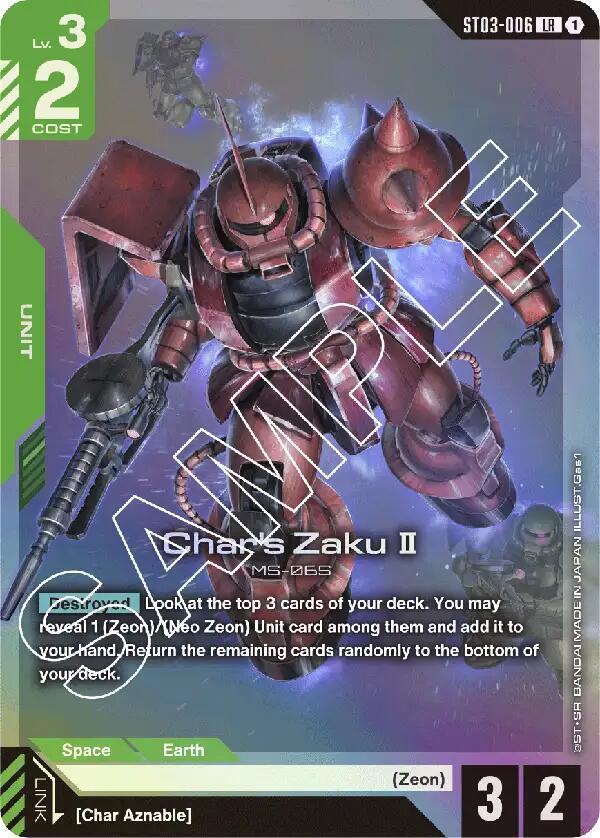
Every ramp deck in every card game lives with the same fundamental weakness: the first two turns are spent ramping, not pressuring, and a fast aggressive deck can exploit that gap to end the game before your payoffs land. Wing Zero is no exception. The Red/Green Zeon Rush and Blue/Red Aegis Aggro decks — both prominent in the current meta — are designed specifically to punish slow starts. Against an aggro pilot who knows what they're doing, you'll occasionally lose before turn five no matter how perfectly you play.
White's defensive package is the answer to this and it does the job most games, but not all of them. The matchup tilt against aggro is real, and pretending otherwise sets new players up for frustration. The good news is that everything else in the format is a favorable matchup — midrange and control decks can't keep pace with the ramp once it lands, and Wing Zero's win rates against the rest of the field are exceptional. You're trading one bad matchup for advantage against everything else, and that's an excellent trade.
Two skills carry most of the weight against aggro, and both have dedicated guides worth reading: knowing the exact outcome of a fight before you commit (our combat math guide), and knowing when to take damage on Shields versus blocking (our shield management guide). Ramp decks survive aggro by spending Shields as a resource — let damage through, keep ramping, and trust the late game.
Piloting: When to Ramp, When to Defend
A few habits separate a winning Wing Zero pilot from a stalling one:
-
Mulligan for ramp, not defense.
You want an opening hand with at least one Resource accelerator — Wing Gundam (Bird Mode) or First Contact. A hand without ramp will lose to the deck's own slow midgame. A hand with ramp can survive most openings. Ship hands that are pure White with no acceleration. Our mulligan guide covers the redraw decision. -
Ramp on turn one even if it costs Shields.
Resist the temptation to play a defensive Unit instead of ramping. The defensive Unit doesn't matter if you don't reach the late game. Take chip damage on Shields, get the Resource accelerator down, and trust the wall to come online on turn three. -
Link your Wing Gundam aggressively.
The Wing Gundam + Heero Yuy Link Unit is a major stat upgrade and one of your best mid-game threats. If both are in hand, play them on curve — don't hold the Pilot waiting for a "better" Unit to link onto. Wing Gundam is the right home. -
Don't deploy your closer until you can protect it.
A Wing Gundam Zero that gets answered the turn it lands is a wasted closer. Time the deployment for a turn where the opponent has spent their removal and your White wall can absorb retaliation. Patience here turns a 50/50 game into a clean win.
Matchup Snapshot
Versus aggro (Zeon Rush, Aegis Aggro): the hard matchup. Mulligan for ramp plus a defensive body if possible. Take damage on Shields rather than spending Units on early trades — you need the ramp to land more than you need the early-game board. The game is won if you survive to turn four with your accelerators down. Lose it and you'll lose the game.
Versus other ramp / midrange: the favorable matchup. You usually ramp faster, and your White healing absorbs the chip damage their tempo deals. Don't over-think it — ramp, stabilize, deploy first. Whoever lands their Level 7 closer first wins, and that's you.
Versus control (Blue/White, Banshee Norn): the winnable matchup. Control wants to grind you out, but your Level 7+ closer is bigger than anything they have. Don't deploy threats one at a time into their answers — bank a hand, then double-deploy on a single turn to overload their removal. Once a closer sticks, the game is decided.
The Upgrade Path: Shell to Tournament Build
The cheapest entry is one ST02 starter plus a stack of White commons. From there, the upgrades that move you toward a competitive list, in priority order:
- 1. Playsets of your best ramp and healing. Extra copies of First Contact and your healing Commands are the biggest consistency gains. The deck wants to draw acceleration in every opening hand — playsets make that happen.
- 2. A second White defensive body slot. The hardest aggro matchups improve dramatically with a stronger early-game wall. Cheap, high-HP White commons in playsets close the matchup gap more than any single chase card would.
- 3. The Wing Gundam Zero finisher. The named closer of the archetype. This is the upgrade that turns a budget shell into the actual meta deck. Prices move with set rotation and reprints, so watch the market — one or two copies are enough.
- 4. Premium late-game support. Once Zero is in the deck, the optimization is alternate Level 7+ threats (Gundam Aerial and others) and the most efficient White interaction Commands from the latest sets. This is where the tournament list pulls ahead of the budget shell.
Where This Deck Comes From
If the ramp concept is new and you want to learn the engine before pivoting to White, start with our Budget Green/Blue Ramp Deck guide — it walks through the ST02 starter as a complete deck and teaches the ramp fundamentals. Once you've mastered the acceleration and want the upgraded competitive shell, this guide is the next step.
Where to Buy
Wing Zero's budget shell starts with the ST02 "Wings of Advance" starter for the Green ramp half, then cheap White commons from singles marketplaces. Save Wing Gundam Zero for last — the deck plays without it. These searches are a good starting point; compare current listings before you commit, since prices move with new set releases.
Shop the ST02 Wings of Advance Starter on Amazon Search Wing Gundam Zero & White Singles on TCGplayer Browse Wing Gundam Lots & Singles on eBayPrices move with new set releases, so check current listings before buying playsets. For a deck built on a starter plus cheap singles, marketplaces almost always beat chasing cards in sealed product.
A Tournament Shell on a Starter Budget.
Green/White Wing Zero is one of the strongest decks in the format, and almost every card in the competitive shell is cheap. The ST02 "Wings of Advance" starter provides the entire Green ramp engine for the cost of a starter deck; the White defensive package comes from common singles. The only premium piece is the named finisher itself — and the deck plays fine without it while you wait to find one at the right price.
Ramp behind the wall, deploy the closer at the right moment, and close before the opponent recovers. This is the closest the format gets to a tier-one deck you can build from a starter, and the learning is the same whether you own Zero or not. Start the shell now; the chase card slots in when you're ready.
Build Your Gundam Arsenal:
© GEEKYDOMAIN.COM | Strategy Powered by Data