

It looks intimidating, but the Gundam Card Game gives you a clear framework — and even official recommended ratios — to build a solid first deck. Here's how to go from a pile of cards to a working 50.
Staring at a collection of Mobile Suits, pilots, and commands with no idea how to turn them into a deck is a rite of passage for every new Gundam player. The good news is that Gundam's deck construction is refreshingly structured: there are firm rules about what's legal, and Bandai even publishes a recommended card-type breakdown that takes most of the guesswork out of your first build.
This guide walks you through the whole process — what makes a deck legal, how to pick your colors, the card-type recipe to follow, how to manage your curve, and the resource deck that powers it all. Follow these steps and you'll end up with a coherent, playable first deck instead of a random 50 cards that never quite works.
One tip before we start: the single fastest way to a good first deck is to begin with a starter deck and upgrade from there. We'll cover that route too. Everything here follows Gundam's official rules — and if you haven't actually played a game yet, our how-to-play beginner's guide is the place to start.
The Short Version
A legal Gundam deck is exactly 50 cards in the main deck plus a separate 10-card resource deck, using up to two colors and up to four copies of any card. Build the main deck from Units, Pilots, Commands, and Bases, and Bandai's own recommended split is a great starting point: roughly 25–28 Units, 6–8 Pilots, 8–10 Commands, and 4–6 Bases. Pick one or two colors that match how you want to play, keep a low curve so you have early plays, lean on Pilot-and-Link synergy, and you've got a working deck. Easiest path of all: start from a starter deck and upgrade it.
→ Build Your Gundam Knowledge
In This Guide
The Rules: What Makes a Legal Deck
Before the fun part, learn the boundaries — they're simple and they shape every decision that follows. A legal Gundam deck is actually two decks:
- A 50-card main deck — exactly 50, no more, no less. This holds your Units, Pilots, Commands, and Bases.
- A 10-card resource deck — exactly 10, made up only of Resource cards. This is what you draw resources from to pay for everything.
- Up to four copies of any card with the same card number in your main deck. (Resource cards have no copy limit.)
- Up to two colors. A deck must be built from one or two colors — a pure single-color deck or a two-color pairing, but never three.
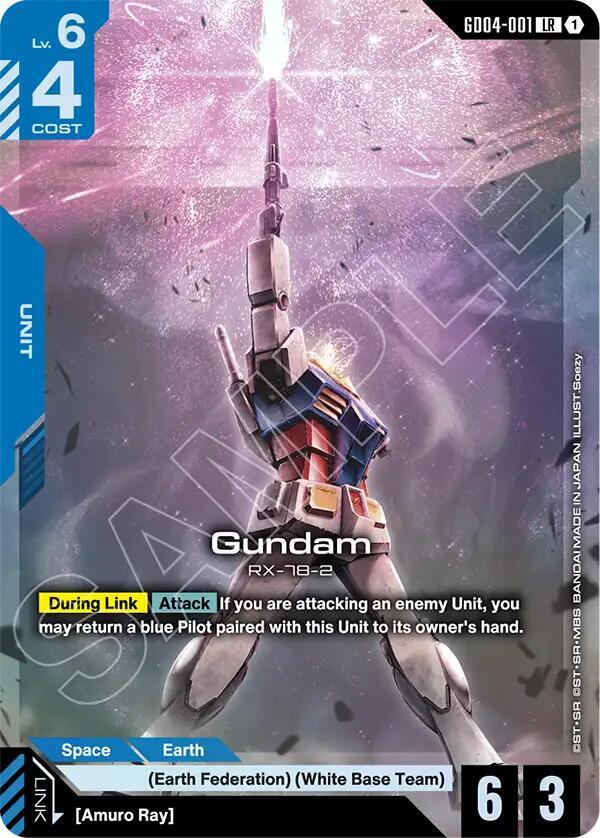
A couple of in-game limits are worth knowing while you build: you can have a maximum of six Units in your Battle Area at once, and your hand size caps at ten at the end of your turn. You also start every game with two free token cards — an EX Base protecting you in the Shield Area and an EX Resource to help you get rolling — and you set six cards from your deck as Shields during setup. (Those tokens are more strategically important than they look; our EX Base & EX Resource guide breaks down why.)
That's the entire legal framework. Everything else is strategy.
Step 1: Pick Your Colors
Your color choice defines your deck's personality. Each color has a clear identity, and picking one whose style you enjoy is the most important early decision:
- Green — acceleration. Specializes in resource gain and search effects, letting you ramp ahead and find your key cards.
- Red — offense. Focused on damage and aggressive attacks, it wants to pressure your opponent early and often.
- White — defense. Built around Commands and reducing enemy attack power, it grinds opponents down and protects your life.
- Blue — tempo and resilience, leaning on card draw and recovery to outlast the opponent.
- Purple — the newest color, with its own evolving toolkit; one to explore once you've found your footing.
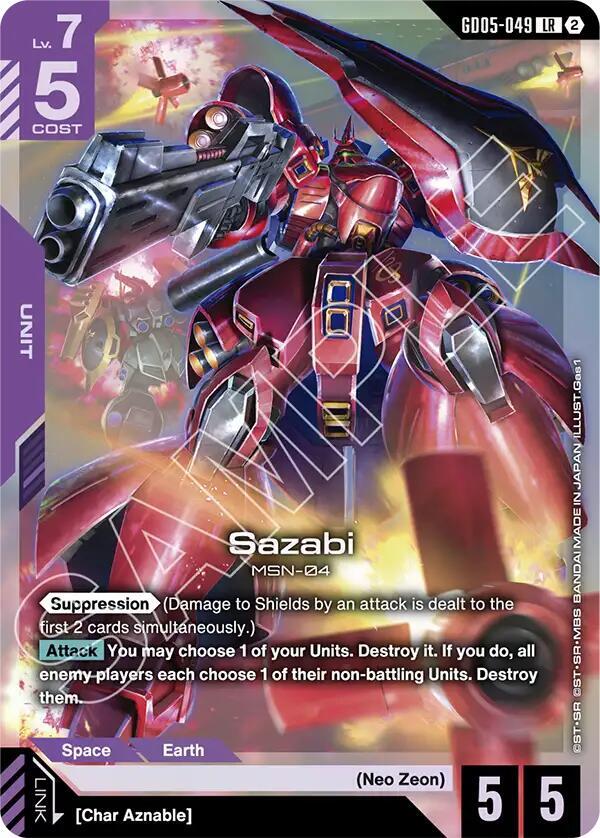
For a deeper look at what each color wants to do and which pairs play well together, see our color & color-pair primer; when you're ready to add a second color, the two-color deckbuilding guide covers the rules and best pairings.
Beginner Advice: Start With One Color
A single-color deck is the most consistent and the easiest to play — your resources always match your cards, and you never get stuck holding a card you can't pay for. Two colors add power and flexibility but introduce consistency risks. For your very first deck, pick one color (or simply run a starter's existing colors) and learn the fundamentals before you splash a second.
Step 2: The Card-Type Recipe
Your main deck is built from four card types, each with a job. Here's what they do — and Bandai's own recommended distribution for a balanced 50.
- Units — about 25 to 28 cards. Your Mobile Suits: the cards that attack, block, and win the game. They're the bulk of the deck for good reason — you need a steady supply of bodies to pressure the opponent and defend yourself.
- Pilots — about 6 to 8 cards. Placed with a Unit to boost its AP and HP and, crucially, to enable Links — the powerful pairings that supercharge your Units (more on that below).
- Commands — about 8 to 10 cards. One-shot effects: removal, combat tricks, draw, and power reduction. They activate and go to the trash, and they're how you interact with what your opponent is doing. (Some can also act as Pilots.)
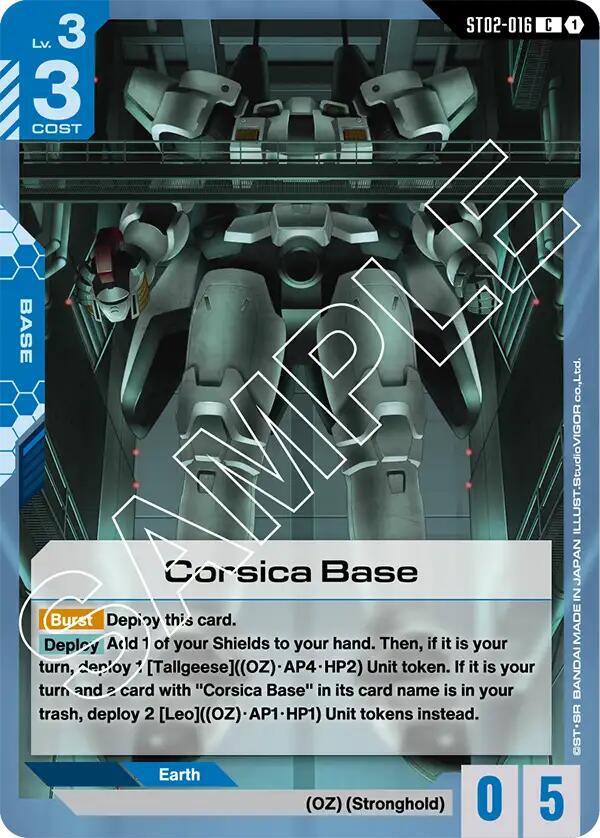
- Bases — about 4 to 6 cards. High-HP defensive cards that sit in your Shield Area and absorb attacks before your Shields do, buying you time.
The Recommended 50 at a Glance
Over half your deck is Units, with Commands the next-largest slice for interaction, and a lean Pilot-and-Base supporting cast. That shape is the quickest mental model for a balanced first 50.
If you're unsure where to start, follow those numbers literally — they add up to a sensible 50 and reflect how the game is designed to be played. As you gain experience you'll tune the ratios to your strategy (an aggressive Red deck might run more Units; a defensive White deck more Commands and Bases), but this recipe is a proven launch point.
Step 3: Mind the Curve
This is the step new players most often get wrong. Every card has a Level (Lv.) and a Cost, and both are gated by your resources. Each turn you add a resource from your resource deck, so your available resources climb roughly one per turn. To play a card, you need resources in your area at least equal to its Level, and you pay its Cost by resting that many resource cards.
A Worked Example
A Lv.5 / 4-cost Unit can first be played on turn five if you went first (or turn four if you went second, since the second player gets an early resource edge), because that's when you'll have five resources available — and you then rest four of them to pay the cost. A Lv.1 card, by contrast, can come down on turn one. Card effects can accelerate your resources to play things earlier, but the Level is your baseline timing.
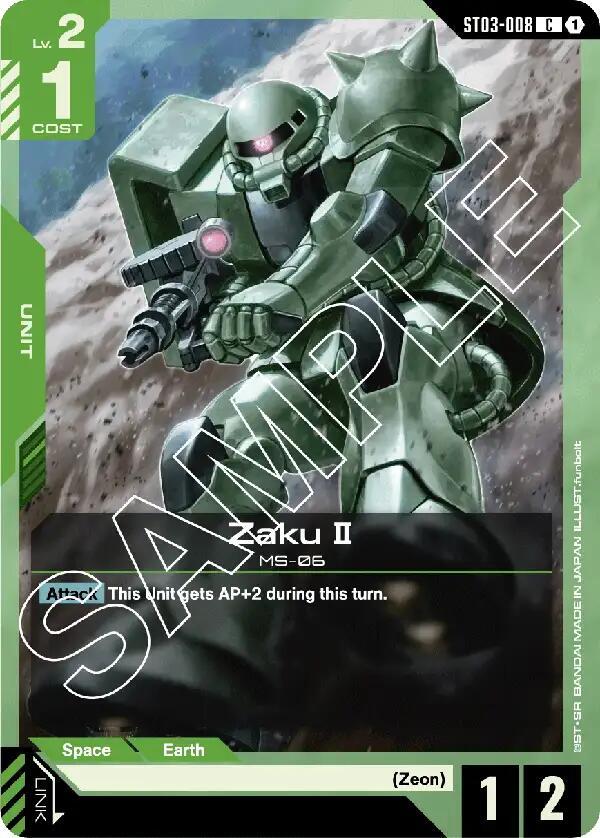
The lesson: you need plenty of low-Level cards to do things in the early turns, or you'll sit helpless while your opponent builds a board. Aim for a smooth curve — lots of Lv.1–3 cards, a solid middle, and only a handful of expensive Lv.5+ finishers. A deck stuffed with powerful high-Level Units that you can't play until turn six loses to a deck that's been attacking since turn two. (For how those attacks actually resolve — AP, HP, and trades — see our combat math guide.)
Step 4: Build Around Pilots & Links
Pilots are what separate a pile of Mobile Suits from a real Gundam deck. Pairing a Pilot with a Unit boosts that Unit's stats, but the real prize is the Link: when a Pilot is paired with a Unit it specifically matches, the pairing activates enhanced effects — and because a freshly deployed Unit normally can't attack the turn it arrives, a Link Unit's ability to swing immediately is a genuine tempo advantage.
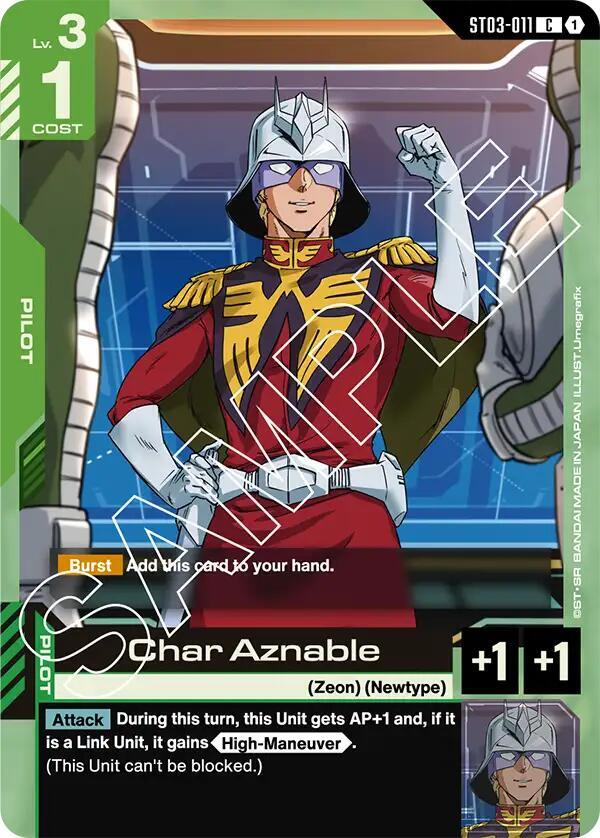
When you choose your 6–8 Pilots, don't pick them in isolation. Make sure they actually pair with the Units you're running — matching characteristics and names so your Links come together in real games. A Pilot that never finds its Unit is a dead card.
This synergy is deep enough to deserve its own study, so if Links are new to you, read our dedicated Link Unit guide before finalizing your Pilot lineup. Getting this relationship right is what makes a first deck feel like it's actually doing something.
Step 5: The Resource Deck
The easiest part of the whole process. Your resource deck is exactly ten Resource cards, and there's no limit on copies, so it's mostly a non-decision: it's the engine that pays for your main deck.
The one thing to keep in mind is color. Your resources need to support the colors of the cards you want to play, so make sure your resource deck lines up with your chosen one or two colors. For a single-color deck this is automatic; for a two-color deck, give a thought to which color you most need to power out early. Beyond that, set it and forget it.
The Shortcut: Start From a Starter
Here's the advice that saves new players the most frustration: you don't have to build from scratch. Gundam's starter decks come with a complete, legal, pre-tuned 50-card main deck and a 10-card resource deck, ready to play out of the box. They've already solved the color, ratio, curve, and Pilot-Link problems for you. (Trying to decide between them? Our ST01 vs ST03 comparison walks through which to buy first.)
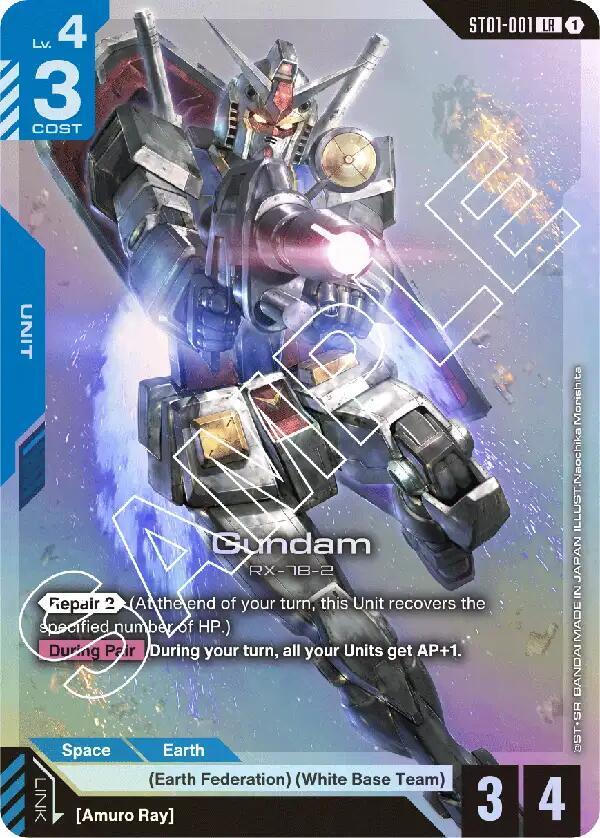
The smart path is to play a starter first, learn how its pieces work together, and then upgrade it. A practical upgrade order:
- First, max out what's already good. Starters often include only one or two copies of their best Units and Commands. Bringing those up to the full four copies is the cheapest, highest-impact upgrade you can make — it makes the deck draw its best cards far more reliably.
- Then, shore up the curve. Note where the starter feels slow or clunky and add cheap singles at those Levels to smooth it out.
- Finally, add a Link package. Identify the strongest Pilot-Unit Links available in your color and build toward them, cutting the weakest cards to make room.
You'll learn far more about deckbuilding by improving a working deck than by assembling 50 cards blind. Build your first deck on the bones of a starter, and you've skipped the hardest part. (When you're shopping upgrades, our beginner's buyer's guide and set comparison point you to the right boxes.)
If you're following the starter-deck route, the next useful purchases are a clean play surface and a ready-to-play starter you can upgrade over time.
As an Amazon Associate, Geeky Domain earns from qualifying purchases. eBay links are affiliate links; Geeky Domain may earn a commission at no extra cost to you.
Common First-Deck Mistakes
- Too many colors or too few copies. Stick to one or two colors, and run multiple copies (often the full four) of your key cards. A deck of 50 singletons is wildly inconsistent — you'll rarely draw what you need.
- A top-heavy curve. Loading up on exciting high-Level Units with nothing to do early is the classic trap. Prioritize a strong low-to-mid curve.
- Ignoring the ratios. All Units and no Commands leaves you unable to interact; too many Bases and Pilots leaves you short on threats. Respect the recommended mix until you know why you're deviating.
- Pilots that don't pair. Including Pilots that don't match your Units wastes slots. Build the Pilot package around the Units you're actually playing.
Quick Reference
- Main deck: exactly 50 cards.
- Resource deck: exactly 10 Resource cards (no copy limit).
- Copies: up to 4 of any card number in the main deck.
- Colors: one or two only.
- Recommended mix: ~25–28 Units, 6–8 Pilots, 8–10 Commands, 4–6 Bases.
- Curve: plenty of low-Level cards; few expensive finishers.
- Pilots: choose them to Link with your Units.
- Setup: EX Base + EX Resource tokens, 6 Shields, max 6 Units, hand size 10.
From Pile to Pilot.
Building your first Gundam deck comes down to a handful of clear decisions: pick a color you enjoy, follow the recommended card-type recipe, keep your curve low enough to act early, pair your Pilots with their Units, and round it out with a simple ten-card resource deck. Get those right and you'll have a deck that does what it's supposed to — and a foundation you can sharpen for years.
And if it all feels like a lot at once, start from a starter and upgrade. There's no shame in standing on Bandai's shoulders for your first build.
Gear Up to Build:
© GEEKYDOMAIN.COM | Strategy Powered by Data