

Budget Green/Blue Ramp Deck (Gundam)
Accelerate your Resources, deploy big threats ahead of schedule, and take over before your opponent is ready. The cheapest way into Gundam's ramp strategy.
Some links below are affiliate links. If you buy through them, Geeky Domain may earn a small commission at no extra cost to you. We only recommend cards and products we believe offer real value to players.
Most Gundam decks are limited by the same clock: one Resource per turn, so your biggest threats can't come down until the late game. Ramp breaks that clock. By generating extra Resources ahead of schedule, a Green/Blue ramp deck deploys powerful high-level Units turns before anyone expects them — landing a threat on turn four that the opponent planned to face on turn six, and snowballing from there.
This is green's official identity in the Gundam Card Game: it's the acceleration color, specializing in Resource gain and search effects. Pair it with blue — the draw-and-tempo color that helps you survive the setup turns and find your payoffs — and you get the game's classic ramp archetype. It even has a dedicated starter: ST02 "Wings of Advance," officially a ramping Green and Blue deck, which makes it the perfect cheap on-ramp.
This guide covers how ramp wins, the cheap acceleration core that powers it, the honest catch every ramp deck lives with, and the upgrade path toward the premium Wing closers. As with our other budget builds, every card named is confirmed against current databases, and we won't dress up an expensive list as a budget deck.
→ Short Version
Green/Blue ramp accelerates Resources with cards like Wing Gundam (Bird Mode) and First Contact, then deploys high-level Units ahead of curve while blue's draw keeps the gas flowing. Start from the ST02 "Wings of Advance" starter — it's officially a ramping Green/Blue deck and the cheapest entry point. The budget build leans on efficient mid-level payoffs; premium closers like Wing Gundam Zero are upgrades, not requirements. The honest catch: ramp is fragile to early aggression, since you spend your first turns accelerating instead of defending. Learn it cheap here, then graduate toward the tuned Green/White Wing build.
In This Guide
The Game Plan: Break the Resource Clock
Every Gundam game runs on the same economy: you place one Resource per turn, and that Resource count is what lets you deploy bigger Units. Most decks are stuck on that one-per-turn schedule, so a Level 6 unit simply can't appear until turn six. Ramp's entire purpose is to cheat that schedule — to have more Resources than the turn count says you should, and convert that lead into deploying threats nobody can answer yet.
The Green/Blue pairing splits the work cleanly. Green is the engine: it's the game's acceleration color, with the most ways to generate extra Resources and search for the pieces you need. Blue is the support: card draw to keep your hand full and tempo tools to survive the turns while you're setting up. Together they answer the two questions every ramp deck must: how do I get ahead on Resources, and how do I stay alive long enough to use them?
The Core Idea
A Resource you generate early is a threat you deploy early. Ramp doesn't win by playing more cards — it wins by playing bigger cards sooner than the game intends, so each of your threats lands a turn or two before the opponent has an answer ready. Get ahead on Resources, stay ahead on board.
How Ramp Beats the Curve
The whole advantage of ramp is visual: you climb the Resource ladder faster than the turn count. Here's the difference between a normal curve and a ramp curve — the gap is the turns of advantage you're buying.
Resources Available by Turn
Bar length shows roughly how many Resources you can have each turn. Ramp (green) outpaces the normal one-per-turn schedule (navy).
Illustrative figures — exact ramp depends on your draws. The point is the gap: by turn five, a ramp deck can be deploying what a normal deck can't touch until turn eight.
The Cheap Core: Accelerants & Payoffs
A ramp deck has two halves: the cheap accelerants that build your Resource lead, and the payoffs that lead pays for. The ST02 starter gives you a coherent version of both; here's the verified core that defines the archetype.
-
The accelerants (your engine)
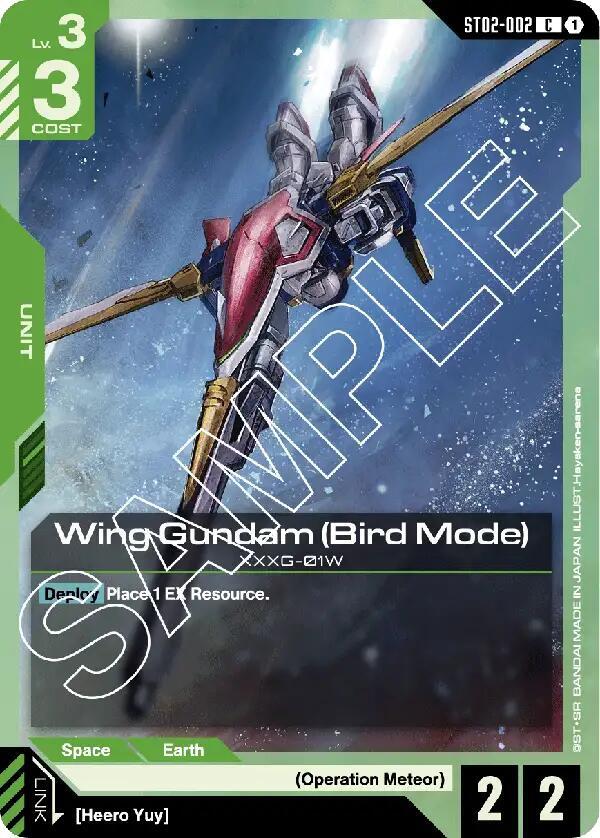
Wing Gundam (Bird Mode) is the deck's handiest ramp tool — a Level 3 Unit that's easy to play and adds an EX Resource, jumping you up the ladder. First Contact is a Command that adds additional Resources. Green's broader kit of Resource-gain and search effects fills out the engine. These are the cards you want early, every game. -
The budget payoffs (what ramp buys)
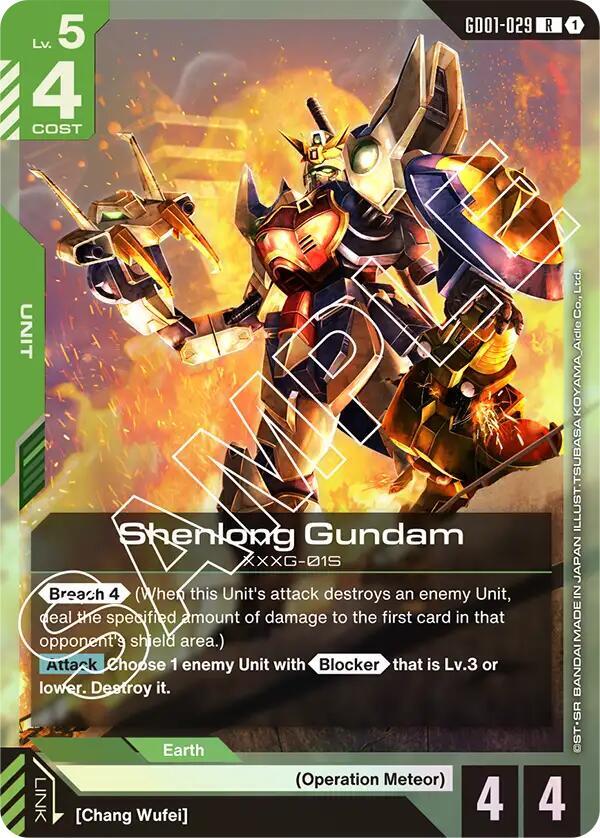
Once you're ahead on Resources, deploy efficient mid-level threats early. Shenlong Gundam and Gundam Sandrock are strong mid-level bodies to lay on the pressure. Gundam Aerial is especially efficient — it can cost just 1 when you have no Level 5-or-higher Units in your battle area, a perfect early tempo play. Wing Gundam itself is a heavy hitter with Breach 5, able to threaten a Base without even attacking it. -
Blue's support (stay alive, stay stocked)
Cheap blue draw keeps your hand full so the ramp never sputters, and blue's tempo tools buy time during the vulnerable setup turns. The goal is simple: don't run out of gas before the payoffs land.
Where the Money Hides (and Why You Can Skip It)
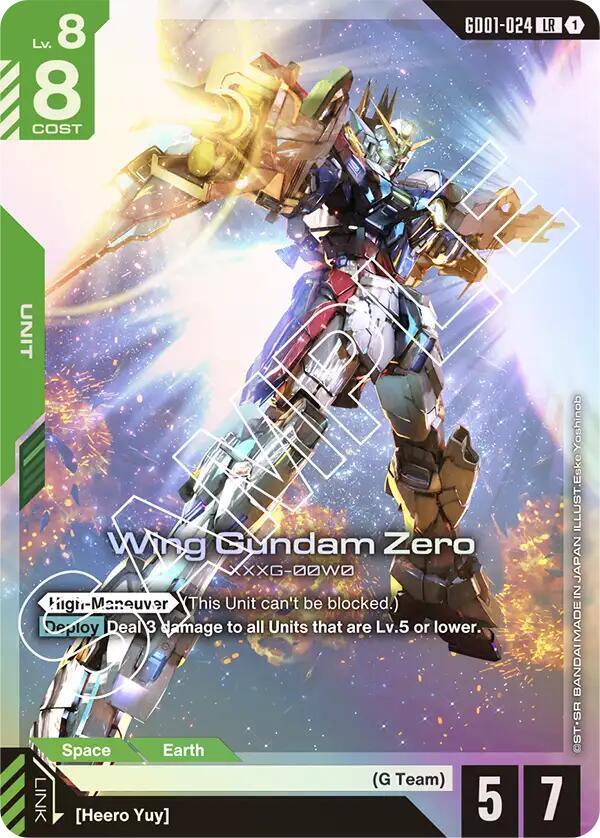
The dream payoff is Wing Gundam Zero — a Level 8 closer with High-Maneuver and a board-clearing deploy effect. It's spectacular, and it's the priciest, most chase-worthy card the archetype wants. But it is an upgrade, not a requirement: your budget build wins with the cheaper mid-level payoffs above, and a Level 8 bomb is something to add once the cheap engine is humming. Don't let the ceiling scare you off the floor.
The Honest Catch: Fragile Early
Every ramp deck in every card game shares one weakness, and Gundam's is no exception: you are at your most vulnerable in the early turns, precisely because you're spending them accelerating instead of defending. A turn you use to add a Resource is a turn you're not developing a blocker or pressuring back — and an aggressive opponent will try to punish exactly that window.
This is the trade-off for the deck's explosive mid-game. Against fast aggro — the Zeon swarm decks especially — you're in a race to stabilize before their early pressure ends the game, and if your ramp draws don't line up with some defense, you can lose before your payoffs ever land. It's not a reason to avoid the deck; it's the thing to respect and play around.
The mitigation is blue's tempo tools and a few well-timed blockers to survive to your power turns. Knowing exactly when a hit is safe to take on Shields versus when you must block is the core survival skill here — our Blocker guide and shield management guide both pay off directly for a ramp pilot.
Matchup Snapshot
Versus aggro: your hardest matchup, and the one to respect most. Fast decks are trying to end the game in the exact window you spend ramping, so you're racing to stabilize. Prioritize survival over greed here — sometimes the right play is to deploy a blocker instead of an accelerant, accepting a slower ramp in exchange for not dying. If you reach your power turns alive, your bigger units take over; the whole matchup is about getting there.
Versus control and midrange: this is where ramp shines. Slower decks give you the turns you need to accelerate unmolested, and a ramp deck that's allowed to set up will deploy threats faster than a fair deck can answer them. Against the grind, your job is to convert your Resource lead into board presence before they stabilize — land an early big threat, protect it, and make them react to a clock they can't match. Patience favors you here, because every uneventful turn widens your Resource advantage.
Piloting: Ramp, Then Threaten
Ramp rewards disciplined sequencing. A few habits carry most of the weight:
-
Mulligan for an accelerant.
A hand with no early Resource-gain is a slow hand — and slow is exactly what ramp can't afford. Keep openers with a ramp tool and a way to survive; ship hands that are all expensive payoffs with no way to cast them yet. Our mulligan guide covers the call. -
Ramp first, threaten second.
In the early turns, prioritize accelerating over deploying a small body for minor pressure. The Resource lead compounds — a turn-two accelerant is worth more than a turn-two attacker, because it unlocks everything that follows. -
Deploy Gundam Aerial when it's cheap.
Aerial's discount applies when you have no Level 5+ Units out, so it's a perfect early tempo play before your big threats land — cheap pressure that doesn't slow your ramp. -
Know your power turn.
Identify the turn your ramp lets you deploy a threat the opponent can't answer, and aim everything at getting there alive. Once your payoffs outclass their board, the snowball is hard to stop.
The Upgrade Path: Budget to Wing
The cheapest entry is one ST02 starter. From there, you upgrade in priority order for the most power-per-dollar:
- 1. Playsets of your accelerants. More copies of your best Resource-gain and search cards means you ramp consistently instead of stumbling. The single biggest consistency gain, and cheap.
- 2. Efficient mid-level payoffs. Round out the threats your ramp deploys — the more good targets you have for your Resource lead, the less your draws can let you down.
- 3. The premium closers, last. A Wing Gundam Zero or other Level 8 bomb adds a ceiling — buy these once the cheap engine is complete, because they're the refinement, not the foundation.
Where This Deck Leads
When you've learned the ramp plan and want the tuned, top-tier version, the destination is the Green/White Wing deck — the premium control-ramp build anchored by Wing Gundam Zero that sits among the format's best decks. This budget Green/Blue build teaches the same fundamentals at a fraction of the cost. For where each color pairing leads, our color-pair primer maps the options, and the two-color deckbuilding guide covers blending a second color cleanly.
Where to Buy
Ramp comes together cheaply because the ST02 "Wings of Advance" starter gives you a complete Green/Blue ramp deck in one box. Grab the starter first, then fill in cheap singles to tune the accelerants and payoffs. These searches are a good starting point—compare current listings before you commit, since prices move with new set releases.
Shop the ST02 Wings of Advance Starter on Amazon Search Gundam Singles on TCGplayer Browse Gundam Singles & Lots on eBayPrices move with new set releases, so check current listings before buying playsets. For a deck built on a starter plus cheap singles, marketplaces almost always beat chasing cards in sealed product.
Get Ahead. Stay Ahead.
Green/Blue ramp is one of Gundam's most satisfying strategies and one of its cheapest to start, thanks to the ST02 starter that doubles as a complete ramp deck. It teaches a fundamental every strong player understands — that a Resource lead is a board lead — while asking little of your wallet. The early turns are a real risk, but survive them and your accelerated threats simply outclass what the opponent can field. Learn the plan cheap, and the premium Wing builds will feel natural when you get there.
Ramp early, defend smart, and deploy what they can't answer yet. The Resource clock is yours to break.
Build Your Gundam Arsenal:
© GEEKYDOMAIN.COM | Strategy Powered by Data