

Outlast, out-draw, and out-position your opponent. The most beginner-friendly way into control — built from a single starter deck.
Some links below are affiliate links. If you buy through them, Geeky Domain may earn a small commission at no extra cost to you. We only recommend cards and products we believe offer real value to players.
Control is the archetype that wins by refusing to lose. Where aggro races to end the game early, Blue/White control does the opposite: it survives behind durable, high-HP Units, heals the damage it does take, manipulates combat math so its blockers always come out ahead, and grinds the opponent down until they simply have nothing left. It is patient, defensive, and deeply satisfying once it clicks.
The best news for a new player is that you don't need to chase expensive cards to start. The ST01 "Heroic Beginnings" starter deck is itself a Blue/White control deck — and a well-regarded one. It is widely considered the most consistent of the original starter decks, built around White's high hit points, built-in healing, and the AP manipulation that lets a control deck dominate the board. That makes it the ideal, affordable on-ramp into the archetype.
This guide covers how Blue/White control actually wins, the cheap core that powers a budget build, the honest learning curve that comes with the archetype, and the upgrade path — including where this deck leads once you're ready to invest in a premium control finisher. No fabricated cards, no expensive chase list disguised as a budget deck.
→ Short Version
Blue/White control wins by surviving: durable high-HP Units, healing, AP manipulation, and card draw that buries the opponent in resources. Start from the ST01 "Heroic Beginnings" starter — it's a complete budget control deck on its own and the most consistent starter in the game. Add cheap blue draw and white defensive tools to tune it. The catch: control is the hardest archetype for a beginner to pilot well, because winning depends on patience and reading the game. Learn it here, then graduate toward a premium finisher when you're ready.
→ More Reading
In This Guide
The Game Plan: How Control Wins
Every Gundam game is a race to grind down the opponent's Shields and land the finishing blows. Aggro tries to win that race outright. Control wins it from behind, by making sure the opponent's race stalls while yours quietly continues. The Blue/White pairing is purpose-built for this: White brings durable, high-HP Units, healing, and the defensive Base that anchors your board, while Blue brings card draw and the tempo tools that keep the opponent's threats from ever landing cleanly.

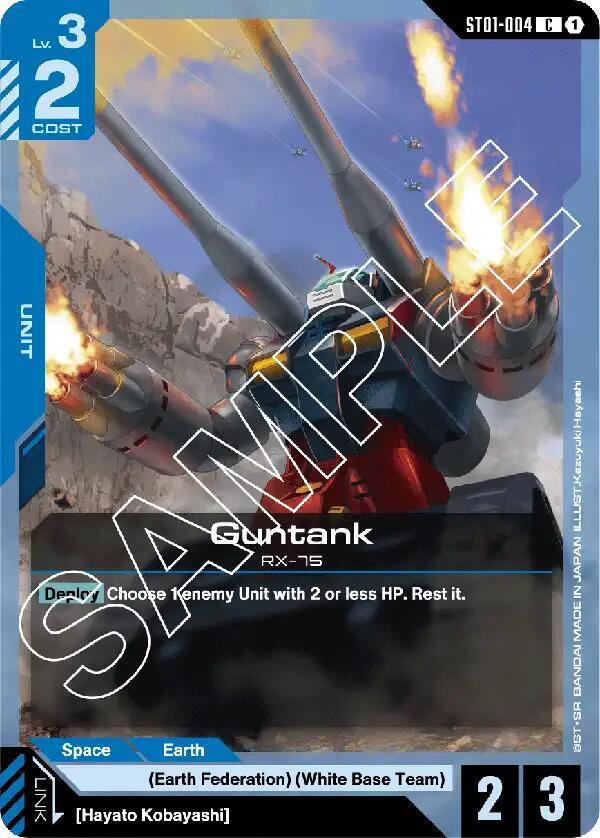
The deck's power comes from trading efficiently and drawing relentlessly. Every combat you win without losing a Unit, every point of damage you heal back, every extra card you draw — each is a small advantage, and control stacks those small advantages until the gap is insurmountable. You're not trying to deal twenty damage in three turns; you're trying to make sure that by turn ten, you have a board and a full hand while the opponent has neither.
The Core Idea
A control deck doesn't ask "how do I win this turn?" It asks "how do I make sure I don't lose this turn?" — and trusts that if it keeps answering that question correctly, the win condition takes care of itself. Card advantage is the engine; durable blockers and healing are what buy the time for that engine to run.
The Three Phases of a Control Game
A control game has a rhythm. Recognizing which phase you're in — and playing to that phase rather than panicking — is most of what separates a winning control pilot from a frustrated one.
From Survival to Control to Inevitability
Notice that attacking is the last thing control does, not the first. A new control player's most common mistake is trying to win during the survival phase — committing too much, too early, and getting punished. The phases are a sequence; respect the order.
The Cheap Core: Starter & Tools
The foundation of a budget Blue/White control deck is the ST01 "Heroic Beginnings" starter. Unlike most starter decks, which are stepping stones you quickly outgrow, ST01 is a genuinely coherent control deck out of the box — which is why it's the recommended entry point rather than a throwaway.
-
The White defensive engine
White's identity is durability: high-HP Units that survive combat, healing that undoes chip damage, and a strong defensive Base to anchor the board. This is the backbone that buys you time. White is widely regarded as one of the strongest defensive foundations in the current game, which is a big part of why ST01 plays so consistently. -
Blue's card draw and tempo
Blue is what keeps a control deck from running out of gas. Cheap draw Commands refill your hand so you always have an answer, and Blue's tempo tools — resting and bouncing enemy Units — keep the opponent's board from ever stabilizing. A control deck lives and dies on card advantage, and Blue supplies it. -
A cheap Pilot package
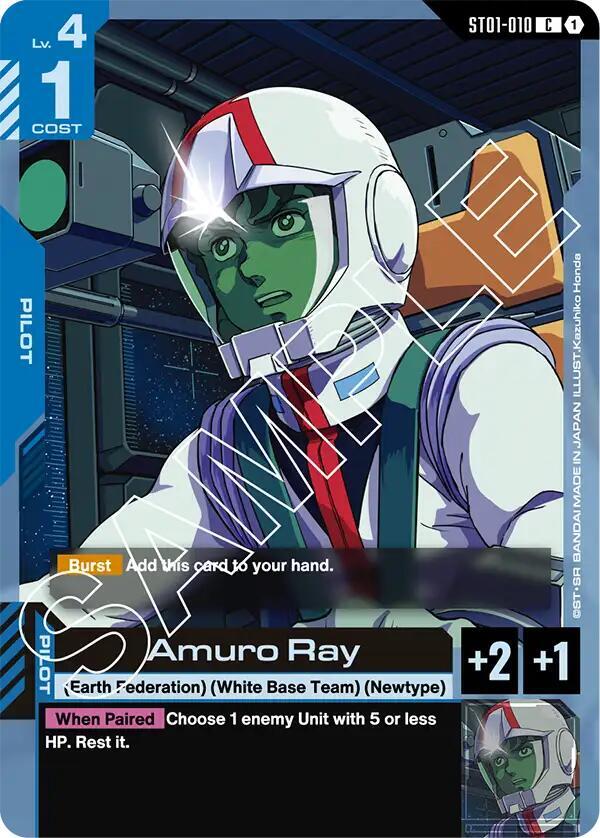
Inexpensive Pilots round out the shell, completing Link Units and adding control effects. Amuro Ray (ST01-010) is a standout from the starter itself — a Blue Pilot who can rest an enemy Unit, exactly the kind of tempo tool the deck wants, and one you already own from the box.
Cheap Tuning, Not Expensive Chasing
The upgrades that improve a budget control deck are mostly cheap singles: extra copies of the best blue draw Commands and white defensive Units. You don't need a single chase rare to have a functional, consistent control deck. Don't forget the separate Resource Deck either — if you're new to the format, our resource-deck guide covers how that second deck works.
The Honest Weakness: A Hard Deck to Pilot
Here's the honest part a good guide owes you: control is the hardest archetype for a beginner to win with, and it's not because of the cards. Aggro is forgiving — deploy, attack, and even a loose line usually applies pressure. Control punishes loose play. Every turn asks you to make the right judgment call: trade now or wait? Heal or develop? Hold the tempo tool or use it? Make those calls wrong and a control deck stalls out and loses to a deck it should beat.
This is the trade-off for the archetype's power ceiling. A well-piloted control deck beats almost everything; a poorly piloted one loses to almost everything. The good news is that the ST01 starter is the best possible place to learn those judgment calls, because it's cheap, consistent, and forgiving enough to teach you the fundamentals without a large investment. You will lose some games early while you learn to read the board — that's the tuition, and it's much cheaper to pay it with a starter deck than a premium build.
Two specific skills carry most of the weight, and both have dedicated guides worth reading: knowing the exact outcome of a fight before you commit (our combat math guide), and knowing when to take damage on Shields versus blocking (our shield management guide). Control rewards players who do this math deliberately.
Piloting: Patience & Sequencing
A few habits turn a stalling control deck into a winning one:
-
Mulligan for a stable opening, not a fast one.
You want an early defensive body, your Base, and ideally a draw Command — a hand that survives, not one that attacks. Ship hands that can't defend the early turns. Our mulligan guide covers the redraw decision. -
Take damage on Shields when it's safe.
You don't have to block everything. Control decks often let early attacks through to preserve blockers and resources, spending Shields as a resource to buy time. Knowing when a hit is "safe" to take is a core control skill. -
Draw before you have to.
Cast your draw Commands proactively to stay ahead on cards — a control deck wants to be the player with more options every single turn. Running out of cards is how control decks lose. -
Don't turn the corner early.
Switching from defense to offense is the most important decision in a control game. Do it only when you're certain you can close before the opponent recovers. Turn too early and you hand them the tempo you spent the whole game denying them.
Matchup Snapshot
Versus aggro: this is the matchup White is built for. Your high-HP Units, healing, and AP manipulation are designed to blunt a fast start — trade efficiently, heal the chip damage, and let their early aggression burn out against a wall it can't break. Survive the opening turns and the game tilts heavily your way, because an aggro deck that doesn't close early has nothing left.
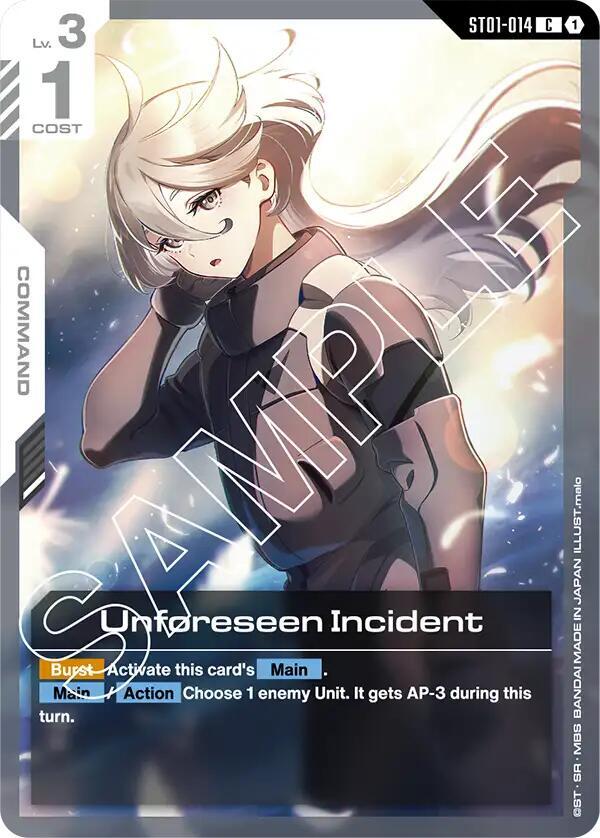
Versus other control and midrange: the game becomes a long grind decided by card advantage. Here your draw Commands are the most important cards in the deck — whoever runs out of resources first loses. Avoid over-committing into a board that can trade back, lean on your tempo tools to deny their best turns, and treat every clean card-advantage trade as a step toward inevitability. Patience wins these; the player who forces the issue usually loses it.
The Upgrade Path: Starter to Premium
The cheapest possible entry is one ST01 starter. From there, you upgrade in priority order for the most consistency-per-dollar:
- 1. Playsets of your best draw and defensive cards. Extra copies of the cheap blue draw Commands and the sturdiest white Units make the deck draw an answer far more often. Cheap, and the biggest consistency gain.
- 2. More tempo tools. Additional resting and bounce effects give you more ways to neutralize the opponent's board while your card advantage compounds.
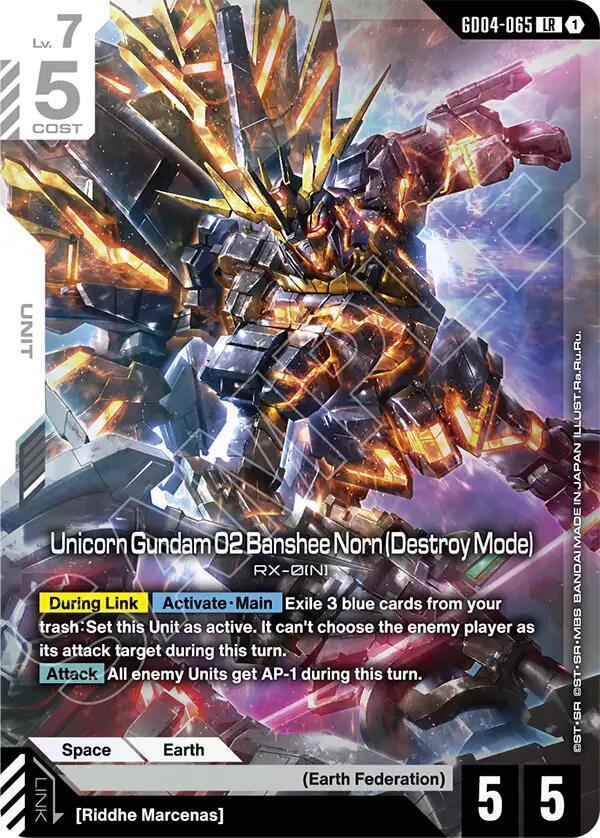
- 3. A premium finisher, last. Once you've learned the archetype and want to invest, the natural destination is a dedicated premium control build — the kind anchored by a self-reactivating GD04 finisher.
Where This Deck Leads
When you've mastered the fundamentals here and you're ready to spend on a premium control deck, the destination is our Blue/White Banshee Norn Control deck tech — the tuned, GD04-powered version of everything this starter teaches, built around a finisher that attacks, falls over, and stands right back up. Think of this guide as the on-ramp and that one as the destination.
Where to Buy
Blue/White control is one of the cheapest archetypes to start, because the ST01 starter gives you a complete deck in one box. Grab the starter first, then fill in cheap singles to tune it. These searches are a good starting point—compare current listings before you commit, since prices move with new set releases.
Shop the ST01 Heroic Beginnings Starter on Amazon Search Gundam Singles on TCGplayer Browse Gundam Singles & Lots on eBayPrices move with new set releases, so check current listings before buying playsets. For a deck built on a starter plus cheap singles, marketplaces almost always beat chasing cards in sealed product.
Outlast Everything.
Blue/White control is the most rewarding archetype to master and the cheapest to start, thanks to the ST01 starter that doubles as a complete budget deck. It teaches the fundamentals every strong player relies on — patience, threat assessment, combat math, and card advantage — while asking almost nothing of your wallet. The learning curve is real, but it's the most worthwhile curve in the game, and the starter is the perfect classroom.
Survive the early game, take over the middle, and close when the lead is unassailable. Learn it cheap, and the premium builds will feel effortless when you get there.
© GEEKYDOMAIN.COM | Strategy Powered by Data