

Budget Red/Green Zeon Rush Aggro Deck
Flood the board, swing fast, end it early. The cheapest competitive on-ramp in the Gundam Card Game.
Some links below are affiliate links. If you buy through them, Geeky Domain may earn a small commission at no extra cost to you. We only recommend cards and products we believe offer real value to players.
Zeon Rush is the Gundam Card Game's classic aggro deck: a Red/Green swarm built to flood the board with cheap, efficient units and end the game before your opponent ever stabilizes. It is fast, it is forgiving of small mistakes, and—crucially for a new player—it is the cheapest competitive archetype you can build. The core engine is almost entirely common-rarity units that cost cents apiece.
The deck takes its name and its spine from the ST03 "Zeon's Rush" starter deck, a Red/Green preconstructed list that already contains a huge chunk of what you need. That makes Zeon Rush unusual: you can buy one cheap starter, add a handful of singles, and have a functional aggressive deck for a fraction of what a control or midrange deck would cost.
This guide breaks down how the deck wins, the cheap units that form its core, the honest weakness you need to play around, and the exact upgrade path from "starter plus singles" to a tuned competitive list. No fabricated cards, no $100 list dressed up as a budget deck—just the real archetype, built for a beginner's wallet.
→ Short Version
Zeon Rush (Red/Green) wins by deploying a wide board of cheap units and attacking relentlessly, using Command cards like Close Combat and High Maneuver to push damage through. Start from the ST03 Zeon's Rush starter, add cheap singles, and you have a real aggro deck for very little money. Its weakness is recoverability: if the early assault stalls, you can run out of gas. Play to close fast, and respect that limit.
→ More Reading
In This Guide
The Game Plan: How Zeon Rush Wins
Every Gundam game is a race to grind your opponent's shields down and land the finishing blows. Most decks build toward that slowly, trading efficiently and grinding value. Zeon Rush refuses to wait. The plan is to deploy a cheap unit on turn one, add two more on turn two, and start attacking immediately—forcing the opponent to deal with a full board before they have set up their own.
The Red/Green pairing is built for exactly this. Red brings the aggressive units and the Command cards that push damage through blockers; Green adds efficient bodies and resource consistency so you never stall on deployment. Because the deck wins by overwhelming numbers rather than a few expensive bombs, its power is spread across many cheap cards—which is precisely why it budgets down so well.
The Core Idea
A one-cost unit that attacks every turn pays for itself almost immediately. Put three or four of them on the board, back them with a Command card or two to break through blockers, and the opponent has only a couple of turns to find an answer to your entire board—before their shields are gone. That tempo pressure is the whole deck.
The Curve: Why Aggro Lives Low
An aggro deck's mana curve is its identity. Zeon Rush is weighted heavily toward one- and two-cost units, with a small amount of three-cost top end and just enough Command cards to force damage through. Here is roughly how a healthy budget Zeon Rush list distributes its non-resource cards by cost:
Typical Cost Distribution
The exact counts vary by list, but the shape is constant: a deck that tops out high is not Zeon Rush. Every expensive card you add is a turn you are not attacking.
The Core: Cheap Units & Commands
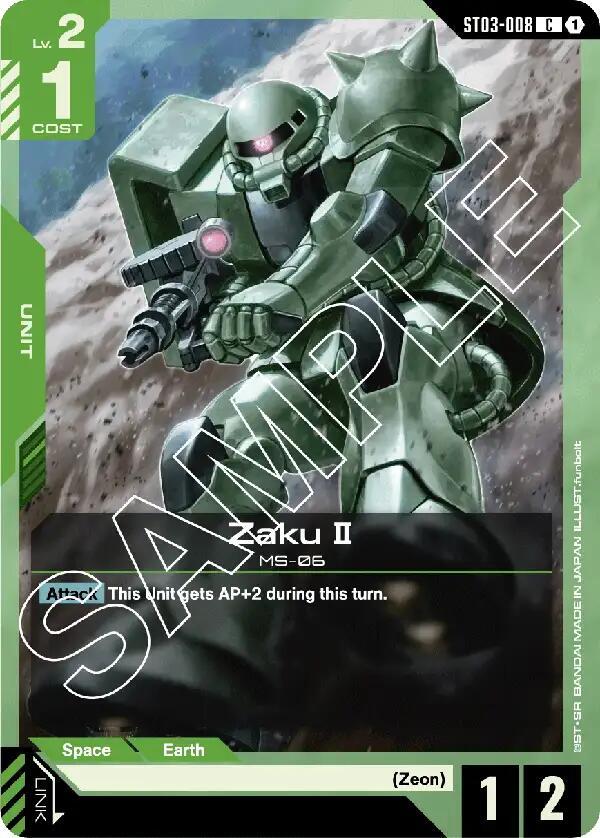
The beauty of Zeon Rush is that its most important cards are also its cheapest. The Zaku family does the heavy lifting—basic, efficient units that come down early and attack relentlessly. The starter-deck and GD01-era printings of these are common-rarity staples that cost cents apiece.
-
The Zaku core (your cheap engine)
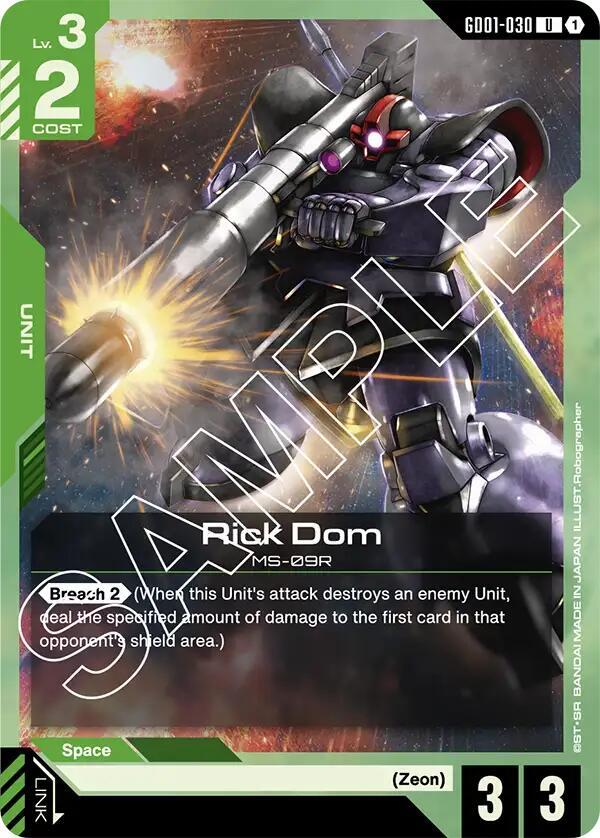
Low-cost Zaku-line units like the basic Zaku II, plus efficient follow-ups such as Rick Dom and Gelgoog, form the backbone. These are the cards you want in your opening hand every game. Almost all sit at common rarity and bulk pricing—you can assemble full playsets for very little. -
Close Combat & High Maneuver (the reach)
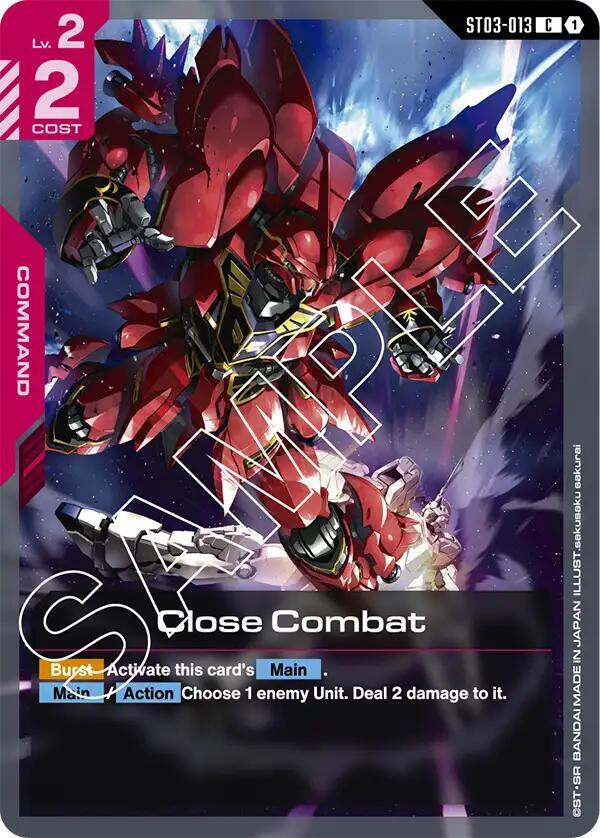
Cheap units alone can stall against blockers. The Red Command cards are what make the deck lethal—Close Combat and High Maneuver let your small units trade up into bigger threats or push damage through defenders. They are, as one starter-deck review put it, gigantic thorns for any opponent who forgets they exist. Understanding exactly how these aggressive keywords resolve is the single biggest skill jump in the deck; our aggressive keywords guide breaks each one down. -
A cheap Pilot package
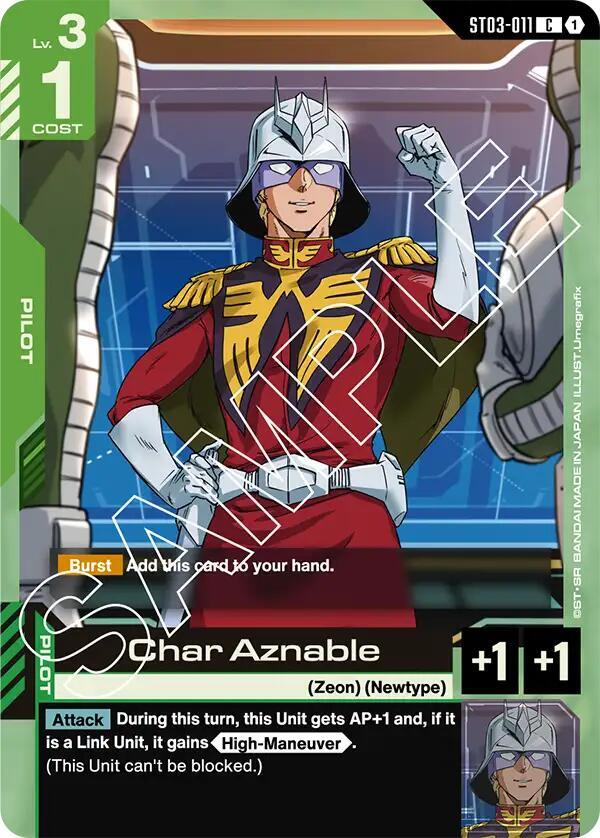
Inexpensive Pilots—Char Aznable being the iconic budget option—pair with your units to complete Link Units and add a burst of stats exactly when you want to swing. They are low-cost, on-theme, and easy to find cheaply.
Where the Money Hides (and Why You Can Skip It)
Competitive Zeon Rush lists often run a premium copy of Char's Zaku II and a high-cost finisher or two. These are the cards driving the $80–100 price tags on tournament lists—and they are upgrades, not requirements. A cheaper alternate printing of Char's Zaku II carries the same text for a fraction of the price, and your budget build can run a cheaper finisher in the top-end slot without losing the core game plan.
The Honest Weakness: Running Out of Gas
A good budget guide tells you where the deck falls short, because that is what makes you a better pilot. Zeon Rush's defining weakness is recoverability. The deck is built to win in the first several turns; if that opening assault stalls—because the opponent stabilized with blockers, traded efficiently, or weathered your damage—you can run out of cards and pressure with little way to rebuild.
This is the trade-off for being cheap and fast. It is not a flaw to hide; it is a clock to respect. You win by recognizing your closing window and committing to it, rather than playing a long game the deck was never designed to win. Against control and slower midrange, you are the favorite if you keep the pressure relentless. Against decks that can stabilize and grind, your job is to be fast enough that "the long game" never arrives.
Knowing when to trade and when to race is a defensive skill aggro players often neglect. Our shield management guide and combat math guide are worth reading even as the aggressor—knowing the exact damage you can force, and what the opponent can answer, is what turns a fast start into a win rather than a fizzle.
Matchup Snapshot
Versus control and slower midrange: you are favored. These decks want to reach their powerful late game, and your entire job is to make sure that game never arrives. Deploy aggressively, ignore the temptation to play around sweepers, and force them to answer a full board before they are set up. The faster you commit, the better your odds.
Versus other aggro and blocker-heavy defensive decks: the math flips. The mirror is often won by whoever respects the board at the right moment—trading a unit to remove a key attacker, or holding a Command to blow out a profitable block. Against heavy blocker walls, your Command cards become your most important resource: you need them to push damage through, so sequence them for maximum breakthrough rather than spending them early. Reading which side of that line you are on, turn by turn, is what separates a coin-flip Zeon pilot from a consistent winner.
Piloting: Mulligans & Sequencing
Aggro is easy to learn and hard to master, because every point of tempo matters. A few rules carry most of the weight:
-
Mulligan for your early units.
A hand without a turn-one or turn-two play is a losing hand for aggro. Keep hands that deploy early and curve out; redraw hands clogged with your few expensive cards. Gundam gives you one mulligan—use it decisively if your opener cannot apply pressure. Our mulligan guide covers the redraw math. -
Deploy wide, attack early.
Your board is your clock. Default to adding a unit and attacking every turn. Do not hold units back "for safety"—a Zeon Rush that plays cautiously has thrown away its only advantage. -
Save Commands for the breakthrough.
Close Combat and High Maneuver are at their best when they turn a blocked attack into lethal damage or a favorable trade. Don't fire them on turn one for no reason—hold them for the swing that actually closes the game or removes the blocker stopping your board.
The Upgrade Path: Starter to Competitive
The cheapest possible entry is one ST03 Zeon's Rush starter plus a few cheap singles. From there, you upgrade in priority order for the most pressure-per-dollar:
- 1. Playsets of your cheap core units. Four copies each of your best one- and two-drops, so you draw an aggressive opener more consistently. Cheap and the single biggest consistency gain.
- 2. Extra Command cards. More Close Combat / High Maneuver effects = more games where your board breaks through instead of stalling.
- 3. The premium top end last. A premium Char's Zaku II or a high-cost finisher adds resilience—buy these only once the cheap engine is complete, since they are refinements, not the foundation.
A Note on the Format
The Gundam Card Game pool grows fast, and new sets shift which cheap units are best. Before buying playsets, it is worth checking the current set landscape so you invest in cards with staying power. Our beginner's buyer's guide and ST01-vs-ST03 comparison keep the current product picture in one place.
Where to Buy
Zeon Rush is the rare deck where a sealed starter plus cheap singles gets you most of the way there, so it comes together fast and cheap. The ST03 Zeon's Rush starter gives you the spine in one box; fill in playsets of the cheap units from a singles marketplace. These searches are a good starting point—compare current listings before you commit, since prices move with new set releases.
Shop the ST03 Zeon's Rush Starter on Amazon Search Gundam Singles on TCGplayer Browse Gundam Singles & Lots on eBaySwing First. Spend Later.
Red/Green Zeon Rush is the best on-ramp the Gundam Card Game has. It is cheap because its power lives in common-rarity units, it is forgiving because the game plan is simple and proactive, and it teaches you the aggressive fundamentals—curve, tempo, and combat—that every other deck builds on. Start from the ST03 starter, learn the Command cards, and respect the deck's one real weakness: it wants to win early, so let it.
Mulligan for your openers, deploy wide, and hold your reach for the swing that closes the game. Treat the premium cards as a destination, not a starting line—the cheap core is what wins games, and the upgrades only refine a deck that already works. At this price, a genuinely competitive deck can be on your table this week.
© GEEKYDOMAIN.COM | Strategy Powered by Data