

Color-Pair Strategy Primer: The 5 Colors (Gundam)
In the Gundam Card Game, your colors define your strategy before you pick a single card. Here's what all five colors do, their strengths and weaknesses, and how to pair them into a winning deck.
Every Gundam Card Game deck is built from up to two colors, and that choice shapes how you win more than any individual card does. Each color carries a distinct identity — a preferred playstyle, a set of signature tools, and clear strengths and weaknesses. Learn the five colors and you'll understand the bones of any deck on the table, including your own.
The official advice for deckbuilding is simple and smart: choose a main strategic color, then add a secondary color that either enhances your main color's strengths or covers its weaknesses. This primer gives you everything you need to make that choice well — a deep profile of each color, then the logic of how to pair them.
One honest note: the color identities below are foundational and stable, but which specific pairs are strongest shifts with every set release. We'll cover the established combinations as durable tendencies, then point you to a live tier list for the current pecking order.
The Short Version
The five colors are Blue (stability — draw and recovery for the long game), Green (acceleration — ramp, search, and big units early), Red (offense — raw damage and aggression), White (defense — blockers, attack-power reduction, and counterplay), and Purple (the newest color, built on series-synergy packages). Decks use up to two colors: pick a main color for your strategy and a second to enhance it or shore up its weaknesses. Classic pairs include Blue-Green aggression, Green-White and Blue-White control, and the rising Purple pairings — but check a live tier list for the current meta.
→ Build Your Gundam Knowledge
In This Guide
The Five Colors at a Glance
A deck may use up to two colors out of the five, alongside the standard 50-card deck and 10-card resource deck. The four founding colors are Blue, Green, Red, and White; Purple was added later as the game's fifth color. Here's each in a sentence:
- Blue — stability: card draw and recovery to win long, grinding battles.
- Green — acceleration: resource ramp and search to field powerful units early.
- Red — offense: raw damage and aggressive attacking to end games fast.
- White — defense: blockers, attack-power reduction, and counterplay.
- Purple — synergy: the newest color, built around series-specific packages.
Now let's go deeper on each — because the magic is in how their strengths and weaknesses combine.
Blue — Stability
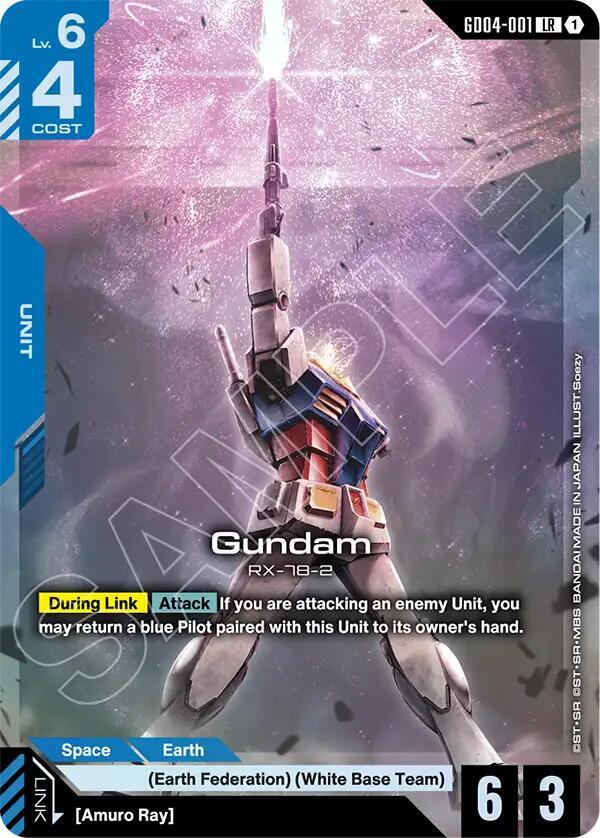
Blue is the color of tactics and survivability, drawing on the Earth Federation and Universal Century factions. It has the most card draw in the game, plus the ability to keep key units on the board through HP recovery and resting effects — letting it ambush attackers and grind out long games. Blue is often rewarded for battling units directly, ensuring it stays ahead on resources.
Strengths
Card advantage, resilience, and a powerful late game. Blue rarely runs out of resources and excels at outlasting opponents.
Weaknesses
Slower to close games and can struggle to survive a fast, focused assault before its engine comes online.
Green — Acceleration
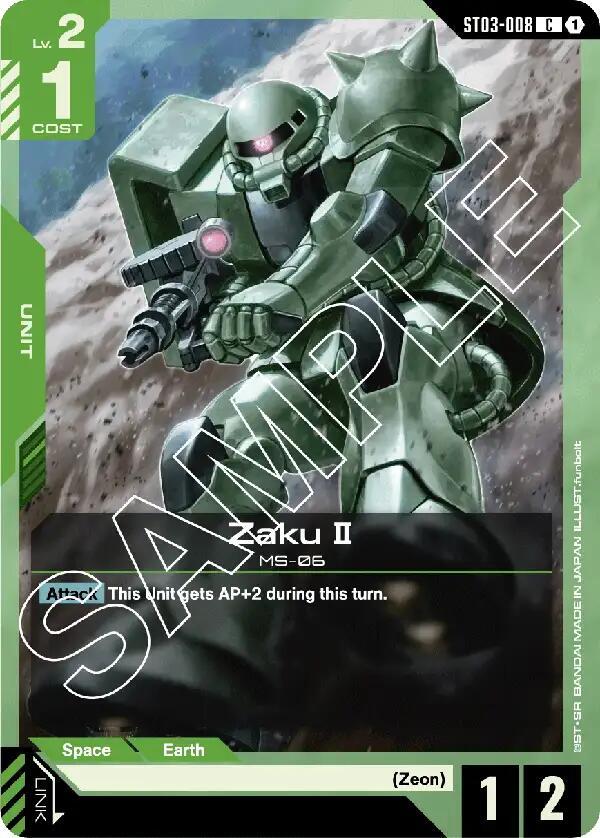
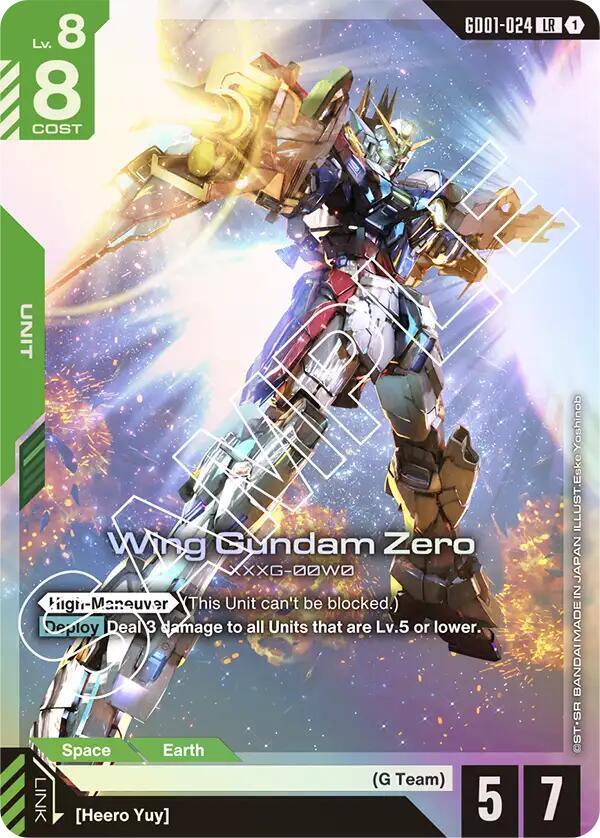
Green is all about acceleration. It specializes in resource gain and search effects, with the most ways to bring out extra units and extra EX Resources. That lets Green inflate its level quickly and deploy stronger units ahead of schedule, overwhelming opponents with power they aren't ready for. If you like getting big things into play early, Green is your engine.
Strengths
Explosive starts, oversized units ahead of the curve, and consistency from search effects that find your key cards.
Weaknesses
Can stumble if the ramp plan is disrupted, and individual cards may be less impactful when the acceleration engine isn't firing.
Red — Offense
Red is the offense-focused color, specializing in damage and attacking. It wants to apply pressure from the very first turns, forcing the opponent onto the back foot and racing them down before they can stabilize. Red is the most proactive, beginner-friendly color: the plan is intuitive, and the pressure is relentless.
Strengths
A fast clock and constant pressure that forces opponents to react on your terms rather than execute their own plan.
Weaknesses
Tends to run out of steam in long games, and can be walled by defensive decks that survive the early storm.
White — Defense
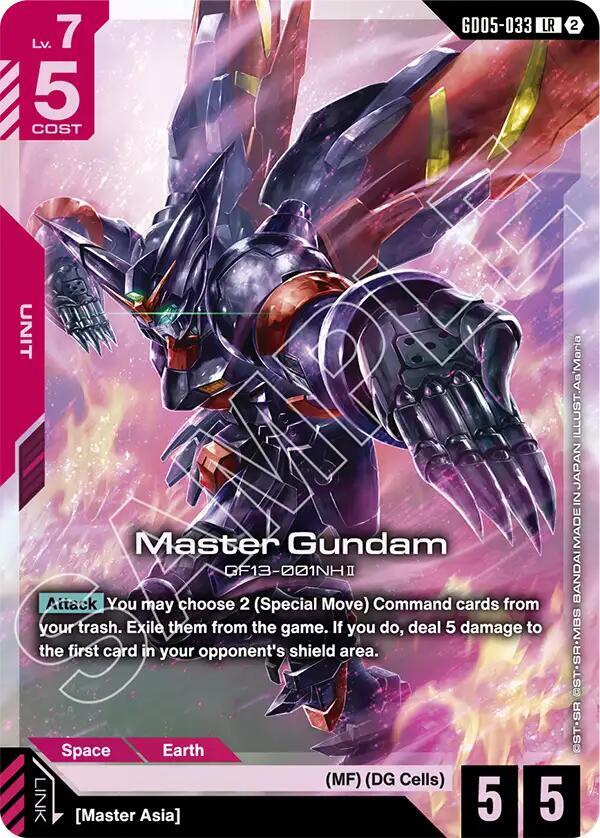
White is defense and counterplay. It has the most blockers, supported by effects that reduce attack power and send cards back to the hand, plus a strong suite of Commands. Its whole identity is punishing opponents who try to recklessly force their way to a win — White lets the aggressor crash into a wall and then takes over once their assault has spent itself.
Strengths
Excellent at neutralizing aggression and controlling combat, stabilizing the board until the late game tilts its way.
Weaknesses
Reactive by nature, so it can be slow to actually close games and may struggle against grindy value engines.
Purple — Synergy
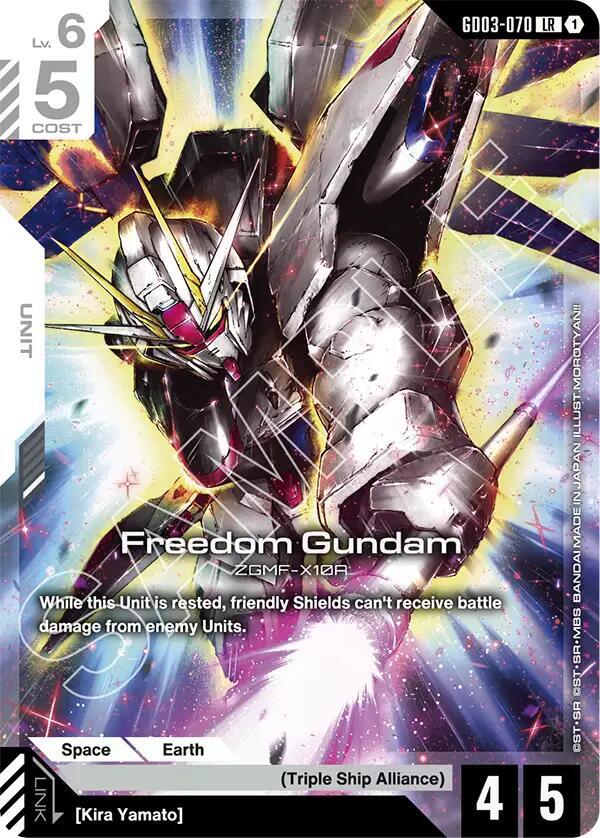
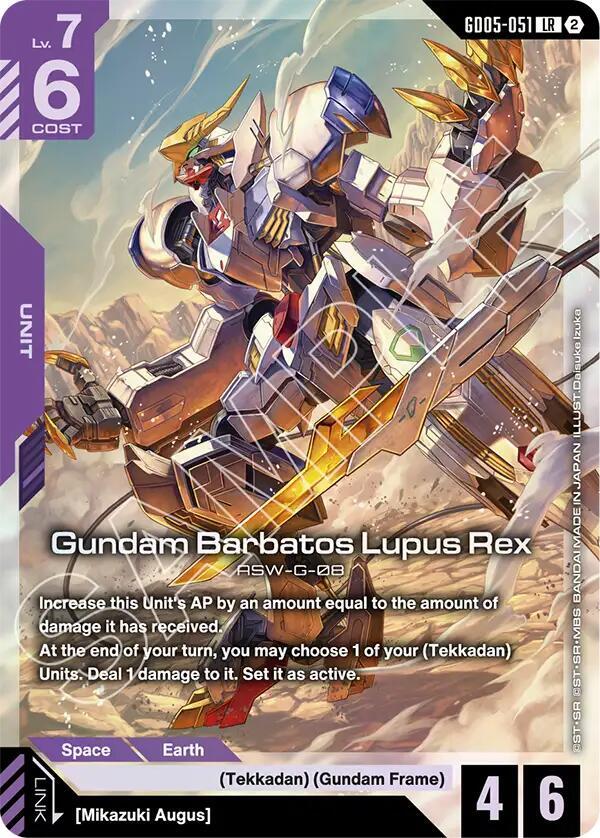
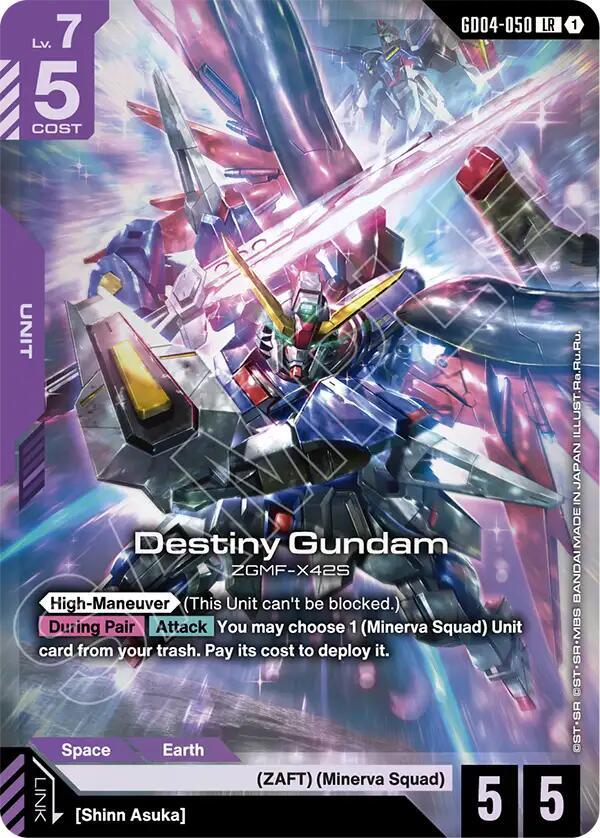
Purple is the game's newest color, and it's defined by synergy — series-specific packages that reward building around a theme. It's the home of Iron-Blooded Orphans' Tekkadan, Mobile Suit Gundam SEED Destiny's Minerva Squad, and similar themed groups, and it leans on linked units and paired effects that snowball when assembled. Because it's the youngest color, Purple is also the fastest-evolving, gaining new tools and pairings with each set.
Strengths
Powerful linked synergies and flexible pairings — Purple slots into White, Red, or Blue to form some of the format's strongest current decks.
Weaknesses
More build-dependent — it wants its synergy pieces together to shine, and a disrupted package can leave it underpowered.
Matching Colors to Gundam Series
One of the joys of the Gundam Card Game is that the colors map onto the anime's factions, so you can often choose your colors by the series you love. Broadly, the faction-to-color assignments run like this:
- Blue — the Earth Federation and many Universal Century institutions: the original Federation and White Base team, the Titans, OZ, White Fang, League Militaire, and Neo Zeon (in places).
- White — institutional and protagonist forces: Orb, the Earth Alliance, the AEUG, the Academy (Witch from Mercury), Gjallarhorn, and the Earth Federation in places.
- Red — aggressive factions: Zeon and Neo Zeon, ZAFT and the Minerva Squad, Mafty, the Trinity team, and Celestial Being (in places).
- Green — Zeon, the Maganac Corps, Side 6, the AGE-era Federation, and Celestial Being (in places); the Wing factions land in Green as well as Blue.
- Purple — newer themed groups: Iron-Blooded Orphans' Tekkadan and Teiwaz, the Vagan, SEED Destiny's Minerva Squad and ZAFT, and Celestial Being (in places).
The Big Caveat: Factions Span Colors
The mapping above is a rough guide, not a rulebook — and several factions deliberately appear in more than one color. Zeon shows up in Red, Green, and (as Neo Zeon) Blue; the Earth Federation spans Blue, White, and Green across its eras; Celestial Being is split across Red, Green, and Purple; and individual cards can break their faction's usual color for story reasons. The lesson: pick by the suits and pilots you love, but always confirm the color printed on the specific card rather than assuming from the series. If you have a favorite show, there's almost certainly a color — and a deck — waiting for you, but the card itself is the source of truth.
How to Pair Colors
Since you can run up to two colors, the art of deckbuilding is choosing the right pair. The official guidance is the best starting framework: pick your main color based on the strategy you want, then add a secondary color for one of two reasons.
- To enhance your strengths. Pair two colors that push the same plan harder — for example, Red's aggression alongside Green's acceleration to deploy threats faster and hit even sooner.
- To cover your weaknesses. Pair a color that patches your main color's blind spot — for instance, splashing White's blockers into a slower Blue deck so it can survive aggression long enough for its card advantage to take over.
One practical wrinkle: linked units and pilots can set your pair for you. If the unit and pilot you want to build around are different colors, that combination already defines your two colors — so decide on your key cards first, and the pairing often follows naturally. Our two-color deckbuilding guide goes deeper on the construction rules.
Mono-Color vs Two-Color
You don't have to use two colors — one is perfectly legal, and the choice between one and two is a real strategic decision:
- Mono-color gives you maximum focus and consistency — the purest version of a single identity, simpler to build and pilot, and usually easier on the wallet. It's an excellent starting point for new players.
- Two-color opens up more tools, more archetypes, and synergy pairings (especially the Purple combinations), at the cost of slightly more demanding construction. Most competitive decks run two colors for exactly this flexibility.
Whichever you choose, mind your curve: a good rule of thumb is around 16–20 unit cards at level 3 or lower, so you reliably have plays in the early turns and your deck doesn't clog with expensive cards you can't deploy yet.
The Established Pairs
Certain combinations have become defining archetypes. Treat these as durable tendencies rather than a current ranking — the exact tier order shifts every set:
- Blue-Green (Zeon Rush): aggression backed by acceleration — a steady, consistent attacker.
- Green-White (Wing): acceleration plus defense for a controlling, grind-them-out build.
- Blue-White (Unicorn): card advantage plus blockers — a classic control shell.
- Red-White (SEED): aggression tempered with defensive counterplay.
- Purple pairs (Purple-White, Blue-Purple, Purple-Red): the synergy color's combinations have risen sharply, with Purple-White prized for consistency and Blue-Purple as a powerful aggressive option in recent metas.
For which of these is on top right now, always consult a current, tournament-tracking tier list — the framework here tells you why a pair works, and the live data tells you which is winning today.
Color FAQ
- Can I play three or more colors? No — decks are capped at two colors. That limit is what makes color choice such a meaningful part of deckbuilding.
- Which color is best for beginners? Red is the most intuitive — its offensive, proactive plan is easy to learn. Alternatively, start from a starter deck, which hands you a tuned, ready-made color pairing to learn the game with.
- Does my pilot's color affect my deck's colors? Yes. Pilots have colors too, and pairing a unit and a pilot of different colors already sets your two colors. Link conditions and traits also matter, so decide your key unit-and-pilot combos first and let them guide your pairing.
- Do I have to commit to a second color right away? Not at all. Many players start mono-color for consistency and add a second color later, once they understand what their deck is missing. There's no rush.
Quick Reference
- Blue: stability — draw, recovery, resting, long-game value.
- Green: acceleration — ramp, search, big units early.
- Red: offense — damage and aggression, a fast clock.
- White: defense — blockers, AP-reduction, bounce, Commands.
- Purple: synergy — series packages; pairs widely.
- Pairing rule: main color for strategy + secondary to enhance or cover weaknesses (max two colors).
- For current tiers: check a live tournament-tracking tier list.
Pick Your Colors, Pick Your Path.
The five colors are the foundation of every Gundam deck: Blue grinds, Green ramps, Red attacks, White defends, and Purple synergizes. Choose the identity that matches how you want to play, add a second color to sharpen or shore it up, and you're already most of the way to a coherent deck. Pair around your favorite units and pilots, lean into your main color's strengths, and let the framework guide you while the live meta tells you what's hot.
Find the colors that speak to you, learn their rhythm, and build the deck only you would build.
Start Building:
© GEEKYDOMAIN.COM | Strategy Powered by Data