

Budget Steel/Ruby Aggro-Control Under $50
A real, buildable 60-card Lorcana shell for players who want cheap Steel bodies applying early pressure and Ruby reach closing the game, without spending more than a used board game.
Some links below are affiliate links. If you buy through them, Geeky Domain may earn a small commission at no extra cost to you.
The Short Version
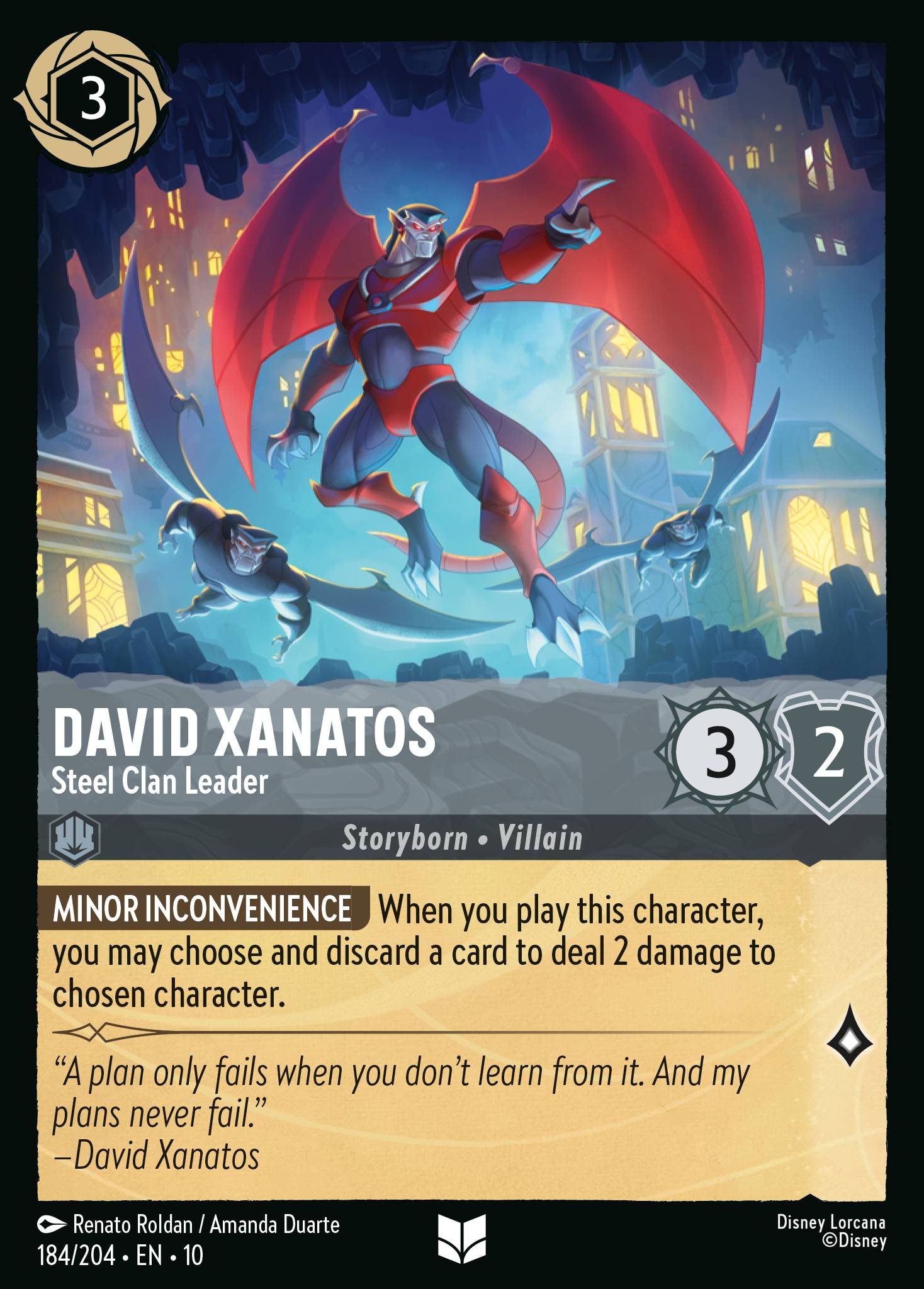
This is a two-ink Steel/Ruby shell that leans on cheap, efficient Steel bodies -- Captain Hook - Forceful Duelist, Simba - Future King, and Cinderella - Knight in Training -- to start questing and trading in the opening turns, then uses David Xanatos - Steel Clan Leader and Calhoun - Marine Sergeant to pick off whatever survives, before Ruby closes with Mulan - Elite Archer's board-wide damage and Captain Hook - Ruthless Pirate's Rush finisher. Based on confirmed market prices for eight of the nine key cards (no price was confirmed for Aladdin - Street Rat, and only a foil price for Judy Hopps), a disciplined non-foil build of the full 60 lands somewhere in the high-$20s to high-$40s -- that's an estimate built from today's prices, not a locked number, since Lorcana singles move week to week. Every Lorcana deck needs a minimum of 60 cards, at most 2 ink colors, and no more than 4 copies of any one named card, and you get exactly one free mulligan per game to fix a bad opening 7.
In This Guide
- → Why Steel/Ruby Works as a Budget Aggro-Control Pair
- → The Game Plan: Pressure Early, Hold Just Enough Removal
- → Key Cards and Their Roles in the 60
- → Filling Out the Rest of the 60
- → Mulligan Guide for This Shell
- → Common Mistakes That Sink This Deck
- → Where to Find These Singles Under Budget
- → FAQ & Quick Reference
Why Steel/Ruby Works as a Budget Aggro-Control Pair
Steel and Ruby isn't the pairing topping Set Championship standings the way Amber-based shells such as Amber/Amethyst midrange and Amber/Emerald currently do, but it might be the cheapest genuinely competitive identity you can put together in Disney Lorcana right now, and the two colors patch each other's weaknesses almost by design. Steel's whole design space is built around cheap, sturdy bodies and small removal effects -- one-cost commons that trade up in combat, plus discard-for-value pings like David Xanatos - Steel Clan Leader that clean up whatever survives the first wave of attacks. Ruby, meanwhile, is the color of direct damage and reach: it isn't going to out-grind a dedicated control deck over a long game, but it can force through the last few points of lore with a heavy hitter like Captain Hook - Ruthless Pirate, or clear a stalled board with Mulan - Elite Archer's Triple Shot when your Steel removal alone can't keep up.
That split is exactly what an aggro-control shell wants. You don't need a wall of eight-drop finishers if you're already pressuring the opponent from turn one with cheap Steel questers, and you don't need a fifteen-card removal suite if a couple of Ruby cards can just end the game before the opponent stabilizes their board. It's worth being precise about the label here, too: this isn't a true control deck that wins on card advantage over twenty turns. It's an aggressive, tempo-first shell that borrows just enough Steel removal and Resist to protect an early lead, which is what "aggro-control" means in practice for a budget list like this one. If you've already read up on the format's cheapest all-stars in Best Ruby Cards Under $10 or Best Steel Cards Under $10, several of the names below will look familiar -- this guide is about actually assembling them into 60 cards that function as a deck, not a pile of good stuff.
Budget-wise, this pairing is also unusually forgiving. Most of the Steel side of the list is made up of commons and uncommons from early sets like The First Chapter and Rise of the Floodborn, plus newer Steel-ink additions such as David Xanatos -- check current set lists and print runs before you shop, since Lorcana keeps releasing new sets and exact availability shifts over time -- and those cards typically sell for pocket change. The two genuinely pricier cards in the list are Calhoun - Marine Sergeant and Mulan - Elite Archer, and you only need a couple of copies of each -- everything else is priced like bulk-bin filler, which is exactly what makes a sub-$50 build realistic in the first place.
The Game Plan: Pressure Early, Hold Just Enough Removal
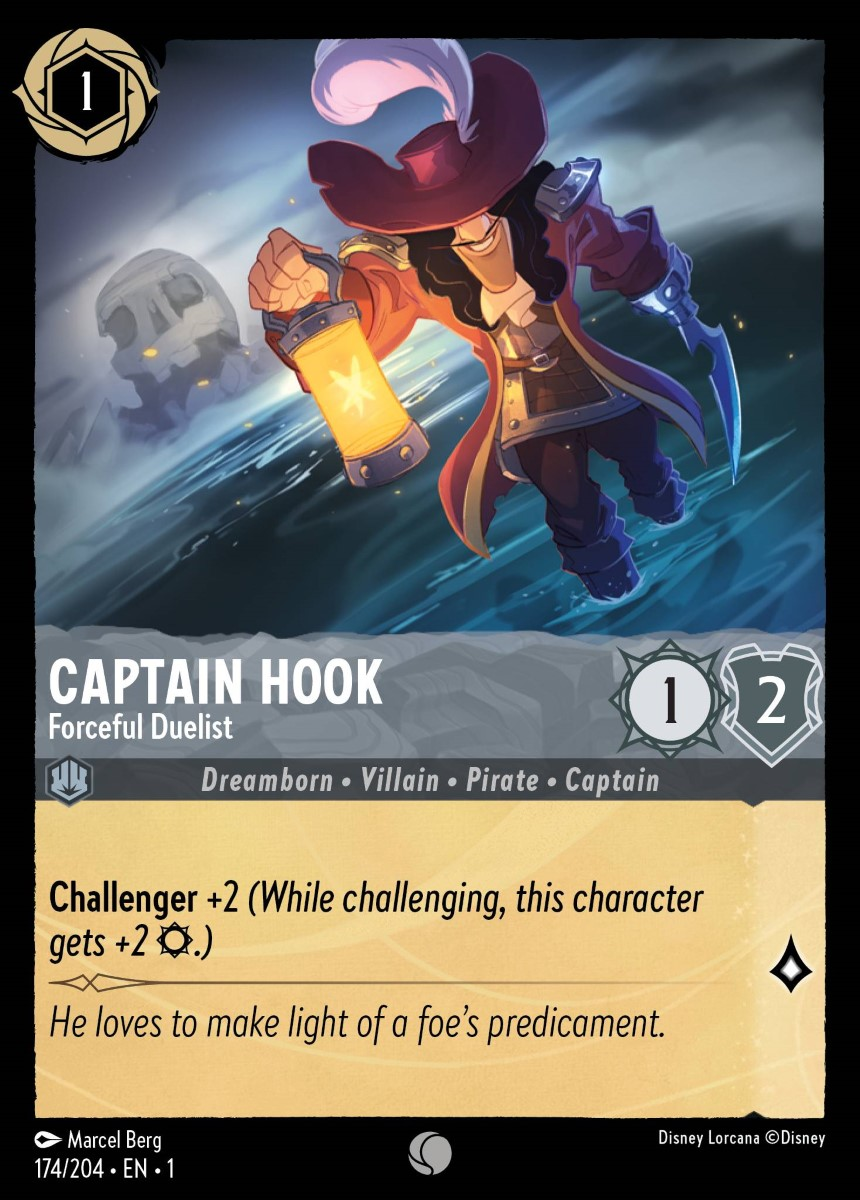
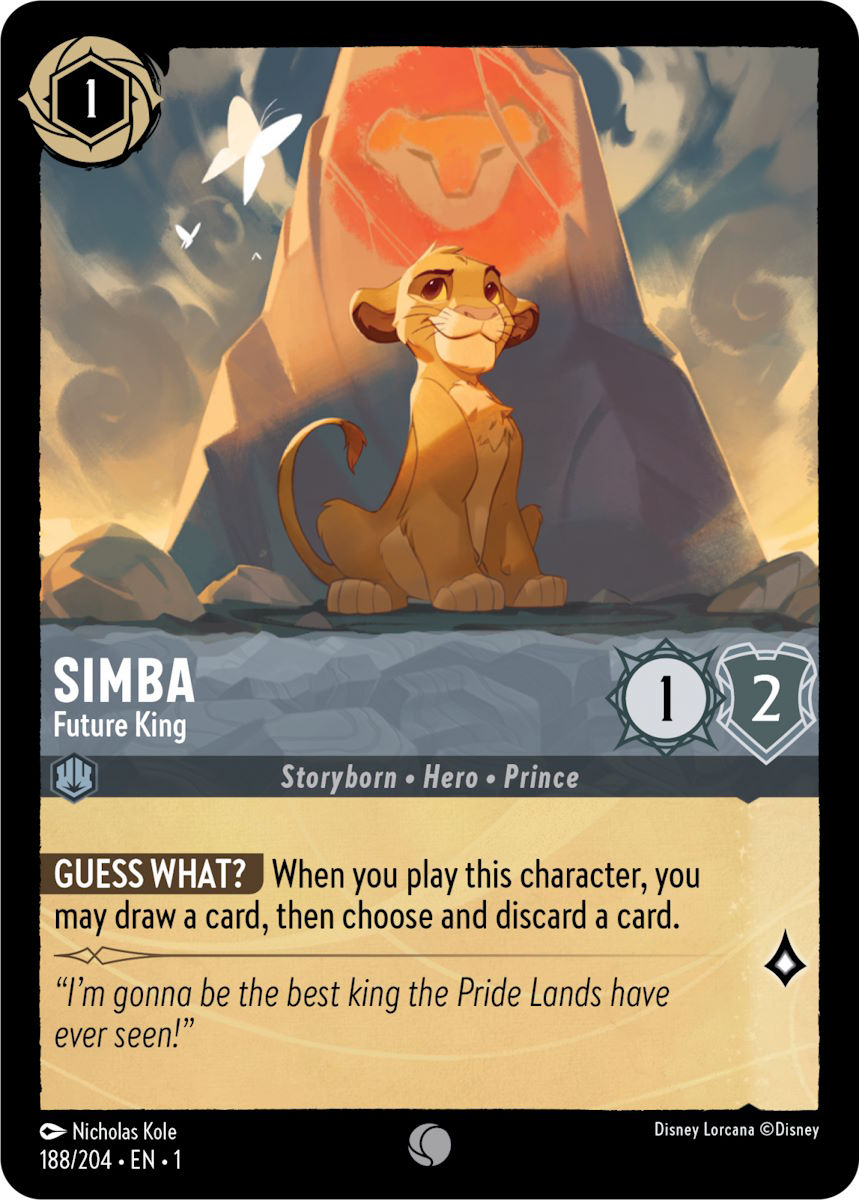
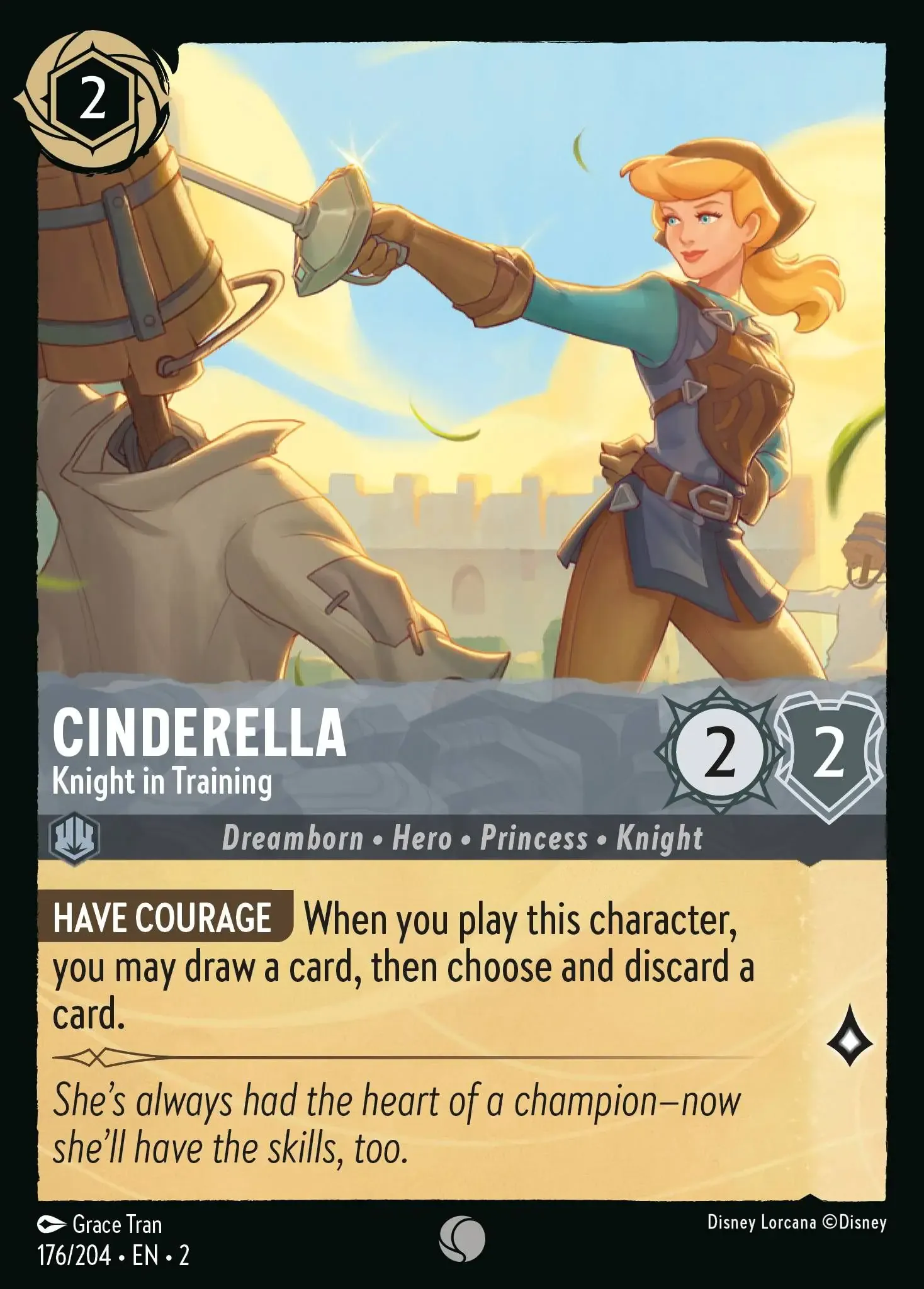
Turns one and two are about deploying cheap Steel bodies and starting the lore race immediately -- that's what tempo and the lore race actually looks like at the table, not a slogan. Captain Hook - Forceful Duelist comes down for a single ink and carries Challenger +2, meaning it jumps to 3 Strength on offense even though it's only a 1/2 body at rest -- that's enough to profitably challenge into most one- and two-cost characters your opponent plays first. Simba - Future King is a similarly cheap one-drop whose GUESS WHAT? ability lets you draw a card and then discard one, which is small but real card filtering when you're trying to find your removal or your next play on curve. Cinderella - Knight in Training does the same job a turn later at two ink, drawing and discarding to smooth out whatever you're stuck holding.
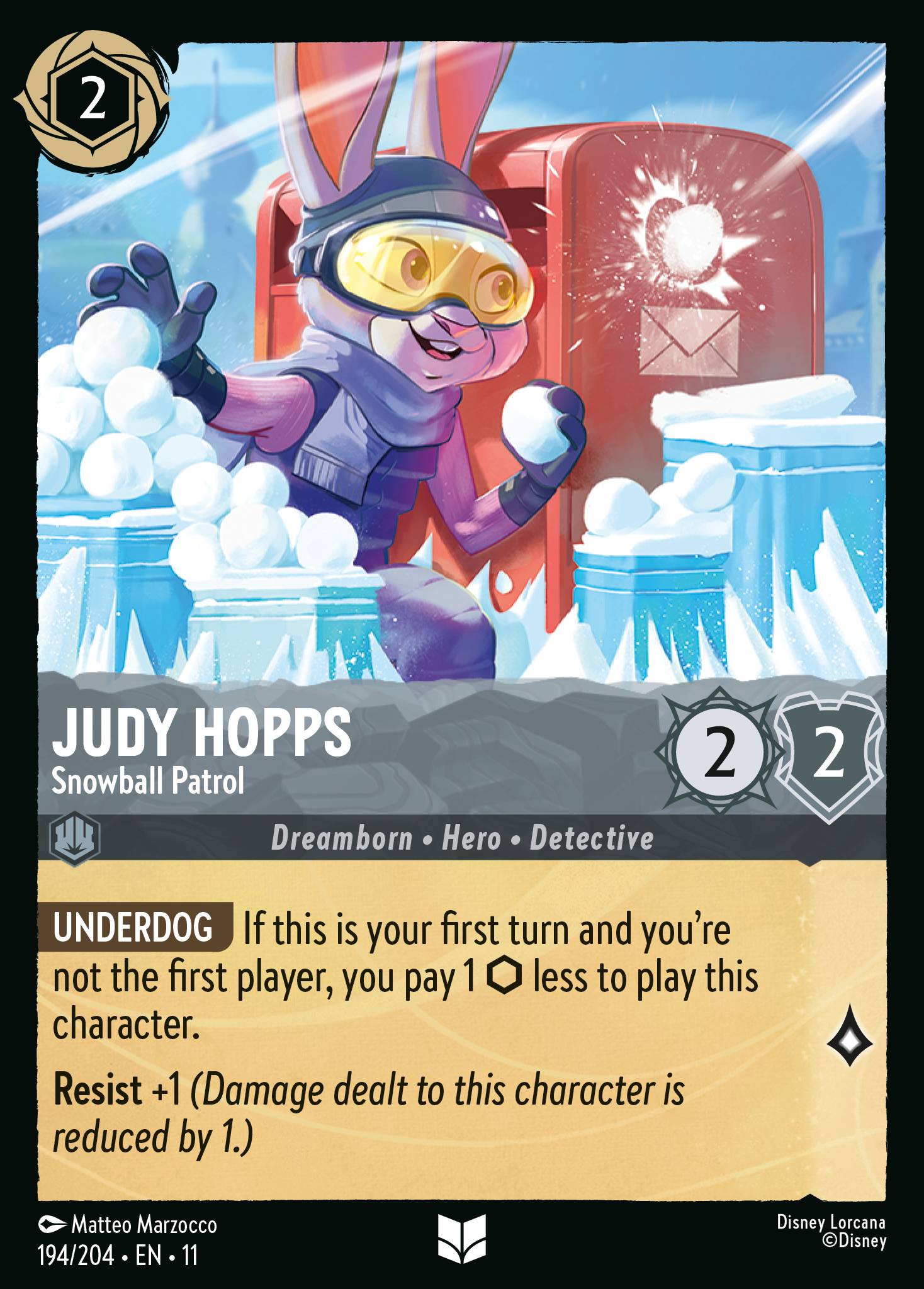
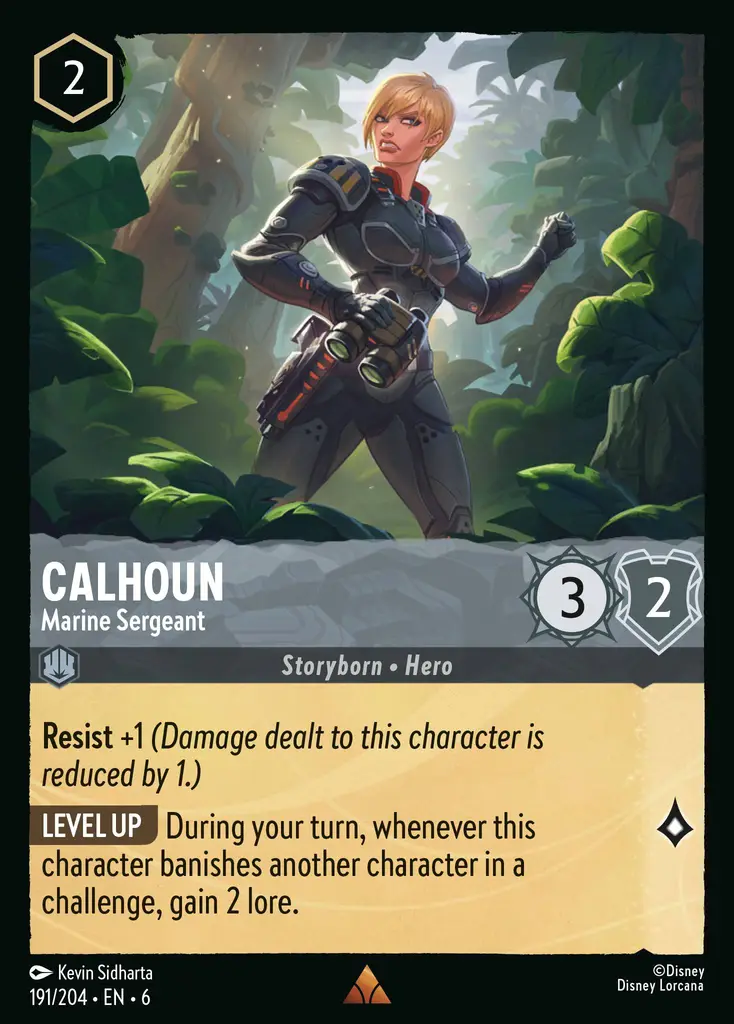
By turn three you're looking to land David Xanatos - Steel Clan Leader, whose MINOR INCONVENIENCE ability lets you discard a card to deal 2 damage to a chosen character -- enough to clear most early blockers outright or finish off something your questers already dinged. Judy Hopps - Snowball Patrol adds a defensive layer here too: she carries Resist +1, meaning any damage aimed at her is reduced by 1, which is exactly the kind of small stat buffer that wins combat math against an opposing deck's removal-light early game. Calhoun - Marine Sergeant is the card doing the most quiet work in the shell: also Resist +1, and her LEVEL UP ability means that during your turn, whenever she banishes another character in a challenge, you gain 2 lore. Against a deck that's slower to develop threats, Calhoun alone can functionally end a game a couple of turns early.
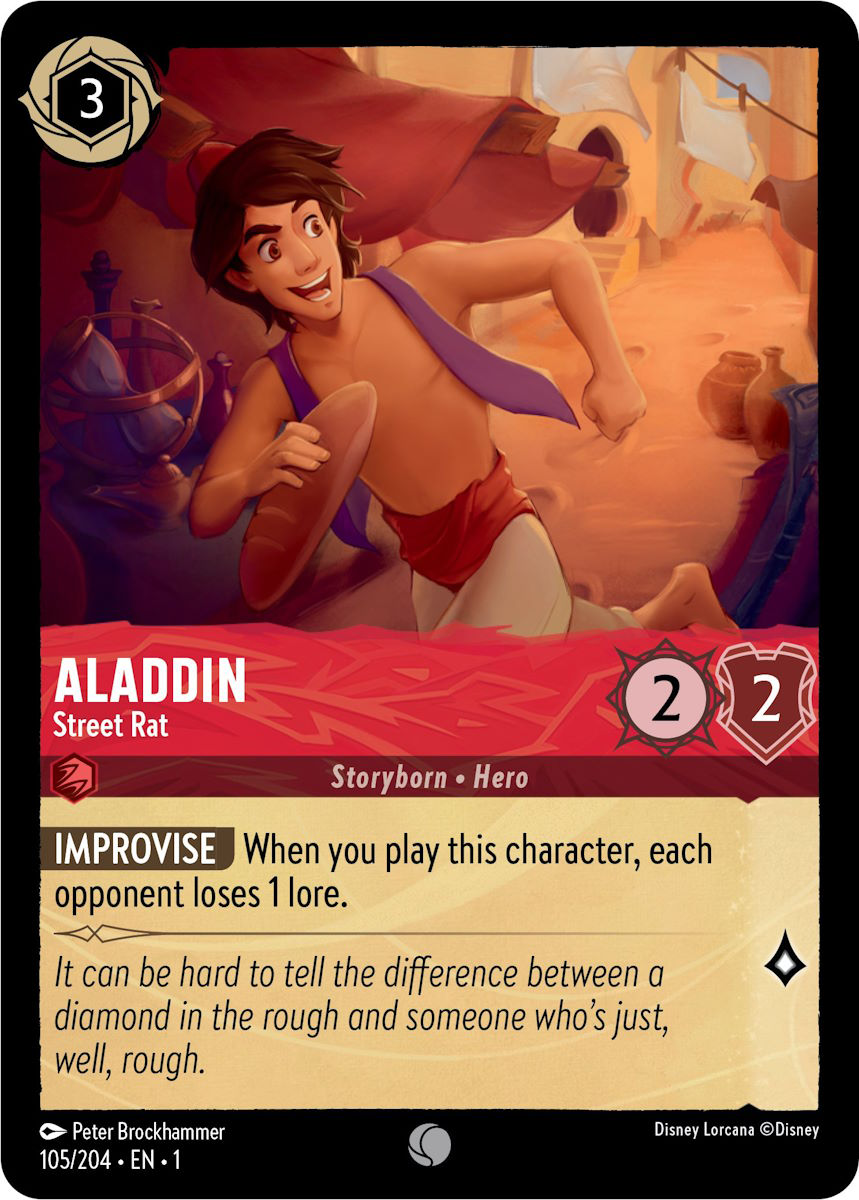
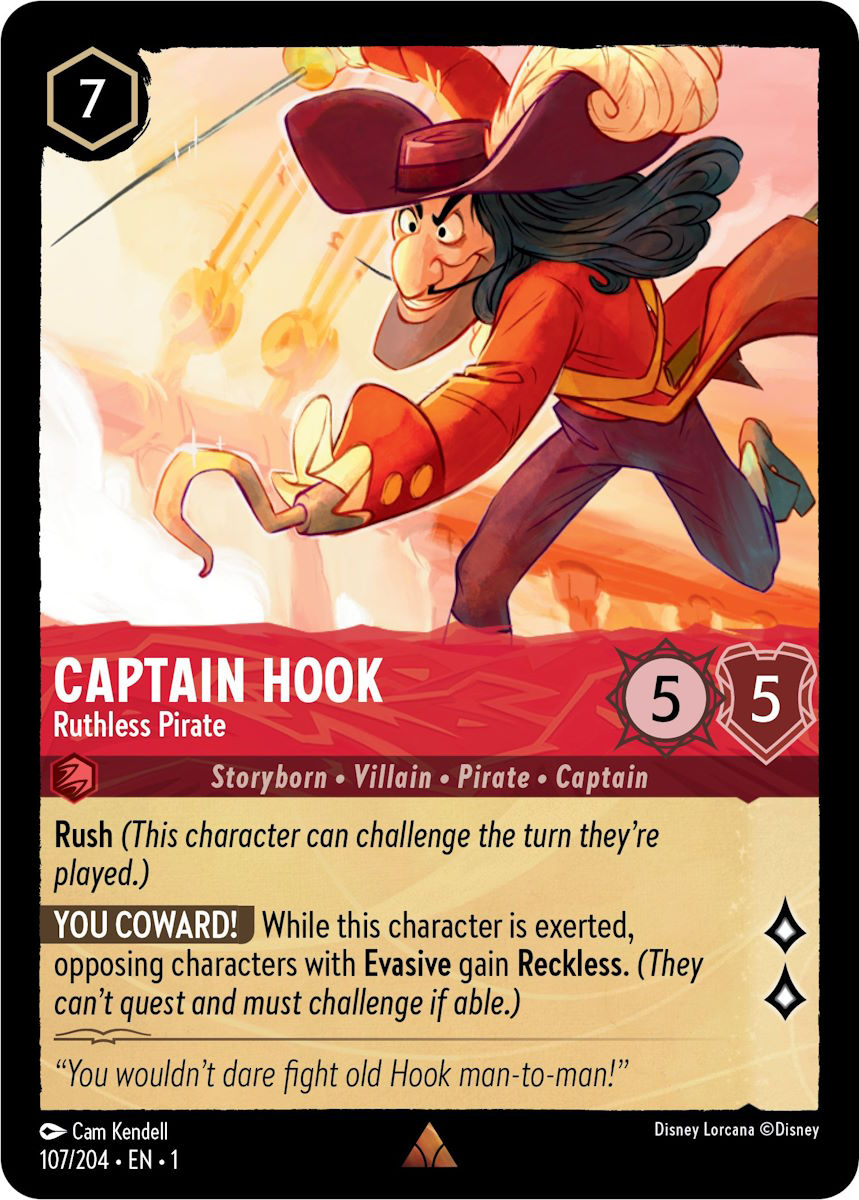
The back half of the plan belongs to Ruby. Aladdin - Street Rat's IMPROVISE ability drains 1 lore from each opponent the moment it hits the table, which is a small but free chunk of the race you don't have to earn through combat. Mulan - Elite Archer is the payoff for a long game: at 6 cost she's a 2/6/2 body, and her TRIPLE SHOT ability means that during your turn, whenever she deals combat damage to a character, you deal that same amount to up to two other chosen characters -- effectively a one-sided board wipe against a deck that's tried to stabilize with several small bodies. She also has Shift 5, though this budget list doesn't run a cheaper Mulan to shift from, so plan to hard-cast her at 6 rather than relying on that discount. Captain Hook - Ruthless Pirate is the true finisher: 7 cost for a 5/5/2 body with Rush, meaning it can challenge the turn it comes down instead of waiting for its ink to dry, and its YOU COWARD! ability strips the escape route from any Evasive character the opponent is hiding behind while Hook himself is exerted.
Key Cards and Their Roles in the 60
Below is the confirmed core of the deck -- nine real, currently obtainable cards with sourced costs, stats, and abilities, plus the role each one plays. This isn't the full 60-card list (see the next section for how to round that out), but it's the package that actually defines how the deck plays, and it's the part worth spending your budget on deliberately rather than picking up whatever's cheapest in a bulk bin.
| Card | Ink / Cost | Copies | Role | Approx. Price (each) |
|---|---|---|---|---|
| Captain Hook - Forceful Duelist | Steel / 1 | 4 | Turn-1 pressure, Challenger +2 trades | ~$0.10-$0.50 |
| Simba - Future King | Steel / 1 | 4 | Cheap body, draw-then-discard filtering | ~$0.35 non-foil |
| Cinderella - Knight in Training | Steel / 2 | 4 | Curve filler, more draw-and-discard smoothing | ~$0.07 |
| Judy Hopps - Snowball Patrol | Steel / 2 | 3 | Resist +1 speed bump, cheaper if on the draw | foil ~$2.55 (non-foil price not confirmed) |
| David Xanatos - Steel Clan Leader | Steel / 3 | 3 | Discard-to-ping removal (2 damage) | ~$0.13-$0.49 |
| Calhoun - Marine Sergeant | Steel / 2 | 2 | Resist +1 wall, +2 lore when it banishes in a challenge on your turn | ~$5.74-$6.99 non-foil |
| Aladdin - Street Rat | Ruby / 3 | 4 | Free 1-lore drain on every opponent when played | not confirmed in this research |
| Mulan - Elite Archer | Ruby / 6 (Shift 5) | 2 | Triple Shot board clear, top-end closer | ~$1.27-$6 by printing |
| Captain Hook - Ruthless Pirate | Ruby / 7 | 1 | Rush finisher, shuts down Evasive escape | ~$0.16-$0.99 |

Add up the 23 of those 27 copies that have confirmed prices and you're looking at roughly $24 at the low end, or roughly $40 at the high end -- before whatever Aladdin - Street Rat costs, since a specific market price for that card wasn't available in this research (commons from The First Chapter tend to sit near the cheap end of the range, but treat that as an educated guess rather than a confirmed figure). That leaves the remaining 33 slots in the deck to fill on whatever's left of your budget, which is what the next section covers.
Filling Out the Rest of the 60
A 60-card deck needs 60 cards, and the nine key pieces above only get you to 27. The remaining 33 slots are where you get to control the total cost most directly, because generic cheap Steel and Ruby commons -- extra one- and two-cost bodies, a handful of cheap Ruby actions or songs, and enough inkable cards to keep your curve moving -- typically sell for well under a dollar each in bulk-bin listings or marketplace lots. If you're new to deckbuilding in this game, it's worth reading Building Your First 60-Card Deck before you start buying singles piecemeal, since the curve and ink-count decisions you make in those remaining slots matter as much as the marquee cards.
The one deckbuilding wrinkle worth flagging here is inkable status. Not every card in your ink colors can be played face-down as ink to pay for your other cards -- that's determined per-card, and it's worth understanding before you build your fill slots, which the inkable/uninkable breakdown covers in more depth. As a rule of thumb for a budget aggro-control shell like this one, you want most of your filler slots to be inkable so you're never stuck with a hand of cards you can't afford to play, and you want your curve weighted toward one, two, and three-cost cards since that's where this deck actually wins its games -- the nine key cards above already cover most of what you need at four cost and up.
Mulligan Guide for This Shell
Lorcana's mulligan rule is simple and worth restating exactly, because it's easy to misremember: each player draws a 7-card opening hand, then may place any number of those cards on the bottom of their deck, in any order, and draw back up to 7. You only get to do this once per game, and there's no hand-size penalty for using it -- you don't end up with 6 cards instead of 7 just because you mulliganed. For a full walkthrough of how to read a hand before deciding, see the dedicated mulligan guide.
For this specific deck, the hand you're looking for has at least one playable one-drop (ideally Captain Hook - Forceful Duelist or Simba - Future King) and a follow-up play for turn two or three, because the entire plan depends on getting ahead on board early rather than catching up. A hand with two or three expensive cards and nothing to do before turn three is a strong candidate to bottom, even if those cards are individually powerful -- Mulan - Elite Archer and Captain Hook - Ruthless Pirate are excellent finishers, but they're dead weight in an opening hand where you have no way to survive to the turns where they matter. Conversely, don't be afraid to keep a hand that's a little light on inkable cards if it has strong early plays; this deck wants to be doing something on turns one and two more than it wants a perfectly smooth seven-turn curve mapped out in advance.
Common Mistakes That Sink This Deck
The second most common mistake is overspending on Calhoun - Marine Sergeant copies because she's clearly the best card in the list. At roughly $6-7 a copy for the non-foil printing, going up to three or four copies of her alone can eat a third to more than half of your total budget before you've bought a single other card. Two copies is enough to see her at a reasonable rate across a 60-card deck without blowing past the article's whole premise -- if you want more consistency on her specifically, that's a reasonable upgrade path once you've got the rest of the deck built and have more room in the budget.
The third mistake is misjudging matchups. This shell is built to fight from ahead, which means it's naturally favored against decks that are even slower to develop a board, and it's the one applying pressure against decks that are also trying to be aggressive -- understanding how to beat aggro matters here even though this is nominally an aggressive deck itself, because your removal and Resist bodies are what let you win races against other fast starts rather than just trading evenly. If you're weighing this shell against other budget options in a similar price range, it's worth comparing it to something like the Amber/Steel midrange budget list before you commit -- the two decks want to attack the format from different angles, and one may suit your local meta better than the other.
Geeky Domain doesn't carry Lorcana singles directly, so these searches point you to active listings for the Steel and Ruby cards this deck needs.
As an Amazon Associate, Geeky Domain earns from qualifying purchases. eBay links are affiliate links; Geeky Domain may earn a commission at no extra cost to you.
Where to Find These Singles Under Budget
Because this deck's cost lives almost entirely in commons and uncommons, buying loose singles from a marketplace will usually beat buying booster packs and hoping to pull them -- packs are a gamble on rarity, while a search for "Simba Future King" or "Cinderella Knight in Training" gets you exactly the card at a known price. If you haven't shopped for loose Lorcana cards before, the guide to buying Lorcana singles walks through the tradeoffs between marketplaces, local game stores, and bulk lots.
One thing worth budgeting a few extra minutes for: condition and authenticity checks matter more when you're buying dozens of cheap cards from different sellers than when you're buying one or two expensive ones. A handful of damaged commons won't ruin your deck functionally, but it's still worth knowing what to look for, and how to spot a fake Lorcana card is worth a skim before you buy from an unfamiliar seller, especially for anything approaching the pricier end of this list.
FAQ & Quick Reference
How much does this Steel/Ruby budget deck actually cost to build? Based on confirmed individual card prices, eight of the nine key cards run roughly $24-$40 depending on where in each card's price range you buy (no market price was confirmed for Aladdin - Street Rat), with the remaining 33 filler slots typically adding a few more dollars in cheap commons. A disciplined non-foil build realistically lands in the high-$20s to high-$40s, though exact totals shift with daily market prices and which printings you choose.
What makes Steel and Ruby a good pairing instead of just playing pure aggro? Steel supplies cheap, efficient bodies plus small removal effects, while Ruby supplies direct damage and a hard-hitting Rush finisher. That combination lets the deck protect an early lead with removal and Resist rather than just racing and hoping the opponent doesn't stabilize.
How many copies of Calhoun - Marine Sergeant do I really need? Two copies is a reasonable budget target. At roughly $6-7 per non-foil copy, going up to three or four starts to dominate the deck's total cost for a card that, while excellent, isn't strictly required in higher counts to function.
Should I mulligan a hand with no one-drop? Usually yes if it also lacks a turn-two play, since this deck's plan depends on establishing board presence in the first couple of turns. Remember you only get one mulligan per game, with no penalty for taking it, so use it on hands that genuinely can't function rather than ones that are merely suboptimal.
What does Judy Hopps - Snowball Patrol's Underdog ability actually require? It only discounts her cost by 1 ink on your very first turn, and only if you are not the first player -- meaning you're on the draw. On the play, or on any later turn, she costs her full 2 ink.
Can I upgrade this deck later without a full rebuild? Yes. The 27-card core is the part worth keeping stable; the 33 filler slots are where you'd swap in stronger (and pricier) Steel and Ruby cards as your budget grows, without touching the deck's fundamental plan.
Is this deck good against control decks? It's built to be, since the entire plan is applying pressure before a slower deck can stabilize -- but a genuinely resilient control shell that survives the early turns can still grind this list out, since it doesn't carry a deep late-game card advantage engine of its own.
Do I need exactly 60 cards, or can I run more? Sixty is the minimum, not a hard cap -- but every card above 60 dilutes your odds of drawing your key pieces, so competitive lists (budget or otherwise) almost always sit at exactly 60.
Verdict: A Real, Cheap Way Into Steel/Ruby.
This shell isn't a proxy for a "real" deck you'll upgrade away from later -- it's a functional aggro-control list built on genuinely good cards that happen to be cheap right now. Keep Calhoun to two copies, mulligan aggressively for an early play, and let cheap Steel bodies do the early work while Mulan and Ruthless Pirate close it out.
© GEEKYDOMAIN.COM | Strategy Powered by Data