

Shift, Explained: Saving Ink & Tempo
Lorcana's most strategically dense keyword, demystified. How Shift actually works, what carries over, the timing decisions that separate good plays from great ones, and the deckbuilding implications most players miss.
Of all the keywords Lorcana has introduced, Shift is probably the one new players misunderstand most often — not because the rules text is unclear, but because the strategic depth hidden inside that rules text is genuinely substantial. On the surface, Shift looks like a discount: pay a smaller number to play a powerful character. In practice, Shift is a complete deckbuilding decision, a turn-timing puzzle, and one of the most rewarding skill-expression mechanics in the game.
Master Shift and you'll cheat out big threats two or three turns ahead of your opponents, sneak attack into damaged characters who suddenly hit with double the lore, and tempo your way through games other decks can't keep up with. Misunderstand it and you'll find yourself building toward Shifts that never trigger, paying real ink for what should have been free swings, and losing games to opponents who simply read the rules text more carefully.
This guide is the strategic deep-dive Shift deserves: the actual rules, the things that carry over (and the things that don't), the timing decisions that decide games, the deckbuilding implications that affect every list with Shift cards in it, and the small interactions with other cards that catch even experienced players off-guard.
The Short Version
Shift lets you play a powerful character at a reduced ink cost by playing it on top of another character that shares its main name. The covered character is completely replaced — stats, abilities, lore values all change to the new card — but state carries over: damage transfers, exerted/ready state transfers, and most critically, the new character can act immediately because "ink dried" status transfers too. Shift counts as "playing" a character, so it triggers all "when played" effects. You can Shift across ink colors as long as the main name matches, and you can Shift onto Shifted characters (stacking). The whole stack acts as one unit for removal — banish the top, lose them all. Shift cards require cheap setup versions in your deck to enable them, so they're a deckbuilding pair, not a single slot.
→ More Lorcana Guides
In This Guide
- → The Core Shift Rules
- → What Carries Over (and What Doesn't)
- → The Real Math: How Much You Actually Save
- → The Tempo Trick: Bypassing Ink Drying
- → Shift Variants & Edge Cases
- → Key Card Interactions
- → Deckbuilding Around Shift
- → When to Shift (and When to Wait)
- → Common Shift Mistakes
- → FAQ & Quick Reference
The Core Shift Rules
Shift is a keyword found on certain character cards, written as "Shift X" where X is the discounted ink cost. The rules text on the card itself reads roughly: "You may pay X to play this on top of one of your characters named [Same Name]." Under the hood, here's what's actually happening:
- 1. You can always play a Shift card normally. Cards with Shift have a regular ink cost in the top-right corner. You can pay that full cost and play them like any other character — Shift is optional, not mandatory.
- 2. Or you can Shift them on top of an existing character. Pay the lower Shift cost and put the new card on top of one of your characters that shares the same main name (everything before the comma — "Mickey Mouse" for any "Mickey Mouse, X" character).
- 3. Ink colors don't have to match. You can Shift an Amber character onto an Amethyst character (or any color combo) as long as the main name matches. The two cards' inks can be completely different.
- 4. The covered card is fully replaced. Strength, Willpower, Lore, abilities, classifications — everything the bottom card had is now governed by the top card. The cards become a single unit; the top card is the one in play.
- 5. Shift counts as "playing" a character. All "when you play a character" triggers fire when you Shift, both your effects and your opponent's. This is critical for engine decks.
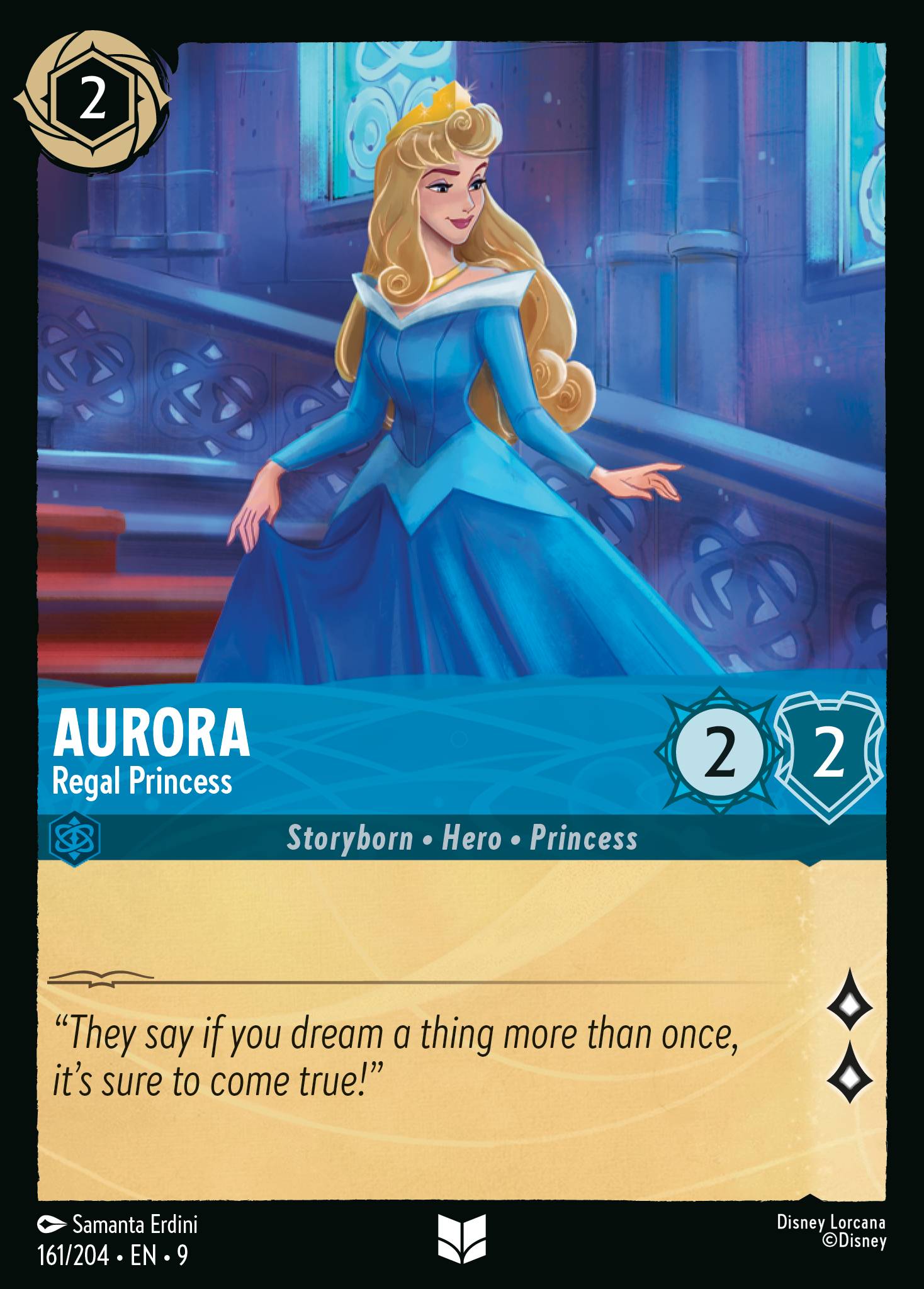
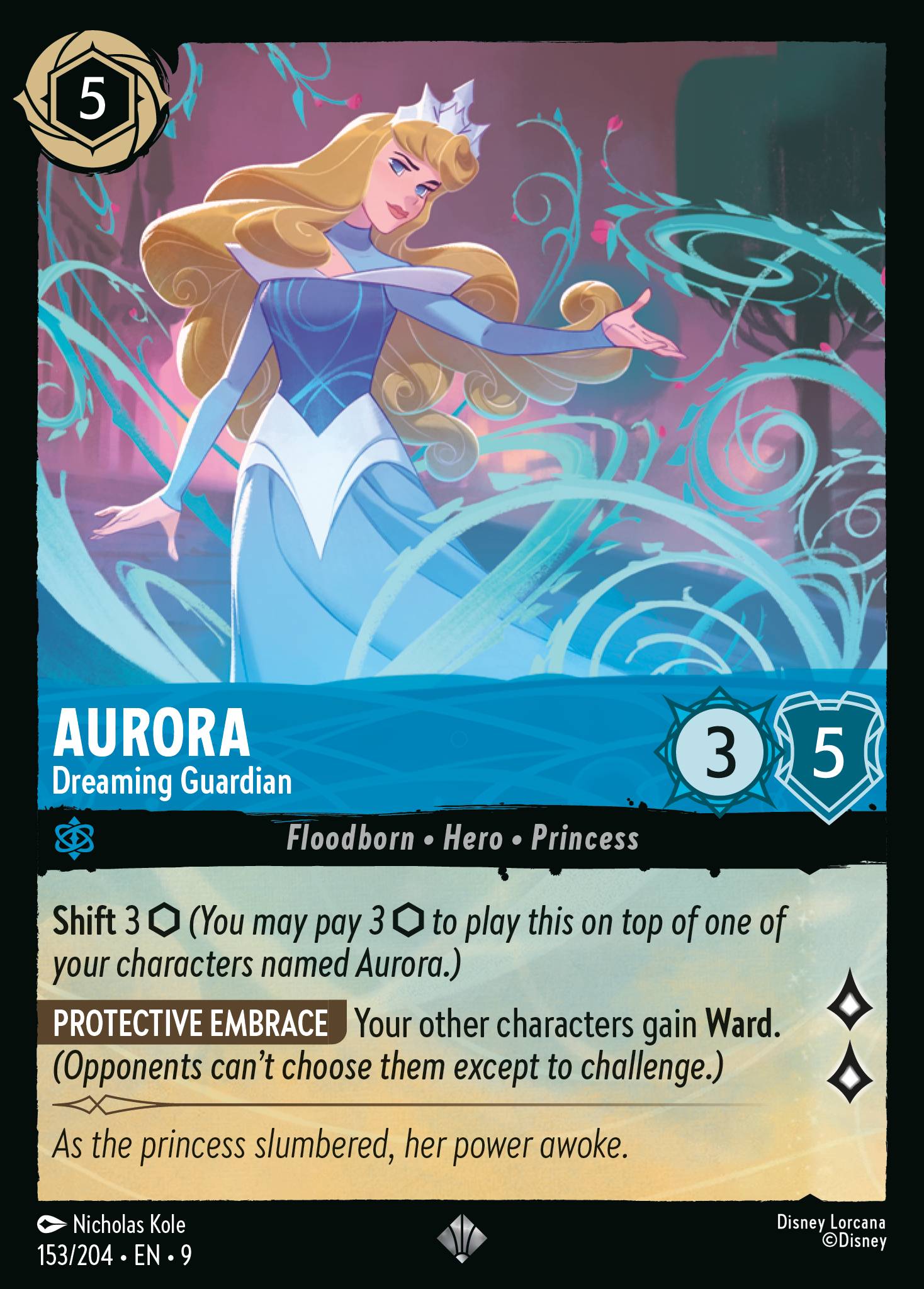
- 6. You can Shift onto a Shifted character. Stacks can grow. Aurora, Regal Princess → Aurora, Lore Guardian → Aurora, Dreaming Guardian is a legal sequence of three cards in one stack, paying only the Shift cost each step.
What Carries Over (and What Doesn't)
This is where Shift gets strategically interesting. The Shifted character inherits the state of the character it landed on, but not its attributes. Practically:
Carries Over
- Damage — any damage on the bottom character stays on the new one.
- Exerted/ready state — if the bottom character was exerted, the new one is too.
- "Ink dried" status — the new character can quest/challenge/sing immediately if the bottom card was already in play long enough to dry.
- Equipped items and attached effects — Items targeting the character continue to apply to the new top card.
- Other lasting effects — "this character can't be challenged this turn," "this character gets +2 strength," etc., transfer.
Does Not Carry
- Bottom card's stats — Strength, Willpower, Lore all switch to the top card's values.
- Bottom card's abilities — the original character's effects are gone; only the top card's abilities apply.
- Bottom card's classifications — the new card's classifications (Princess, Hero, etc.) are what counts, even if different.
- Bottom card's ink color — the stack is now governed by the top card's ink for color-matters effects.
The Damage-Carries Trick
Worth pausing on: damage carrying over is a good thing when used correctly. If your starter character takes 2 damage from a challenge, Shifting a high-Willpower character on top doesn't heal the damage — but it does mean the character now has a much bigger health buffer to absorb future hits. You're effectively trading a weak version that's hurt for a strong version that's also hurt, where the hurt matters less. The conventional wisdom that "carried damage is a downside" is half the story; against the right opponents, it's a non-issue.
The Real Math: How Much You Actually Save
Surface-level, Shift looks like a massive discount — "play a 6-cost character for 4 ink!" But the real ink math is more subtle, because you had to play the bottom character too. Consider the canonical example:
Aurora, Regal Princess (2 ink) → Aurora, Dreaming Guardian (Shift 3 instead of 5)
Total ink spent: 2 + 3 = 5 across two turns.
Casting Aurora, Dreaming Guardian normally: 5 ink, one turn.
You pay no extra ink total — and you spread it over multiple turns, so you got a body on the board in the meantime.
So what are you actually getting out of splitting the cost? Three things, and they're the entire reason Shift exists as a mechanic:
- Tempo. You get a character into play on turn 3 instead of waiting until turn 7. Even if your turn-3 character is weak, it's questing for lore, contesting the board, or absorbing challenges — all while you're building toward the big version.
- Ink curve smoothing. 7-cost cards are awkward to cast on turn 7 — you've spent that whole turn on one card. Splitting it as 3 ink + 5 ink lets you play other cards alongside on each turn, dramatically improving your tempo over the same 8-ink window.
- Immediate action. This is the biggest one, and it has its own section below. A normally-cast 7-cost character has wet ink and can't quest until next turn. A Shifted 7-cost character whose bottom card already had dry ink can quest the turn it arrives.
The "you save 1-2 ink overall" math undersells Shift dramatically. The real benefit isn't the ink — it's everything you got to do with the early turns while building toward the Shift.
The Tempo Trick: Bypassing Ink Drying
Here's the rule that separates new Shift players from experienced ones: a freshly Shifted character can quest, challenge, or sing immediately if the character beneath it had been in play long enough for its ink to dry. This is the single most powerful thing Shift does, and most beginners miss it for weeks.
In Lorcana, characters normally can't quest or challenge the turn you play them — their ink hasn't "dried" yet. You have to wait a turn. This wet-ink rule is a major balancing mechanism in the game; it's why you can't drop a 7-cost finisher and immediately swing for 5 lore.
Shift bypasses this entirely. If you played your cheap setup character on turn 3, by turn 5 their ink has dried — they can act normally. When you Shift the big version on top during turn 5, the wet-ink status doesn't reset. The new top card inherits the "ink dry" state of the card beneath. You can Shift on turn 5 and immediately quest with the new character for full lore that same turn.
This is why Shift wins games. A normally-cast 7-cost character with 4 lore sits on the board for a turn doing nothing useful. A Shifted 7-cost character with 4 lore quests immediately, dealing real damage to your opponent's life total the moment it hits play. That's a one-turn tempo swing that's effectively impossible without Shift — and it's why decks built around Shift can race opponents who outscale them on raw power.
Shift Variants & Edge Cases
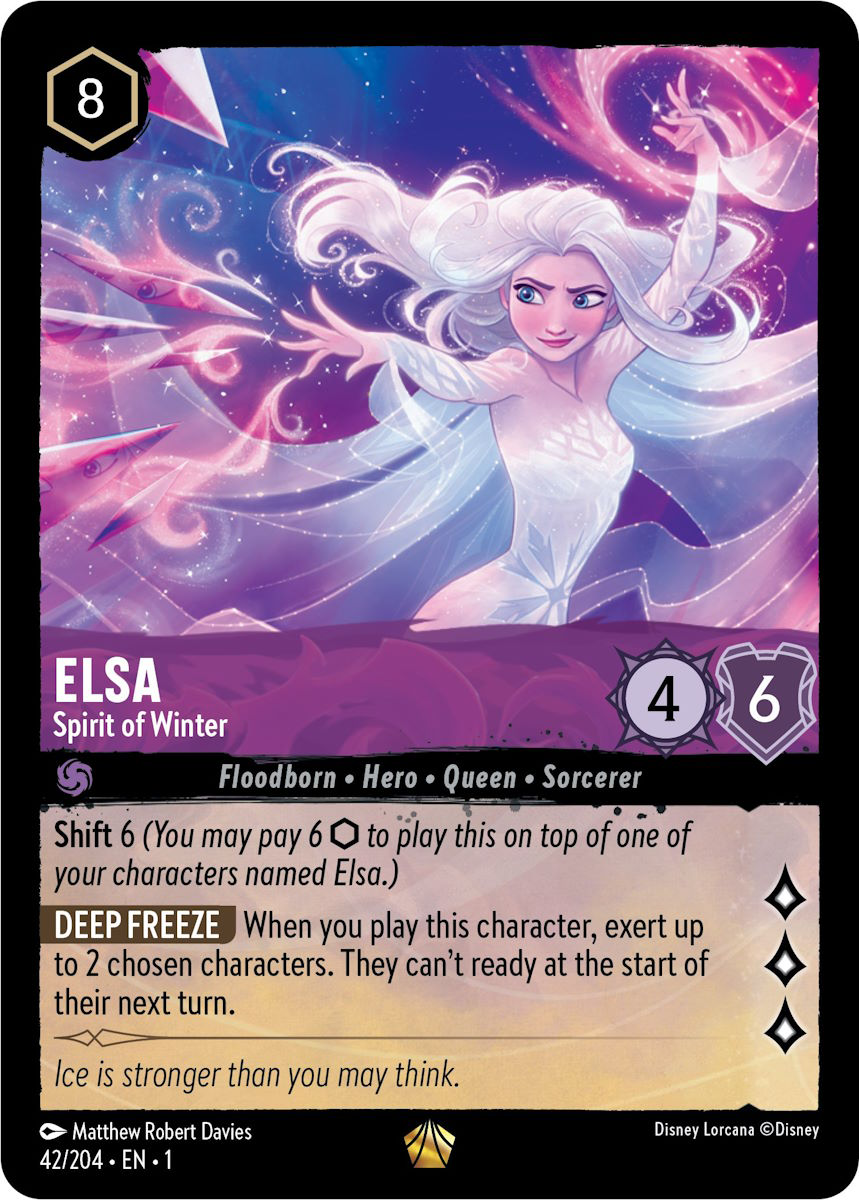
As Lorcana has expanded, Ravensburger has introduced Shift variants that broaden the mechanic. The current ones worth knowing:
- Standard Shift. The base mechanic — same main name required, any ink color OK. The vast majority of Shift cards work this way.
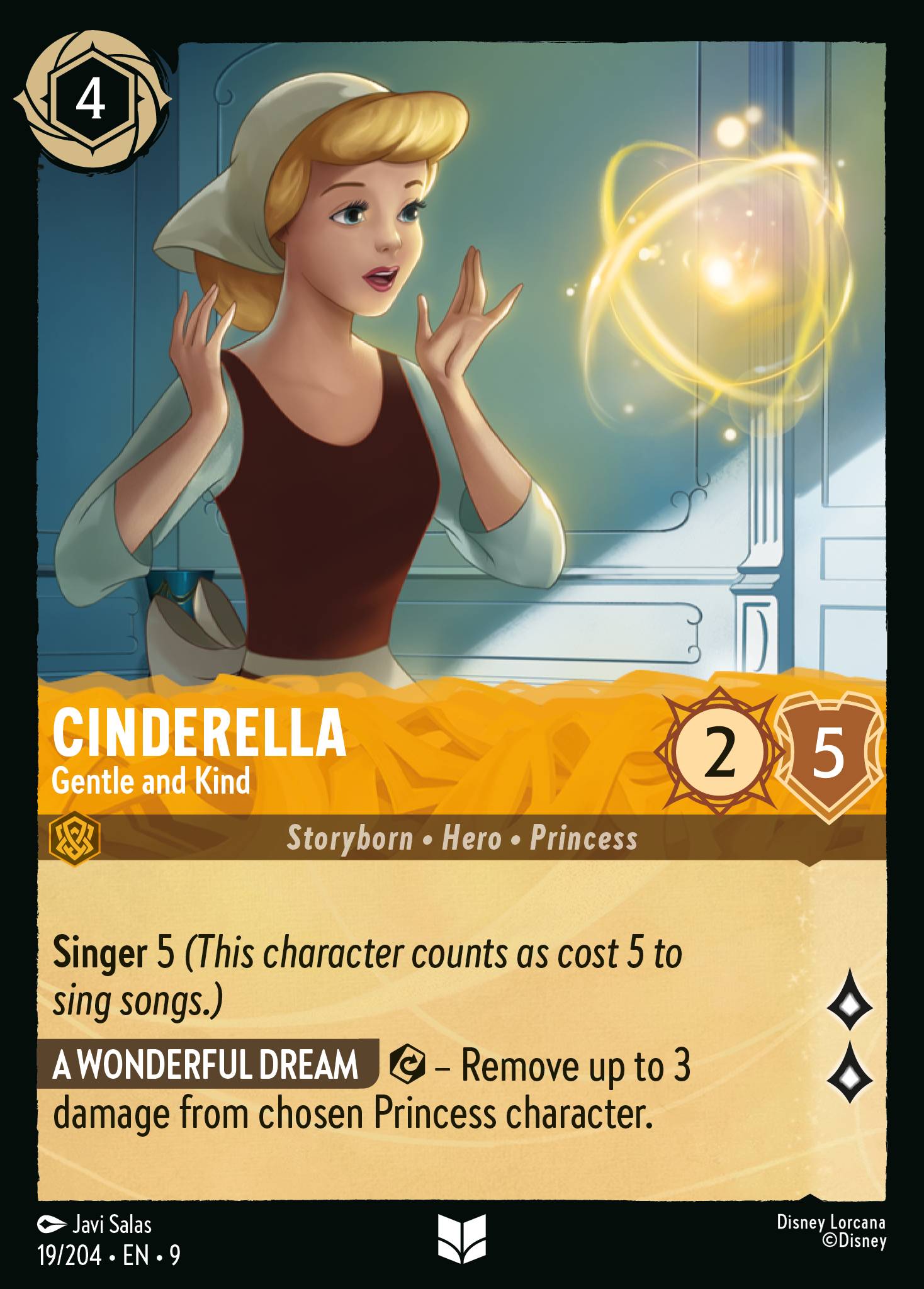
- Classification Shift. A variant where the Shift cost can be paid to play onto any character with a particular classification, not just one with the same name. Example: "Shift 4 (You may pay 4 to play this on top of one of your Princess characters)." Much more flexible — you don't need a same-named setup card, any Princess will do.
- Cost-substitute Shift. Some Shift cards substitute a different cost for ink — discarding cards, banishing items, or other resources. The mechanic is the same; only the resource you pay is different.
- Shift in every ink. Worth knowing as trivia: Shift and Sing Together are the only two keywords that appear in all six of Lorcana's inks. Every color has Shift cards, which makes the mechanic universally relevant for deckbuilding across the color pie.
Key Card Interactions
Several specific interactions come up often enough to know cold:
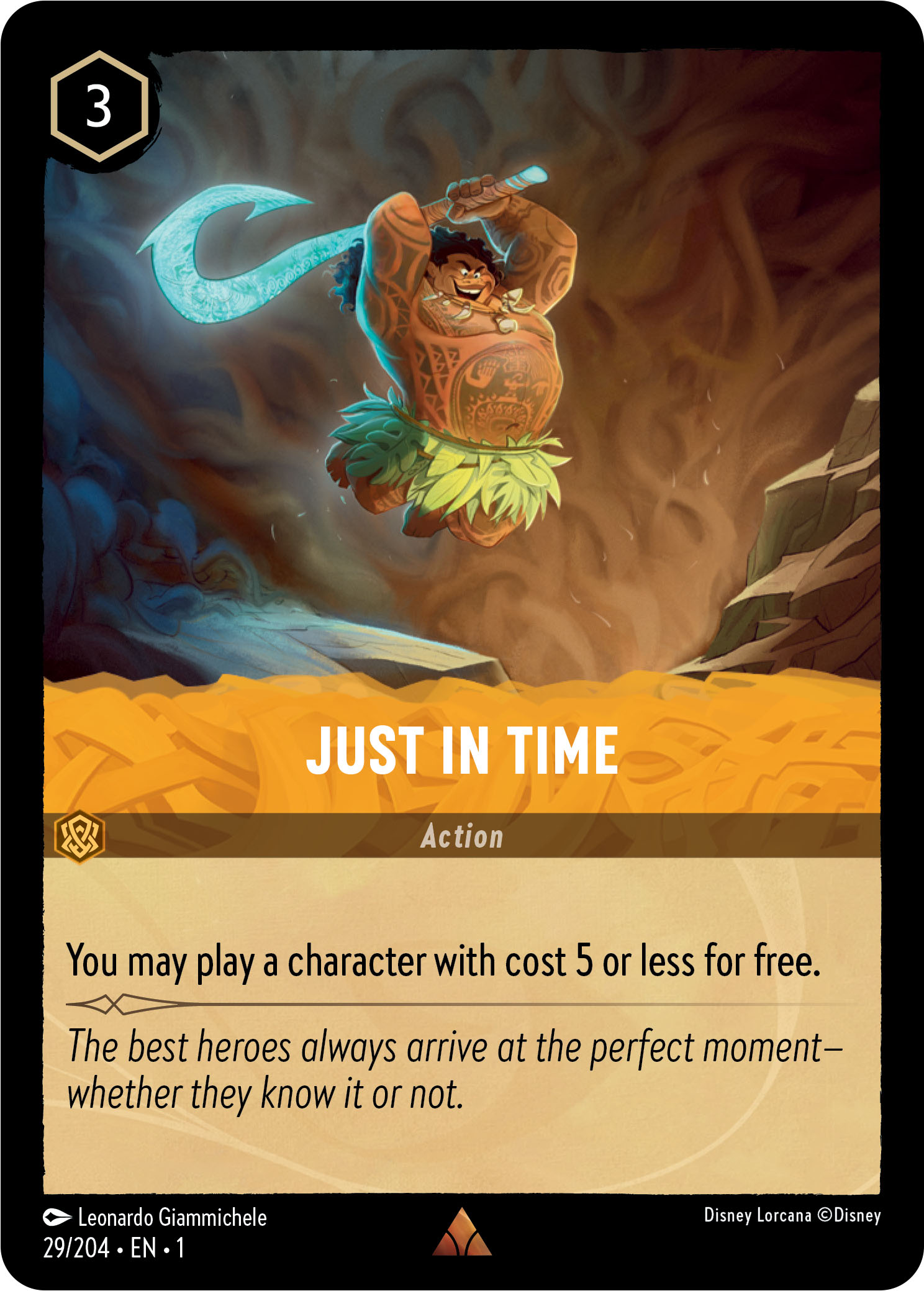
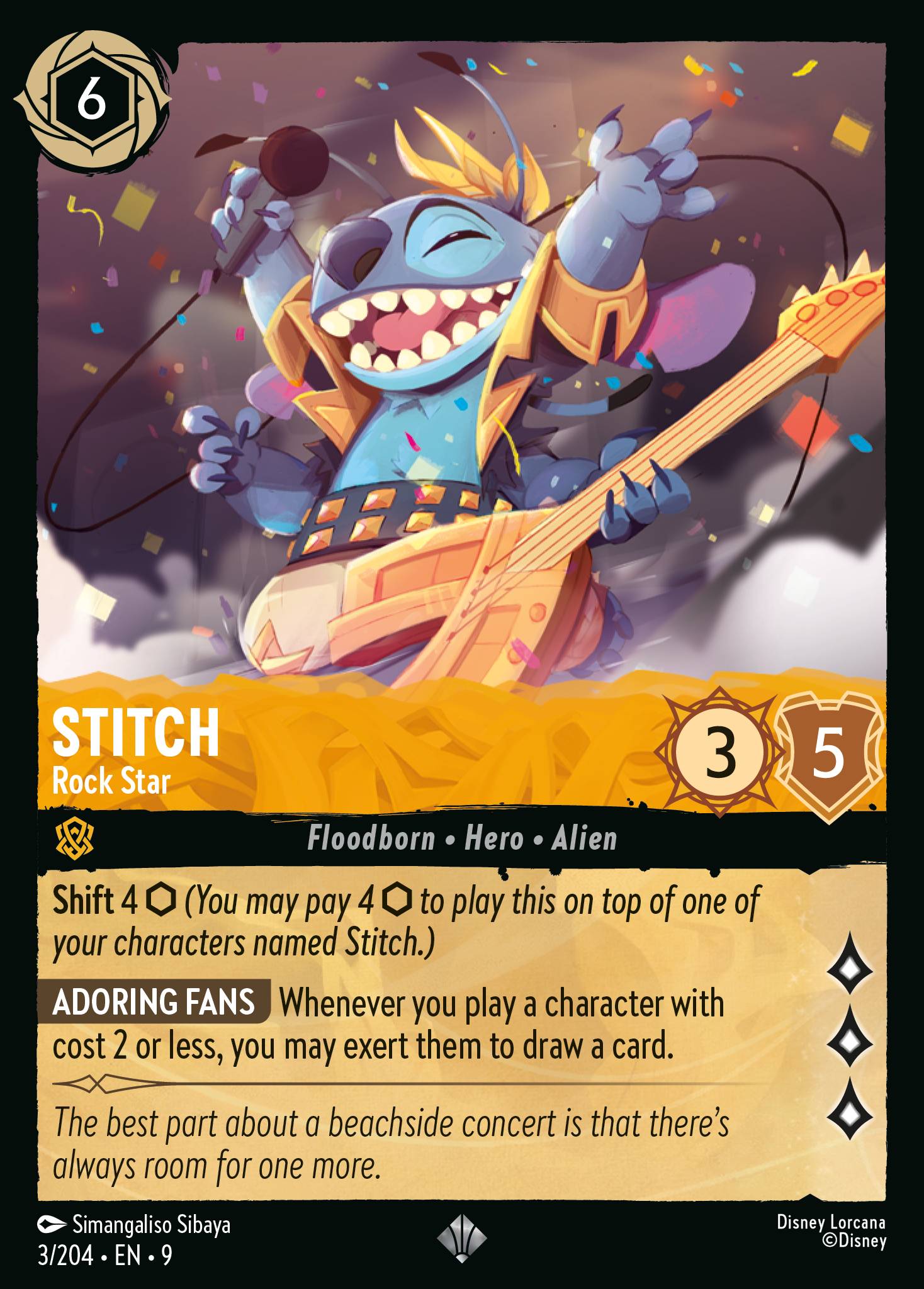
- Just in Time and "real cost" effects. The Just in Time action lets you play a character with cost 5 or less for free. The card's real (printed) cost is what matters, not the Shift cost you'd actually pay. Stitch, Rock Star (real cost 6) cannot be made free by Just in Time even when you're Shifting him for 4 — his real cost is still 6, and 6 is more than 5. This trips up new players constantly.
- Cost-reduction effects like Lantern. Items that reduce the cost of your next character (Lantern, for example) do reduce Shift costs. Exert a Lantern to reduce by 1; you'll pay one less ink to Shift. Multiple cost-reducers stack — exert two Lanterns, pay two less ink.
- Removal hits the whole stack. If your Shifted character is banished, all cards in the stack go to the discard. If a bounce effect returns it to your hand, every card in the stack returns. There's no "the bottom card survives" — the stack is one unit for the purposes of being removed from play.
- Send to inkwell. If an effect (like Let It Go) sends a Shifted character to the inkwell, the whole stack goes to the inkwell, generating ink equal to the number of cards in the stack. A two-card Shift stack becomes 2 ink, a three-card stack becomes 3 ink. Worth knowing for combo planning.
- "When you play a character" triggers. Shift counts as playing — so any "when you play a character" triggers (yours and your opponent's) fire when you Shift. This is huge in engine decks built around play-trigger effects.
Deckbuilding Around Shift
Shift cards are a deckbuilding pair, not a single slot. To Shift a powerful version of a character, you need a cheaper version of that same character already in your deck and reasonably likely to be in play when the Shift card arrives in hand. That has real implications:
- Run the setup version. If you want to Shift Aurora, Dreaming Guardian, you need Aurora, Regal Princess (or another Aurora) actually in your deck — ideally at 3 or 4 copies so you reliably draw one. Running the Shift target without the setup is a slot that does nothing if you don't naturally draw both.
- Setup characters need standalone value. Your 3-cost Aurora isn't just a Shift enabler — she's a card you'll cast even in games where you never Shift. Pick setup versions that are playable on their own merits (good lore, decent stats, or a useful ability), not "I'll just include this because it shares a name."
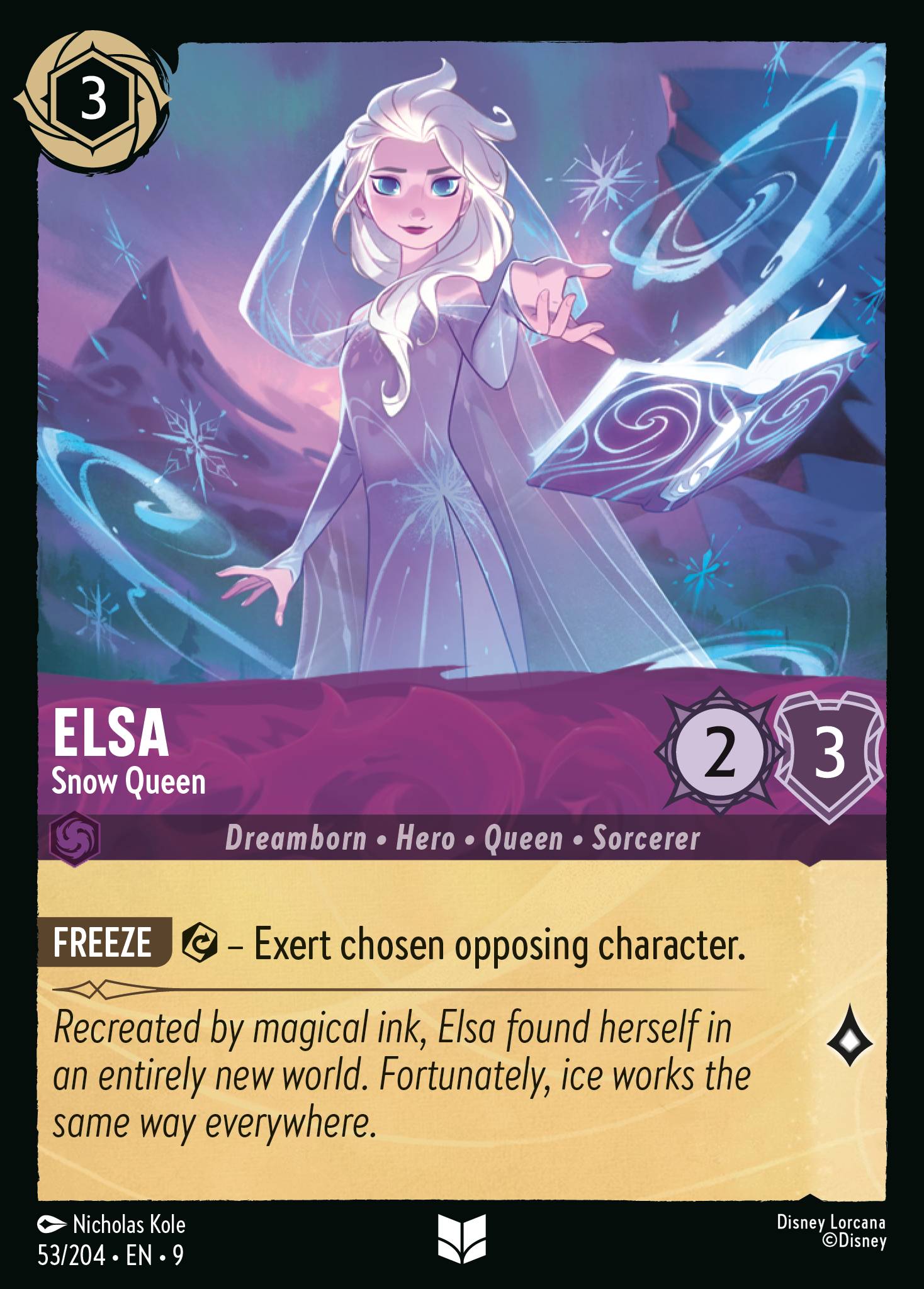
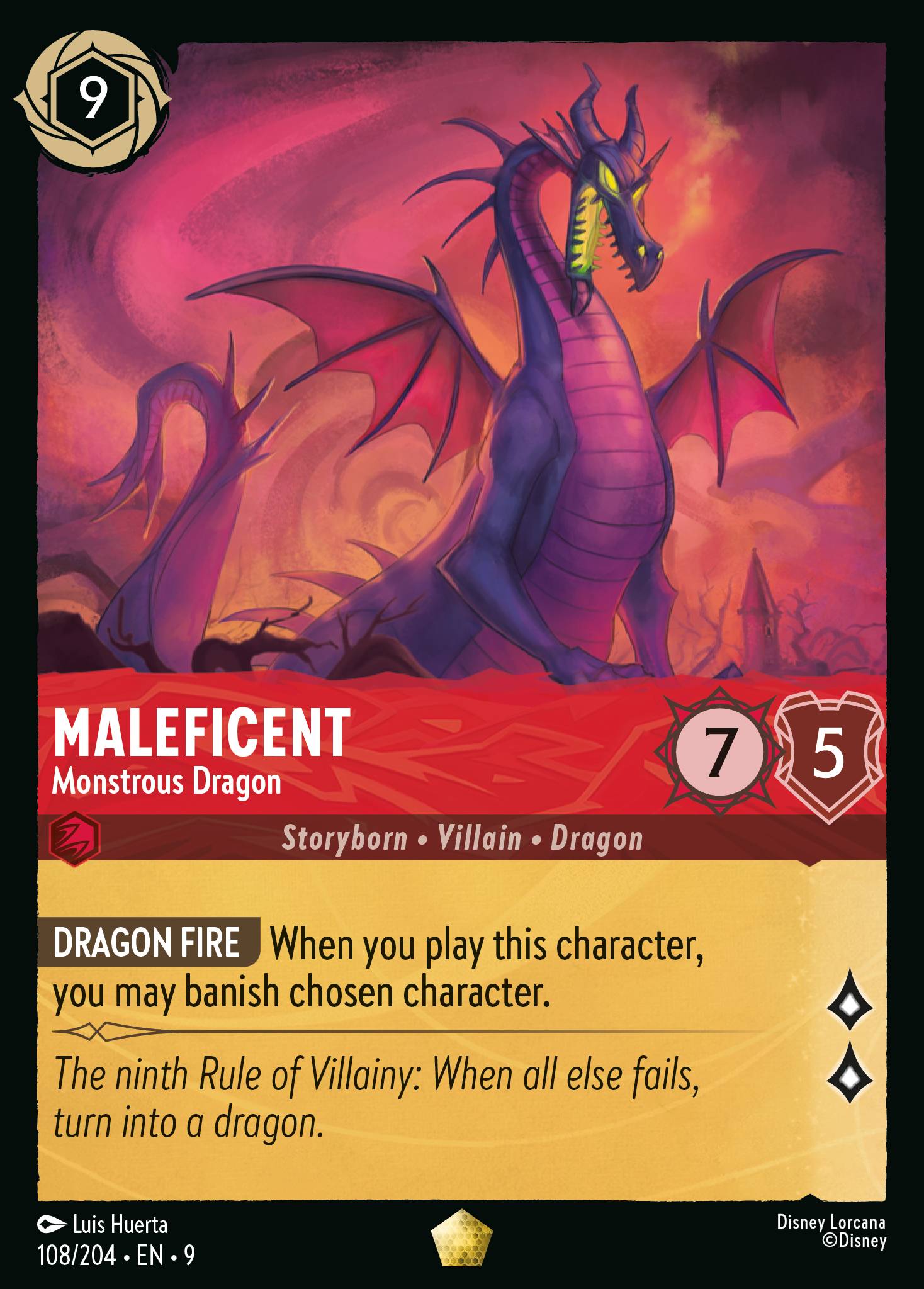
- Cluster around characters with multiple versions. Some Disney characters have many Lorcana cards across sets — Mickey Mouse, Stitch, Elsa, Maleficent, and so on. Building a Shift deck around these means you have more flexibility in which versions you draw and Shift onto.
- Plan for cross-ink Shifts. Because Shift doesn't care about ink color, your two-ink deck can play an Aurora in Amber on turn 3 and Shift an Amethyst Aurora on top later. This is a major reason Shift is so strong in two-ink decks specifically.
- Classification Shift opens the design space. If a card has Classification Shift onto "Princess," it can Shift onto any Princess in your deck, not just a specific named character. That makes the Shift cost more reliably available and turns "Princess tribal" into a viable archetype on its own.
When to Shift (and When to Wait)
Even with the right cards in hand, the question of when to Shift is genuinely strategic. The decision tree:
- 1. Is the bottom character's ink dry? If yes, Shifting now gives you an immediate questing/challenging body — the tempo benefit kicks in. If no, you're losing the immediate-action benefit; consider waiting a turn unless other reasons push for now.
- 2. Is the bottom character about to die? If yes — opponent has a removal Action or a stronger challenger ready — Shift now to "upgrade" before they kill it. A 3-Strength character about to be banished becomes a 6-Strength character your opponent has to deal with.
- 3. Does your opponent have removal up? If yes — you suspect they have a banish Action in hand — Shifting puts more value into a single target. They remove your stack for the same Action cost they'd have spent on the bottom card alone. That's actually a trade against you. Sometimes the right play is to deploy the Shift target as a separate, normally-cast threat instead.
- 4. Can you afford to wait one more turn? If the immediate lore swing or board pressure isn't critical this turn, waiting a turn often gets you to a state where the Shift triggers Bigger Effects — your opponent has used their removal, you have an extra Lantern to reduce cost, or your bottom character has taken a free quest. Patience is sometimes correct.
- 5. Do you have a "play trigger" engine? If yes — characters or effects that fire on "when you play a character" — Shifting may be worth doing primarily to trigger the engine, even if the Shift discount itself is marginal. Shift counts as playing, which means the engine fires.
Common Shift Mistakes
Mistake #1: Running Shift cards without their setup versions.
Including Aurora, Dreaming Guardian in your deck without any other Auroras means you can never Shift her. New deckbuilders forget that Shift requires a specific named partner. Always include at least one setup version (ideally 3-4 copies of a cheap one) for any Shift card you run.
Mistake #2: Missing the wet-ink bypass.
Shifting onto a character whose ink has dried means the new top card can act immediately. New players sometimes hold off on Shifting because "I just played a character last turn, so its ink isn't dry" — not realizing that's exactly when Shifting is worst. The right time is when the bottom character's ink has dried, so you keep that ready-to-act status.
Mistake #3: Shifting into removal.
If your opponent clearly has a banish Action ready, Shifting concentrates your investment into one target they were going to remove anyway. They get to spend one removal spell on your two-card investment. Sometimes the right call is to keep your characters spread across the board, not stacked.
Mistake #4: Forgetting the real-cost rule with Just in Time.
Just in Time only makes characters with real cost 5 or less free — the Shift cost doesn't change the real cost. Trying to free-Shift a 6-cost character won't work, even if you're Shifting for 4. Memorize this for any cost-cap interaction.
Mistake #5: Underrating Classification Shift.
Classification Shift cards can land on any character of the named classification — you don't need a name match. This is dramatically more flexible than standard Shift and opens up tribal builds (all Princesses, all Heroes, etc.). New players sometimes evaluate Classification Shift cards by the same standard as named Shift, missing how much easier they are to enable.
FAQ & Quick Reference
- Can I Shift onto an opponent's character? No — Shift only targets your own characters. The rules text always says "one of your characters." You can't Shift onto opponent permanents.
- What if I want to Shift but only have a wet-ink character on the board? You can still Shift — the rules don't require the bottom character to have dry ink. But the wet-ink status carries over to the top, meaning the Shifted character can't act this turn. You'd usually want to wait until next turn so the new character can quest immediately.
- Can I look at the cards beneath my Shifted character? Yes, you can look at the cards in your own stack at any time. Your opponent can also ask to see the contents of your stack — the cards aren't hidden information, just covered visually.
- Does Shift work with cards that "play for free"? Sometimes — depends on the wording. If a card says "play a character with cost 5 or less for free," it checks the printed cost. If a card lets you put a character into play without paying a cost, Shift may or may not interact depending on phrasing. The general rule: "play" effects let you use Shift; "put into play" effects bypass Shift entirely. When in doubt, the printed cost on the card is what cost-cap effects check.
- Are there cards that disable Shift? Not directly — no card outright "turns off Shift." But cards that destroy your characters, return them to hand, or send them to the inkwell remove your setup characters, indirectly preventing Shifts you were planning. Protecting setup characters from removal is a real skill in Shift-heavy decks.
- Mechanic: play a Shift card at the discounted Shift cost on top of a character sharing its main name.
- Carries over: damage, exerted state, ink-dried status, items, attached effects.
- Replaced: stats, abilities, classifications, ink color.
- Cross-ink: the two cards' ink colors don't need to match.
- Counts as playing: all "when you play a character" triggers fire.
- Stacks together: removal hits the whole stack as one unit.
- Deckbuilding: always include playable setup versions; aim for 3-4 copies of each.
- Best timing: when bottom character's ink is dry, when opponent's removal is spent, or when ducking incoming removal.
- Variant: Classification Shift lets you target by category (Princess, Hero) rather than name.
The Mechanic That Rewards Reading Carefully.
Shift looks like a simple ink discount and turns out to be one of Lorcana's deepest strategic levers. The discount is real, but the tempo from bypassing wet-ink rules is bigger, the deckbuilding implications shape entire archetypes, and the timing decisions reward players who think several turns ahead. Learn the rules cold, build around them deliberately, and you'll find yourself winning games where opponents simply couldn't keep up with your curve.
© GEEKYDOMAIN.COM | Strategy Powered by Data