

Budget Sapphire/Steel Control Under $50
A real, buildable Sapphire/Steel shell for Lorcana players who'd rather ramp into removal and a big finisher than chase whatever's expensive this month.
Some links below are affiliate links. If you buy through them, Geeky Domain may earn a small commission at no extra cost to you.
The Short Version
Sapphire/Steel is a real, currently-recognized 2026 Core Constructed archetype: ramp your ink early with cheap Sapphire pieces, then spend the extra ink on Steel removal and a big finisher. This budget core runs Fishbone Quill, Pawpsicle, and One Jump Ahead for ramp; Smash, Grab Your Sword, and Let It Go to control the board; Cogsworth - Grandfather Clock for protection; and Tinker Bell - Giant Fairy as an affordable finisher. One warning before you shop: older Sapphire/Steel lists built around the item Fortisphere are no longer legal in Core Constructed after a 2025 ban, so this list skips it entirely — always check Ravensburger's current banned-and-restricted list before buying singles for an older decklist. Card prices below are point-in-time snapshots, not locked quotes, so treat the $50 target as a realistic ballpark rather than a guaranteed checkout total.
In This Guide
- → Why Sapphire/Steel Control Belongs on Your Radar
- → The Budget Decklist Under $50
- → The Ramp Package: Fueling Big Steel Turns
- → Removal and Control: Smash, Grab Your Sword, and Let It Go
- → Protection and Card Advantage: Cogsworth and A Whole New World
- → A Legality Check Before You Buy
- → Closing the Game: Tinker Bell and the Late-Game Plan
- → Mulligan Guide and Play Pattern
- → FAQ & Quick Reference
Why Sapphire/Steel Control Belongs on Your Radar
Every other ink-pair budget deck on this site already has a home. Amber/Emerald aggro, Amber/Steel midrange, Emerald/Steel discard, Ruby/Emerald aggro, Sapphire/Amber ramp, and Amethyst/Ruby control all have their own guides. Sapphire/Steel has been the gap, which is strange, because current meta coverage still tracks the pairing under the name "Sapphire/Steel Ramp," even though tournament data has it well outside the format's top tier. The name matters, because it tells you exactly how the deck wants to be played: you spend your early turns accelerating your ink the way Sapphire/Amber ramp does, then you spend that extra ink on Steel's removal and big bodies to shut the game down. Whether you call the finished product "ramp" or "control" depends on which half of the plan you like watching more.
The appeal for a budget build specifically is that Sapphire's ramp package and Steel's removal suite lean on cheap commons, uncommons, and a few inexpensive rares and Super Rares rather than expensive chase cards. You are not hunting a single $40 staple to make the deck function; you're buying a dozen or so cards that each cost less than a coffee. If you've already read our best Sapphire cards under $10 roundup or the best Steel cards under $10 guide, a good chunk of this list will already look familiar.
What you're building is a deck that loses the early turns on purpose. You are not racing anyone to lore. You are trading resources, building your inkwell, and waiting for the turn where you can slam a five-cost song for free off a character you already had in play. That patience is exactly what makes this deck cheap to build: efficient removal and ramp are almost never the expensive cards in a set, because flashy legendaries get the price tags, not the commons doing the actual work.
The Budget Decklist Under $50
Lorcana doesn't use a separate land base — you build your ink supply by putting inkable cards from your hand into the inkwell one at a time, which is exactly why a deck full of ramp effects that put extra cards into the inkwell can pull ahead of a "normal" curve. Below is the core shell: the cards that do the actual ramping, removing, and closing. Round out the rest of your 60 with budget-friendly Sapphire and Steel commons that fit your local card pool — cheap characters with useful stats or Bodyguard are fine filler, and you likely already own some from starter decks or boosters.
| Card | Ink / Cost | Role | Qty | Approx. Price Each |
|---|---|---|---|---|
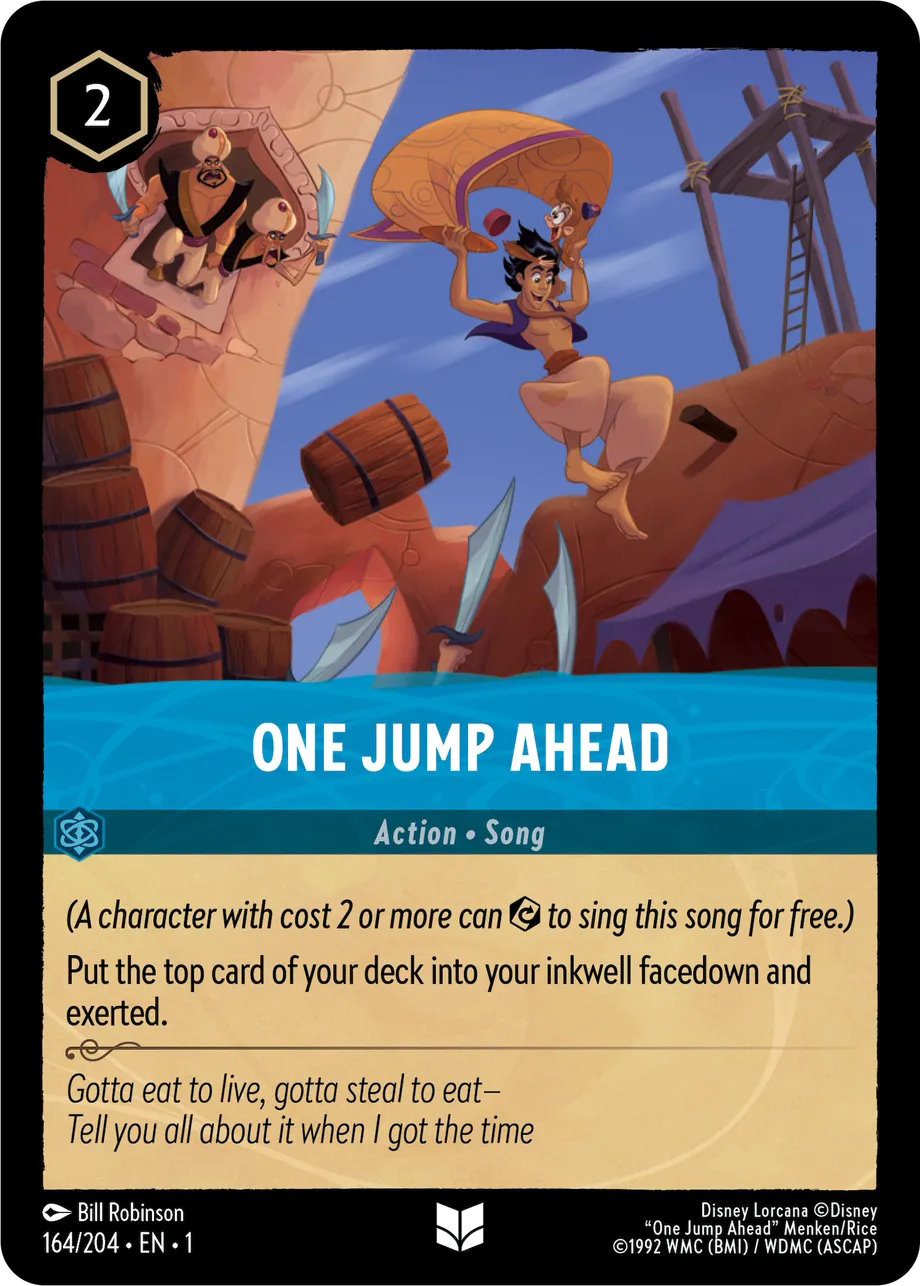
| One Jump Ahead | Sapphire, 2 (song) | Ramp | 4 | ~$0.11 |
| Fishbone Quill | Sapphire, 3 | Ramp (item) | 4 | ~$0.92–$2.99 |
| Pawpsicle | Sapphire, 1 | Ramp / card draw (item) | 4 | ~$0.26 |
| Mickey Mouse - Detective | Sapphire, 3 | Ramp body / blocker | 4 | ~$0.06 |
| Nothing to Hide | Sapphire, 1 | Card draw / info | 2 | ~$0.07 |
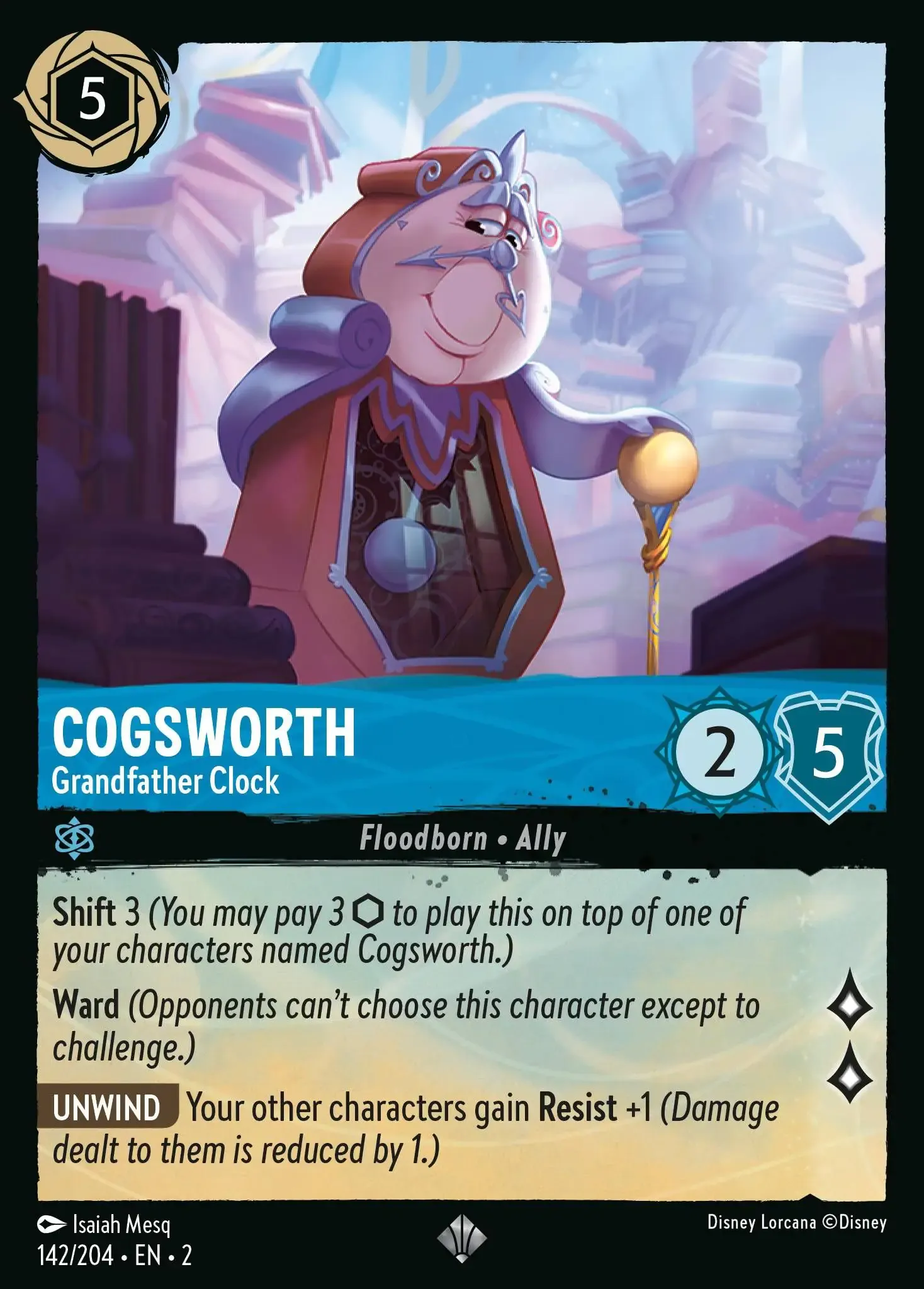
| Cogsworth - Grandfather Clock | Sapphire, 5 (Shift 3) | Protection | 4 | ~$0.24–$0.96 |
| Let It Go | Sapphire, 5 (song) | Tempo removal | 2 | ~$1.99 (rare, non-foil) |
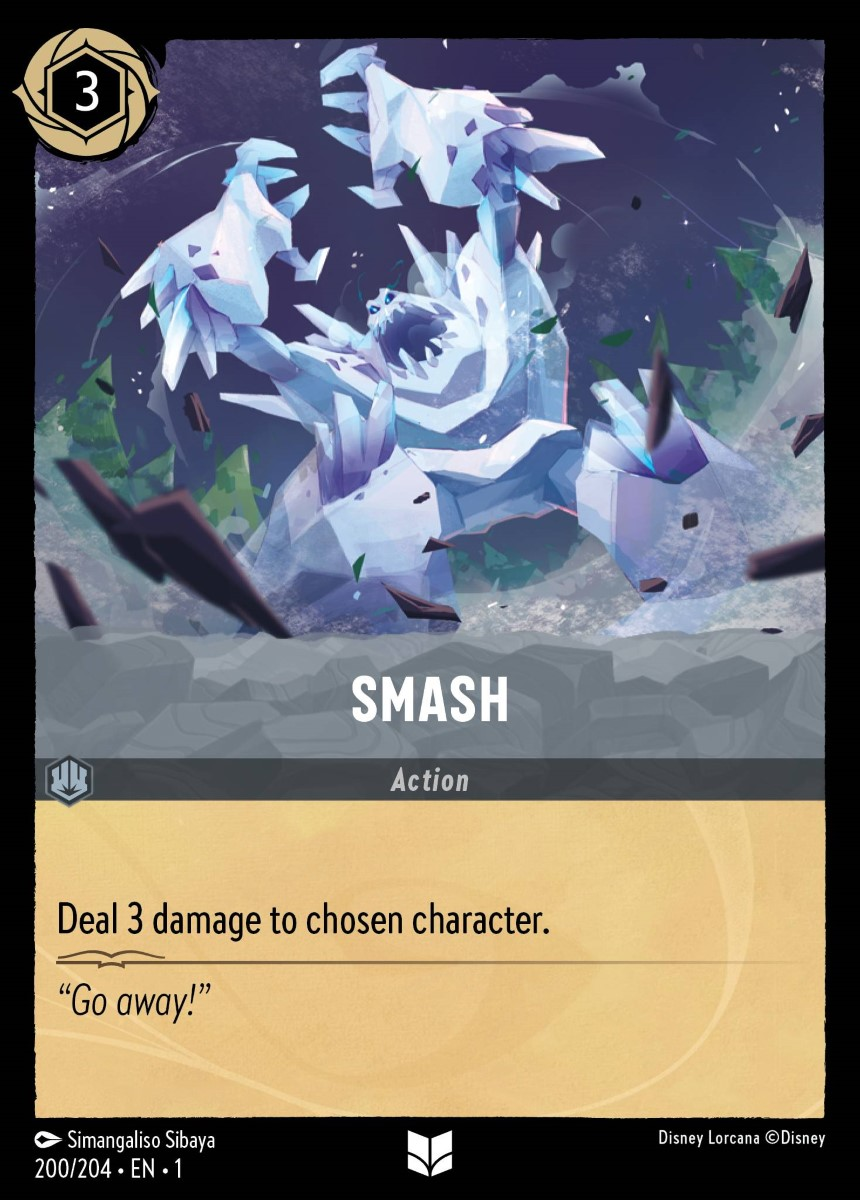
| Smash | Steel, 3 | Single-target removal | 4 | ~$0.10–$0.28 |
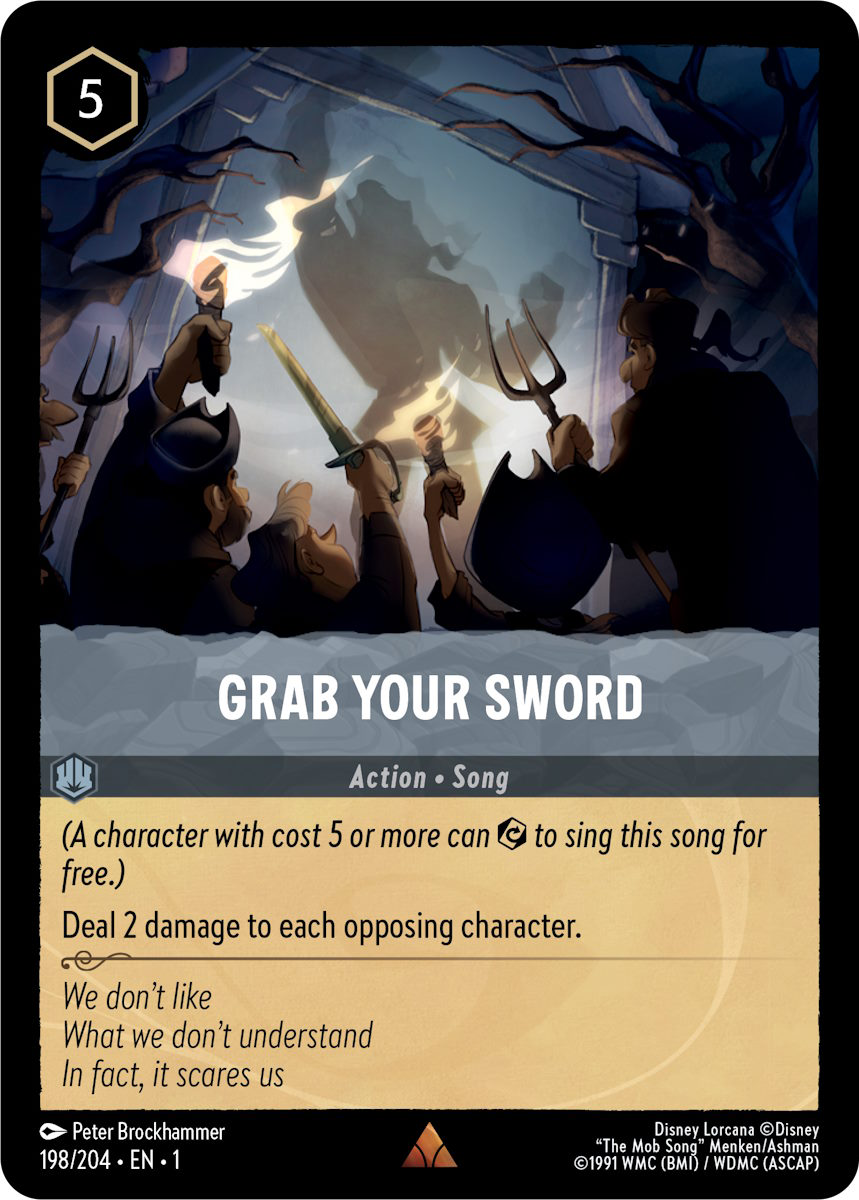
| Grab Your Sword | Steel, 5 (song) | Board wipe (small threats) | 4 | ~$0.32–$0.52 |
| A Whole New World | Steel, 5 (song) | Card advantage / refill | 4 | ~$1.58 |
| Prince Eric - Dashing and Brave | Steel, 2 | Cheap early body (Challenger +2 when challenging) | 4 | ~$0.04 |
| Tinker Bell - Giant Fairy | Steel, 6 (Shift 4) | Finisher / sweeper | 2 | ~$0.69 |
That's 42 of your 60 cards, all with individually confirmed prices under about $3 each. Add them up and the core alone lands in the mid-$20s at typical listed prices, or closer to $33 if you pay the top of every range above; fill the remaining 18 slots with cheap Sapphire and Steel commons and the full deck should realistically land somewhere between about $25 and $48 depending on which specific singles you use and how the market moves on any given day. If you're new to buying loose cards instead of sealed product, our guide to buying Lorcana singles walks through where to shop and what "near mint" actually means for a $0.10 common.
There's no Lorcana-specific product in our own shop, so here's where to look for Sapphire and Steel singles and a deck box to carry your finished 60.
As an Amazon Associate, Geeky Domain earns from qualifying purchases. eBay links are affiliate links; Geeky Domain may earn a commission at no extra cost to you.
The Ramp Package: Fueling Big Steel Turns
Community deck-building guides generally recommend four to six dedicated ramp pieces to consistently hit your big Steel finishers on curve, and this list runs exactly that many. One Jump Ahead is the cheapest song in the deck at roughly $0.11 a copy: any character with cost 2 or more can exert to sing it for free, and it puts the top card of your deck into your inkwell facedown and exerted. Because that card comes from the top of your deck rather than your hand, you're not sacrificing a card you could otherwise play — it's close to pure acceleration.
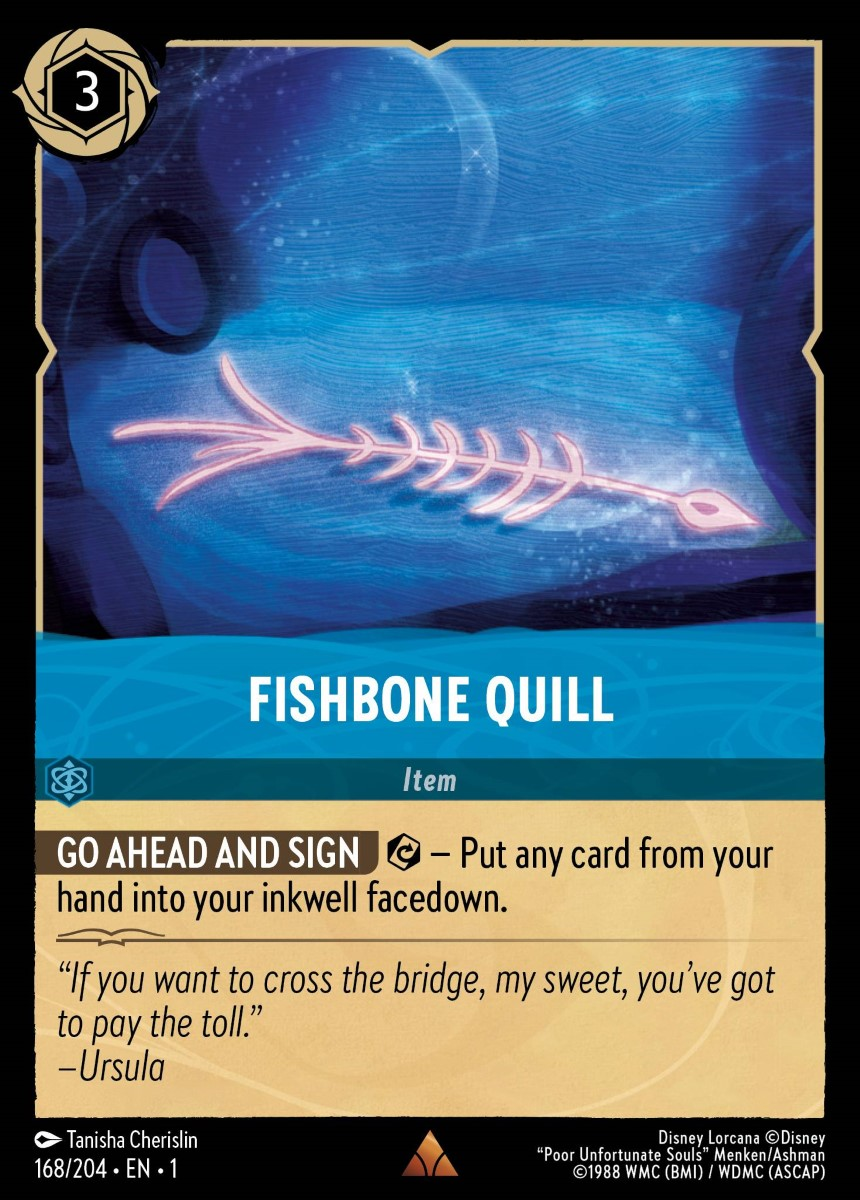
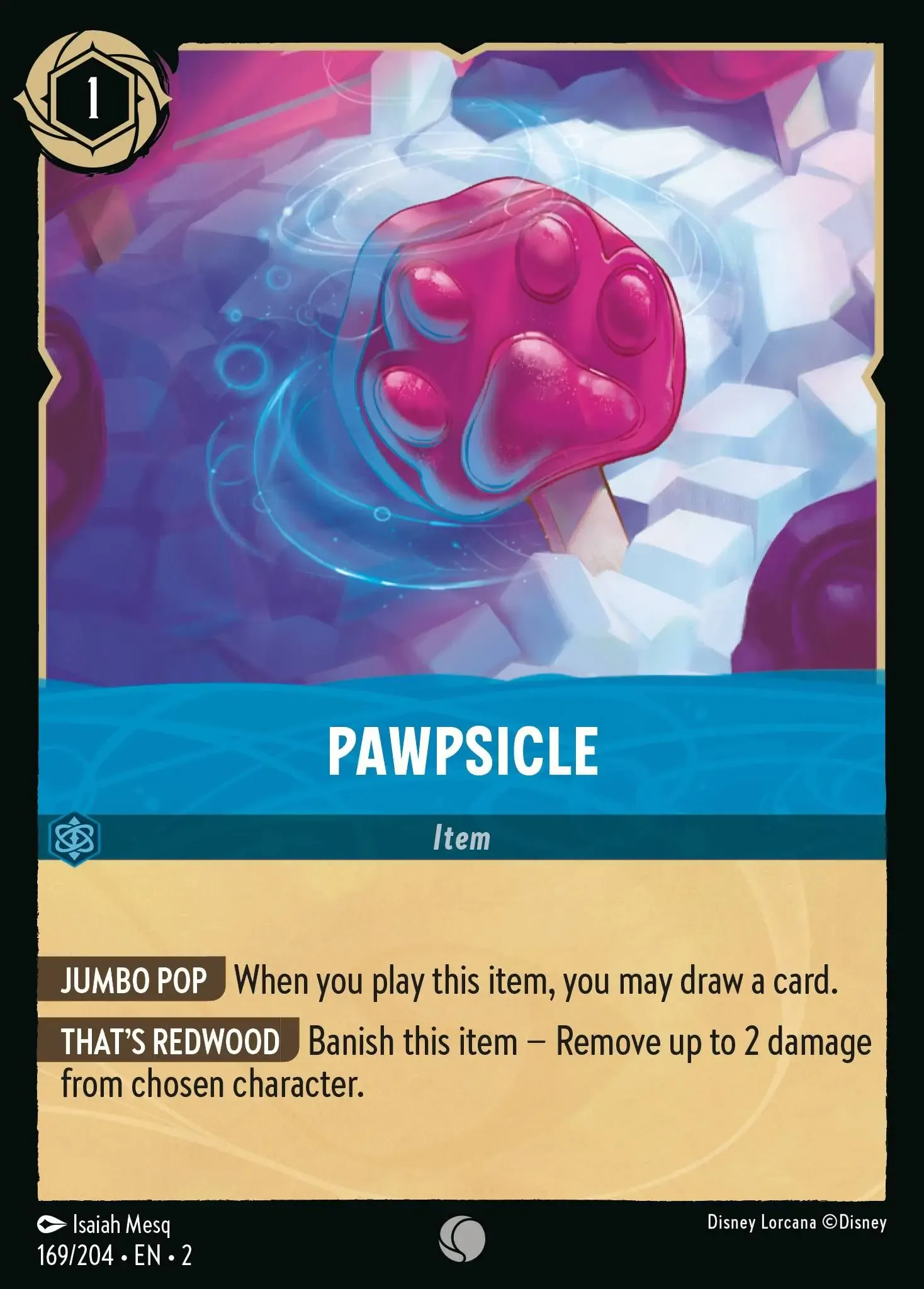
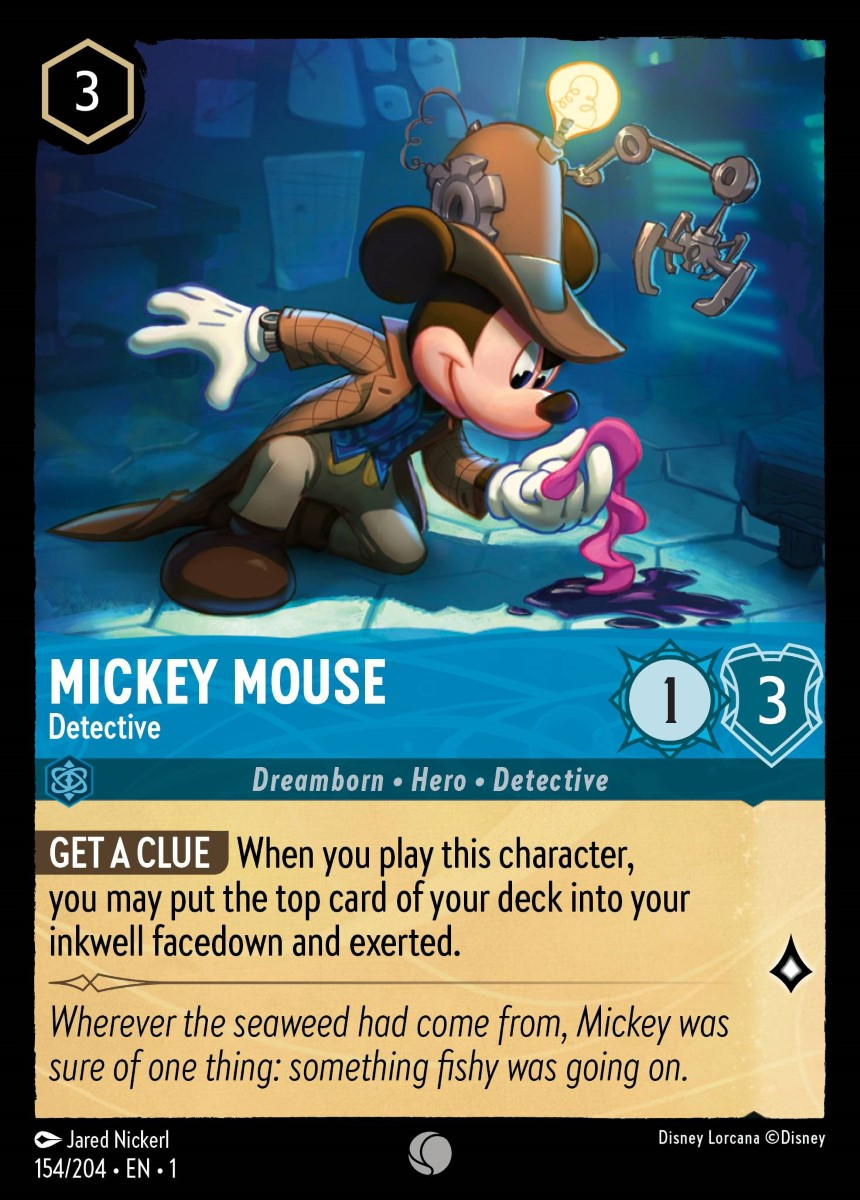
Fishbone Quill is the priciest card in the ramp suite at roughly $0.92 to $2.99, but it earns the spot: exert it to put any card from your hand into your inkwell facedown, which means a dead card late in the game becomes fuel instead of a discard. Pawpsicle, at roughly $0.26, does double duty — draw a card when you play it, then later banish it to remove up to two damage from a character, letting it save a blocker or extend a body's lifespan. Mickey Mouse - Detective rounds out the package as an uninkable 1/3/1 body for 3 that may put the top card of your deck into the inkwell when played, so it ramps and blocks in the same slot. This is the same underlying philosophy as our Sapphire/Amber ramp build, just aimed at Steel's payoffs instead of Amber's. Winning the tempo and lore race isn't the plan here — outlasting it is.
Removal and Control: Smash, Grab Your Sword, and Let It Go
This is the half of the deck that actually wins games. Smash, an uncommon action running roughly $0.10 to $0.28, deals 3 damage to chosen character for 3 ink — cheap, efficient, and able to answer almost anything an opponent plays on curve in the early and mid game. Grab Your Sword, roughly $0.32 to $0.52, is a five-cost song that any character with cost 5 or more can sing for free, dealing 2 damage to every opposing character at once. Against an aggressive board full of 1- and 2-cost characters, that single card can wipe the table.
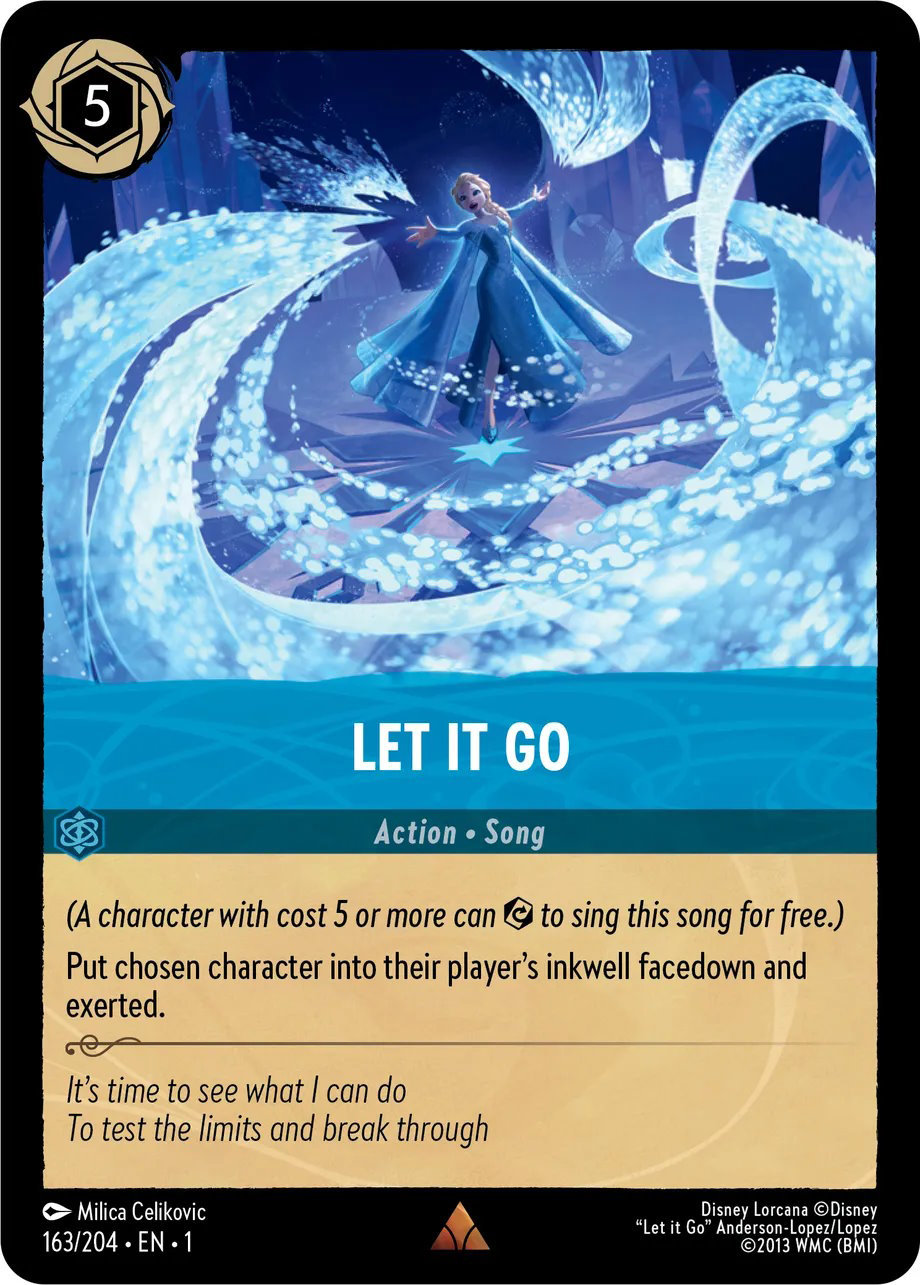
Let It Go is the deck's answer to a single big threat rather than a wide board. It's a five-cost song, singable free off any character cost 5 or more, that puts a chosen character into their own player's inkwell facedown and exerted. It's not permanent removal — the card isn't banished, and your opponent does gain an extra card in their inkwell — but it takes their best threat off the board immediately and exerted, which is often exactly the tempo swing you need. One important note on shopping for it: the standard rare non-foil version runs roughly $1.99, which is the budget target here. A separate ultra-rare promo printing of the same card exists and sells for dramatically more, so double-check the listing before you buy. These three cards together are also why this deck holds up against faster strategies; if you want the aggro side of that matchup explained in more depth, read our guide on how to beat aggro in Lorcana. Two of those three removal pieces — Grab Your Sword and Let It Go — are songs, so if you're not clear on how singing works, our Singer and songs guide covers the mechanic in full.
Protection and Card Advantage: Cogsworth and A Whole New World
A control deck that can't protect its own board is just a slower loss, which is where Cogsworth - Grandfather Clock comes in. At roughly $0.24 to $0.96, he's cheap for what he does: he carries Ward, so your opponent can't target him directly with removal, and while he's in play your other characters gain Resist +1, meaning every one of your other characters takes one less damage from each source. He also carries Shift 3, so once you have a cheaper Cogsworth on board, the follow-up copy costs only 3 ink instead of his full 5. In a deck built around grinding, a passive damage reduction on your whole board is exactly the kind of card advantage that doesn't show up on the stack but wins games anyway.
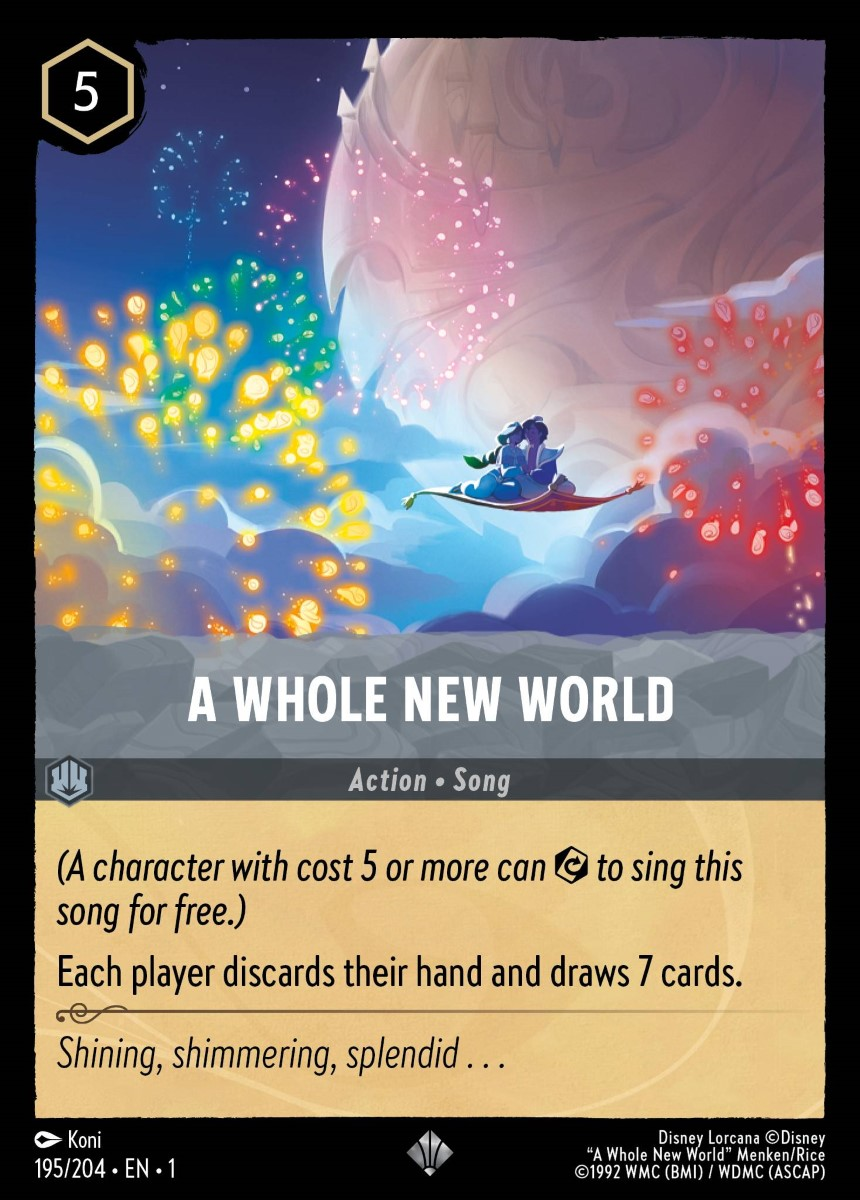
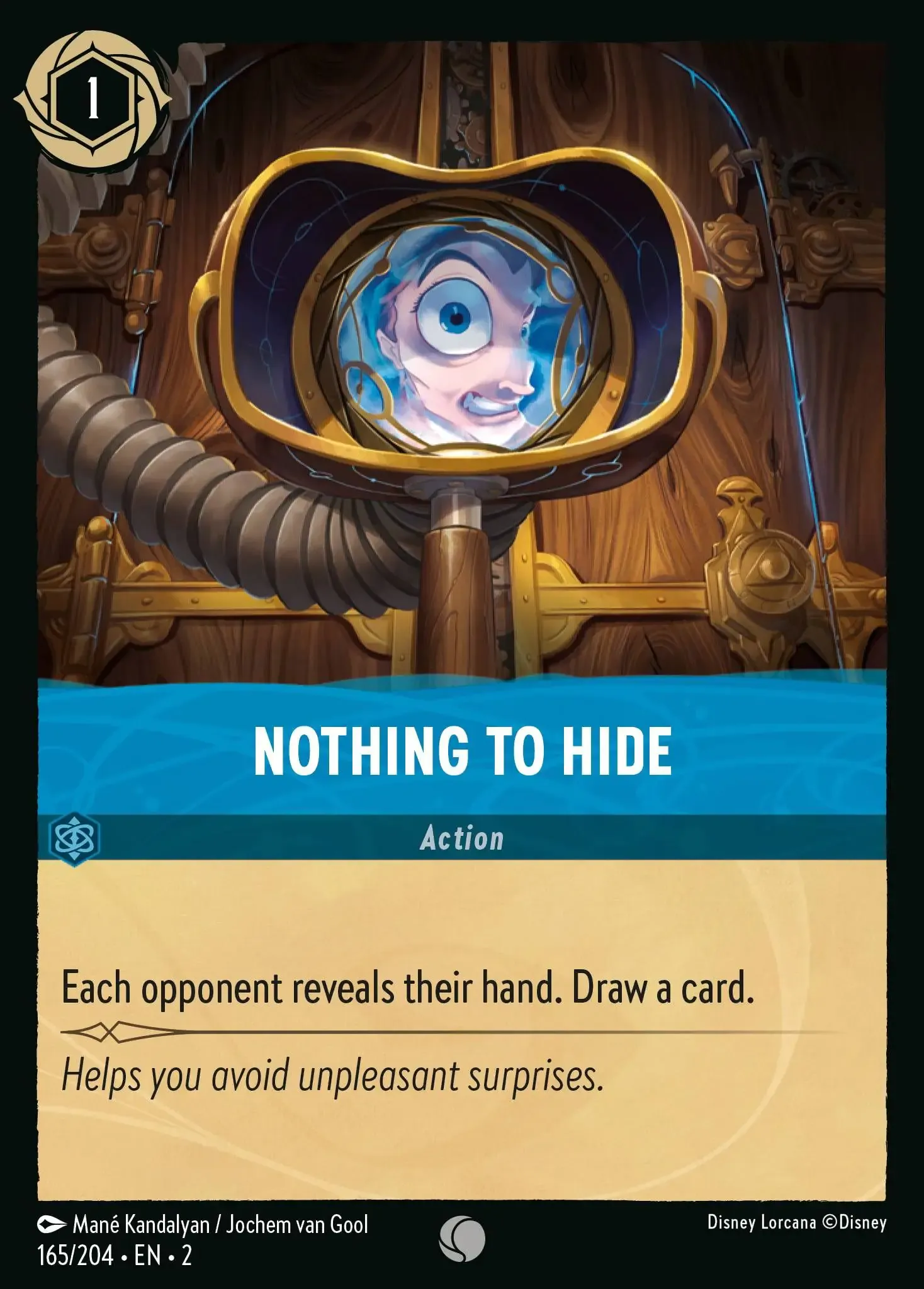
A Whole New World, roughly $1.58, is the deck's reset button. Sung free off any character cost 5 or more, it has each player discard their hand and draw seven — which sounds symmetrical until you remember that a control deck is usually the one sitting on an empty or clunky hand late in the game after spending everything to survive, while your opponent is often the one who benefits less from a fresh seven. Backing it up early is Nothing to Hide, a one-cost action running roughly $0.07 that has each opponent reveal their hand and lets you draw a card. Beyond the raw card advantage, seeing your opponent's hand tells you exactly when to hold Smash for their real threat instead of firing it early.
A Legality Check Before You Buy
If you go looking for Sapphire/Steel decklists online, you will run into older ones built around a Steel item called Fortisphere, often paired with Pawpsicle for a strong combo. Don't buy singles for that plan.
This is exactly why the ramp package above leans on One Jump Ahead, Fishbone Quill, and Mickey Mouse - Detective to pick up the slack instead. None of it depends on a banned combo piece — but rotation is a separate problem from bans, and it bites here: six of the twelve cards above have no printing in a Core Constructed-legal set. Fishbone Quill, Grab Your Sword, and A Whole New World exist only in The First Chapter, and Pawpsicle, Nothing to Hide, and Cogsworth - Grandfather Clock only in Rise of the Floodborn — both sets left Core when Sets 1–4 rotated out in 2025. Build this list for casual play or Infinity Constructed, where nothing rotates; if you need a Core-legal list, the other six cards here all have current reprints to build around. If you're prepping for organized play rather than just casual games, our Set Championship and organized play guide covers what to expect at a sanctioned event, and our rotation survival guide explains how format changes like bans and rotations affect a budget deck's long-term value.
Closing the Game: Tinker Bell and the Late-Game Plan
Some published Sapphire/Steel Control lists build their top end around Belle - Strange but Special, reaching ten or more ink to unlock her full potential. That's a real, working version of this archetype — but Belle isn't a budget card, so this build swaps in a cheaper finisher that still closes games on its own.
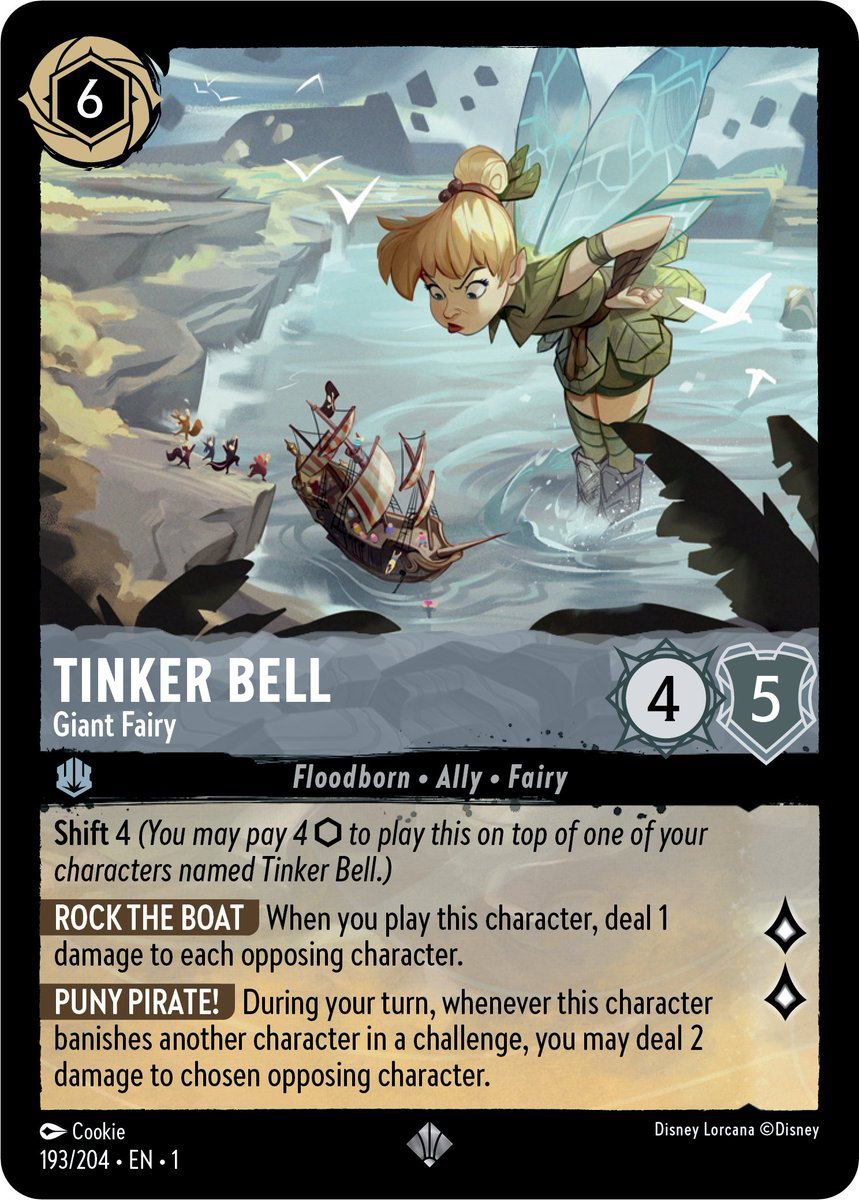
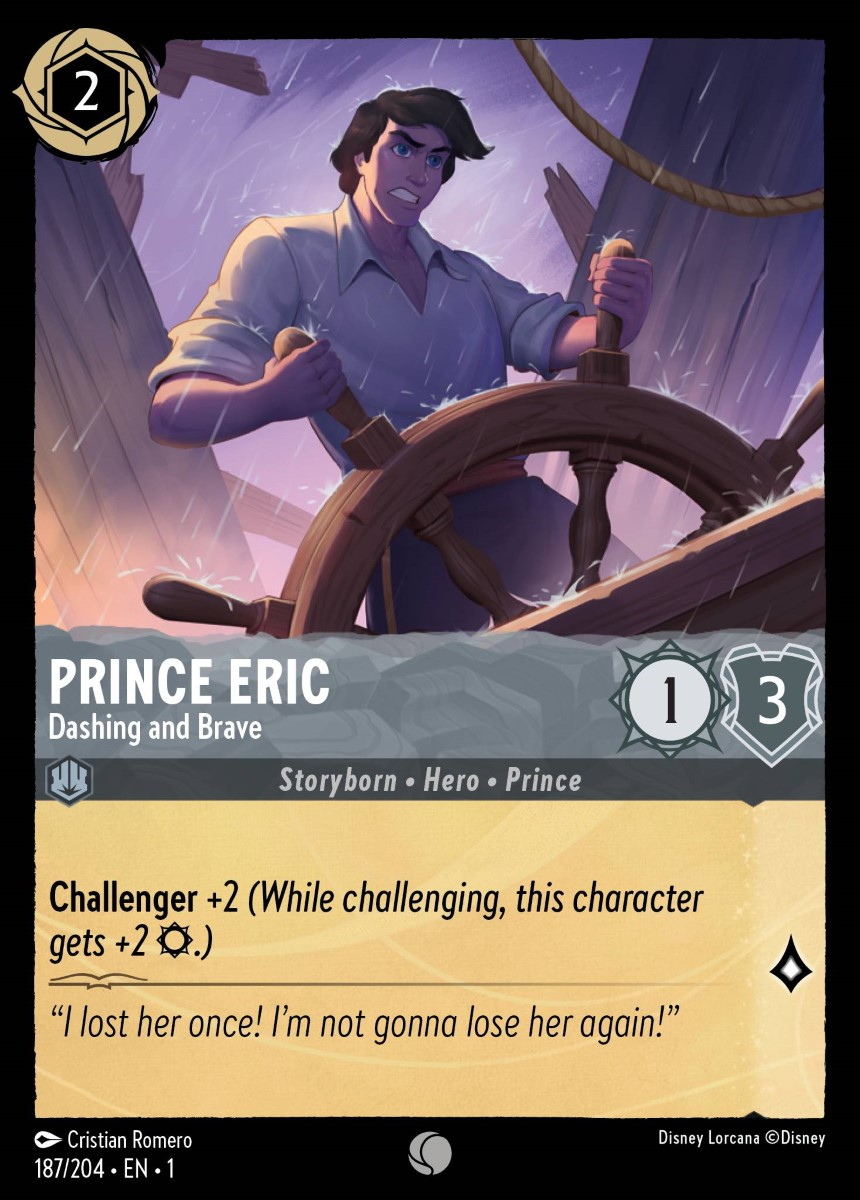
Tinker Bell - Giant Fairy, roughly $0.69, is a 4/5/2 body at 6 ink with Shift 4 — so once a cheaper Tinker Bell is on board, this version costs only 4 to bring down. She deals 1 damage to every opposing character the moment she's played, mopping up whatever survived your earlier sweepers, and during your turn, whenever she banishes another character in a challenge, you may deal 2 more damage to a chosen opposing character. That's a body that clears the board on entry and keeps punishing your opponent every time it attacks afterward, for well under a dollar. Shift is worth understanding on its own if you haven't used it before, since it's the mechanic that makes both Tinker Bell and Cogsworth cheaper the second time around. Prince Eric - Dashing and Brave, at roughly $0.04, is the cheap glue holding the early turns together: a 2-cost body with Challenger +2 that trades up in combat while you're busy ramping into your real plays.
Mulligan Guide and Play Pattern
Under Disney Lorcana's official Comprehensive Rules, each player draws seven cards for their opening hand and may put any number of them on the bottom of the deck, draw that many replacement cards, and shuffle — with no penalty to hand size for doing so. Use every bit of that. For this deck specifically, you're mulliganing for two things: enough inkable cards across both Sapphire and Steel to hit your curve, and at least one early ramp piece (One Jump Ahead, Fishbone Quill, or Pawpsicle) so you're not just sitting on removal you can't afford to cast yet.
The play pattern itself is patient by design. Turns one through three are about developing ink and, ideally, landing Pawpsicle or Mickey Mouse - Detective for a body that also ramps. Turns three through five are where Smash and Fishbone Quill do their work — answering whatever threat is biggest on the board while continuing to accelerate. By turn five or six you should be able to sing Grab Your Sword or A Whole New World for free off a character you already control, since both only require a character with cost 5 or more to exert, not 5 ink of your own on that turn. That's the payoff for all the earlier ramping: a five-cost effect that didn't cost you five ink to cast. If you're still getting comfortable with deckbuilding fundamentals in general, our guide to building your first 60-card deck and our dedicated mulligan guide are both good companion reads before your first games with this list.
FAQ & Quick Reference
Is Sapphire/Steel actually competitive, or is this just a cheap deck? Current meta coverage lists Sapphire/Steel Ramp among the top 2026 Core Constructed archetypes, so the shell is genuinely strong, not just budget-friendly. This build trades a few percentage points of raw power for a much lower buy-in by swapping expensive Legendaries like Belle - Strange but Special for cheaper equivalents like Tinker Bell - Giant Fairy.
Do I need Fortisphere to make this deck work? No. Fortisphere was banned from Core Constructed effective April 8, 2025, so it can't be played in that format — though it is still legal in sanctioned Infinity Constructed events, and this list was built entirely around cards that don't need it — One Jump Ahead, Fishbone Quill, and Mickey Mouse - Detective cover the same ramp role.
How many ramp pieces should a Sapphire ramp shell run? Community deck-building guides generally recommend four to six dedicated ramp cards to consistently reach your big Steel finishers on curve. This list runs four distinct ramp pieces — One Jump Ahead, Fishbone Quill, Pawpsicle, and Mickey Mouse - Detective — at four copies each, which sits right inside that range.
What's the mulligan priority for this deck? Look for a mix of both inks and at least one early ramp piece. Under the official mulligan rule you draw seven cards and may bottom and redraw any number of them with no hand-size penalty, so use that redraw aggressively if your opening seven is missing either color of ink.
Is the rare version of Let It Go the one I want? Yes. The standard rare non-foil printing runs roughly $1.99 and is the budget target. A separate ultra-rare promo printing of the same card also exists and sells for far more — check the listing carefully so you don't overpay for the wrong version.
Will this deck actually cost under $50? The researched core of a dozen key cards runs well under $30 at typical listed prices. Filling the remaining slots with budget commons should land the full 60-card deck somewhere between about $25 and $48, though exact totals shift with the market — always check current prices before you check out.
Can I upgrade this deck later without rebuilding it? Yes. The ramp and removal shell — One Jump Ahead, Fishbone Quill, Pawpsicle, Smash, Grab Your Sword, Let It Go — stays the same as your budget rises. The upgrade path is mostly the top end: swap Tinker Bell - Giant Fairy for a pricier finisher like Belle - Strange but Special once you're ready to spend more.
Verdict: This Is a Real Gap Worth Filling.
Sapphire/Steel Control earns its spot as a recognized 2026 archetype and its budget core costs less than a single booster box. Build the ramp package first, add the removal suite, and let Tinker Bell - Giant Fairy close out the games your Smashes and Grab Your Swords already won.
© GEEKYDOMAIN.COM | Strategy Powered by Data