

Budget Sapphire/Amber Ramp Under $50
Flood your inkwell, then drop bombs your opponent can't answer yet. Here's how Lorcana's friendliest ramp pairing works — and how to build it cheap.
TL;DR: Sapphire ramps — it puts extra cards into your inkwell so you play expensive bombs ahead of schedule. Amber supplies the go-wide bodies, songs, and lore payoff to actually win once you're ahead on ink. The plan: ramp on turns 2–3, deploy threats a turn early, and out-resource the table. The engine cards (Fishbone Quill, Gramma Tala) are cheap, so a budget build under $50 is very realistic. It rewards patience over speed — you're trading early tempo for a late-game nobody can match.
In This Guide
- → 1. The Deck at a Glance
- → 2. How the Deck Wins
- → 3. What "Ramp" Means in Lorcana
- → 4. What Each Ink Brings
- → 5. The Core, by Role
- → 6. A Sample Ramp Sequence
- → 7. Building It Under $50
- → 8. Piloting Tips
- → 9. Where Ramp Players Misplay
- → 10. Matchups
- → 11. FAQ
- → 12. Quick Cheat Sheet
1. The Deck at a Glance
Before the card details, here's the fast read on what you're signing up for:
| Archetype | Midrange ramp — accelerate ink, then deploy oversized threats early |
| Game plan | Out-resource the table; win the late game on lore |
| Speed | Slow-to-medium — patient, not explosive |
| Difficulty | Beginner-friendly — the inking decisions are the only real skill gate |
| Budget | Comfortably under $50; engine cards are cheap commons/uncommons |
| Best if you want… | A grindy, value-driven deck that rewards good sequencing over fast hands |
2. How the Deck Wins
Ramp is the patient deck. Where aggro races to 20 lore as fast as possible, ramp accepts a slow start in exchange for an overwhelming mid-game. The sequence:
- Ramp early (turns 2–4). Use Sapphire's ink accelerants to put extra cards into your inkwell, building a bigger ink pool than your turn count should allow.
-
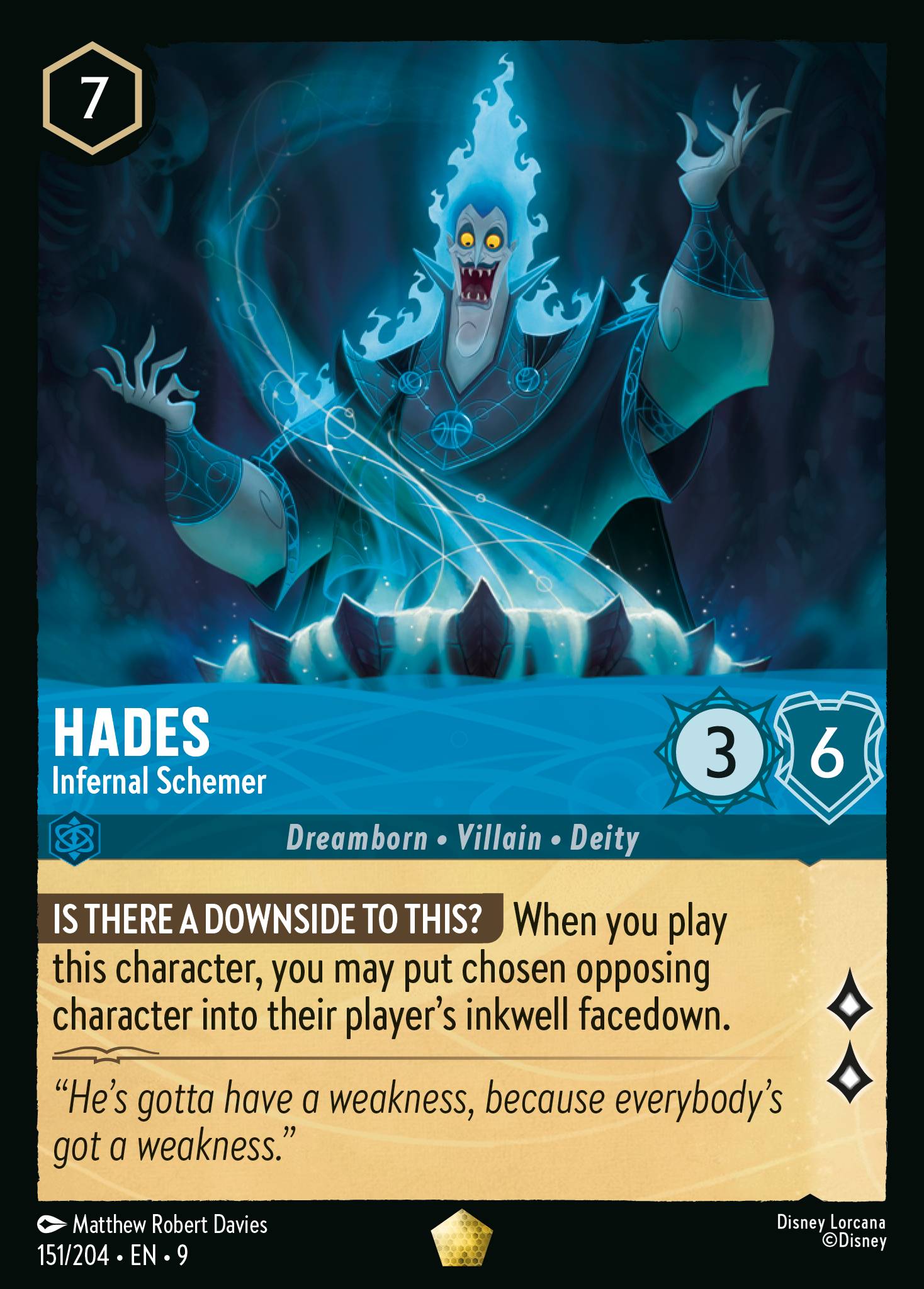
Deploy ahead of curve. Drop a six- or seven-cost bomb on turn four or five — before opponents can answer it — and start dominating the board.
- Convert the advantage to lore. Amber's efficient questers and lore payoffs turn your board lead into the 20 lore you need, while protection keeps your threats alive.
The engine in one line: Spend your early turns building ink instead of board, then cash that ink into threats your opponent simply can't match yet. Every turn you're ahead on ink is a turn you're playing a bigger game than they are.
3. What "Ramp" Means in Lorcana
Normally you add exactly one card to your inkwell per turn, so your available ink equals your turn number. Ramp breaks that rule — it lets you put extra cards into the inkwell, so you have more ink than your turn count would suggest. The term comes from Magic, where mana-acceleration decks have existed since 1993, and it works the same way here: spend a card now to have more resources later.
The cost is real, though, and it's the heart of the archetype's tension. Every card you ramp into your inkwell is a card you can't play. You're trading card count for ink speed — betting that getting to your bombs faster outweighs the cards you spent getting there. That bet pays off against slow decks and falls flat against fast ones, which is the whole story of ramp's matchups (more below).
4. What Each Ink Brings
This pairing splits the labor cleanly: Sapphire is the engine, Amber is the finish.
| Ink | What it contributes |
|---|---|
| Sapphire | The ramp engine — extra ink per turn, item synergies, cost reduction, and big payoff bodies. Lorcana's premier ramp color. |
| Amber | The lore finish — efficient questers, song support, recursion, and protection to keep your ramped-out threats alive. |
A note worth being honest about: Lorcana's most-documented ramp shell has historically been Sapphire/Steel, where Steel adds removal and damage. The Sapphire/Amber version trades Steel's removal for Amber's go-wide bodies, songs, and lore generation — a more proactive, board-focused take on ramp. Both are real; this guide builds the Amber version. If you'd rather lean control-and-removal, the Sapphire/Steel shell is the natural pivot.
5. The Core, by Role
Because Lorcana rotates and prices shift, this is a role-based skeleton built on verified ramp staples rather than a fixed 60. Fill each role with the current legal cards in your format (see the validate note), but these are the proven pieces:
| Role | Verified examples & what they do |
|---|---|
| Ramp engine |
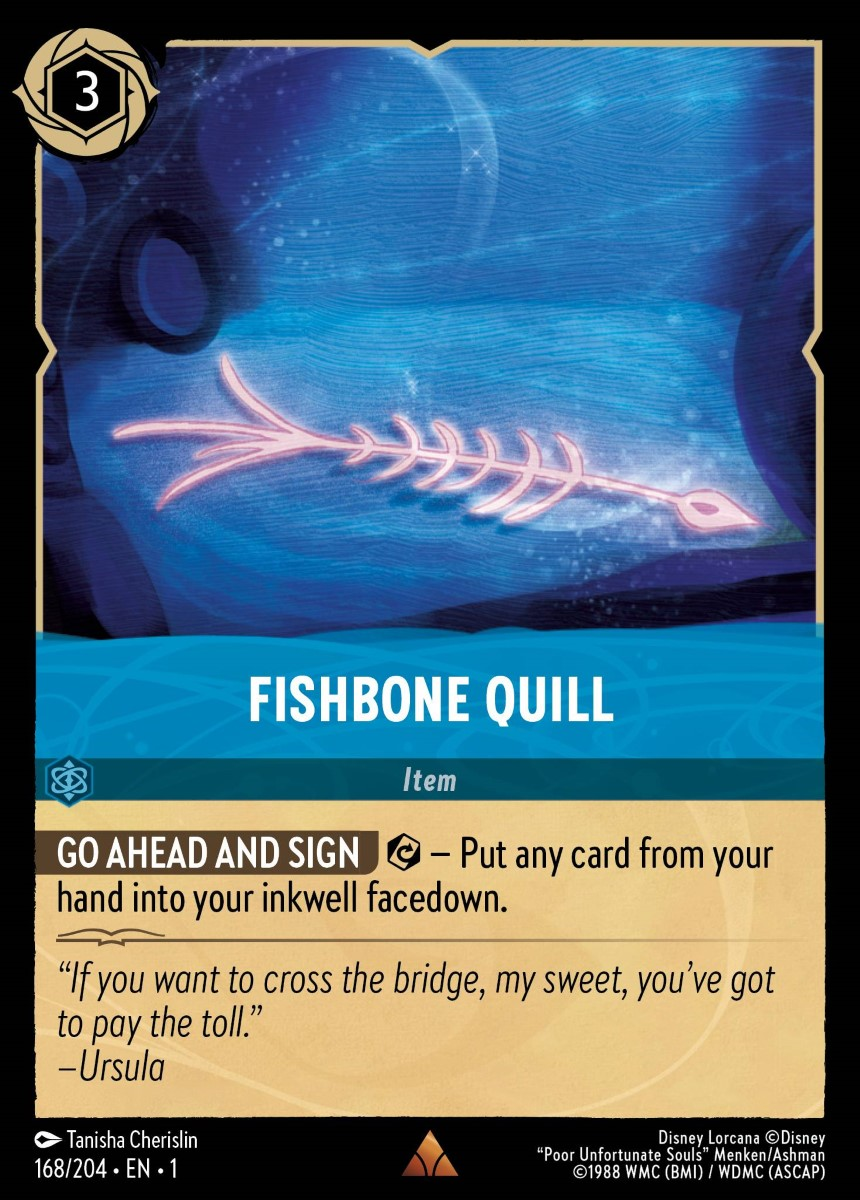
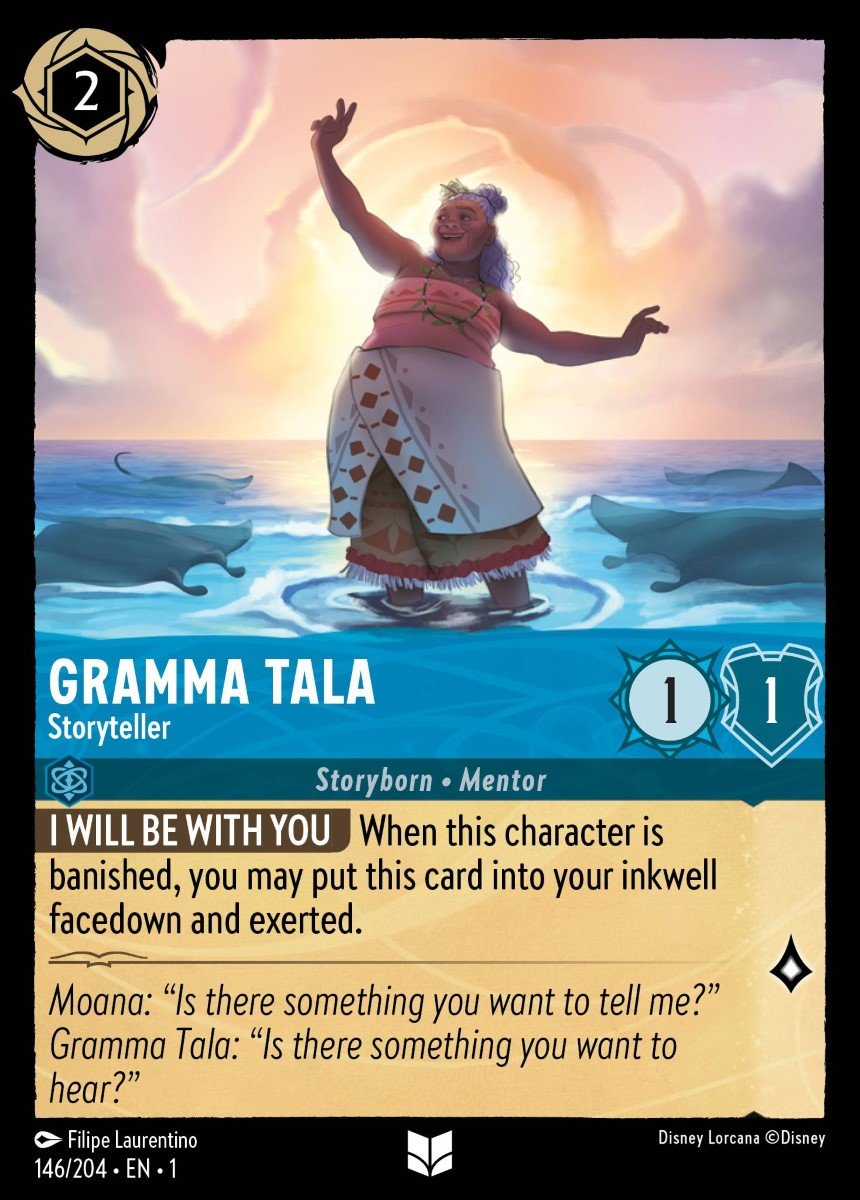
Fishbone Quill (3-cost item: put any card from hand into your inkwell, repeatable); Gramma Tala (character ramp); plus other Sapphire "add an extra card to your inkwell" effects.
|
| Ramp payoff |
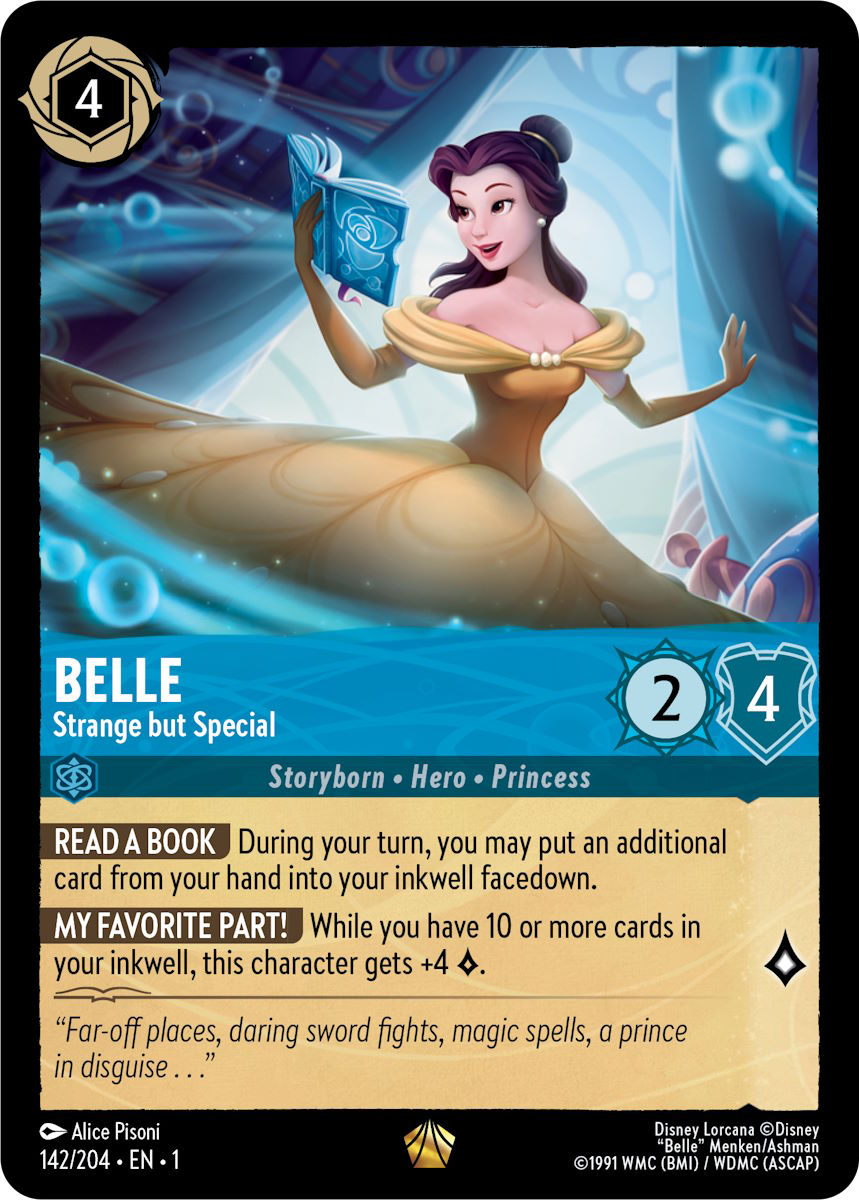
Belle – Strange but Special (gains more lore the more cards you have in your inkwell) — the card that rewards your ramping directly.
|
| Top-end threats | Your expensive bombs — high-cost, high-impact characters that ramp lets you cast early. The reason the deck exists. |
| Lore engine (Amber) | Efficient questers and lore-gain characters that turn your board lead into a win. |
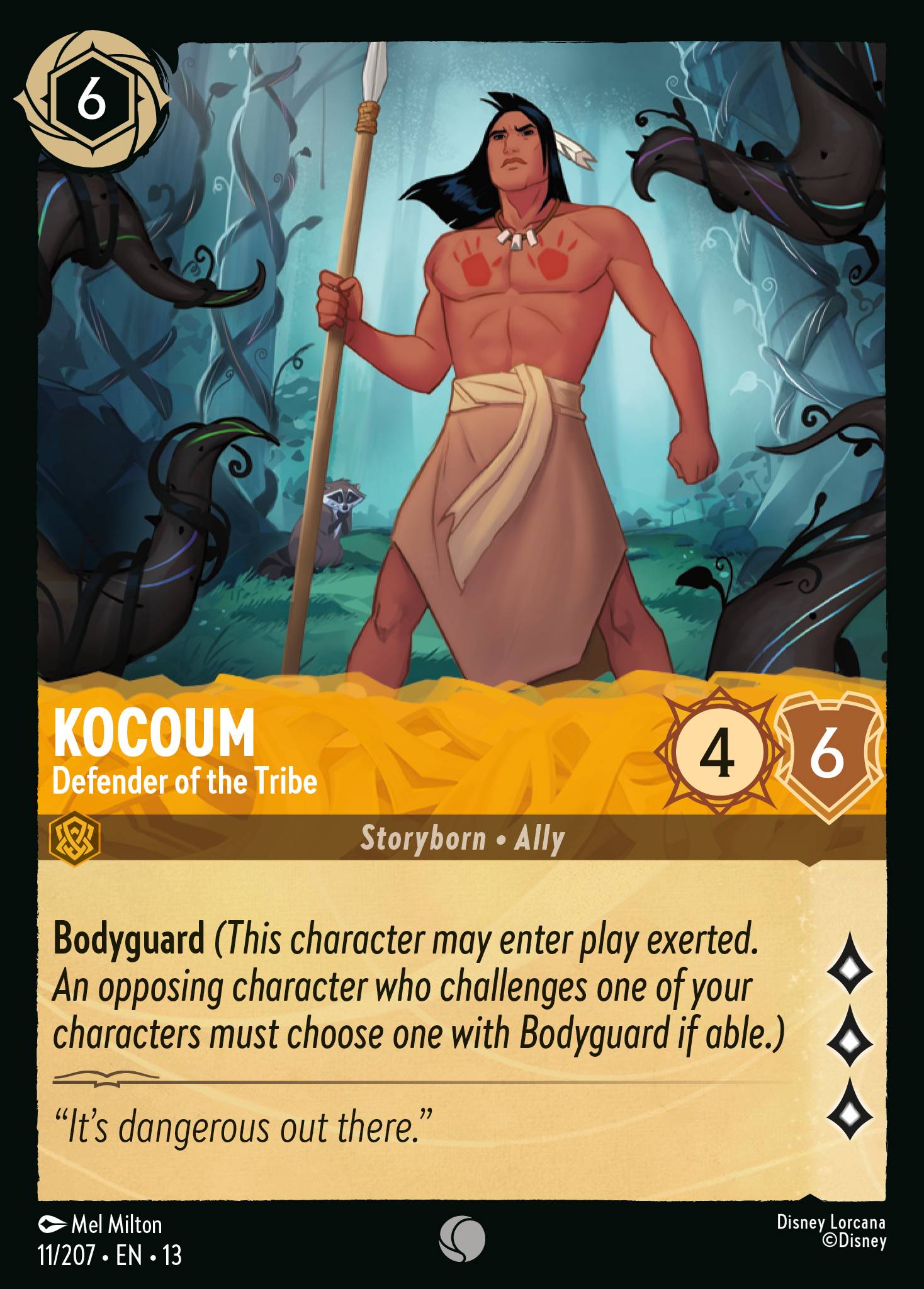
| Protection / songs | Amber's Bodyguard bodies and song support to shield your threats and add free value (sing your bigger cards while ramping). |
| Card draw | Draw to refill after spending cards on ramp, so you don't run out of gas. |
Validate before you sleeve: The cards above are verified Sapphire ramp staples, but Lorcana rotates and the exact legal, budget list shifts. Build your 60 on Dreamborn.ink or inkDecks and confirm both legality (Core vs. Infinity) and the live total before buying — and decide your format first, since it determines which classic ramp pieces are legal.
6. A Sample Ramp Sequence
Here's how the acceleration compounds in practice — an idealized opening that shows why the engine cards matter:
- Turn 1: Ink a card. Play a cheap quester or hold. (1 ink available.)
- Turn 2: Ink a card (2 ink). Develop a cheap body.
- Turn 3: Ink (3 ink). Play Fishbone Quill, then immediately use it to put a card from hand into your inkwell. You now have effectively 4 ink on turn 3 — a full turn ahead.
- Turn 4: Ink (5 ink), Quill again (6 ink). You drop a six-cost bomb on turn four that your opponent won't see until turn six.
- Turn 5+: You're now playing a bigger game every turn — deploying threats early, questing for lore, and protecting your board while opponents scramble to catch up.
The lesson: the ramp cards feel like "doing nothing" early, but every activation is buying you a turn of tempo on your most expensive, most powerful cards. Ramp doesn't win the first three turns — it wins turns six through ten.
7. Building It Under $50
Ramp is genuinely budget-friendly because the engine is cheap and the expensive part is optional. Fishbone Quill and most ink-acceleration pieces are inexpensive commons and uncommons (a community Amber/Sapphire ramp-and-swarm build has come in right around $49 all-in). The cost only climbs if you reach for premium chase bombs at the top end — and you can usually swap those for cheaper high-cost threats without breaking the deck.
Budget rules of thumb:
- Spend on the engine, trim the trophies. A cheap, reliable ramp package matters more than the single flashiest bomb.
- Pick your format first. A casual/Infinity build can use cheaper rotated pieces; a Core build needs legal current cards but the ramp core stays affordable.
- Run several top-end threats, not one. Redundancy beats a single expensive haymaker that gets answered.
- A Sapphire starter deck is a cheap on-ramp — several recent sets shipped Sapphire starter decks you can cannibalize for ramp pieces.
Buy the engine first
Engine before bombs: Fishbone Quill and Gramma Tala – Storyteller first, then Belle – Strange but Special as the payoff. TCGplayer grades condition to one standard and its mass-entry box takes the whole 60-card list at once, so all three land in a single cart; eBay is the place to check for cheap bulk lots and out-of-print pieces. A Sapphire starter deck is the cheapest way into the shell — this build cannibalises one — and a first deck still needs sleeves and a deck box.
Once the 60 is sleeved, our Celestial zoned playmat gives the inkwell and the play area their own marked spaces — handy when your inkwell is the biggest thing on the table.
As an Amazon Associate, Geeky Domain earns from qualifying purchases. eBay links are affiliate links; Geeky Domain may earn a commission at no extra cost to you.
8. Piloting Tips
- Ramp first, develop second. In the early turns, prioritize getting your ink engine online over playing a body for the sake of it.
- Ink your worst card. When you ramp with Fishbone Quill, feed it the card you least want to play — situational answers, extra copies, or anything stuck in your hand.
- Don't over-ramp. Once you can reliably cast your threats, stop. Extra ink past that point is just lost cards.
-
Hold protection for your key bomb. Amber's Bodyguards and resist effects are most valuable shielding the one threat that's winning you the game.
- Mind your song/ink tension. If you want to sing an expensive song, keep a high-cost character in hand rather than inking it.
9. Where Ramp Players Misplay
These are the mistakes that turn a strong ramp deck into a clunky one.
Misplay #1: Over-ramping.
The most common ramp error. You feel productive stacking your inkwell, but every excess card past what you need to cast your threats is a dead card you'll never play. Ramp to your curve, then switch to deploying and questing.
Misplay #2: Inking the wrong card.
Ramping a card you actually needed — a key threat, your lore payoff, a protection piece — sets you back more than the ramp gains you. Always feed the engine your least useful card, and think one turn ahead about what you'll want to cast.
Misplay #3: No early board presence at all.
Pure ramping with zero early bodies leaves you wide open to aggro, which can quest you out of the game before your bombs land. Run a few cheap, efficient characters so you're not totally passive on turns 1–3.
Misplay #4: Treating it like a control deck.
The Amber version isn't a pure stall deck — it has fewer removal tools than Sapphire/Steel. Your job is to build a dominant board and race to lore, not to answer everything. Be proactive once your ramp comes online.
10. Matchups
- vs. control / other midrange: Favored. Your ramp lets you deploy threats faster and grind harder than decks playing on a normal curve.
- vs. aggro: Your hardest matchup. They can quest to 20 before your bombs stabilize the board. Mulligan for early bodies and any cheap interaction, and don't ramp so greedily that you fall behind on the board.
- vs. other ramp: A race of efficiency — whoever ramps more cleanly and lands the more impactful threats wins. Don't waste ink; sequence tightly.
- vs. removal-heavy decks: Lean on Amber's protection and run redundant threats so a single answer doesn't undo your whole game plan.
11. Frequently Asked Questions
Is Sapphire/Amber better than Sapphire/Steel for ramp?
They're different flavors. Sapphire/Steel is the classic, removal-and-control take; Sapphire/Amber is more proactive, leaning on go-wide bodies, songs, and lore. If you like building a board and racing, Amber fits; if you prefer answering threats and grinding, Steel does.
What's the single most important card to get first?
A repeatable ramp engine like Fishbone Quill. It's cheap, it accelerates every turn, and it's the piece the whole strategy is built around. Buy the engine before the bombs.
Can ramp actually compete, or is it just a casual deck?
Sapphire ramp shells have been competitive since the game launched and remain a real meta presence. The budget version won't have every premium top-end card, but the core strategy is genuinely strong at most tables.
How do I not lose to aggro every game?
Don't ramp on autopilot. Against fast decks, prioritize early bodies and stabilizing the board over greedily stacking your inkwell. A turn-three blocker can matter more than a turn-five bomb if you're dead before turn five.
Does the exact decklist matter, or just the roles?
The roles are what make the deck work; the specific cards shift with rotation and budget. Build the skeleton above with current legal cards, validate it on a deckbuilder, and you'll have a sound list regardless of which set you're in.
12. Quick Cheat Sheet
- The plan: ramp ink early → deploy bombs ahead of curve → convert board lead to lore.
- Sapphire = engine (extra ink, items, payoffs); Amber = finish (bodies, songs, protection, lore).
- Key engine cards: Fishbone Quill, Gramma Tala; payoff: Belle – Strange but Special.
- Golden rule: ramp to your curve, then stop — and always ink your worst card.
- Hardest matchup: aggro. Keep early bodies; don't over-ramp into a fast clock.
- Budget: the engine is cheap (~$50 builds exist); spend there, trim the top-end trophies.
- Always: pick your format, then validate the list and prices on a deckbuilder.
Flood the Well, Drop the Bombs
Sapphire/Amber ramp proves patience wins games. Build the cheap ink engine, line up a few oversized threats, and out-resource the table one turn ahead the whole way.
Explore the Lorcana Hub →Keep building: see the inkable vs. uninkable guide (essential for any ramp deck), our budget Steelsong midrange, and the Singer & Songs guide for the Amber half.
© GEEKYDOMAIN.COM | Strategy Powered by Data