

Big, flashy, and famously expensive — but Dragons are one of the most budget-friendly tribes in Magic if you know which cards carry the deck. Here's the engine, two builds, and how to land your fliers a turn early.
Some links below are affiliate links. If you buy through them, Geeky Domain may earn a small commission at no extra cost to you.
The Short Version
Dragons win by ramping into a wall of evasive fliers, then converting each new Dragon into damage with payoffs like Scourge of Valkas and Terror of the Peaks. The deck's one weakness — Dragons cost a lot of mana — is solved cheaply by the cost-reducers Dragonlord's Servant and Dragonspeaker Shaman, which together make your Dragons cost three mana less. Two budget homes: a mono-red Lathliss Commander build (easiest, community lists land around $75) and a 5-color Ur-Dragon build (flashiest, harder to keep under $100). Most staples cost under $1, so the tribe punches far above its price.
In This Guide
- → Which Build Is Right for You
- → How Dragons Actually Win
- → The Cost-Reducer Trick (Your Most Important Cards)
- → Build #1: Mono-Red Lathliss (The Easy Entry Point)
- → Build #2: 5-Color Ur-Dragon (The Dream Build)
- → The Shortcut: Start With a Precon
- → A Sample Opening Curve
- → Building Under $100
- → Where Dragon Players Misplay
- → Matchups
- → Frequently Asked Questions
- → Quick Cheat Sheet
Which Build Is Right for You
Dragons tribal lives almost entirely in Commander — the format's bigger life totals and singleton variety reward a "play a giant flier every turn" plan. Before the cards, here's the fast decision. Skim the table, pick your row, and the rest of the guide fills it in.
| Build | Colors | Budget | Difficulty | Best if you want… |
|---|---|---|---|---|
| Lathliss (Cmdr) | Mono-Red | Easiest under $100 | Beginner | The simplest mana base and a clear go-tall plan |
| Karrthus (Cmdr) | Jund (B/R/G) | Moderate | Intermediate | Haste, recursion, and removal in three colors |
| The Ur-Dragon (Cmdr) | 5-Color | Tightest fit under $100 | Advanced | Every Dragon ever printed, flashiest games |
| 60-card casual | Mono-Red / R-x | Cheapest overall | Beginner | Kitchen-table play without learning Commander |
This guide focuses on the two we recommend most: mono-red Lathliss as the easy entry point, and 5-color Ur-Dragon as the dream build. The shared engine below powers all four.
How Dragons Actually Win
Strip away the spectacle and Dragons is a simple value plan with three moving parts:
- Ramp ahead of curve so you can deploy expensive fliers a turn or two early.
- Land evasive threats — almost every Dragon flies, so your board is hard to block and chips opponents down fast.
- Convert each new Dragon into extra damage with payoffs that trigger whenever a Dragon enters or attacks.
That third leg is what turns "a pile of big creatures" into a deck. The signature payoffs:
| Payoff | What it does | Why it matters |
|---|---|---|
| Scourge of Valkas | Each Dragon that enters deals damage equal to your Dragon count | Turns every deploy into a burn spell that scales as you go wide |
| Terror of the Peaks | Deals damage equal to a creature's power when any creature enters | A second, redundant burn engine — huge Dragons hit hard on entry |
| Utvara Hellkite | Makes a 6/6 Dragon token whenever a Dragon attacks | Snowballs your board into an unbeatable air force |
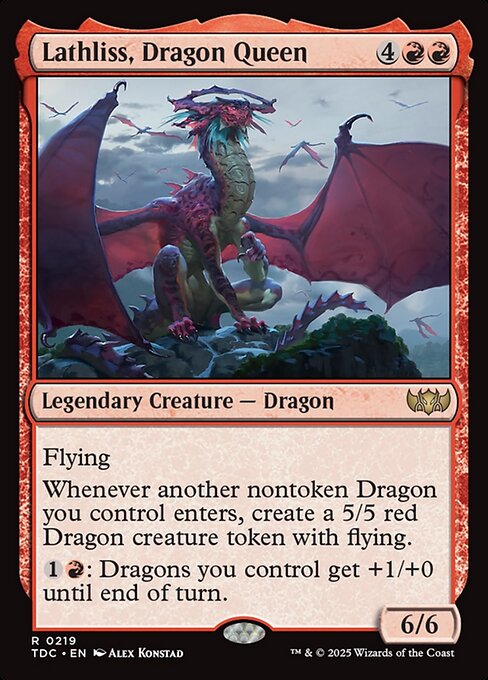
| Lathliss, Dragon Queen | Makes a 5/5 token when a nontoken Dragon enters; can pump the team | Doubles your bodies and works as commander or in the 99 |
| Dragon Tempest | Gives haste, and burns when Dragons enter | Lets your fliers attack immediately and adds reach |
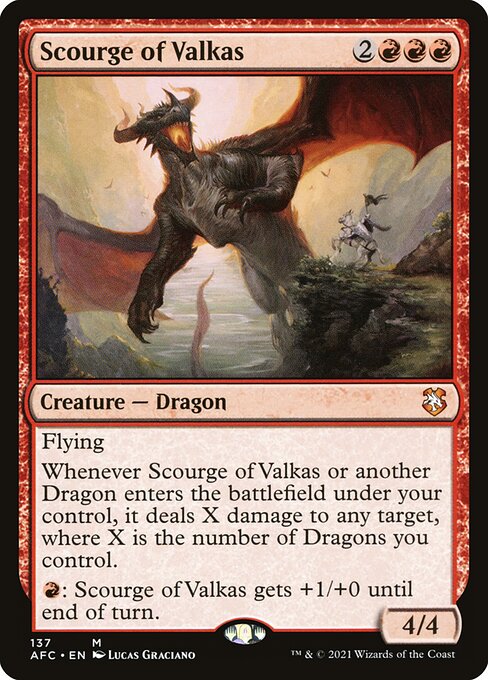
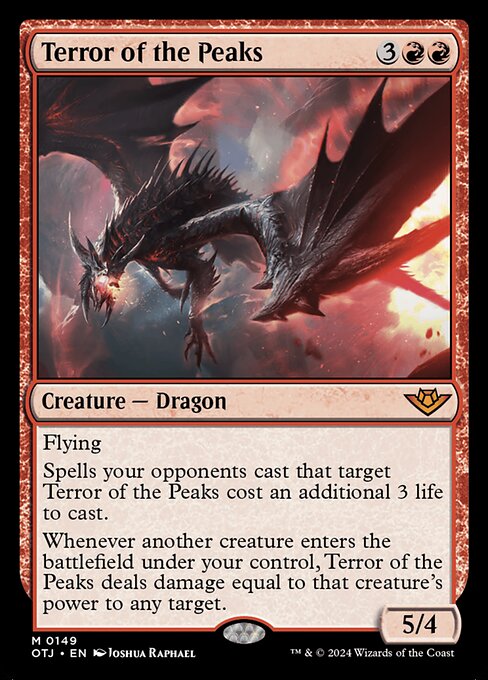
The engine in one line: Ramp early → drop a Dragon → a payoff turns that Dragon into damage or a token → repeat with a bigger board each turn. The deck wins by making every Dragon do two jobs at once.
The Cost-Reducer Trick (Your Most Important Cards)
Here's the single most important concept in budget Dragons, and the thing that separates a deck that flounders from one that pops off: Dragons are mana-hungry, and cost-reducers fix that for pennies.
Two cheap creatures carry the whole curve:
- Dragonlord's Servant — your Dragons cost 1 less.
- Dragonspeaker Shaman — your Dragons cost 2 less.
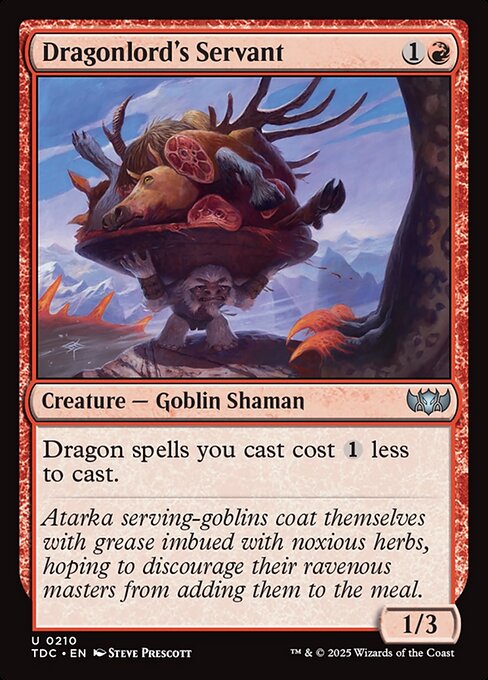
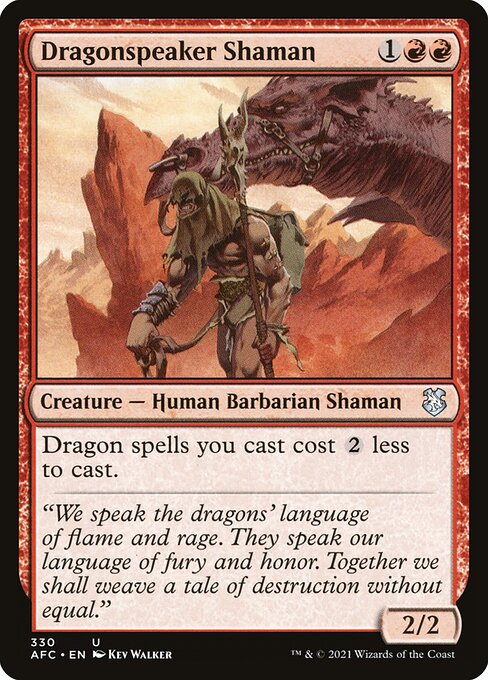
Individually they're nice. Together they make your Dragons cost three mana less — which means a six-mana bomb lands on turn three or four, well ahead of what your opponents expect. Because they reduce generic mana on every Dragon you play (not a one-time rebate), they compound across the whole game. Most experienced Dragon pilots favor these over plain mana rocks for exactly that reason. Both are typically well under $1.
Round out your ramp with the dedicated Dragon support: Sol Ring and Arcane Signet (Commander staples), the green ramp spells (Cultivate, Rampant Growth, Farseek) in multicolor builds, and the Dragon-specific lands Haven of the Spirit Dragon and Crucible of the Spirit Dragon.
Build #1: Mono-Red Lathliss (The Easy Entry Point)
Commander: Lathliss, Dragon Queen. This is the build to start with. One color means the cheapest, most consistent mana base, and Lathliss's plan is dead simple: every nontoken Dragon you play makes a free 5/5, so you're always doubling your board. It's the most forgiving way to learn the tribe, and it comfortably fits under $100 (community builds land around $75).
The role skeleton:
| Role | Verified examples |
|---|---|
| Cost-reducers | Dragonlord's Servant, Dragonspeaker Shaman |
| Ramp | Sol Ring, Mind Stone, Sarkhan, Fireblood, Ruby Medallion |
| Payoffs | Scourge of Valkas, Terror of the Peaks, Utvara Hellkite, Dragon Tempest |
| Cheap Dragons | Glorybringer, Thunderbreak Regent, Stormbreath Dragon, Hellkite Charger |
| Card draw | Dragon's Hoard, Knollspine Dragon |
| Tutors / finishers | Sarkhan's Triumph, Utvara Hellkite, Scourge of Valkas |
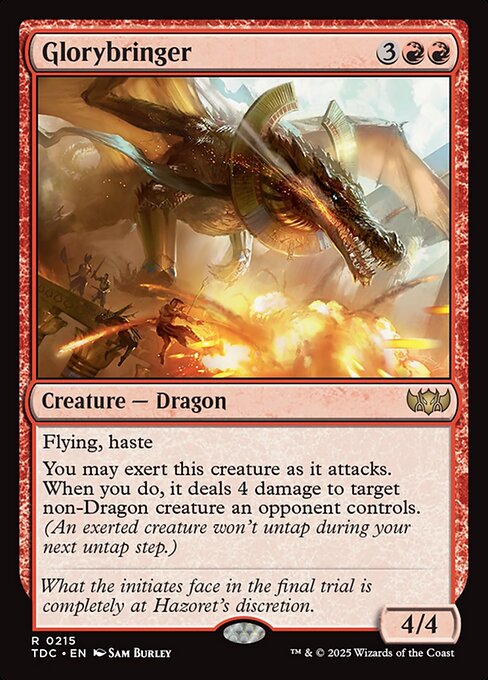
Every card above is verified as a real, budget-friendly Dragon staple. The exact 99 should be confirmed and priced on a deckbuilder before you buy — see the validate note below.
Build #2: 5-Color Ur-Dragon (The Dream Build)
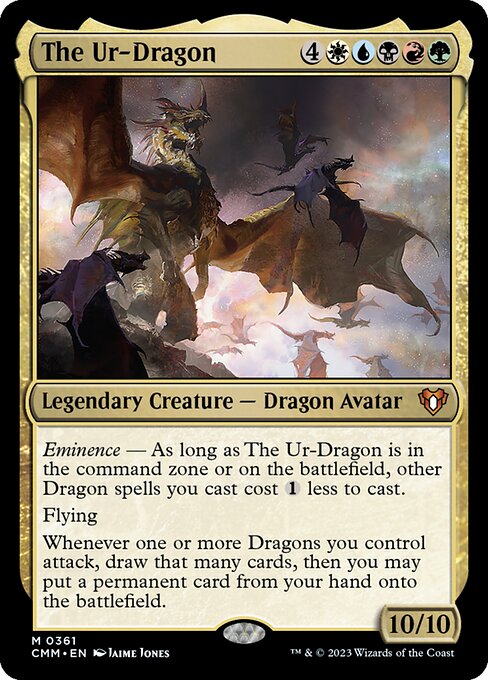
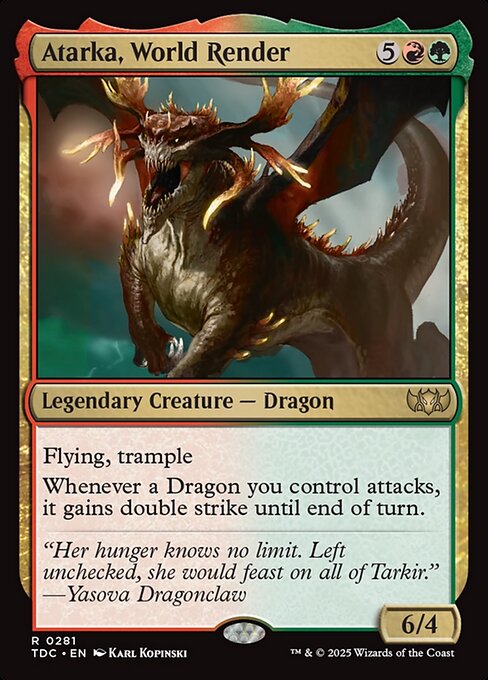
Commander: The Ur-Dragon. This is the flashy one — five colors means you can run every Dragon ever printed, including the iconic Dragonlords (Atarka, Ojutai, Kolaghan, Dromoka, Silumgar). The Ur-Dragon itself reduces your Dragon spells and refills your hand when your Dragons attack.
The catch, and the reason this build is rated "advanced": a five-color mana base is the hardest part to keep cheap. You lean on budget fixing — Command Tower, Chromatic Lantern, Evolving Wilds, the green fetch-ramp (Farseek, Cultivate) — and the Dragon-specific lands. Squeezing all five colors plus a deep Dragon roster under $100 is doable but tight; expect to make some cuts the mono-red build doesn't force.
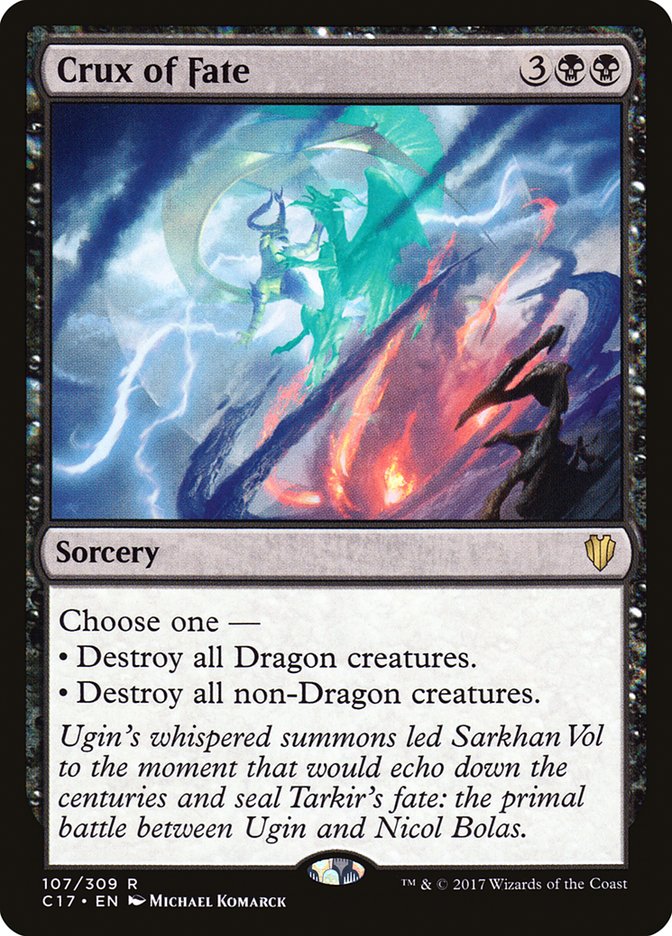
The payoff for the extra effort is access to the full toolbox: Crux of Fate (a board wipe that can destroy all non-Dragons, leaving your board intact), the asymmetric removal Dragons get in black, and the sheer ceiling of casting multiple Dragonlords in a turn. If you want the build that makes the table groan when you untap, this is it.
Dragonlord's Servant and Dragonspeaker Shaman are the cheapest singles in the deck; a Tarkir: Dragonstorm Commander precon is the fastest way to a playable list.
As an Amazon Associate, Geeky Domain earns from qualifying purchases. eBay links are affiliate links; Geeky Domain may earn a commission at no extra cost to you.
The Shortcut: Start With a Precon
If you'd rather skip the deckbuilding entirely, there's a genuinely good shortcut right now: Tarkir: Dragonstorm Commander decks are preconstructed, ready-to-play Dragon-themed decks that retail in roughly the $28–60 range each. They're an out-of-the-box entry into the tribe, and they double as a parts donor — you can buy one, play it as-is, then upgrade toward one of the builds above using singles. For a beginner who wants to play this week, a precon plus a handful of cheap upgrades is often the smartest path under $100.
A Sample Opening Curve
Here's how the cost-reducer engine compounds in practice — an idealized Lathliss opening to show the why behind the card choices:

- Turn 1: Land, Sol Ring. You're now a full turn ahead on mana.
- Turn 2: Land, Dragonlord's Servant. Every future Dragon now costs 1 less.
- Turn 3: Land, Dragonspeaker Shaman. Your Dragons now cost 3 less combined — a six-drop is suddenly castable.
- Turn 4: Drop Scourge of Valkas, then a discounted Dragon. The new Dragon triggers Scourge (burn to the face) and Lathliss (free 5/5 token), which also triggers Scourge again.
- Turn 5+: Every Dragon you play now lands early, burns on entry, and spawns a token. The board snowballs faster than opponents can wipe it.
The lesson the curve teaches: the cost-reducers aren't filler — they're the reason the expensive payoffs come online a turn or two before your opponents are ready for them.
Building Under $100
Dragons is one of the most budget-forgiving tribes precisely because the payoffs are cheap and the expensive cards are optional. The core engine — cost-reducers, Scourge of Valkas, Terror of the Peaks, Dragon Tempest, and a stack of efficient mid-cost Dragons — is largely sub-$1 cards. The price only climbs if you reach for premium Dragonlords or fast mana you don't need.
Practical budget rules:
- Mono-red first. The cheapest, most consistent mana base, built on cheap red staples. Add colors only when you want specific cards.
- Spend on the engine, not the trophies. A $0.50 cost-reducer does more work than a $15 chase Dragon.
- Use cheap fixing in multicolor. Command Tower, Evolving Wilds, and green ramp keep five colors affordable.
- Consider a precon as the chassis and upgrade with singles over time.


Validate before you sleeve: The cards here are verified as real, budget Dragon staples, but exact prices and the final 99 shift over time. Build your list and confirm the live total on a deckbuilder like Moxfield or Archidekt before buying — and check current singles prices, ours included, rather than trusting any fixed dollar figure.
Where Dragon Players Misplay
These are the mistakes that quietly lose games — the difference between a deck that looks scary and one that actually closes.
Misplay #1: Trading the cost-reducers in combat.
Dragonlord's Servant and Dragonspeaker Shaman look like chump blockers, but they're your acceleration. Chump-blocking with them to save 2 life and then watching your whole curve slow down is a losing trade. Protect them — they're worth more than most of your actual Dragons.
Misplay #2: Not running enough ramp.
New Dragon builders fall in love with the fliers and under-build the mana. A Dragon deck without a healthy ramp package just sits with a hand full of uncastable bombs. The fliers are the reward; ramp and reducers are the price of admission.

Misplay #3: Over-committing into a board wipe.
Dragons go wide fast, which makes you the table's wipe magnet. Dumping your whole hand to build the biggest board invites a sweeper that sets you back further than anyone. Hold a Dragon or two in reserve, and lean on Crux of Fate (in black builds) as your own one-sided wipe.
Misplay #4: Forgetting your Dragons fly.
It sounds obvious, but players often grind the ground game when their whole board has evasion. Against go-wide ground decks, you don't need to block — you race in the air, and your payoffs close before they get there.
Matchups
- vs. slow / ramp / control: Favored. Your evasive clock and burn payoffs punish durdling — pressure early and don't give them time to set up.
- vs. go-wide ground decks (tokens, aggro): Favored in the air, but respect their reach. Race rather than block, and use Scourge/Terror to clear key blockers.
- vs. board wipes: Your toughest matchup. Sandbag threats, don't over-extend, and value cost-reducers so you can rebuild fast after a sweep.
- vs. flyers / spot removal: Single removal trades down against a deck that makes a Dragon every turn. The danger is mass removal, not one-for-ones.
Frequently Asked Questions
Can Dragons really be competitive on a budget?
In casual and mid-power Commander, absolutely. The engine cards are cheap, and an early cost-reducer start can outpace far more expensive decks. It's not a cutthroat cEDH contender, but for the vast majority of tables it's a powerful, fun deck.
Mono-red or five colors?
Start mono-red with Lathliss — it's cheaper, more consistent, and easier to pilot. Move to The Ur-Dragon once you want access to the full Dragon roster and don't mind a pricier, fiddlier mana base.
What's the most important card to buy first?
The cost-reducers and a payoff or two — Dragonlord's Servant, Dragonspeaker Shaman, and Scourge of Valkas do more for your deck than any single expensive Dragon. Build the engine before the trophies.
Is buying a precon worth it?
For beginners, often yes. A Tarkir: Dragonstorm Commander deck gets you playing immediately for well under $100 and gives you a base to upgrade. If you'd rather build from scratch for full control, the role skeletons above are your blueprint.
Does this work in 60-card formats?
Yes — a mono-red or red-x Dragons deck is a fine kitchen-table 60. You lose access to the multicolor toolbox, but the cost-reducer-plus-payoff core works the same. Commander is just where the tribe shines brightest.
Quick Cheat Sheet
- The plan: Ramp early → land evasive Dragons → payoffs turn each Dragon into damage or tokens.
- Your best cards: the cost-reducers (Dragonlord's Servant, Dragonspeaker Shaman) — protect them.
- Core payoffs: Scourge of Valkas, Terror of the Peaks, Utvara Hellkite, Dragon Tempest, Lathliss.
- Easy build: mono-red Lathliss (~$75). Dream build: 5-color Ur-Dragon (tight under $100).
- Shortcut: a Tarkir: Dragonstorm precon, upgraded with singles.
- Biggest mistakes: trading reducers in combat, skimping on ramp, over-extending into a wipe.
- Always: validate the list and live prices on a deckbuilder before you buy.
The Verdict: Buy the Engine, Not the Trophies.
Start with mono-red Lathliss — it is the cheapest, most consistent version of the tribe and it lands comfortably under $100. Buy the cost-reducers and two or three payoffs before any premium Dragonlord, because those sub-$1 cards are what make the expensive fliers castable a turn early. If you want to play this week instead of building, a Tarkir: Dragonstorm precon plus a handful of singles gets you there.
Keep Learning
- → Magic: The Gathering Strategy Hub
- → Best Budget MTG Goblins Tribal Deck Under $100 (2026)
- → Best Budget Dual Lands in MTG (2026 Guide)
- → Building a Budget Mana Base That Works
- → Best MTG Red Commander Staples Under $5
- → Best Budget Golgari Commander Staples
- → Which Commander Precon Should You Buy?
- → Building a $50 Commander Deck: The Ultimate MTG Budget Blueprint
© GEEKYDOMAIN.COM | Strategy Powered by Data