

Best One Piece TCG Starter Deck For Beginners
Forget the tier lists for a second — here's how to actually pick the starter deck that's right for you.
Some links below are affiliate links. If you buy through them, Geeky Domain may earn a small commission at no extra cost to you.
→ Short Version
A One Piece TCG starter deck is a fixed, pre-built 51-card deck with one leader, made to get a new player playing immediately for far less than building a deck from boosters or singles. This guide isn't about which starter deck wins the most games — that's a separate question already answered in our starter deck power ranking. It's about which deck actually fits you: the character and color you'd enjoy playing, and the deck that teaches the game's core mechanics most cleanly so your first few games make sense. Pick the deck that matches a character you like, learn on it, then decide whether to upgrade.
→ Related Reading
In This Guide
- → What a Starter Deck Actually Gives You
- → Starter Deck vs. Booster Box: The Real Difference
- → How to Pick a Starter Deck by Color and Character
- → Which Starter Decks Teach the Game Most Cleanly
- → A Concrete Example: The Green Mihawk Path
- → When to Upgrade Past Your Starter Deck
- → Common Starter Deck Mistakes to Avoid
- → Where Starter Decks Fit in Your Long-Term Collection
If you've been circling the One Piece TCG for a while — maybe you've watched a few match videos, maybe a friend keeps bringing their deck box to lunch — the starter deck aisle is where almost everyone actually begins. That's true whether you're a lifelong fan of the anime picking Whitebeard because he's your favorite, or someone who just wants to know how the mechanics fit together before spending real money on singles. This guide skips the "which starter deck wins the most local tournaments" question entirely — we already cover that ground, in detail, in our starter decks ranked by competitive strength article, and duplicating it here wouldn't serve you. Instead, this is about the more personal question: which deck should you buy first, given who you like, how you like to play, and how cleanly you want to be taught the game.
That distinction matters more than it sounds like it should. A deck that's slightly weaker in a competitive sense but teaches you exactly how the color's mechanics are supposed to work — and is built around a character you're excited to play — will usually get you further as a beginner than a deck that wins on paper but leaves you confused about why. If you haven't read through the actual rules yet, it's worth doing that first; our full rules guide covers turn structure, Life cards, and combat in plain language, and everything below will make more sense once those basics are in place.
What a Starter Deck Actually Gives You
A One Piece TCG starter deck (these are labeled with an "ST" prefix, distinct from the numbered main sets) is a fixed, pre-built 50-card deck plus one Leader card, sold as a single sealed product. There's no randomness involved — every copy of a given starter deck contains the exact same cards, in the exact same ratios, every time. That's the whole point: it's a known quantity, built specifically to get someone from "never played" to "playing a full game" as fast and as cheaply as possible. Most starter decks also include a rules insert or quick-reference sheet in the box, which is genuinely useful the first few times you sit down to play before the sequencing becomes second nature.
Because the deck is fixed, you're not just buying cards — you're buying a coherent strategy that someone else already assembled for you. The Leader card sets the deck's color (or colors, since some Leaders are dual-color), its Life total, and usually a passive or triggered ability that shapes how the whole 51 cards are meant to work together. You don't need to understand deckbuilding theory to pick up a starter deck and have it function the way it's supposed to — that groundwork is already done. This is a big part of why starter decks are consistently the cheapest way into the game; you are not paying booster-box economics or single-card markups, you're paying for a complete, playable unit.
Starter Deck vs. Booster Box: The Real Difference
The comparison beginners usually get stuck on is starter deck versus booster box, and the honest answer is that they're not really solving the same problem. A booster box is a case of sealed packs with randomized contents — you might pull several copies of a card you don't need and none of the one you do, and you still have to build a legal, functional deck out of whatever you end up with. A starter deck skips all of that uncertainty: you open the box and you have a complete 51-card deck with a Leader, ready to play, full stop. We won't put a specific dollar figure on the gap here since pricing shifts by region and retailer, but the difference is consistently large enough that "cheapest possible way to start playing" and "starter deck" are basically synonymous in this game.
Where booster boxes win is upside and long-term value — you might open a genuinely valuable chase card, and boosters are how you eventually build a deck tuned to the current competitive meta rather than a fixed beginner list. If you want the fuller breakdown of that tradeoff, including when singles-buying beats box-breaking, our booster box vs. singles budget math guide walks through it in detail. For a first purchase, though, a starter deck removes almost all the risk: no guessing whether you pulled enough playable cards, no gluing together a legal 51-card list from a stack of random pulls on night one.
How to Pick a Starter Deck by Color and Character
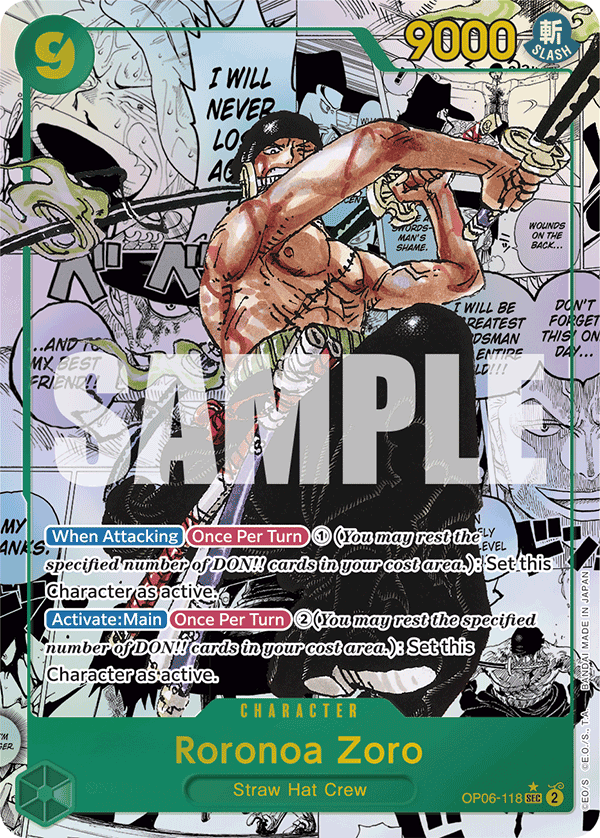
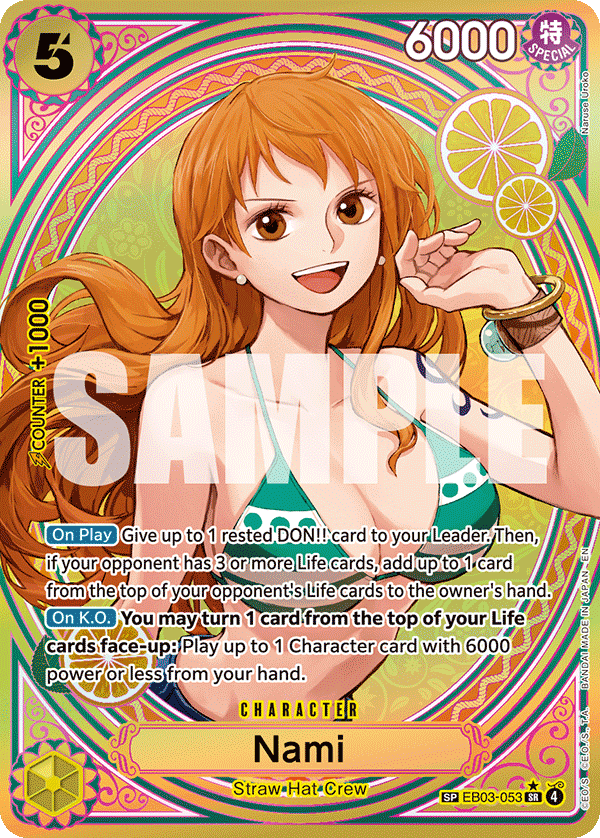
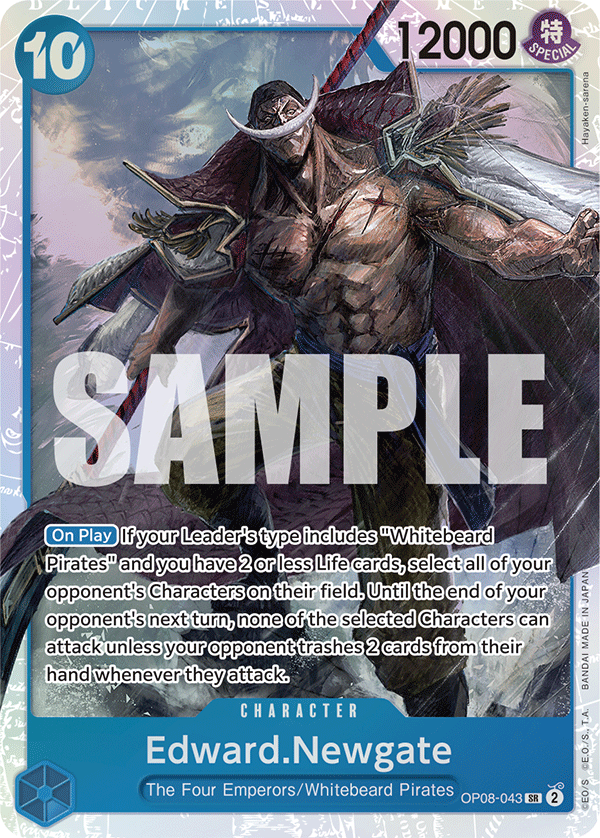
Once you understand what a starter deck is, the actual decision comes down to two questions: which character do you want leading your deck, and which color's playstyle sounds fun to you. Every Leader in the game belongs to one or two colors, and those colors carry real mechanical identities — some lean into aggressive early pressure, some are built around card advantage and grinding out a long game, some focus on disrupting what your opponent is trying to do. None of that is secret or locked behind advanced knowledge; it's visible on the cards themselves once you know what to look for.
This is genuinely the part beginners are allowed to make an emotional decision on. If you've watched the anime and you're a Zoro person, a Nami person, or a Warlords person, that's a completely legitimate reason to pick a starter deck — you're far more likely to keep playing a deck built around a character you're invested in than one you picked purely off a spreadsheet. The competitive strength differences between starter decks, which is what our starter decks ranked article measures, matter far less at this stage than whether you actually want to keep picking up the deck. A slightly weaker deck you love playing beats a slightly stronger deck you resent.
That said, character preference and mechanical preference aren't always the same thing, so it's worth pausing on what each color tends to reward before you commit. If you like methodical, defensive play where you're setting up a board state and waiting for the right moment, look at colors known for control and removal. If you'd rather be applying pressure from turn one and forcing your opponent to react to you, an aggressive color will feel much better in your hands. None of this requires memorizing the full card pool — the Leader's printed ability and the deck's general color identity, both visible on the box, tell you almost everything you need going in.
Which Starter Decks Teach the Game Most Cleanly
Beyond "which character do I like," there's a second, more practical filter worth applying: how cleanly does this deck teach the core loop of the game? Some starter decks lean on straightforward combat math — attack, block, counter, resolve — with very little text to parse on each card. Others are built around a specific mechanic (a particular keyword ability, a resource-management wrinkle, a synergy between the Leader and a handful of Character cards) that's more interesting once you know the game, but genuinely confusing on turn one if you're still learning what a Don!! card even does. As a rule, if you're brand new, a deck that plays close to "vanilla" — big stats, simple triggers, few exceptions to learn — will get you comfortable with turn structure and combat faster than a deck full of conditional text.
This is also where reading a full rules explanation before you buy pays off, because you'll be able to look at a starter deck's Leader ability on the shelf or online and immediately tell whether it's asking you to track something complicated (counters, revealed cards, specific card-type synergies) or whether it's mostly just "this card is bigger than it should be." Our rules guide covers the full turn sequence, so cross-referencing a Leader's printed text against that structure will tell you fairly quickly whether a given starter deck is a "learn the game" deck or a "learn this deck's specific trick" deck. Both are fine choices — just know which one you're getting.
It's also worth understanding, early, that not every card in a starter deck is equally important, and that rarity isn't the same thing as playability. A starter deck's best card for actually winning games is very often a plain common or uncommon that does something efficient and repeatable, not the flashiest rare in the box. If you want to understand how the game's rarity tiers work and why a Super Rare isn't automatically better than a Common in your deck, our rarity guide breaks that down — it'll save you from the common beginner mistake of assuming the shiniest card in your starter deck is also the one you should be building around.
A Concrete Example: The Green Mihawk Path
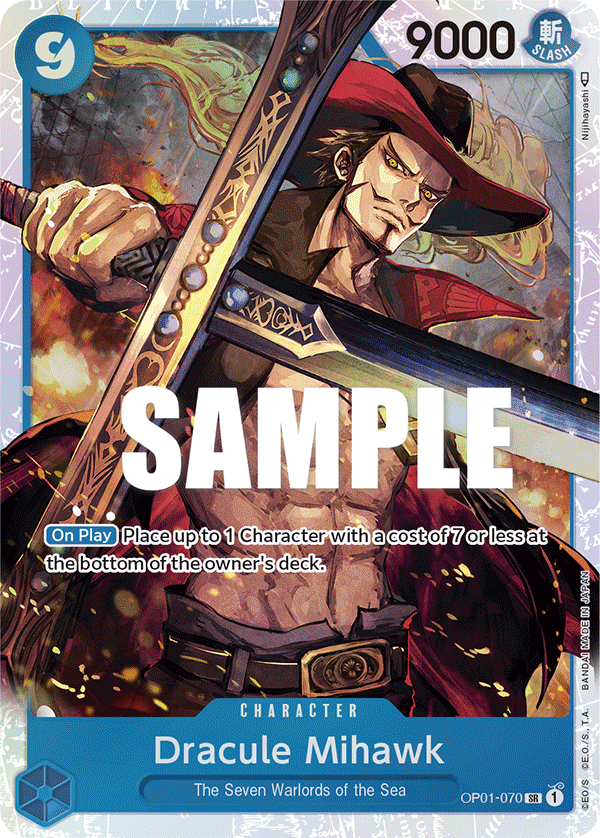
It helps to walk through one real path from beginner to intermediate rather than talk about starter decks only in the abstract, so let's use Green Dracule Mihawk as the example, since we've already covered where that path leads in detail. A player who's drawn to Mihawk — whether because of the character or because Green's control-and-removal identity sounds appealing — can start on a Green starter deck built around him, learn the color's fundamentals at a low cost, and then have a clear, already-mapped next step waiting: our Green Mihawk budget deck guide picks up exactly where the starter deck leaves off, showing how to build a stronger, still-affordable version of the same character and color without jumping straight to a full competitive singles list.
That's really the ideal shape of a beginner's first year with this game: start on a starter deck that matches a character and color you like, get comfortable with the rules and that color's rhythm, then upgrade incrementally toward a stronger version of the same identity rather than starting over from scratch with an unrelated color. It keeps your existing sleeves, deck box, and card knowledge useful the entire way, and it means every dollar you spend after the starter deck is building toward something you already understand rather than relearning a new color's logic from zero.
When to Upgrade Past Your Starter Deck
A starter deck is not meant to be your forever deck — it's meant to be a fixed, reliable on-ramp, and at some point you'll start noticing the signs that it's time to move past it. The clearest sign is a simple one: you're winning games against the deck itself, not against your opponent, meaning you understand the color and the matchup well enough that the deck's built-in limitations are what's holding you back rather than your own mistakes. Another sign is that you've started wanting to swap specific cards in or out based on what you're actually seeing across the table, which is the first real instinct toward deckbuilding.
When that happens, you don't need to jump straight to a tournament-level competitive list. The natural next step is a budget upgrade in the same color — swapping in a handful of stronger, still-affordable cards while keeping the deck's core identity intact, which is exactly the approach our Green Mihawk budget deck guide takes, and it's a pattern that applies to other colors too. If Purple ends up being more your speed than Green, our Purple Enel deck guide walks through a similar upgrade path for that color. Only once you've outgrown a budget upgrade — and you actually want to compete rather than just improve — does it make sense to look at a full competitive build; our first competitive deck guide is written for exactly that jump, and our meta tier list will tell you where your color currently stands if competitive results are what you're chasing at that point.
Before you get that far, it's worth protecting the cards you already have. A starter deck represents a real, if modest, investment, and sleeves plus a deck box will keep those cards in shuffle-ready condition through however many games it takes you to decide on your next move. Our accessories guide covers sleeves, deck boxes, and playmats specifically for this game if you haven't picked any up yet — it's a small purchase that pays for itself the first time you avoid bending a card mid-shuffle.
Common Starter Deck Mistakes to Avoid
The most common mistake new players make isn't a rules mistake at all — it's buying two or three starter decks at once "to see which one they like" before they've actually played a single game with any of them. It's an understandable impulse, but it's usually more efficient to commit to one deck built around a character or color that already appeals to you, actually play several games with it, and let real experience tell you whether you want to branch out. If you do end up wanting a second color down the line, that's a completely normal part of the hobby — just let it be a second purchase, not a hedge against the first one.
The second common mistake is treating the starter deck's included cards as disposable once you start building a stronger version of the deck. Don't. Even after you upgrade, the cards you pull out are still legal, still functional, and often useful in a second deck, in trades, or just as extras for a friend who wants to learn the game with you. And if you're buying secondhand, sealed, or from a marketplace rather than straight off a store shelf, it's worth knowing what to check — our guide to spotting fake cards covers the basics so you're not caught out on a purchase that's supposed to be the cheap, low-risk part of getting into this game.
Finally, don't let the existence of a competitive tier list talk you out of a deck you actually want to play. Our starter decks ranked guide is a genuinely useful resource once you're deciding between two decks you're equally excited about and want a tiebreaker — but it isn't meant to override "I want to play as this specific character." The whole reason this article exists alongside that one is that a beginner's first deck should be chosen on fit and enjoyment first, and adjusted for power later, once you already know you're going to stick with the game.
Where Starter Decks Fit in Your Long-Term Collection
It's worth zooming out for a moment, because a starter deck is also the first entry in what will hopefully become an actual collection, not just a deck you play with. Even if you never plan to sell or trade, it's useful to understand roughly how value works in this hobby from day one — our collection value guide and our list of the most valuable One Piece cards right now are both useful context, even though nothing in a starter deck is likely to be a headline chase card. Knowing the landscape helps you make sense of why singles cost what they cost when you eventually start buying them individually.
As your collection grows past a single starter deck — a couple of boosters here, a budget upgrade there, maybe a second color you picked up on a whim — it's worth thinking early about how you're going to store all of it. A tidy system now saves you from a shoebox of loose cards later; our binders vs. boxes organization guide lays out the tradeoffs, and our broader guide to building a collection on any budget is a good read once you're thinking past your first deck and toward the collection it's going to become part of. And if you want the bigger picture of how the sets you're pulling from fit together — which is useful context even if you only ever touch a starter deck and a couple of boosters — our set history guide walks through how the game has evolved from OP01 through OP17.
None of this needs to happen immediately, and it definitely doesn't need to happen before your first game. The starter deck's entire job is to get you to that first game as quickly and cheaply as possible — everything else, from budget upgrades to full competitive builds to long-term collecting, is a decision you're free to make later, once you actually know whether this is a game you want to keep playing.
Pick the character, not the tier list
A starter deck is a fixed, low-cost, complete 51-card deck built to teach you the game — and for a first purchase, the deck built around a character and color you actually want to play will serve you better than the highest-ranked option on a competitive list. Learn on it, then upgrade in the same direction once you know you're staying.