

Every ST-31 to ST-36 Starter Deck, Ranked for New Players
Six new leaders, one genuinely surprising two-Luffy twist, and a starter deck that buys you straight into an S-tier competitive archetype. Here's how the July 2026 wave stacks up.
Some links below are affiliate links. If you buy through them, Geeky Domain may earn a small commission at no extra cost to you.
On July 31, 2026, One Piece TCG got a six-deck starter wave at once, ST-31 through ST-36, each led by a different major character and each bundled with a booster pack from OP-16, "The Time of Battle" (OP-16 itself had released a few weeks earlier, on June 12, 2026). That's Monkey D. Luffy, Roronoa Zoro, Kuzan, Charlotte Katakuri, Sabo, and Eustass "Captain" Kid, each headlining their own box — coverage of the wave has been confirmed by outlets like Beckett.
Six starter decks releasing on the same day is a lot to sort through, especially for a new player trying to figure out which box to actually buy. This guide ranks all six — but we want to be upfront about how, because the six decks aren't equally well-documented right now. ST-31's contents are confirmed in real detail, right down to a genuinely surprising quirk in its Leader slot. The other five — ST-32 through ST-36 — only have their leader's name and color confirmed; no card-by-card decklist has been published for any of them as of this writing. So for those five, we're ranking on leader identity and what that character's established reputation reasonably suggests about the deck they'd headline, not on confirmed in-game mechanics. We'll flag exactly which is which as we go.
One deck breaks the pattern entirely, though, and it's the reason this ranking has a clear number one: Sabo's ST-35 isn't just a starter deck leader. He's currently rated an S-tier leader in live competitive tournament trackers for the OP-17 format — a rare case of a beginner box also being a genuine top-tier purchase. More on that below.
→ Short Version
Buy ST-35 (Sabo) first if competitive relevance matters to you at all — he's the one leader in this wave with confirmed S-tier status in current OP-17 trackers, so this starter deck doubles as a genuine competitive purchase, not just a learn-the-game box. Buy ST-31 (Luffy) if you want the most collector-interesting box in the wave — it contains an exclusive alternate-art parallel of an older Luffy leader card plus a separate, brand-new Luffy character card, a real two-Luffy quirk worth knowing about before you open it. The remaining four — ST-32 Zoro, ST-33 Kuzan, ST-34 Katakuri, and ST-36 Kid — don't have confirmed decklists yet, so we rank them on leader appeal and established character reputation only. Any of the six gets you a playable starter deck and an OP-16 booster on top; Sabo and Luffy are simply the two with something extra and verifiable behind them.
→ Related Reading
In This Guide
- → The Wave: What Released and When
- → How We're Ranking These
- → #1 — ST-35: Sabo (Red/Black)
- → #2 — ST-31: Monkey D. Luffy (Red)
- → #3 — ST-32: Roronoa Zoro (Green)
- → #4 — ST-34: Charlotte Katakuri (Purple)
- → #5 — ST-33: Kuzan (Blue)
- → #6 — ST-36: Eustass "Captain" Kid (Yellow)
- → Head-to-Head at a Glance
- → Quick Buyer FAQ
The Wave: What Released and When
All six decks — ST-31, ST-32, ST-33, ST-34, ST-35, and ST-36 — released on the same day, July 31, 2026. Each one ships as its own complete starter deck bundled with one booster pack from OP-16, "The Time of Battle," which had released about seven weeks earlier, on June 12, 2026. Pairing a fresh wave of starters with a booster from the set immediately preceding it is a pattern worth knowing if you're new to the game: it means each box gives you a full pre-built deck around a named leader, plus a handful of cards from the current competitive card pool to experiment with or trade away.
Here's the full lineup, confirmed leader and color for each:
- ST-31 — Red — Monkey D. Luffy
- ST-32 — Green — Roronoa Zoro
- ST-33 — Blue — Kuzan
- ST-34 — Purple — Charlotte Katakuri
- ST-35 — Red/Black — Sabo
- ST-36 — Yellow — Eustass "Captain" Kid
Pricing on this wave hasn't settled into anything we're comfortable quoting a firm figure on yet — like most new starter decks, expect it to sit in the usual affordable, entry-level range for the format, but check current listings for exact numbers rather than trusting a fixed price here.
How We're Ranking These
We want to be transparent about the gap in what's actually confirmed here, because it directly shapes how much we can say about each deck. ST-31's box contents are documented in detail — we know exactly what's inside, including a genuinely surprising wrinkle in the Leader slot (covered in full below). ST-32 through ST-36, on the other hand, only have their leader's name and color confirmed as of this writing. No card list has been published for any of those five.
So rather than pretend we know what's in those five boxes, we're ranking them on two things a new player can reasonably weigh even without a decklist: who the leader is, and what that character's established reputation from the anime and manga suggests about the kind of deck built around them. Zoro's reputation is built on aggressive, head-on combat. Katakuri's is built on calculated, controlled precision. Kid's is built on brute physical force. None of that is a confirmed in-game mechanic for these five decks — it's a reasonable read on what the character brings to the table, offered as exactly that and nothing more. Treat the rankings for ST-32 through ST-36 as "which leader would I most want to build around," not "which deck is objectively stronger," because the second question genuinely can't be answered yet.
Sabo and Luffy are the two exceptions, and for different reasons — one because of hard data from the competitive scene, one because of a confirmed, unusually specific detail about what's physically in the box. That's why they sit at the top.
#1 — ST-35: Sabo (Red/Black)
There's no real competition for the top spot. Sabo's ST-35 is the standout pick in this entire wave, and the reason has nothing to do with character reputation or box contents guesswork — it's a confirmed fact about where he currently sits in the competitive scene, backed by more than one source. As of this writing, Sabo is rated an S-tier leader in the OP-17 format by both opmetagame.com's tracked results and the tier lists onepiece.gg maintains, with a TCGplayer "best decks" roundup naming him among the format's top performers too. That's not a starter-deck marketing claim; it's the same competitive standing that top-tier chase decks are being judged on right now.
What makes that genuinely notable is how rarely it happens. Starter decks, in this game and most others, exist to teach new players the rules — they're built to be approachable, not to compete at the top of a format, and most players expect to fully replace a starter's core once they start taking the game seriously. Sabo breaks that pattern. A brand-new player who picks up ST-35 off the shelf isn't buying a "learn the ropes and upgrade later" deck. They're buying directly into a top-tier competitive archetype, on day one, for the price of a starter deck.
We go into much more depth on exactly where Sabo and the rest of the current field stack up in our companion One Piece TCG Meta Tier List covering the OP-17 format — worth a read if competitive standing is a real factor in your purchase, or check our guide to building your first competitive deck for how to think about that jump generally.
Released July 31, 2026 alongside a bonus OP-16 booster, ST-35 is the rare starter deck that doubles as a genuine top-of-format entry point — good for brand-new players and for anyone who wants Sabo's pieces without hunting singles.
Prices and stock change frequently — check the listing for current availability.
#2 — ST-31: Monkey D. Luffy (Red)
ST-31 takes the second spot for a reason that has nothing to do with tournament standings and everything to do with what's physically sitting in the box — and it's a genuinely surprising detail worth knowing before you buy. This is also the one deck in the wave besides ST-35 where we have confirmed, card-by-card contents to talk about, rather than reputation-based guesswork.
Here's the twist: the card physically printed as the Leader inside the ST-31 box is not a brand-new card. It's an exclusive alternate-art parallel print of an older leader card — ST21-001 Monkey.D.Luffy, which originally came from the "EX Gear 5" starter deck — reissued as its "_p3" parallel exclusively for this release. So the headline Leader you actually play with isn't a new ST-31-exclusive print; it's a fresh alternate-art treatment of a leader that was already out there.
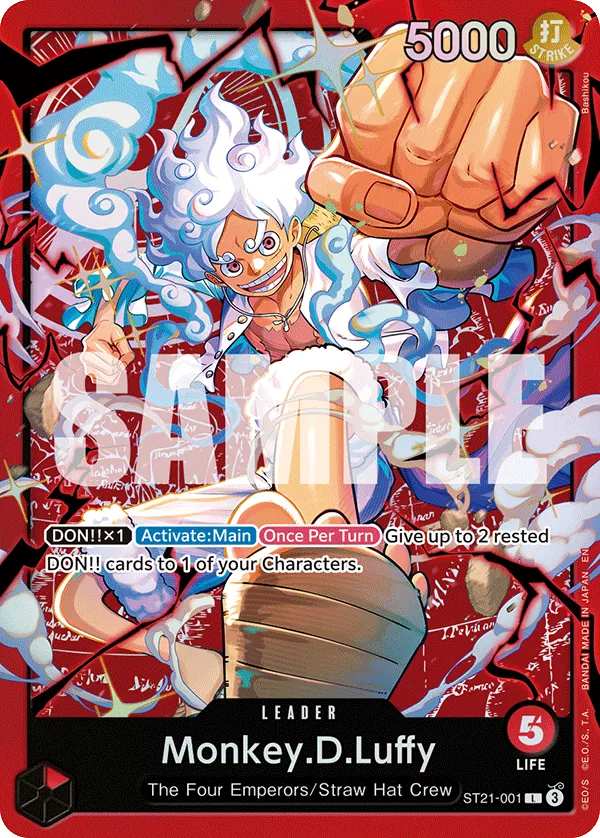
That's not the only Luffy in the box, either. ST-31 separately includes a different card also named Monkey.D.Luffy — this one a Character card, ST31-004 (Cost 7 / Power 9000), which is not the Leader. So the box genuinely contains two different "Luffy" cards: one an alternate-art parallel of an older leader print, and one a brand-new character card. It's the kind of detail that's easy to miss skimming a product listing and mildly disorienting the first time you open the box and realize you're holding two Luffys that aren't the same card.
The rest of ST-31's confirmed contents round out a recognizable crew: Sanji (ST31-001), Jinbe (ST31-002), Brook (ST31-003), and the Thousand Sunny (ST31-005), a Stage card. It's a lineup built around familiar, well-loved characters, and combined with the leader-slot surprise, it makes ST-31 the deck in this wave with the most going on for a curious buyer, competitive standing aside.
#3 — ST-32: Roronoa Zoro (Green)
A reminder before we go further: from here on, we're working with confirmed leader and color only — no decklist has been published for ST-32 through ST-36, so everything below is character-reputation reasoning about what a Zoro-led (or Katakuri-led, or Kuzan-led, or Kid-led) deck would plausibly bring to the table, not a confirmed read on actual card contents.
With that framing set, ST-32 lands at a comfortable third. Zoro is one of the most consistently popular characters in the franchise, and his established reputation — direct, aggressive, front-foot combat, built around overwhelming an opponent through sheer forward pressure rather than finesse — is exactly the kind of characterization that suggests an appealing pick-up-and-play experience for a new player who wants to feel proactive at the table rather than reactive. That's a read on the character, not a confirmed mechanical fact — we can't confirm specific card effects for this box.
If you already know Zoro from the anime or manga and gravitate toward straightforward, hit-first playstyles, ST-32 is a reasonable leader to build enthusiasm around — just go in knowing you're buying on character appeal, not a verified decklist.
#4 — ST-34: Charlotte Katakuri (Purple)
Katakuri is one of the more fan-favorite antagonists-turned-respected-figures in the series, and his established reputation is built on calculation — a character known for reading opponents, controlling the pace of a fight, and rarely getting caught off guard. That reputation reasonably suggests a deck built around careful, deliberate play rather than raw aggression, which tends to appeal to players who enjoy out-thinking an opponent over multiple turns rather than racing them down early. That's a read on the character, not a confirmed mechanical fact — as with the rest of this section, no specific card effects for ST-34 are confirmed.
We're ranking ST-34 fourth mainly because "calculating and controlled" is a playstyle that rewards experience more than it welcomes a first-time player — it's a great deck to grow into, but maybe not the very first one you pick up if you want to feel powerful on turn one. Katakuri fans should still be excited; just know you may be doing a bit more thinking than swinging early on.
#5 — ST-33: Kuzan (Blue)
Kuzan — better known to longtime fans by his former Marine title, Aokiji — carries a reputation built on ice-based abilities and an unhurried, laid-back demeanor that belies a genuinely formidable fighter underneath. That kind of characterization reasonably points toward a deck that leans defensive or control-oriented rather than aggressive: someone who's content to slow a game down and win on their own terms rather than rush an opponent. Again, no card list for ST-33 has been confirmed, so treat this as a character-driven guess rather than a mechanical fact.
We have Kuzan fifth not because there's anything wrong with the character — he's a genuinely compelling pick for fans of his arc — but because a defensive, patient archetype is generally a tougher on-ramp for a brand-new player than something more immediately proactive. It's a deck we'd point an intermediate player toward more readily than a first-timer.
#6 — ST-36: Eustass "Captain" Kid (Yellow)
Kid rounds out the wave at sixth, and it's worth saying plainly that this isn't a knock on the character — it's simply the deck with the least to distinguish it in the absence of confirmed card details. Kid's established reputation is built almost entirely around brute, overwhelming physical force: a character who solves problems by hitting them harder than anything else can, without much in the way of subtlety. That reputation suggests a deck that could be a genuinely fun, straightforward smasher in the right hands, but it's also the least differentiated read of the six — "hits hard" doesn't tell a new player as much about deck identity as "calculating," "defensive," or "S-tier competitive" does for the leaders ranked above him.
If you're specifically a Kid fan, that reputation alone might be reason enough to grab ST-36 — a straightforward, hit-hard playstyle is exactly what plenty of players want. We just don't have anything more specific to point to yet, which is why he sits at the bottom of a ranking built on the information currently available rather than any real weakness in the character or the box.
Head-to-Head at a Glance
A quick side-by-side of where each deck lands and why, for anyone skimming straight to the comparison:
| Rank | Deck / Leader | Color | Why It's Here |
|---|---|---|---|
| #1 | ST-35 — Sabo | Red/Black | Confirmed S-tier leader in current OP-17 trackers |
| #2 | ST-31 — Monkey D. Luffy | Red | Confirmed two-Luffy box quirk (old-leader parallel plus new character print) |
| #3 | ST-32 — Roronoa Zoro | Green | Reputation suggests aggressive, forward playstyle (decklist unconfirmed) |
| #4 | ST-34 — Charlotte Katakuri | Purple | Reputation suggests calculated, controlled playstyle (decklist unconfirmed) |
| #5 | ST-33 — Kuzan | Blue | Reputation suggests defensive, patient playstyle (decklist unconfirmed) |
| #6 | ST-36 — Eustass "Captain" Kid | Yellow | Reputation suggests brute-force playstyle (decklist unconfirmed) |
Each box ships as a complete, ready-to-play starter deck with a bonus OP-16 "The Time of Battle" booster pack included. Browse current listings to compare stock and pricing across the lineup.
Prices and stock vary by seller — MSRP for this wave hasn't been confirmed, so compare current listings before buying.
Quick Buyer FAQ
Do all six starter decks come with something extra, or is that just Sabo and Luffy?
Every one of the six — ST-31 through ST-36 — is bundled with a booster pack from OP-16, "The Time of Battle," regardless of which leader you pick. What's different about ST-35 and ST-31 isn't a bonus pack; it's that we have confirmed, specific details about each of those two boxes (Sabo's competitive standing, Luffy's two-card quirk) that we simply don't have yet for the other four.
Is the ST-31 Leader card actually a reprint, or is it new?
It's a reprint in the sense that it's the same underlying card, ST21-001 Monkey.D.Luffy, originally from the "EX Gear 5" starter — but the specific alternate-art parallel print inside ST-31 (its "_p3" version) is exclusive to this release. It's not a brand-new card design, but it is a new-to-this-box print of it.
Why isn't there a decklist for ST-32, ST-33, ST-34, or ST-36 in this guide?
Because one hasn't been published yet. Rather than guess at specific cards for those four boxes, we've ranked them on confirmed leader identity and reasonable character-reputation reasoning only, and we've been explicit about that throughout. We'll update this guide if and when full decklists for those four become available.
Should a total beginner start with Sabo just because he's competitively strong?
It's a reasonable place to start precisely because it doesn't force a trade-off — you get a normal, playable starter deck experience now, and you're not buying into an archetype you'll need to abandon later if you decide to play competitively. That said, any of the six is a fine on-ramp to learn the game's fundamentals; Sabo just happens to also hold up at the top of the format.
What's MSRP on these decks?
We're not citing a specific number here because pricing for this wave hasn't been confirmed in our research. Expect it to land in the usual range for a starter deck in this format, but check current listings for an exact figure before you buy.
One Wave, Six Leaders, One Clear Standout.
Every deck in the ST-31 to ST-36 wave gets you a complete, ready-to-play starter and a bonus OP-16 booster. But two of them have something genuinely extra behind them: Sabo's confirmed S-tier competitive standing makes ST-35 the strongest overall pick, and ST-31's real two-Luffy quirk makes it the most interesting box to actually open. The rest — Zoro, Katakuri, Kuzan, and Kid — are worth choosing on leader appeal alone until more detail on their contents surfaces.
Pick the leader you're most excited to play, or grab Sabo if competitive relevance is the deciding factor for you.
© GEEKYDOMAIN.COM | Strategy Powered by Data