

How to Upgrade Your Gundam Starter Deck
You bought a starter and played a few games. Now what? Here's the universal upgrade sequence that works for any starter — and the path from your box to a real deck.
Some links below are affiliate links. If you buy through them, Geeky Domain may earn a small commission at no extra cost to you. We only recommend cards and products we believe offer real value to players.
A Gundam starter deck is the best on-ramp the game has: a ready-to-play 50-card deck for the price of a couple of booster packs. But every new player hits the same wall after a few games — the starter gets you playing, and then you want it to get better. The question isn't "which cards are good," it's "what do I upgrade first, and in what order, so I don't waste money?"
That's what this guide answers. Not a card-by-card list for one specific deck — we have dedicated deck techs for those — but the universal upgrade sequence that applies no matter which starter you own, plus a simple router that points you to the exact archetype your starter is built to become. Think of this as the map; the deck techs are the detailed directions for each destination.
We'll cover the principles every starter upgrade follows, the official method for tuning a starter, the four-step priority order for spending your money, and where each of the three main starters leads. Every rule here is confirmed against the official deckbuilding guidance.
→ Short Version
Upgrade any starter in the same order: (1) buy a second copy of the same starter for playsets of its core cards — the cheapest, biggest consistency gain; (2) fix the curve and consistency by cutting vanilla units and leaning into your starter's signature card and pilot links; (3) add your archetype's win conditions; (4) add premium chase cards last, since they're refinement, not foundation. Which archetype you're building toward depends on your starter: ST01 becomes Blue/White control, ST02 becomes Green/Blue ramp, ST03 becomes Red/Green aggro. Pick your path below and follow the deck tech for the specifics.
→ More Reading
In This Guide
Why Start From a Starter at All

Starters are the most cost-effective foundation in the game. Each one is a complete, ready-to-play 50-card deck plus its 10-card resource deck, pre-balanced by the designers around a clear strategy. You're not assembling a deck from a pile of singles — you're starting from a coherent shell and improving it, which is far easier and cheaper than building from scratch.
Better still, a starter teaches you its archetype as you play. By the time you've run ST03 a few times, you understand aggro's tempo; ST01 teaches you control's patience. That hands-on understanding is exactly what tells you which upgrades you actually want — you've felt the deck's weak spots firsthand.
If you haven't bought a starter yet, our ST01-vs-ST03 comparison walks through which to pick, and the beginner's buyer's guide covers the full product picture. This guide assumes you already own one and are ready to make it better.
The Principles Every Upgrade Follows
Before any specific cards, three universal truths shape every Gundam deck. Internalize these and your upgrade choices get a lot clearer.
- Consistency beats power. A deck that does its plan reliably every game beats one with a few bombs it rarely draws. That's why your first upgrades aren't flashy — they're about drawing your best cards more often.
- The copy count is a dial. You can run up to four copies of any card number. The official guidance: run 4 of cards central to your strategy that you always want; 3 of strong cards where one draw is enough; 2 of situational or high-level cards you only want late. Tuning these counts is most of what "upgrading" actually means.
- Respect the curve and the ratios. The official recommended build is roughly 25–28 Units, 6–8 Pilots, 8–10 Commands, and 4–6 Bases. Every card you add or cut should keep those ratios and your level curve intact — you always want cheap early plays and a payoff top end.
Don't Forget the Resource Deck
Your separate 10-card resource deck is part of the machine, not an afterthought. It has no copy limit, and getting its colors right for a two-color deck is essential to casting your cards on time. If that piece is fuzzy, our resource deck guide covers it in full.
The Official Upgrade Method
Bandai actually publishes how to upgrade a starter, and it's a great backbone. The official method comes down to three moves you can apply to any starter you own:
- 1. Build around your signature card. Start by checking your starter's headline card — its central, game-deciding effect. Then look through boosters for cards that synergize with it. Your best upgrades amplify what your deck already wants to do.
- 2. Feed your pilot's links. Units that meet the link conditions of your starter's key pilot are ideal additions — linking unlocks enhanced effects and lets a unit attack the turn it lands. Adding more good link targets makes your existing pilots better for free.
- 3. Cut the vanillas, keep the balance. Swap out plain units with no effects — but replace them with cards in the same level range, so you don't wreck your curve. Upgrading is a series of even trades that each raise card quality without unbalancing the deck.
That's the official skeleton. The four-step sequence below puts it in priority order — what to actually do first when you've got a starter in hand and limited cash.
The Four-Step Upgrade Sequence
This is the priority order that gets you the most deck for the least money. Work it top to bottom — each step matters more than the one below it.
Spend In This Order
The pattern is the same every time: consistency first, identity second, payoffs third, luxuries last. Spend from the top.
The Sequence in Action
Here's the order working in practice, kept deliberately general so it fits any starter. Say you've played your box a dozen times and noticed two problems: you sometimes don't draw your best card, and you occasionally stall out with a clunky hand. That diagnosis maps straight onto the sequence.
Step 1 solves the first problem instantly — a second copy of the starter turns your single best cards into playsets, so you draw them far more often. No deckbuilding skill required, just the highest-value purchase in the game.
Step 2 solves the second — you cut the plain vanilla units that were clogging your hand and replace them, level-for-level, with cards that actually do something or link with your pilots. The deck starts flowing because every card now pulls its weight.
Only then do steps 3 and 4 enter the picture: with a consistent, well-curved shell, you add the archetype's payoffs and, eventually, a premium closer or two. Notice the order — you fixed how reliably the deck runs before you touched how powerful its best draw is. That's the whole philosophy in one example.
Which Starter Did You Buy?
Each starter is built to become a specific archetype. Once you've worked the universal sequence above, follow your starter's dedicated deck tech for the exact cards, upgrade list, and piloting plan. Find your box below:
"Heroic Beginnings"
Your starter is built for control — outlast and out-position behind durable blockers. The most beginner-friendly route into a grindy, defensive game plan.
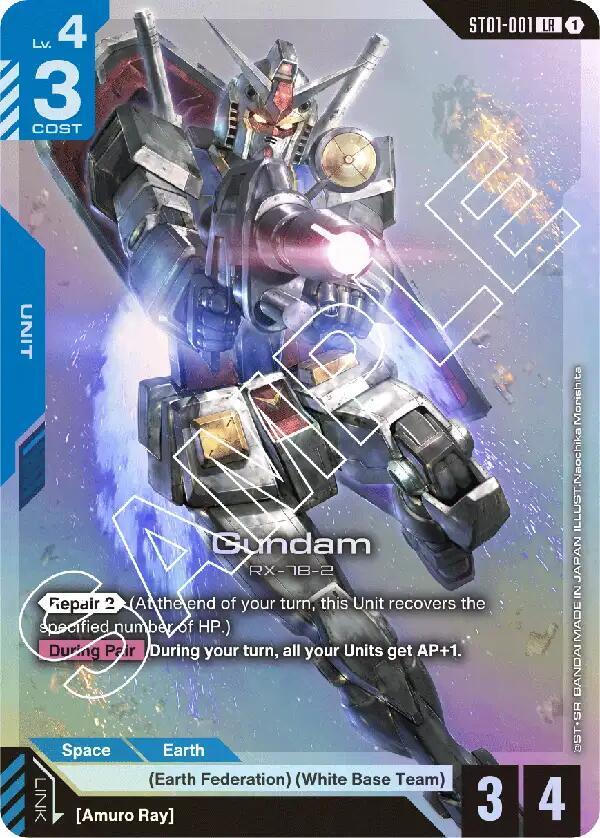
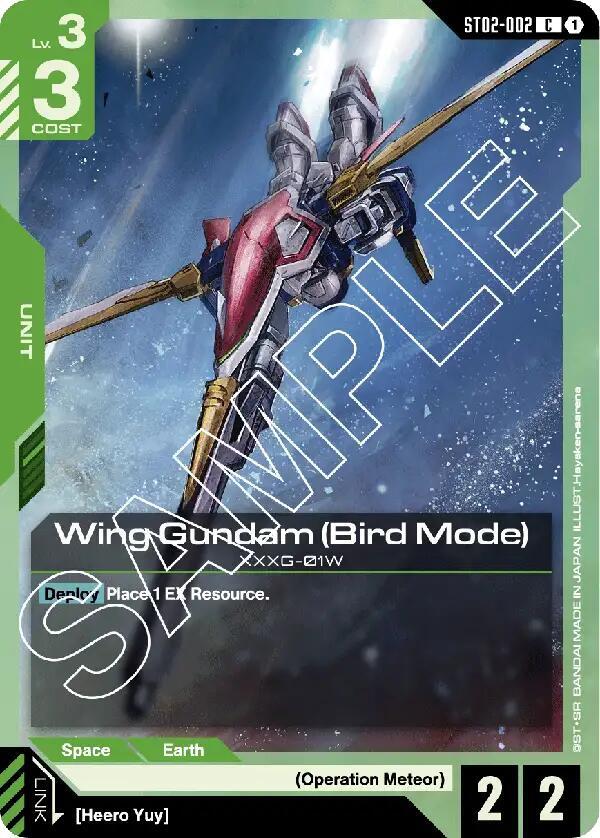
"Wings of Advance"
Your starter is built for ramp — accelerate your Resources and deploy oversized threats ahead of schedule. A satisfying tempo-and-payoff plan.
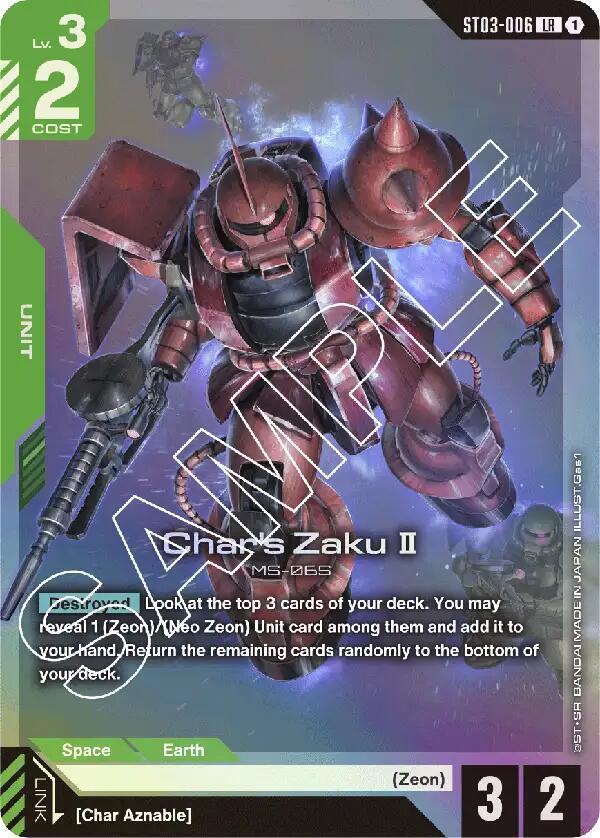
"Zeon's Rush"
Your starter is built for aggro — flood the board with cheap units and race the opponent's Shields down before they stabilize. The cheapest competitive on-ramp.
Bought a different or newer starter? The same universal sequence still applies — identify your archetype (our color-pair primer helps), then upgrade toward it in the same priority order. The principles don't change; only the destination does.
Upgrade Mistakes to Avoid
A few common missteps waste money and weaken decks. Sidestep these and your upgrade path stays efficient:
- Buying chase cards first. A flashy Level 8 bomb in an inconsistent deck mostly sits in your hand. Build the cheap, consistent engine before the expensive top end — the bomb is only good once you reliably reach it.
- Adding singletons of everything. One copy each of ten cool cards makes a deck that never does the same thing twice. Commit to a plan and run multiples of the cards that serve it — consistency over variety.
- Breaking your curve. Loading up on powerful but expensive units leaves you with nothing to do early and dead in the water against aggro. Replace cards within the same level range to keep your curve healthy.
- Splashing a third color. Decks use at most two colors, and even two needs a clean resource base. Don't dilute your consistency chasing off-color cards — stay in your lane and your draws stay reliable. Our two-color deckbuilding guide covers doing it right.
Quick Upgrade FAQ
- Do I really need a second copy of the same starter? It's the single best first purchase. A starter is built around a few key cards you only get one or two of; a second copy gives you the playsets that make the deck consistent. It's cheaper than chasing the same cards as singles, and it instantly fixes the "I never draw my good card" problem.
- Should I buy booster packs or singles to upgrade? For targeted upgrades, singles win — you buy exactly the cards your plan needs instead of gambling on packs. Boosters are for collecting and opening fun, not efficient deckbuilding. Once you know which cards your archetype wants (from your deck tech), buy those specific cards as singles.
- How much should I expect to spend? A duplicate starter plus a handful of cheap singles gets you a genuinely solid, consistent deck for very little — that's the whole appeal of starting here. Premium chase cards can cost more later, but they're optional refinements you add once the cheap engine works. You set the ceiling.
- Can I just keep playing the starter as-is? Absolutely — starters are designed to be playable out of the box, and they're great for learning. Upgrading is about closing the gap with tuned decks at your table. If you're winning and having fun, there's no rush; upgrade when you start noticing specific weaknesses you want to fix.
Where to Buy
The cheapest upgrade path starts with a second copy of your starter, then a few cheap singles to tune it. Grab a starter (or a duplicate) as your foundation, then fill in upgrade pieces as singles. These searches are a good starting point—compare current listings before you commit, since prices shift with new releases.
Shop Gundam Starter Decks on Amazon Search Starters & Singles on TCGplayer Browse Starters & Lots on eBayPrices move with new set releases, so check current listings before buying. A duplicate starter plus cheap singles is almost always the best value for a first upgrade.
From Starter to Real Deck.
Every strong Gundam deck started where you are: a starter, a few games played, and a question about what to upgrade first. The answer is always the same shape — buy consistency before power, tune your identity before chasing payoffs, and save the premium cards for last. Follow that order with any starter and you'll spend less, win more, and actually understand why each upgrade made the deck better.
Find your starter above, work the sequence, and let your deck tech carry you the rest of the way. Your starter was never the finish line — it was the on-ramp.
Pick Your Path:
© GEEKYDOMAIN.COM | Strategy Powered by Data