

Two-Color Deckbuilding: Rules & Best Pairings (Gundam)
Up to two colors per deck is the rule — and picking the right combination is the most important deckbuilding decision you'll make. Here's how it works and why each pairing succeeds.
The Gundam Card Game caps your deck at two colors, and that constraint is the heart of the game's strategy. It forces a genuine choice: every pairing commits you to a game plan, carves out strengths you'll lean on, and exposes weaknesses you'll either cover or accept. The decks that succeed do so because their two colors work together — not just because they have good cards in both.
This guide is the practical companion to the color profile primer. Where that article explains what each color does individually, this one explains the rules of two-color construction, the two philosophies for choosing your second color, why each established pairing works, and how to actually split your 50-card deck between two colors.
As always, which specific pair is strongest shifts every set, so we'll cover the durable logic — the matchup of identities — and leave the live tier list to community resources. The reasoning behind a good pairing never goes stale even when the meta does.
The Short Version
Decks use up to two colors out of five (Blue, Green, Red, White, Purple) across a 50-card main deck and a 10-card resource deck. Pick your main color for the strategy you want, then add a secondary to either enhance your strengths or cover your weaknesses. Each established pairing has a clear logic: Blue-Green combines ramp with tempo for resourced aggression; Green-White pairs big threats with defensive survival tools; Blue-White is a control shell of card advantage and stabilization; and the Purple pairs have risen into some of the format's most powerful current options. Build with a clear main color, mind your curve, and let the pairing's logic guide your card choices.
→ Build Your Gundam Knowledge
In This Guide
The Deckbuilding Rules
Before pairing colors, the rules of deck construction:
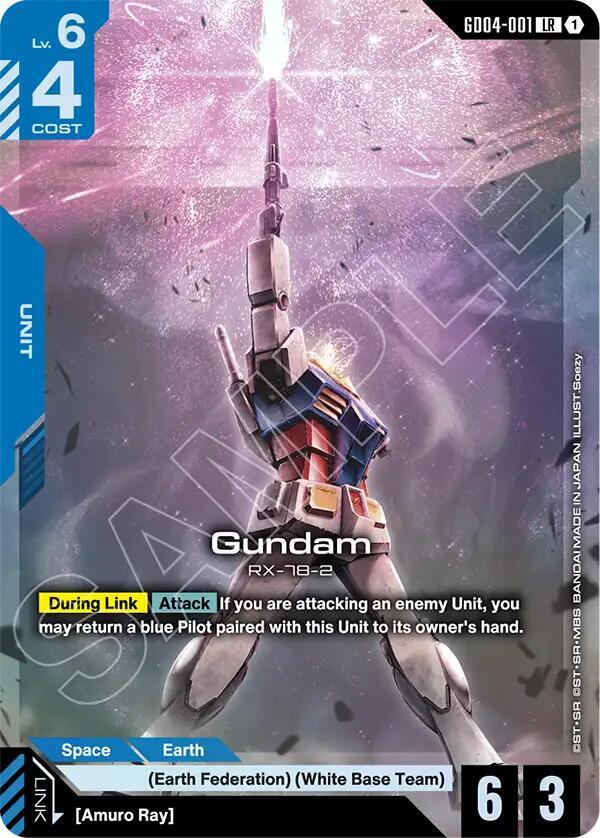
- 50-card main deck — your primary deck of Units, Pilots, Commands, and Bases.
- 10-card resource deck — a separate deck of resource cards only, which can be any quantity of individual cards (no four-copy limit applies here).
- Up to four copies of any card — in the main deck (the resource deck is not subject to this limit).
- Up to two colors — your entire 50-card deck can include at most two of the five colors (Blue, Green, Red, White, Purple). This is the most important constraint in deckbuilding.
- Curve guideline — the official deckbuilding advice recommends about 16–20 unit cards that are level 3 or lower, so your early turns are always productive. A deck full of high-level units can't deploy anything in the first few rounds.
The two-color cap is what makes pairing decisions meaningful. Unlike games where you can freely splash any color, Gundam forces you to commit, which means every card in your deck should support your chosen pairing's plan.
Two Philosophies: Enhance or Cover
The official deckbuilding guide frames the second color as serving one of two purposes. Both are valid, and understanding which you're doing clarifies every card selection:
- Enhance your strengths. Add a color that doubles down on what you're already doing. Blue-Green is the classic example: Blue's card draw and tempo tools combine with Green's ramp to produce a deck that always has resources and fields threats faster than anyone else. Both colors push the same aggressive-value plan from slightly different directions.
- Cover your weaknesses. Add a color that patches what your main color can't do. Red is great at damage and pressure but burns out quickly and folds to defensive boards — adding White gives Red the blockers, attack-power reduction, and Commands that keep it relevant into the late game.
Neither philosophy is inherently better. Enhancing tends to produce more focused, linear decks; covering tends to produce more rounded, resilient ones. The best pairing is the one that reflects your intended game plan clearly enough that every card you choose obviously belongs.
How Colors Get Set By Your Cards
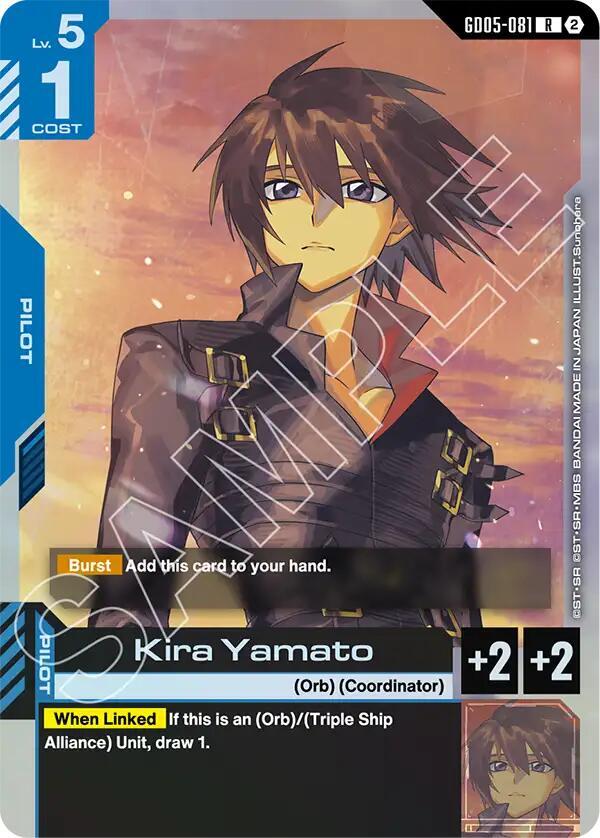
In practice, your color pair is often determined before you consciously choose it. Gundam units and pilots each have a color printed on the card, and when you pair a unit and pilot of different colors, you've already set your two colors — the combination of their colors is your deck's color identity.
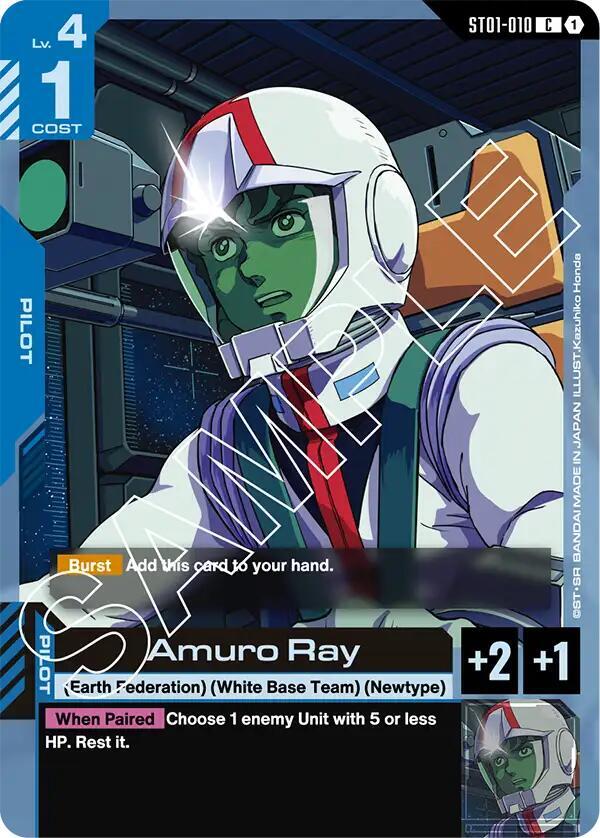
This is actually a helpful starting point: decide which unit and pilot combinations you want to build around first. If your ideal unit is Blue and your ideal pilot is Green, your deck is Blue-Green by default, and the rest of your card selections flow naturally from there. Link conditions and trait requirements further reinforce which cards "belong" in your pairing.
When you do have a free hand to choose, start with the Gundam series you love — each faction maps to one or two colors (see the color primer for the full breakdown) — and let your emotional investment in the theme guide you toward a color pair before you optimize from there.
The Established Pairs: Why They Work
Each of the format's defining combinations has a clear mechanical reason for its success. Treat these as durable logic — the synergy doesn't disappear even when the meta shifts:
- Blue-Green (Zeon Rush) — Blue's draw and recovery tools ensure you never run out of resources; Green's ramp accelerates you into threats faster than the curve would normally allow. Together they produce a resilient, consistently resourced deck that applies pressure at a speed most opponents can't match. This is the enhance philosophy: both colors push the same proactive plan.
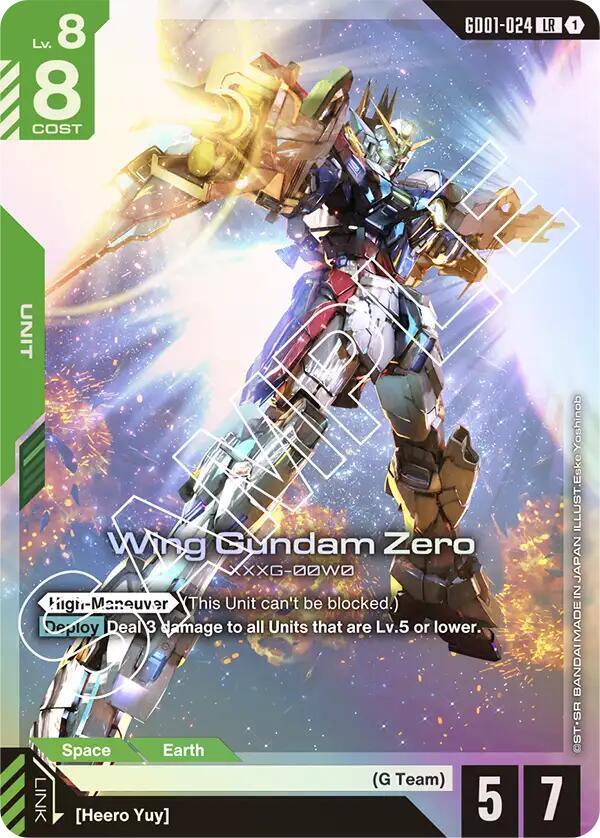
- Green-White (Wing) — Green ramps into powerful high-level units ahead of schedule; White keeps them alive behind blockers and attack-power reduction once they arrive. It's the cover philosophy applied beautifully: Green's weakness is that it can flood the board with threats that die too quickly, and White's defensive suite is the exact remedy.
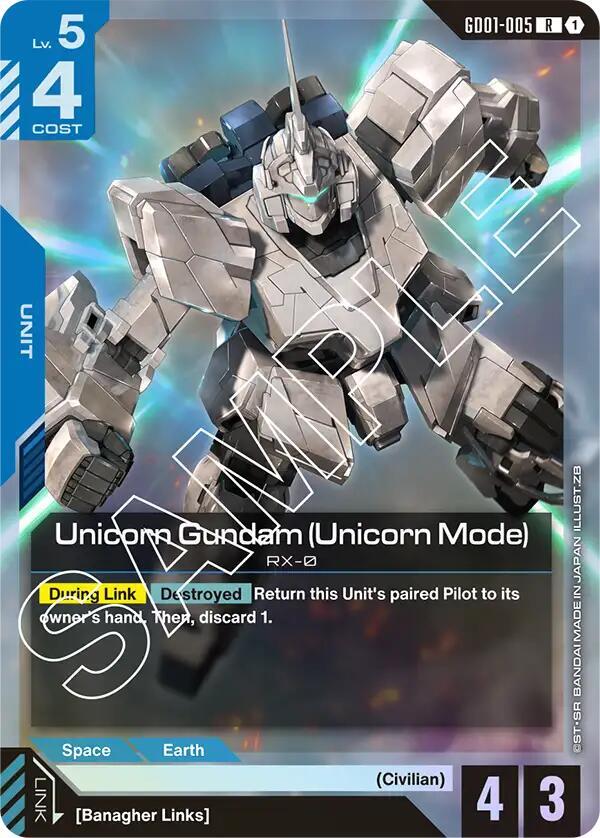
- Blue-White (Unicorn) — Blue draws cards and recovers HP; White deflects attacks and reduces incoming power. The combination is a textbook control shell: Blue ensures you're always ahead on cards, and White buys enough time for that advantage to snowball. Games go long, Blue wins the resource war.
- Blue-Red — Red's damage and aggression apply a fast clock; Blue's tempo tools clear the way and keep the pressure from stalling. This is aggressive tempo: Red threatens, Blue enables, and the combination closes games faster than either color could alone.
- Red-White (SEED) — Red attacks aggressively; White patches the hole in Red's game plan by providing blockers, Commands, and counterplay tools that keep the deck functioning when opponents mount a defense. Red alone burns out; Red-White can sustain pressure and then finish.
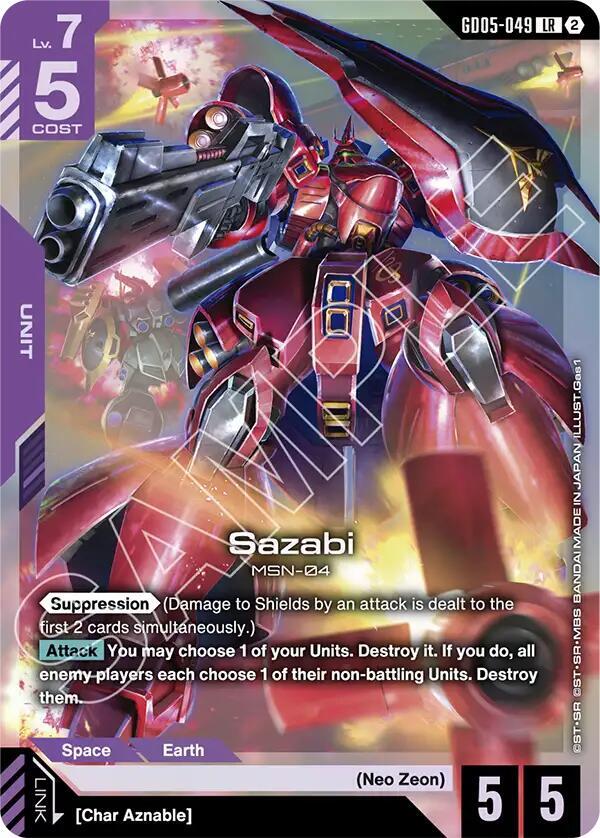
- Purple pairings — Purple's series-synergy packages are flexible by design and slot into three different secondaries. Purple-White is the most balanced: Purple's synergy engine pairs with White's stability for a consistent, defensively sound deck. Blue-Purple leans aggressively: Blue's draw feeds Purple's package for a powerful value-aggression loop. Purple-Red is the most offensive, stacking synergies on top of raw damage. All three have been strong recent options — confirm with a live tier list for the current rankings.
Practical Construction: Splitting Two Colors
Once you've chosen your pair, the question becomes how to divide the 50 cards between the two colors. A few practical guidelines:
- Let the main color dominate. A roughly 60–70% main / 30–40% secondary split keeps the deck focused. An even 50/50 split usually means neither color shows up reliably enough to deliver its plan. The main color carries the strategy; the secondary supports it.
- Mind the curve. Both colors should contribute to your early turns, not just the late ones. Aim for that 16–20 unit card threshold at level 3 or lower across both colors combined, so you're always deploying something in the first three turns.
- Build the resource deck around both colors. Your 10-card resource deck doesn't have to split evenly either — weight it toward the resources that power your more expensive main-color cards, then include a few secondary-color resources so you can access both colors early.
- Pick your pilot first. Your pilot pool determines which link conditions you can meet, which in turn filters which units belong in the deck. A pilot-first approach keeps the deck coherent and prevents you from including units that don't synergize with anything.
The tighter the synergy between your two colors, the more you can push the secondary's proportion up — a true 50/50 can work if every card in both halves serves the same game plan. The problem arises when a deck plays 50/50 because the builder liked cards in both colors without a unifying plan.
Common Two-Color Mistakes
Most two-color deckbuilding problems trace back to a handful of avoidable errors:
- No clear main color. If you can't state in one sentence what your main color's game plan is, the deck probably doesn't have a coherent identity. Decide on the plan first, then let the secondary serve it — not the other way around.
- Too even a split. Splitting your 50 cards equally between two colors often means each plan shows up too inconsistently to execute. Unless both colors are tightly unified, weight toward the main color.
- Forgetting the resource deck. The 10-card resource deck is how you access the levels and costs for both colors. Neglecting to balance it means you'll often be able to play cards of one color but not the other in the turns you need them.
- Mismatched pilots and units. Including units whose link conditions can't be met by any pilot in your deck wastes the card's potential. Always confirm your pilot pool can fulfill the link requirements of the units you want before adding them.
When to Stay Mono-Color
Two-color is the competitive standard, but mono-color is a real and viable choice — particularly in certain situations:
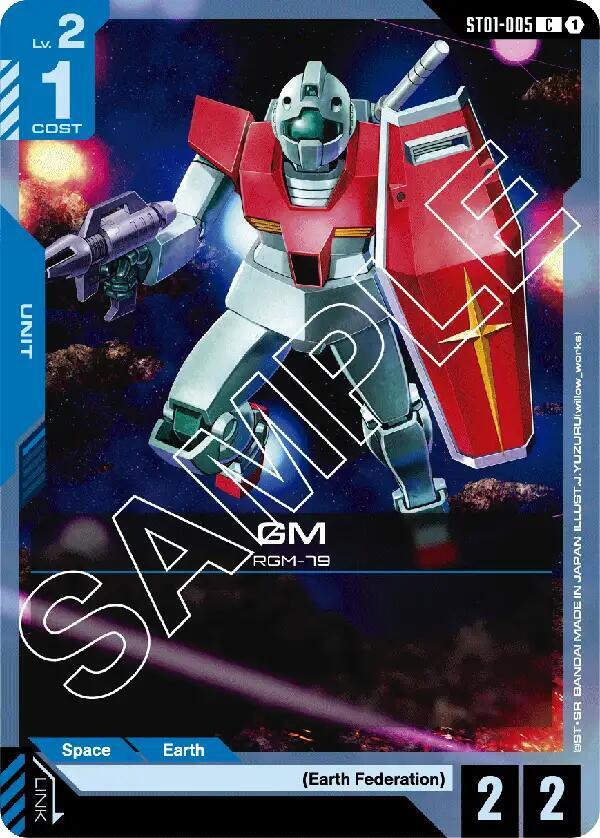
- Learning the game. A mono-color deck is simpler to pilot and build. You don't need to worry about balancing two color identities or managing the resource deck's split — just one coherent strategy.
- When the second color doesn't help. If adding a secondary would weaken your consistency without adding meaningful tools, stay mono. A focused mono build often beats a distracted two-color one.
Think of mono as the highest-consistency version of a single color's identity — great for learning and for some specific archetypes — while two-color unlocks the extra tools and synergies that define most of the format's strongest strategies.
Two-Color FAQ
- What if I love cards in three different colors? Pick the two whose overlap best serves your game plan, and accept that some favorites won't make the cut. The two-color constraint is what makes deckbuilding choices meaningful — it forces the focus that produces a coherent deck.
- Does my secondary color need to show up early in my curve? Yes — a secondary that only appears in high-level cards won't matter until very late, and may not be worth the slot cost. Include some secondary-color pieces across your early and mid curve so both colors contribute from the start.
- Can I switch my color pair later? Absolutely. Many players start with a starter's built-in pair to learn the game, then shift once their collection grows. The rules don't lock you in — a deck is built new each time.
- What are the recommended card-type ratios? The official guidance suggests roughly 25–28 Units, 6–8 Pilots, 8–10 Commands, and 4–6 Bases across your 50 cards — with ~16–20 of those Units at level 3 or lower. Both colors should contribute to each type as the strategy demands.
Quick Reference
- Rules: 50-card deck + 10 resource cards + tokens; ≤4 copies per card; ≤2 colors.
- Curve: ~16–20 units at level 3 or lower for early stability.
- Main color: ~60–70% of cards; carries the strategy.
- Secondary: ~30–40%; enhances strengths or covers weaknesses.
- Blue-Green: ramp + tempo = resourced aggression. Blue-White: draw + defense = control.
- Green-White: ramp + defense = big protected threats. Red-White: offense + counterplay.
- Purple pairs: Purple-White (balanced), Blue-Purple (value-aggression), Purple-Red (offense).
- Start here: pick your unit and pilot, let their colors set your pair, then fill in from there.
Two Colors, One Plan.
The best two-color Gundam decks aren't built from two stacks of good cards shuffled together — they're built around a unified game plan that both colors serve. Blue draws and Green ramps toward the same aggressive outcome; Green ramps and White defends the same big threats; Purple synergizes and White stabilizes toward the same reliable finish. Once you can say in a sentence what your deck does and point to every card as proof, you've built a real two-color deck.
Pick the plan you want to execute, find the two colors that deliver it, and let the construction flow from there.
© GEEKYDOMAIN.COM | Strategy Powered by Data