

Resource Deck Construction: The 10-Card Engine
Every Gundam deck has two decks — the 50-card main and a separate 10-card Resource Deck. Here's what's actually in it, why it works the way it does, and the small choices that genuinely matter.
Pick up any deckbuilding guide for any TCG and it'll spend pages on curve, ratios, and card selection. The Gundam Card Game adds a wrinkle no other major TCG has: a separate 10-card Resource Deck that exists alongside your 50-card main deck. Every player has one. You draw from it every turn. It generates the resources that fuel everything else — and most new players have no idea what's actually supposed to go in it.
The good news, and the surprise: Resource Deck construction is the simplest deckbuilding decision in Gundam. It's just 10 Resource cards, all functionally identical, no copy limits, no color restrictions. The "decisions" are aesthetic and small — which themed art you run, whether to foil them — but the mechanics are settled the moment you understand the system.
The reason this guide exists isn't that the Resource Deck is complicated. It's that understanding what it is — why it's separate, how it interacts with the EX Resource and EX Base, why Resource cards are designed the way they are — is the difference between a player who just shuffles ten cards together and a player who actually grasps how Gundam's resource economy works. The construction is easy; the comprehension is what matters.
The Short Version
Your Resource Deck is exactly 10 cards, all Resource cards only (no Units, no Pilots, no Commands, no Bases), and you can run any number of copies of the same Resource card — no 4-card limit applies. All Resource cards are mechanically identical (colorless, common rarity); the differences are purely artwork. Each turn during your Resource Phase, you draw one from this deck and place it in your Resource Area, which generates the resources you need to play cards from your main deck. The EX Resource (given to player two as a going-second bonus) and EX Base (both players get one) are separate tokens, not in either deck. Resource Deck construction is trivial; the real value is understanding how the resource economy works.
→ More Gundam Guides
In This Guide
- → What the Resource Deck Is
- → The Legal Construction Rules
- → Reading a Resource Card
- → How the Engine Works Each Turn
- → Cost vs. Level: Two Numbers, Two Jobs
- → EX Resource & EX Base: The Setup Tokens
- → Why Gundam Uses a Separate Deck
- → The Real (Small) Choices
- → Common Resource Deck Mistakes
- → FAQ & Quick Reference
What the Resource Deck Is
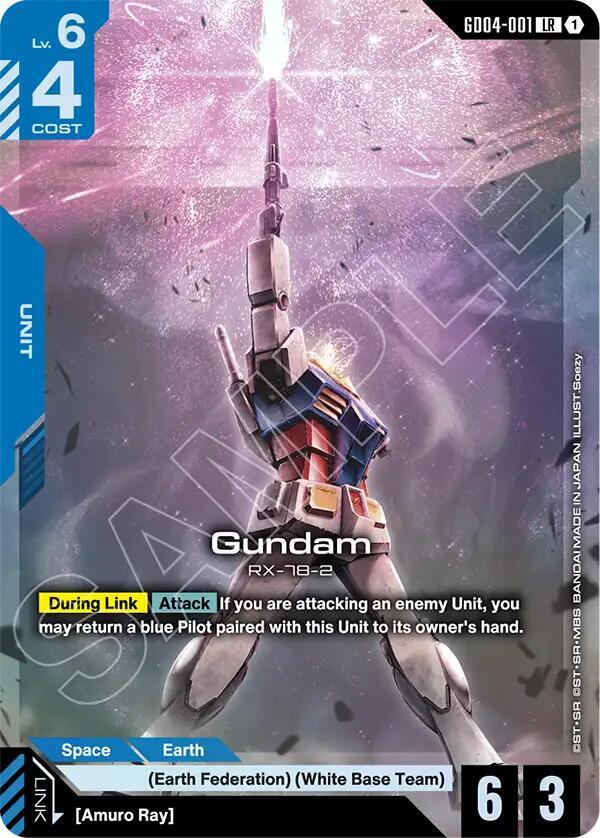
Your Resource Deck is a separate 10-card pile that sits next to your 50-card main deck and feeds the resource system every turn. It exists for one reason: to make sure you always have something to ramp with. In most TCGs, you mix your resources (lands, energy, ink) into your main deck and gamble on drawing enough; Gundam separates them out so the resource curve is deterministic.
Each turn during your Resource Phase, you draw one card from your Resource Deck and place it face-down in your Resource Area. After ten turns, you've placed all ten. That's a guaranteed +1 resource every turn for the first ten turns, no variance, no mana flood, no mana screw. It's an elegant solution to one of the oldest problems in TCG design.
The trade-off: because your resource ramp is guaranteed, the design space for Gundam's main deck shifts. Cards don't need to compete with "missed land drops" as a failure mode; instead, the game's tension comes from your Resource Level (more on that below), your Shield management, and the timing of plays.
The Legal Construction Rules
The official construction rules per Bandai's Comprehensive Rules (current version 1.6.0, updated April 2026):
- Exactly 10 cards. Not at least 10, not up to 10 — exactly 10. The Resource Deck size is fixed.
- Resource cards only. You cannot include Units, Pilots, Commands, or Bases. Only cards whose card type is "Resource" are legal — per Bandai's official FAQ.
- No copy limit by card number. Unlike the main deck's 4-copy ceiling, you can include any number of copies of the same Resource card. Run all 10 identical if you want.
- No color restriction. Resource cards are colorless, so your Resource Deck doesn't have to match your main deck's color identity. Any Resource card works in any deck.
- EX Resource and EX Base are not in this deck. These are tokens placed during setup — they don't count toward the 10 and you don't include them as construction choices.
Why No Copy Limit?
It's the rule that tells you everything about the Resource system's design: Bandai considers all Resource cards functionally identical. They're mechanically interchangeable — same colorless cost, same role, same effect of generating one resource per turn. The only differences are aesthetic (artwork, foil treatment, promotional themes). Because there's no mechanical advantage to mixing them, there's no reason to limit copies. The system treats Resources as commodities, and the rules reflect that.
Reading a Resource Card
All Resource cards share the same anatomy. From the standard R-001 (the basic no-artwork Resource you get in starter decks) to the latest promotional themed cards (RP-001, RP-002, RP-003 and beyond, featuring artwork from various Gundam series), the mechanical text is identical:
- Card type: Resource. A fifth card type alongside Unit, Pilot, Command, and Base — but the only one used in the Resource Deck.
- Color: Colorless. Resource cards do not have a color, which is why they don't affect your two-color main deck rule.
- Rarity: Common. All standard Resource cards are common rarity, though many have foil printings and promotional versions that fetch collector premiums.
- Function: generate one resource. When placed in your Resource Area, the card adds 1 to your Resource count for paying card costs.
- Card numbering. Standard Resource cards run R-001 (basic, no art) through R-002 and beyond (themed artwork). Promotional Resource cards use the RP- prefix (RP-001, RP-002, etc.) and feature unique illustrations — Lacus Clyne, Char's Zaku, Amuro & Gundam, Freedom Gundam, Wing Gundam Zero, and others.
How the Engine Works Each Turn
The Resource Deck operates on a simple loop. Each turn follows the same five-phase structure, and the Resource Phase is what makes the engine tick:
- 1. Start Phase. All your rested (sideways) cards stand up, including your Resources. Every Resource refreshes and is available to use this turn.
- 2. Draw Phase. Draw one card from your main deck. Standard for any TCG — the Resource Deck is not involved here.
- 3. Resource Phase. This is where the Resource Deck does its job. Draw one card from your Resource Deck and place it face-down in your Resource Area. You don't choose — it's the top card, every turn, automatically.
- 4. Main Phase. Deploy Units, pair Pilots, play Commands, activate effects, attack. You pay costs by resting Resources in your Resource Area — each rested Resource pays 1 cost.
- 5. End Phase. Resolve end-of-turn effects, discard down to a 10-card maximum hand size. The Resource Area is unaffected.
The math: by turn 1 you have 1 Resource (or 2 if you're player two with the EX Resource); by turn 5 you have 5; by turn 10 you have all 10, and your Resource Deck is empty — but that's fine, because the cap on Resource Level rarely matters beyond turn 7 or 8 in practice.
After your Resource Deck is empty, you don't draw any more Resources — the engine has finished its job. Games rarely run long enough for this to be a serious constraint, but it's worth knowing.
Cost vs. Level: Two Numbers, Two Jobs
Gundam's resource system has a subtle but important nuance new players miss: every Unit, Pilot, Command, and Base card shows two numbers — its Cost and its Resource Level. Both matter, and they're not the same thing.
Cost = how many Resources you rest to play it.
Resource Level = the minimum total Resources you must have to play it.
A card may be 1-Cost but Level 2, meaning you only spend 1 Resource to cast it — but you can't cast it at all until you have 2 Resources in total.
The Zaku II is the textbook example: 1-Cost, Level 2. On turn 1, you have 1 Resource (or 2 if you're player two). If you're player one, you can play a Dopp (1-Cost, Level 1), but not a Zaku II — even though both cost the same to play. The Zaku II's Level 2 requirement gates it behind having more total resources in play, not having more to spend.
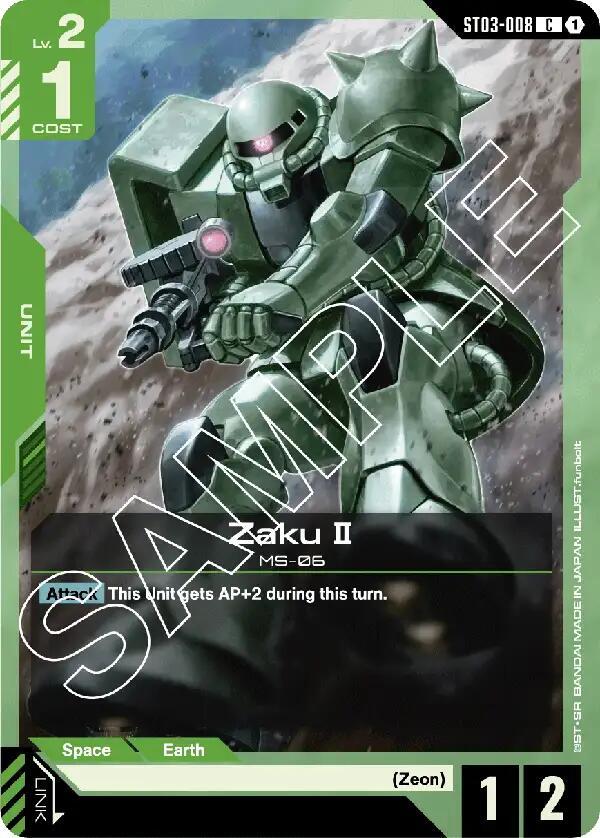
This separation lets Bandai print cards that are cheap to cast but only become available later in the game — useful for balance. It also gives the Resource Deck more strategic weight than it appears to have: your Resource Level rises with every Resource you place, and that unlocks new cards even when you're not spending. A Resource you've never tapped is still doing work, simply by existing.
EX Resource & EX Base: The Setup Tokens
Two more pieces sit at the edge of the Resource system, but they're not in your Resource Deck — they're separate setup tokens placed during the game-start sequence:
- EX Resource (EXR-001). Given to player two only, placed in their Resource Area at game start. It's a one-time-use Resource that acts like a normal Resource but is consumed when used — offsetting the going-second disadvantage. Once spent, it's removed from play permanently.
- EX Base (EXB-001). Both players place one EX Base into their Shield Area's Base section at game start. It functions as a starting Base providing HP and a small effect. Both players begin with this; it's not asymmetric like the EX Resource.
A few clarifications that trip up new players:
- EX Resource cards do not go in your Resource Deck. They're tokens, kept separately and placed during setup. You don't build around them.
- EX Resources can also be placed by some effects. A handful of card effects in the game place additional EX Resources mid-game — another way to ramp slightly ahead of the standard turn-by-turn pace.
- Promotional EX Resource and EX Base cards exist. Themed versions like the Lacus Clyne EX Resource (EXRP-002) and the Char's Zaku EX Base (EXBP-004) are aesthetic upgrades to the basic tokens — functionally identical, but collectible. Some carry meaningful secondary-market premiums.
Why Gundam Uses a Separate Deck
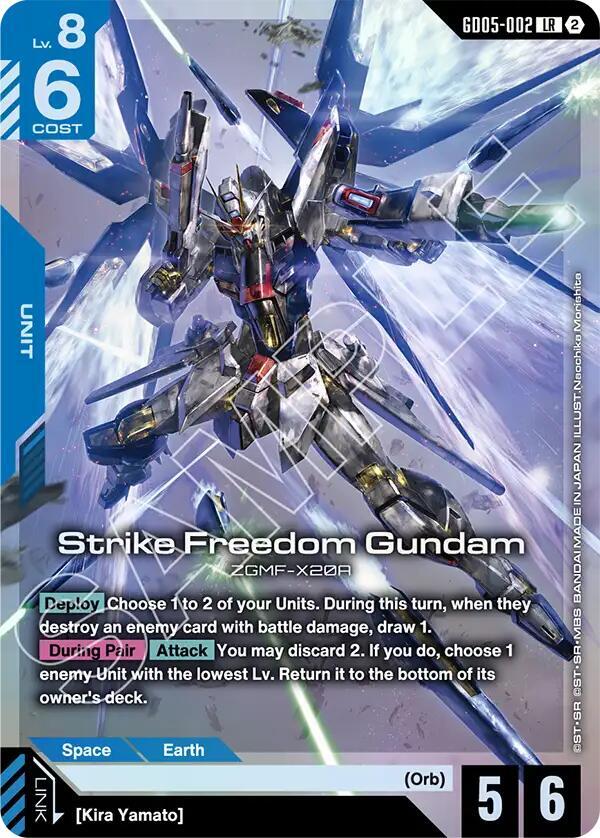
Gundam's separate Resource Deck isn't an arbitrary design choice — it's a deliberate response to one of the biggest pain points in older TCGs: mana screw and mana flood. In games where resources are mixed with playable cards (Magic's lands, Pokémon's energies, Lorcana's ink), bad luck on resource draws can decide a game before either player makes a meaningful choice. Drawing 1 land in seven cards or 12 lands in 20 cards both feel awful and neither involves skill.
By separating resources into their own deterministic pile, Gundam removes that variance entirely. The benefits:
- Guaranteed ramp curve. You'll always have N Resources on turn N. Card designers can balance costs against a known ramp without having to account for "what if you never drew a land."
- More draws are "real cards." Every card you draw from your main deck is a playable card, not a resource. Hands feel denser and more interactive than in mixed-resource games.
- Skill replaces luck. Without resource variance, games are decided more by play decisions and deckbuilding than by opening-hand luck. Better players win more reliably, which is what a TCG generally wants.
- No deckbuilding tax for ramp. You're not "wasting" slots on resources — the Resource Deck is its own thing, leaving the full 50 cards in your main deck for actual game-affecting cards.
The cost: less variance in the resource curve means less variance in turn-by-turn possibility space, which some players experience as predictability. The honest read is that Gundam trades some of TCG's classic chaos for more decision-heavy, skill-rewarding gameplay — a deliberate choice, and one that's been popular with players coming from more variance-heavy formats.
The Real (Small) Choices
If Resource Deck construction is mechanically trivial, where do the choices live? Three places, all aesthetic or collector-driven:
- Themed artwork. Resource cards come in multiple artwork variants — basic no-art (R-001), themed (R-002 through R-018+, featuring various Mobile Suits), and promotional (RP- series, often tied to specific Gundam productions). Collectors often build Resource Decks themed to their main deck's Gundam series: a Wing Gundam deck might run 10 Wing-themed Resources for visual cohesion.
- Foil treatments. Most Resource cards have foil printings, often pulled from booster packs at low rates. A full foil Resource Deck looks striking on the table and costs significantly more than a standard pile.
- EX token upgrades. The EX Resource and EX Base have promotional versions too (Lacus Clyne, Relena, Komori Harcourt, themed Char's Zaku, etc.). These are also pure aesthetic upgrades — some carry collector premiums into the dozens of dollars.
No competitive advantage comes from any of these choices — a $0.10 plain R-001 Resource Deck plays identically to a $200 foil-themed promotional Resource Deck. The decision is purely about how you want your table to look.
Common Resource Deck Mistakes
Mistake #1: Including non-Resource cards.
The Resource Deck must contain only cards with the Resource card type. Including Units, Pilots, Commands, or Bases makes the deck illegal. Sounds obvious, but new players sometimes try to add a "utility" Unit or Pilot to a Resource Deck thinking it's a flexible utility pile — it isn't. Resources only.
Mistake #2: Treating Cost and Level as the same thing.
A card's Cost (what you pay) and Level (the minimum Resources to play it) are different numbers. Players sometimes try to play a 1-Cost Level 2 card on turn 1 with 1 Resource — not legal, the Level requirement gates it. Always check both numbers on a card before deploying.
Mistake #3: Putting EX Resource or EX Base in the Resource Deck.
EX cards are tokens placed during setup — they're not part of any deck. Mixing them into the Resource Deck is a setup error that's easy to make if you're new to the game and the various card types blur together. EX cards live separately, drawn from your token pile, not your Resource Deck.
Mistake #4: Overspending on premium Resources for a competitive edge.
Foil promotional Resources look great but provide zero competitive advantage. If you're spending on Gundam, prioritize main-deck cards first — a better Unit or key Pilot is dramatically more impactful than the prettiest Resource Deck. Buy themed Resources because you want them to look nice, not because you think they'll help you win.
Mistake #5: Forgetting the Resource Phase entirely.
New players sometimes skip drawing a Resource on their turn — especially when transitioning from games where you draw resources mixed with your hand. If you skip a Resource Phase, you lose that turn's ramp permanently. Build a habit of doing it the moment your Draw Phase ends, before anything else happens.
FAQ & Quick Reference
- Can I run different Resource card art in the same Resource Deck? Yes — mix and match freely. All Resource cards are mechanically identical, so a mixed-art deck is fully legal and functions identically to a uniform one. Many players run a "scrapbook" mix of themed Resources representing different favorite Gundam series.
- What happens if my Resource Deck runs out? From that point on, you skip your Resource Phase — you have no more Resources to draw. Practically, this only happens after turn 10, and games rarely last that long. If they do, you're at a 10-Resource cap and not gaining any more — but you've also already deployed most of what you need.
- Why can I run 10 copies of the same Resource card but only 4 of anything in my main deck? Because Resource cards are functionally identical — there's nothing to balance by limiting copies. The 4-copy rule in your main deck prevents power concentration of specific Units or Pilots; in the Resource Deck, every card does the same thing, so concentration is meaningless.
- Does the Resource Deck count toward "decking out"? No — deck-out (losing because your deck runs out) refers specifically to your main 50-card deck. Running out of Resources is a separate state that just means you stop drawing Resources; it doesn't lose you the game.
- Are there better Resource cards I should chase? Mechanically, no — every Resource card does the same thing. Aesthetically, yes — promotional themed art, foil treatments, and specific tournament-exclusive prints all command collector premiums. Buy them because you want them for your collection or playmat, not for competitive reasons.
Check Before You Build
The rules above reflect the official Gundam Card Game Comprehensive Rules version 1.6.0 (April 2026) and Bandai's published FAQ. Rules updates do happen as new sets release — the EX Resource interaction list, in particular, may expand as new cards introduce ways to place additional EX Resources. Always check the most current official documents before a tournament, and refer to set-specific releases for any new keyword interactions.
- Size: exactly 10 cards, all Resource type, no copy limit, no color rule.
- All Resource cards are functionally identical — differences are purely artwork.
- Engine: draw 1 per Resource Phase, place face-down in Resource Area, +1 Resource per turn.
- Cost vs. Level: Cost = what you spend; Level = the minimum total Resources required.
- EX Resource (player 2 only) + EX Base (both players) are setup tokens, not in any deck.
- No competitive choices — only aesthetic ones (themed art, foils, promos).
- Never: non-Resource cards in the deck, mixing up Cost/Level, skipping the Resource Phase.
The Engine That Just Works.
Gundam's 10-card Resource Deck isn't a deckbuilding puzzle — it's a deliberate solution to a problem older TCGs never quite solved. Once you understand why it exists and how it interacts with your main deck's Cost and Level requirements, the rest follows. The construction is the easy part; understanding what the engine actually does is what makes you a better player.
© GEEKYDOMAIN.COM | Strategy Powered by Data