

The Mulligan Guide: When to Redraw (Gundam)
Your opening hand decides more games than almost any single play. Here's how Gundam's mulligan works — and the simple framework for knowing when to keep and when to ship it back.
Every game of the Gundam Card Game begins with a quiet, high-stakes decision: look at your five opening cards and choose whether to keep them or send them back for a fresh five. It feels minor, but it isn't. A keepable hand sets up your whole early game; a greedy keep can lose you the match before you've deployed a single Unit.
The good news is that Gundam's mulligan is unusually forgiving compared to other card games — and once you understand why, the decision becomes far less stressful. There's a clear, rules-based answer to "should I keep this?", and learning it is one of the fastest ways to win more games without changing a single card in your deck.
This guide explains exactly how the mulligan works under the official rules, then gives you a practical framework for evaluating any opening hand — what makes a keep, what makes a ship, and the common traps that cost new players games on turn zero.
The Short Version
You draw a five-card opening hand, and each player may mulligan once — Player One decides first. To mulligan, you return your entire hand to the bottom of your deck, draw five new cards, then shuffle. The redraw is optional, and crucially, it's a flat redraw to five with no penalty — you don't lose a card the way you do in some games, so there's no reason to keep a genuinely bad hand out of fear. Keep a hand that has enough early plays and the resources to cast them; ship a hand that can't do anything for the first few turns. When in doubt on a clearly weak hand, mulligan: a fresh five is almost always better than a stuck one.
→ Build Your Gundam Knowledge
In This Guide
How the Mulligan Works
Let's start with the exact procedure, because the mechanics shape every strategic decision that follows. During setup, after shuffling, each player draws a five-card opening hand. Then comes the mulligan window.
Each player may mulligan once, and only once. Player One decides first, then Player Two. If you choose to mulligan, the procedure is specific: you return your entire five-card hand to the bottom of your deck, draw five new cards from the top to form your new hand, and then shuffle your deck. The redraw is entirely optional — the rules are explicit that you are not required to redraw if you don't want to.
A few setup details surround this moment and are worth holding in mind as you evaluate your hand. After the mulligan, each player sets the top six cards of their deck face-down as Shields, places an EX Base (a 0 AP, 3 HP token) in their base section, and the player going second additionally places an EX Resource token to offset the disadvantage of the second turn.
That's the whole procedure. One decision, made once, with a clean five-for-five swap if you take it. Simple — but the simplicity hides exactly why it should change how you think about risky hands.
Why Gundam's Mulligan Is Forgiving
Here's the single most important thing to understand, especially if you're coming from another trading card game: Gundam's mulligan has no penalty. When you redraw, you draw a full five cards — the same number you started with. You don't go down to four, you don't "pay" a card for the privilege, and you don't reveal anything to your opponent.
That's a meaningful difference from the mulligan many players know, where each redraw costs you a card and a bad hand becomes a painful gamble. In those games, mulliganing is a genuine sacrifice, so players cling to marginal hands. In Gundam, that instinct is simply wrong. A flat five-for-five swap means the only thing you risk by mulliganing is the small chance your new hand is worse — and against a hand that can't function, that's a risk well worth taking.
The practical takeaway: be far more willing to mulligan than your instincts from other games suggest. If a hand can't do anything in the early turns, there's almost no cost to throwing it back and trying again. The forgiving mulligan is a safety net the game hands you for free — use it.
What Makes a Keepable Hand
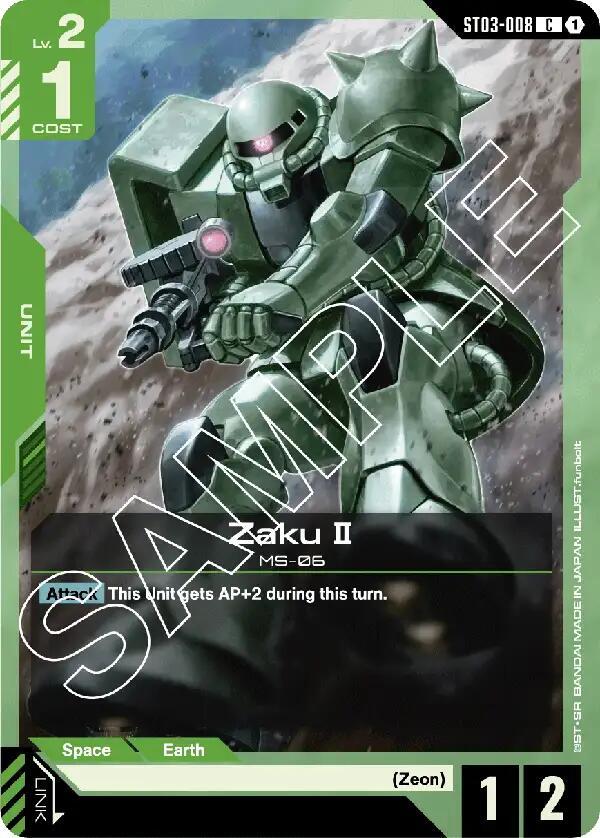
A good opening hand in Gundam answers one question: can I do meaningful things in the first few turns? Because your available resources climb roughly one per turn and most cards are gated by their Level, your early plays depend on having low-cost cards you can actually afford. A keepable hand generally has these traits:
- Early plays you can afford. At least a couple of low-Level cards — Units or Commands you can deploy in the opening turns. A hand that can act on turns one and two is doing its primary job.
- A workable curve. Ideally your hand spreads across costs — something cheap now, something stronger to follow — rather than clumping entirely at the top end. You want a play for each of the first few turns, not five cards you can't cast until turn five.
- Both colors, if you're two-color. In a two-color deck, a hand that only lets you act in one color is shakier. It doesn't have to be perfectly balanced, but access to what you need to cast your key early cards matters.
- At least one Unit. Units win the game and defend you. A hand of nothing but Commands and Bases with no bodies to deploy is usually a mulligan, even if the cards are individually fine.
You don't need a perfect hand — you need a functional one. If you can deploy something early, keep developing, and you have a Unit or two to start applying or absorbing pressure, that's a keep. (If terms like Level and curve are new, our first-deck guide walks through how the curve works.)
What Makes a Ship-It Hand
The flip side is just as clear. Some hands look fine at a glance but can't actually function — and because the mulligan is free, these are easy throwbacks once you learn to spot them:
- The all-expensive hand. Five high-Level cards you can't play until the mid or late game. It looks powerful, but you'll sit doing nothing for several turns while your opponent builds a board. Ship it.
- The no-Unit hand. All Commands, Bases, or Pilots with no Mobile Suits to deploy. Pilots with no Units to ride are dead weight, and you can't pressure or block without bodies. Mulligan.
- The color-screwed hand. In a two-color deck, a hand whose only playable cards are stranded behind the wrong color access. If you can't cast your early plays, the hand isn't doing its job.
- The do-nothing hand. Any hand that simply has no meaningful action for the first two or three turns. Tempo is hard to recover in Gundam, and falling behind early often means losing shields you never get back.
Notice the through-line: these hands fail because they can't act early. Whenever you find yourself rationalizing a hand — "well, if I draw a cheap Unit next turn, this is fine" — that's usually the hand telling you to ship it. Don't bank on perfect draws to rescue a hand the free mulligan could simply replace.
The Keep-or-Mulligan Checklist
When you look at your five cards, run them through this quick mental flow. It takes seconds and removes almost all the agonizing:
No → lean strongly toward mulligan. Yes → continue.
No → lean mulligan. Yes → continue.
No → lean mulligan. Yes → continue.
This isn't about finding a dream hand. It's about confirming the hand can function. Three yeses means you can play the early game; that's all a keep needs to clear.
Playing First vs. Second
Whether you're on the play or the draw subtly shifts what you want from a hand. The player going second receives an EX Resource token to offset the inherent disadvantage of acting after their opponent, which means they can sometimes power out a play a touch earlier than turn count alone suggests.
If you're going first, tempo is your edge — you want a hand that uses the early turns aggressively, since you're setting the pace. Prioritize keeping hands with proactive early plays that press your initiative.
If you're going second, the extra resource gives you a little more reach, so a hand leaning slightly higher on the curve is more forgiving than it would be on the play. You can also value reactive cards a bit more, since you'll often be responding to your opponent's board. The core checklist doesn't change — you still need early action — but the second player has marginally more room to keep a heavier hand.
Common Mulligan Mistakes
- Keeping a greedy hand out of habit. The biggest one, and usually imported from games where mulliganing costs a card. Gundam's redraw is free — stop clinging to hands that can't act early.
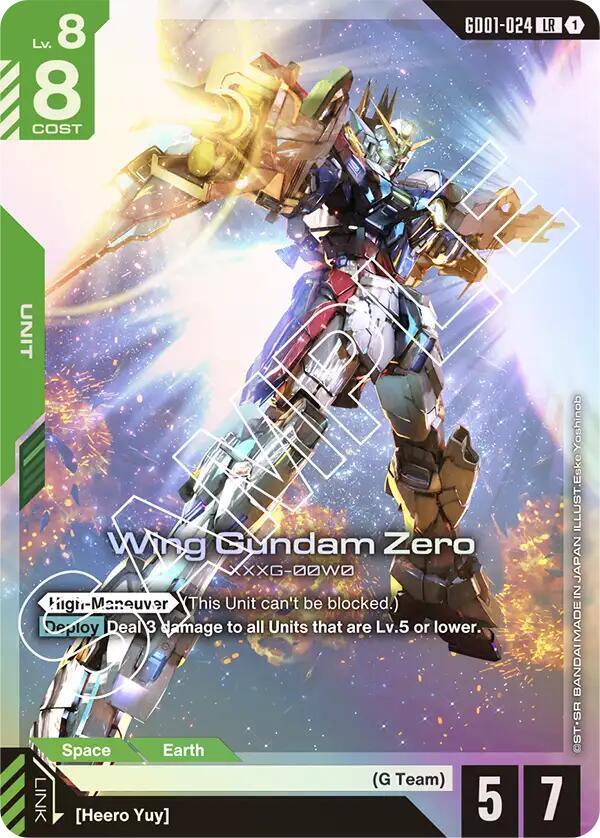
- Falling in love with one bomb. A single powerful late-game card doesn't make a hand keepable if the other four do nothing. You have to survive to play your bomb. Judge the whole hand, not its best card.
- Banking on the perfect draw. "This is fine if I topdeck a cheap Unit" is a trap. Keep hands that work with the cards in them, not the cards you hope to draw.
- Forgetting the cards go to the bottom. A minor technical point, but your mulliganed cards return to the bottom of the deck before you shuffle, then draw fresh — you won't immediately redraw the same five. Mulligan with confidence.
Mulligan FAQ
- How many times can I mulligan? Once. Each player gets a single mulligan, with Player One deciding first. There's no chaining multiple redraws, so make the one you get count.
- Do I lose a card when I mulligan? No. You redraw a full five cards — the same number you started with. There's no penalty, which is exactly why you should mulligan freely when your hand can't function.
- Where do my old cards go? Your entire original hand returns to the bottom of your deck, then you draw five new cards and shuffle. So you won't simply draw the same hand back.
- Should I mulligan a hand with no Units? Almost always, yes. Units are how you pressure and defend; a hand with none usually can't do its job, and the free redraw makes shipping it an easy call.
Quick Reference
- Opening hand: draw five cards.
- Mulligans allowed: one per player; Player One decides first.
- Procedure: entire hand to the bottom of the deck, draw five, then shuffle.
- Penalty: none — a flat five-for-five swap. Mulligan freely.
- Keep if: you can act in the first two turns, have a Unit on curve, and can hit your colors.
- Ship if: the hand is all-expensive, has no Units, is color-screwed, or does nothing early.
- On the draw: the EX Resource gives slight extra reach — a heavier hand is a bit more forgiving.
When in Doubt, Ship It.
The mulligan is the cheapest edge in Gundam: a free chance to fix a bad opening, handed to you every single game. Because the redraw costs you nothing, the right instinct is the opposite of what many card games teach — keep hands that can function in the early turns, and confidently ship the ones that can't. Run your five cards through the checklist, trust it, and you'll start more games on the front foot.
Early action wins Gundam games. Keep the hands that have it, mulligan the ones that don't, and let the free redraw do its job.
Sharpen Your Game:
© GEEKYDOMAIN.COM | Strategy Powered by Data