

Blocker Mechanics: When to Use Blocker Effectively
Blocker is how you protect what matters in the Gundam Card Game. Here's exactly how it works, the rulings that decide combat, and the timing that separates a good block from a wasted one.
In the Gundam Card Game, your opponent decides what to attack — your Units, your Shields, eventually you. Blocker is the keyword that takes that choice away from them. It lets you throw a defending Unit in front of an incoming attack, redirecting the damage onto a Unit of your choosing instead of letting it hit your valuable Units or chew through your Shields. Used well, it's the backbone of defensive play; used carelessly, it's a Unit rested for nothing.
What makes Blocker worth mastering is that it's an active decision with a real cost, made at a specific moment in the battle sequence. Unlike a passive shield, you choose whether and when to block, you pay for it by resting your Blocker, and the timing — it happens in a dedicated Block Step — matters enormously. Knowing when a block is worth the rest, and when to just take the hit, is one of the core skills of piloting a defensive Gundam deck.
This guide breaks down exactly how Blocker resolves using the official rules, the rulings that trip players up (it must be active, it doesn't stack, and High-Maneuver goes right through it), how it interacts with the rest of combat, and the decision-making that turns Blocker from a panic button into a precision tool. It's the defensive companion to our piece on Gundam's combat keywords, First Strike & Support.
The Short Version
Blocker lets you rest an active Unit during the Block Step to redirect an incoming attack onto it, protecting the original target (a Unit or your Shields). The key rulings: the Blocker must be active (unrested) — you can't block with an already-rested Unit, since resting it is the cost; one Unit can't stack multiple copies of Blocker; and an attacker with High-Maneuver bypasses Blocker entirely, hitting the original target anyway. Blocker happens after the attack is declared but before damage, so you react to what they're attacking. Use it to protect key Units and preserve your Shields, to force unfavorable trades (block with a Unit that survives or kills the attacker), and especially well alongside First Strike (block and destroy the attacker before it deals damage). The skill is knowing when a block is worth resting your Unit — and when to take the hit and keep your Unit active for your own turn.
→ More Gundam Guides
In This Guide
What Blocker Does
Blocker is a defensive keyword on a Unit. When your opponent declares an attack — against one of your Units, or against your Shields — a Unit with Blocker can step in and redirect that attack onto itself. The cost: you rest the Blocker (turn it sideways) to do it. The attack that was heading for your valuable Unit or your Shield area now resolves against the Blocker instead.
This is the Gundam game's core "protect your stuff" tool. Your Shields are your life total — once they're gone, the next unblocked hit can defeat you — and your key Units are your engine. Blocker lets you interpose a defender so the attack chews through a Unit you're willing to lose, rather than the thing you actually need to protect.
Blocker in one line:
Rest an active Unit to pull an incoming attack onto it —
protecting the Unit or Shields it was aimed at.
It's the defensive identity of the White color, which is built around Blocker and damage-reduction effects to keep your board and Shields intact. But any deck running Blocker Units gains the same option: turn an opponent's clean attack into a fight on your terms.
Where It Happens: The Block Step
Blocker only works because of when it happens. A Gundam battle resolves in a fixed five-step sequence, and Blocker has its own dedicated step:
- 1. Attack Step. The attacking player declares the attacking Unit and its target — an opposing Unit or the Shields.
- 2. Block Step. The defending player may rest an active Blocker Unit to redirect the attack onto it. This is your window — and it comes after you've seen what they're attacking.
- 3. Action Step. Both players may play Action-timing Command cards or activate effects — pumps, heals, tricks — now that blocks are locked in.
- 4. Damage Step. Damage is dealt. Normally both Units deal their AP simultaneously; First Strike changes that order.
- 5. End of Battle Step. Temporary effects expire.
The crucial detail is that Block happens in step 2 — after the attack and its target are declared, but before damage. So blocking is fully reactive: you get to see exactly what's being attacked and decide whether it's worth resting a Blocker to redirect it. You're never guessing; you're responding to a known attack.
The Rulings That Decide Combat
Ruling #1: The Blocker Must Be Active
You can only block with an active (unrested) Unit — a Blocker that's already rested cannot be used to block. This is because resting the Unit is the cost of blocking. The practical consequence is huge: if you attacked or used abilities that rested your Blocker on your own turn, it can't defend on your opponent's turn. To keep a Blocker available as a defender, you often have to leave it active rather than using it offensively.
Ruling #2: Blocker Doesn't Stack
A single Unit can't have multiple copies of Blocker — a second instance does nothing. One Blocker Unit blocks one attack (by resting). To block multiple attacks in a turn, you need multiple active Blocker Units, each resting to redirect one attack.
Ruling #3: One Block, One Attack
Each block redirects a single declared attack. If your opponent attacks with several Units across the turn, each Blocker you have can intercept one of them — so the number of active Blockers you control caps how many attacks you can redirect. Plan which attacks are worth blocking, because you can't block everything with one Unit.
The Counter: High-Maneuver
Blocker has a hard counter built into the game, and you need to respect it: the High-Maneuver keyword. A Unit attacking with High-Maneuver bypasses Blocker entirely — even if you rest a Blocker to redirect the attack, a High-Maneuver attacker ignores the block and hits its original target anyway.
This is the game's way of keeping defense from being absolute. Against a deck packing High-Maneuver, your Blockers can't reliably wall the threats that have it — those attacks go where the attacker wants regardless. It's the same design logic as evasion keywords in other games: a dedicated answer to dedicated defense.
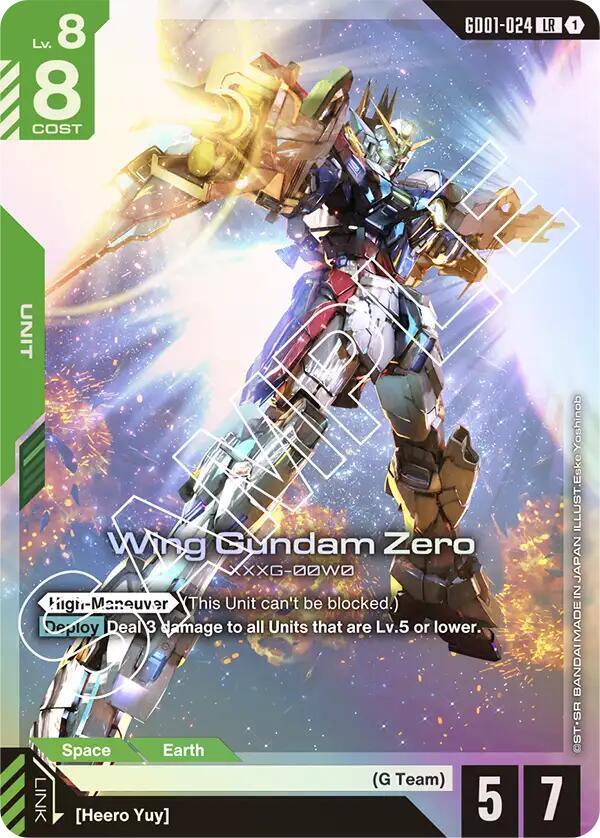
Don't rely on Blocker against High-Maneuver. If you know your opponent's key attacker has High-Maneuver, don't bank your whole defensive plan on blocking it — you can't. Save your Blockers for the threats they can actually stop, and find another answer (removal, racing, or trading) for the High-Maneuver Units.
Blocker + First Strike
The strongest thing you can do with Blocker is pair it with First Strike. Recall how First Strike works: an attacking Unit with it deals damage first, and if that kills the target before it can hit back, no return damage is taken. The same logic applies when a First Strike Unit is the one blocking.
Block with a First Strike Unit and, in the Damage Step, it deals its damage first. If it destroys the attacker outright, the attacker never deals its damage — so your Blocker redirects the attack and walks away unharmed, having destroyed the attacking Unit for free. You've turned a defensive block into a one-sided kill.
The premium block:
A First Strike Blocker redirects the attack, strikes first,
and destroys the attacker before taking any damage.
Even without First Strike, blocking with a Unit that simply survives the attack while dealing enough to destroy the attacker is a great trade — you keep your Blocker and remove their threat. The general principle: the best blocks aren't just "absorb the hit," they're "win the fight you redirected." For the full First Strike breakdown, see our combat keywords guide.
When to Block (and When Not To)
Because blocking costs you a rested Unit, it's a real decision, not an automatic one. A framework for when a block is worth it:
- Block to protect your Shields when low. Your Shields are your lifeline. When you're down to your last few, blocking to preserve them — even by trading away a Unit — is often correct, because losing the Shield could lose you the game.
- Block to make a favorable trade. If your Blocker survives the attack and destroys (or damages) the attacker, you've come out ahead — you protected your target and removed a threat. First Strike or a high-HP Blocker makes these blocks especially clean.
- Block to protect a key Unit. When the attack targets a Unit your deck depends on, redirecting it onto an expendable Blocker keeps your engine running. Spend a lesser Unit to save a greater one.
- Don't block when the rest costs more than the hit. If the attack is hitting a Shield you can afford to lose, and you'd rather keep your Blocker active to attack on your own turn, take the hit. Resting your Blocker to save one Shield you didn't need to save is how aggressive decks grind you down.
The core tension: every Unit you leave active to block is a Unit not attacking, and every Unit you rest to block can't defend the next attack. Good Gundam players hold Blockers back when they expect pressure and commit them to offense when they're the aggressor — reading the game to decide which role each Unit plays each turn.
Common Mistakes
Mistake #1: Resting your Blocker on offense, then having no defense.
A Blocker can only block while active. If you attack or activate abilities with it on your turn, it's rested and can't defend on your opponent's turn. If you're expecting incoming pressure, leave your Blocker active — the defensive option is worth more than one extra attack.
Mistake #2: Banking on Blocker against High-Maneuver.
High-Maneuver attackers ignore Blocker completely. Building your whole defense around walling a threat that has High-Maneuver is a plan that doesn't work — identify those attackers and answer them another way, and save your blocks for what they can actually stop.
Mistake #3: Blocking attacks you didn't need to block.
Resting a Blocker to save a Shield you could comfortably afford to lose just trades your Unit's readiness for nothing important. Let unimportant hits through and keep your Blocker available for the attack that actually threatens you — don't reflexively block everything.
Mistake #4: Blocking into a fight your Unit just loses.
Redirecting an attack onto a Blocker that simply dies without damaging the attacker only delays the problem — sometimes that's worth it to save a Shield, but often you're just throwing away a Unit. Where you can, block with a Unit that survives or kills the attacker, so the block is a trade in your favor rather than a sacrifice.
Mistake #5: Forgetting you can react in the Block Step.
Blocking happens after the attack is declared, so you always know the target before you decide. New players sometimes pre-commit mentally or forget the window exists. Take the moment: see what's attacked, weigh the block, then choose — and remember the Action Step right after lets either player add tricks before damage.
FAQ & Quick Reference
- Can I block with a rested Unit? No. You can only block with an active (unrested) Unit, because resting it is the cost of blocking. A Unit that's already rested — from attacking or using an ability — can't be used to block.
- Does Blocker stack on one Unit? No — a single Unit can't have multiple copies of Blocker, and one Blocker blocks one attack. To redirect multiple attacks, you need multiple active Blocker Units.
- Can anything get around Blocker? Yes — High-Maneuver. An attacker with High-Maneuver bypasses Blocker and hits its original target even if you try to block. It's the dedicated counter to defensive Blocker play.
- When in the battle do I get to block? In the Block Step, which comes right after the attack and target are declared and before damage. You always see what's being attacked before deciding whether to rest a Blocker to redirect it.
- What's the best Unit to block with? One that wins the fight — ideally a First Strike Unit (which can destroy the attacker before taking damage) or a high-HP Unit that survives and damages the attacker. Blocking with something that just dies is sometimes worth it to save a Shield, but trading up is far better.
- Blocker: rest an active Unit to redirect an incoming attack onto it.
- Must be active: resting is the cost — a rested Unit can't block.
- Doesn't stack: one Blocker blocks one attack; need more Units for more blocks.
- Timing: the Block Step — after the attack is declared, before damage (fully reactive).
- Counter: High-Maneuver attackers bypass Blocker entirely.
- Best use: block with First Strike or a survivor to win the redirected fight.
Control the Battlefield.
Blocker is how you take control of combat away from the attacker. Rest an active Unit to pull an attack off your Shields or your key Units, pick your spots so the block is a trade in your favor, and lean on First Strike to destroy what you block before it can hit back. Just respect the limits — keep your Blocker active when you expect pressure, don't waste a block on a hit you could take, and never count on Blocker to stop a High-Maneuver attacker. Master the timing of the Block Step and you'll turn your opponent's attacks into fights they didn't want — and win the ones that matter.
© GEEKYDOMAIN.COM | Strategy Powered by Data