

In the Gundam Card Game, your shields are your life total — and each one might fight back when it breaks. Mastering shields and the Burst trigger is one of the deepest layers of the game.
Most card games give you a life total — a number you protect until it hits zero. The Gundam Card Game does something more interesting. Instead of a number, you have six face-down Shields, and every one of them is both a point of life and a potential trap waiting to spring on whoever breaks it. Attacking an opponent isn't just chipping away at a counter; it's gambling against cards you can't see.
That single design choice — hidden shields that can trigger powerful 【Burst】 effects when destroyed — turns combat into a game of risk, reading, and resource management. Knowing how to manage your own shields, and how to read the threat of your opponent's, separates players who simply attack from players who attack well.
This guide covers exactly how shields, Bases, and the Burst trigger work, then digs into the strategy on both sides of the table. The mechanics here are drawn from the official rules, so you can rely on them.
The Short Version
You have no numeric life total — instead you have a Base section (starting with an EX Base) and six face-down Shields, each with 1 HP. Attacks must destroy your Base first, then strip your shields one at a time; you lose when you take battle damage with no shields left. Crucially, excess damage is wasted — a big attacker breaks the same single shield as a small one — so going wide with multiple attackers strips shields faster. When a shield breaks it's revealed, and if it has a 【Burst】 effect you may trigger it for free. Because shields are hidden, attacking is always a gamble: manage your own shields as a comeback resource, and read your opponent's as a hidden threat.
→ Build Your Gundam Knowledge
In This Guide
How Shields Work
Your Shield Area has two parts: a Base section (which can hold up to one Base) and a Shield section (which holds your shields). You begin the game with an EX Base token — a Base with 0 AP and 3 HP — sitting in your base section, and six face-down Shields, each with 1 HP, in your shield section. There is no separate life total: these cards are your life.
When an opponent's Unit attacks you, the damage has an order of operations. If you have a Base, the attack must get through the Base first — the Base soaks the hit before any shield is touched. Only once no Base remains does an attack on you destroy a Shield, one at a time, taking the top shield of your shield section.
Two details matter enormously. First, shields are private and face-down — your opponent can't see what they are until one breaks. Second, each shield has just 1 HP and excess damage is wasted: a Unit with 5 AP destroys exactly one shield, the same as a Unit with 1 AP. Damage doesn't spill over to the next shield.
You lose the game when you take battle damage from a Unit while you have no cards left in your shield area — that's the killing blow once your Base and all six shields are gone. (You also lose if you run out of cards in your deck.) So your shields are quite literally the wall between you and defeat — but unlike a life total, that wall can fight back.
Your Shield Area, Layer by Layer
An attack has to chew through every layer from left to right. Only the final hit, with nothing left, ends the game.
The Burst Trigger
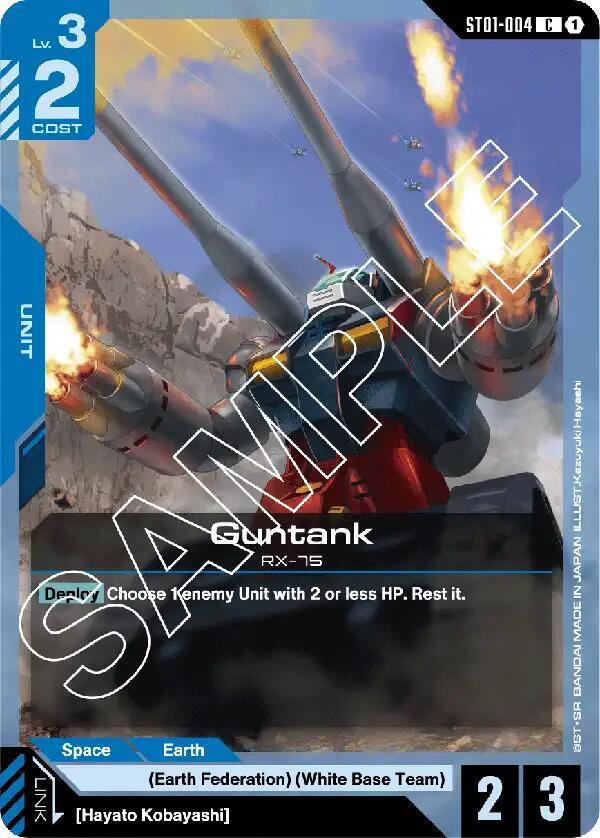
Here's what makes Gundam's shields special. When a shield is destroyed, it isn't just discarded — it's revealed, and if that card has a 【Burst】 effect, you (the defender) may choose to activate it for free before it goes to the trash.
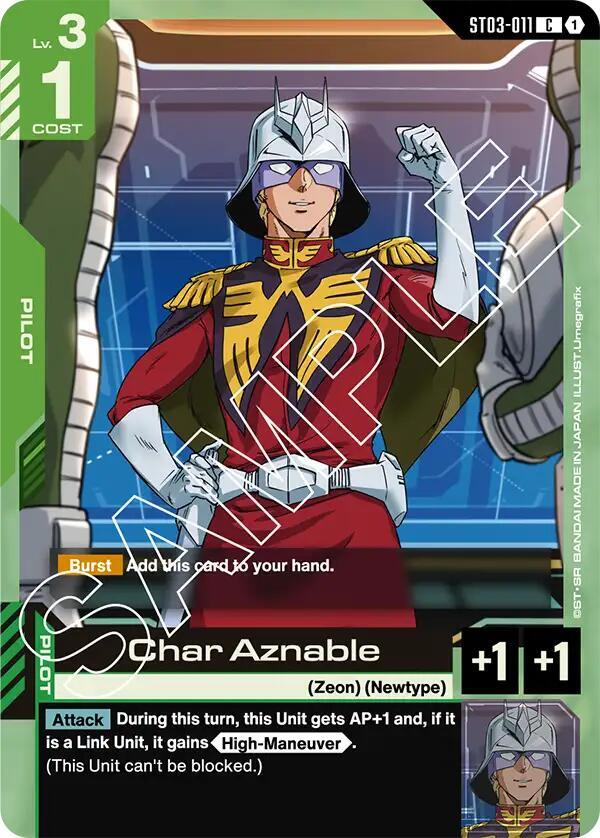
Burst effects are comeback tools. Depending on the card, a Burst might deploy a Unit or Base for free, set one of your Units active so it can block or attack again, draw you cards, or disrupt the attacker. Because the card was sitting in your shields the whole time, a Burst is essentially free value that fires exactly when you're under pressure — the game's built-in rubber band against being overwhelmed.
And because shields are face-down, the attacker never knows which of your shields hold Bursts. Every attack into your shields is a gamble: the opponent might break a blank shield, or they might trigger an effect that swings the game back in your favor. That hidden information is the heart of all the strategy that follows.
The Excess-Damage Rule: Go Wide
This is the most important tactical consequence of how shields work, and many new players miss it. Since each shield has 1 HP and excess damage is wasted, the size of your attacker doesn't matter for breaking shields — only the number of attacks does.
A single 6-AP monster that connects with the shield area destroys exactly one shield. Three small 2-AP Units that connect destroy three shields. If your goal is to strip an opponent's shields and close out the game, going wide with multiple attackers is dramatically more efficient than going tall with one big threat. Width converts directly into shields broken.
Same Total AP, Very Different Results
Six total AP either way — but width breaks three times as many shields. When you're planning the kill, count attackers, not AP.
This shapes everything from deckbuilding to combat math. A board of several modest Units can race through six shields far faster than one huge Unit, and it's also more resilient — the opponent can't stop your assault by blocking or removing a single threat. When you're planning the kill, count your attackers, not your total AP. (For the full damage-resolution picture — how AP and HP interact when Units clash — see our combat math guide.)
A Combat Example, Step by Step
To make all of this concrete, let's walk a single attack step through from start to finish. Suppose your opponent still has their EX Base standing, six shields behind it, and you're swinging in with three Units — a 4-AP, a 3-AP, and a 2-AP — all able to attack:
- Attack 1 — the 4-AP Unit. The opponent has a Base, so this hit lands on the EX Base (3 HP). The Base takes 4 damage, exceeds its HP, and is destroyed. The extra 1 damage is wasted — it does not carry on to a shield. Their shields are now exposed.
- Attack 2 — the 3-AP Unit. No Base remains, so this strikes the top shield. The shield (1 HP) is destroyed and revealed. If it has a 【Burst】, the opponent may fire it now — perhaps deploying a blocker that changes everything about your next attack. The other 2 damage is wasted.
- Attack 3 — the 2-AP Unit. Assuming no Burst-deployed blocker intercepts it, this breaks a second shield, again revealing it for a possible Burst. The opponent started the turn with a Base and six shields; they end it with five shields and no Base.
Notice the rhythm: your nine total AP destroyed one Base and two shields — not nine of anything. Notice too that the order matters. Because the Base must fall first, your first attacker spent itself clearing the gate, and the Bursts you exposed could reshape the rest of the turn. That's why sequencing — which we cover below — is its own skill.
Defending: Managing Your Shields
As the defender, the key mindset shift is to stop seeing shields purely as life and start seeing them as a resource and a comeback engine. A few principles:
- Don't panic as shields fall. Losing a shield can be a good thing if it triggers a Burst. You have six of them, and the early ones breaking often hand you free value. Falling behind on shields is not the same as losing.
- Build Bursts into your deck. The more 【Burst】 cards you run, the more dangerous your shields become to attack. A deck full of Burst threats taxes every opponent's assault — they're never sure whether the next shield will punish them, which buys you time and respect.
- Use your Base as a buffer. Your Base must be destroyed before your shields, so deploying Bases extends your survival. A Base is an extra layer of wall — and forcing the opponent to spend attacks on it slows their march to your shields.
- Block to preserve, not just to trade. Using a 【Blocker】 to absorb an attack keeps a shield intact. Decide whether you'd rather keep the shield (and its possible Burst) in reserve, or let it break now to fire its effect — both can be correct depending on the board.
Attacking: Reading the Burst
On offense, every attack into shields is a calculated gamble against hidden Bursts. You can't see what you're breaking, but you can play the odds intelligently:
- Respect the archetype. Some decks and colors lean heavily on Burst comebacks. Against a known Burst-heavy opponent, assume some shields will fight back and plan for it, rather than attacking blindly and getting blown out.
- Develop before you commit. Build a board that can survive a Burst comeback before you start stripping shields. If a triggered Burst deploys a blocker or sets a Unit active, you want enough on the table that one swing-back doesn't cost you the game.
- Race when the math favors you. Sometimes the right answer is to ignore the risk and go wide fast — break all six shields in a couple of turns before the Bursts can matter. If you can present lethal before the opponent stabilizes, a Burst or two won't save them.
- Sequence your attacks. Attack with your most expendable Units into shields first, so that if a Burst punishes an attacker, you haven't lost your most important threat. Save your key Units for when the path is clearer.
Base Management
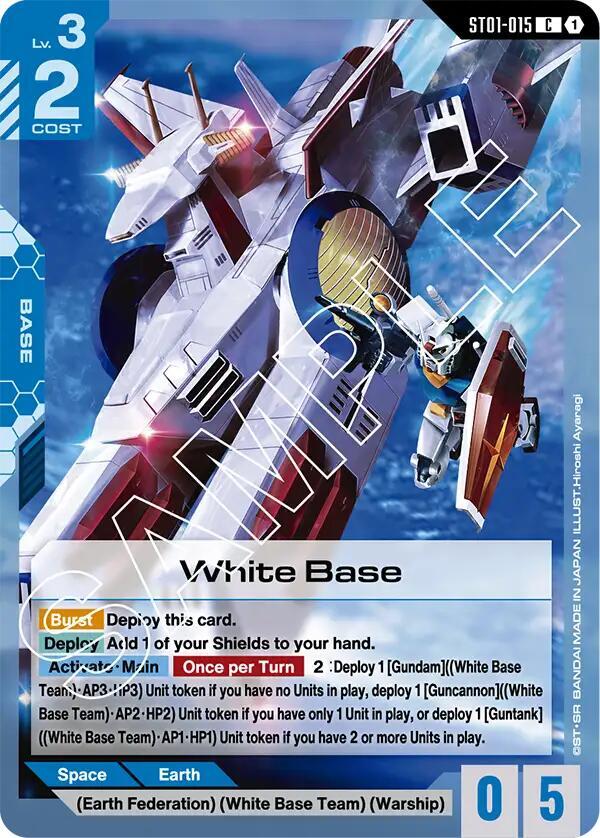
The Base section is the often-overlooked first layer of the whole system. Both players begin with an EX Base — a 0 AP, 3 HP token — and can deploy additional Bases from their deck during the game. Because an attack on a player must destroy the Base before it can touch any shield, Bases are pure defensive tempo.
On defense, a sturdy Base can absorb several attacks and buy you crucial turns, especially against a go-wide assault. On offense, remember that the opponent's Base is the gate to their shields: you can't start breaking shields and threatening Bursts until the Base is gone, so factor destroying it into your plan. A well-timed Base on either side can completely reshape the race. (Bases and the EX tokens are deeper than they look — our EX Base & EX Resource guide covers how to use them well.)
Common Mistakes
- Overkilling shields with one big Unit. A 7-AP attacker breaks one shield, just like a 1-AP attacker. Spread your attacks across multiple Units to break more shields per turn.
- Treating your own shields as just life. They're a comeback resource. Run Burst cards and let your shields punish attackers rather than viewing every broken shield as a pure loss.
- Attacking into shields blindly. Hidden Bursts can blow out a careless assault. Develop a board that survives a comeback before you commit your key Units.
- Forgetting the Base must fall first. You can't touch shields — or trigger any Bursts — while a Base stands. Plan to remove the opponent's Base, and use your own to stall.
Shield & Burst FAQ
- How many shields do I start with? Six face-down Shields in your shield section, plus an EX Base token (0 AP, 3 HP) in your base section. That Base plus those six shields are your entire defensive wall.
- Do I have to activate a Burst when a shield breaks? No — it's optional. When the shield is revealed, you choose whether to activate its 【Burst】 effect before the card goes to the trash. Usually you'll want to, but the choice is yours.
- Can my opponent see what my shields are? No. Shields are private and face-down — only your Base (if one is deployed) is public information. That hidden information is exactly what makes attacking into shields a gamble.
- What happens when I run out of shields? Once your Base and all your shields are gone, the next time you take battle damage from a Unit, you're defeated. You also lose if your deck runs out of cards, so don't ignore your deck count in a long game.
Quick Reference
- Your defenses: a Base section (start with an EX Base, 0 AP / 3 HP) + 6 face-down Shields, 1 HP each.
- No life total: shields are your life — lose when you take battle damage with no shields left.
- Order: attacks destroy the Base first, then strip shields one at a time.
- Excess wasted: 1 damage = 1 shield. Go wide with many attackers, not tall with one.
- Burst: a broken shield is revealed; activate its 【Burst】 free, then trash it.
- Defense: run Bursts, use Bases to stall, treat shields as a comeback resource.
- Offense: attack into hidden Bursts carefully — develop first, or race before they matter.
Your Shields Are a Weapon.
The shield system is what gives Gundam combat its depth. Your six face-down shields aren't just a life total counting down — they're a hidden arsenal that can swing the game the moment an opponent gets greedy. Manage them as a resource, build Bursts that make attacking you dangerous, lean on your Base to buy time, and on offense, attack into that hidden information with a plan. Go wide to break shields, respect the Burst, and you'll win the games that careless players lose.
Count your attackers, read the threat, and break the shields that matter.
Sharpen Your Game:
© GEEKYDOMAIN.COM | Strategy Powered by Data