

Best Budget Card Draw in Each Color
The cheapest ways to keep your hand full in Commander — broken down by color, so you know exactly what your deck has access to and what it's missing.
Some links below are affiliate links. If you buy through them, we may earn a small commission at no extra cost to you. We only recommend cards we'd run ourselves.
Card draw wins Commander games. Not in the flashy way — nobody scoops because you drew three cards. But the player who sees the most cards finds the most answers, hits the most land drops, and assembles the most synergies. Over a 10-turn game, the difference between drawing one extra card per turn and zero is the difference between having a plan and hoping to topdeck one.
The problem is that the premium draw engines are expensive. Rhystic Study, Sylvan Library, Necropotence — the format's best card-advantage tools sit in the $15–$40 range and keep climbing. But every color has budget draw options that do 80% of the same job for a fraction of the price, and knowing which ones to run is the single fastest way to improve a budget deck. This is the companion piece to our Best Budget Removal in Each Color guide — together they cover the two things every Commander deck must do: draw cards and answer threats.
We've organized by color so you can jump straight to what your deck needs. Prices are qualitative — the secondary market moves — but every card here was chosen because it's been cheap for years and stays cheap through reprints. For the strategic case on when to prioritize draw over ramp, see our Ramp vs Card Advantage breakdown.
→ Short Version
White is the weakest at draw — lean on Mentor of the Meek and Welcoming Vampire in creature decks. Blue has the deepest options — Brainstorm, Fact or Fiction, and Windfall are all pennies. Black pays life for cards — Night's Whisper and Read the Bones are the gold standard. Red does impulse draw — Faithless Looting and Light Up the Stage keep the hand moving. Green draws off creatures — Beast Whisperer is the engine, Harmonize is the catch-up. Every color has real options under $5 — the expensive stuff is a luxury, not a requirement.
→ Expand Your Arsenal
In This Guide
- → The Best Budget White Draw
- → The Best Budget Blue Draw
- → The Best Budget Black Draw
- → The Best Budget Red Draw
- → The Best Budget Green Draw
- → The Budget Picture: Draw by Color
- → Commanders That Live on Draw
- → Honorable Mentions
- → Common Mistakes
- → Where to Buy the Pieces
- → Card Draw FAQ
- → The Verdict
The Best Budget White Draw
White has historically been the worst color at drawing cards — and Wizards has spent the last few years fixing that. The new generation of white staples includes conditional draw engines that are cheap to buy and surprisingly powerful in creature-heavy decks. The trick is knowing which conditions your deck reliably meets.
Mentor of the Meek
{2}{W} — Creature. Heavily reprinted and inexpensive.
Why it wins: Whenever a creature with power 2 or less enters the battlefield under your control, you may pay {1} to draw a card. In any token strategy, go-wide build, or Selesnya token shell, Mentor draws two to four cards per turn cycle — that's Rhystic Study territory for a fraction of the price. The mana cost to trigger is real, so it's best in decks that have mana to spare in the mid-game. The budget white draw engine, full stop.

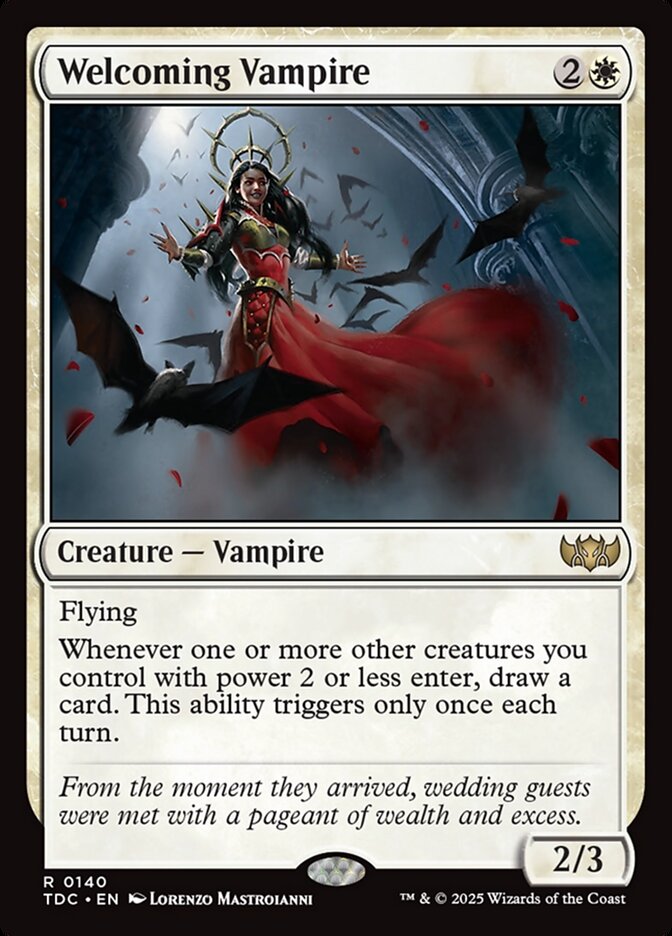
Welcoming Vampire
{2}{W} — Creature. Inexpensive.
Why it wins: Whenever one or more creatures with power 2 or less enter under your control, draw a card — once each turn. No mana payment required, which is the key upgrade over Mentor of the Meek. The "once per turn" cap means it's a steady drip rather than an explosive engine, but a free card every turn in white is exactly what the color needed. Flies under the radar at most tables because it doesn't look threatening — and quietly keeps your hand full while opponents focus elsewhere.
Dawn of Hope
{1}{W} — Enchantment. Cheap.
Why it wins: Whenever you gain life, you may pay {2} to draw a card. Also makes 1/1 lifelink tokens for {3}{W}. In any deck that gains life incidentally — and in Commander, that's most white decks — Dawn of Hope converts surplus lifegain into real cards. A dedicated lifegain build triggers it multiple times per turn. Even in a generic white shell, landing a lifelink creature means every combat step is a draw trigger. Two mana to cast, pay-as-you-go to draw — low floor, high ceiling.
The Best Budget Blue Draw
Blue is the king of card draw — always has been, always will be. The good news for budget players is that blue's best draw spells are expensive (Rhystic Study, Mystic Remora), but blue's second-best draw spells are some of the cheapest cards in the format. The blue staples that actually see Commander play are almost all reprinted to dust.
Brainstorm
{U} — Instant. One of the most reprinted cards in Magic — costs pennies.
Why it wins: Draw three cards, put two back on top of your library. One mana, instant speed, three cards deep. The raw selection is staggering — you see three new options and keep the best one. In Commander it's slightly weaker than in formats with fetch lands (which let you shuffle away the two bad cards you put back), but it's still the best one-mana cantrip ever printed. At instant speed, you hold it up alongside your interaction package and fire it off at end of turn if nothing needed countering.

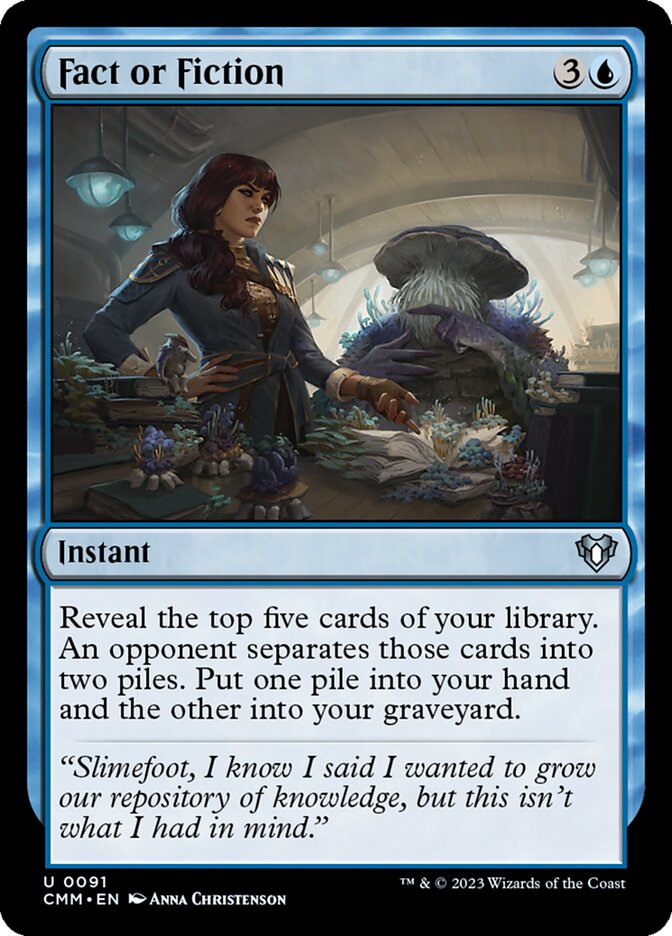
Fact or Fiction
{3}{U} — Instant. Heavily reprinted and inexpensive.
Why it wins: Reveal the top five cards of your library. An opponent separates them into two piles. You put one pile in your hand and the other in your graveyard. The beauty is the mind game — no matter how the opponent splits, you get the better deal, because you know which cards matter. In practice, you're drawing two to three cards for four mana at instant speed, and the cards that hit the graveyard often fuel reanimation or flashback. One of the strongest raw card-advantage spells at any price, and it's been printed enough to cost almost nothing.
Windfall
{2}{U} — Sorcery. Reprinted in multiple Commander products. Cheap.
Why it wins: Each player discards their hand, then draws cards equal to the greatest number of cards a player discarded this way. A wheel effect for three mana — if your hand is empty and an opponent is holding seven, everyone draws seven and you've gone from nothing to a full grip. The disruption to opponents who've been sculpting a perfect hand is real, and in spellslinger decks or Izzet shells that dump their hand fast, it's a refill on demand.
The Best Budget Black Draw
Black draws cards the old-fashioned way — by paying life. In a 40-life format, that's a bargain. The black staples for card advantage are efficient, unconditional, and some of the cheapest playables in the game.
Night's Whisper
{1}{B} — Sorcery. Heavily reprinted. About as cheap as a card gets.
Why it wins: Draw two cards, lose two life. Two mana, no conditions, no hoops — just cards. In a format where you start at 40 life, two life is meaningless. Sign in Blood does the same thing at {B}{B} (harder to cast in multicolor decks but can target an opponent for a lethal-range finisher). Run whichever one your mana supports; run both if you're in mono-black or a Dimir shell that wants density. The cleanest budget draw spell in the game.

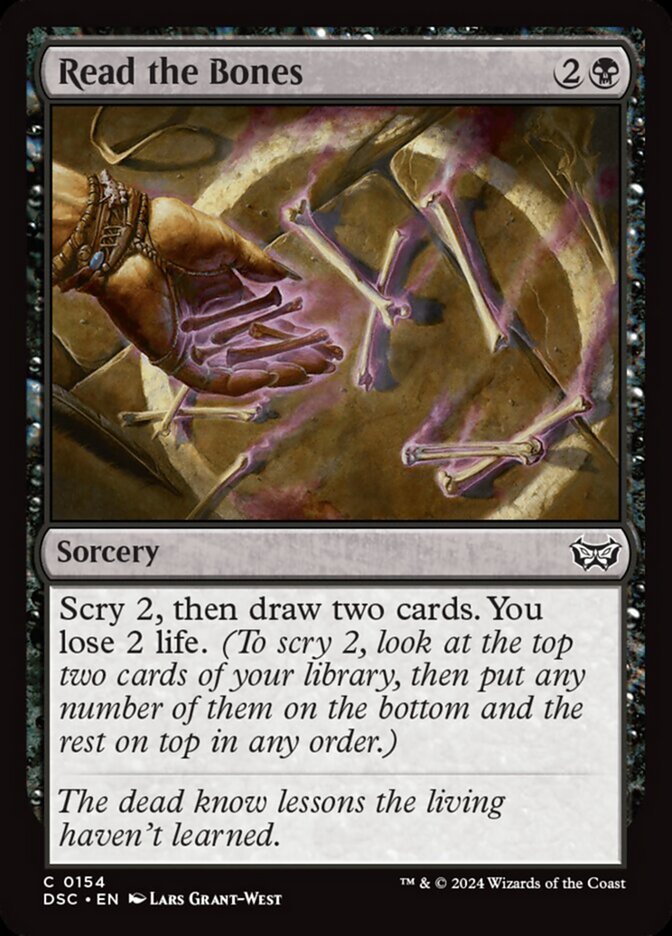
Read the Bones
{2}{B} — Sorcery. Common. Costs pennies.
Why it wins: Scry 2, then draw two cards, lose two life. The scry is what separates this from Night's Whisper — you look at four cards total (scry two, draw two), keep the best two, and send the worst two to the bottom. At three mana it's a turn slower, but the card selection makes it the better topdeck in the mid-game when you need a specific answer. One of the best common-rarity spells in Commander, and the kind of card that makes budget black decks feel like they're cheating on card quality.
Village Rites
{B} — Instant. Common. Essentially free to acquire.
Why it wins: Sacrifice a creature, draw two cards. One mana, instant speed, two cards. The sacrifice is an additional cost, not a drawback — in any deck running sacrifice payoffs, death triggers, or expendable tokens, Village Rites is a ritual. Sacrifice a creature that was about to die to removal anyway, and you've turned your opponent's spell into your card advantage. In Rakdos aristocrats or Golgari sacrifice shells, it's one of the most efficient draw spells ever printed.
The Best Budget Red Draw
Red doesn't draw cards in the traditional sense — it does "impulse draw," exiling cards from the top of the library and giving you a window to play them. It also filters aggressively: draw and discard, rummage, loot. The red budget staples for card advantage are fast, cheap, and reward decks that play proactively.
Faithless Looting
{R} — Sorcery. Draw 2, discard 2. Flashback {2}{R}. Banned in Modern, legal in Commander. Costs pennies.
Why it wins: The best card filtering spell in Commander, bar none. One mana sees two new cards and puts two cards you don't need into the graveyard — where, in red and black decks, they're often more useful than in your hand. The flashback means you get to do it again later. In any deck that cares about the graveyard — reanimator, flashback, Rakdos sacrifice, Izzet spellslinger — Faithless Looting is the first card in the 99.

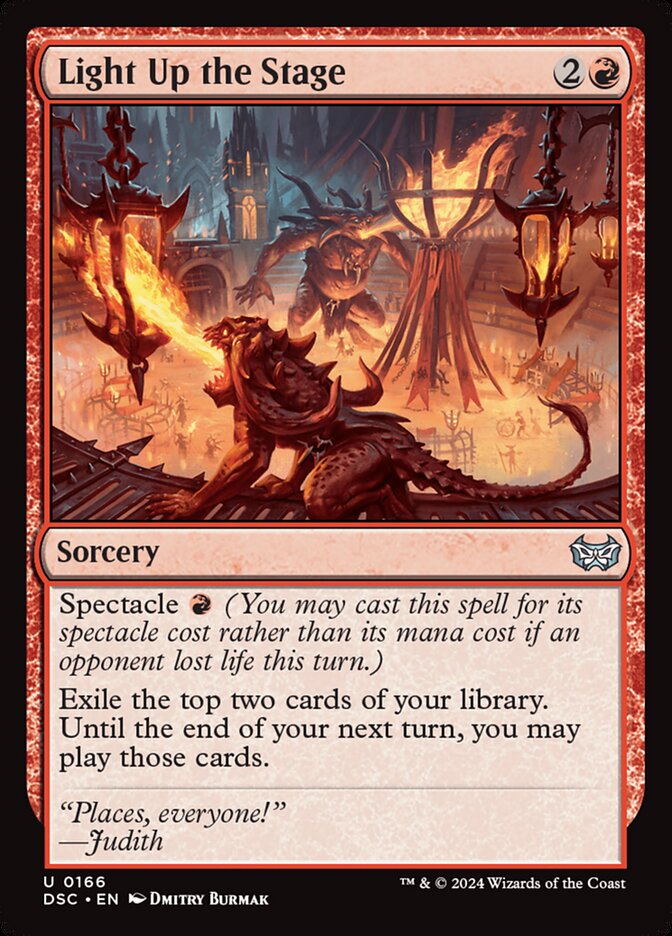
Light Up the Stage
{2}{R} — Sorcery. Spectacle {R}. Exile the top two cards; play them until the end of your next turn. Uncommon, cheap.
Why it wins: If you dealt damage to an opponent this turn (easy in Commander — any attack, any ping), Spectacle drops the cost to one red mana. One mana, two cards, and you get until the end of your next turn to play them — a generous window that most impulse draw doesn't give you. In aggressive Boros and Gruul builds that swing early, Light Up the Stage triggers Spectacle reliably and keeps the aggro plan fueled.
Thrill of Possibility
{1}{R} — Instant. Discard a card, draw two. Common, inexpensive.
Why it wins: Instant-speed card filtering in red — discard a land you don't need, draw two fresh cards. The instant speed is what sets it apart from Cathartic Reunion (which draws more but is sorcery-speed and vulnerable to countermagic on the stack). Hold up mana for interaction; if nothing needs answering, fire off Thrill of Possibility at end of turn. Clean, cheap, and reliable — the red equivalent of a cantrip, and it goes in every red deck that wants to see more cards without committing to a sorcery-speed plan.
The Best Budget Green Draw
Green draws cards through creatures — either by casting them, having big ones, or counting them. The green budget staples for card advantage are engines that reward you for doing what green already wants to do: play creatures and turn them sideways.
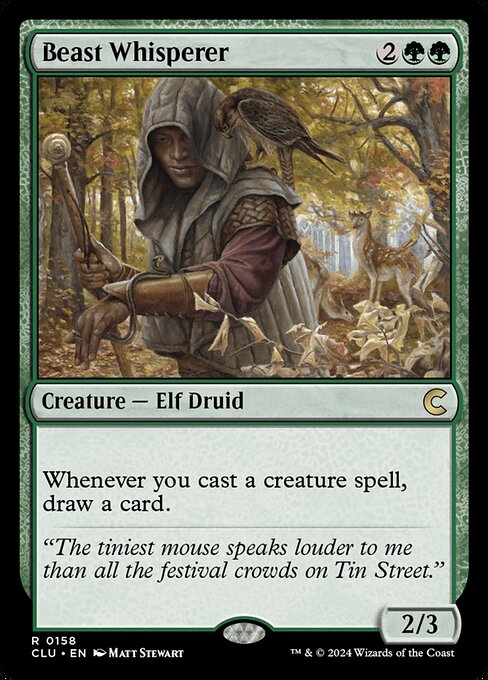
Beast Whisperer
{2}{G}{G} — Creature. Reprinted in Commander products. Inexpensive.
Why it wins: Whenever you cast a creature spell, draw a card. In a creature-heavy green deck — which is most green decks — Beast Whisperer draws three to five cards per turn cycle. That's an engine, not a cantrip. It turns every creature you'd play anyway into a cantrip that replaces itself, and the snowball effect is real: the more creatures you draw, the more creatures you cast, the more cards you draw. The budget version of Guardian Project and The Great Henge, and in high-creature-count decks it performs nearly as well. Essential in Selesnya tokens, Simic value, and elf tribal builds.
Harmonize
{2}{G}{G} — Sorcery. Heavily reprinted. Cheap.
Why it wins: Draw three cards. No conditions, no creatures required, no life payment — just three cards for four mana. Green's version of Concentrate, and the only unconditional "draw three" the color has ever gotten. In a color that usually needs creatures on board to draw, Harmonize is the catch-up spell for the turn after a board wipe when you have zero creatures and need to rebuild. Every mono-green and green-heavy deck should run it as insurance.

Garruk's Uprising
{2}{G} — Enchantment. Uncommon. Cheap.
Why it wins: When it enters, if you control a creature with power 4 or greater, draw a card. Whenever a creature with power 4 or greater enters under your control, draw a card. Your creatures also have trample. In any deck running beefy creatures — Dragons, Voltron, Gruul stompy — Garruk's Uprising replaces itself immediately and keeps drawing as you play your threats. The trample rider pushes damage through chump blockers, which matters more than it looks in combat-focused decks. Three mana for a self-replacing draw engine with trample upside — one of the best uncommons ever printed for Commander.
The Budget Picture: Draw by Color
Every color's premium draw engine has a budget counterpart that does the same fundamental job — keep your hand full. Here's the gap, color by color. The premium cards are better, but the budget options are far closer in performance than the price gap suggests.
Budget vs Premium, By Color
Each row shows one color's best budget draw option versus the chase card everyone assumes you need.
Illustrative pricing — secondary market fluctuates. The point: the budget draw spells do the same core job (put more cards in your hand), just with slightly different conditions or at slightly lower efficiency. In most Commander games, that difference doesn't decide the winner.
Commanders That Live on Draw
Some commanders don't just want card draw — they weaponize it. These budget options turn every draw spell on this list into a direct threat.
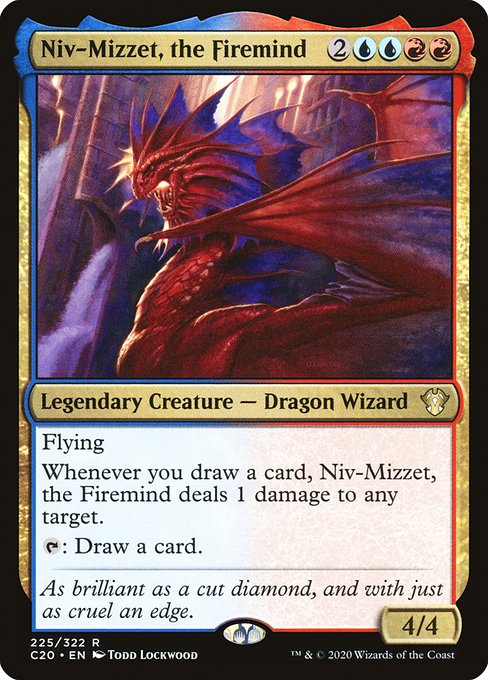
Niv-Mizzet, Firemind
{2}{U}{U}{R}{R} — Legendary Creature. Reprinted multiple times. Budget.
Why he loves budget draw: Whenever you draw a card, Niv-Mizzet deals 1 damage to any target. Every Brainstorm is three damage. Every Windfall is seven. Every Fact or Fiction is two to three. The budget draw spells on this list become a direct damage engine — and the expensive draw spells don't deal any more damage per card than the cheap ones do. One of the best examples of a commander where budget card quality literally doesn't matter: a card drawn is a card drawn is one damage. See our Izzet budget staples for the supporting cast.
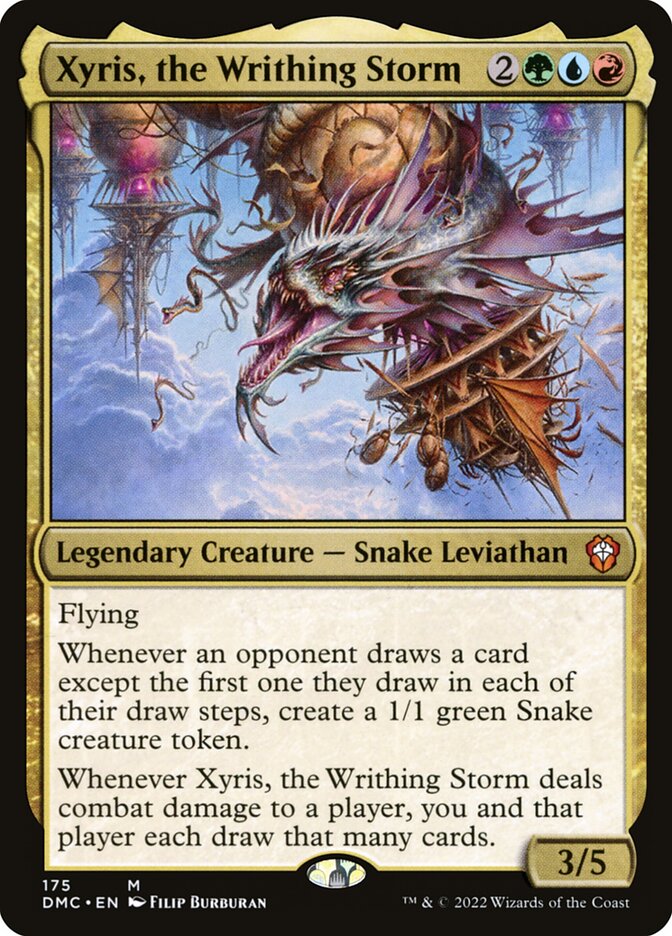
Xyris, the Writhing Storm
{2}{G}{U}{R} — Legendary Creature. Inexpensive.
Why Xyris loves budget draw: Whenever an opponent draws a card, create a 1/1 Snake token. Windfall with three opponents drawing seven cards each creates 21 Snake tokens — instantly. Every wheel effect becomes an army, and the budget wheels (Windfall, plus cards like Xyris's own combat trigger) are the same cards the expensive decks run. Xyris is the commander where the budget draw package is the win condition.
Honorable Mentions
Budget draw spells that didn't crack the top three in their color but earn slots in the right builds:
- Ponder / Preordain (Blue). One-mana cantrips that smooth your draws rather than generating raw card advantage. Run both alongside Brainstorm in any spellslinger build — cheap spell velocity is the archetype's fuel.
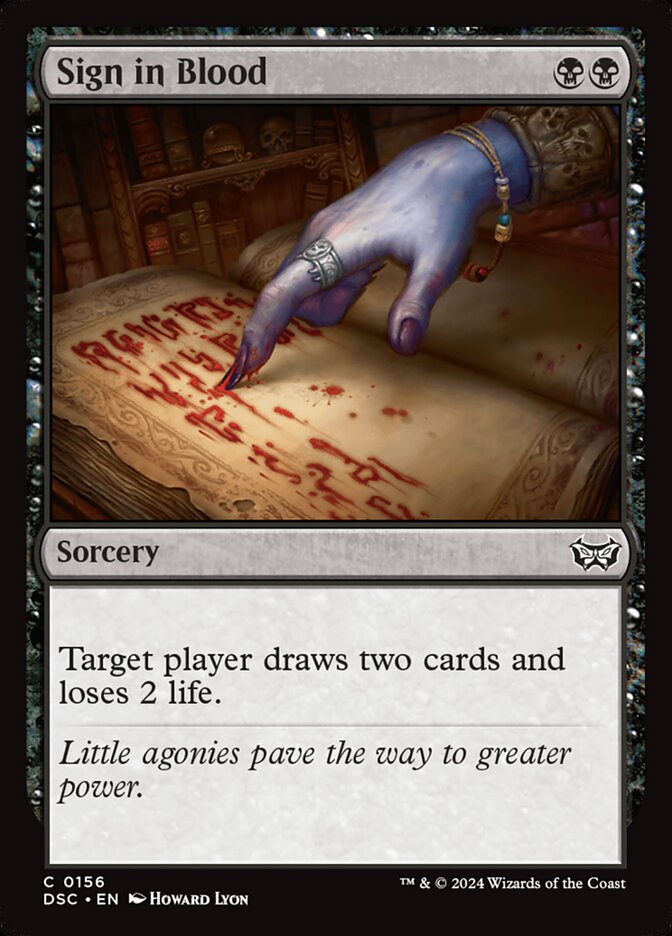
- Sign in Blood (Black). Functionally identical to Night's Whisper at {B}{B} instead of {1}{B}. Harder to cast in multicolor but can target an opponent at low life for a surprise kill. Run both in mono-black — redundancy on efficient draw is never wrong.
- Cathartic Reunion (Red). Discard two, draw three. Higher volume than Thrill of Possibility but sorcery-speed, so it's vulnerable to countermagic on the stack. Better in graveyard-matters decks where the discards are upside; worse in reactive shells that want instant-speed options.
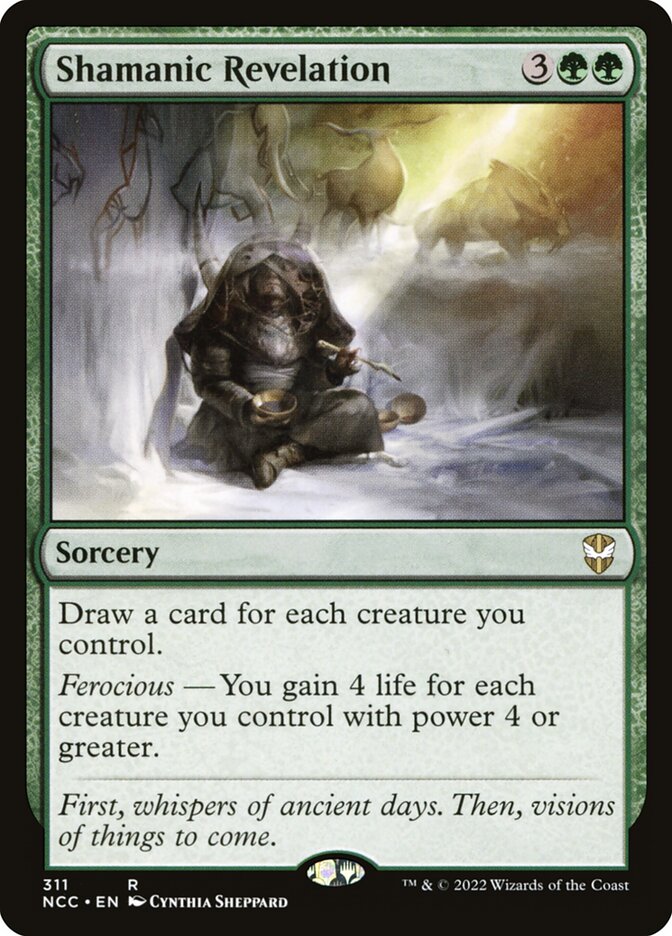
- Shamanic Revelation (Green). Draw a card for each creature you control. In a go-wide deck with eight creatures on board, that's an eight-card refill for five mana. Insane ceiling, dead floor (useless if your board just got wiped). Best in token strategies where creature count stays high.
- Sram, Senior Edificer (White). Draws a card whenever you cast an Aura, Equipment, or Vehicle. Narrow, but in an equipment-based Voltron deck, Sram is one of the best draw engines in the format at any price. The definition of a niche all-star.
Common Mistakes
Running zero dedicated draw in non-blue decks.
Mono-red, mono-white, and Boros decks are the worst offenders — players skip draw spells because "my color doesn't draw cards." Every color on this list has real options. A mono-red deck with Faithless Looting, Light Up the Stage, and Thrill of Possibility draws more cards per game than a blue deck that forgot to include draw spells. Build the draw package, whatever your colors are.
Confusing card filtering with card draw.
Faithless Looting draws two and discards two — net zero cards in hand. Brainstorm draws three and puts two back — net one card. These are filtering spells, not raw card advantage. You need both: filtering to find what you need, and raw draw (Fact or Fiction, Night's Whisper, Beast Whisperer) to actually grow your hand. Don't count filtering toward your card-draw slots.
Waiting to cast draw spells until you're empty.
If you're casting Night's Whisper when your hand is empty, you waited too long. Draw spells are best when you still have options — they give you more choices when you have the mana and board state to act on those choices. Cast your draw spells in the mid-game when you can use what you find, not in desperation mode when you're topdecking.
Where to Buy the Pieces
Every card on this list is a cheap single — most are commons and uncommons that sit in bulk bins at your local game store. Online, TCGplayer lets you fill a cart with all fifteen picks for a few dollars total; Card Kingdom is cleaner for individual lookups. eBay is useful for bulk lots of commons (search "MTG Commander staples lot"). Amazon carries Commander precons that include several of these draw spells out of the box — if you're buying a precon to start, you already own some of them.
Card Draw FAQ
- How many draw spells should I run in Commander? Aim for 8–12 sources of card advantage (draw spells, draw engines, cantrips combined). That includes your commander if it draws cards. Fewer than 8 and you'll run out of gas; more than 12 and you're drawing into draw spells instead of threats. Our $50 deck blueprint walks through the full breakdown.
- Is Rhystic Study worth the price? It's the best draw engine in Commander, full stop — but Fact or Fiction, Windfall, and Brainstorm together cost less than one copy of Rhystic Study and cover a lot of the same ground. If you're on a budget, the three-card package is a better use of your money than one chase enchantment.
- Should I prioritize draw or ramp? Both, but ramp slightly edges draw in the first few turns — you need mana to cast the cards you draw. In the mid-to-late game, draw overtakes ramp as the priority. See our full Ramp vs Card Advantage analysis for the math.
- Do I need card draw if my commander already draws? Yes. Your commander will get removed. When it does, you need backup draw sources in the 99 to keep the engine running. Never rely on a single source of card advantage, even if that source is in the command zone.
Cards In Hand, Money In Pocket.
The dirty secret of Commander card draw is that the gap between budget and premium is narrower than any other category. A $0.25 Night's Whisper draws the same number of cards as a $15 Necropotence draws per activation. A $0.10 Brainstorm sees the same three cards as a $30 Rhystic Study sees over three turns. The premium cards are better — more efficient, more repeatable, harder to interact with — but the budget options do the same fundamental thing, and doing that thing is what wins Commander games.
Build the draw package first. Whatever color you're in, whatever strategy you're running, the cards on this list keep your hand full and your options open. Upgrade later if you want to — but don't wait for the premium cards to start drawing.
© GEEKYDOMAIN.COM | Strategy Powered by Data