

A collector's map of Pokémon's Black & White era: where Full Art Supporters began, what the secret rares really were, and which cards deserve your money.
Some links below are affiliate links. If you buy through them, Geeky Domain may earn a small commission at no extra cost to you.
The Short Version
The Black & White era ran from April 2011 to November 2013, and it's where English Full Art cards began, with Reshiram 113/114 and Zekrom 114/114. N from Noble Victories was the first English Full Art Supporter, and seven more followed in later sets. No Pokémon-EX was ever a secret rare or gold-bordered: Full Art EX were Ultra Rares inside the set count, while the secret slots held normal-looking rares, shiny Pokémon, gold Trainer cards and an all-gold Reshiram and Zekrom. As of September 2026 the most expensive regular-issue raw cards from the main sets are those secrets, led by Rayquaza 128/124 at about $909 and Charizard 136/135 at about $814. Raw Full Art Supporters at roughly $48 to $172 are the smartest way in, and PSA 10 prices are thin comps, not values, because many of them trade only one to four times a year.
In This Guide
- → The Era at a Glance: Sets, Dates and Firsts
- → Full Art Pokémon and the Arrival of Pokémon-EX
- → Full Art Supporters: From N to Iris
- → What B&W Secret Rares Actually Were
- → ACE SPEC and Team Plasma
- → The Radiant Collection
- → Market Snapshot: Raw, Grade 9 and PSA 10
- → How to Buy Into the Era
- → Common Mistakes That Cost B&W Collectors Money
- → FAQ & Quick Reference
If you want to know why modern Pokémon chase cards look the way they do, start with the Black & White era. Between April 2011 and November 2013 it gave English players their first Full Art cards, their first Full Art Supporters, Pokémon-EX, ACE SPEC cards and the Radiant Collection, plus a run of shiny and gold secret rares. A lot of what you pull from a pack today has a direct ancestor somewhere in these sets.
It also sits in an interesting spot in the market. It isn't vintage in the Wizards of the Coast sense, but it's old enough that clean copies have had well over a decade to get played, shuffled, binder-stored and scuffed. PSA 10 copies of many of its best cards change hands only a few times a year. If you're coming from the HGSS and Call of Legends era that came right before it, you'll notice how sharp the design break was.
A lot of what gets repeated about this era isn't true, starting with the idea of gold-bordered "Secret Rare EX". This guide sets out the real rarity structure set by set, walks through each chase lane with prices as of September 2026, and flags the traps that cost collectors money. By the end you'll know which card number you're looking at, what it should cost, and whether it's worth grading.
The Era at a Glance: Sets, Dates and Firsts
The Black & White era opened with Black & White base on April 25, 2011 and closed with Legendary Treasures in November 2013. That's 11 main expansions, plus the small dragon-themed Dragon Vault special set in October 2012 and the Black & White Black Star Promos. You'll sometimes see the era described as thirteen main sets. That's wrong: thirteen only works if you count Dragon Vault and the promo series as sets, and neither is a main expansion. The table below is the one to work from.
It's worth learning the sets in order because the rarity structure changed as the era went on. Each "first" in the right-hand column changed what an Ultra Rare or a secret rare from that set looks like, and that's exactly what you need to know when you're reading a listing.
| Set | Released | Headline chase cards | What it added |
|---|---|---|---|
| Black & White | April 2011 | Full Art Reshiram 113, Full Art Zekrom 114, Pikachu 115/114 | First English Full Art cards |
| Emerging Powers | August 2011 | Full Art Thundurus, Full Art Tornadus | More Full Art Legendaries |
| Noble Victories | November 2011 | N 101, Meowth 102/101 | First Full Art Supporter |
| Next Destinies | February 2012 | Full Art Mewtwo-EX 98, shiny Emboar 100/99 | Pokémon-EX debut; the era's first shiny secret rares |
| Dark Explorers | May 2012 | Full Art Darkrai-EX 107, Gardevoir 109, gold Pokémon Catcher 111 | The era's gold Item secret rares begin |
| Dragons Exalted | August 2012 | Rayquaza 128/124, Full Art Rayquaza-EX 123, Full Art Mew-EX 120 | Home of the era's priciest raw set card |
| Dragon Vault | October 2012 | Dragon-type holos | Special set, not a main expansion |
| Boundaries Crossed | November 2012 | Bianca 147, Cheren 148, Skyla 149 | ACE SPEC debut |
| Plasma Storm | February 2013 | Charizard 136/135, Lugia-EX 134, Colress 135 | Team Plasma debut |
| Plasma Freeze | May 2013 | Ghetsis 115, Professor Juniper 116, Ultra Ball 122/116, Garchomp 120/116 | Six secret rares, including gold Max Potion and Ultra Ball |
| Plasma Blast | August 2013 | Genesect-EX 97, Iris 101 | The era's last Full Art Supporter (Iris) |
| Legendary Treasures | November 2013 | Gold Reshiram 114/113, gold Zekrom 115/113, Mew-EX RC24 | Radiant Collection debut |
One rule of thumb will save you a lot of confusion. If a B&W card's number is at or below the set count (98/99, 101/101), it belongs to the main set, even when it's a Full Art. If the number is above the count (100/99, 136/135), it's a secret rare. Radiant Collection cards carry their own RC numbers (RC24/RC25), so they sit outside both.
Full Art Pokémon and the Arrival of Pokémon-EX
The first English Full Art cards were Reshiram 113/114 and Zekrom 114/114 in Black & White base. Both are Ultra Rares numbered inside the set count. The art runs edge to edge inside a silver border, and the surface has an etched, fingerprint-like texture you can see when you tilt the card. They aren't Pokémon-EX, because that mechanic didn't exist yet. As of September 2026, PriceCharting has Reshiram 113 at about $71 ungraded and Zekrom 114 at about $90. That's cheap for the two cards that started the format.
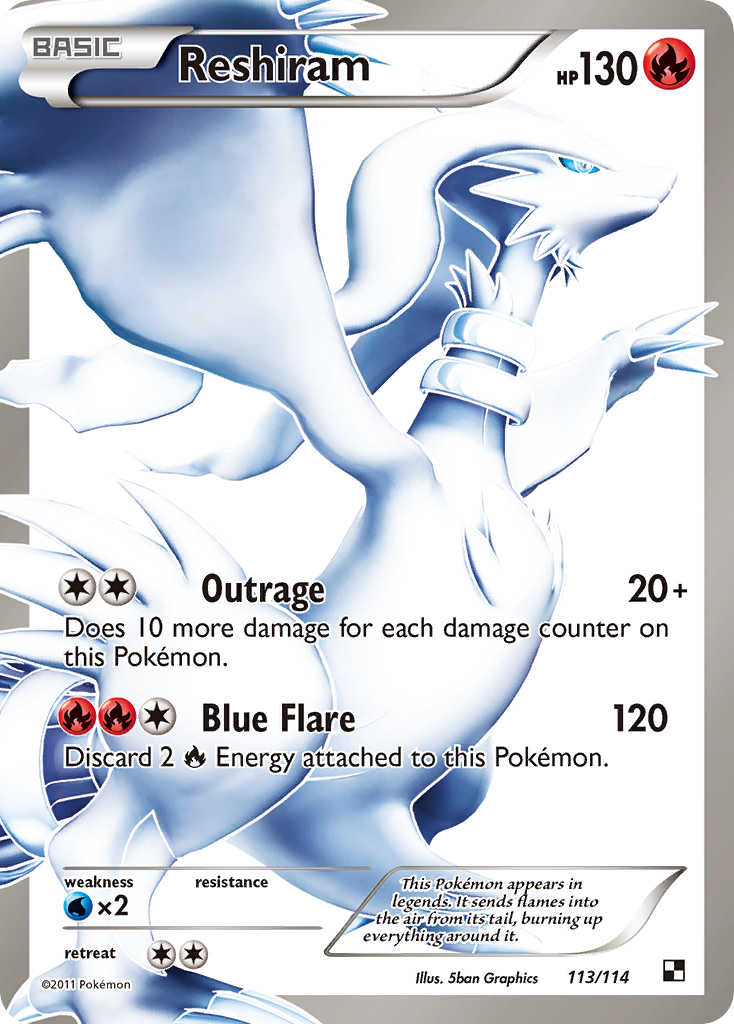
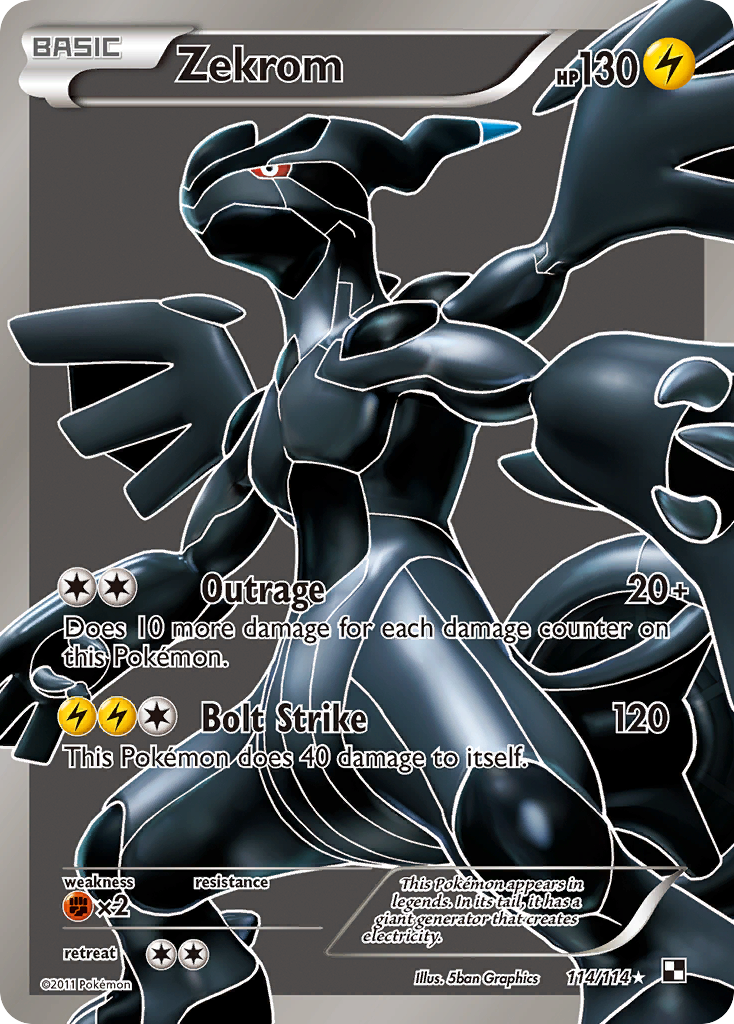
The next two sets kept Full Art for Legendary and Mythical Pokémon. Emerging Powers had Full Art Thundurus and Tornadus, and Noble Victories added Full Art Virizion, Victini, Terrakion and Cobalion. They're easy to overlook next to the base set pair, but they're worth knowing about if you want a run of early Full Arts.
Next Destinies and Pokémon-EX
Pokémon-EX arrived in Next Destinies on February 8, 2012, with six of them: Shaymin-EX, Reshiram-EX, Kyurem-EX, Zekrom-EX, Mewtwo-EX and Regigigas-EX. When one is Knocked Out, your opponent takes two Prize cards instead of one. That brought back the two-Prize idea from the lowercase "ex" cards of 2003 to 2007.
Here's the part that trips people up. Each of the six Next Destinies Pokémon-EX, and most of the EX in the sets that followed, had two prints. There was a regular holo in a normal frame, such as Mewtwo-EX 54/99, and a separate Full Art Ultra Rare, such as Mewtwo-EX 98/99. They share a name, so a listing titled "Mewtwo-EX Next Destinies" could be either one. Not every EX got the upgrade, either. Moltres-EX and Zapdos-EX in Plasma Storm had no Full Art print, and none of the Pokémon-EX in Legendary Treasures' main set did. Full Art wasn't the baseline for EX cards; it was the upgrade. The Full Art Mewtwo-EX is the collector card, at about $129 to $161 ungraded on PriceCharting and about $1,130 in Grade 9.
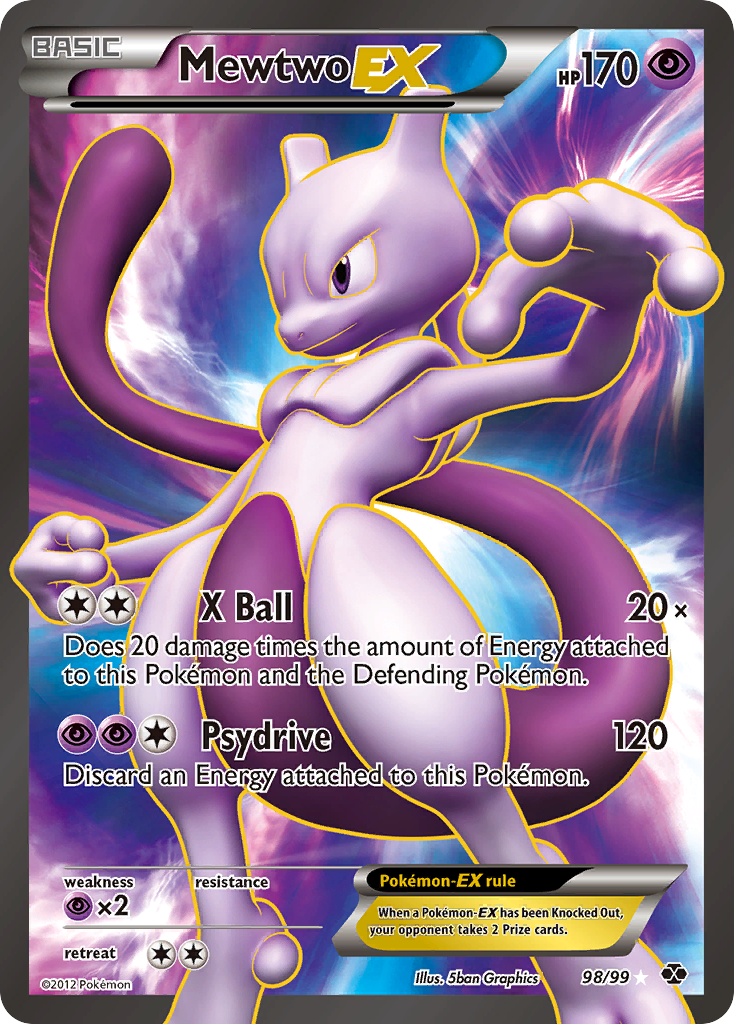
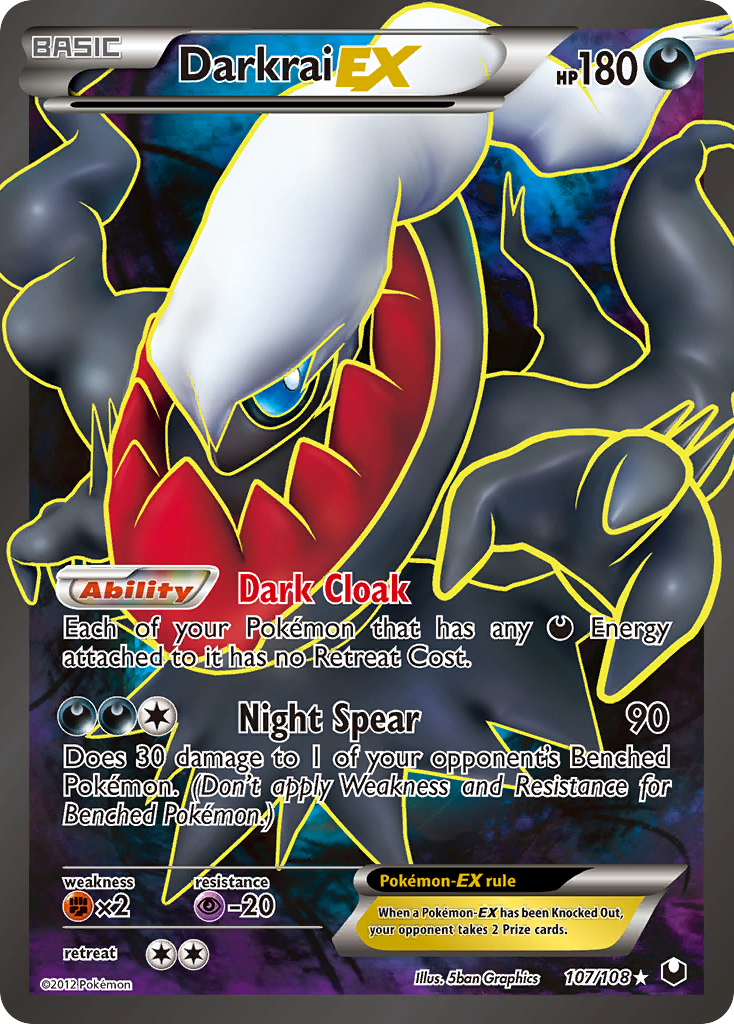
Mewtwo-EX has real competitive history behind it. Igor Costa won the Masters division of the 2012 World Championships with a Darkrai-EX, Mewtwo-EX and Terrakion deck. According to the Pokemon TCG Archive's 2012 Worlds standings, Darkrai decks took 19 of the 32 places in that event's Masters top 32, and 13 of those are listed as Darkrai/Mewtwo builds. Even so, the Full Art Darkrai-EX from Dark Explorers (107/108) now sells for more than Mewtwo, at about $288 ungraded. Tournament history helps a card's story, but it doesn't set the price on its own.
EX, ex and Everything in Between
The naming is a genuine research hazard. The EX-series of 2003 to 2007 used lowercase "ex" cards, which our EX Ruby & Sapphire era collecting guide covers in depth. Black & White and XY used capitalized "Pokémon-EX", and Scarlet & Violet brought back lowercase "ex". Pokémon-EX didn't directly replace the old ex cards, either. LV.X cards, covered in our Diamond, Pearl and Platinum collecting guide, and HGSS's Prime and LEGEND cards came in between. When you search sold listings, add the set name and the card number every time, or you'll end up comparing prices across three different eras.
Full Art Supporters: From N to Iris
If the B&W era has one collecting lane that it started and still owns, it's the Full Art Supporters. N from Noble Victories (101/101, November 2011) was the first English Full Art Supporter. It puts a human character in the same silver-bordered, textured Full Art frame as the Legendary Pokémon, with art by Ken Sugimori. Its effect made it a comeback card: each player shuffles their hand into their deck, then draws a card for each of their remaining Prize cards.

N, Noble Victories 101/101: the first English Full Art Supporter.
N is also the most expensive Full Art Supporter raw. As of September 2026, PriceCharting has it at about $172 ungraded and about $337 in Grade 9, with a PSA 10 comp of about $1,670 on roughly four sales a year. That PSA 10 price is under ten times the raw price. For most of the other Supporters the multiple is roughly 30 to 50 times, and for two of them, Colress and Ghetsis, it's far higher. N's value sits in the raw card itself, which makes it a sensible buy even if you never plan to grade.
Boundaries Crossed: Bianca, Cheren and Skyla
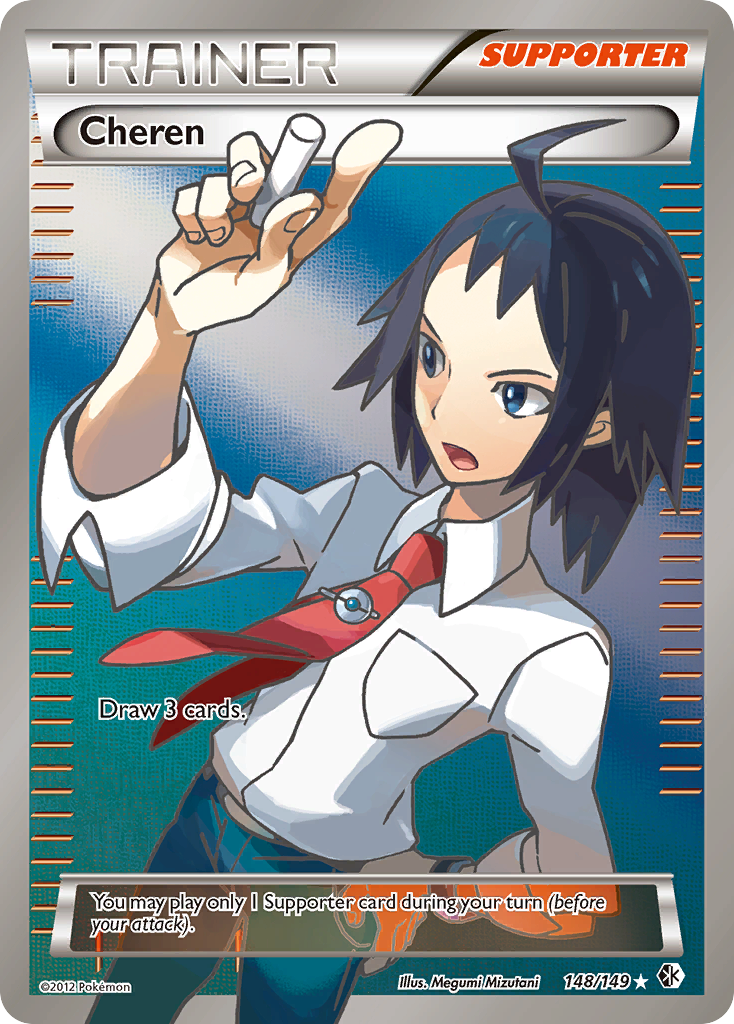
Boundaries Crossed (November 2012) printed three Full Art Supporters in a row at 147, 148 and 149 of 149. Skyla is the priciest of the three raw, at about $145 ungraded, about $640 in Grade 9 and about $4,620 in PSA 10. Bianca is close behind raw at about $125 but has the biggest PSA 10 comp of the trio, at about $6,300. Cheren is the budget pick, at about $48 ungraded and about $1,575 in PSA 10. If you want a matched set that displays well, these three are the easiest way to get one from a single expansion.


The Plasma-Era Supporters: Colress, Ghetsis, Professor Juniper and Iris
The three Team Plasma sets added four more. Colress (Plasma Storm 135/135) and Ghetsis (Plasma Freeze 115/116) carry the Team Plasma logo, so they double as Plasma collectibles. Professor Juniper's Full Art is Plasma Freeze 116/116 from May 2013. Iris (Plasma Blast 101/101) closes the numbered run.

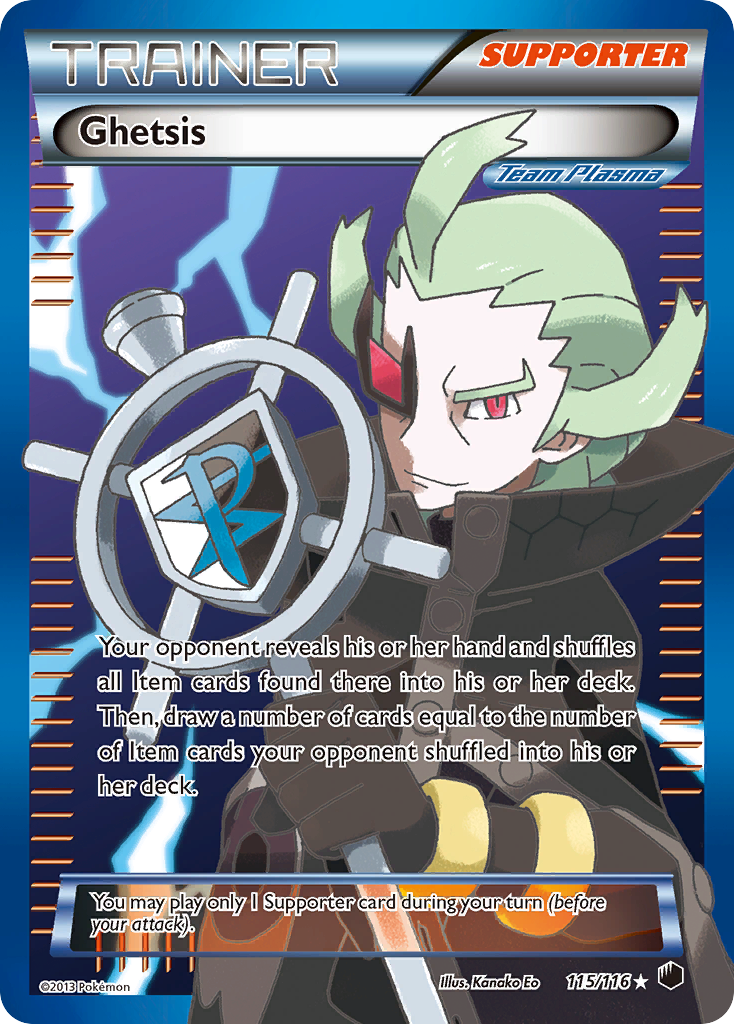


On PriceCharting, Colress sits at about $66 ungraded, Ghetsis at about $70, Professor Juniper at about $65 and Iris at about $87 to $94. Those raw prices sit close together. The PSA 10 comps don't. Colress shows about $25,000 on roughly one sale a year, Ghetsis about $10,000 on around two, Iris about $3,550 and Professor Juniper about $3,050. The market section below explains why you shouldn't read too much into the top of that range.
Full Art Supporters later became a fixture of modern sets, but the B&W cards are the first generation, and they're still affordable raw. If you're buying one card from this era, a clean raw Full Art Supporter is the place to start. Before it goes in a binder, read our buyer's guide to sleeves and toploaders so the texture and edges stay the way they arrived.
Search eBay for N, Skyla, Bianca or Professor Juniper Full Arts and check sold listings before you bid; Amazon covers the penny sleeves, toploaders and Card Savers that keep a textured front clean.
As an Amazon Associate, Geeky Domain earns from qualifying purchases. eBay links are affiliate links; Geeky Domain may earn a commission at no extra cost to you.
What B&W Secret Rares Actually Were
Secret rares, meaning cards numbered above the set count, weren't new in 2011. They go back to the Team Rocket set in 2000, which our Team Rocket set collector's guide covers. What B&W changed was what went into the secret slot, and it changed several times. The Full Art Pokémon-EX and Full Art Supporters you've just read about were never secret rares. They were Ultra Rares numbered inside the set.
Normal-Looking Rares: Pikachu and Meowth
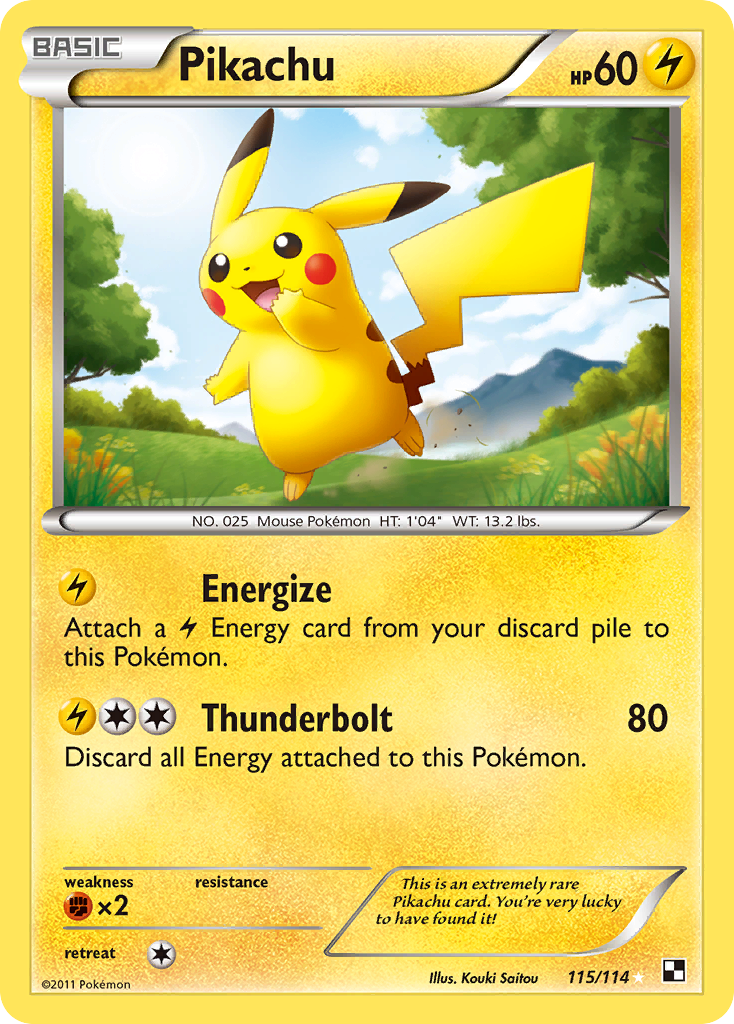
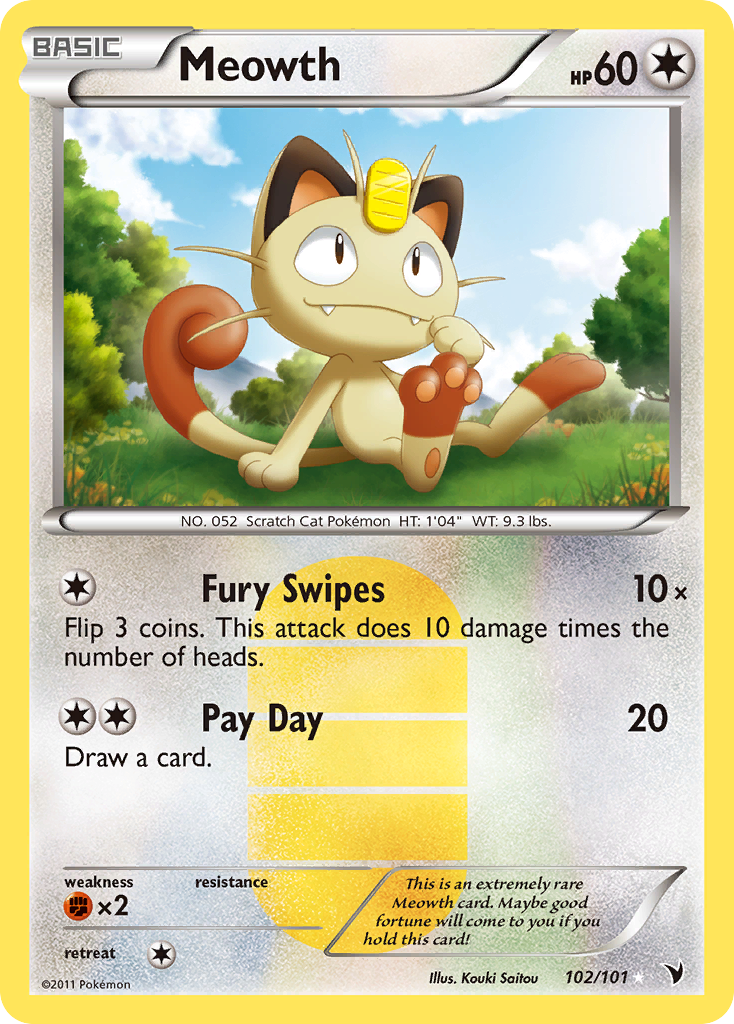
The first two secrets were ordinary-looking Pokémon in the standard yellow frame. Pikachu 115/114 in Black & White base and Meowth 102/101 in Noble Victories both carry flavor text telling you the card is extremely rare, but otherwise they look like any other rare. As of September 2026, Pikachu 115 sells for about $85 ungraded and has a PSA 10 comp of about $3,500. Because nothing about the front screams "secret", always check the number before you buy.
Shiny Pokémon, From Next Destinies On
Next Destinies switched the secret slot to shiny Pokémon: alternate-color versions in the standard frame, with flavor text noting the Pokémon is "a different color than usual." Its four were Emboar 100/99, Chandelure, Zoroark and Hydreigon. Later sets kept the pattern with cards like Gardevoir in Dark Explorers, Rayquaza 128/124 in Dragons Exalted, Charizard 136/135 and Blastoise in Plasma Storm, and Garchomp 120/116 in Plasma Freeze.
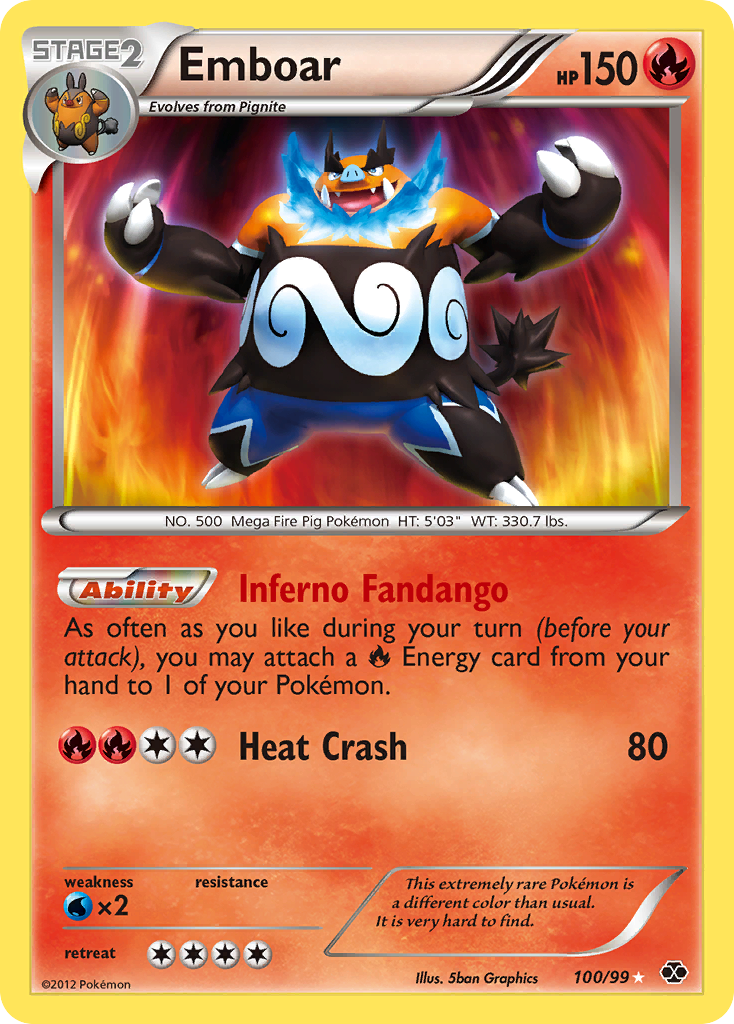
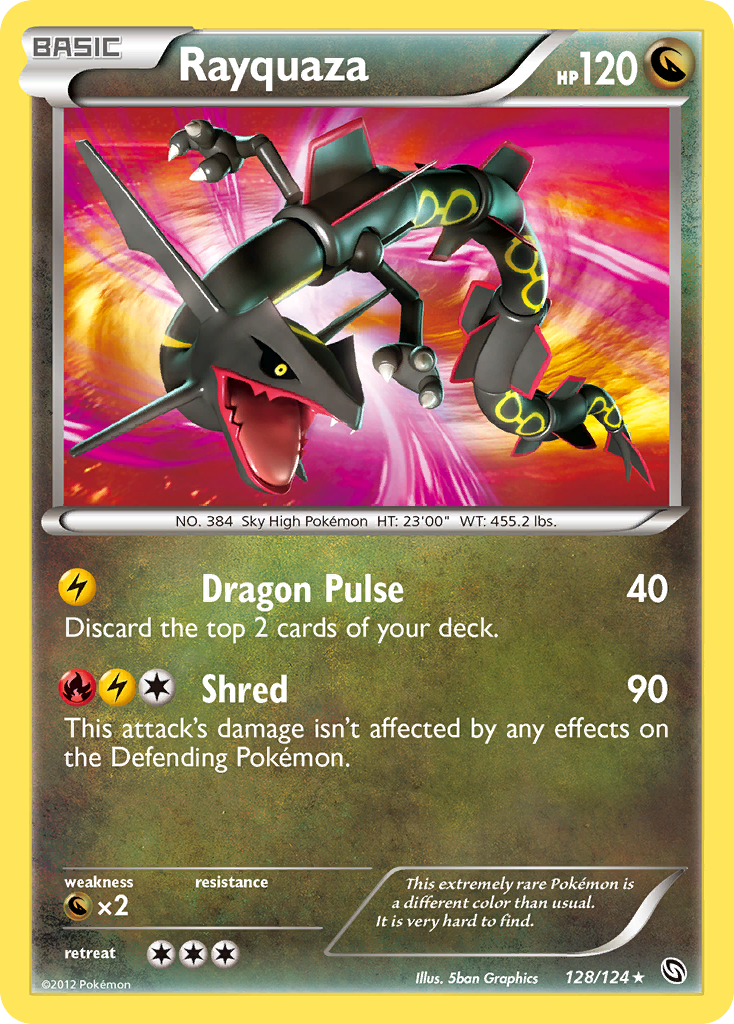
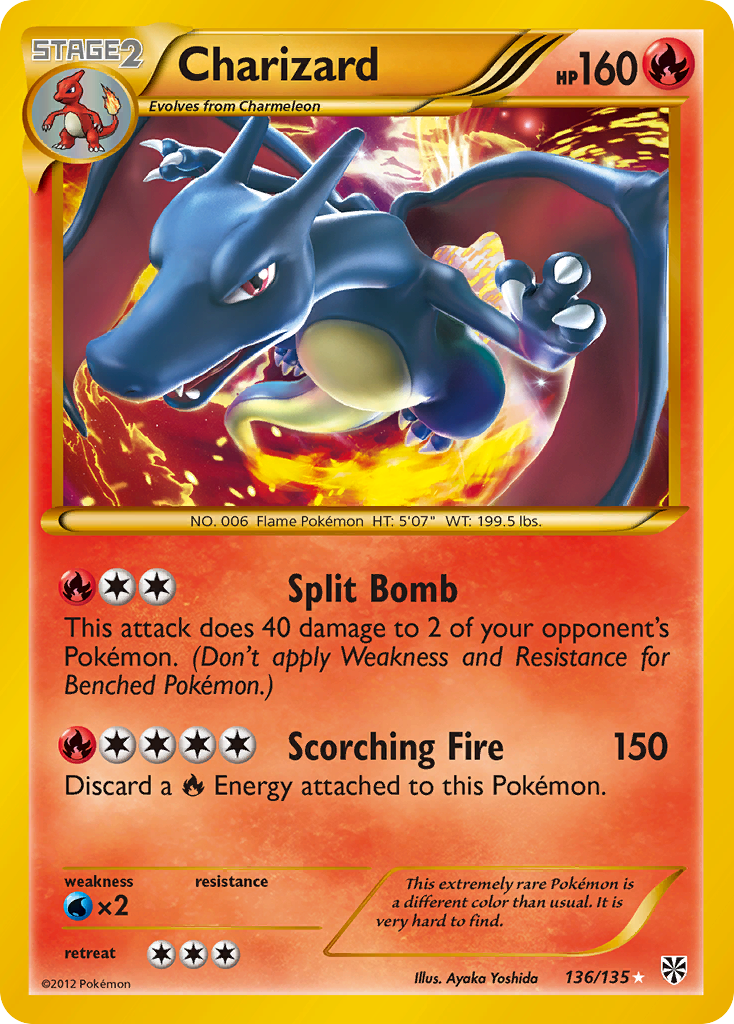
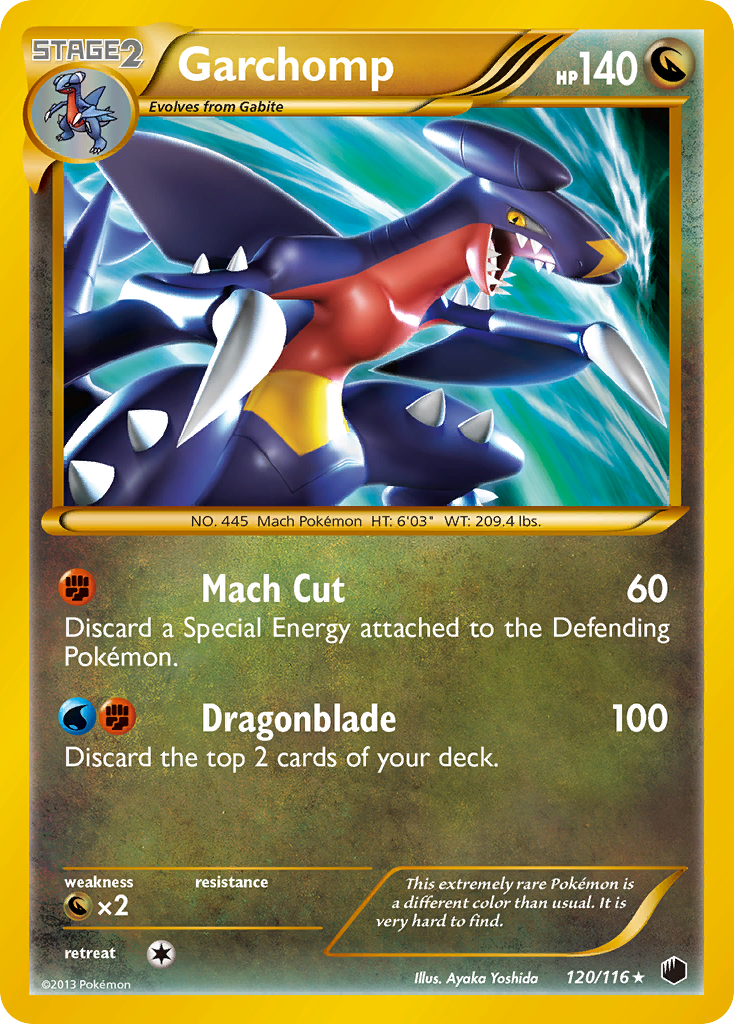
These are the era's heavy hitters now. Rayquaza 128 is the most expensive regular-issue B&W card ungraded on PriceCharting at about $909 (staff-stamped event variants aside), with Charizard 136 close behind at about $814. Gardevoir 109 sits around $659 and Garchomp 120 around $491. Emboar 100, the card that started the shiny run, is about $122. The shiny idea came back in a much bigger way later, and our Sun & Moon era guide to Hidden Fates and shiny chase cards shows where it went. Rainbow Rares, for the record, didn't exist yet. They arrived with Sun & Moon in 2017.
Gold Items and Tools
Dark Explorers (May 2012) added a third kind of secret: gold Trainer cards. Pokémon Catcher 111/108 was the first, with a gold border and gold finish, and it sells for about $75 ungraded. Boundaries Crossed followed with a gold Rocky Helmet, Plasma Storm with Random Receiver, Plasma Freeze with Max Potion and Ultra Ball, and Plasma Blast with Rare Candy. Until Legendary Treasures, gold borders in the main sets belonged to these Trainers alone, and no Pokémon-EX ever got one.
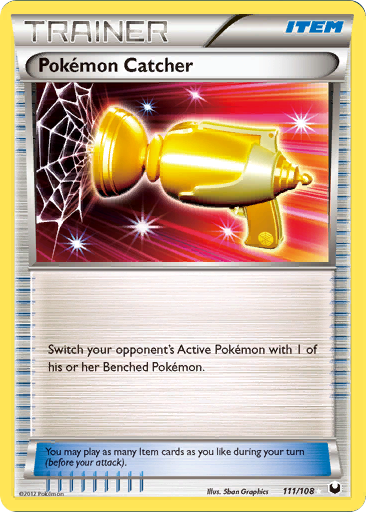
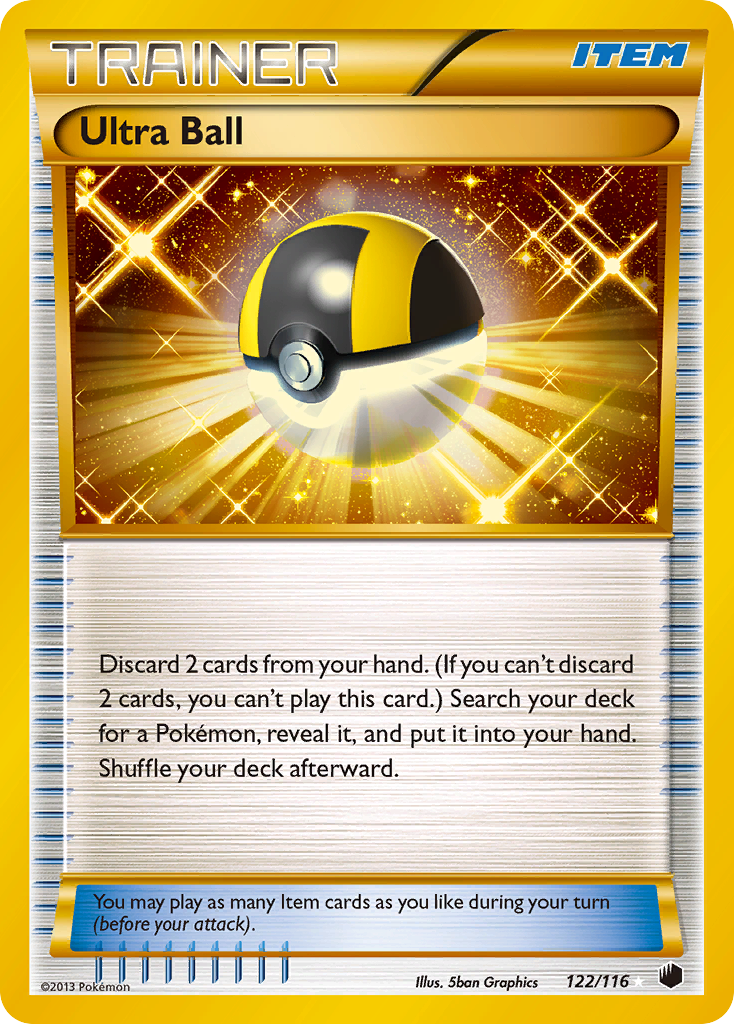
Ultra Ball 122/116 is the surprise of the group. It sells for about $558 ungraded, which puts a simple Item among the most expensive raw cards of the era. Its Grade 9 price, about $602, is barely above raw. In other words, you're paying for the card, not for a slab.
All-Gold Reshiram and Zekrom
Legendary Treasures closed the era with its only gold Pokémon: Reshiram 114/113 and Zekrom 115/113. Instead of a gold border, the whole card is gold, with a subtle etched outline of the Pokémon where the artwork would normally sit. They bookend the era neatly with the base set's Full Art Reshiram and Zekrom. The gold Zekrom is about $211 ungraded and the gold Reshiram about $179, and both have PSA 10 comps of roughly $9,000 to $10,000.
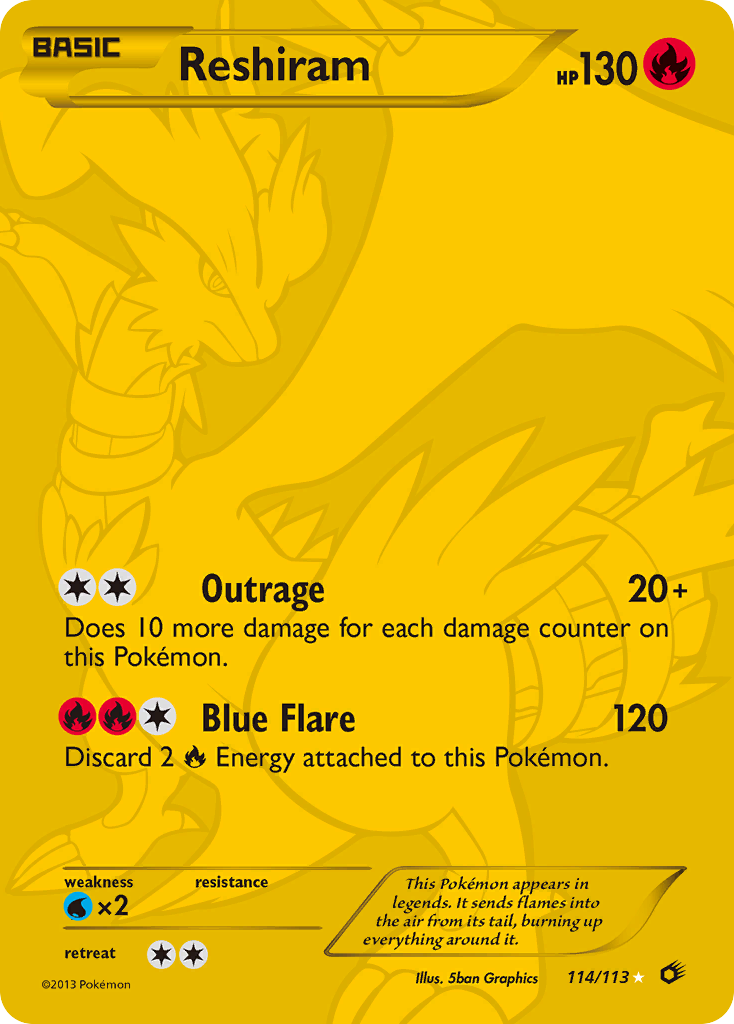
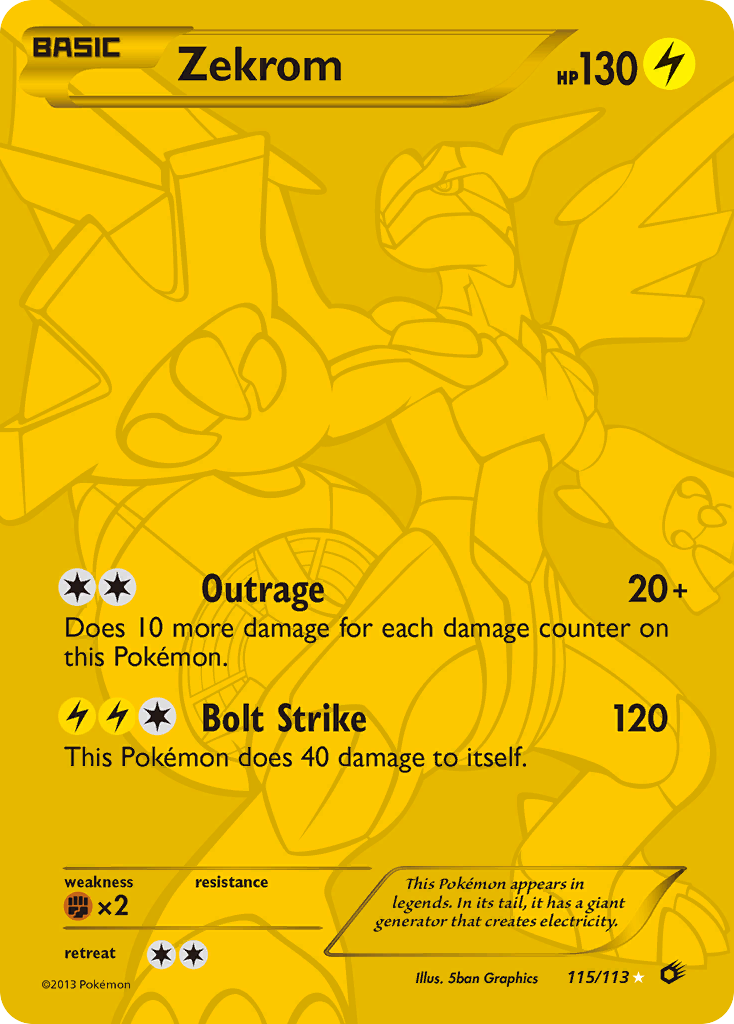
Put together, B&W's secret slot held four kinds of card: normal-looking rares, shiny Pokémon, gold Items and Tools, and the two all-gold Legendaries. If a listing describes anything else from this era as a "secret rare EX", the seller has it wrong, and you should find out exactly which card it is before you pay.
ACE SPEC and Team Plasma
Two late-era mechanics give you smaller side collections. ACE SPEC cards debuted in English in Boundaries Crossed (November 2012). You can only have one ACE SPEC card in a deck, and each carries a bold ACE SPEC banner down the side. The first four were Computer Search, Crystal Edge, Crystal Wall and Gold Potion. Plasma Storm, Plasma Freeze and Plasma Blast added more, including Dowsing Machine, Scramble Switch, Victory Piece, Life Dew, Rock Guard, G Booster, G Scope, Master Ball and Scoop Up Cyclone. Legendary Treasures had none.
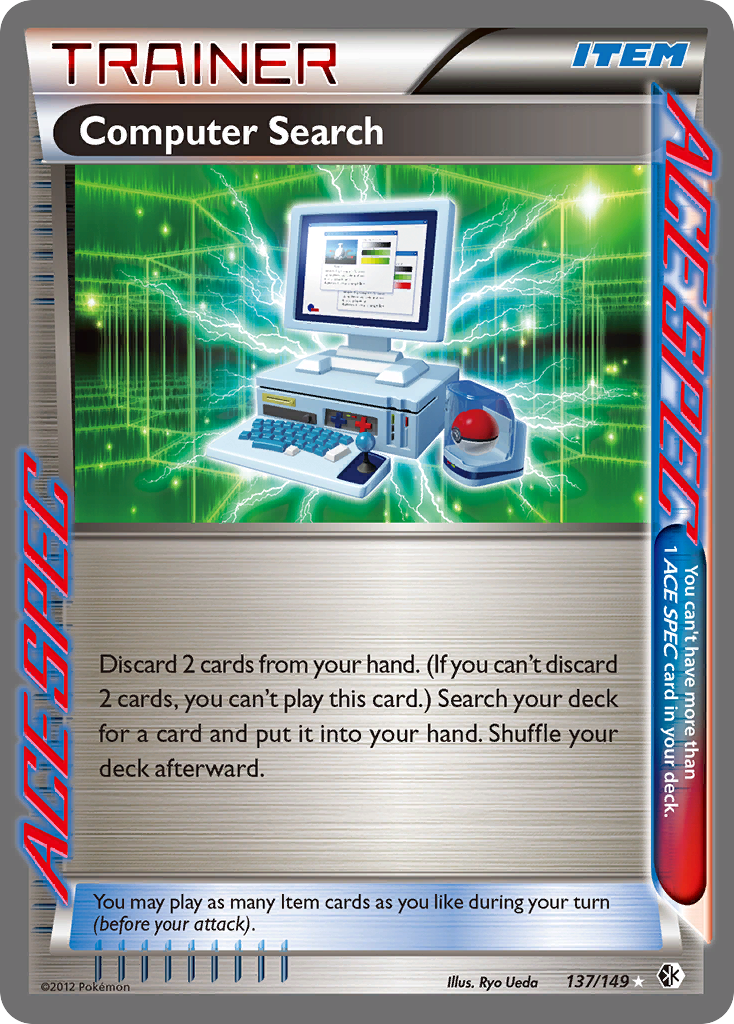
ACE SPECs use a regular frame rather than a Full Art. Computer Search sells for about $14 ungraded as of September 2026, and its PSA 10 comp is only about $136. If you want a card that shows off the mechanic and the era's competitive design without a big outlay, it's the one to get.
Team Plasma Cards
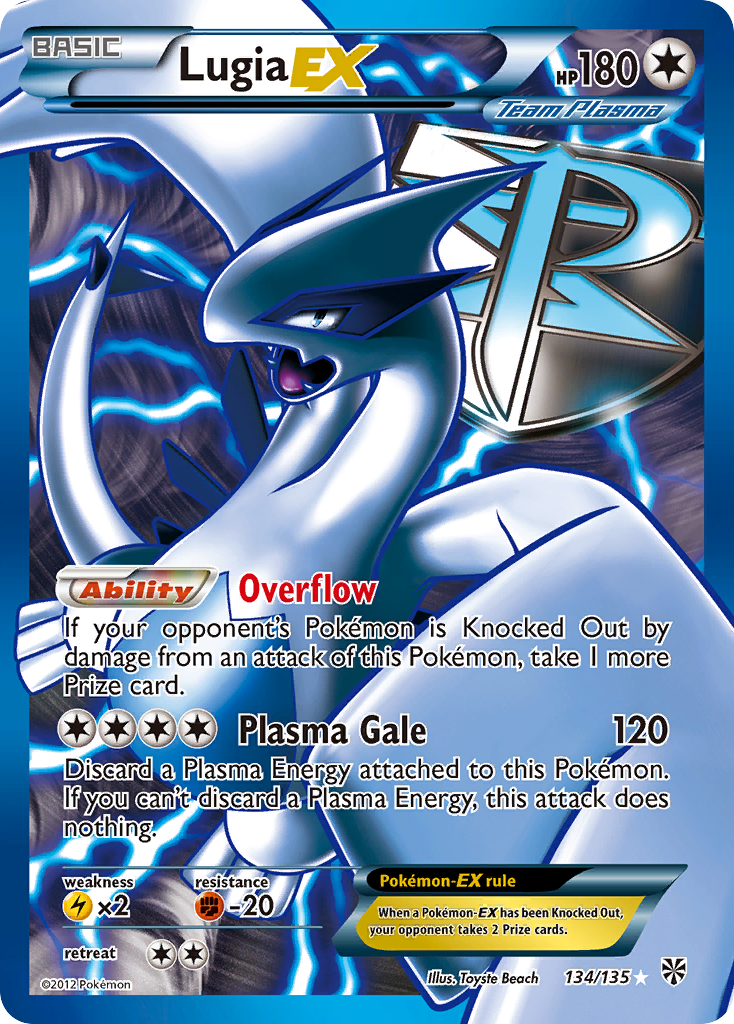
Team Plasma arrived in Plasma Storm on February 6, 2013 and ran through Plasma Freeze and Plasma Blast. Plasma Pokémon have a blue border and art window, plus a Team Plasma bar under the HP, and Plasma Trainers carry the Team Plasma logo. A Team Plasma Lugia-EX also turns up in Legendary Treasures. If you like a collection with a clear visual theme, the blue Plasma cards give you one.
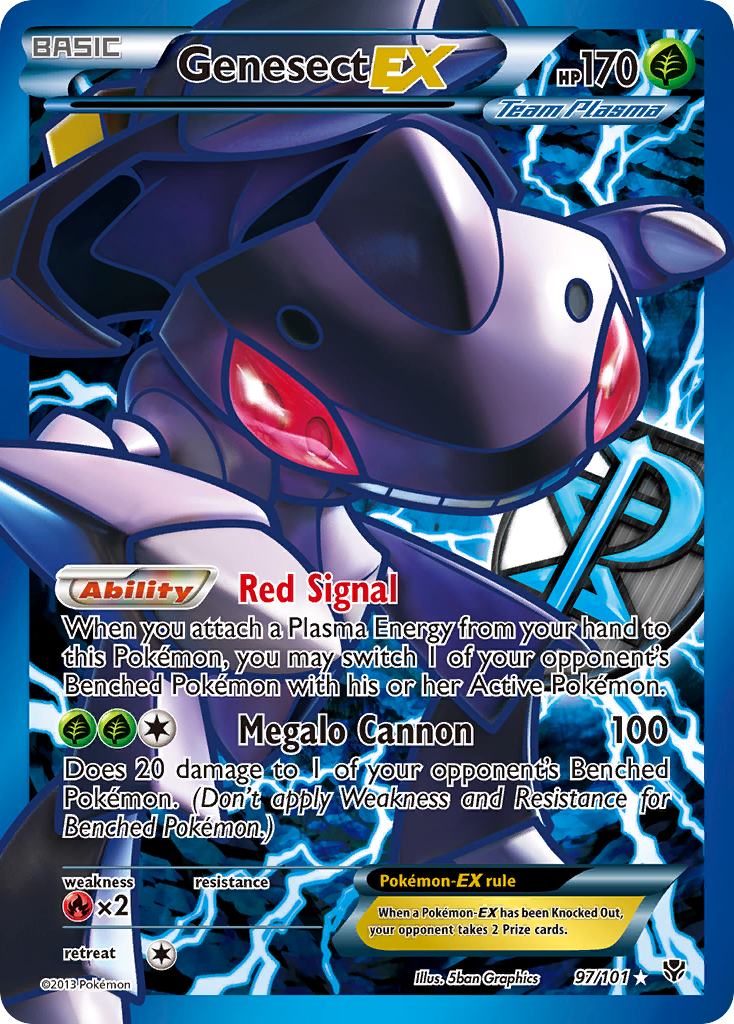
The two Full Art EX to know are Lugia-EX (Plasma Storm 134/135) and Genesect-EX (Plasma Blast 97/101). Lugia-EX is about $400 ungraded. Genesect-EX is about $132 ungraded, about $811 in Grade 9 and about $8,400 in PSA 10. Lugia's graded prices are a good lesson in thin markets: its Grade 9 is about $4,210 and its PSA 10 about $4,290, almost the same number, because so few copies trade that a single sale can move either one.
Plasma Storm also holds two of the era's biggest numbers. Charizard 136 carries the largest PSA 10 comp we found for any B&W set card on PriceCharting, at about $85,900 on roughly three sales a year, and the set has the most expensive B&W booster box there too, at about $22,900.
The Radiant Collection
Legendary Treasures (November 2013) introduced the Radiant Collection, a 25-card subset numbered RC1 to RC25 and adapted from Japan's Shiny Collection. Despite that name, these cards aren't shiny Pokémon, and they don't have gold borders. The Pokémon appear in their normal colors on a sparkling, dotted texture foil that covers the card. That foil is the look to learn, because it's what sets them apart from everything else in the set.
The lineup is Snivy, Servine, Serperior, Growlithe, Torchic, Piplup, Pikachu, Ralts, Kirlia, Gardevoir, Meloetta-EX, Stunfisk, Purrloin, Eevee, Teddiursa, Ursaring, Audino, Minccino, Cinccino and the Supporter Elesa. Five Ultra Rare Full Arts top the subset: Shaymin-EX, Reshiram, Emolga, Mew-EX and a second Meloetta-EX. There's no Charizard and no Mewtwo in it, whatever a listing title says.
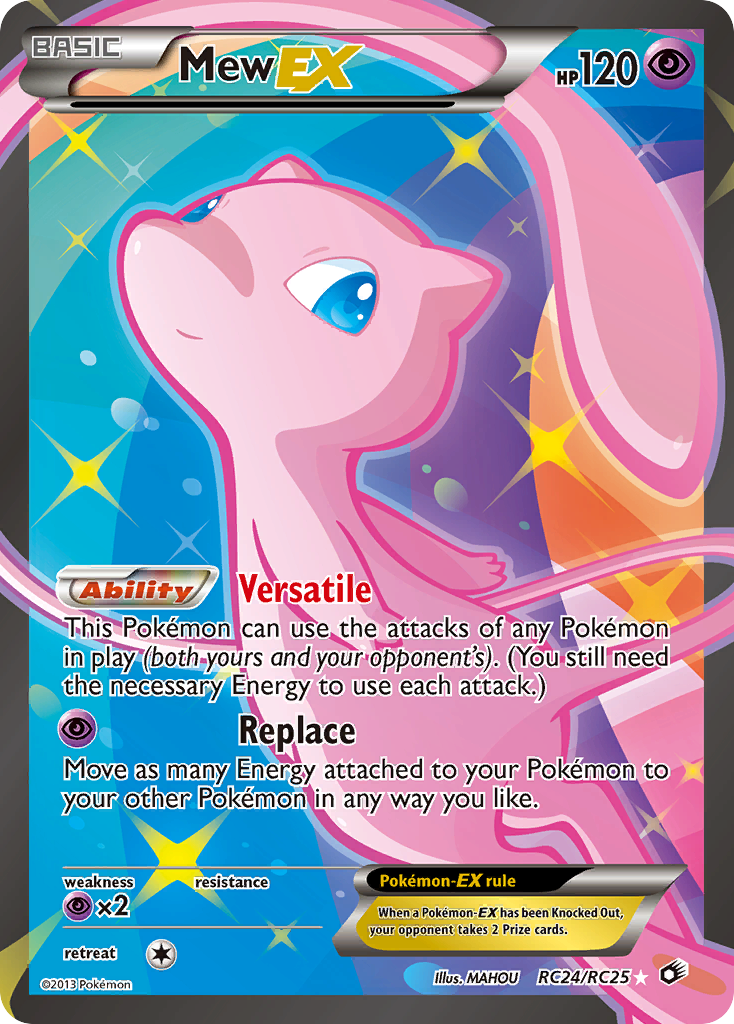
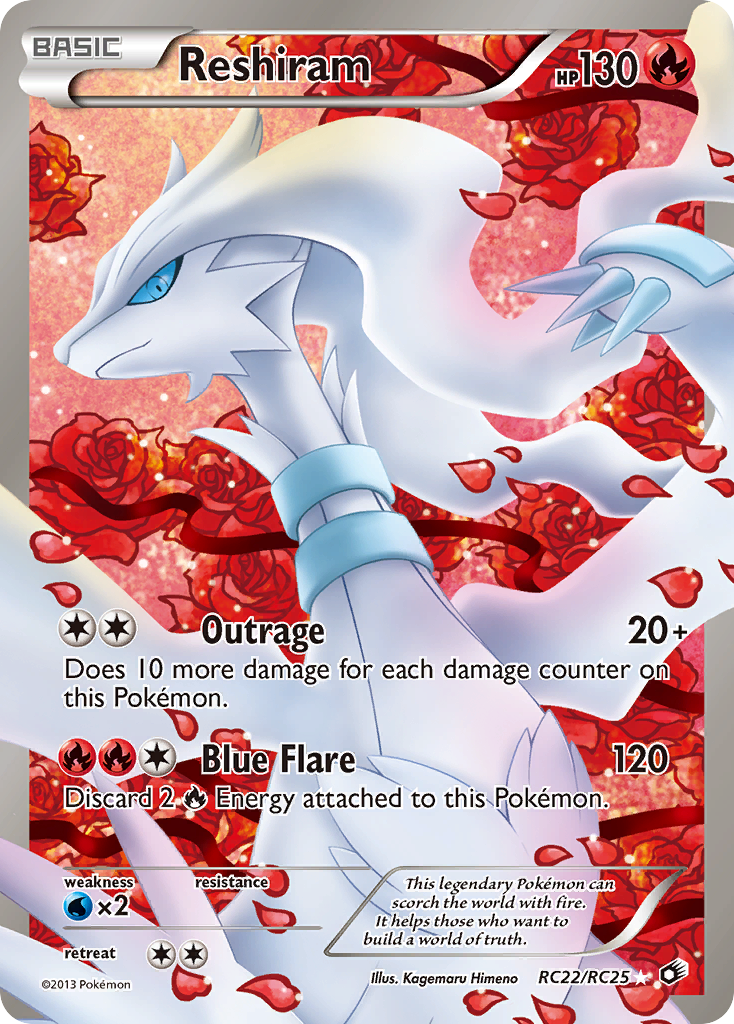

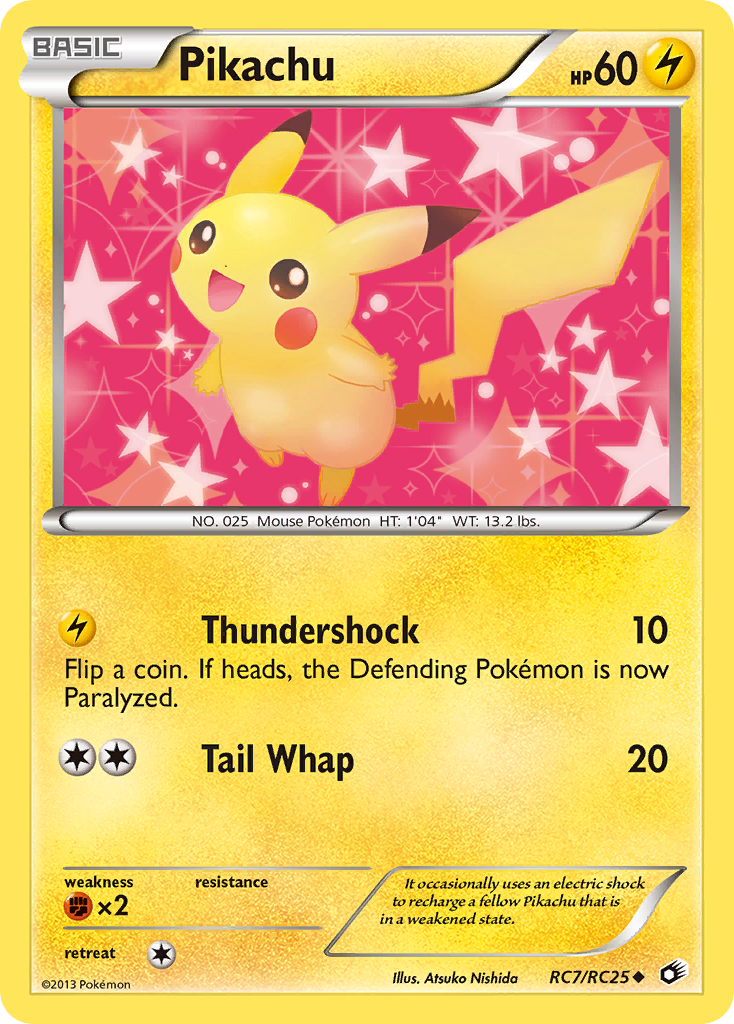
Mew-EX RC24 is the top card. As of September 2026, PriceCharting has it at about $137 ungraded, about $978 in Grade 9 and about $13,600 in PSA 10. Reshiram RC22 follows at about $84 raw and about $11,300 in PSA 10. Emolga RC23 sells for about $47 raw and about $6,800 in PSA 10. Pikachu RC7 isn't a Full Art, but it shows the sparkle foil on a standard frame, and it's about $41 ungraded. Shaymin-EX RC21 is about $34 raw, and Eevee RC14 about $22.
You'll sometimes read that Legendary Treasures had a small print run. We couldn't find a source for that, and sealed prices don't back it up. A Legendary Treasures booster box is about $18,400 on PriceCharting, below both Plasma Storm (about $22,900) and Dragons Exalted (about $19,400). Buy Radiant Collection cards because you like them, not because of a scarcity story.
The idea returned once more in Generations (February 2016), an XY-era set with its own 32-card Radiant Collection subset, but with flat foil instead of the sparkle pattern. The printed number is the quickest tell: Legendary Treasures cards end in /RC25, and Generations cards end in /RC32. For what came after B&W, our guide to the XY era and Evolutions picks up the story.
Market Snapshot: Raw, Grade 9 and PSA 10
Here's where the era's money actually sits. Every figure below comes from PriceCharting as of September 2026 and is rounded, so you can check any row by searching the site for the set name and card number. "Grade 9" and "PSA 10" are PriceCharting's graded columns, and prices move, so treat this as a snapshot rather than a price list.
| Card | Set and number | Ungraded | Grade 9 | PSA 10 comp |
|---|---|---|---|---|
| Rayquaza (shiny) | Dragons Exalted 128/124 | about $909 | about $6,010 | about $21,100 |
| Charizard (shiny) | Plasma Storm 136/135 | about $814 | about $3,810 | about $85,900 (about 3 sales a year) |
| Gardevoir (shiny) | Dark Explorers 109/108 | about $659 | about $1,260 | about $6,600 |
| Ultra Ball (gold) | Plasma Freeze 122/116 | about $558 | about $602 | about $3,140 |
| Garchomp (shiny) | Plasma Freeze 120/116 | about $491 | about $2,450 | about $7,000 |
| Lugia-EX (Full Art) | Plasma Storm 134/135 | about $400 | about $4,210 | about $4,290 |
| Darkrai-EX (Full Art) | Dark Explorers 107/108 | about $288 | about $2,730 | about $5,500 |
| Mew-EX (Full Art) | Dragons Exalted 120/124 | about $277 | about $2,330 | about $34,350 (about 2 sales a year) |
| Rayquaza-EX (Full Art) | Dragons Exalted 123/124 | about $274 | about $5,000 | about $6,000 (about 1 sale a year) |
| Zekrom (gold) | Legendary Treasures 115/113 | about $211 | about $710 | about $9,050 |
| Reshiram (gold) | Legendary Treasures 114/113 | about $179 | about $784 | about $10,050 |
| N (Full Art) | Noble Victories 101/101 | about $172 | about $337 | about $1,670 (about 4 sales a year) |
| Skyla (Full Art) | Boundaries Crossed 149/149 | about $145 | about $640 | about $4,620 |
| Mew-EX (Radiant Collection) | Legendary Treasures RC24 | about $137 | about $978 | about $13,600 |
| Colress (Full Art) | Plasma Storm 135/135 | about $66 | about $200 | about $25,000 (about 1 sale a year) |
| Professor Juniper (Full Art) | Plasma Freeze 116/116 | about $65 | about $205 | about $3,050 |
| Computer Search (ACE SPEC) | Boundaries Crossed 137/149 | about $14 | about $20 | about $136 |
Three things stand out. First, the top of the raw market belongs to the shiny and gold secrets, not the Supporters. Rayquaza, Charizard, Gardevoir, Ultra Ball and Garchomp all sell for more raw than any Full Art Supporter. Second, N raw (about $172) sits above the Full Art Mewtwo-EX and Genesect-EX but below the headline Full Art EX (Lugia-EX, Darkrai-EX, Mew-EX and Rayquaza-EX) and well below those secrets, so N is a premium Supporter, not the era's premium card. Third, the gap between raw and PSA 10 swings wildly from card to card. Ultra Ball's PSA 10 is under six times raw, and N and Computer Search are both under ten times, while Charizard 136 and Mew-EX 120 are each more than a hundred times raw and Colress is about 380 times.
The grade premium is real. It's just not predictable enough to plan around. If you're deciding whether a specific card is worth submitting, our guide to when to grade and when to sell raw walks through the math, and PSA vs BGS vs CGC compared helps you pick a grader.
How to Buy Into the Era
Start With a Raw Full Art Supporter
For most collectors, the best first B&W card is a raw Full Art Supporter. At roughly $48 for Cheren up to about $172 for N as of September 2026, they're the era's most recognizable cards at prices that don't need a second thought. Pick the character you actually like. N gives you the history and the smallest PSA 10 multiple of the group, Skyla and Bianca sit in the middle of the range, and Cheren, Colress, Ghetsis and Professor Juniper are the cheapest ways into the lane. Compare eBay sold listings with TCGplayer and PriceCharting before you commit.
Buy the Number, Not the Name
Many chase cards in this era share their name with other printings at very different prices, and the costliest trap is Rayquaza from Dragons Exalted. A search for that name mixes the shiny secret Rayquaza 128/124, at about $909 raw, with the Full Art Rayquaza-EX 123/124 at about $274 and the regular Rayquaza-EX 85/124. The same thing happens elsewhere: Mewtwo-EX comes as 98/99 and 54/99, Pikachu as 115/114 and RC7, and Reshiram as 113/114, 114/113 and RC22. Always confirm the full card number and the set symbol in the photos, not just the title. If a seller won't show the number clearly, move on.
Grade Only the Copies That Earn It
Grading makes sense for well-centered copies with clean edges and an unscratched surface. Before you submit, price the card at Grade 9 as well as PSA 10. If the submission only makes sense at a 10, it's a bet, not a plan. Our guide to prepping your cards for grading covers the checks worth doing first.
Treat Secrets and Sealed as the Premium Lane
If you want Rayquaza 128 or Charizard 136, you're spending hundreds of dollars raw, so buy from sellers with a long feedback history and demand clear photos of the front, back and corners. Sealed product is further out still. PriceCharting has B&W booster boxes from about $5,000 for Emerging Powers to about $22,900 for Plasma Storm, with single packs at roughly $80 to $400. That's a serious purchase, and our guide to buying sealed Pokémon booster boxes covers what to check before you pay.
Common Mistakes That Cost B&W Collectors Money
1. Hunting for a "Secret Rare EX"
B&W Full Art EX are Ultra Rares numbered inside the set, and the era's secret slots never held a Pokémon-EX. A listing that says otherwise is either mislabeled or describing something that isn't an English B&W main-set card. Why it costs you: you pay a "secret rare" premium for an ordinary Full Art, or for a card you can't properly identify or resell.
2. Buying the Regular EX When You Wanted the Full Art
Most B&W Pokémon-EX had a regular holo print and a separate Full Art. Titles like "Mewtwo-EX Next Destinies holo" can describe either one. Why it costs you: as of September 2026 the regular Mewtwo-EX 54/99 sells for about $11 ungraded on PriceCharting, against about $129 to $161 for the Full Art 98/99. Pay Full Art money for the wrong number and most of it is gone the moment you try to resell.
3. Judging a Textured Full Art From Flat Photos
The etched texture that makes B&W Full Arts look great also hides damage in straight-on photos. Why it costs you: a card listed as Near Mint arrives with surface scratches, a dent or edge wear, and it's worth a fraction of what you paid. Our guide to centering, print lines and whitening shows what to look for.
4. Treating a PSA 10 Comp as the Price
Many B&W PSA 10s sell one to four times a year, so the "value" you see may be one sale from months ago. Why it costs you: you overpay for a slab, or you grade a raw card expecting $25,000 and end up holding a card worth a small fraction of that.
5. Mixing Up the Two Radiant Collections
Legendary Treasures and Generations both have Radiant Collection subsets, but only the Legendary Treasures cards use the sparkle foil. Why it costs you: you end up with a later XY-era card instead of the one you priced, and comps for one don't apply to the other. Check the printed number (/RC25 or /RC32), the set symbol and the foil pattern before you buy.
FAQ & Quick Reference
What was the first Full Art Supporter in the Pokémon TCG? In English, it's N, from Noble Victories (101/101), released in November 2011. It sells for about $172 ungraded as of September 2026, the most of any B&W Full Art Supporter.
Were there Secret Rare EX cards in Black & White? No. Full Art Pokémon-EX were Ultra Rares numbered inside the set count, such as Mewtwo-EX 98/99. The secret slots held normal-looking rares like Pikachu 115/114, shiny Pokémon like Charizard 136/135, gold Items like Ultra Ball 122/116, and the all-gold Reshiram 114/113 and Zekrom 115/113.
What is the most valuable Black & White era card? Among regular-issue cards, raw, it's Rayquaza 128/124 from Dragons Exalted at about $909 as of September 2026, with Charizard 136/135 at about $814. In PSA 10, Charizard 136 has the biggest comp we found for any B&W set card on PriceCharting, at about $85,900, but that figure rests on roughly three sales a year.
Is the Radiant Collection made of shiny Pokémon? No. It's 25 cards (RC1 to RC25) in Legendary Treasures, showing Pokémon in their normal colors on a sparkling texture foil. The top card is Mew-EX RC24, and there's no Charizard or Mewtwo in the subset.
How many sets are in the Black & White era? Eleven main expansions, from Black & White (April 2011) to Legendary Treasures (November 2013), plus the Dragon Vault special set and the Black & White Black Star Promos.
Are Black & White Pokémon cards considered vintage? Not in the usual sense. "Vintage" in Pokémon normally means the Wizards of the Coast era. B&W is better thought of as a modern classic: old enough that PSA 10 copies of its key cards rarely come up for sale, without the WOTC nostalgia premium.
Should I grade my B&W Full Art Supporter? Only if it's well centered with clean edges and an unscratched surface, and only if the numbers still work at Grade 9. Skyla goes from about $145 raw to about $640 in Grade 9 as of September 2026, while N goes from about $172 to only about $337.
Start With a Full Art Supporter; Save Up for the Secrets.
The Black & White era is where Full Arts and Full Art Supporters began, and a raw Supporter is still the most affordable way to own a real first. The era's top cards are its shiny and gold secrets, not a gold EX that never existed. Buy by card number, check the texture under angled light, and treat every PSA 10 comp as one data point rather than a price.
Keep Learning
- → Pokémon TCG Gameplay Hub: Rules, Deck Building & Strategy
- → HGSS & Call of Legends: Collecting Pokémon TCG's Prime and LEGEND Era
- → Diamond, Pearl & Platinum: Collecting the DPPt Era
- → XY Era + Evolutions: Modern Reprints of Vintage Chase
- → Sun & Moon Era: Hidden Fates, Shinies & GX Chase Cards
- → PSA vs BGS vs CGC: Card Grading Compared
© GEEKYDOMAIN.COM | Strategy Powered by Data