

Diamond, Pearl & Platinum: Collecting the DPPt Era
The Generation 4 era introduced Lv.X cards, SP Pokémon, and a competitive meta that shaped the game for years — yet it remains one of the most overlooked collecting eras in Pokémon TCG history.
The Diamond and Pearl era occupies an unusual position in Pokémon collecting: it followed the underappreciated EX era, preceded the widely loved HeartGold SoulSilver sets, and introduced mechanics — Lv.X cards and SP Pokémon — that were genuinely innovative but never became collector icons the way Gold Stars or Shining cards did. The result is an era that's systematically undervalued, with historically interesting cards available at prices that don't yet reflect their age or significance.
The DPPt era ran from 2007 to 2010 across twelve main sets, introducing the Sinnoh Pokédex to the TCG and building a competitive scene that many veteran players remember as one of the most strategically deep formats in the game's history. Understanding what this era produced — and what's actually worth owning — is the starting point for collecting it intelligently.
This guide covers the era's structure, its defining card mechanics, the sets collectors should prioritize, and how to approach buying into DPPt-era material today.
→ Short Version
The DPPt era (2007–2010) introduced Lv.X cards — Level Up cards that stacked on top of existing Pokémon to enhance their stats and add powerful attacks. The Platinum sub-era introduced SP Pokémon — cards tied to specific trainers and Team Galactic that dominated competitive play. Secret Rare Pokémon from Stormfront and beyond are among the era's most sought collector targets. DPPt material is undervalued relative to its age — a collecting window that patient collectors should be examining now.
→ Related Reading
- EX Ruby & Sapphire Era Collecting Guide
- HGSS & Call of Legends: The Forgotten Bridge Era
- Vintage Pokémon Slab Investment Guide
- PSA vs BGS vs CGC: Card Grading Compared
In This Guide
| Set | Year | Collector Significance |
|---|---|---|
| Diamond & Pearl | 2007 | First Gen 4 set; introduced Lv.X cards |
| Mysterious Treasures | 2007 | Electivire Lv.X, Lucario Lv.X |
| Secret Wonders | 2007 | Gardevoir Lv.X; popular pull set |
| Stormfront | 2008 | Secret Rare Charmander, Charmeleon & Charizard; highly collected |
| Platinum | 2009 | SP Pokémon introduced; Giratina Lv.X |
| Rising Rivals | 2009 | Luxray GL Lv.X; SP era peak |
| Arceus | 2009 | Final DP era set; Arceus LV.X in all types |
Era Overview: 2007–2010
The Diamond and Pearl era launched in 2007, introducing Generation 4's Sinnoh Pokédex to the TCG. It ran twelve main sets across three distinct phases: the core Diamond & Pearl sets (2007–2008), the Platinum sub-era (2009), and the Arceus standalone set that closed out the era in late 2009.
The era is remembered fondly by players who were active during it as one of the most strategically layered formats the TCG had seen. SP Pokémon in particular created an entire sub-game around building efficient, flexible decks with consistent access to specific powerful cards. The competitive depth was real — but that reputation hasn't fully translated into collector demand the way WOTC-era nostalgia or modern set hype has.
That gap is the opportunity. DPPt cards are now fifteen-plus years old, increasingly hard to find in high grades, and systematically undervalued by collectors still focused on older WOTC material or newer GX and V era pulls. The window for buying this era before price discovery catches up won't be open indefinitely.
Part of what kept DPPt from developing strong collector demand earlier is generational timing. The players who grew up during this era are only now reaching the age where disposable income for nostalgia purchases becomes a real factor, following roughly the same pattern that drove the earlier surge in WOTC-era demand a decade prior. As that generation's buying power increases, DPPt cards are positioned to see the same kind of demand curve WOTC material experienced, just delayed by about fifteen years.
Lv.X Cards: The Era's Defining Chase
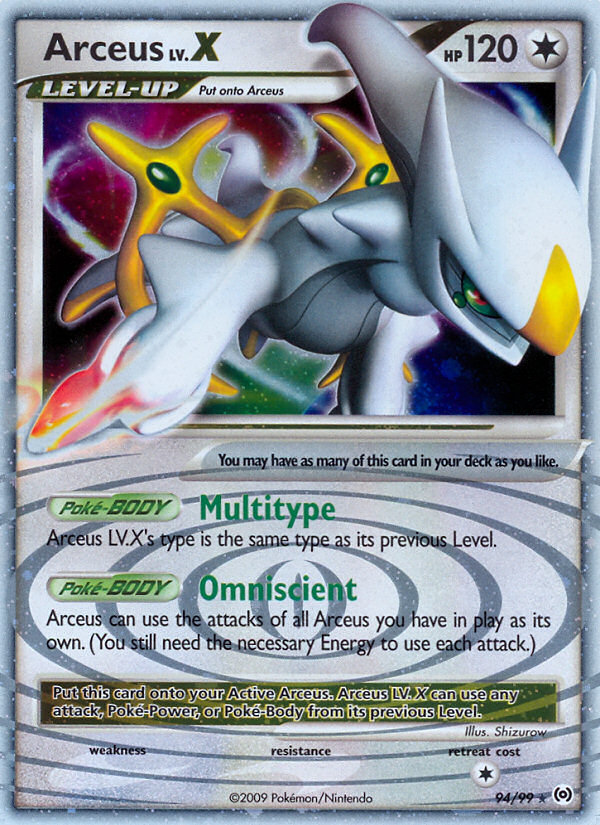
Lv.X cards (pronounced "Level X") were the DPPt era's primary chase mechanic. Unlike the EX cards they replaced, Lv.X cards weren't standalone Pokémon — they were placed on top of a Pokémon of the same name already in play, effectively "leveling up" that Pokémon to gain additional HP, new attacks, and a special Poké-Power or Poké-Body.
The design created interesting deck-building constraints: you needed the base version of the Pokémon in play before the Lv.X card was useful, which meant committing multiple deck slots to support the strategy. That constraint made Lv.X decks feel meaningfully different from simply running the most powerful card — you were building around a combo, not just a single threat.
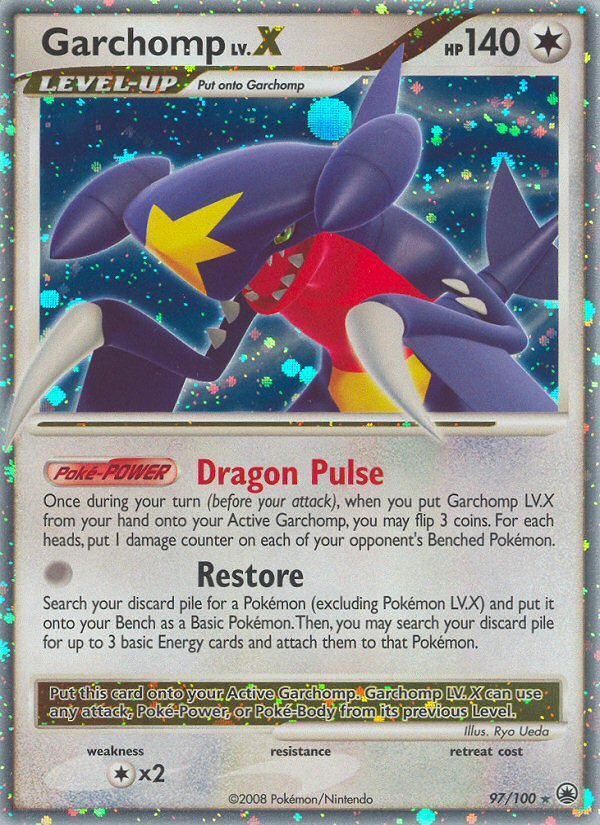
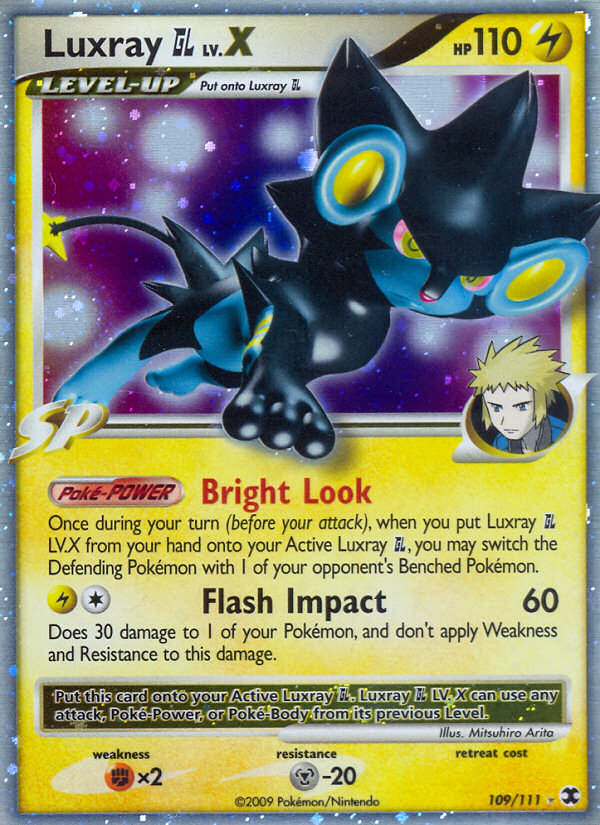
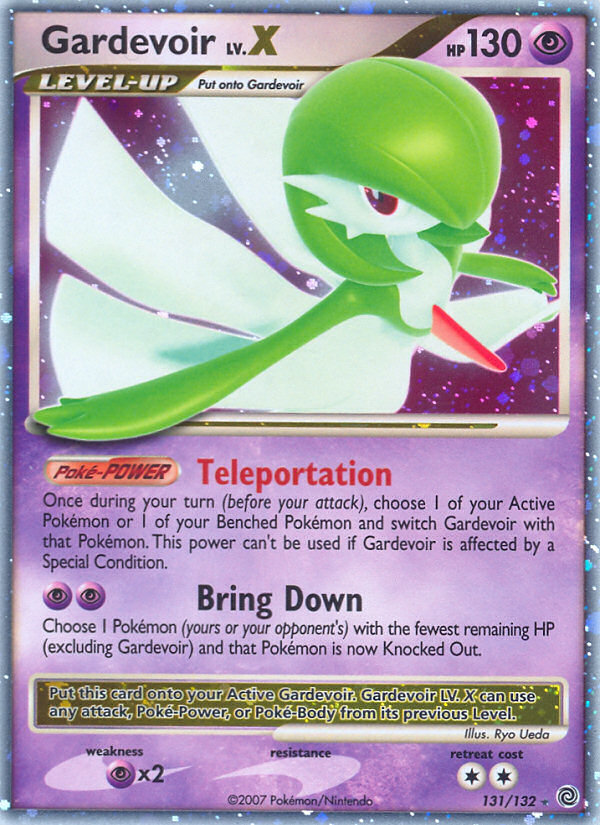
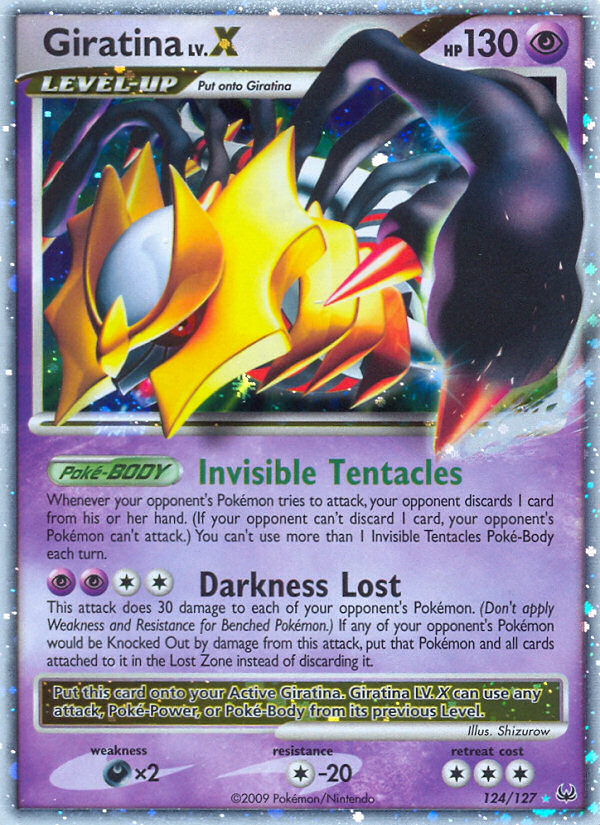
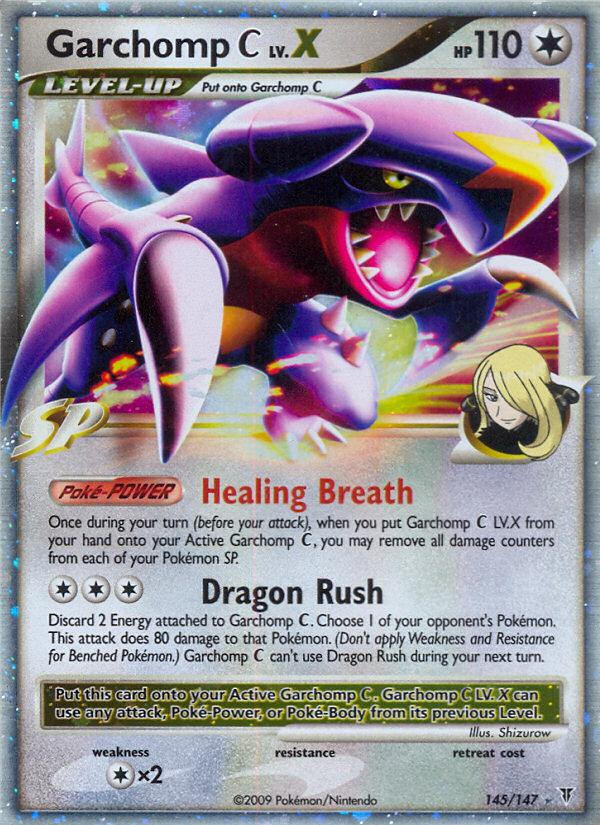
Visually, Lv.X cards used a distinctive raised-foil treatment with a different card frame than standard cards of the era, making them immediately recognizable in a collection. The most desirable Lv.X cards — Garchomp Lv.X, Luxray GL Lv.X, Gardevoir Lv.X, Giratina Lv.X — combine competitive pedigree with strong Pokémon brand recognition, the same combination that drives long-term collector demand in any era.
SP Pokémon: The Platinum Revolution
The Platinum sub-era introduced SP Pokémon — cards associated with specific trainers or organizations, identified by a letter code after the Pokémon's name (C for Champion, G for Team Galactic, GL for Gym Leader, 4 for Elite Four, FB for Frontier Brain). Each SP Pokémon had a specific Poké-Power allowing it to be searched directly from the deck, making them consistent to run in multiples.
The SP mechanic enabled an entirely different style of deck: rather than building around a few powerful individual threats, SP decks ran many efficient single-card answers that could be fetched on demand. The result was a format defined by flexibility and consistency — and some of the most technically demanding gameplay the TCG has ever produced.
SP Pokémon as Collector Targets
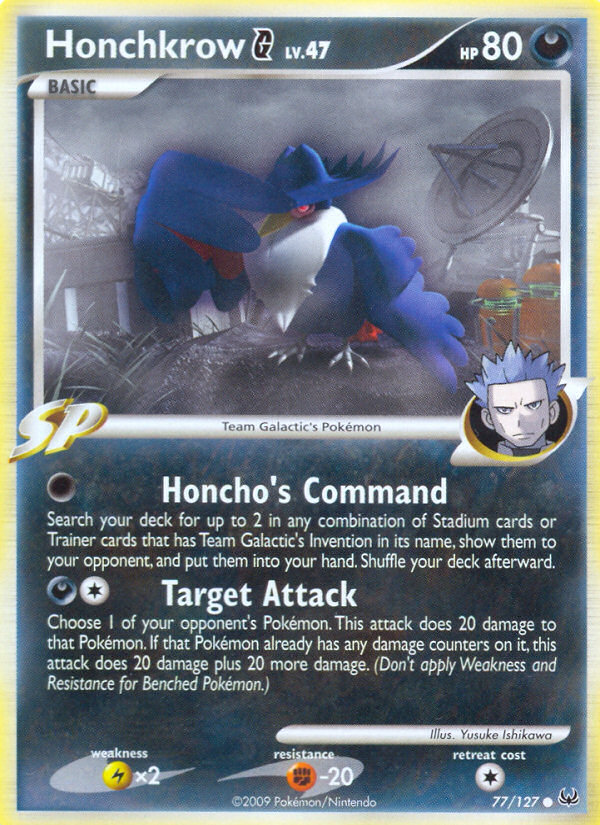
SP Pokémon have an unusual collector profile: they're strongly associated with specific human characters (Cynthia's Garchomp C, Cyrus's Honchkrow G, etc.), which gives them a narrative identity that purely mechanic-driven cards lack. Collectors who care about in-game lore often find this pairing of character and Pokémon more compelling than standard Pokémon-only cards.
Key Sets for Collectors
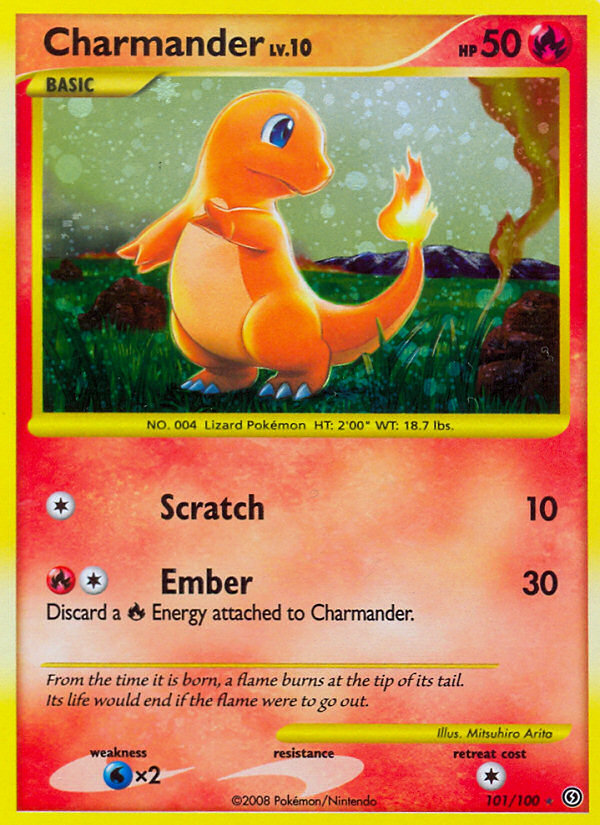
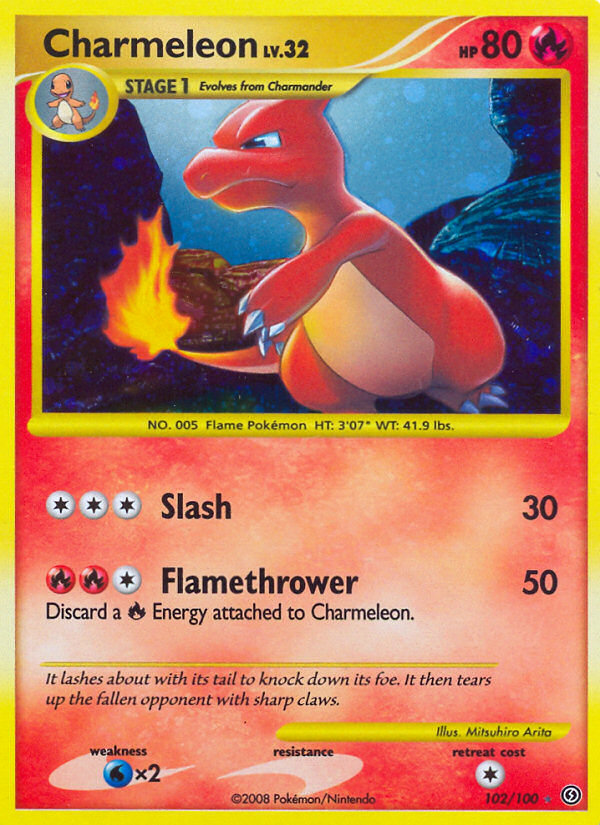
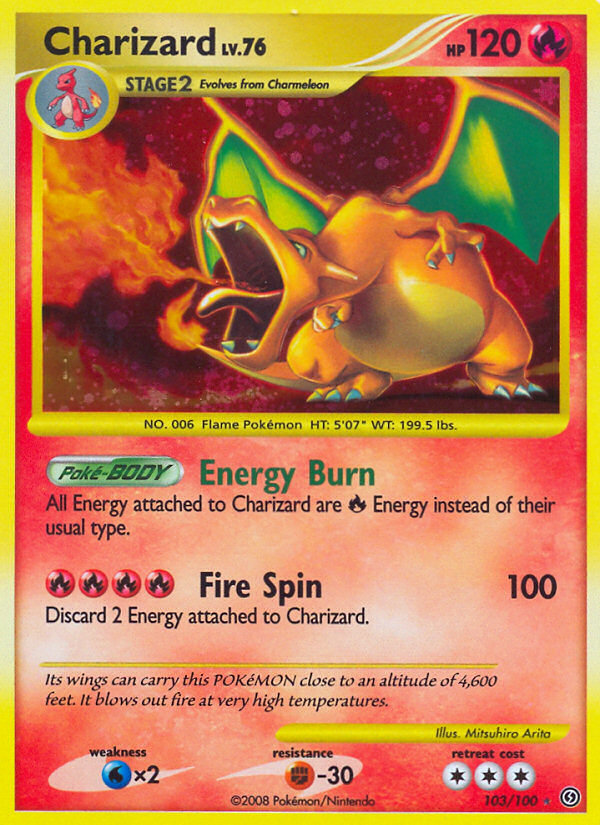
- Stormfront (2008). The most collector-relevant DP-era set. Contains the Secret Rare retro Charmander, Charmeleon and Charizard — the Charizard line carrying deep cross-generational recognition — that are among the most sought-after cards from this entire era.
- Rising Rivals (2009). The peak of SP Pokémon. Contains Luxray GL Lv.X, which dominated competitive play for years and remains a historically significant card for collectors interested in the era's competitive legacy.
- Platinum (2009). The set that launched the SP mechanic and contains Giratina Lv.X — the era's legendary Pokémon centerpiece. Distortion World was also introduced here as a card concept, adding thematic depth.
- Arceus (2009). A standalone set entirely focused on Arceus, with a card for each of Arceus's type variants plus an Arceus LV.X. The completionist appeal of collecting the full Arceus type set makes this an interesting niche within the era.
- Supreme Victors (2009). A deep late-era set with strong competitive representation and a handful of secondary Secret Rares that don't get the attention Stormfront's headline pulls do, but are genuinely worth tracking for collectors building out the full era's history rather than just chasing its two or three most obvious marquee cards. Patience here tends to be rewarded, since secondary Secret Rares from deep-cut sets are exactly the kind of cards that get overlooked until a broader era-wide revaluation eventually catches up to them.
Secret Rares Worth Knowing
The DPPt era established Secret Rares as a distinct pull tier — cards numbered beyond the set's official count, with special treatments. This was a meaningful innovation: it gave sets a true "best pull" beyond the standard holo and Lv.X tiers, something collectors chased specifically rather than simply discovering by accident.
Stormfront's retro Charmander, Charmeleon and Charizard Secret Rares are the era's benchmark collector targets. The Charizard line carries enormous brand recognition from the game's earliest years, and finding high-grade copies of these cards is genuinely difficult given their age and the volume of play they likely saw. Other sets in the era have Secret Rares worth noting — Supreme Victors, Legends Awakened — but Stormfront's trio are the headline pieces.
Beyond Stormfront, keep an eye on Rising Rivals and Arceus for lower-profile Secret Rares that haven't been as widely discussed but carry meaningful competitive or aesthetic history. Because the DPPt era's Secret Rare concept was still relatively new, print runs across the era's later sets weren't yet calibrated to modern demand levels, which means genuine scarcity is baked into nearly every Secret Rare from this window regardless of how well-known the specific card is today.
Buying Into the DPPt Era
- Focus on cards with dual appeal. The most resilient DPPt cards for collectors are those with both competitive history and strong Pokémon brand recognition — Garchomp, Luxray, Raichu, Gengar. Pure competitive relevance fades; brand recognition doesn't.
- Singles are realistic; sealed product is not. Finding sealed DPPt booster boxes at reasonable prices is increasingly difficult. Direct singles purchasing via platforms compared in our marketplace guide is the practical approach.
- Grade high-value targets. Cards from 2007–2010 are old enough that truly high-grade copies are uncommon. For Stormfront Secret Rares and key Lv.X cards, a graded slab documents condition and provides authentication — both matter when values eventually reflect this era's real scarcity.
- Buy in gradually rather than all at once. Because this era is still undervalued relative to WOTC-era vintage, there's no urgency to acquire everything immediately. Spreading purchases over months as prices come up lets you avoid overpaying during any single price spike, and gives you time to properly research each target before committing significant money to it.
- Compare a few listings before committing. Check several comparable sales rather than the first listing you find — pricing on this era is still inconsistent enough that a bit of comparison shopping meaningfully improves your buying price.
Tracking Down DPPt Singles
Singles are the realistic route into this era. The cards named above — the Stormfront Secret Rare Charizard, Luxray GL Lv.X, Garchomp C Lv.X, Giratina Lv.X and the Arceus Lv.X type run — all sit inside the two searches below: one for the Lv.X run, one for Stormfront's Secret Rares. eBay is where out-of-print DPPt cards and graded slabs actually surface; TCGplayer lists Lv.X copies at a stated condition if you would rather buy on a grade than bid.
If a Stormfront Secret Rare or a key Lv.X is heading to a grader, check centering and surface under a loupe before you pay for the submission, and ship it in a penny sleeve and toploader.
As an Amazon Associate, Geeky Domain earns from qualifying purchases. eBay links are affiliate links; Geeky Domain may earn a commission at no extra cost to you.
FAQ
- Are Lv.X cards playable in modern formats? No — Lv.X cards are legal only in formats that include the DP era rules. They're collector items today rather than competitive tools. Some see limited play in nostalgic fan formats, but their value is primarily historical and aesthetic.
- Why is the DPPt era undervalued compared to WOTC? Primarily because the players who were kids during the DPPt era (2007–2010) are only now entering their prime collecting years with disposable income. WOTC nostalgia is older and more established. DPPt's collector moment is coming — it just hasn't fully arrived yet.
- What's the most important single DPPt card for a collector? Stormfront's Secret Rare Charizard is probably the single most discussed DPPt collector target — high recognition, strong competitive history, and genuine scarcity in high grades. Luxray GL Lv.X and Garchomp C Lv.X are strong runner-ups for collectors who value competitive pedigree.
- Is the Arceus set worth collecting as a set rather than individual cards? The Arceus set has a compelling completionist angle — collecting the full type-variant run of Arceus cards plus the LV.X makes for a thematic display piece. If you're interested in set completion rather than individual chase pulls, Arceus is one of the more interesting targets in this era for that reason.
The Overlooked Era With Real Upside.
The DPPt era produced genuinely scarce cards with strong competitive legacies and deep Pokémon brand recognition — and those cards are currently priced as if none of that matters. The players who grew up with Sinnoh are still coming into serious collecting budgets, and when they do, the era's best pieces will reflect what they actually are: significant cards from a historically important era.
The window for buying ahead of that demand shift is open right now. The question is whether you're paying attention to it.
Keep Learning
- → EX Ruby & Sapphire Era Collecting Guide
- → HGSS & Call of Legends: The Forgotten Bridge Era
- → Vintage Pokémon Slab Investment Guide
- → Where to Buy Singles: Platform Comparison
© GEEKYDOMAIN.COM | Strategy Powered by Data