

EX Ruby & Sapphire Era: The Full Collecting Guide
The era that bridged WOTC and modern Pokémon introduced Gold Stars, Delta Species, and the two-Prize ex mechanic — and built a collector legacy that's still underappreciated relative to what it produced.
When Wizards of the Coast lost the Pokémon TCG license in 2003, the game could have quietly faded. Instead, the license moved in-house to Pokémon's own owners, and a new era launched — EX Ruby & Sapphire — that would run for nearly four years, produce sixteen main sets, and introduce some of the most coveted cards in the hobby's history. The EX era is the bridge between the WOTC sets collectors treat as vintage gold and the modern era that most current players grew up with.
Despite that, the EX era is chronically undervalued in collector conversation. It doesn't carry the nostalgia premium of Base Set, and it predates the GX and V era mechanics that drive modern demand. That gap is exactly where patient collectors find opportunity — and understanding what this era actually produced is the starting point.
This guide covers the era's structure, its defining card types, the sets that matter most for collectors, and how to approach buying into this corner of the hobby intelligently.
→ Short Version
The EX era (2003–2007) introduced Pokémon-ex — cards worth two Prize cards when Knocked Out — fundamentally changing how the game rewarded high-power plays. Gold Star cards are the era's true chase pieces: among the rarest pulls across all of Pokémon's history, featuring full-art single-species artwork. Delta Species introduced off-type Pokémon with unexpected type assignments, making familiar species suddenly strange. This era is undervalued relative to its historical importance — a collecting window that won't stay open forever.
→ Related Reading
In This Guide
| Set | Year | Collector Significance |
|---|---|---|
| EX Ruby & Sapphire | 2003 | First post-WOTC set; introduced Pokémon-ex |
| EX FireRed & LeafGreen | 2004 | Kanto nostalgia; popular ex pulls from Gen 1 |
| EX Team Rocket Returns | 2004 | First Gold Star cards introduced |
| EX Deoxys | 2005 | Home of Rayquaza Gold Star |
| EX Unseen Forces | 2005 | Gold Stars: Entei, Raikou & Suicune |
| EX Delta Species | 2005 | Delta Species mechanic introduced |
| EX Holon Phantoms | 2006 | Holon engine; more Gold Stars |
| EX Dragon Frontiers | 2006 | Delta Species Dragon-types; Charizard Gold Star |
| EX Power Keepers | 2007 | Sixteenth and final EX set; reprint-heavy |
Era Overview: 2003–2007
The EX era launched in June 2003 with EX Ruby & Sapphire, the first set after the license moved on from Wizards of the Coast. The transition was abrupt enough that collectors who stopped buying during the changeover largely missed this entire era — which is part of why it remains undervalued relative to what it produced. It's a similar dynamic to the one that leaves Jungle and Fossil overlooked next to Base Set: proximity to a more famous neighbor suppresses attention, not merit.
The era ran for sixteen main sets over roughly four years, ending in February 2007 with EX Power Keepers just before the Diamond & Pearl era launched. It spans the entire Gen 3 period (Ruby/Sapphire through Emerald) and the Gen 4 transition year, drawing from Hoenn and then revisiting Kanto and other generations through its various subsets.
For collectors, the EX era matters for three distinct reasons: the Pokémon-ex mechanic that changed how the game valued powerful cards, the Gold Star rarity that remains among the rarest pulls in Pokémon history, and the Delta Species subset that gave familiar Pokémon completely unexpected type assignments.
Sixteen sets over four years also means the era has a genuinely wide range of price points and entry options for a new collector. You can start with a modest EX-era common or uncommon and work toward a Gold Star over months or years, rather than needing a large budget just to get a foothold in the era at all. That range is part of what makes EX approachable despite its collector reputation being built around a handful of extremely rare chase cards.
The Pokémon-ex Mechanic
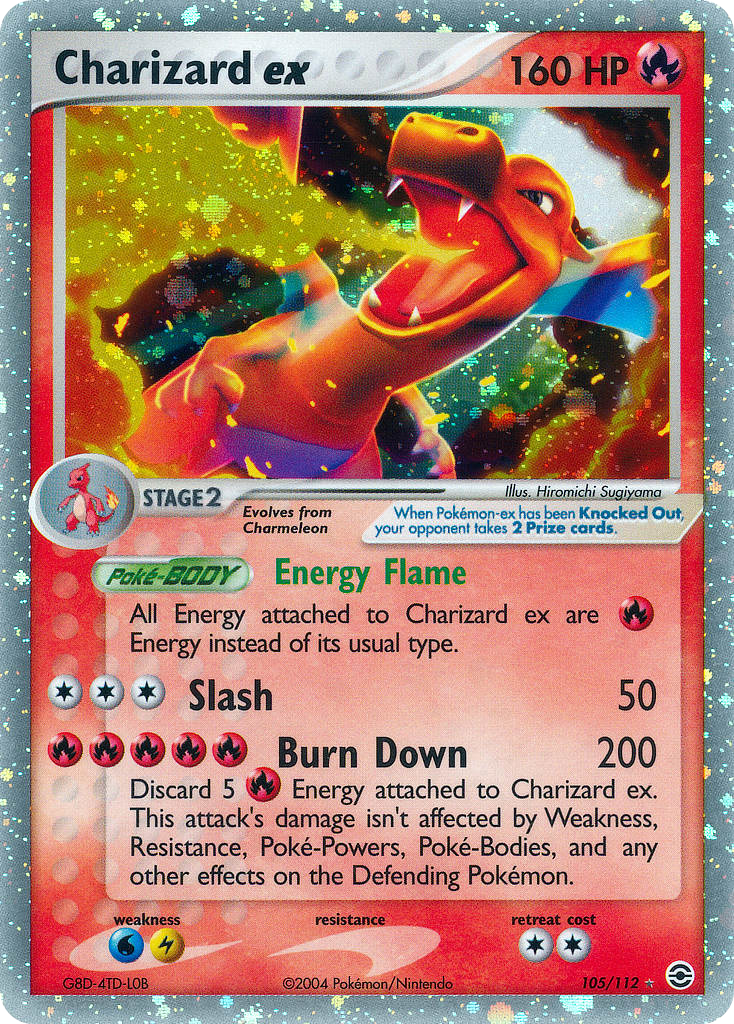
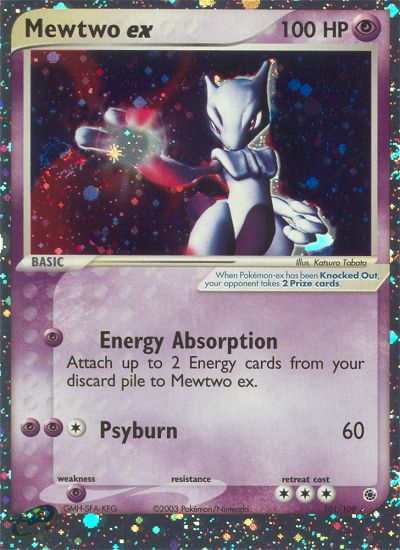
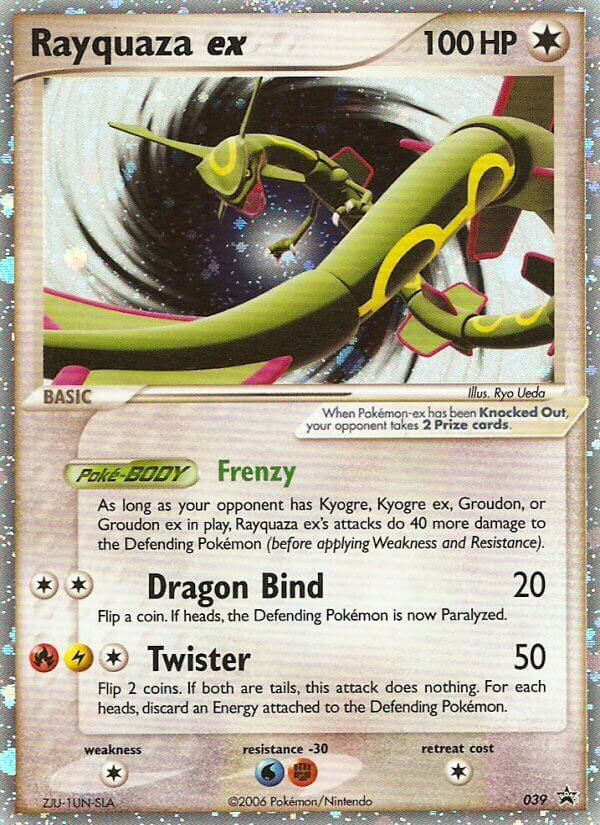
Pokémon-ex were the EX era's primary chase cards — powerful Pokémon with inflated HP and strong attacks, but with a significant downside: when your opponent Knocks Out a Pokémon-ex, they take two Prize cards instead of one. In a game where you win by taking six Prizes, that's a massive concession.
That two-Prize mechanic changed how both players approached the game. Playing an ex card committed you to protecting it aggressively; your opponent, meanwhile, had every incentive to focus fire on your ex and swing the Prize race in their favor. The risk/reward balance made ex cards feel genuinely consequential in a way that high-HP cards in other eras often don't. If you learned the game on modern rules versus Base Set, this is one of the clearest inflection points between them.
Visually, Pokémon-ex were printed with full-color holo treatments on a larger name text and the "ex" suffix in lowercase — a deliberately different aesthetic from the WOTC era holos. They were the obvious chase tier of every set they appeared in, and the most desirable ex cards from popular Pokémon (Charizard ex, Mewtwo ex, Rayquaza ex) remain collector targets today.
Gold Star Cards: The Era's True Chase
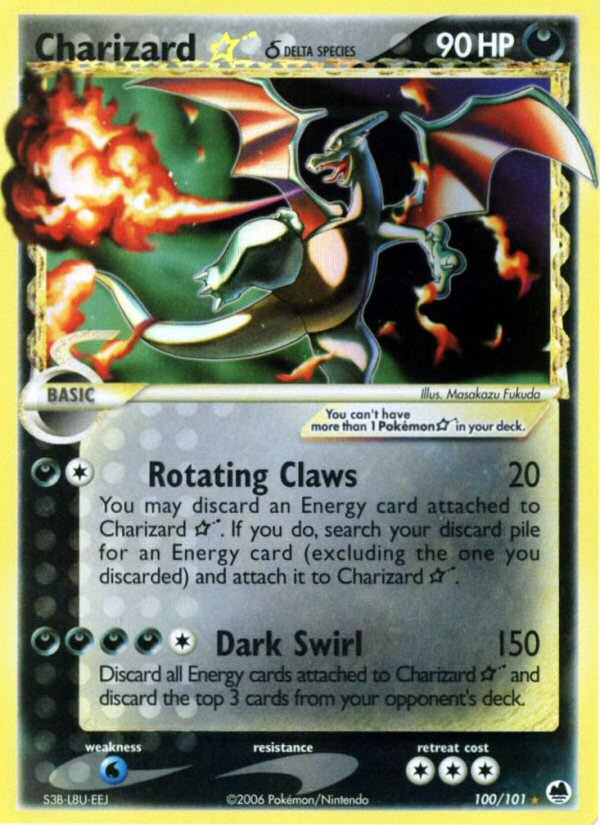
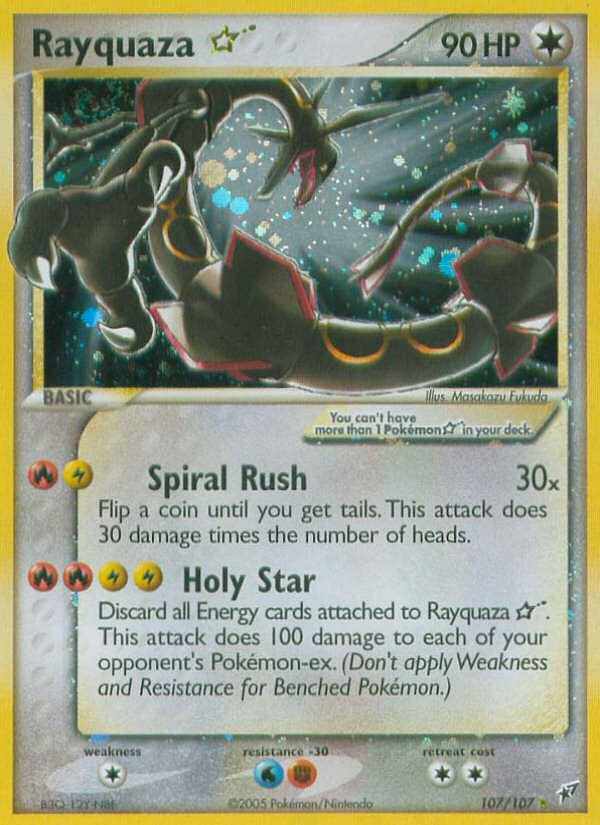
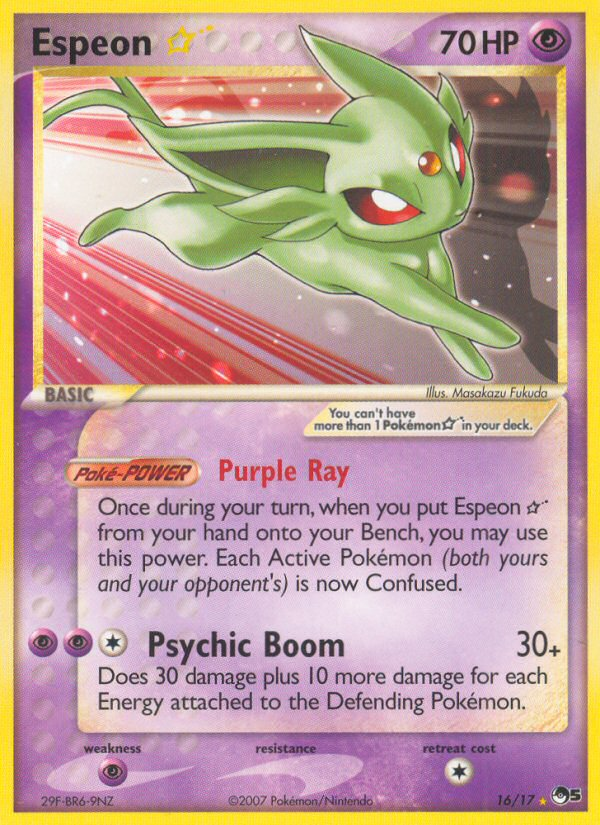
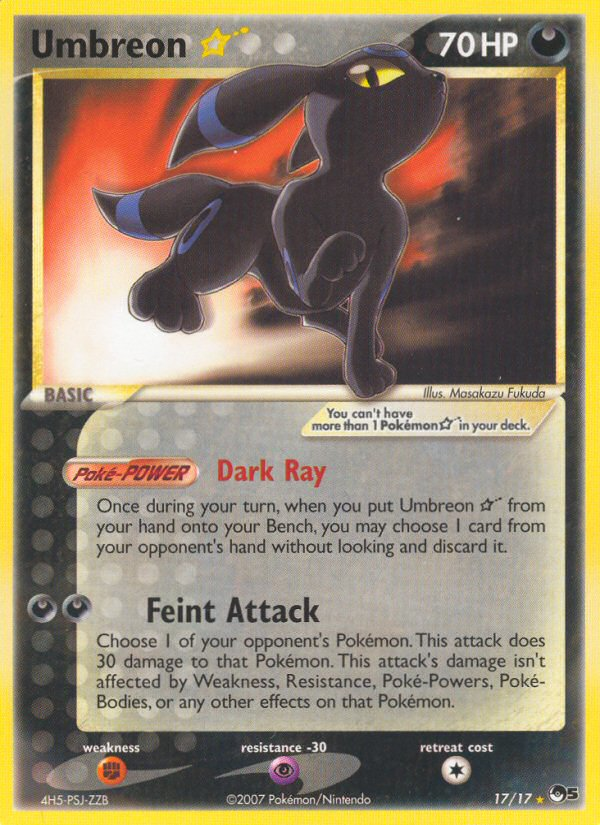
Gold Star cards — identified by a gold star symbol after the Pokémon's name — are the EX era's most significant contribution to Pokémon collecting. Introduced in EX Team Rocket Returns in 2004, they appeared sporadically across subsequent sets and represent some of the rarest pulls in the game's entire history.
What distinguishes Gold Stars visually is their full-art treatment: each card depicts a single Pokémon in a unique pose filling the entire card face, with artwork that was notably more dynamic than the standard card layouts of the era. The gold star in the name was a direct signal to players and collectors that this was something exceptional.
The pull rate for Gold Stars was extremely low — they were among the rarest cards the TCG had produced up to that point, appearing far less frequently than even standard secret rares in later eras. The combination of extreme scarcity, distinctive artwork, and association with popular species has kept Gold Stars in consistent collector demand for over twenty years.
If you're orienting yourself in this corner of the era, these are the Gold Stars that anchor most collector conversations:
| Gold Star | Set | Why It Anchors Demand |
|---|---|---|
| Charizard | EX Dragon Frontiers (2006) | The single most sought-after Gold Star; Charizard's name carries the hobby |
| Rayquaza | EX Deoxys (2005) | Gen 3's mascot legendary; one of the era's most valuable cards |
| Espeon & Umbreon | POP Series 5 (2007) | Eeveelution collectors chase these as a pair; deep, durable demand |
Gold Stars and the Grading Market
Gold Stars printed during the EX era are old enough to show genuine wear from play and storage, and their age means truly high-grade specimens are uncommon. A PSA 10 or BGS Black Label on a sought-after Gold Star represents a meaningful scarcity premium over raw or lower-grade copies — the same dynamic that drives vintage WOTC slab values, applied to cards that are just as old but less discussed.
Delta Species: Off-Type Pokémon
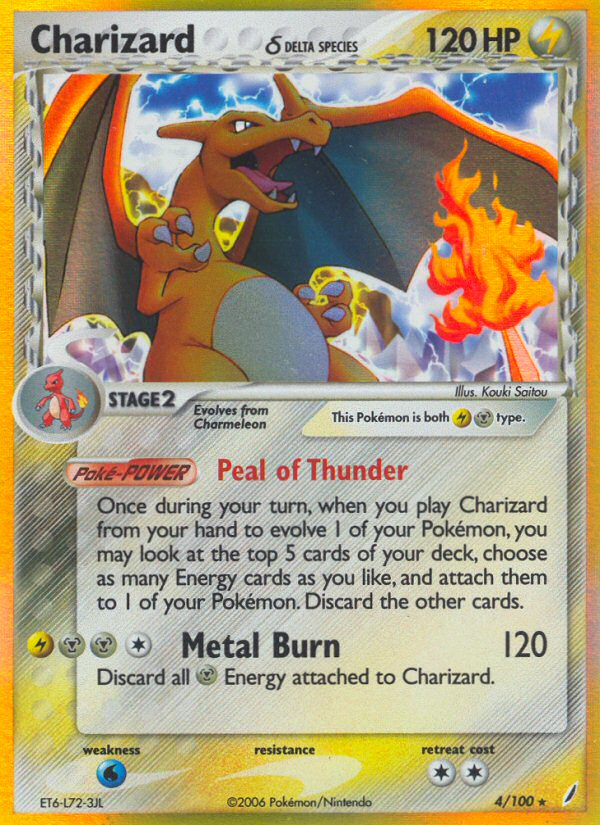
EX Delta Species (2005) introduced one of the most creatively distinctive subsets in Pokémon TCG history: Delta Species Pokémon, marked with a delta symbol, depicted familiar species as unexpected types. A Charizard that isn't a Fire type. A Mewtwo that isn't Psychic. The premise sounds strange because it is — and that novelty drove genuine engagement from both players and collectors.
Delta Species cards continued across several subsequent sets (EX Legend Maker, EX Holon Phantoms, EX Crystal Guardians, EX Dragon Frontiers) and developed their own internal lore around the Holon Research Tower storyline. The Holon Pokémon — special cards that could be attached as Energy — added a mechanical layer that made these sets interesting beyond just the visual novelty of off-type Pokémon.
For collectors, Delta Species Charizard cards occupy a particularly interesting niche: they're a version of Charizard that looks and behaves nothing like the standard Charizard collector expects, which appeals both to Charizard completionists and to collectors interested in the stranger corners of TCG history.
Key Sets for Collectors
EX Team Rocket Returns (2004)
The set that introduced Gold Stars. Has historical significance as the first appearance of the rarity, plus Dark-themed Pokémon that appeal to collectors who liked the original Team Rocket set.
EX FireRed & LeafGreen (2004)
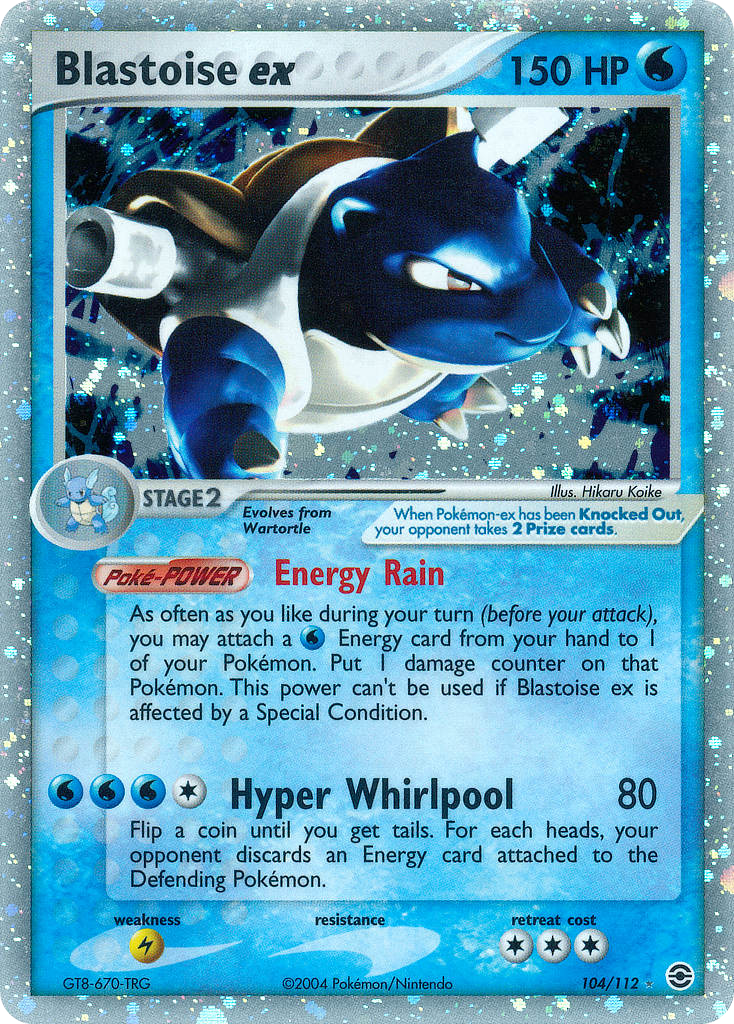
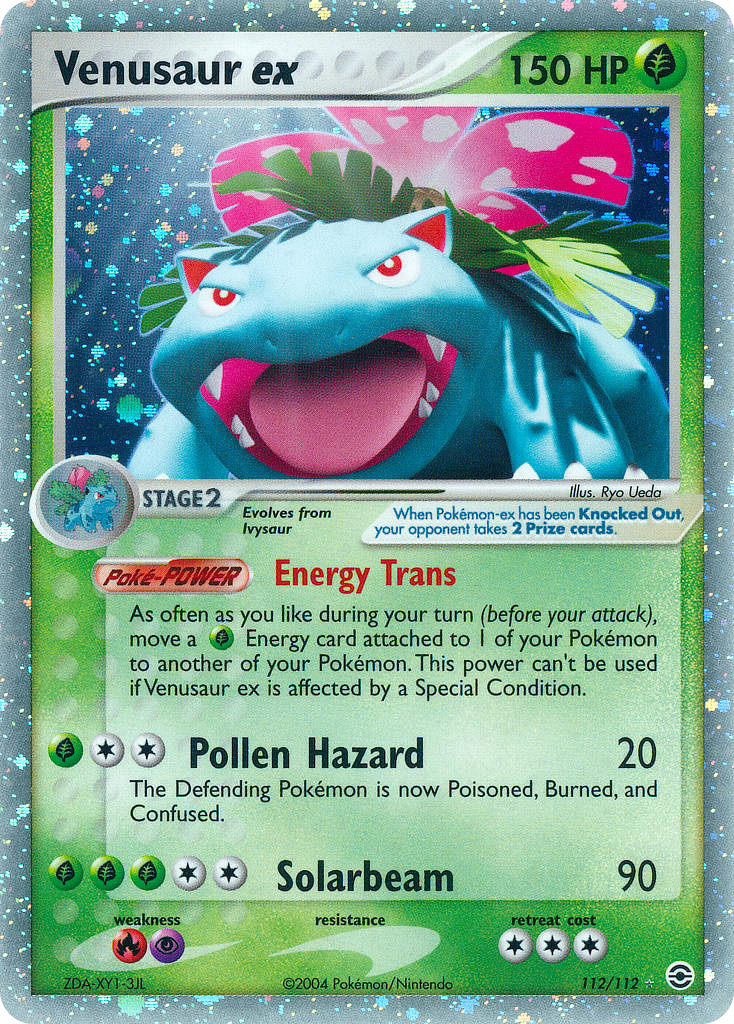
The set that brought the original Kanto Pokédex back to the EX era, making it a natural target for collectors who love Gen 1 but want something beyond WOTC-era cards. Charizard ex, Blastoise ex, and Venusaur ex from this set remain popular pulls — the same Kanto pull that later made Scarlet & Violet—151 a phenomenon.
EX Delta Species (2005)
Where the era's most distinctive visual identity lives. Delta Charizard, Delta Mewtwo, and the Gold Star pulls from this set attract collectors interested in the unusual.
EX Dragon Frontiers (2006)
Contains the Charizard Gold Star — one of the most sought-after cards from the entire era. A set that's disproportionately important relative to its position near the end of the EX run.
Buying Into the EX Era
- Singles are the only realistic path. Sealed EX-era product from 2003–2007 is genuinely scarce and priced accordingly. Buying packs to pull specific cards is not a sensible strategy for this era — target the singles you want directly from reputable sellers.
- Authenticate carefully. Cards of this age and value attract counterfeits. Apply the same authentication diligence you would to WOTC-era cards — light tests, texture checks, and the general counterfeit-spotting fundamentals — plus third-party grading for anything at meaningful price points.
- Consider graded vs raw based on your goal. If you want a specific Gold Star for your personal collection, a raw NM copy may be entirely appropriate. If you're buying as a long-term hold or planning to resell, a graded slab provides authentication and grade documentation that supports future liquidity.
- Focus on the most recognizable species first. Within any budget, prioritize ex cards and Gold Stars featuring Pokémon with the strongest cross-generational recognition — Charizard, Mewtwo, Rayquaza, Umbreon, Espeon. These have the deepest collector base and the most consistent demand regardless of what the broader market is doing.
- Track a few specific listings before buying. Watch a handful of comparable listings for a week or two before committing, so you have a realistic sense of the going rate rather than anchoring to the first price you see.
Where To Buy EX-Era Singles
Singles, not sealed — so this is the Charizard Gold Star from Dragon Frontiers, the Rayquaza Gold Star from EX Deoxys, and the Espeon and Umbreon Gold Stars from POP Series 5, plus graded copies if you decided a slab suits your goal better (add PSA to the eBay search to see only slabs). TCGplayer lists raw EX-era singles under standardised condition grading with one cart across sellers, and its mass-entry search takes all four names at once, which is the easier place to compare NM copies.
And the kit the authentication step above assumes: a loupe with a UV light for checking print pattern and surface before you pay, sleeves and toploaders for anything raw, and a hard case if you end up holding a slab.
As an Amazon Associate, Geeky Domain earns from qualifying purchases. eBay links are affiliate links; Geeky Domain may earn a commission at no extra cost to you.
FAQ
Are EX-era cards the same as the modern Pokémon-EX (capital letters)?
No. EX-era cards use a lowercase "ex" suffix (Charizard ex) and are a completely separate mechanic from the modern Pokémon-EX (capital letters) that appeared in the Black & White era onward. Visually and mechanically, they are different card types from different eras.
How rare are Gold Star cards compared to modern chase cards?
Gold Stars were significantly rarer at print than most modern chase pulls. They appeared extremely infrequently even in full booster boxes, and with no reprint mechanism in this era, the total population is genuinely fixed. High-grade Gold Stars are accordingly scarcer than most modern Illustration Rare or Special Art Rare equivalents.
Is the EX era a good collecting focus for someone starting in vintage Pokémon?
Yes — it offers genuine historical importance and scarcity without the extreme price ceiling of WOTC 1st Edition material. The entry points for many EX-era cards are lower than comparable WOTC era cards of similar historical significance, which creates a meaningful opportunity for collectors who can identify that gap.
Do WOTC-era grading considerations apply to EX-era cards?
Yes. Cards from 2003–2007 are old enough to show genuine wear and centering issues from play and storage. The same grading principles apply: centering, surface scratches, edge wear, and corner condition all matter when evaluating a raw EX-era card.
The Most Important Era Nobody Talks About.
The EX era introduced mechanics and chase cards that belong in any serious discussion of Pokémon TCG history — and it remains undervalued because it sits in the blind spot between WOTC nostalgia and modern hype. Gold Stars are genuinely rare by any standard in the hobby. The Delta Species mechanic is unlike anything before or since. And the era's cards are old enough to carry real scarcity.
If you're building a vintage collection and haven't looked seriously at 2003–2007 material, you're leaving a window open that collectors a decade from now will wonder why anyone left unaddressed.
© GEEKYDOMAIN.COM | Strategy Powered by Data