

Lorcana on a Budget: Your First $50 Spent Wisely
A new-player money guide to Disney Lorcana: what a starter deck, a booster pack, and an Illumineer's Trove actually get you, and which combination makes the most sense for the first fifty dollars you spend.
Some links below are affiliate links. If you buy through them, Geeky Domain may earn a small commission at no extra cost to you.
The Short Version
For most brand-new players, the best use of a first $50 is one $16.99 starter deck plus roughly $30 in singles or a booster pack or two — not a $49.99 Illumineer's Trove and not two starter decks. A starter deck gives you a tournament-legal 60-card deck the moment you open the box, built under Lorcana's own deckbuilding rules (60-card minimum, max 4 copies of any card, and only two ink colors per deck). Community strategy sites tend to point beginners toward the Amber/Amethyst or Sapphire/Steel starter pairs as the easiest to learn, though that's community consensus, not an official Ravensburger recommendation. Skip the temptation to chase a $1,000-plus Enchanted card or to buy a second starter deck before you've actually played your first one — that money does far more for you spent on singles that fix real gaps in the deck you already own.
In This Guide
- → What Fifty Dollars Actually Gets You in Lorcana
- → The Three Realistic Ways to Spend Your First $50
- → Which Ink Pair Should You Start With
- → The Illumineer's Trove: Sealed Variety, No Guaranteed Deck
- → Three Things Not to Buy With Your First $50
- → Building Toward Your First Real 60-Card Deck
- → FAQ & Quick Reference
What Fifty Dollars Actually Gets You in Lorcana
Fifty dollars sounds like a small budget until you look at what Lorcana actually costs to get into. A single starter deck carries an MSRP of $16.99 and comes with a ready-to-play 60-card deck plus the accessories you need to sit down and play a game the same day — no deckbuilding required. A single booster pack runs $5.99 MSRP and contains 12 cards: 6 commons, 3 uncommons, 2 cards pulled from the rare/super rare/legendary pool, and 1 foil card of any rarity, which occasionally means a foil Enchanted. Those two numbers are the entire math of a first Lorcana purchase — everything else is just different ways of combining them.
Two things worth flagging before you look at prices anywhere: those figures are Ravensburger's suggested retail prices, not a guarantee of what you'll pay at the register. Starter decks have held steady at their $16.99 MSRP for years and dip to around $15 on sale, but sealed booster product has run well above MSRP through 2026 — booster boxes have listed at $250 and up against a $143.76 MSRP, so treat "$50" as a working budget rather than an exact number and check current pricing at whichever retailer you're actually buying from. Second, if you decide your $50 is better spent buying loose cards instead of a full box, read up on the smartest way to buy Lorcana singles before you start — the difference between buying from a marketplace bundle and hand-picking cards for your specific deck adds up fast at this budget level.
The other product you'll see at this price point is the Illumineer's Trove, at $49.99 MSRP — essentially all of your budget in one box. We'll get into exactly what that buys you (and what it doesn't) in a later section, but if you're trying to decide between a sealed-variety box and a guaranteed deck right now, the short answer is that they solve different problems. For the fuller comparison, see our breakdown of booster boxes versus the Illumineer's Trove.
The Three Realistic Ways to Spend Your First $50
There are really only a handful of ways to combine a $16.99 starter deck, $5.99 booster packs, and a $49.99 Trove into something close to $50. The table below lays out the realistic options, what each one actually hands you when you open the box, and who each is genuinely best for. Dollar figures here are based on MSRP; your actual total will shift with tax, and sealed booster product in particular has been selling well above MSRP through 2026.
| Option | Cost | What You Get | Best For |
|---|---|---|---|
| One starter deck + singles | $16.99 + ~$30 in singles | A tournament-legal, ready-to-play 60-card deck, plus extra copies of key commons and uncommons chosen to shore up its weak spots | New players who want to be playing real games tonight and improving the exact deck they own |
| Two starter decks | ~$34 (2 x $16.99) | Two complete 60-card decks, likely two different ink pairs, but almost nothing left over for singles, sleeves, or extras | Two people who want to sit down and play against each other the same day |
| One Illumineer's Trove | $49.99 | 8 booster packs (96 randomized cards), a full-art storage box, card dividers, damage-counter dice, and a spin-dial lore tracker — no prebuilt deck included | Players who enjoy opening packs, or who already own a deck and want a pile of new singles to build with |
| Starter deck + 1-2 booster packs | ~$23-$29 | A ready-to-play deck plus the surprise of cracking one or two packs (12 cards each, with a shot at a rare, super rare, legendary, or even an Enchanted) | Players who want to play immediately but still want a little pack-opening fun |
Notice what all four rows have in common: the starter deck is the only element that guarantees you a legal deck on day one. That's because Lorcana's own rules require a minimum of 60 cards, no more than 4 copies of any card with the same full name, and — with rare exceptions like draft formats — cards from no more than two ink colors in a single deck. A starter deck is built to satisfy all three of those rules out of the box; loose singles and booster packs are not, until you assemble them yourself. If the ink-color rule is new to you, our guide to inkable versus uninkable cards and how the inkwell works is a good next stop before you start mixing and matching. For a fuller walkthrough of turning a starter deck into a deck that's genuinely yours, see building your first 60-card Lorcana deck.
Which Ink Pair Should You Start With
Lorcana has six ink colors — Amber, Amethyst, Emerald, Ruby, Sapphire, and Steel — and every starter deck locks you into exactly two of them. Each ink has its own identity: Amber leans on healing and support, Amethyst on card control and spell effects, Emerald on evasion and disruption, Ruby on aggressive lore-racing, Sapphire on ramp and item value, and Steel on board control and defense. None of that is a strict rulebook designation; it's the shorthand strategy sites use because it holds up in practice.
Lorcana's launch set, The First Chapter, actually shipped three starter decks split along exactly these lines: Sapphire/Steel (Aurora & Simba), Emerald/Ruby (Cruella De Vil & Aladdin), and Amber/Amethyst (Moana & Sorcerer Mickey). Community roundups from sites like lorcana.gg, ScreenRant, and Wargamer have tended to point new players toward the Amber/Amethyst or Sapphire/Steel pairs specifically, on the reasoning that their game plans are the most forgiving to pilot while you're still learning turn structure — that's a community read, not an official Ravensburger "beginner" label, so treat it as a starting point rather than gospel.
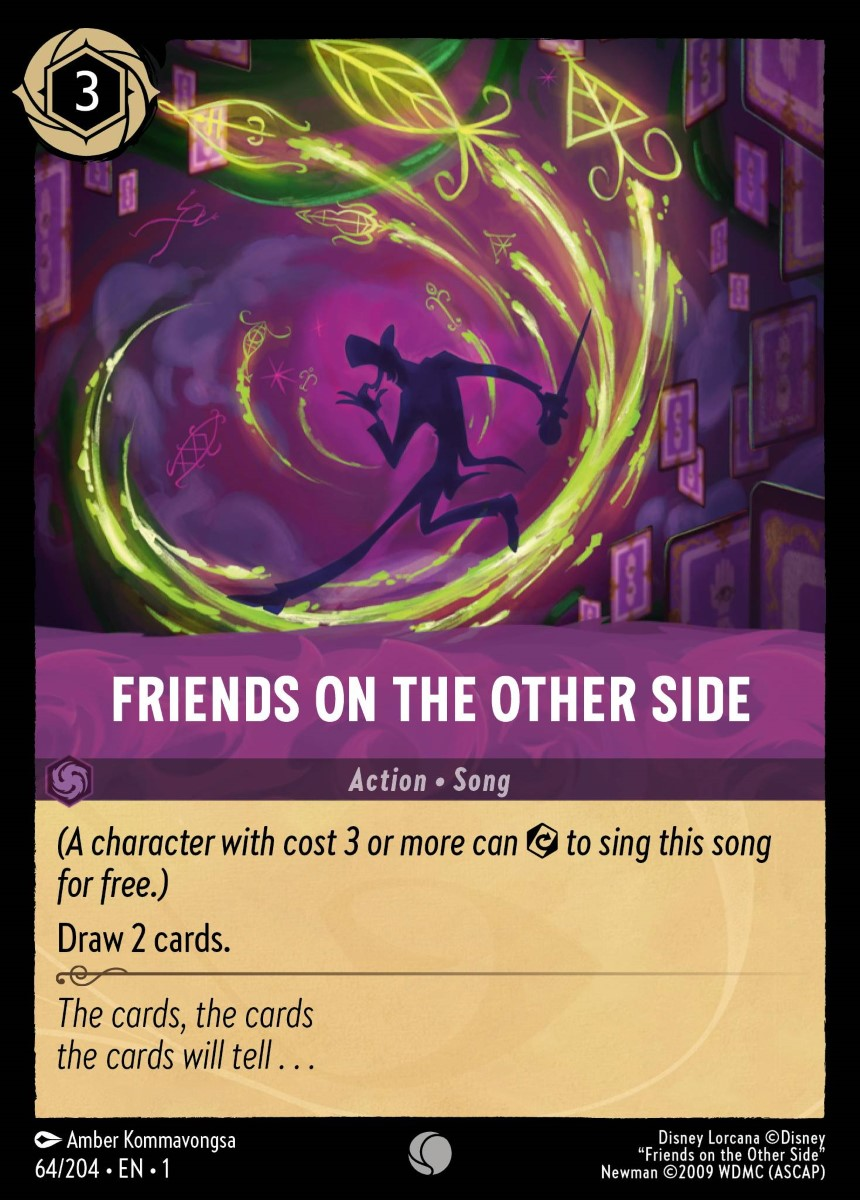
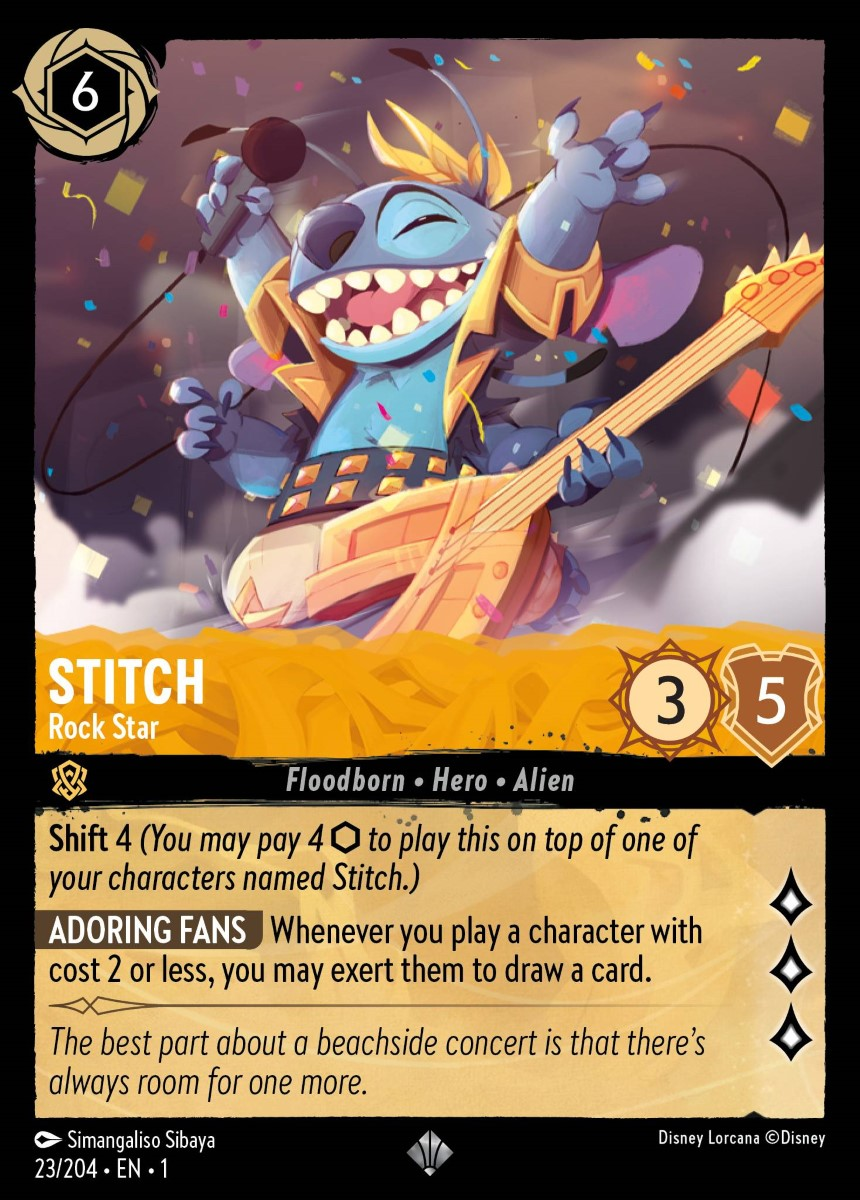
If you want a concrete sense of what an Amber/Amethyst-style deck is doing, look at two of its staple effects. The Amethyst action song Friends on the Other Side lets any character with cost 3 or more exert to sing it for free, drawing you 2 cards — a clean card-advantage engine that three copies of ship in the First Chapter Amber/Amethyst starter deck. On the Amber side, Stitch - Rock Star is a 6-cost Floodborn character with Shift 4 whose Adoring Fans ability lets you exert a newly played character with cost 2 or less to draw a card, rewarding a deck that plays a lot of cheap bodies.
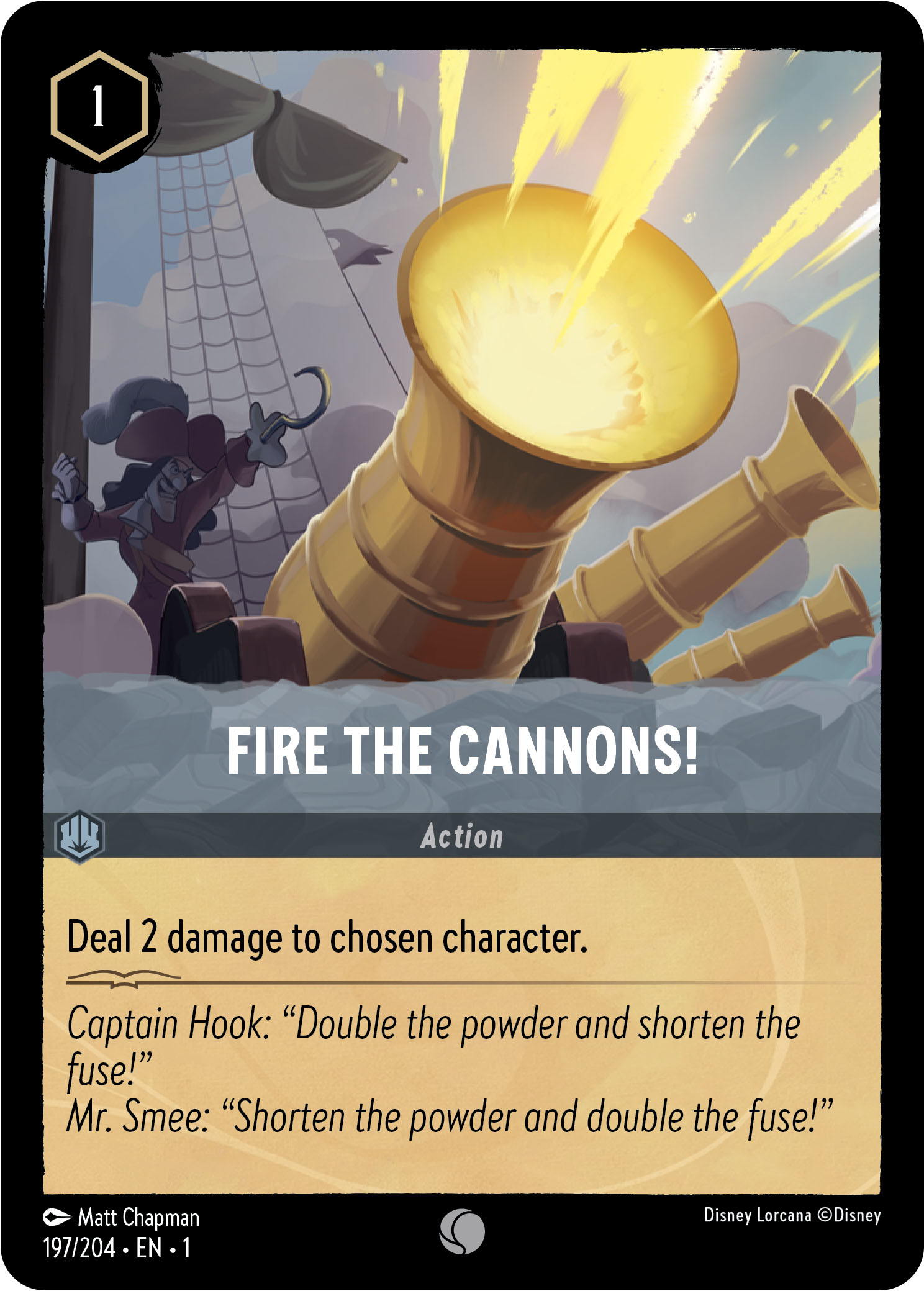
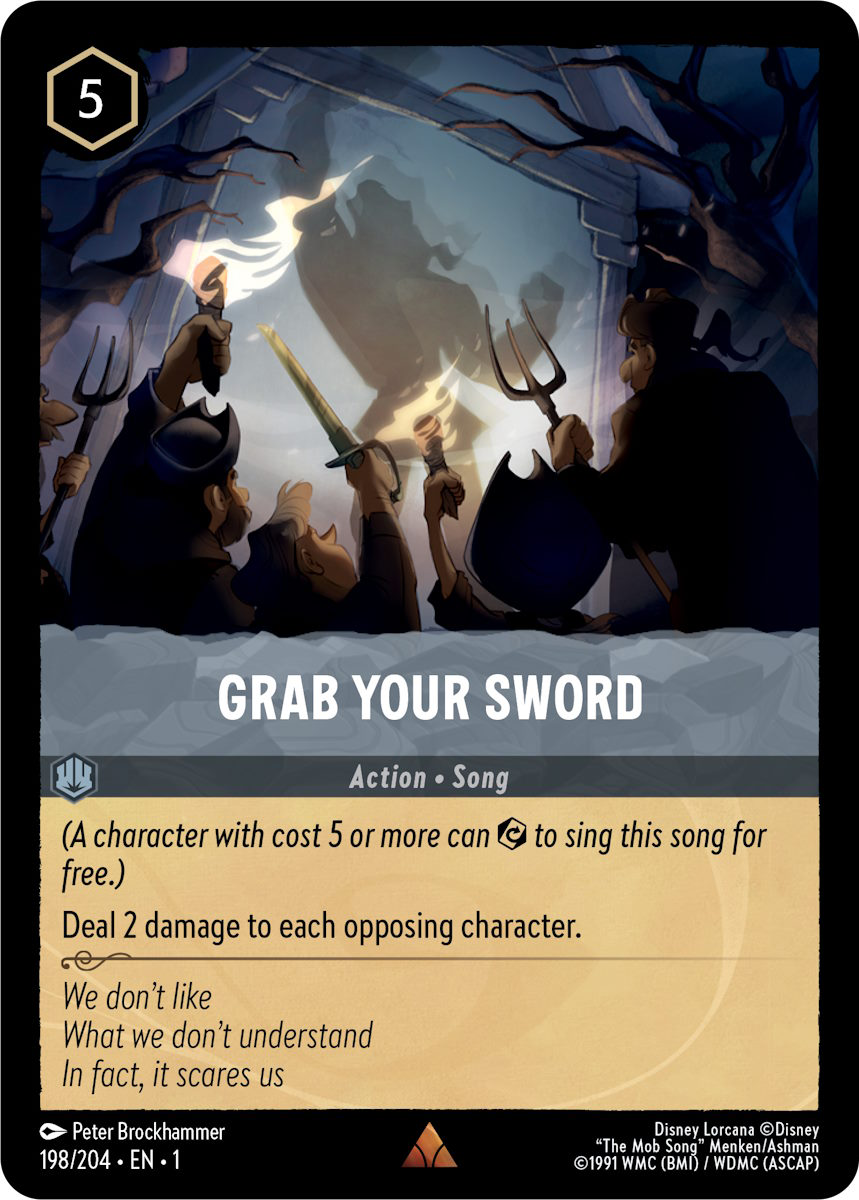
Sapphire/Steel plays a very different game, leaning on removal and tempo instead of card draw. The Steel common Fire the Cannons! is about as simple as Lorcana gets: for 1 ink, deal 2 damage to a chosen character. The Steel rare action song Grab Your Sword costs 5, but any character with cost 5 or more can exert to sing it for free, and its effect — 2 damage to every opposing character — can wipe out a board of small creatures in one shot. If that kind of "answer their board, then race" plan sounds more like your speed than a draw-and-go-tall Amethyst deck, our comparison of going tall versus going wide in Lorcana is worth reading before you commit your $16.99.
One specific starter deck worth knowing by name: reviewers have singled out the Whispers in the Well printing of the Sapphire/Steel starter deck (Judy Hopps & Robin Hood) as an especially strong beginner box. It ships with a prebuilt 60-card deck where 58 of the 60 cards were new to that set, a bonus Whispers in the Well booster pack, 11 game tokens, and a rulebook and quick-start guide. Whether that exact printing is what's on the shelf in front of you will depend on what your local store or online retailer currently has in stock — sets rotate through release cycles — but it's a useful example of what a well-designed Sapphire/Steel starter looks like in practice, and the $16.99 single-ink-pair starter decks all follow the same basic formula: one ink pair, one ready-made 60-card deck, one box. One thing to know before you shop, though: Ravensburger stopped printing single-ink-pair starter decks after Whispers in the Well (Set 10). Newer sets ship a Collection Starter Set instead — four booster packs, a portfolio and a foil promo, no prebuilt deck inside — or, in Wilds Unknown's case, a roughly $40 two-player set with two 60-card decks. So the $16.99 ready-to-play deck this guide is built around will be a still-in-print single deck from a slightly older set rather than the newest box on the shelf.
Whether you're going the starter-deck route or the Illumineer's Trove route, here's where to start looking — check current pricing against MSRP before you buy, since retailers move both up and down.
As an Amazon Associate, Geeky Domain earns from qualifying purchases. eBay links are affiliate links; Geeky Domain may earn a commission at no extra cost to you.
The Illumineer's Trove: Sealed Variety, No Guaranteed Deck
The Illumineer's Trove sits at $49.99 MSRP — essentially your entire budget — and the pitch is straightforward: 8 booster packs, which works out to 96 randomized cards, bundled with a storage box, card dividers, damage-counter dice, and a spin-dial lore tracker. What it notably does not include is a prebuilt or curated starter deck. Every card inside is random, spread across whatever ink colors and rarities the packs happen to contain. The exact accessory count varies a little depending on which source and printing you check — some listings describe two deck boxes and 15 tokens, others describe a slightly different token and divider count — so treat the accessory list as illustrative of "storage plus dividers plus counters" rather than a fixed manifest, and read the box at your specific retailer before buying.
Here's the actual tradeoff. A Trove gives you more raw cards and more chances at rare pulls than a single starter deck — 96 cards instead of 60, with real odds at commons, uncommons, rares, super rares, legendaries, and even an Enchanted foil, since any of the 8 packs' foil slots can land one. Enchanted rares are full-art, alternate-treatment foils and, until the newer Iconic tier was introduced, were the rarest cards Lorcana printed for pack-pulling — Iconic (about two cards per set) now holds that spot, but Enchanted remains the marquee chase rarity most players are hunting. Community pack-tracking projects have long pegged the odds at roughly 1 per 96 packs — about one Enchanted per sealed case of four booster boxes — and while trackers report better rates in some recent sets, a single 24-pack box is still more likely than not to come up empty, and a Trove's 8 packs are an even smaller slice of those odds. If pulling something spectacular and adding to a growing collection sounds more appealing than playing a complete deck tonight, a Trove is a reasonable way to spend $50. If a card's shiny alternate art matters to you, our roundup of the most beautiful Enchanted card arts in Lorcana is a fun rabbit hole once you're past this first purchase.
But if your actual goal is sitting across from a friend and playing a full game of Lorcana as soon as possible, a Trove alone doesn't get you there. Ninety-six random cards, spread across up to six ink colors, are not a legal 60-card, two-ink deck until you sort and cut them down yourself — which, as a brand-new player, means doing real deckbuilding work before your first game rather than after it.
Three Things Not to Buy With Your First $50
The most common way new players waste a first Lorcana budget isn't buying the "wrong" starter deck — any legal starting point is fine. It's spending the money chasing something that has nothing to do with actually playing the game yet. Three specific traps are worth naming directly.
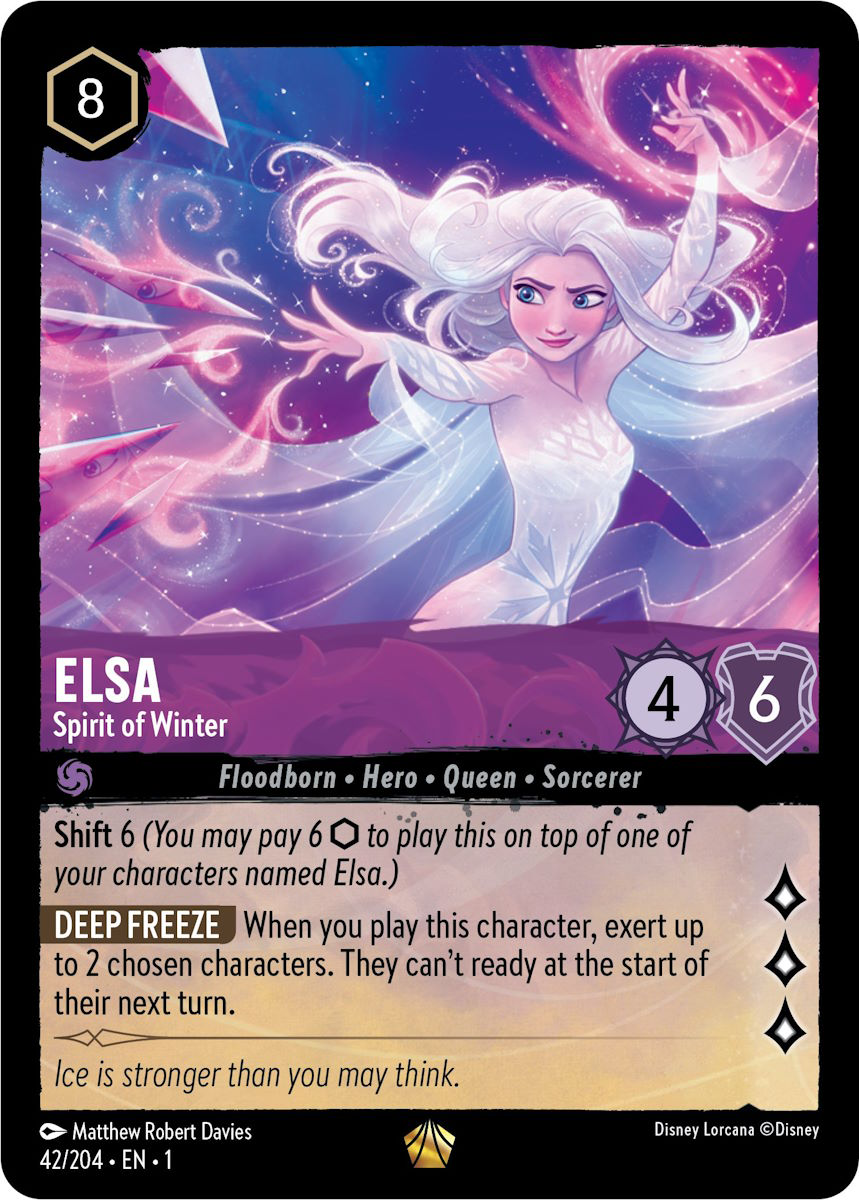
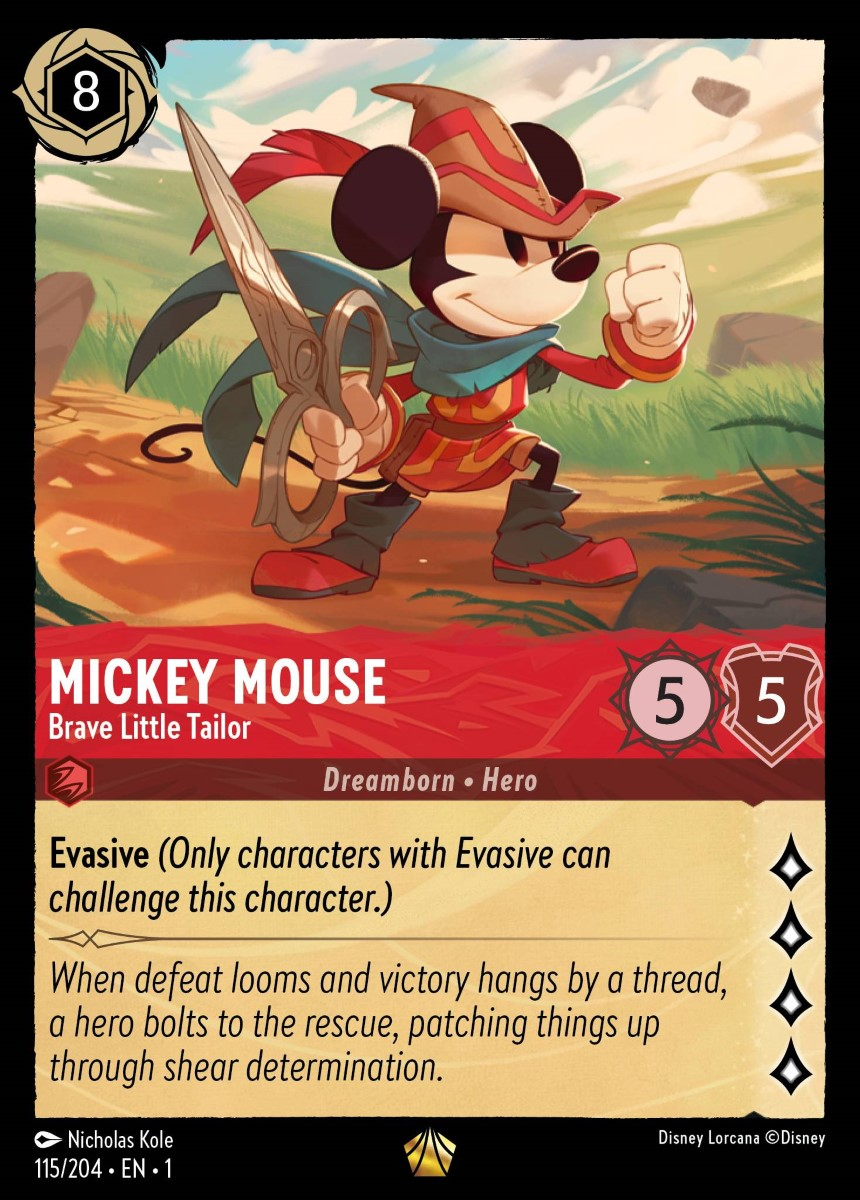
First: do not go shopping for a specific chase Enchanted single with your starter budget. Lorcana's rarity ladder runs Common, Uncommon, Rare, Super Rare, Legendary, Epic, Enchanted, and Iconic, in ascending order of scarcity, and Enchanted cards — full-art foil versions of existing characters and actions — remain among the game's priciest chase cards, though the newer, even scarcer Iconic tier (about two cards per set) has now overtaken Enchanted as the single most expensive rarity pullable from packs. Elsa - Spirit of Winter, an 8-cost Amethyst Enchanted from The First Chapter with Shift 6 that exerts up to two chosen characters when she's played, is regularly cited as one of the priciest non-promo Enchanteds in the game. Mickey Mouse - Brave Little Tailor, an 8-cost Ruby Legendary with 5 Strength, 5 Willpower, 4 Lore, and Evasive, is a useful reminder of how wide chase-card prices can swing: an ordinary copy sells for pocket change, but rare serialized and tournament-promo printings of that exact same card have sold at auction for thousands of dollars. Neither card belongs on a $50 shopping list; both belong on a "someday, once you actually know if you like this game" list. If chase cards do end up in your future, our grading guide for PSA versus BGS on Enchanted cards is where that conversation actually starts, not your first purchase.
Second: do not buy a second starter deck before you've actually finished playing games with your first one. It's an easy trap — two decks means you and a friend can both play right away, which is genuinely valuable if that's your actual situation. But if you're buying solo and just want to learn the game, a second $16.99 deck (bringing your total to roughly $34) buys you a second full deck you haven't asked for yet, and leaves almost nothing for the singles that would have actually improved the deck you're already learning on. Play ten or twenty games with deck one, notice which cards feel weak, and only then decide whether deck two or a handful of targeted singles solves the problem better.
Third: do not assume more sealed product automatically means a better deck. A Trove's 96 random cards sound like more value than a starter deck's curated 60, but random cards spread across six ink colors do not sort themselves into a legal, coherent two-ink deck — that's manual work, and it's work a total beginner is not well positioned to do efficiently yet.
Building Toward Your First Real 60-Card Deck
Once you've got a starter deck in hand and a few games under your belt, the realistic path forward is small, targeted purchases rather than another big box. Community sources describe recent commons and uncommons trading somewhere in the rough neighborhood of $0.25 to $1.50 each on the secondary market, though that number moves constantly with what's tournament-relevant and what's rotating in or out, so treat any specific price you see as a snapshot rather than a fact — check a live pricing guide like TCGplayer before you buy rather than relying on a number from an article. What matters more than the exact price is the shopping list: figure out which 4 to 8 cards in your starter deck feel weakest, then buy targeted copies of proven replacements rather than a grab-bag of whatever's cheap.
A few habits make that process much less painful. Learn the game's core keywords — Ward, Evasive, Resist, Bodyguard, and Shift all show up constantly and change how a card should be evaluated, so our Lorcana keywords explained guide is worth a read before you spend a single dollar on upgrades. Practice your opening-hand mulligan decisions with the deck you already own before assuming new cards will fix a run of bad games — sometimes the deck is fine and the sequencing wasn't. And before you invest in cards from an already-rotated set like The First Chapter (it left Core Constructed in September 2025, and those cards are now legal only in the eternal Infinity Constructed format unless they have been reprinted in a current set), it's worth understanding how set rotation works in Lorcana's constructed formats, so your $30 in singles goes toward cards that'll actually still be legal to play with when you're ready to use them.
The version of Lorcana that's on shelves right now, as of this writing, is built around Attack of the Vine!, which released July 24, 2026; the next set, Hyperia City, has a pre-release scheduled for October 16, 2026 and a general release October 23, 2026. None of that changes the core math of a first $50 — a starter deck is still $16.99 and a booster pack is still $5.99 regardless of which set they're printed from — but it's worth knowing the game keeps moving, so a starter deck you buy this month is playing catch-up with a slightly different card pool than one built a year ago.
FAQ & Quick Reference
What's the single best first purchase for a brand-new Lorcana player? One $16.99 starter deck. It's the only $50-budget option that guarantees a legal, ready-to-play 60-card deck the moment you open the box, which matters most when you're still learning the rules.
Do I need to buy two starter decks right away? Only if you already have a specific person to play against on day one. Otherwise, put that second $16.99 toward singles that improve the deck you're already learning — you'll get more value once you know what your deck actually needs.
Is the Illumineer's Trove a good beginner buy? It's a fine buy if you want variety and pack-opening excitement more than you want to play a complete deck tonight. At $49.99 for 8 booster packs (96 randomized cards), storage, and tokens, it does not include a prebuilt deck, so you'll need to sort and build before you can play a legal game.
Which ink pair should I start with? Community roundups commonly point new players toward Amber/Amethyst or Sapphire/Steel as the most forgiving to learn on — that's strategy-site consensus, not an official Ravensburger beginner label, so any legal two-ink pair is a fine place to start.
How rare are Enchanted cards, and should I hope to pull one? Community pack-tracking puts Enchanted odds at roughly 1 per 90-100 packs — about one per case of four booster boxes on average, so a single 24-pack box (or a Trove's 8 packs) is more likely than not to have zero. Don't budget a first $50 around pulling one; treat it as a bonus if it happens, not a plan.
What exactly is in a Lorcana booster pack? 12 cards: 6 commons, 3 uncommons, 2 cards from the rare/super rare/legendary pool, and 1 foil card of any rarity — which is the slot that can occasionally be an Enchanted.
Will my starter deck stop being legal to play if I don't buy new cards? Not immediately, but Lorcana sets do move through rotation in certain constructed formats over time, so an older starter deck's cards can eventually fall outside what's legal in some events. Check our rotation survival guide for the specifics before assuming your deck is safe long-term.
Is $50 street price the same as $50 MSRP? Not necessarily. The prices in this guide ($16.99 starter deck, $5.99 booster, $49.99 Trove) are Ravensburger's suggested retail prices; starter decks have held at that $16.99 MSRP and occasionally dip to around $15 on sale, but sealed booster product has run well above MSRP through 2026 — booster boxes have listed at $250 and up against a $143.76 MSRP — so check current pricing before finalizing your purchase.
Buy One Deck, Finish It, Then Build.
A single $16.99 starter deck plus roughly $30 in targeted singles or a booster pack or two is the highest-value way to spend a first $50 in Lorcana, because it's the only path that guarantees a legal 60-card deck on day one while leaving room to fix real weaknesses once you know what they are. Save the Illumineer's Trove for later, when opening packs is a bonus rather than your only option, and save chase cards like the Enchanted Elsa - Spirit of Winter or the Legendary Mickey Mouse - Brave Little Tailor for whenever you're actually collecting, not learning.
© GEEKYDOMAIN.COM | Strategy Powered by Data