

You win the Gundam Card Game by destroying your opponent's Shields. These three keywords are how you get there faster — through blockers, around blockers, and by hitting harder once you connect.
In the Gundam Card Game, the path to victory runs through your opponent's Shields — chew through them, and the next unblocked attack ends the game. Everything aggressive in the game is ultimately about getting damage to those Shields faster than your opponent can defend them. Three keywords specialize in exactly that, each solving a different obstacle on the way to the shield area: Breach, High-Maneuver, and Suppression.
They make a natural trio because they attack the same goal from three angles. Breach punishes blocking — destroy the blocker, and you still deal damage to their Shields. High-Maneuver ignores blocking entirely — it simply can't be blocked. And Suppression hits harder once you connect — doubling the Shields you damage. Together they're the offensive toolkit of an aggressive Gundam deck: get through the wall, go around the wall, or break more once you're past it.
This guide breaks down all three using the official rules, the rulings that matter (how Breach stacks, why High-Maneuver shuts off the Blocker keyword, how Suppression interacts with your other damage), and how to combine them for a fast, shield-shredding game plan. It's the aggressive counterpart to our pieces on Gundam's combat keywords and the defensive Blocker keyword.
The Short Version
Breach X: when this Unit's attack destroys an enemy Unit, deal X damage to the first card in the opponent's shield area — so even a blocked attack punches their Shields if it kills the blocker. It stacks (Breach amounts add together). High-Maneuver: this Unit can't be blocked — it bypasses the Blocker keyword entirely and hits its declared target no matter what. Suppression: when this Unit deals battle damage to an enemy Shield, it damages the first two Shields simultaneously instead of one — doubling your shield pressure on a connecting hit. Suppression does not stack. The three solve the same problem — getting damage to Shields — from different angles: Breach beats blockers, High-Maneuver ignores them, Suppression hits harder once through. Pair them (a High-Maneuver Unit with Suppression is unblockable and double-shield damage) for an aggressive deck that ends games fast.
→ More Gundam Guides
In This Guide
The Goal: Damage the Shields
To see why these three keywords matter, remember how you win. Each player has a shield area protecting them; battle damage that reaches a Shield destroys (flips) it, and once a player has no Shields left, the next time they take battle damage from a Unit, they're defeated. So aggression in Gundam is fundamentally a race to strip Shields and then connect for the finish.
Two things stand between your attacker and their Shields: the Blocker keyword (which lets them rest a Unit to redirect your attack onto it) and the simple fact that a normal hit only damages one Shield at a time. The aggressive trio exists to beat exactly those two obstacles.
Three answers to "how do I get to their Shields?"
Breach: destroy the blocker and hit Shields anyway.
High-Maneuver: can't be blocked at all.
Suppression: hit two Shields instead of one.
Keep that framing in mind as we go: each keyword is solving the shield-race problem from a different direction. Breach and High-Maneuver are about getting damage to the Shields past a defender; Suppression is about amplifying the damage once you connect.
Breach: Punch Through Blockers
Reminder text: Breach X — when this Unit's attack destroys an enemy Unit, deal X damage to the first card in that opponent's shield area. In other words, if your attack kills an enemy Unit (including a Blocker that redirected your attack onto itself), Breach then reaches past that Unit and deals X damage straight to their Shields.
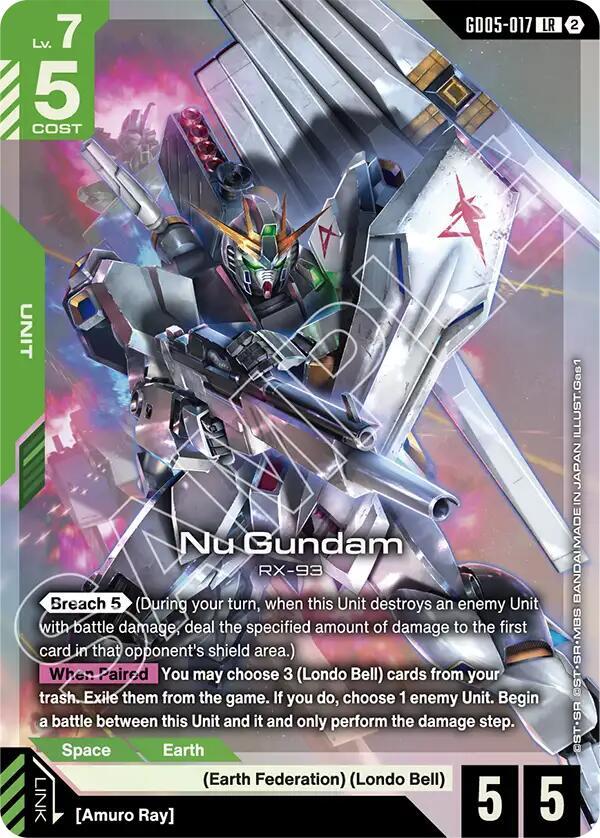
This is the anti-Blocker keyword. Normally, if your opponent blocks, your attack hits the blocker instead of its intended target — the block "absorbs" the attack. Against Breach, blocking is far less safe: if your attacker destroys the blocking Unit, you still get damage through to the shield area. The opponent can stop your Unit, but they can't stop the Breach. It turns "I blocked, so I'm safe" into "I blocked, lost a Unit, and still took shield damage."
It's also a way to pressure Shields even when attacking into the board. Send a Breach Unit at an enemy Unit it can destroy, and you remove their Unit and chip their Shields in one attack — two-for-one tempo that ends games quickly. Big Breach values are devastating: a high-Breach attacker that destroys something can knock out multiple Shields' worth of progress in a single swing.
Breach is most associated with the Green color, which leans on it as a core offensive identity. The key requirement to remember: Breach only triggers when your attack destroys an enemy Unit — if your attack doesn't kill anything, there's no Breach damage. It rewards attacking into things you can actually destroy.
High-Maneuver: Can't Be Blocked
Reminder text: This Unit can't be blocked. Simple and brutal. When a High-Maneuver Unit attacks, the opponent cannot redirect the attack with the Blocker keyword — the attack hits its declared target (a Unit or the Shields) no matter how many Blockers they have available.
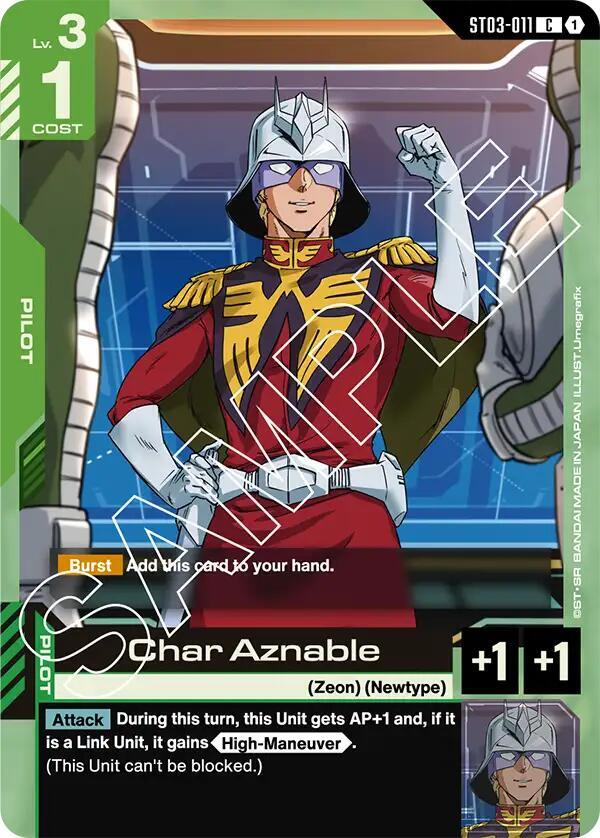
Where Breach punishes blocking, High-Maneuver simply removes the option. If you declare an attack on their Shields with a High-Maneuver Unit, those Shields are going to take the hit — there's no resting a defender to save them. Against a defensive deck built around Blocker, this is the clean answer: their whole protection plan does nothing against an attacker they can't block.
The Blocker Hard-Counter
High-Maneuver is the dedicated counter to the Blocker keyword. A defender can rest a Blocker to redirect almost any attack — but not one with High-Maneuver, which ignores the block and connects with its original target. If you're playing against a Blocker-heavy White deck, High-Maneuver attackers are how you make sure your damage actually lands where you aimed it. It's the offensive key that unlocks an otherwise locked door.
Suppression: Hit Two Shields
Reminder text: when this Unit deals battle damage to an enemy Shield, it damages the first two Shields in the shield area simultaneously. Where a normal attack that reaches the Shields destroys one Shield, a Suppression attack destroys two at once — effectively doubling your progress through the opponent's defenses on a connecting hit.
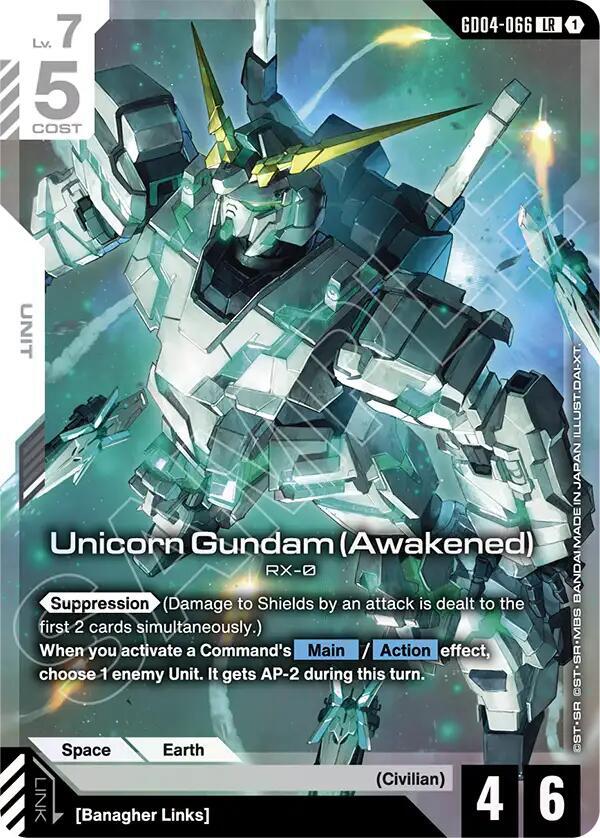
This is the "hit harder" keyword. It doesn't help you get past a blocker the way Breach and High-Maneuver do — it makes the damage you do land to the shield area count for more. In the shield race, that's enormous: stripping Shields two at a time means a defensive opponent runs out of protection in half the attacks, and your finishing hit comes far sooner.
Suppression was introduced as the game expanded (it's strongly associated with the Purple color's aggressive shield-pressure plan). The important limitation: it triggers specifically when the Unit deals battle damage to a Shield — so it matters when your attack actually reaches the shield area, not when you're trading with enemy Units. And one more wrinkle worth knowing: if the opponent has only a single Shield left, Suppression simply deals damage to that one Shield — the "second Shield" damage isn't dealt to the player. Unlike Breach, Suppression does not stack — multiple copies on one Unit don't add up.
The Rulings That Matter
Ruling #1: Breach Stacks; Suppression Doesn't
Breach is a numbered "+X" effect, and multiple copies add together — a Unit given a second Breach effect combines the amounts (Breach 1 plus Breach 2 becomes Breach 3). Suppression, by contrast, can't stack: a Unit can't have multiple copies of Suppression, and a second copy does nothing. So you can scale Breach as high as you can pile it on, but Suppression is a one-time on/off effect per Unit.
Ruling #2: Breach Needs a Destroyed Unit
Breach only triggers when your attack destroys an enemy Unit. An attack that hits a Unit but doesn't kill it deals no Breach damage. So Breach rewards attacking into Units you can actually destroy — and it's especially good against blockers, since a destroyed blocker still lets the Breach damage through to the Shields. Note that when Breach and a destroyed Unit's own "Destroyed" effect would resolve together, the attacking player's Breach resolves first.
Ruling #3: High-Maneuver Only Stops Blocking
High-Maneuver makes a Unit unblockable — but that's all it does. It doesn't make the attacker bigger, doesn't protect it from removal or Action-step tricks, and doesn't help it survive combat. The opponent can still answer a High-Maneuver attacker with damage-based removal, AP reduction, or by simply having enough Shields to absorb the hits. It guarantees the attack can't be redirected; it doesn't guarantee the attack wins.
Combining the Trio
Each keyword is strong alone; stacked on the right attacker they end games. The interactions worth building toward:
| Combo | What it does |
|---|---|
| High-Maneuver + Suppression | Unblockable and hits two Shields per connection — the opponent can't redirect it and loses Shields twice as fast. A premier finisher. |
| Breach + a big body | Attack into their Units to destroy them and chip Shields at the same time — relentless two-for-one pressure that grinds down board and Shields together. |
| Breach + High-Maneuver | They can't block to stop it, and if it destroys a Unit it Breaches Shields anyway — covers both the "they block" and "they don't" cases. |
| Any of the three + First Strike | First Strike helps your attacker win the fight (and survive), so it lives to keep applying shield pressure turn after turn. |
The throughline: these are the keywords of an aggressive, shield-focused deck that wants to end games before the opponent stabilizes. Breach and High-Maneuver guarantee your damage reaches the Shields past any defense; Suppression makes each connection count double. Build around getting an evasive, shield-pressuring threat online early and the game can be over in a hurry. For where they fit in a full deck, see our first-deck guide.
Where These Keywords Live
Knowing what the keywords do is one thing; knowing which colors and decks actually carry them tells you what to build. Each of the three has a natural color home, and that's where you'll find the densest support for an aggressive, shield-pressuring strategy.
The Trio at a Glance
Stacks? Yes — amounts add up
Best target: a Unit you can destroy
Color home: Green (Zeon swarm)
Stacks? No — simple on/off
Best target: Shields, vs Blocker decks
Color home: Green & aggressive units broadly
Stacks? No — one copy per Unit
Best target: an open lane to Shields
Color home: Purple (shield pressure)
Green is the spiritual home of aggression. Its Zeon swarm decks flood the board with cheap Units and lean on Breach and High-Maneuver to push damage through — exactly the keywords this guide covers. If you want to see them in an actual budget shell, our Red/Green Zeon Rush deck tech is built around precisely this plan: cheap bodies, Breach and High-Maneuver to get through, and a fast clock on the opponent's Shields.
Purple is the newer aggressive color, and Suppression is central to its identity — a shield-pressure plan that strips two Shields per connecting hit. It's one of the thinnest-competition corners of the current meta, which makes it an appealing place to brew. For how each color's identity shapes deckbuilding, our color & color-pair strategy primer maps the whole palette.
The practical takeaway: if you're drawn to the aggressive shield race, start in Green for Breach and High-Maneuver, or explore Purple for Suppression. Both want the same thing — your damage on the opponent's Shields, fast — and both reward the same skill of picking the right attack each turn.
Common Mistakes
Mistake #1: Expecting Breach when your attack doesn't destroy a Unit.
Breach only triggers on destroying an enemy Unit. If you attack into something your Unit can't kill — or you attack the Shields directly without a Unit to destroy — there's no Breach damage. Aim Breach attackers at Units you can actually banish to cash in the keyword.
Mistake #2: Thinking High-Maneuver makes a Unit unstoppable.
It only means "can't be blocked." A High-Maneuver Unit can still be destroyed by removal, shrunk by AP reduction, or simply walled by a deep shield area. Don't over-invest in one High-Maneuver threat as if it auto-wins — the opponent has answers that aren't blocking.
Mistake #3: Trying to stack Suppression.
Suppression doesn't stack — a second copy on the same Unit is wasted. It's an on/off "hit two Shields" effect, not a scaling one. Spend extra effects elsewhere (Breach scales, Suppression doesn't), and put Suppression on a Unit that will reliably connect with the shield area.
Mistake #4: Wasting Suppression on attacks into Units.
Suppression triggers on battle damage to a Shield — so its value only shows up when your attack reaches the shield area. Spending your Suppression attacker trading with enemy Units gives you none of the double-shield payoff. Save it for when the lane to the Shields is open.
Mistake #5: Ignoring that you can mix the three.
Players often build around one keyword and stop. The real payoff is combining them — an unblockable Suppression attacker, or a Breach Unit that's also High-Maneuver, covers every defensive answer at once. Look for Units and Pilot pairings that grant a second aggressive keyword; that's where games get closed out.
FAQ & Quick Reference
- What does Breach actually do? When your attack destroys an enemy Unit, Breach X deals X damage to the first card in the opponent's shield area. It lets you damage Shields even when your attack was blocked — as long as it kills the blocking Unit — making it the anti-Blocker keyword.
- Can a High-Maneuver Unit be stopped at all? It can't be blocked — but it can still be destroyed by removal, weakened by AP reduction, or absorbed by the opponent's Shields. High-Maneuver guarantees the attack isn't redirected, not that it wins the game on its own.
- How is Suppression different from Breach? Suppression doubles damage to the shield area when you connect (hitting the first two Shields), while Breach sends damage to a Shield when your attack destroys a Unit. Suppression amplifies a connecting hit; Breach punishes a destroyed defender. They attack the shield race from different angles.
- Which of these keywords stack? Breach stacks — multiple Breach amounts add together. Suppression does not stack, and High-Maneuver is a simple on/off "can't be blocked" with no number to add. So only Breach scales with repeated copies.
- What's the best aggressive combo? High-Maneuver plus Suppression is a standout — an attacker that can't be blocked and destroys two Shields per connection ends games fast. Breach plus High-Maneuver is also excellent, covering both the "they block" and "they don't" scenarios. Add First Strike so your threat survives to keep swinging.
- Breach X: destroy an enemy Unit on attack → deal X to their first Shield. Stacks.
- High-Maneuver: this Unit can't be blocked — the hard counter to Blocker.
- Suppression: damages the first two Shields at once on a connecting hit. Doesn't stack.
- Breach needs a kill: no destroyed Unit, no Breach damage.
- High-Maneuver only stops blocking: removal and AP reduction still work on it.
- Best combo: High-Maneuver + Suppression (unblockable, double-shield).
Race to the Shields.
Breach, High-Maneuver, and Suppression are the three ways an aggressive Gundam deck forces damage onto the Shields that win the game. Breach punishes the block, High-Maneuver ignores it, and Suppression doubles the damage once you're through — and stacked on the right attacker, they close games before the opponent can stabilize. Aim Breach at Units you can destroy, use High-Maneuver to beat Blocker decks, save Suppression for an open lane to the Shields, and combine them whenever a Unit or Pilot pairing lets you. Master the shield race and you'll be the one ending games, not surviving them.
© GEEKYDOMAIN.COM | Strategy Powered by Data