

The 1999 Base Set started it all — and it's the most variant-dense, misunderstood set in the hobby. Here's what every Pokémon collector needs to know before buying.
Some links below are affiliate links. If you buy through them, we may earn a small commission at no extra cost to you. Vintage prices are volatile — this is general collecting information, not financial advice, so always check live sold comps before a significant purchase.
The 1999 Pokémon Base Set is the cornerstone of the entire hobby. It launched the trading card game in English, introduced the cards every collector still chases — Charizard, Blastoise, Venusaur — and set the collecting norms we use to this day. It's also where the most expensive mistakes happen, because a single Base Set card can exist in three very different printings worth wildly different amounts.
Two cards that look nearly identical to a passerby — same art, same number, same Pokémon — can differ in value by an order of magnitude based on a drop shadow, a tiny stamp, or the weight of the HP font. Knowing how to read those signals is the single most valuable skill in vintage Pokémon.
This guide covers the set's structure, the three printings and how to tell them apart, the famous error cards, and how to buy without overpaying or getting burned. Prices in vintage Pokémon move constantly and run high — treat every figure here as directional and always check live comps before a significant purchase.
The Short Version
Base Set has 102 cards (16 holos) and exists in three printings: 1st Edition (has the "Edition 1" stamp; rarest and priciest), Shadowless (no stamp, and no drop shadow to the right of the art box; the scarce early print run), and Unlimited (a drop shadow to the right of the art; mass-printed and most affordable). Value order is 1st Edition > Shadowless > Unlimited. The two tells to learn first: the stamp and the drop shadow. Watch for Red Cheeks Pikachu and other famous variants, beware counterfeits on high-value cards, and check live prices before buying.
→ More Collecting Guides
In This Guide
Why Base Set Matters
Base Set isn't just old — it's foundational. Released in the U.S. in January 1999, it was the first English Pokémon TCG set, and it carries a level of nostalgia and cultural weight no later set can match. For millions of collectors, these are the cards from childhood, which is exactly why demand has stayed durable for over a quarter century.
That history also makes it the most scrutinized set in the hobby. Because it was printed in distinct waves as Pokémania exploded, the same card exists in multiple forms with very different scarcity. Understanding those forms is what separates a confident collector from someone who overpays for an Unlimited card thinking it's Shadowless — or, worse, sells a Shadowless gem for Unlimited money.
The Set at a Glance
The essentials every Base Set collector should have memorized:
| Release | January 1999 (English), by Wizards of the Coast |
| Set size | 102 cards, numbered 1/102 to 102/102 |
| Holos | 16 holographic rares — the crown jewels of the set |
| Headline card | Charizard (4/102) — the most iconic card in the hobby |
| Printings | 1st Edition, Shadowless, Unlimited (in value order) |
| Rarity symbols | Circle (common), diamond (uncommon), star (rare), bottom-right corner |
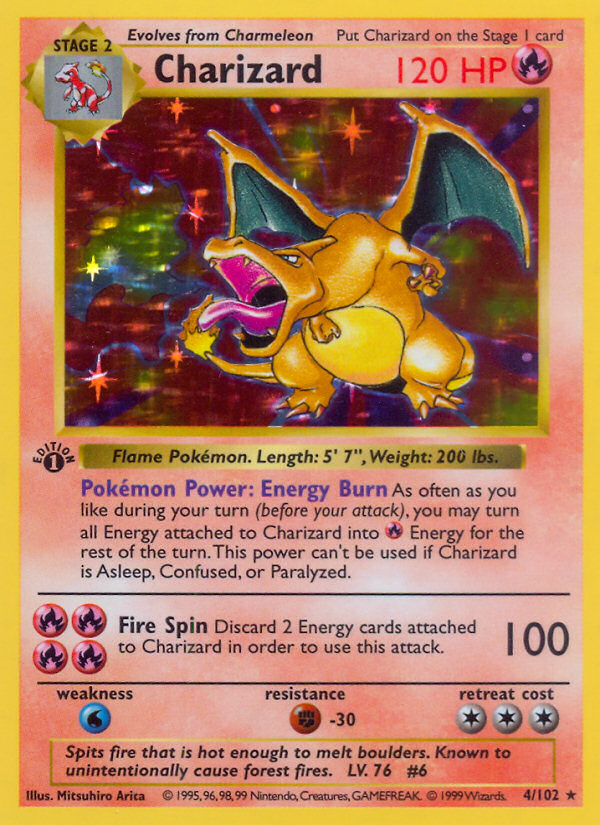
The three "tiers" of holo desirability are roughly: the iconic Stage-2 fan favorites (Charizard, Blastoise, Venusaur) at the top; strong fan and playability picks like Chansey, Mewtwo, Gyarados, and Alakazam in the middle; and the remaining holos rounding out a master set. But within any of these, the printing matters as much as the Pokémon.
The Three Printings
This is the heart of Base Set collecting. All three share the same 102 cards — the differences are print-run details and cosmetics — but they sit at very different scarcity and price tiers.
- 1st Edition — the very first cards off the press, marked with the "Edition 1" stamp. Printed in limited quantities over a narrow window, these are the rarest and most valuable, and the top priority for serious vintage collectors. They use the shadowless layout (no drop shadow) and carry the stamp.
- Shadowless — the "middle child," and the one that trips up the most collectors. These came from the same early print run but lack the 1st Edition stamp. They have no drop shadow to the right of the art box, and use finer, thinner HP and attack text. Scarcer than Unlimited, more accessible than 1st Edition — and that in-between rarity is exactly what drives a meaningful premium over Unlimited.
- Unlimited — the mass-produced version that flooded shelves for years. Wizards added a drop shadow to the right of the art box, set the HP value in a bolder, thicker font, and tweaked the layout. Far more common, it stayed in circulation long after the early runs sold out, making it the most affordable and the version most people grew up owning.
Key fact most collectors miss: Shadowless only exists in the English Base Set. Foreign-language versions — French, German, Italian, Spanish — were printed with the drop shadow from the very start. If someone offers you a "Shadowless" French Base Set card, something is wrong.
How to Tell Them Apart
Two checks identify any Base Set card in seconds; the rest are confirmations. Run them in this order:
-
1. Look for the stamp. An "Edition 1" stamp — a small circle with a "1" — sits to the lower-left of the Pokémon artwork (a different spot on Trainer cards). Stamp present = 1st Edition, full stop. No stamp = it's Shadowless or Unlimited, so go to step two.
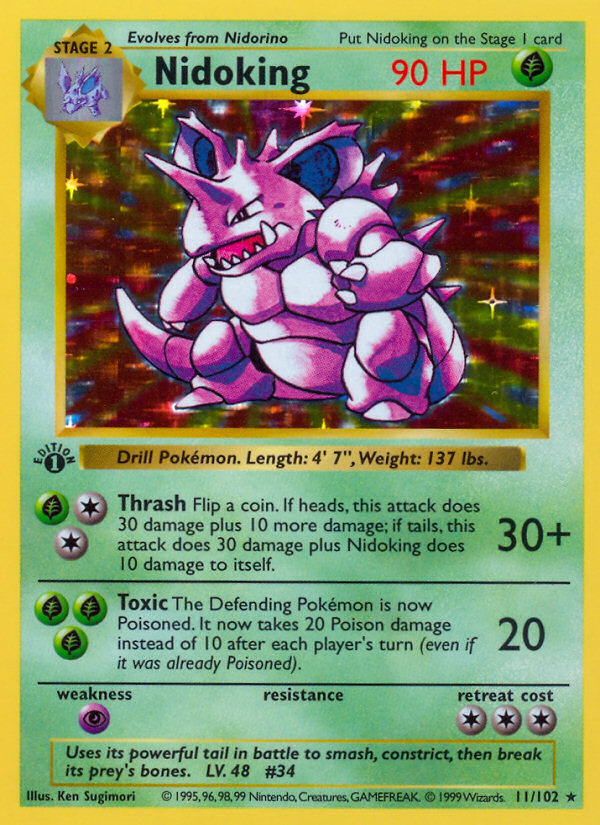
- 2. Check for the drop shadow. Look at the right edge of the artwork box. A drop shadow (a gray shadow making the art look slightly raised) = Unlimited. No shadow = Shadowless. This single visual is the whole Shadowless-vs-Unlimited distinction.
- 3. Confirm with the HP font. Unlimited cards set the HP value (and attack text) in a noticeably bolder, thicker font; 1st Edition and Shadowless use a finer, thinner one. Color differences between printings exist too, but they're subtle and subjective — lean on the font, not the colour.
- 4. Read the copyright line. Shadowless and 1st Edition cards carry the copyright "©1995, 96, 98, 99 Nintendo, Creatures, GAMEFREAK." Unlimited dropped the "99" from that line and added a separate "©1999 Wizards" (later runs used a 1999–2000 line). It's the tiebreaker when a card's condition makes the shadow hard to read.
The fast version: Stamp? → 1st Edition. No stamp, no shadow? → Shadowless. No stamp, has shadow? → Unlimited. Everything else (font, copyright) just confirms what those two checks already told you.
The Machamp Exception
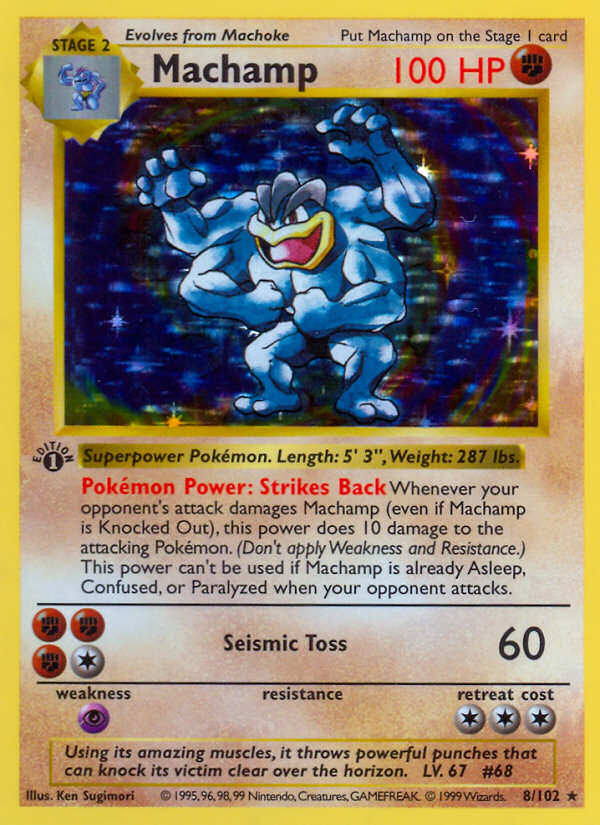
One card breaks the rules, and every collector should know it: Machamp (8/102). The 1st Edition Machamp was included as a holo in the Base Set 2-Player Starter Set, so it was effectively mass-produced. The result is a 1st Edition holo that's far more common than any other 1st Edition holo in the set — so a "1st Edition Machamp" carries nowhere near the premium the stamp implies on other cards. Don't let the stamp alone fool you into overvaluing it.
Famous Errors & Variants
Base Set is rich with printing quirks and deliberate variants, some of which carry real premiums. The notable ones:
- Red Cheeks Pikachu (58/102) — the most famous variant. Wizards deliberately recoloured Pikachu's cheeks red for the first English printing (1st Edition and Shadowless), then reverted to yellow in later runs — so Red Cheeks is tied to the earliest production, and is often mislabeled an "error" when it was actually a deliberate choice. Rarer still is the Red Cheeks Pikachu promo handed out at the Nintendo booth at E3 in May 1999 — the first English promotional card — carrying a gold-foil "E3" stamp where the set symbol normally sits.
- Gyarados (6/102) misaligned number — Unlimited (and the later 1999–2000) Base Set Gyarados were printed with the "6/102" set number spaced too far to the left. It's a documented printing quirk rather than a value driver, but a classic piece of Base Set trivia.
- Holo bleed — on some holos the holographic foil "bleeds" outside the art window into the borders or text box. Collectors of early printings prize certain holo-bleed examples, and they can command premiums on marquee cards.
- Ink and stamp errors — "ghost"/partially-missing 1st Edition stamps from wet-ink transfer, yellow-stain vertical lines on some Shadowless holos, and oversaturated-yellow Unlimited holos are all documented. Most are curiosities, but condition-sensitive collectors track them.
The Chase Cards
If you're prioritizing where to spend, these are the cards that anchor the set's demand and value:
-
Charizard (4/102) — the undisputed king. The card that launched Pokémon into mainstream collecting and still the hobby's most recognizable single. The 1st Edition holo is a grail; even Shadowless and Unlimited holos carry strong value.
-
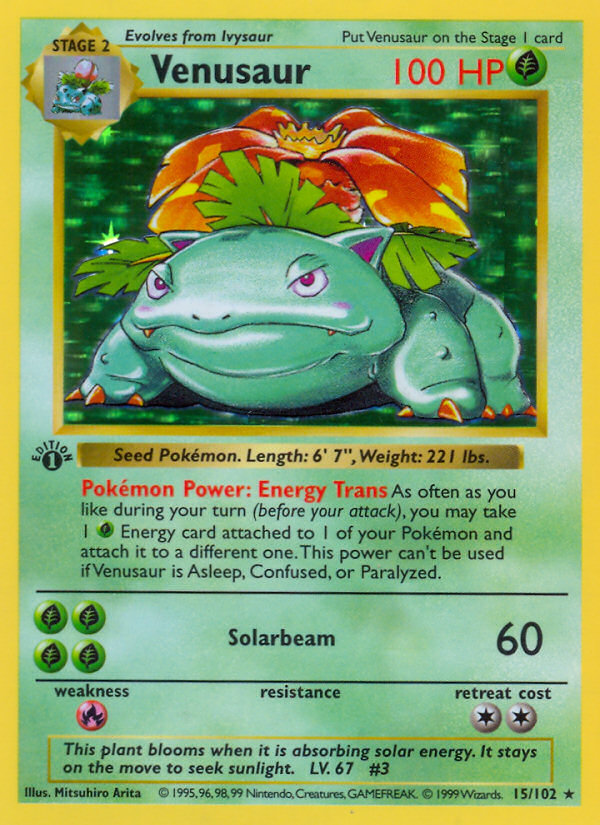
Blastoise (2/102) & Venusaur (15/102) — the other two starter finals. Iconic, beloved, and the natural companions to a Charizard in any serious Base Set collection.
-
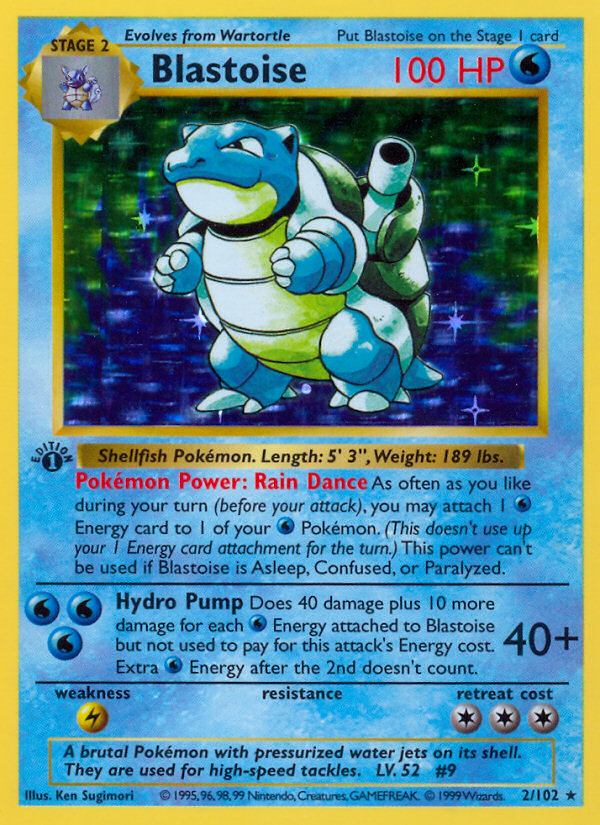
The supporting holos — Mewtwo, Gyarados, Alakazam, Chansey, Zapdos, Ninetales, and the rest. Excellent display pieces and far more attainable than the big three, especially in Unlimited, making them a smart entry point. The scans below show these cards in their 1st Edition printing — you can see the "Edition 1" stamp at the lower-left of each artwork — so an Unlimited copy of the same card, the version that actually sits at the entry-level price, will look slightly different: no stamp, a drop shadow to the right of the art box, and a bolder HP font.
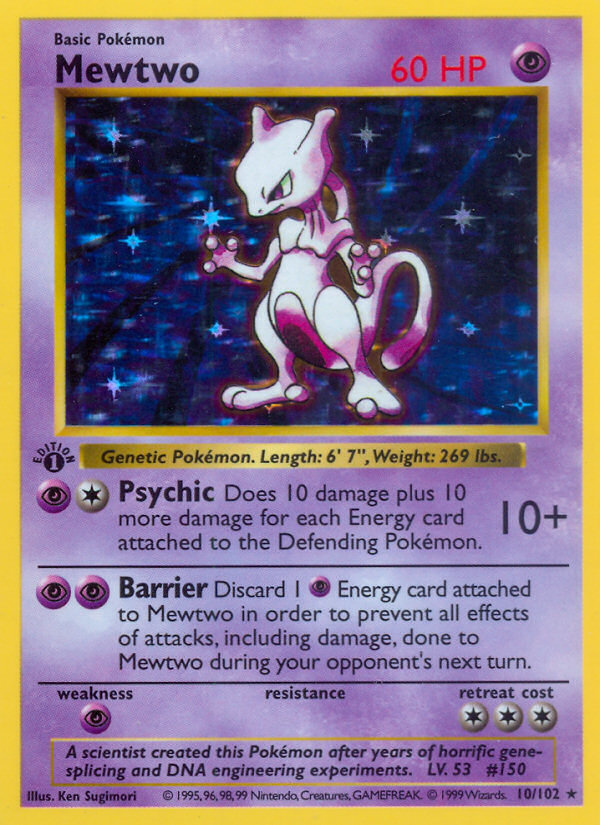
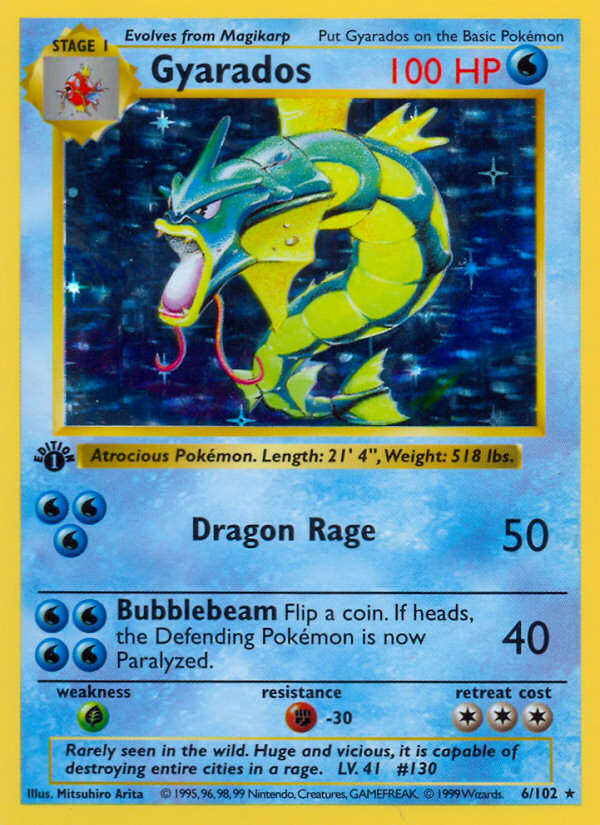
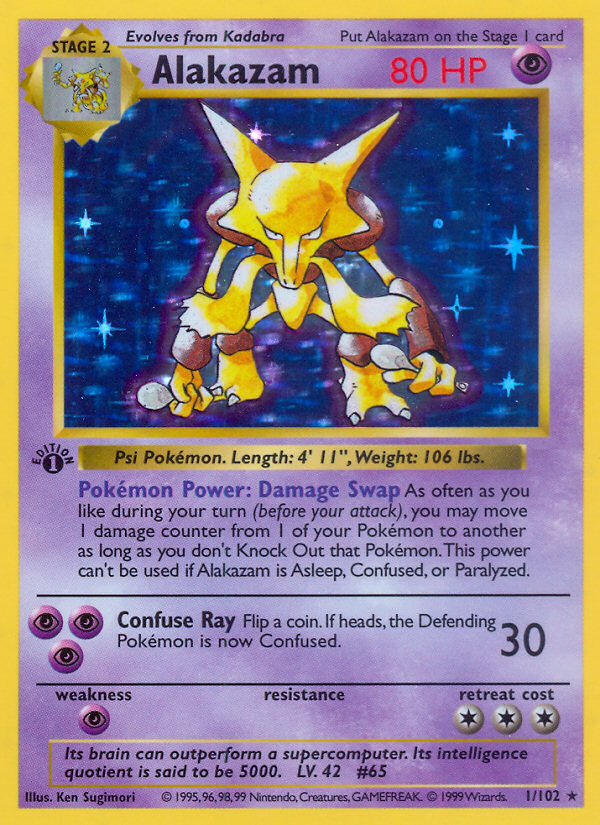
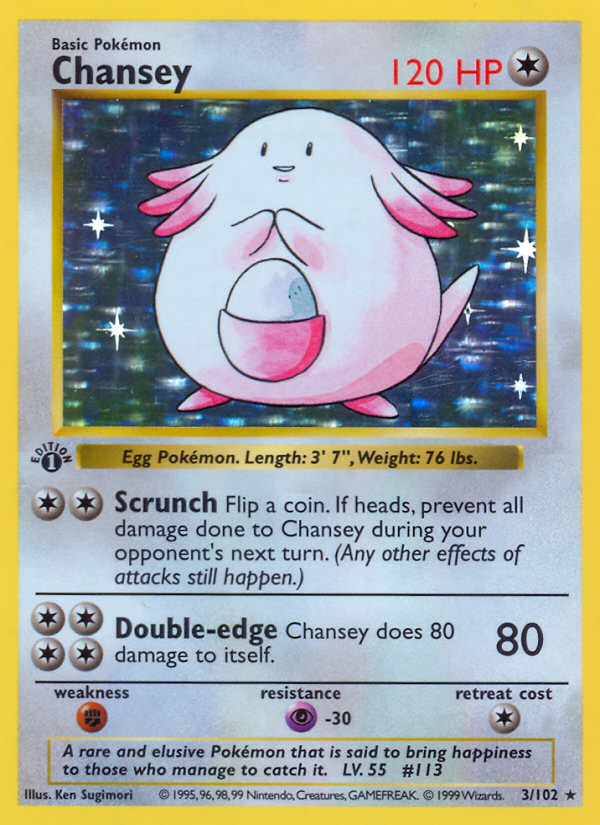
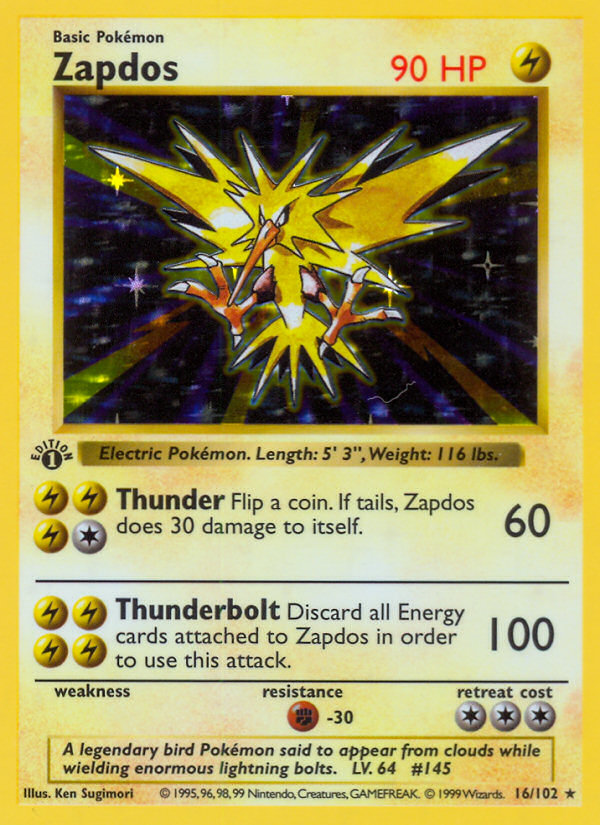
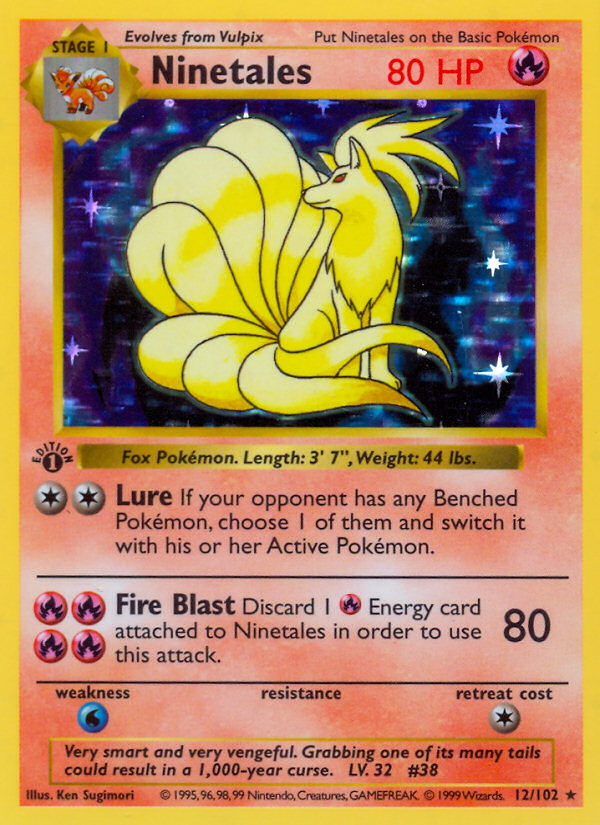
Smart entry strategy: If you want the Base Set look without grail prices, start with an Unlimited holo of a non-Charizard (a Mewtwo or Gyarados), or a complete Unlimited common/uncommon run. The cards pictured above are 1st Edition scans, so run the stamp-and-shadow check on any listing before you buy: no stamp plus a drop shadow to the right of the art is the cheaper Unlimited printing you're after. You get the authentic 1999 feel at a fraction of the cost, and can graduate to Shadowless or 1st Edition pieces over time.
How to Buy Smart
Vintage Pokémon is a high-value, counterfeit-prone market, so a little discipline protects a lot of money:
- Confirm the printing before you pay. Stamp and shadow first. A listing that says "Shadowless" but shows a drop shadow is mislabeled — whether by mistake or design, walk carefully.
- For high-value cards, buy graded. A reputable grade (PSA, BGS, CGC) authenticates the card and locks in condition — well worth it on Charizards and 1st Edition holos where fakes are rampant. See our grading comparison for which grader fits Pokémon, and our vintage slab authentication guide for spotting fake slabs.
- Learn to spot fakes. Base Set is one of the most counterfeited products in the hobby. Know the authentication basics before buying raw high-value cards — our counterfeit-spotting guide covers them.
- Check live comps. Prices swing with the vintage market. Look up recent sold listings for the exact card, printing, and grade before committing — never trust an old price guide on a 27-year-old card.
- Mind condition on holos. Early Base Set holos are notorious for edge wear, surface scratches, and curling. Condition swings vintage value dramatically, so inspect (or buy graded) carefully.
Where Collectors Get Burned
Mistake #1: Confusing Shadowless with Unlimited.
The single most expensive Base Set error in both directions — overpaying for an Unlimited card believed to be Shadowless, or selling a Shadowless card for Unlimited money. Always check the drop shadow on the right of the art box before any transaction.
Mistake #2: Overvaluing 1st Edition Machamp.
The stamp says "1st Edition," but Machamp was mass-produced in the 2-Player Starter Set and is common. Don't pay grail money for the stamp alone — it's the one 1st Edition holo that doesn't carry the usual premium.
Mistake #3: Buying raw high-value cards without authentication.
Base Set Charizards are among the most faked cards anywhere. On any significant raw purchase, learn the authentication tests or buy a reputably graded copy. The grading fee is cheap insurance against a four-figure mistake.
Mistake #4: Ignoring condition on vintage holos.
A Base Set holo that looks "fine" in a photo may have whitening, scratches, or print lines that crater its grade and value. Condition is everything on 27-year-old cardboard — inspect closely or buy graded.
FAQ & Quick Reference
- Is every 1st Edition card shadowless? Yes — 1st Edition cards use the shadowless layout and carry the stamp. So technically both 1st Edition and Shadowless lack the drop shadow, but only Shadowless lacks the stamp. The stamp is what separates them.
- Why is Shadowless more valuable than Unlimited? It came from the earlier, smaller print run before Pokémania peaked, so fewer copies exist and even fewer survived in high grade. That mid-tier scarcity — rarer than Unlimited, more available than 1st Edition — drives the premium.
- How many cards are in Base Set? 102 cards (1/102 to 102/102), including 16 holographic rares. A complete master set chases all three printings, which is a serious long-term project.
- Should I grade my Base Set cards? For high-value holos and any 1st Edition or Shadowless card in good condition, grading authenticates and protects value — usually worth it. For played commons or low-value Unlimited cards, the fee often exceeds the benefit. See our grading guide for the math.
- What's the best card to start with? An Unlimited holo of a beloved non-Charizard — Mewtwo, Gyarados, or Alakazam — gives you the genuine 1999 Base Set look at an accessible price, with room to upgrade to Shadowless or 1st Edition later.
Check Before You Buy
Vintage Pokémon prices move constantly and vary enormously by printing and grade. Before any significant purchase, confirm the printing (stamp, then shadow), check recent sold comps for that exact card and grade, and authenticate or buy graded on high-value singles. A few minutes of due diligence is the difference between a great pickup and an expensive regret.
- Set: 1999, 102 cards, 16 holos; Charizard 4/102 is the headliner.
- Printings: 1st Edition (stamp) > Shadowless (no stamp, no shadow) > Unlimited (drop shadow).
- Tell them apart: stamp first, drop shadow second; HP font & copyright confirm (Unlimited has the bolder HP font).
- Watch: Red Cheeks Pikachu, holo bleed, the mass-produced 1st Edition Machamp.
- Shadowless = English only — foreign Base Sets always had the shadow.
- Always: authenticate or buy graded on high-value cards; check live comps.
Where to Buy Base Set Cards
For vintage Base Set, graded slabs live on eBay, where you can filter by printing and grade and check sold comps. For raw singles to build a set, a dedicated marketplace is the place to compare condition and price. Confirm the printing (stamp, then shadow) before you commit, and lean toward graded copies on anything high-value.
Where It All Began.
Base Set is the heart of Pokémon collecting — and the most rewarding to understand. Learn the stamp and the shadow, respect condition, authenticate the big cards, and you'll navigate the set with confidence whether you're chasing a grail Charizard or building an affordable Unlimited run.
© GEEKYDOMAIN.COM | Strategy Powered by Data