

Neo Genesis & Neo Discovery: The Post-WOTC Era
The Neo block introduced the Johto region to the TCG — and with it, the second wave of holos that collectors now chase almost as hard as Base Set.
After the original WOTC trilogy — Base Set, Jungle and Fossil — and the brief detour into Team Rocket's dark Pokémon, the TCG needed a reason to keep growing. That reason arrived in December 2000 with Neo Genesis: the first set built entirely around new Pokémon from the Gold and Silver games, introducing the Johto region to English-speaking collectors for the first time.
Neo Genesis and its 2001 follow-up, Neo Discovery, occupy a strange place in collecting history. They're old enough to carry real vintage weight and genuine scarcity, but young enough that they get overshadowed by the louder, more famous Base Set conversation. For collectors who know the era, that gap between reputation and actual rarity is exactly the opportunity.
This guide breaks down what each set introduced, why Lugia and the Johto Eeveelutions still drive collector demand decades later, and what to know before buying into the first half of the Neo block today.
→ Short Version
Neo Genesis (Dec 2000) introduced Johto Pokémon and the legendary Lugia holo, one of the most iconic cards of the era. Neo Discovery (June 2001) expanded the Johto roster with fan-favorite Eeveelutions Espeon and Umbreon plus powerhouse holos like Tyranitar and Scizor. Both sets are genuinely scarcer than Base Set despite lower brand recognition, since fewer were opened and far fewer were preserved. 1st Edition copies command a real premium over Unlimited, same as the original trilogy.
→ Related Reading
In This Guide
| Set | Release | Cards | Key Chase Cards |
|---|---|---|---|
| Neo Genesis | Dec 2000 | 111 | Lugia, Typhlosion, Feraligatr |
| Neo Discovery | Jun 2001 | 75 | Espeon, Umbreon, Tyranitar, Scizor |
| Neo Revelation | Sep 2001 | 66 | Shining Magikarp, Shining Gyarados, Ho-Oh, Suicune, Celebi |
| Neo Destiny | Feb 2002 | 113 | Shining Charizard, Shining Mewtwo, Light Pokémon |
Why a "Neo" Block at All
By the time Neo Genesis released, the original 151 Pokémon had been thoroughly covered across Base Set, Jungle, Fossil, and the Gym series. Pokémon Gold and Silver had introduced 100 new Pokémon and the Johto region in the video games, and the TCG needed its own fresh start to match.
"Neo" was the branding for that new generation — four English sets released between December 2000 and 2002: Neo Genesis, Neo Discovery, Neo Revelation, and Neo Destiny. This guide focuses on the first two, which represent the true start of the post-original-151 era and still fall within the most collected "vintage WOTC" window.
Crucially, the Neo sets were the last WOTC-era sets to use the original card frame and the last to receive the iconic 1st Edition stamp treatment collectors associate with true vintage Pokémon — Neo Destiny was the final WOTC set to carry a 1st Edition print run at all.
Neo Genesis: Lugia and the Johto Debut
Neo Genesis released in December 2000 as a 111-card set, and it remains best known for one card above all others: Lugia. The legendary Pokémon's holo card became one of the most recognizable images in the entire TCG, helped along by its starring role on the Pokémon: The Movie 2000 box art and marketing that surrounded the set's release.
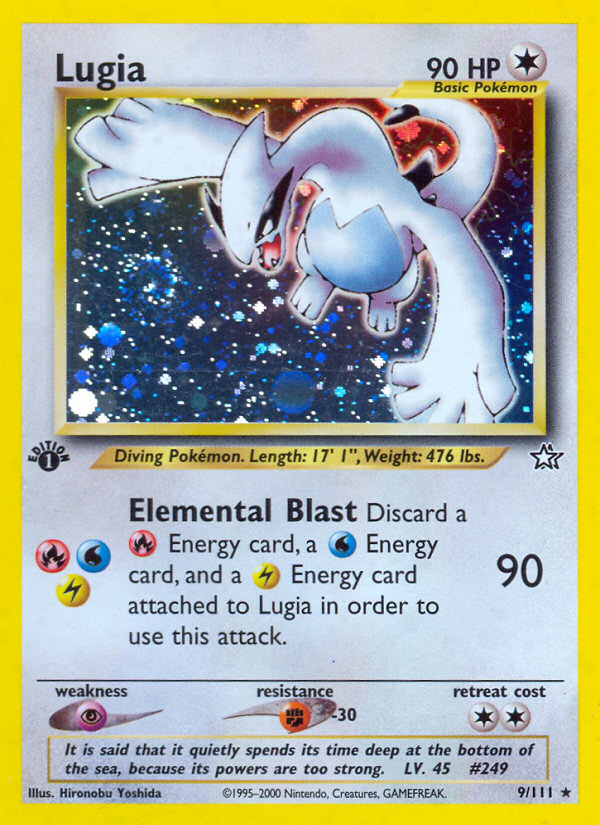
Beyond Lugia, Neo Genesis introduced fan-favorite Johto starters and their evolutions — Typhlosion, Feraligatr, and Meganium among them — along with a wave of new Trainer cards that updated the format's toolbox for a new generation of players.
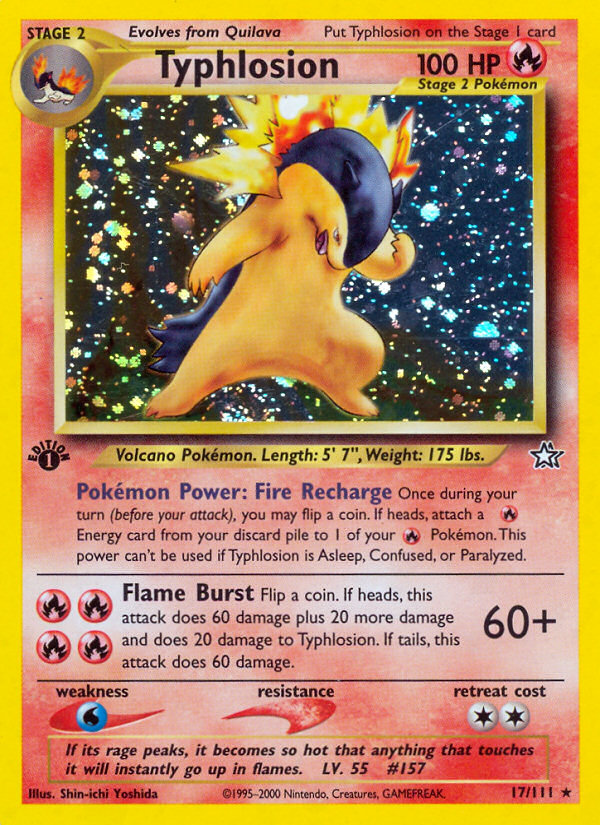
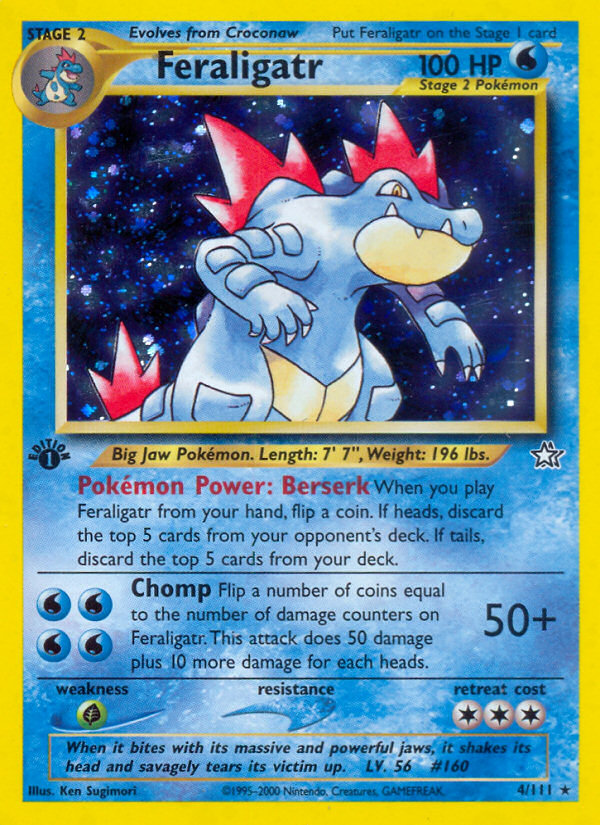
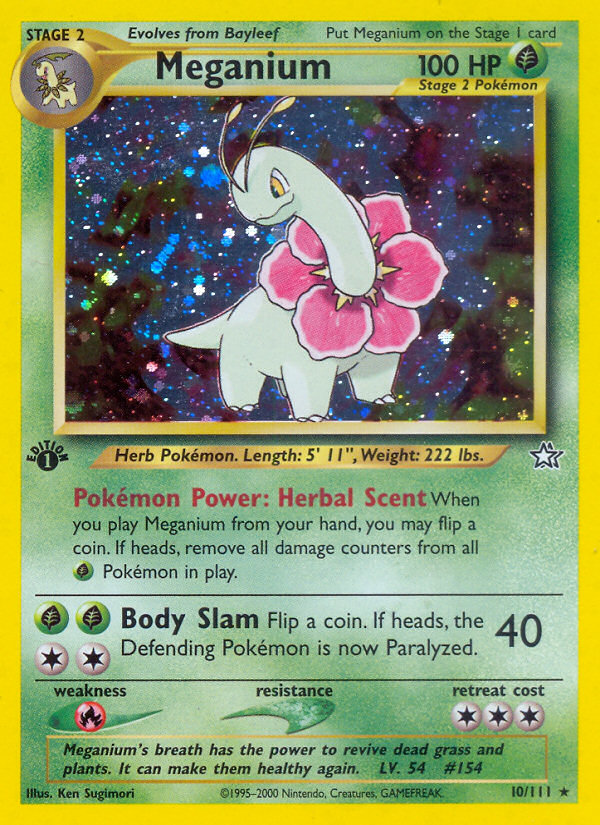
The set is also notable for introducing baby Pokémon as a card category for the first time, a quirky mechanical wrinkle specific to this era of the game that collectors specifically hunting "first of their kind" cards tend to seek out.
Neo Discovery: The Eeveelution Set
Neo Discovery followed in June 2001 as a 75-card set that continued building out the Johto Pokédex. Where Neo Genesis made its mark with legendaries, Discovery is best remembered for two cards that would become perennial fan favorites: Espeon and Umbreon, the Psychic and Dark Eeveelutions introduced in Gold and Silver.
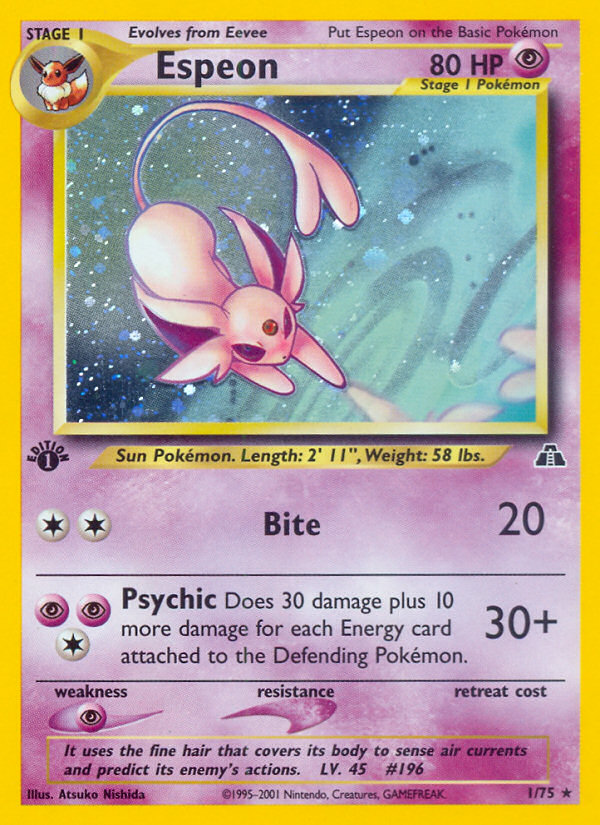
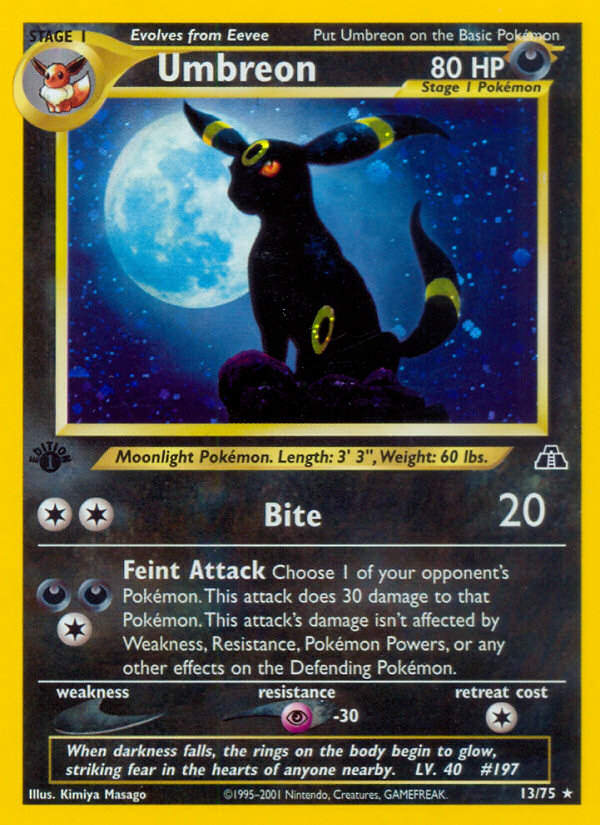
Both Espeon and Umbreon holos from Neo Discovery carry enduring collector demand precisely because these two Eeveelutions have remained consistently popular across every subsequent generation of the franchise. Modern sets still print new Espeon and Umbreon cards as chase pieces — which keeps driving collector interest backward toward the original Neo-era printings where these Pokémon first appeared in the TCG.
Beyond the Eeveelutions, Neo Discovery introduced Tyranitar and Scizor as holo rares — two more Johto Pokémon with strong ongoing fan followings — and continued the set's pattern of building out the second-generation roster with competent, well-designed cards that didn't rely on gimmicks to hold appeal.
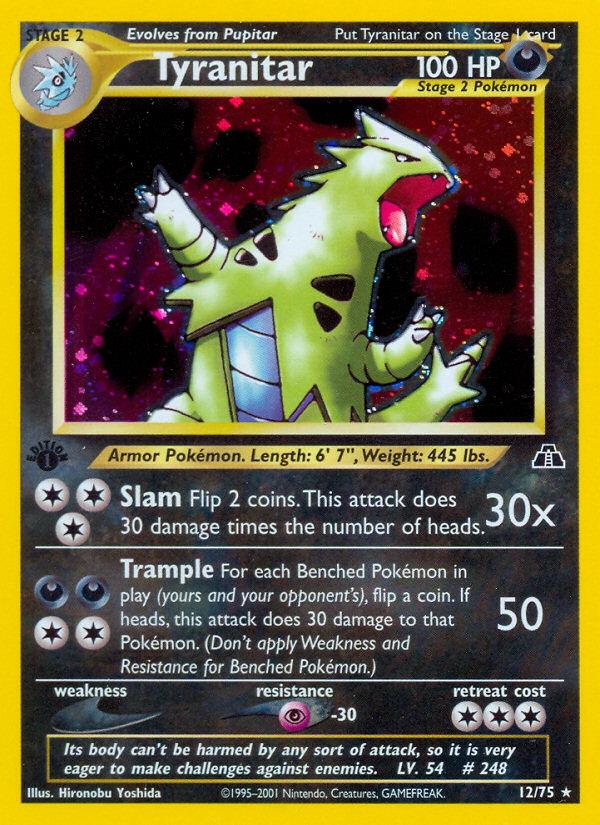
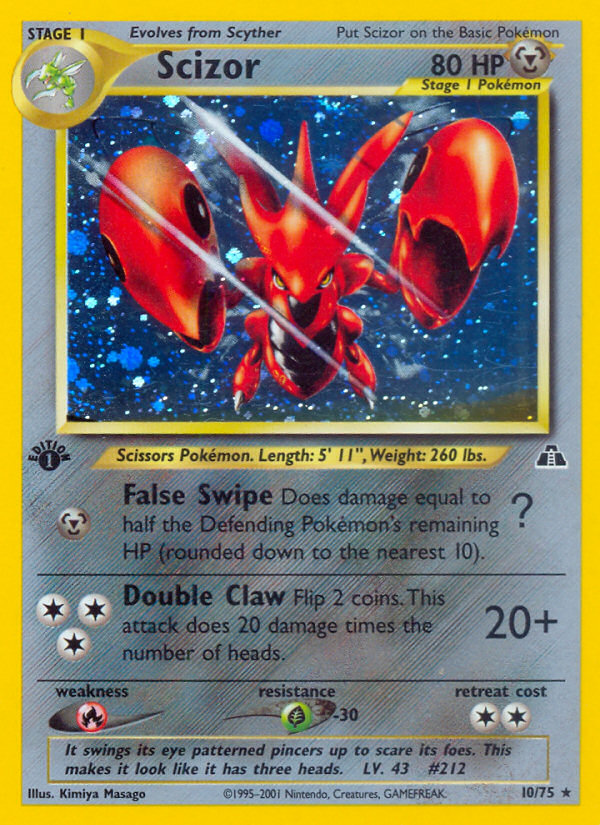
Note: the "Shining" Pokémon subset that many collectors associate with the Neo block didn't debut until the third set, Neo Revelation. Neo Discovery's appeal is its Johto roster, not its rarity gimmicks — which, for set completionists, makes it a cleaner and more straightforward collecting target than the later Shining-focused sets.
Why Eeveelution Originals Hold Value
Every time The Pokémon Company prints a new Espeon or Umbreon chase card in a modern set, it drives a wave of collector attention back toward the original Neo Discovery printings. This "retroactive demand" effect is one of the strongest value drivers in vintage Pokémon collecting — cards that depict Pokémon with active, ongoing fan communities hold interest far more durably than cards depicting one-off or forgotten species.
Why Neo Is Scarcer Than People Assume
Base Set dominates the vintage conversation, but by the time Neo Genesis released, the original Pokémon TCG boom had already cooled significantly from its 1999–2000 peak. Fewer packs were bought, fewer were opened, and far fewer were carefully preserved by buyers who, at the time, had no reason to think Johto-era cards would matter decades later.
This creates a counterintuitive dynamic that experienced collectors know well: high-grade Neo Genesis and Neo Discovery cards are, population-report for population-report, often scarcer in top grades than equivalent Base Set cards — despite Base Set carrying far more name recognition and, in many cases, a higher price tag for that recognition alone.
If you're chasing genuine rarity rather than brand-name nostalgia, the Neo block is one of the most underrated places to look in the entire WOTC catalog.
There's a practical consequence to this scarcity profile: because fewer Neo-era cards were preserved in mint condition, the grading submission pipeline for these sets runs thinner than for Base Set, where decades of collector attention have pushed thousands of submissions through PSA and BGS. For Neo Genesis and Neo Discovery, particularly in PSA 9 and PSA 10, the population reports are meaningfully smaller — and that gap only widens as the remaining unsubmitted raw copies tend to be in worse condition, having survived two decades without protection.
Collectors who understand this dynamic have a genuine informational edge: while the broader market gravitates toward Base Set by default, Neo-block cards in high grades often represent comparable or better scarcity at a lower price point. That window won't last forever as more collectors piece together the population data, but as of mid-2026 it remains a meaningful one.
1st Edition vs Unlimited
Like the original trilogy, both Neo Genesis and Neo Discovery received 1st Edition print runs before transitioning to Unlimited prints. The same authentication principles from the original WOTC sets apply directly here — check the stamp placement, the card stock, and the print quality against known authentic references.
The 1st Edition Neo Genesis print run is widely understood to be smaller than the Base Set 1st Edition run, which reinforces the scarcity argument above. Collectors specifically targeting 1st Edition Lugia or 1st Edition Shining Gyarados should expect a real premium over Unlimited copies, mirroring the dynamic seen across every other WOTC-era set.
As always, never buy a graded "1st Edition" slab on reputation alone — confirm the certification details directly through the grading company's lookup tool before paying a 1st Edition premium.
What to Know Before Buying In
- Start with the headline holos. If you're building a focused Neo collection rather than chasing full sets, Lugia from Neo Genesis and the Espeon/Umbreon pair from Neo Discovery are the most recognizable entry points. The Shining cards (Magikarp, Gyarados) come from the later sets — Neo Revelation and Neo Destiny.
- Centering issues are common. As with the original trilogy, Neo-era printing technology had real centering inconsistency. Inspect listing photos carefully or request additional angles before buying raw cards you intend to submit for grading.
- Sealed product is genuinely rare. Sealed Neo Genesis boosters and boxes see far less market volume than Base Set sealed product. If sealed collecting interests you, expect longer search times and verify authenticity even more carefully than usual — vintage sealed product is a common counterfeit target.
- Pop reports are your friend here. Because the Neo block's scarcity isn't as widely known as Base Set's, checking population reports before buying graded copies will often reveal that a Neo card is rarer in a given grade than a comparably priced Base Set card.
- First-edition Neo prints carry a meaningful premium for a reason. Unlike Base Set, where first-edition print runs were enormous because nobody expected them to matter, Neo Genesis onward had far smaller first-edition windows. Wizards had learned from the collector frenzy and limited those early runs, which means a first-edition Neo Genesis holo is genuinely scarce — not just symbolically collectible. Pair that with the lower overall print volumes of the Neo block and you have a fundamentally different supply picture than the one most collectors assume when they compare prices to Base Set equivalents.
Buying Into Neo Genesis & Neo Discovery
1st Edition Lugia, the Neo Discovery Espeon/Umbreon pair, and the Tyranitar and Scizor holos are the cards named above: graded slabs and the scarce sealed Neo Genesis product trade mostly on eBay, while raw singles are easier to compare by listed condition on TCGplayer. If you are buying raw with the intent to submit, an illuminated 30x loupe and a penny sleeve plus toploader are what that centering check actually requires.
As an Amazon Associate, Geeky Domain earns from qualifying purchases. eBay links are affiliate links; Geeky Domain may earn a commission at no extra cost to you.
Neo Block FAQ
- What's the difference between Neo Genesis and Neo Discovery? Neo Genesis (Dec 2000) was the first set of the block, introducing the Johto Pokémon headlined by Lugia, Typhlosion, and Feraligatr. Neo Discovery (June 2001) expanded the Johto roster with Espeon, Umbreon, Tyranitar, and Scizor holos. The Shining card subset didn't debut until the third set, Neo Revelation.
- Is Neo Genesis worth collecting compared to Base Set? If your goal is brand recognition and resale liquidity, Base Set still wins. If your goal is genuine scarcity and an underrated entry point into vintage collecting, the Neo block frequently offers better population-report rarity for a comparable price. Either way, choose the right marketplace for the type of purchase you're making.
- Are there fakes of Neo-era cards? Yes, especially for the headline cards like Lugia and Shining Gyarados. Apply the same authentication checks you'd use for any vintage WOTC card — light test, font check, and verified grading lookups.
- What comes after Neo Discovery? Neo Revelation (2001) and Neo Destiny (2002) round out the block. Neo Destiny is particularly notable as the home of Shining Charizard and Shining Mewtwo, plus the final WOTC-era 1st Edition print run.
Vintage Without the Base Set Premium.
Neo Genesis and Neo Discovery don't carry Base Set's name recognition, and that's exactly what makes them interesting. The cards are genuinely old, genuinely scarce in top grades, and tied to one of the most beloved Pokémon generations ever made — without the inflated premium that comes purely from being "the first set."
Whether you're chasing a 1st Edition Lugia as a centerpiece or quietly building out a full Shining subset, the Neo block rewards collectors who do their homework. Check pop reports before you assume a card is common, and don't let Base Set's louder reputation talk you out of a genuinely undervalued era.
© GEEKYDOMAIN.COM | Strategy Powered by Data