

DBS Fusion World Strategy Hub (2026)
The Definitive Guide to Mastering the Combo Step on a Budget
Let's get straight to the point: Dragon Ball Super: Fusion World is a game of brutal mathematics disguised as a fast-paced anime brawler. You can buy the most expensive, max-rarity Alternate Art Secret Rares on the secondary market, but if you don't understand how to properly calculate the Combo Step or when to intentionally take damage to trigger your Leader's Awakening, you are going to lose to a starter deck.
Fusion World is unique in the Bandai TCG ecosystem because it gives the player almost total control over the combat phase. It rewards precision, patience, and a deep understanding of resource management.
This Hub is Geeky Domain's master directory for the DBS Fusion World competitive scene. We are stripping away the hype of foil cardboard to focus entirely on the "Budget-to-Pro" pipeline. Below, we break down the five color identities, the undeniable power of the Combo mechanic, the budget staple types you need to own, how to build a competitive deck without dropping a week's pay on a single box — and the full library of our Fusion World guides, organized so you can find exactly what you need.
Tactical Roadmap
- → 1. The 5 Color Identities: Mapping the Meta
- → 2. The Master Mechanics: Awakening and the Combo Step
- → 3. The Essential Staple Types Under $10
- → 4. The Value of Starter Decks in Competitive Play
- → 5. Transitioning to Competitive: The $50 Ceiling
- → 6. The Full Fusion World Library
- → 7. The Geeky Domain Verdict
1. The 5 Color Identities: Mapping the Meta
Fusion World keeps its color pie tight and incredibly focused. The game launched with four colors and has since added a fifth — Black — giving you five distinct playstyles to choose from. If you build a deck that fights against its own color identity, your efficiency plummets. Here is how to maximize your budget within each sphere. (For the deep dive on choosing your color, see The 5 Colors of Fusion World, and for how each color's Leaders flip, Leader Awakening by Color.)
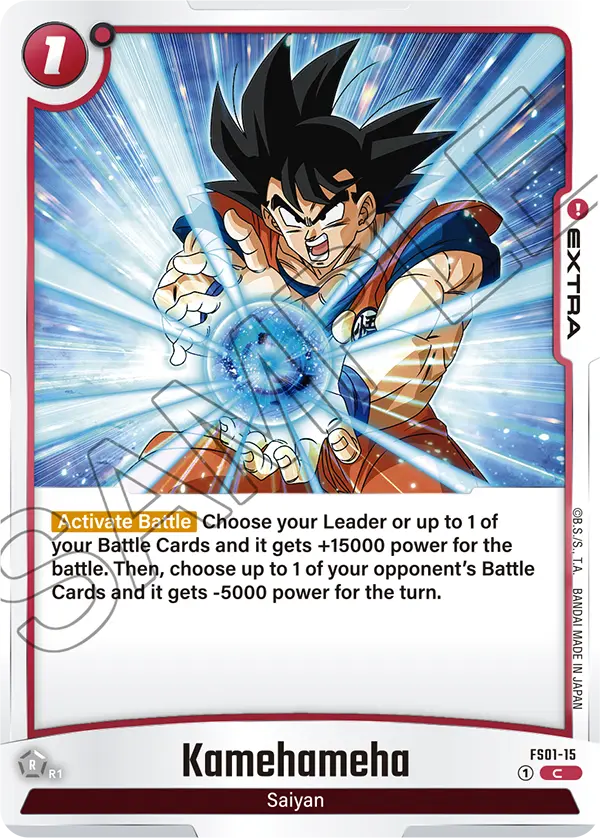
Red: The Aggressive Swarm
Red is exactly what you expect from the Universe 7 saiyans: fast, aggressive, and highly focused on lowering the opponent's battle power to clear the board. Red wants to apply pressure early and never let off the gas.
The Core Efficiency: Red is typically the most budget-friendly entry point into Fusion World, and it's widely considered the best color to learn the game on. Its best early-game threats and power-reduction Extra Cards are almost entirely Common or Uncommon. You can build a highly competitive Red rush engine out of bulk cards, reserving your actual budget for the one or two high-end finishers needed to close the game.
Blue: The Hand Control Engine
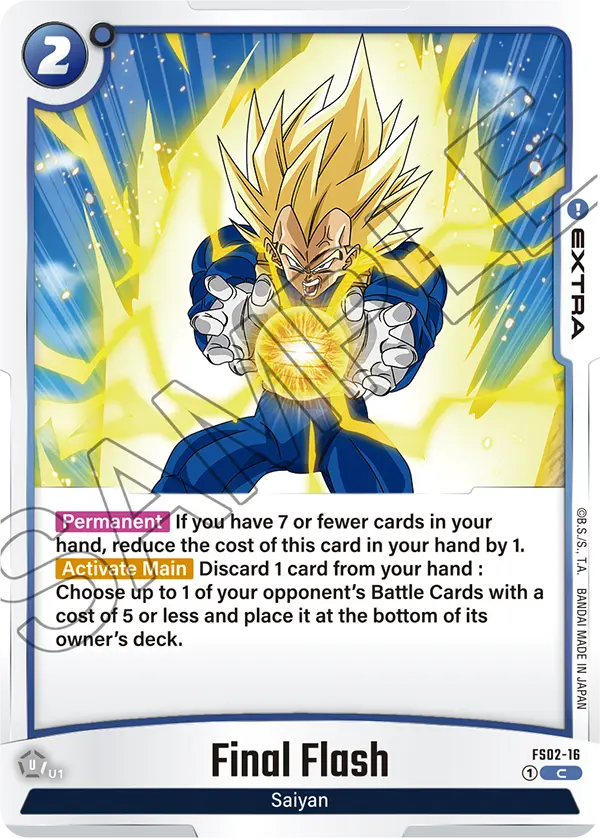
Blue is the thinking player's color. It revolves around bouncing Battle Cards back to hands and meticulously managing the number of cards in your own hand to trigger specific, powerful effects. It is the closest thing Fusion World has to a pure control deck — and historically one of the more demanding colors to pilot well.
The Core Efficiency: Blue requires strict discipline. The trap here is overspending on high-rarity finishers when you haven't secured the foundational draw engine. A cheap Common that draws a card and replaces itself in your hand is mathematically more valuable to a Blue deck's win condition than a pricey Super Rare that doesn't advance your hand state.
Green: The Unstoppable Ramp
Green is the color of big, stompy characters and massive energy pools. It is the color that most consistently accelerates its resources, letting you play devastating high-cost Battle Cards turns before your opponent is prepared to deal with them. Its trade-off is weaker early-game interaction, so it has to survive to its payoff.
The Core Efficiency: The mistake new Green players make is spending their entire budget on the massive, high-rarity finishers while ignoring the engine. If your deck doesn't have the cheap, efficient ramp and survival cards to get you to your big turns, that expensive bomb just sits in your hand while a Red deck beats you down on turn four. Optimize your ramp-and-survival core first; worry about the shiny finishers later.
Yellow: The Tactical Lockdown
Yellow is the color of annoyance, manipulation, and control. It specializes in switching your opponent's Battle Cards into Rest Mode, rendering them unable to attack and leaving them vulnerable — while dominating the card-advantage battle. It dictates the rules of engagement.
The Core Efficiency: Yellow is an incredibly rewarding color for budget players because its control mechanics scale perfectly against expensive decks. Neutralizing an opponent's max-rarity finisher with a cheap Uncommon Extra Card or an "on-play" rest effect is the definition of financial and tactical dominance. You don't need expensive cards when you prevent your opponent's expensive cards from ever swinging.
Black: The Energy-Marker Tempo Deck
Black is the game's fifth color, introduced after the original four and built around a signature Energy Marker synergy. Its game plan is tempo: gain and spend Energy Markers to deploy Battle Cards a turn early and snowball the board through the mid-game, roughly turns three to five, with a side of board and resource disruption.
The Core Efficiency: Black's power lives in how its cards interact with Energy Markers, not in a stack of pricey bombs — some effects only require that you have a marker, while others spend one. That makes sequencing and the cheap marker-generators the heart of the deck. Get the engine right and the expensive payoffs can wait; played out of order, even the best Black cards do nothing.
2. The Master Mechanics: Awakening and the Combo Step
If you want to win tournaments in Fusion World, you must unlearn everything other card games have taught you about taking damage and hoarding cards in your hand.
The Awakening: Life is a Resource
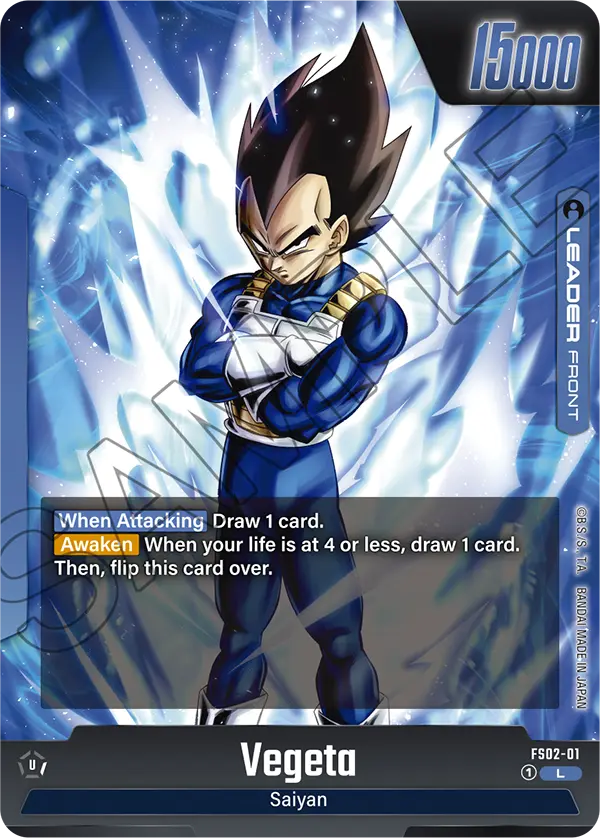
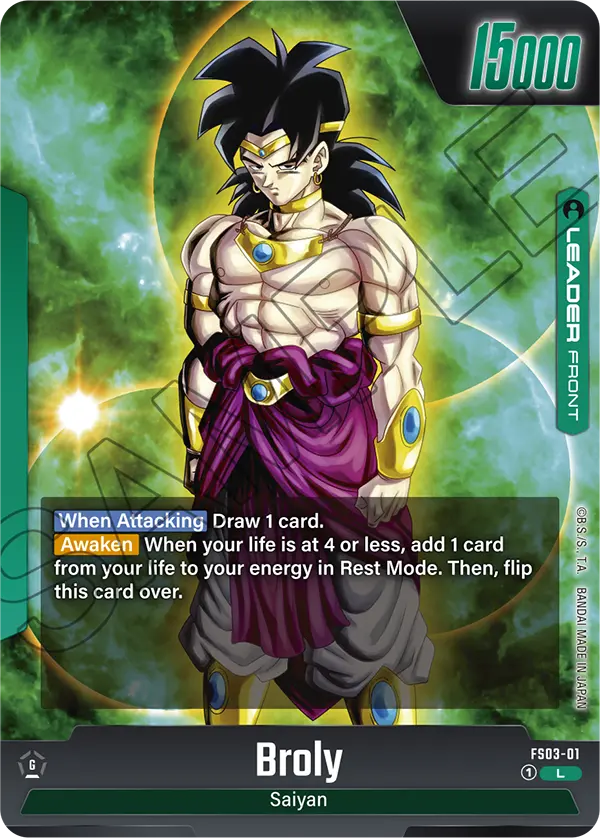
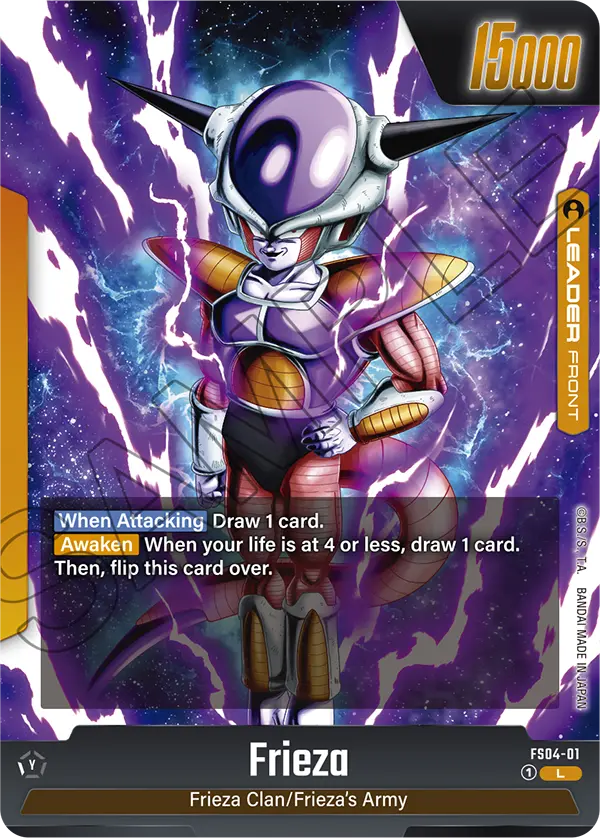
In most TCGs, your life total is a high score you desperately want to protect. In Fusion World, your life total is a currency. Every Leader card has an "Awaken" mechanic, which lets you flip the card over to a vastly more powerful side once your life reaches a certain threshold (usually half).
Furthermore, every time you take damage, that card goes from your Life Area directly into your hand. Taking early damage is actually a massive card-advantage engine. The worst players in Fusion World furiously defend their life total in the early game, exhausting their whole hand to do so, only to be trapped with an un-Awakened Leader and zero resources on turn five. Geeky Domain Rule: Take the hits early. Draw the cards. Awaken. Then strike back.
The Combo Step: Where Games Are Won
The Combo Step is the beating heart of Fusion World. During battles, both players can place Battle Cards from their hand or board into the Combo Area to temporarily add that card's Combo Power to an attacking or defending card. This creates a deeply psychological layer of combat math — and remember, ties go to the attacker, so a defender has to come out strictly higher to survive.
Budget Reality: Win the Combo Step
Here's the budget truth: almost every Battle Card carries a printed Combo Power on its left side — typically +5,000 or +10,000 — even big, expensive finishers. So the failure mode isn't that pricey cards have "no" combo value; it's running a clunky hand of high-cost cards you can't deploy and can't afford to pitch defensively. A budget player holding a flexible hand of cheap cards — each worth a real +5,000 or +10,000 in the Combo Step — can out-trade a stack of expensive bombs simply by having more usable combo fuel. Deck efficiency is about balancing your threats with cheap, flexible combo value, not jamming the most expensive cards into a list.
Want the full breakdown of how comboing and the hand-and-life economy actually work? Read The Combo System, Explained and The Mulligan & Mind-Games Guide. And for the newest layer on top of the core rules — the FB09-era Fusion and Evolve mechanics — see Fusion Evolve, Explained.
3. The Essential Staple Types Under $10
If you are building your first real competitive deck for the local or regional scene, this is your baseline. Stop drooling over the Secret Rares in the display case and start organizing your Common and Uncommon piles. The following card types and keywords offer the highest utility-to-cost ratio in the game — and when you're picking which Leader to build them around, our guide to the best budget Leaders for new players pairs perfectly with this list.
- Super Combos (All Colors): Cards with the [Super Combo] keyword reward you for using them as a combo, typically adding strong combo power and triggering a bonus effect. They're the defensive backbone of nearly every deck, and standard-rarity copies cost pennies.
- 1-Cost Searchers (All Colors): Cheap characters that dig several cards deep to pull a specific trait into your hand, then double as combo fodder later. They cost one energy, effectively replace themselves, and smooth out every draw. Pure efficiency.
- Self-Damage / Awaken Enablers: Cards that let you move a card from your Life Area to your hand to trigger an effect. Taking damage on your own terms accelerates your Leader's Awakening and refills your hand — a massive competitive advantage when timed right.
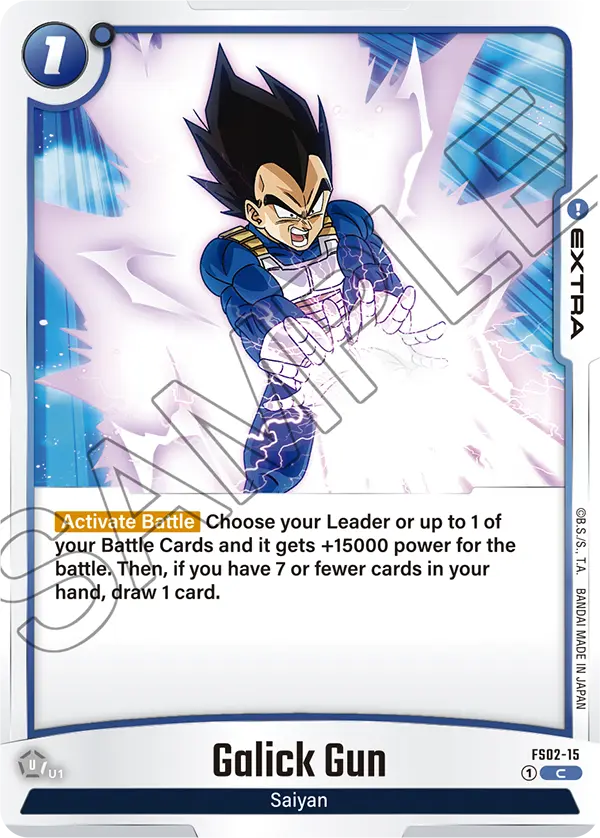
- Power-Pump Extra Cards: Cheap Extra Cards that grant a Leader or Battle Card a big power boost for one battle, letting you win the Combo Step without emptying your hand of Battle Cards. Blue's Galick Gun is a classic budget example of the type.
- Bounce Effects (Blue): Blue's cheap Extra Cards that return an opposing Battle Card to hand or deck control the tempo of the game while keeping your own hand size — and combo fuel — high.
- Rest-Mode Control (Yellow): Yellow's inexpensive effects that switch opposing Battle Cards to Rest Mode shut down attackers and set up your own swings. Locking down a pricey finisher with a cheap card is peak budget value.
- Ramp & Survival (Green): Green lives and dies by reaching its big turns, so the cheap energy-acceleration and stay-alive cards matter far more than the expensive bombs everyone covets. Build the engine first.
- Low-Cost Blockers (All Colors): A cheap Battle Card with [Blocker] that absorbs a huge attack just saved you multiple cards from your hand. You want redundancy here, and the standard-rarity ones perform exactly like the foils.
- Critical Attackers (All Colors): When a card with [Critical] deals damage to a Leader, that Life card goes to the Drop Area instead of the opponent's hand — stripping them of the refill while you deal damage. Hunt for the cheap Uncommons with this keyword.
- Double Strike Finishers: You don't need a Secret Rare to close a game. A card with [Double Strike] deals 2 damage instead of 1 when attacking, and most colors have an affordable Rare or Super Rare that carries it. Buff one past their blockers and it ends games decisively.
One more budget lever: knowing what you're actually pulling. Our rarity and pull-rate guide explains why the standard-rarity copy plays identically to the alt-art — and why your wallet should care.
4. The Value of Starter Decks in Competitive Play
In many Trading Card Games, "Starter Decks" are a trap — weak, watered-down products designed to trick beginners before forcing them to buy boosters. Fusion World is the exact opposite. Bandai builds its starters to be genuine foundations for the competitive meta, and certain leaders and staples are only available through them, not standard booster boxes.
There are two tiers to understand. The original regular starter decks (the Son Goku, Vegeta, Broly, and Frieza line and beyond) are cheap, simple, and built for learning. The newer Starter Deck EX releases are a premium tier — all-foil, with double the Super Rares of a regular starter, a bonus pack, and stronger, more current builds. Which you want depends on whether you're learning on a budget or after the most competitive ready-to-play option. And starters aren't dead ends: our FS03 Broly upgrade guide and FS11 vs FS12 Goku breakdown show how to grow a starter into a real contender.
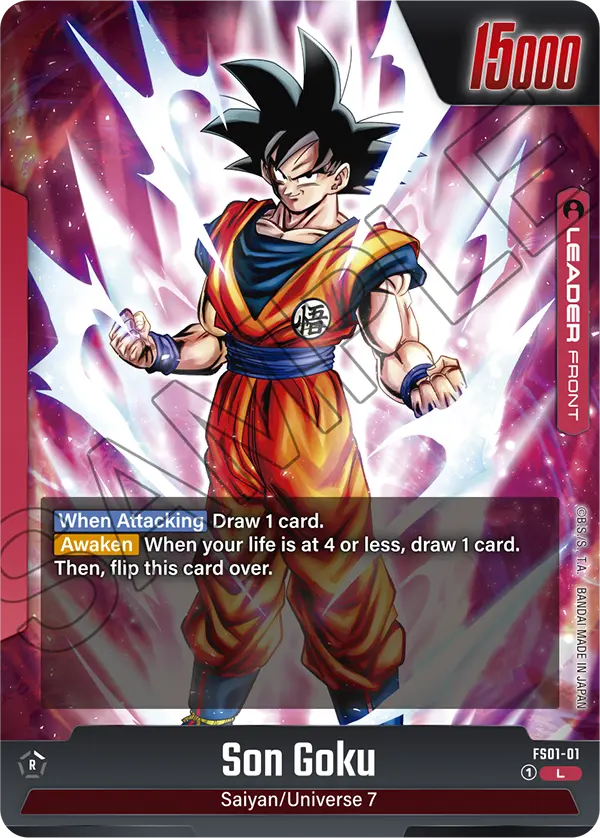
The "Buy Two" Tip (Regular Starters)
For regular starters that include only two copies of a key exclusive card, buying two copies of the deck is often the cheapest route to a full playset (four copies) of that engine — frequently the smartest money in the game. Note this rule of thumb is starter-specific: copy counts vary, and the Starter Deck EX tier is built differently, so always check a deck's contents before doubling up. For a full breakdown, see Best Fusion World Starter Deck to Buy.
Where to Buy Fusion World Starters
Amazon carries the current in-print starters and the all-foil Starter Deck EX tier — price two copies against one before you commit to a playset. The original FS01–FS04 decks (Goku, Vegeta, Broly, Frieza) are largely out of print, so eBay is the realistic route for those, and starters ship unsleeved if you need protection before your first event.
As an Amazon Associate, Geeky Domain earns from qualifying purchases. eBay links are affiliate links; Geeky Domain may earn a commission at no extra cost to you.
5. Transitioning to Competitive: The $50 Ceiling
Buying the right singles and sleeving up your starter is only half the battle; the real test is how you pilot them. The TCG community has a terrible habit of assuming a deck's win rate scales linearly with its price tag. If a budget deck wins 40% of the time, a deck eight times its price packed with Secret Rares must win 90% of the time, right? Wrong.
In Dragon Ball Super: Fusion World, $50 is the Competitive Ceiling of Efficiency. Around that mark you can assemble a fully optimized, fiercely competitive 50-card deck. Because Fusion World leans so heavily on the Combo Step and Awakening timings, player skill vastly outweighs card rarity.
A $50 deck piloted by someone who knows exactly when to take life for card advantage, and how to math out defensive Combo Steps to drain the opponent's hand, will routinely demolish a max-rarity deck piloted by someone who blindly attacks the Leader every turn. You don't need the Alternate Art finisher if you've already starved your opponent of their defensive combo pieces by turn four.
The Geeky Domain Starter Build: Red Aggro Rush
If you want to see exactly what $50 of optimized, brutal efficiency looks like, Red Aggro is the perfect starting point. By combining cheap, power-reducing Extra Cards with relentless early-game attacks, you can push your opponent into a defensive panic before they even have the energy to play their late-game threats. Prefer a different flavor? The FB09 Dual Evolution budget build is the modern alternative.
6. The Full Fusion World Library
Everything we've published on Fusion World, organized by where you are in the journey:
Learn the Game
- → How to Play Fusion World — Beginner's Guide
- → The 5 Colors — Which Should You Play?
- → Building Your First Fusion World Deck
- → Best Starter Deck to Buy
Master the Mechanics
- → The Combo System, Explained
- → Leader Awakening by Color
- → The Mulligan & Mind-Games Guide
- → Fusion Evolve, Explained (FB09)
Build on a Budget
- → Best Budget Leaders for New Players
- → Red Aggro Budget Deck (Under $50)
- → FB09 Dual Evolution Budget Deck
- → FS03 Broly Starter Upgrade Guide
- → FS11 vs FS12: The Goku Starters
Sets & Collecting
7. The Geeky Domain Verdict
The Verdict
Topical authority in Fusion World isn't about owning the flashiest cards; it's about owning the Decision Space. Every dollar you save by relying on high-efficiency Commons, smart starter purchases, and flawless Combo Step math is a dollar you can invest in tournament entry fees and testing new strategies.
Stop playing the wallet game. Master your Awakening timings, learn the Combo Power of the meta, and build smart. Let collectors chase their Secret Rares while you chase your win rate.
Ready to Awaken Your Deck?
© GEEKYDOMAIN.COM | Strategy Powered by Data