

Building Your First Fusion World Deck
The 50-card structure, the mono-color rule, the role ratios that actually work, and the deckbuilding decisions every Fusion World player has to make — one practical guide, before you commit a single card.
You've bought a starter deck, you've played a few games, and you're ready to build something of your own. This is where most new Fusion World players hit the same wall: the rules tell you a deck is 50 to 60 cards plus a Leader, all matching your Leader's color, but they don't tell you how those 50 cards should break down. How many Battle Cards? How many Extras? What curve? How much defense? The starter decks make this look effortless because they've already solved those questions for you — building your own means answering them yourself.
The good news: Fusion World is one of the most beginner-friendly TCGs to deckbuild for. The deck size is small, the energy system has no color restrictions (any card can be charged for Energy), and the mono-color rule narrows your options in a helpful way. There's still real depth — what you do with that 50-card budget shapes everything — but the framework you need is genuinely learnable in one read.
This guide covers the deckbuilding fundamentals: the legal structure, the role ratios that work for most archetypes, the curve, how to choose a Leader, the deckbuilding decisions that separate good decks from random piles, and the mistakes that quietly turn promising builds into inconsistent ones. It's color-agnostic and set-agnostic — the principles apply whether you're building Red Goku BR, Yellow Gogeta, or anything else.
The Short Version
Fusion World decks are 50 to 60 cards plus your Leader; most competitive decks run 50 or 51 for consistency. All cards must match your Leader's color (mono-color rule), and you can include up to 4 copies of any single card. A healthy ratio starts at 25-28 Battle Cards / 8-10 Extras, with the rest tuned to your strategy and curve. Build around your Leader's Awaken condition and combat plan, keep your curve low (most cards 1–3 cost), include enough Blockers to survive, and remember that every card is also potential Energy or Combo Power — there are no "dead" cards in Fusion World.
→ More Fusion World Guides
In This Guide
The Legal Structure
The official Fusion World deckbuilding rules, in one place:
| Deck size | 50–60 cards (Battle Cards + Extra Cards), plus 1 Leader |
| Color rule | All cards must share your Leader's color — no off-color cards |
| Copy limit | Up to 4 copies of any card (by card number) |
| Card types in deck | Two: Battle Cards (creatures) and Extra Cards (single-use spells) |
| Starting setup | 6-card opening hand, full mulligan once; 8 cards face-down as Life |
| Win conditions | Reduce opponent's Life to 0, or deck them out |
A practical recommendation: run 50 or 51 cards. The deck-size range is 50-60, but you almost always want consistency over variety — a 50-card deck draws its key pieces more reliably than a 60-card deck. There are niche reasons to run 51 (mill protection, mostly), but 50 is the default starting point and 60 is generally too many.
Step 1: Pick Your Leader
Your Leader card is the foundation of the whole deck — not just because it dictates your color, but because its abilities, Awakening condition, and base power define what kind of deck you can build around it. Pick your Leader first; everything else flows from that choice.
What to evaluate when picking a Leader:
- Color identity. Red is aggressive and combo-heavy, Blue is tempo and control, Green ramps and builds bigger threats, Yellow combines elements and is fusion-themed (especially in FB09), Black is disruption and resource denial. See our color-by-color Leader awakening guide for deeper breakdowns.
- Awaken condition. All Leaders awaken when their life total reaches 4 or lower, gaining a stronger ability and higher base power. Some Leaders reward racing toward that threshold; others reward defending until it happens naturally.
- Pre-Awaken vs. Awakened power profile. Some Leaders are weak pre-Awaken and become monsters after — their decks are built around surviving to that point. Others are strong from turn one and use Awakening as a finisher boost. Your deck shape changes accordingly.
- Activated abilities. Many Leaders have on-attack or once-per-turn abilities that shape the deck. A draw-on-attack Leader wants attack triggers; a removal-on-Awaken Leader wants to control the pace until that point.
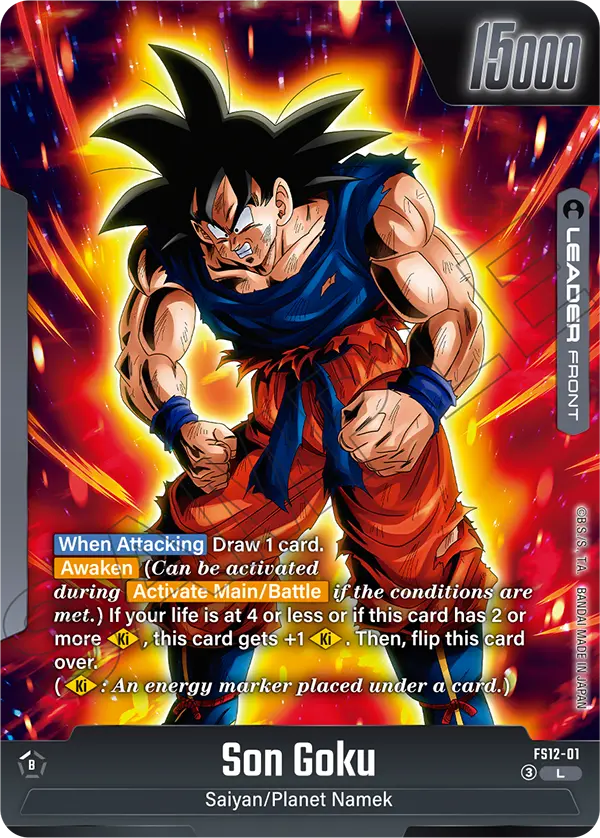
New to Fusion World? Pick a starter Leader first. The starter decks are designed to teach the game and give you a baseline of legal cards for your color. Our starter deck guide covers which to buy, and our budget Leaders guide covers the best beginner-friendly Leaders across colors. Don't build a competitive deck around a Leader you haven't played yet — you won't know if you actually like the playstyle.
Step 2: Pick Your Archetype
Once you've chosen a Leader, decide what your deck wants to do. Most Fusion World decks fall into one of three broad archetypes, and the Leader you picked usually points at one naturally:
| Archetype | Plan | Speed |
|---|---|---|
| Aggro | Drop cheap Battle Cards, attack the Leader directly, end the game before they Awaken | Fast (wins by turn 5-6) |
| Midrange | Trade efficiently, control the board, win with mid-cost threats and Combo Power | Medium (wins around turn 7-9) |
| Control | Stall with Blockers and removal, win late with Awakened Leader and big finishers | Slow (wins after turn 10) |
There are sub-archetypes — combo decks built around specific Extra Card or Fusion Evolve chains, for example — but for a first build, pick one of the three above and commit. Mixing archetypes is how new players end up with a deck that's not fast enough to race and not defensive enough to control — just stuck in the middle. Our Red aggro budget deck is a tuned example of the aggro path; the FB09 deck guide covers a Fusion Evolve combo build.
Step 3: The Role Ratios
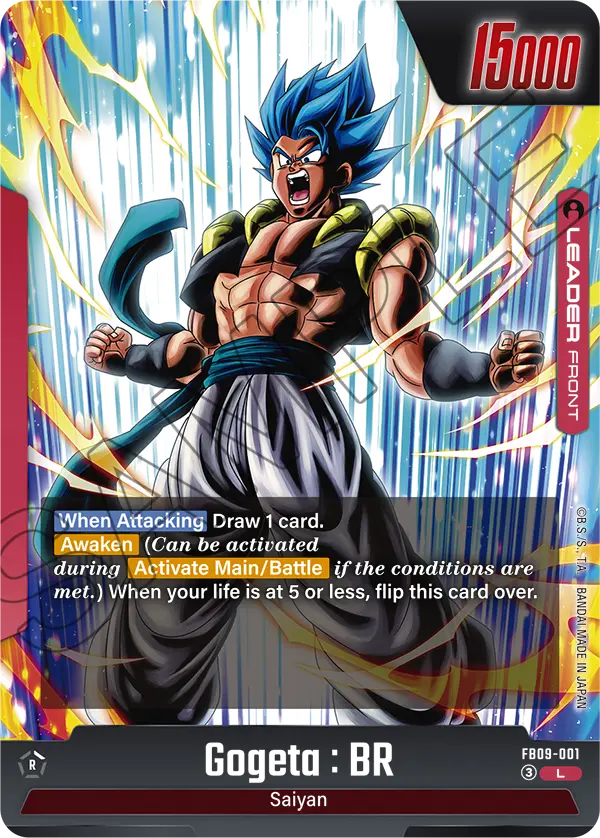
A 50-card deck has two card types — Battle Cards and Extra Cards — but within those, several roles need to be filled. A healthy starting framework:
| Role | Count (of 50) | What it does |
|---|---|---|
| Core Battle Cards | 25–28 | Your attackers, blockers, and main board presence |
| Extra Cards | 8–10 | Removal, combat tricks, draw, one-shot effects |
| Combo / Defensive cards | 10–12 | Battle Cards with high Combo Power for boosting attacks & defending |
| Finishers / win cards | 3–5 | Your top-end threats — the cards that actually close out games |
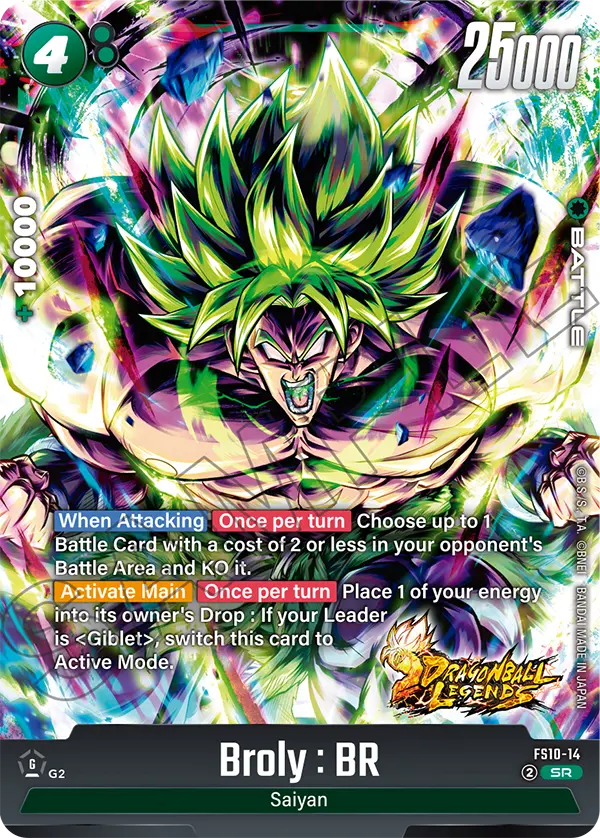
A few important notes: these roles overlap. A Blocker is a Battle Card. A high-Combo-Power Battle Card is both a Combo card and a Battle Card. The framework is about functions filled, not strict categories. When tallying your deck, count each card once — just make sure every role has enough representation.
Aggro decks shift this ratio — more cheap Battle Cards, fewer Extras, no finishers (the cheap Battle Cards are the win). Control decks shift the opposite way — fewer Battle Cards, more Extras and Blockers. The midrange framework above is a sensible default; tune from there based on your archetype.
Step 4: The Curve
Your curve is the distribution of card costs across your deck. Fusion World gives you one Energy per turn (by charging a card from your hand), so by turn 3 you have 3 Energy, by turn 5 you have 5, and so on. A healthy curve means you have a relevant play at each Energy count.
A reasonable midrange curve for a 50-card deck:
- 1-cost cards: 6–10 — cheap early plays, often with utility or Blockers.
- 2-cost cards: 10–14 — the workhorses; solid attackers and defenders.
- 3-cost cards: 10–14 — mid-game threats and key Extra Cards.
- 4-cost cards: 6–10 — bombs and impactful Extras.
- 5+ cost cards: 3–6 — finishers only; too many here and you'll brick early.
The most common new-player curve mistake: too many expensive cards. A deck with 15 cards costing 4+ Energy looks impressive on paper — "look at all my bombs!" — and plays like a stalled-out mess where you sit on dead cards for the first three turns and lose before you can cast them. Bias toward 1–3 cost; you can always charge expensive cards as Energy in the meantime.
Step 5: Combo & Defense
Combo Power is one of Fusion World's defining mechanics, and it shapes deckbuilding in ways that surprise new players. Every Battle Card has a Combo Power value (the number on the left side, no Energy cost to use), and you can add that value to attacks or defenses by:
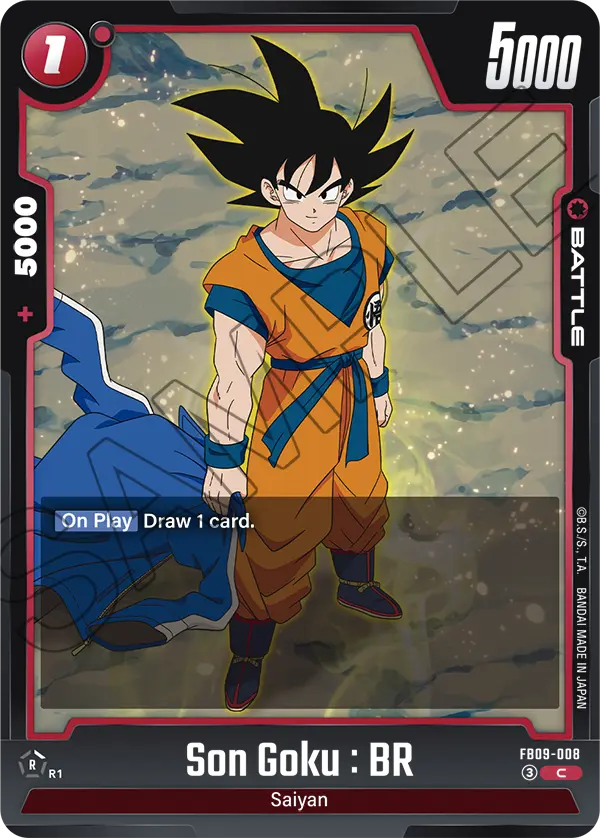
- Playing Battle Cards from hand to the Combo Area — one-shot use; the card goes to the Drop Area after.
- Resting Active-Mode Battle Cards already on the field — also one-shot for that combat; they tap and go to the Drop Area.
This means every Battle Card in your deck has dual value — it's either a body on the board, or a damage/defense boost in combat. There are no truly "dead" cards in Fusion World; the worst case for any Battle Card is "I charge it as Energy" or "I commit it to Combo for some power." That's a meaningful difference from games where bad cards are just bad.
Practical deckbuilding implications:
- Pay attention to Combo Power numbers. A 2-cost Battle Card with 15,000 Combo Power is genuinely more useful than one with 5,000 — you can pitch it for a combat blowout or save the opposing leader from a swing.
- Make sure you have Blockers. The [Blocker] keyword lets a Battle Card intercept attacks. Roughly 8–12 Blockers across your deck is a safe baseline for non-aggro decks — you need targets to soak hits, not just attackers.
- Critical-keyword cards push damage past Blockers. [Critical] is one of the most impactful keywords — it sends damage straight to the Drop Area instead of Life on a successful Leader hit, denying them the card draw from taking life damage.
For a deeper read on Combo Power, attack math, and how Critical / Double Strike / Super Combo interact, see our combo system explained.
The Energy Insight
Here's the deckbuilding insight that separates good Fusion World decks from average ones: your Energy is also your deck. Every turn, you charge a card from your hand to your Energy Area, where it acts as a generic Energy regardless of color. There are no separate "land" or "energy" cards — every card in your deck is a potential Energy source.
Two implications shape every choice:
- No bad-mana mulligans. Unlike games where you can miss your land drops, every hand in Fusion World can hit Energy reliably — you'll always have something to charge. That makes mulligans about card quality, not mana, which our mulligan guide walks through.
- Every card is a tradeoff. When you decide whether a card is "good enough" for your deck, ask: is it better than charging this slot as Energy? If it's only marginally playable, the answer is often no — cut it and run a stronger card or a more impactful Extra Card.
This is why focus matters so much in Fusion World deckbuilding. A coherent 50-card deck where every card supports the plan beats a "good cards" pile where each card is independently strong but they don't work together.
A Worked Example Breakdown
Here's what a 50-card midrange deck looks like by role (not specific cards — those depend on your Leader and color):
- 8x cheap Battle Cards (1-cost): early plays + Energy fodder. ~4 with Blocker.
- 12x mid Battle Cards (2-cost): the backbone. Solid attackers/defenders with reasonable Combo Power.
- 10x impactful Battle Cards (3-cost): threats that demand answers. ~4 with key keywords (Critical, Double Strike).
- 6x late Battle Cards (4-cost): bombs and finishers. ~2 with built-in evasion or [On Play] effects.
- 4x top-end Battle Cards (5+ cost): game-winners. Keep this small.
- 6x Extra Cards (mid-cost): removal, combat tricks, draw effects.
- 4x Extra Cards (cheap reactive): defensive tricks — counter an attack, save a Battle Card, draw a card.
- Total: 50 cards, roughly 40 Battle / 10 Extra, with 8–10 Blockers and 3–5 finishers across the curve.
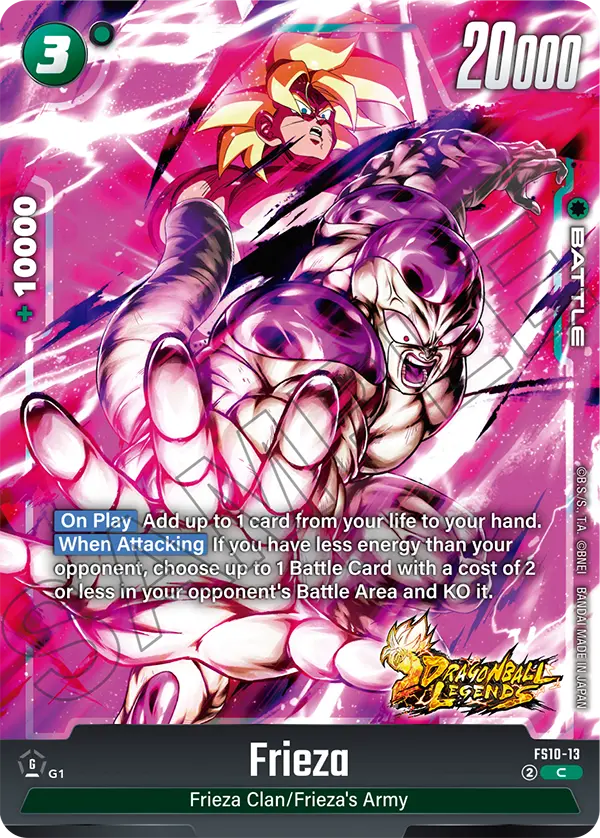
From here, you tune toward your archetype. Aggro shifts the curve down (more 1-2 cost, fewer 4-5 cost, fewer Blockers, more attack tricks). Control shifts it up (more Blockers, more Extras, fewer attackers, more finishers). The framework above is the midrange default — the place to start before pushing in a direction.
Common Deckbuilding Mistakes
Mistake #1: Running 55+ cards.
"I have all these good cards, I want to fit them in" — tempting, but a bigger deck is a less consistent deck. Every card you add beyond 50 makes you slightly less likely to draw your best cards in any given game. Run 50 (or 51 if you want mill protection); cut the borderline cards, don't add them.
Mistake #2: Too few Blockers.
A common newer-player build: all attackers, no defenders. The deck looks aggressive on paper and gets walked over by anything faster than it. Even aggro decks usually want a handful of Blockers; midrange and control need 8–12. If you can't survive opponent pressure, you can't execute your plan.
Mistake #3: Too many 4+ cost cards.
Bombs are exciting, but a deck with 15+ cards above 4 Energy plays like sludge — dead cards in the early game, never enough Energy to deploy the late game. Keep your high-cost slot at roughly 8–10 total, with the bulk of your deck in the 1–3 range.
Mistake #4: Mixing archetypes.
Half aggro, half control — the deck that's "flexible" in theory and confused in practice. Pick a lane and commit. A focused aggro deck beats a half-aggro/half-control deck almost every time, because every card in the focused deck pulls in the same direction.
Mistake #5: Ignoring Combo Power.
Picking Battle Cards purely by Power and Cost, ignoring the Combo Power number. A 2-cost Battle Card with 5,000 Combo Power is a substantially worse deck slot than the equivalent with 15,000, because the latter is a real combat trick when you pitch it. Treat Combo Power as a deckbuilding stat, not a number you read after the fact.
FAQ
- Can I run a two-color deck? No — Fusion World decks are mono-color, dictated by your Leader's color. The Leader determines what cards you can run, and only cards matching that single color are legal. This is non-negotiable; it's what makes the color identity matter in deckbuilding.
- Should I run 4 copies of my best card? Usually yes — if a card is core to your plan, you want maximum chance of drawing it. The exceptions: very expensive bombs (drawing two is usually bad) and unique high-cost finishers (3 copies often suffices). For 1–3 cost workhorses you want to see early, run the full 4.
- How many Extra Cards is too many? Above 12-13 and your deck starts feeling thin on board presence. Extra Cards are one-shot effects — powerful, but they don't stay on the field. Midrange decks usually want 8–10; control can push 12; aggro often runs 5–7.
- When should I tune away from these ratios? After playing 10–20 games with your deck. The ratios above are starting points; once you've experienced what your deck actually does, you'll notice "I always need one more Blocker" or "I never cast my 5-cost card" — then adjust. Don't tune in theory; tune from results.
- Is it cheaper to upgrade a starter or build from scratch? Almost always cheaper to upgrade a starter. Starters give you a tuned baseline of legal cards for your color, plus a Leader — the expensive pieces are already there. Add singles to fill gaps rather than buying packs hoping to pull what you need. Our starter guide covers which to start with.
Quick Reference
Validate Before You Build
The ratios and curve in this guide are starting frameworks — not absolutes. Every Leader pulls the deck in a specific direction, and every meta shifts what works. Build your list on a deckbuilder, playtest at least 10 games before committing money to upgrades, and tune based on what you see in actual games rather than theory. The cards you cut are as important as the ones you keep.
- Structure: 50–60 cards + 1 Leader, mono-color, max 4 copies. Default to 50.
- Order: Leader → archetype → role ratios → curve → Combo/Defense.
- Default ratios: 25-28 Battle Cards / 8-10 Extras / 10-12 Combo-Defensive / 3-5 finishers.
- Curve: bulk in 1–3 cost; modest 4–5 cost; small 5+ slot.
- Combo Power is a deckbuilding stat — not an afterthought.
- Energy is every card — every slot must beat "I charge this for Energy."
- Never: 55+ cards, too few Blockers, too many bombs, mixed archetypes, ignored Combo Power.
Build Focused, Win Often.
Fusion World rewards deckbuilders who pick a direction and commit to it. Start with a Leader you love, settle on an archetype, hit your role ratios, keep your curve low, and respect Combo Power as a real deckbuilding stat. Do those five things and your first build will outperform decks that look more expensive on paper.
© GEEKYDOMAIN.COM | Strategy Powered by Data